


Amino Acids (AA)
Amino acids (AAs) are the fundamental building blocks of proteins, playing a crucial role in various biological processes. These organic compounds are essential for protein synthesis, metabolic pathways, and cell signaling. In this category, you will find a comprehensive range of amino acids, including essential, non-essential, and modified forms, which are vital for research in biochemistry, molecular biology, and nutritional sciences. At CymitQuimica, we provide high-quality amino acids to support your research and development needs, ensuring accuracy and reliability in your experimental outcomes.
Subcategories of "Amino Acids (AA)"
- Amino Acid Derivatives(3,955 products)
- Amino Acid and Amino Acid Related Compounds(3,436 products)
- Amino Acids with Oxygen or Sulphur(168 products)
- Boc- Amino Acids(351 products)
- Fmoc Amino Acids(1,710 products)
Found 38216 products of "Amino Acids (AA)"
Sort by
Purity (%)
0
100
|
0
|
50
|
90
|
95
|
100
(2-Hydroxy-4-methoxyphenyl)(4-methylphenyl)methanone
CAS:<p>Applications (2-hydroxy-4-methoxyphenyl)(4-methylphenyl)methanone (cas# 1641-17-4) is a useful research chemical.<br></p>Formula:C15H14O3Color and Shape:NeatMolecular weight:242.274-Chloro-4-methyl-1-pentene
CAS:Controlled Product<p>Applications 4-Chloro-4-methyl-1-pentene affects the surface modification of Kevlar stitch threads on mechanical interfacial properties of carbon fiber and bismaleimide stitched composites.<br> Not a dangerous good if item is equal to or less than 1g/ml and there is less than 100g/ml in the package<br>References Ai, T., et al.: Fuhe Cailiao Xuebao, 24, 34-39 (2007)<br></p>Formula:C6H11ClColor and Shape:NeatMolecular weight:118.62-sec-Butyl-3-methoxypyrazine
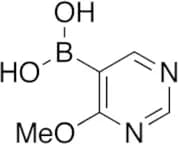
CAS:Controlled Product<p>Applications A compound contents in musts and wines from Vitis vinifera variety Cabernet Sauvignon.<br>References Murray, K., et al.: J. Sci. Food Agric., 26, 973 (1975), Maga, J., et al.: Food Rev. Int., 8, 479 (1992), Allen, M., et al.: J. Agric. Food Chem., 43, 769 (1995),<br></p>Formula:C9H14N2OColor and Shape:NeatMolecular weight:166.22(4-Methoxypyrimidin-5-yl)boronic Acid
CAS:Controlled ProductFormula:C5H7BN2O3Color and Shape:NeatMolecular weight:153.932N-Methylformamide
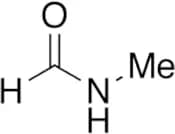
CAS:Controlled Product<p>Applications N-Methylformamide is used in amidation or transamidation chemical reactions where formamide is insufficient.<br>References Rao, S. et al.: Org. Lett., 15, 1496 (2013); Xu, K. et al.: Chem. A. Eur. J., 18, 9793 (2012);<br></p>Formula:C2H5NOColor and Shape:NeatMolecular weight:59.071-Ethyl-1-methylcyclopentane
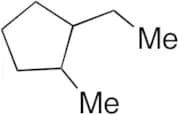
CAS:Controlled Product<p>Applications 1-Ethyl-1-methylcyclopentane, is one of the chemical components of Gas-Phase organic carbon emissions from motor vehicles. It is also a volatile component of frying oils.<br>References Gentner, D. R., et al.: Environ. Sci. Tech., 47, 11937 (2013); Prevot, A. Frying Food, 155 (1988);<br></p>Formula:C8H16Color and Shape:NeatMolecular weight:112.21(S)-1-b-Hydroxy-1-(2-thienyl)-3-methylaminopropane
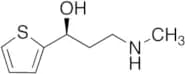
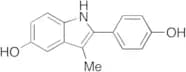
CAS:Controlled Product<p>Impurity Duloxetine EP Impurity B<br>Applications A Duloxetine intermediate. Duloxetine EP Impurity B.<br></p>Formula:C8H13NOSColor and Shape:NeatMolecular weight:171.262-(4-Hydroxyphenyl)-3-methyl-1H-indol-5-ol
CAS:<p>Applications 2-(4-Hydroxyphenyl)-3-methyl-1H-indol-5-ol is used as a reagent in the synthesis of tethered indoles as functionalizable ligands for estrogen receptor.<br>References Trogden, B.G., et al.: Bioorg. Med. Chem. Lett., 19, 485 (2009)<br></p>Formula:C15H13NO2Color and Shape:NeatMolecular weight:239.27N1-(2-Aminoethyl)-N1-Methylethane-1,2-Diamine
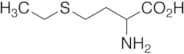
CAS:Controlled Product<p>Applications N1-(2-AMINOETHYL)-N1-METHYLETHANE-1,2-DIAMINE (cas# 4097-88-5) is a useful research chemical.<br></p>Formula:C5H15N3Color and Shape:NeatMolecular weight:117.192-Amino-5-methylhexanoic Acid
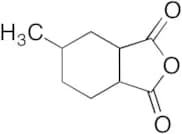
CAS:Controlled Product<p>Applications 2-amino-5-methylhexanoic acid (cas# 3558-32-5) is a useful research chemical.<br></p>Formula:C7H15NO2Color and Shape:NeatMolecular weight:145.2Hexahydro-4-methylphthalic Anhydride
CAS:Controlled Product<p>Stability Hygroscopic, Moisture Sensitive<br>Applications Hexahydro-4-methylphthalic Anhydride, can be used in the mixture of other isomers nanofiber supported 3D interconnected BN nanosheets for epoxy nanocomposites with ultrahigh thermal management capability<br>References Chen, J., et al.: Adv. Funct. Material., 27, 5 (2017)<br></p>Formula:C9H12O3Color and Shape:NeatMolecular weight:168.1902-Methyl-d3-propyl-3,3,3-d3 Alcohol
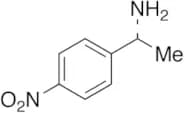
CAS:Controlled Product<p>Applications 2-Methyl-d3-propyl-3,3,3-d3 Alcohol (CAS# 72182-69-5) is a useful isotopically labeled research compound.<br></p>Formula:C4D6H4OColor and Shape:NeatMolecular weight:80.16R-(+)-α-Methyl-4-nitrobenzylamine
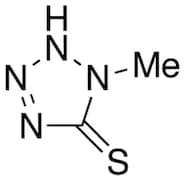
CAS:Controlled ProductFormula:C8H10N2O2Color and Shape:NeatMolecular weight:166.177N-Methyl-5-tetrazolethiol
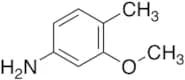
CAS:Controlled Product<p>Impurity Cefoperazone EP Impurity C<br>Applications N-Methyl-5-tetrazolethiol (Cefoperazone EP Impurity C) is an impurity of Cefoperazone.<br>References Kitson, T., et al.: Biochem. J., 175, 83 (1978), Elenbaas, R., et al.: Clin. Pharmacol. Ther., 32, 347(1982),<br></p>Formula:C2H4N4SColor and Shape:NeatMolecular weight:116.143-Methoxy-4-methylaniline
CAS:Controlled Product<p>Applications 3-Methoxy-4-methylaniline (cas# 16452-01-0) is a useful research chemical.<br></p>Formula:C8H11NOColor and Shape:NeatMolecular weight:137.1792-Methyl-4-nitroaniline-d3
CAS:Controlled Product<p>Applications A red azoic dye.<br> Not a dangerous good if item is equal to or less than 1g/ml and there is less than 100g/ml in the package<br>References Hoover, K., et al.: Chem. Res. Toxicol., 18, 1497 (2005), Altenburger, R., et al.: Environ. Toxicol. Chem., 24, 324 (2005), Gonzalez, M., et al.: Bioorg. Med. Chem., 13, 1775 (2005),<br></p>Formula:C7H5D3N2O2Color and Shape:NeatMolecular weight:155.17H-Pro-Glu-Oh
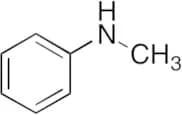
CAS:Controlled Product<p>Applications H-PRO-GLU-OH (cas# 67644-00-2) is a useful research chemical.<br></p>Formula:C10H16N2O5Color and Shape:NeatMolecular weight:244.244N-Methylaniline
CAS:Controlled Product<p>Applications N-Methylaniline is used as an additive in gasoline because of its antiknock properties.<br> Not a dangerous good if item is equal to or less than 1g/ml and there is less than 100g/ml in the package<br>References Liu, Li-jun, et al.: Huaxue Shiji, 37(1), 53-55, 96 (2015); Qin, Li-xia, et al.: Guangzhou Huagong, 43(8), 138-139, 148 (2015);<br></p>Formula:C7H9NColor and Shape:NeatMolecular weight:107.15N-Acetyl Phentermine
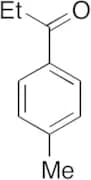
CAS:Controlled Product<p>Applications N-(2-Methyl-1-phenylpropan-2-yl)acetamide is a byproduct from the preparation of benzolactams by palladium-catalyzed carbonylation of arylethylamines and α-amino benzenepropanoates.<br>References Lopez, B., et al.: Chem. Commun., 47, 1054 (2011); Albert, J., et al.: Organometallics, 32, 649 (2013);<br></p>Formula:C12H17NOColor and Shape:NeatMolecular weight:191.274′-Methylpropiophenone
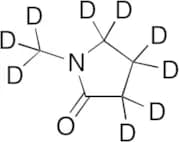
CAS:Controlled Product<p>Applications 4′-Methylpropiophenone is a chemical reagent used in electrocarboxylation reactions.<br>References Zhang, K. et al.: Chin. J. Chem., 28, 509 (2010); Zhao, S. et al.: Tetra. Lett., 52, 2702 (2011);<br></p>Formula:C10H12OColor and Shape:NeatMolecular weight:148.201-Methyl-2-pyrrolidinone-d9
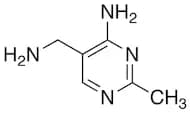
CAS:Controlled Product<p>Applications 1-Methyl-2-pyrrolidinone-d9 is labeled 1-Methyl-2-pyrrolidinone (M326120), which is a versatile industrial solvent. NMP is currently approved for use only in veterinary pharmaceuticals. The determination of the disposition and metabolism of NMP in the rat will contribute toward understanding the toxicology of this exogenous chemical which man may likely be exposed to in increasing amounts.<br>References Southwell, D., et al.: J. Pharm. Pharmacol., 33, 3 (1981), Barry, W., et al.: J. Invest. Dermatol., 82, 49 (1984),<br></p>Formula:C5D9NOColor and Shape:NeatMolecular weight:108.194-Amino-5-aminomethyl-2-methylpyrimidine
CAS:Controlled Product<p>Applications Substrate for TenA enzyme in the thiamin salvage pathway<br>References Jenkins, A., et al.: Nat. Chem. Biol., 3, 492 (2007), Jenkins, A., et al.: Bioorg. Chem., 36, 29 (2008),<br></p>Formula:C6H10N4Color and Shape:Light YellowMolecular weight:138.17N’-(5-Aminopentyl)-N-(4-methoxybenzyl)-N’-methyl-N-2-pyridinyl-1,2-ethanediamine, Dimaleate Salt
CAS:Controlled Product<p>Applications A synthetic intermediate.<br>References Blakemore, R., et al.: Eur. J. Med. Chem., 22, 91 (1987),<br></p>Formula:C21H32N4O·C4H4O4Color and Shape:NeatMolecular weight:472.584,5-O-(1-Methylethylidene)-β-D-fructopyranose
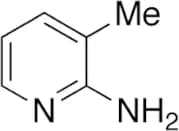
CAS:Controlled Product<p>Applications Intermediate in the preparation of 2,3-Desisopropylidene Topiramate, a metabolite of Topiramate<br></p>Formula:C9H16O6Color and Shape:NeatMolecular weight:220.222-Amino-3-methylpyridine
CAS:Controlled Product<p>Applications 2-Amino-3-methylpyridine is used in the synthesis of ketones from aldehydes.<br>References Jun, C. et al.: J. Org. Chem., 62, 1200 (1997); Jun, C. et al.: Angew. Chem. Int. Ed., 37, 145 (1998);<br></p>Formula:C6H8N2Color and Shape:NeatMolecular weight:108.144-(4-Chloro-2-methylphenoxy-d3)butyric Acid
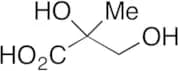
CAS:Controlled Product<p>Applications 4-(4-Chloro-2-methylphenoxy-d3)butyric Acid (CAS# 1219803-42-5) is a useful isotopically labeled research compound.<br></p>Formula:C11D3H10ClO3Color and Shape:White To Off-WhiteMolecular weight:231.691α-Methylglyceric Acid
CAS:Controlled Product<p>Applications α-Methylglyceric Acid is a biogenic secondary organic aerosol used in air quality diagnosis.<br>References Ru, P., et. al.: Environ. Sci. Technol., 48, 8491 (2014); Napelenok, S.L., et. al.: Environ. Sci. Technol., 48, 464 (2014); Stone, E.A., et. al.: Environ. Chem., 9, 263 (2012)<br></p>Formula:C4H8O4Color and Shape:NeatMolecular weight:120.1N-Fmoc-L-tyrosine Benzyl Ester
CAS:Controlled Product<p>Applications N-Fmoc-L-tyrosine Benzyl Ester is used to synthesize truncated analogues of preptin-(1-16) as possible osteoblast proliferation stimulant. It is also an intermediate used to prepare phosphotyrosinyl phosphoramidite derivatives useful in the incorporation of multiple reporter groups on synthetic oligonucleotides.<br>References Kowalczyk, R., et al.: Bioorg. Med. Chem., 22, 3565 (2014); Misiura, K., et al.: Nucl. Acids Res., 18, 4345 (1990)<br></p>Formula:C31H27NO5Color and Shape:NeatMolecular weight:493.55Ethyl [2-Methyl-3-(chlorosulfonyl)phenoxy]acetate
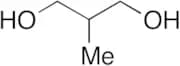
CAS:Controlled Product<p>Applications Ethyl [2-Methyl-3-(chlorosulfonyl)phenoxy]acetate (cas# 91427-62-2) is a compound useful in organic synthesis.<br></p>Formula:C11H13ClO5SColor and Shape:NeatMolecular weight:292.742-Methyl-1,3-propandiol (b-Hydroxyisobutanol)
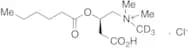
CAS:Controlled Product<p>Applications β-Hydroxyisobutanol is used as a reagent in the synthesis of pyrazolo[1,5-a]pyridinecarbonyl-substituted spirocyclic piperidine ketals as inhibitors of HCV protein NS4B and of hepatitis C viral replication and their lack of cytotoxicity in human cells.<br>References Tai, V.W.-F., et al.: Bioorg. Med. Chem. Lett., 24, 2288 (2014);<br></p>Formula:C4H10O2Color and Shape:ColourlessMolecular weight:90.121Hexanoyl-L-carnitine-(N-methyl-d3) Chloride
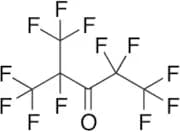
Controlled Product<p>Stability Hygroscopic<br>Applications Hexanoyl-L-carnitine-(N-methyl-d3) Chloride, is the labeled analogue of Hexanoyl-L-carnitine Hydrochloride (H294440), which is used as reactant in the synthesis of carnitine benzyl esters as prodrugs.<br>References Gong, X., et. al.: J. Chem. Res., 6, 327 (2008)<br></p>Formula:C13H23D3ClNO4Color and Shape:NeatMolecular weight:298.82Perfluoro(2-methyl-3-pentanone)
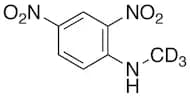
CAS:Controlled Product<p>Applications Perfluoro(2-methyl-3-pentanone) (cas# 756-13-8) is a useful research chemical.<br></p>Formula:C6F12OColor and Shape:ColourlessMolecular weight:316.04N-Methyl-2,4-dinitroaniline-d3
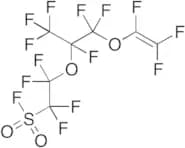
CAS:Controlled Product<p>Applications N-Methyl-2,4-dinitroaniline-d3 (cas# 91808-45-6) is a compound useful in organic synthesis.<br> Not a dangerous good if item is equal to or less than 1g/ml and there is less than 100g/ml in the package<br></p>Formula:C7H4D3N3O4Color and Shape:BrownMolecular weight:200.17Perfluoro(4-methyl-3,6-dioxaoct-7-ene)sulfonyl Fluoride
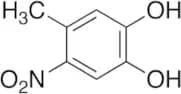
CAS:Controlled Product<p>Applications Perfluoro(4-methyl-3,6-dioxaoct-7-ene)sulfonyl Fluoride is used as a reagent in the synthesis of novel perfluorinated vinyl ether containing sulfonimide functionality which can be copolymered with tetrafluoroethylene to yield a novel perfluorinated copolymer.<br>References Zhu, S., et al.: Chinese J. Chem., 21, 921 (2003);<br></p>Formula:C7F14O4SColor and Shape:NeatMolecular weight:446.124-Methyl-5-nitrocatechol
CAS:Controlled Product<p>Applications MNC is on the metabolic pathway for 2,4-Dinitotoluene degradation.<br>References Spangoord, R.J., et al.: App. and Environ. Microbiology, 57, 11, 3200 (1991)<br></p>Formula:C7H7NO4Color and Shape:NeatMolecular weight:169.13(6Z)-8-Methyl-6-nonenoic Acid (up to 10% trans isomer)
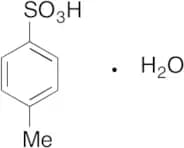
CAS:Controlled Product<p>Applications Used in the synthesis of Capsaicin analogues, useful for their anti-tumor activity.<br>References Fusco, B., et al.: Drugs, 53, 909 (1997), Buisman, G., et al.: Biotechnol. Lett., 20, 131 (1998), Kobata, K., et al.: Bios. Biotechnol. Biochem., 66, 319 (2002), Aluru, M., et al.: J. Exp. Bot., 54, 1655 (2003),; Wang, W. et al.: Gaodeng Xuexiao Huaxue Xuebao 31, 2400(2010)<br></p>Formula:C10H18O2Color and Shape:NeatMolecular weight:170.254-Methylbenzenesulfonic Acid Monohydrate
CAS:Controlled Product<p>Impurity Lisinopril EP Impurity B/ Anastrozole EP Impurity F<br>Applications 4-Methylbenzenesulfonic Acid Monohydrate (Lisinopril EP Impurity B) is used in the synthesis of resveratrol. Also used in the synthesis of oxane derivatives as antimalarial agents.<br> Not a dangerous good if item is equal to or less than 1g/ml and there is less than 100g/ml in the package<br>References Davis, M. et al.: Org. Prep. Proc. Int., 45, 304 (2013); Wang, X. et al.: J. Med. Chem., 56, 2547 (2013);<br></p>Formula:C7H8O3S·H2OColor and Shape:WhiteMolecular weight:190.22Sodium 2,2'-Methylene-bis(4,6-di-tert-butylphenyl)phosphate
CAS:Controlled Product<p>Applications Sodium 2,2'-Methylene-bis(4,6-di-tert-butylphenyl)phosphate is an organophosphate nucleating agent.<br>References Li, J., et al.: Suliao, 43, 47-50 (2014);<br></p>Formula:C29H42O4P·NaColor and Shape:White PowderMolecular weight:508.60Potassium 4-Hydroxy-4-methylpentanoate
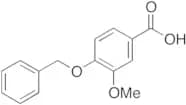
CAS:Controlled Product<p>Applications potassium 4-hydroxy-4-methylpentanoate (cas# 1607261-66-4) is a useful research chemical.<br></p>Formula:C6H11O3•KColor and Shape:NeatMolecular weight:170.244-Benzyloxy-3-methoxybenzoic Acid
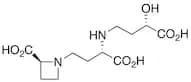
CAS:Controlled Product<p>Applications 4-Benzyloxy-3-methoxybenzoic Acid is used in the synthesis of Hsp90 inhibitors as EGCG analogues. Also used in the preparation of vanillates exhibiting cytostatic properties towards cancel cells resistant to pro-apoptotic stimuli.<br>References Khandelwal, A. et al.: J. Org. Chem., 78, 7859 (2013); Lamoral-Theys, D. et al.: Bioorg. Med. Chem., 18, 3823 (2010);<br></p>Formula:C15H14O4Color and Shape:NeatMolecular weight:258.272’-Deoxymugineic Acid
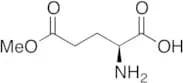
CAS:Controlled Product<p>Applications Phytosiderophores are produced in higher plants as iron chelating amino acids that promote uptake of iron from soil.<br>References Klair, S., et al.: J. Plant Nutr., 19, 1295 (1996),<br></p>Formula:C12H20N2O7Color and Shape:NeatMolecular weight:304.30L-Glutamic Acid 5-Methyl Ester
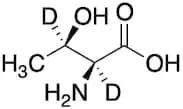
CAS:Controlled Product<p>Applications L-Glutamic acid 5-methyl ester is a protected form of L-Glutamic acid (G596960). L-Glutamic acid is a nonessential amino acid that is important to the mammalian central nervous system. L-Glutamic acid is also a neurotransmitter for cone photoreceptors in the human brain and is used as a treatment for patients who have liver disease accompanied by encephalopathy (a condition termed ‘hepatic coma’).<br>References Anderson, H., et al.: J. Nutr., 99, 82 (1969); Brandon, C. & Lam, D.: Proc. Nat. Acad. Sci., 80, 5117 (1983); McDermott Jr, W., et al.: New Engl. J. Med., 253, 1093 (1955)<br></p>Formula:C6H11NO4Color and Shape:NeatMolecular weight:161.156L-Threonine-2,3-d2
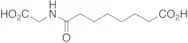
CAS:Controlled Product<p>Applications L-Threonine-2,3-d2 (CAS# 1202936-45-5) is a useful isotopically labeled research compound.<br></p>Formula:C4D2H7NO3Color and Shape:NeatMolecular weight:121.13Suberyl Glycine
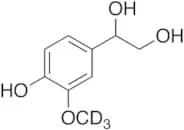
CAS:Controlled Product<p>Applications Suberylglycine is one of the acylglycines, an important class of metabolites that have been used in the diagnosis of several inborn errors of metabolism (IEM).<br>References Costa, C., et al.: J. Pharmaceut. Biomed. Anal., 21, 1215 (2000), Garcia-Villoria, J., et al.: Clin. Biochem., 42, 2 (2009), Scalbert, A., et al.: Metabolomics, 5, 435 (2009),<br></p>Formula:C10H17NO5Color and Shape:Light Yellow To BrownMolecular weight:231.25rac 4-Hydroxy-3-methoxyphenylethylene Glycol-d3
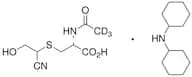
CAS:Controlled Product<p>Applications A labelled metabolite of Catecholamines.<br>References Kopin, I.J., et al.: J. Biol. Chem., 236, 2109 (1961), Short, F.W., et al.: J. Med. Pharm. Chem., 5, 642 (1962)<br></p>Formula:C92H3H9O4Color and Shape:NeatMolecular weight:187.21N-Acetyl-S-(1-cyano-2-hydroxyethyl)-L-cysteine-d3 Dicyclohexylamine Salt (Mixture of Diastereomers)
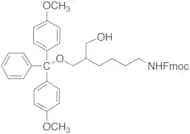
CAS:Controlled Product<p>Stability Hygroscopic<br>Applications A labelled metabolite of Acrylonitrile (ACN).<br>References Guengerich, F., et al.: Cancer Res., 41, 4925 (1981), Leonard, A., et al.: Mutation Res., 436, 263 (1999), Stadler, R., et al.: J. Agric. Food Chem., 52, 5550 (2004), Dybing, E., et al.: Food Chem. Toxicol., 43, 365 (2005), Rice, J., et al.: Mutation Res., 580, 3 (2005),<br></p>Formula:C20H32D3N3O4SColor and Shape:White To Off-WhiteMolecular weight:416.591-O-Dimethoxytrityl-2-(N-Fmoc)-4-Aminobutyl)-1,3-propanediol, >95%
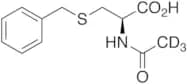
CAS:<p>Stability Very Hygroscopic<br>Applications 1-O-Dimethoxytrityl-2-(N-Fmoc)-4-Aminobutyl)-1,3-propanediol is a useful reagent for the synthesis of acridine and/or lipid containing oligodeoxyribonucleotides.<br>References Marasco, C. J., et al.: Tetra. Lett., 35, 3029 (1994)<br></p>Formula:C43H45NO6Purity:>95%Color and Shape:Off White SolidMolecular weight:671.82N-(Acetyl-d3)-S-benzyl-L-cysteine
CAS:Controlled Product<p>Applications A labelled metabolite of Toluene.<br>References Gargas, M., et al.: Toxicol. Appl. Pharmacol., 98, 87 (1989), Commandeur, J., et al.: Pharmacol. Rev., 47(2), 271 (1995), Campo, P., et al.: Neurotoxicol. Teratol., 21, 427 (1999), Lohse, C., et al.: J. Agr. Food Chem., 48, 5913 (2000),<br></p>Formula:C122H3H12NO3SColor and Shape:White To Off-WhiteMolecular weight:256.348-Nitroguanine
CAS:Controlled Product<p>Applications 8-Nitroguanine as a potential biomarker for progression of malignant fibrous histiocytoma, a model of inflammation-related cancer.<br>References Surh, Y., et al.: Mutat. Res., 480, 243 (2001), Balkwill, F., et al.: Lancet, 357, 539 (2001), Kawanishi, S., et al.: Biol. Chem., 387, 365 (2006), Hoki, Y., et al.: Cancer Sci., 98, 163 (2007),<br></p>Formula:C5H4N6O3Color and Shape:NeatMolecular weight:196.12Azido-PEG3-alcohol
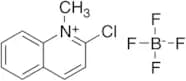
CAS:Controlled ProductFormula:C6H13N3O3Color and Shape:NeatMolecular weight:175.192-Chloro-1-methylquinolinium Tetrafluoroborate
CAS:Controlled Product<p>Applications 2-Chloro-1-methylquinolinium tetrafluoroborate (cas# 16843-24-6) is a useful research chemical.<br></p>Formula:C10H9ClN·BF4Color and Shape:NeatMolecular weight:265.44L-Valine
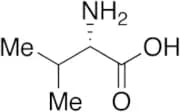
CAS:Controlled Product<p>Applications L-Valine is an essential amino acid and one of 20 proteinogenic amino acids. L-Valine cannot be manufactured by the body and must be acquired through diet or supplementation. L-valine is found in grains, dairy products, mushrooms, meats, peanuts and soy proteins. L-Valine has been used in studies to attenuate arrhythmias and induce hypotensive effects.<br>References Choi, C.W. et al.: Anim. Feed Sci. Technol., 102, 15 (2002); Kolarski, D. et al.: Krmiva, 30, 155 (1988); Oba, M. et al.: J. Dairy Sci., 93, 2044 (2010); Mitrega, K. et al.: Pharmacol. Res., 64, 218 (2011);<br></p>Formula:C5H11NO2Color and Shape:NeatMolecular weight:117.15Linoleoyl Carnitine
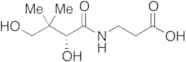
CAS:Controlled Product<p>Stability Hygroscopic, Temperature Sensitive<br>Applications A carnitine ester of unsaturated fatty acid. Used in the studies of fibroblasts in long-chain 3-hydroxyacyl-CoA dehydrogenase deficiency and fatty acid oxidation disorders.<br>References Gross R.W., et al.: J. Biol. Chem., 258, 5221 (1983),<br></p>Formula:C25H45NO4Color and Shape:NeatMolecular weight:423.63Pantothenic Acid (Technical Grade, Contains Lactone)
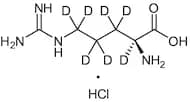
CAS:Controlled Product<p>Stability Hygroscopic<br>Applications Pantothenic Acid is a member of the B complex vitamins; essential vitamin for the biosynthesis of coenzyme A in mammalian cells. Occurs ubiquitously in all animal and plant tissue. The richest common source is liver, but jelly of the queen bee contains 6 times as much as liver. Rice bran and molasses are other good sources.<br>References Gardner, P., et al.: Food Chem., 68, 471 (2000); Ou, B., et al.: J. Agric. Food Chem., 50, 2772 (2002); Bahorun, T., et al.: J. Sci. Food Agric., 84, 1553 (2004)<br></p>Formula:C9H17NO5Color and Shape:NeatMolecular weight:219.24L-Arginine-2,3,3,4,4,5,5-d7 HCl
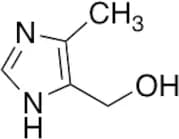
CAS:Controlled Product<p>Applications L-Arginine-2,3,3,4,4,5,5-d7 HCl (CAS# 204244-77-9) is a useful isotopically labeled research compound. It can be used with Raman scattering for imaging living cells and organisms.<br>References Min, W., et al., PCT Int. Appl. (2014), WO 2014205074 A2<br></p>Formula:C6D7H7N4O2·HClColor and Shape:NeatMolecular weight:217.704-Hydroxymethyl-5-methylimidazole
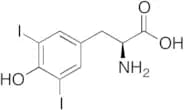
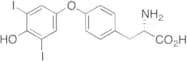
CAS:Controlled Product<p>Applications 4-Hydroxymethyl-5-methylimidazole (cas# 29636-87-1) is a useful research chemical.<br></p>Formula:C5H8N2OColor and Shape:NeatMolecular weight:112.133’,5’-Diiodo-L-thyronine
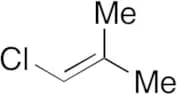
CAS:Controlled Product<p>Applications 3’,5’-Diiodo-L-thyronine is a thyroid hormone that has been shown to increase malic enzyme activity, and the activity of glucose-6-phosphate dehydrogenase in teleost Anabas testudineus. Thus, showing short term effect on lipid metabolism.<br>References Davey, K.G.: Insect Biochem. Mol. Bio., 30, 877 (2000); Shameena, B., et. al.: Endocr. Res., 26, 431 (2000)<br></p>Formula:C15H13I2NO4Color and Shape:NeatMolecular weight:525.081-Chloro-2-methylpropene
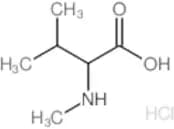
CAS:Controlled Product<p>Stability Volatile<br>Applications 1-Chloro-2-methylpropene is a reagent in the synthesis of pyrrolyl and indolyl diketo acids and esters as nucleotide-competitive non-nucleoside inhibitors of terminal deoxynucleotidyl transferase.<br> Not a dangerous good if item is equal to or less than 1g/ml and there is less than 100g/ml in the package<br>References Costi, R., et al.: J. Med. Chem., 56, 7431 (2013);<br></p>Formula:C4H7ClColor and Shape:NeatMolecular weight:90.55N-Methyl-dl-valine Hydrochloride
CAS:Controlled Product<p>Applications N-Methyl-dl-valine, HCl<br></p>Formula:C6H13NO2Color and Shape:NeatMolecular weight:131.173DL-Serine-2,3,3-d3
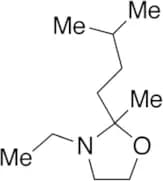
CAS:Controlled Product<p>Applications Labelled DL-Serine is used in the synthesis of novel tryptoline derivatives as IDO (indoleamine 2,3-Deoxygenase) inhibitors, for potential use in Alzheimer’s treatment.<br>References Tanaka, M. et al.: Bioorg. Med. Chem., 21, 1159 (2013);<br></p>Formula:C32H3H4NO3Color and Shape:NeatMolecular weight:108.113-Ethyl-2-methyl-2-(3-methylbutyl)-oxazolidine
CAS:<p>Applications 3-Ethyl-2-methyl-2-(3-methylbutyl)-oxazolidine is a oxazolidine-based moisture scavenger for use in urethane coatings, sealants and elastomers.<br> Not a dangerous good if item is equal to or less than 1g/ml and there is less than 100g/ml in the package<br></p>Formula:C11H23NOColor and Shape:NeatMolecular weight:185.31NG,NG-Dimethylarginine-D6 Dihydrochloride
CAS:Controlled Product<p>Stability Very Hygroscopic<br>Applications A potent inhibitor of NO synthase of adrenal glands, brain, and vascular endothelial cells.<br>References Vallence, P., et al.: Lancet, 339, 572 (1992),<br></p>Formula:C8H14D6Cl2N4O2Color and Shape:NeatMolecular weight:281.21(R)-3-Carboxy-2-hydroxy-N,N,N-trimethylpropan-1-aminium Chloride
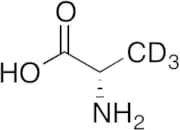
CAS:Controlled Product<p>Stability Hygroscopic<br>Applications (R)-3-Carboxy-2-hydroxy-N,N,N-trimethylpropan-1-aminium chloride is an important co-factor of mammalian mitochondrial energy metabolism. It is also a good active ingredient for dry-skin.<br>References Geier, David A., et al.: Neurochem. Res., 38(11), 2336-2341 (2013);Tanno, Osamu, et al.: Fragrance J., 33(8), 82-85 (2005);<br></p>Formula:C7H16NO3·ClColor and Shape:White To Off-WhiteMolecular weight:197.660L-Alanine-d3
CAS:Controlled Product<p>Applications L-Alanine-d3 is the labeled analogue of L-Alanine (A481500), which is used to make in-vivo measurement of glucose and alanine metabolism in studies of patients with diabetes. L-Alanine is a non-essential amino acid for human development. L-Alanine is one of the 20 amino acids encoded by the genetic code.<br>References Bier, D.M. et al.: Diabetes, 26, 1005 (1977); Capaldo, B. et al.: J. Clin. Endocrinol. Metab., 71, 1220 (1990); Giacca, A. et al.: Diabetes, 47, 1763 (1998)<br></p>Formula:C3D3H4NO2Color and Shape:NeatMolecular weight:92.11L-Aspartic Acid
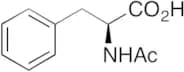
CAS:<p>Applications L-Aspartic Acid is a non-essential amino acid found in food sources. L-Aspartic Acid is one of the 20 proteinogenic amino acids; the building blocks of proteins. Its conjugate base L-aspartate is an excitatory neurotransmitter in the central nervous system.<br>References Ager, D.J. et al.: J. Mol. Catal. Enzym., 11, 199 (2001); Velisek, J. et al.: Cze. J. Food. Sci., 24, 1 (2006); Nagahama, M. et al.: Cell Tiss. Res., 318, 483 (2004);<br></p>Formula:C4H7NO4Color and Shape:WhiteMolecular weight:133.10N-Acetyl-L-phenylalanine
CAS:Controlled Product<p>Applications N-Acetyl-L-phenylalanine is an protected analogue of L-Phenylalanine (P319415), an essential amino acid produced for medical, feed, and nutritional applications such as in the preparation of Aspartame.<br>References Sriram, S., et al.: J. Med. Chem., 56, 2540 (2013); Parker, B.M., et al.: J. Biotech., 155, 396 (2011);<br></p>Formula:C11H13NO3Color and Shape:NeatMolecular weight:207.23cis-4-Hydroxy-L-proline
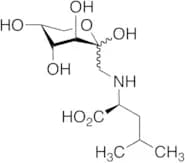
CAS:<p>Applications Hydroxyprolines are valuable chiral building blocks for organic synthesis of pharmaceuticals. Several microorganisms producing proline trans-4- and cis-3-hydroxylase were discovered and these enzymes were applied to the industrial production of trans-4- and cis-3-hydroxy-L-proline.<br>References Lawrence, C., et al.: Biochem. J., 313, 185 (1996), Mori, H., et al.: J. Bacteriol., 179, 5677 (1997), Clifton, I., et al.: Eur. J. Biochem., 268, 6625 (2001),<br></p>Formula:C5H9NO3Color and Shape:Off White Crystalline PowderMolecular weight:131.13Fructose-leucine (mixture of diastereomers)
CAS:Controlled ProductFormula:C12H23NO7Color and Shape:White To BrownMolecular weight:293.31L-Methionine-3,3,4,4-d4
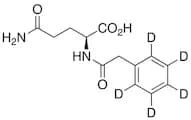
CAS:Controlled Product<p>Applications L-Methionine-3,3,4,4-d4 (CAS# 67866-75-5) is a useful isotopically labeled research compound.<br></p>Formula:C5D4H7NO2SColor and Shape:White To Off-WhiteMolecular weight:153.236Phenylacetyl-d5 L-Glutamine
CAS:Controlled Product<p>Applications It is used as labelled biomarker for metabolic age.<br>References Selmer, T., et al.: Eur. J. Biochem., 268, 1363 (2001), Connelly, J., et al.: Drug Metab. Dispos., 30, 1357 (2002), Lindon, J., et al.: Pharm. Res., 23, 1075 (2006), Monteagudo, E., et al.: Xenobiotica, 37, 1000 (2007),<br></p>Formula:C13D5H11N2O4Color and Shape:Off-White To Light YellowMolecular weight:269.31L-Arginine Hydrochloride
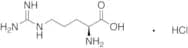
CAS:<p>Applications An essential amino acid for human development. Precursor for nitric oxide. Ammonia detoxicant (hepatic failure); diagnostic aid (pituitary function).<br>References Miura, T., et al.: Anal. Biochem., 139, 432 (1984), Jones, et al.: Adv. Enzyme Regul., 9, 19 (1970), Borders, C.L., et al.: Protein. Sci., 3, 541 (1994),<br></p>Formula:C6H14N4O2·ClHColor and Shape:NeatMolecular weight:210.66N-Methyl-1-propanamine
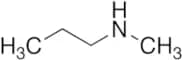
CAS:<p>Applications A naturally occurring nitrostable secondary amine found in tabacco smoke condensate.<br>References Singer, G.M. et al.: J. Agric. Food Chem. 24, 553(1976); Bush, L. P. et al.: Can. J. Plant Sci. 50, 289(1970).<br></p>Formula:C4H11NColor and Shape:ColourlessMolecular weight:73.14Isobutyryl L-Carnitine Chloride
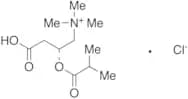
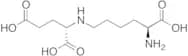
CAS:Controlled ProductFormula:C11H22NO4·ClColor and Shape:NeatMolecular weight:267.75L-Saccharopine
CAS:<p>Stability Hygroscopic<br>Applications L-Saccharopine is a product of breakdown of essential amino acid Lysine (L468895). Saccharopine is also part of the α-aminoadipate pathway of fungal lysine biosynthesis.<br>References Higashino, K., et al.: Biochem. Biophys. Res. Commun., 20, 285 (1965); Johansson, E., et al.: Structure, 8, 1037 (2000)<br></p>Formula:C11H20N2O6Color and Shape:NeatMolecular weight:276.29Nα-Acetyl-L-ornithine
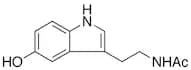
CAS:Controlled ProductFormula:C7H14N2O3Color and Shape:Off-WhiteMolecular weight:174.2N-Acetyl-5-hydroxytryptamine
CAS:<p>Stability Hygroscopic<br>Applications A metabolite of Melatonin (M215000).<br>References Reiter, R.J., et al.: J. Biomed. Sci., 7, 444 (2000), Chen, Z., et al.: Am. J. Physiol, 284, 1618 (2003), Barrenetxe, J., et al.: J. Physiol. Biochem., 60, 61 (2004),<br></p>Formula:C12H14N2O2Color and Shape:White To GreyMolecular weight:218.25185'-O-Methylthymidine
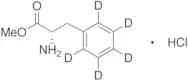
CAS:Controlled Product<p>Applications 5'-O-Methylthymidine (cas# 14504-60-0) is a useful research chemical.<br></p>Formula:C11H16N2O5Color and Shape:White To Off-WhiteMolecular weight:256.26L-Phenylalanine-d5 Methyl Ester Hydrochloride
CAS:Controlled Product<p>Applications Protected (S) enantiomer of the amino acid Phenylalanine.<br>References Zhu, P., et al.: Bioorg. Med. Chem. Lett., 19, 6966 (2009), Cramer, B., et al.: Bioorg. Med. Chem., 18, 343 (2010),<br></p>Formula:C10H9D5ClNO2Color and Shape:NeatMolecular weight:220.71L,L-Dityrosine Dihydrochloride
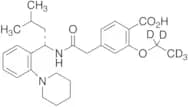
CAS:Controlled Product<p>Stability Hygroscopic<br>Applications Dityrosine (DY), a tyrosine dimer formed by 3,3’-biaryl bond formation can be used as a biomarker to detect oxidative protein damage and selective proteolysis. Fluorescence intensity decays of Dityrosine are generally characterized by two decay components, one with a lifetime in the range of 150 to 800 ps and another between 2.5 and 4.5 ns.<br>References Libertini, L., et al.: Biophys. J., 47, 765 (1985), Huggins, T., et al.: J. Biol. Chem., 268, 12341 (1993), Malencik, D., et al.: Biochemistry, 35, 4375 (1996),<br></p>Formula:C18H20N2O6·2ClHColor and Shape:NeatMolecular weight:433.28Repaglinide-ethyl-d5
CAS:Controlled Product<p>Applications Deuterated Repaglinide, a non-sulfonylurea oral hypoglycemic agent which is used as an antidiabetic.<br>References Wolffenbuttel, B.H.R., et al.: Eur. J. Clin. Pharmacol., 45, 113 (1993), Ampudia-Blasco, F.J., et al.: Diabetologia, 37, 703 (1994),<br></p>Formula:C272H5H31N2O4Color and Shape:White SolidMolecular weight:457.62L-Thioproline
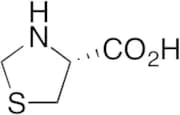
CAS:<p>Applications L-Thioproline is used to create a monolayer on gold electrodes for the determination Copper(II). L-Thioproline has shown to be an effect inhibitor of proline absorption in Saccharomyces chevalieri.<br> Not a dangerous good if item is equal to or less than 1g/ml and there is less than 100g/ml in the package<br>References Cui, X., et. al.: Sci. China Chem., 53, 257 (2010); Magana-Schwenchke, N., Schwencke, J.: BBA-Biomembranes, 173, 313 (1969)<br></p>Formula:C4H7NO2SColor and Shape:NeatMolecular weight:133.172-Amino-5-chloro-3-methylbenzoic Acid
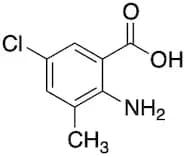
CAS:Controlled Product<p>Applications 2-Amino-5-chloro-3-methylbenzoic Acid is a useful research chemical for the preparation of benzoyl urea containing anthranillic acid groups with insecticidal activity.<br>References Peng, Y., et al.: Nongyao, 48, 326 (2009);<br></p>Formula:C8H8NO2ClColor and Shape:NeatMolecular weight:185.64-(1-Methylethyl)benzoic Acid
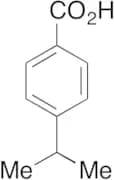
CAS:<p>Applications 4-(1-Methylethyl)benzoic Acid is used in the synthesis of quinuclidine benzamides as agonists for nicotinic acetylcholine receptors. Also used in the synthesis of nifuroxazide analogues showing antimicrobial activity against methicillin-resistant Staphylococcus.<br>References Bodnar, A. et al.: J. Med. Chem., 48, 905 (2005); Masunari, A. et al.: Bioorg. Med. Chem. Lett., 15, 4229 (2007);<br></p>Formula:C10H12O2Color and Shape:NeatMolecular weight:164.2D-Glutamic Acid 1-tert-Butyl Ester
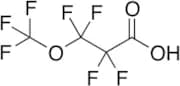
CAS:Controlled Product<p>Applications D-Glutamic acid 1-tert-butyl ester is a protected form of D-Glutamic acid (G596965). D-Glutamic acid is an unnatural isomer of L-Glutamic acid (G596960), and is found in bacterial cell wall peptidoglycan of gram-positive and gram-negative bacteria. D-Glutamic acid also occurs as poly-gamma-Glutamic acid, which is a weak immunogen but is capable of acting as a hapten (a small molecule that induces the production of antibodies, as well as binding to them).<br>References Dougherty, T., et al.: J. Bacteriol., 175, 111 (1993); Goodman, J. & Nitecki, D.: Immunology, 13, 577 (1967); Robinson, T.: Life Sci., 19, 1097 (1976)<br></p>Formula:C9H17NO4Color and Shape:NeatMolecular weight:203.24Perfluoro-3-methoxypropanoic Acid
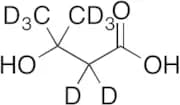
CAS:<p>Applications Perfluoro-3-methoxypropanoic acid (cas# 377-73-1) is a useful research chemical.<br> Not a dangerous good if item is equal to or less than 1g/ml and there is less than 100g/ml in the package<br></p>Formula:C4HF7O3Color and Shape:NeatMolecular weight:230.04β-Hydroxyisovaleric Acid-d8
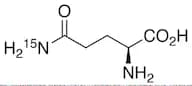
CAS:Controlled ProductFormula:C5H2D8O3Color and Shape:Colourless To YellowMolecular weight:126.18L-Glutamine-amide-¹⁵N
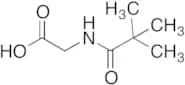
CAS:Controlled Product<p>Applications Labelled L-Glutamine (G597000). L-Glutamine is an essential amino acid that is a crucial component of culture media that serves as a major energy source for cells in culture. L-Glutamine is very stable as a dry powder and as a frozen solution. In liquid media or stock solutions, however, L-glutamine degrades relatively rapidly. Optimal cell performance usually requires supplementation of the media with L-glutamine prior to use.<br>References Rivett, A., et al.: J. Biol. Chem., 260, 300 (1985), Watford, M., et al.: Metabolism, 49, 141 (2000), Wilmore, D., et al.: J. Nutr., 131, 2543S (2001),<br></p>Formula:C5H1015NNO3Color and Shape:NeatMolecular weight:147.14N-Pivaloylglycine
CAS:Controlled Product<p>Applications N-Pivaloylglycine is used in the biological study between dogs and rats. In a high dose toxicity study of pivalic acid (PA), PA caused skeletal muscle disorder in dog, and a significant increase of pivaloyl carnitine (PC) was observed in canine muscle, but not in rat muscle.<br>References Yamaguchi, T., et al.: Toxicol. Appl. Pharmacol., 214, 61-68 (2006)<br></p>Formula:C7H13NO3Color and Shape:NeatMolecular weight:159.183-Hydroxy-DL-kynurenine
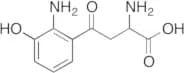
CAS:<p>Stability Hygroscopic<br>Applications 3-Hydroxy-DL-kynurenine is a tryptophan metabolite. Could be associated with symptoms in Parkinson's disease.<br>References Heilman, P. L., et al.: Movement Disorders, 35, 2028 (2020)<br></p>Formula:C10H12N2O4Color and Shape:NeatMolecular weight:224.21rac-3-Aminoisobutyric Acid-d3 Hydrochloride
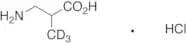
CAS:Controlled Product<p>Stability Hygroscopic<br>Applications Labelled 3-Aminoisobutyric Acid (A611585). Substituted β-alanines. Used for preparation and isolation of D(-)-β-aminoisobutyric acid.<br>References Kakimoto, Y., et al.: J. Biol. Chem., 236, 3288 (1961),<br></p>Formula:C4H7D3ClNO2Color and Shape:NeatMolecular weight:142.6Oleoyl-L-carnitine
CAS:Controlled Product<p>Stability Hygroscopic<br>Applications Oleoyl-L-carnitine is a long-chain fatty ester of carnitine which is accumulated and released into the circulation, in fatty-acid oxidation defects. Pattern of Oleoyl-L-carnitine can be diagnostic for a number of ß-oxidation defects.<br>References Adams, S., et al.: J. Nutrition, 139, 1073 (2009); Ventura, F., et al.: Clinica Chimica Acta, 281, 1 (1999); Pourfarzam, M., et al.: Clinical Chem,, 40, 2267 (1994); Schaefer, J., et al.: Pediatric Res., 37, 354 (1995)<br></p>Formula:C25H47NO4Color and Shape:NeatMolecular weight:425.64D-Cysteine Hydrochloride Monohydrate
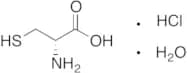
CAS:Controlled Product<p>Applications D-Cysteine Hydrochloride Monohydrate is used as a reactant in the expedient synthesis of electronically modified luciferins for bioluminescence imaging.<br>References McCutcheon, D., et al.: J. Am. Chem. Soc., 134, 7604 (2012);<br></p>Formula:C3H7NO2S·HCl·H2OColor and Shape:NeatMolecular weight:121.16+(36.46)+(18.02)L-Cysteic Acid Monohydrate
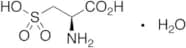
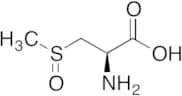
CAS:Controlled Product<p>Applications A major metabolite of non-essential amino acid L-Cysteine.<br>References Parsons, R.B. et al.: Neurotoxicol., 19, 599 (1998);<br></p>Formula:C3H7NO5S·H2OColor and Shape:White To Off-WhiteMolecular weight:187.17S-Methyl-L-cysteine sulfoxide
CAS:Controlled ProductFormula:C4H9NO3SColor and Shape:Off-WhiteMolecular weight:151.18N-Acetyl-L-cysteine-d3
CAS:Controlled Product<p>Stability Hygroscopic<br>Applications A labelled metabolite of Methyl isocyanate.<br>References Slatter, J. G., et al.: Chem. Res. Toxicol., 4, 157 (1991),<br></p>Formula:C52H3H6NO3SColor and Shape:Off-WhiteMolecular weight:166.214-Amino-3-Hydroxybutanoic Acid
CAS:Controlled ProductFormula:C4H9NO3Color and Shape:NeatMolecular weight:119.124,6,7,8-Tetrahydro-8-hydroxy-6-methylpyrimido[1,2-a]purin-10(3H)-one (Mixture of Diastereomers)
CAS:Controlled Product<p>Applications Cyclic propano guanine adduct DNA acetaldehyde histone.<br>References Nath, R., et al.: Cancer Res., 58, 581 (1998), Wang, M., et al.: Chem. Res., 13, 1065 (2000), Terashima, I., et al.: Biochemistry, 40, 4106 (2001), Yokoyama, A., et al.: Carcinogenesis, 23, 1851 (2002),<br></p>Formula:C9H11N5O2Color and Shape:Off-WhiteMolecular weight:221.22












![Ethyl [2-Methyl-3-(chlorosulfonyl)phenoxy]acetate](/_next/image/?url=https%3A%2Fstatic.cymitquimica.com%2Fproducts%2FTR%2Fthumb-webp%2FE925070.webp&w=3840&q=75)




















![4,6,7,8-Tetrahydro-8-hydroxy-6-methylpyrimido[1,2-a]purin-10(3H)-one (Mixture of Diastereomers)](/_next/image/?url=https%3A%2Fstatic.cymitquimica.com%2Fproducts%2FTR%2Fthumb-webp%2FT293685.webp&w=3840&q=75)