Amino Acids (AA)
Subcategories of "Amino Acids (AA)"
- Amino Acid Derivatives(4,015 products)
- Amino Acid and Amino Acid Related Compounds(3,490 products)
- Amino Acids with Oxygen or Sulphur(168 products)
- Boc- Amino Acids(351 products)
- Fmoc Amino Acids(1,710 products)
Found 38368 products of "Amino Acids (AA)"
(His(1-Me)2)-LHRH trifluoroacetate salt
CAS:Please enquire for more information about (His(1-Me)2)-LHRH trifluoroacetate salt including the price, delivery time and more detailed product information at the technical inquiry form on this pageFormula:C56H77N17O13Purity:Min. 95%Molecular weight:1,196.32 g/mol3-Methoxybenzyl chloride
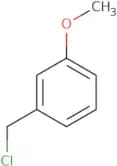
CAS:3-Methoxybenzyl chloride is a polymer conjugate that has the chemical formula C6H5CH2ClO. It reacts with hydroxy groups to form ester bonds. The compound was synthesized by reacting 3-methoxybenzyl chloride with hydrochloric acid in vitro, and the resulting product was found to have antimicrobial properties. In vivo studies have shown that this compound binds to receptors in rat striatal tissue. 3-Methoxybenzyl chloride also showed fluorescence properties when exposed to ultraviolet light and can be used for molecular modeling. Titration calorimetry has been used to study the thermal stability of this polymer conjugate.Formula:C8H9ClOPurity:Min. 95%Molecular weight:156.61 g/molVasonatrin Peptide (VNP) trifluoroacetate salt
CAS:Please enquire for more information about Vasonatrin Peptide (VNP) trifluoroacetate salt including the price, delivery time and more detailed product information at the technical inquiry form on this pageFormula:C123H198N36O36S3Purity:Min. 95%Molecular weight:2,853.31 g/molPhenylac-Leu-Asp-Phe-D-Pro-NH2
CAS:Phenylac-Leu-Asp-Phe-D-Pro-NH2 is a molecule that inhibits the inflammatory response by binding to the active site of proteinase 3. It has been shown to be effective in treating bowel disease, such as Crohn's disease, and also shows potential for use in other inflammatory diseases, including autoimmune diseases and blood disorders. Phenylac-Leu-Asp-Phe-D-Pro-NH2 is an inhibitor of proprotein convertase 3 (PC3) and has been shown to inhibit the activity of PC3 in vitro. This inhibition leads to reduced production of inflammatory cytokines and decreased inflammation in animal models. Clinical studies have demonstrated that phenylacetic acid ester derivatives are safe for use in humans.Formula:C32H41N5O7Purity:Min. 95%Molecular weight:607.7 g/molMozavaptan
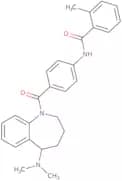
CAS:Controlled ProductMozavaptan is a pharmacological agent that acts as a vasopressin V2 receptor antagonist. It is derived through synthetic chemical processes designed to target specific neurohormonal pathways in the body. Mozavaptan exerts its effects by inhibiting the action of vasopressin, a hormone that promotes water reabsorption in the kidneys. By blocking the vasopressin receptors, it enhances water excretion and corrects imbalances in electrolyte levels, particularly addressing conditions like hyponatremia.Formula:C27H29N3O2Purity:Min. 98 Area-%Color and Shape:PowderMolecular weight:427.54 g/molH-Glu-Ala-OH
CAS:H-Glu-Ala-OH is a human protein that belongs to the family of glycosylated proteins. It is expressed in the cells of the ovary and is a member of the insulin-like growth factor (IGF) superfamily. H-Glu-Ala-OH binds to lectins in mammalian cells, which may be due to its sulfoxide group. This protein has been shown to have dehydrogenase activity and polymerase chain reaction (PCR) amplification properties. H-Glu-Ala-OH has also been shown to inhibit growth in cell culture and promote apoptosis, which may be due to its ability to regulate IGF levels in mammalian cells.br>br> br>br> This protein is found at high levels in ovarian cancer cells and serum from patients with ovarian cancer. The sequence of this protein has been determined using mass spectrometry analysis on ovary extracts and on cDNA derived from human embryonic kidney (Formula:C8H14N2O5Purity:Min. 95 Area-%Color and Shape:PowderMolecular weight:218.21 g/mol2-Iodo-5-methoxybenzoic acid
CAS:2-Iodo-5-methoxybenzoic acid is a macrocyclic compound that has been synthesized in the Wittig reaction. It was first prepared by catalyzed intramolecular aryl demethylation of 2-iodo-5-nitrobenzoic acid, followed by coupling with methyl vinyl ketone. The cytotoxic activity of this compound is due to its ability to inhibit the synthesis of protein and DNA and induce apoptosis. This molecule has been shown to be effective against liverworts and ethers.
Formula:C8H7IO3Purity:Min. 95%Color and Shape:PowderMolecular weight:278.04 g/mol(R)-methyl pyrrolidine-3-carboxylate hydrochloride
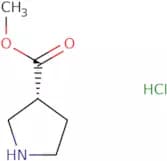
CAS:Please enquire for more information about (R)-methyl pyrrolidine-3-carboxylate hydrochloride including the price, delivery time and more detailed product information at the technical inquiry form on this page
Purity:Min. 95%Cys-Gly-Lys-Lys-Gly-Amyloid b-Protein (36-42) trifluoroacetate salt
CAS:Please enquire for more information about Cys-Gly-Lys-Lys-Gly-Amyloid b-Protein (36-42) trifluoroacetate salt including the price, delivery time and more detailed product information at the technical inquiry form on this pageFormula:C47H86N14O13SPurity:Min. 95%Molecular weight:1,087.34 g/molBoc-Met-Met-OH
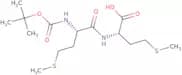
CAS:Please enquire for more information about Boc-Met-Met-OH including the price, delivery time and more detailed product information at the technical inquiry form on this pageFormula:C15H28N2O5S2Purity:Min. 95%Molecular weight:380.53 g/molAc-Cys(farnesyl)-OH
CAS:Ac-Cys(farnesyl)-OH is a synthetic chemical that has been shown to inhibit the growth of cells. It inhibits the enzyme form of farnesyl protein transferase, which is involved in the synthesis of basic proteins. Ac-Cys(farnesyl)-OH also binds to and inhibits epidermal growth factor receptor, which plays an important role in cell proliferation. In addition, this compound has been found to have anti-cancer properties. Ac-Cys(farnesyl)-OH has been shown to reduce the frequency of cellular transformation in vitro and in vivo. This effect may be due to its ability to inhibit protease activity.
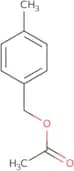
Formula:C20H33NO3SPurity:Min. 95%Molecular weight:367.55 g/mol4-Methylbenzyl acetate
CAS:4-Methylbenzyl acetate is a monocarboxylic acid that is an oxidation product of benzyl esters. It has been found to be a suitable catalyst for the oxidation of wastewater containing monocarboxylic acids, including acetic acid, propionic acid and butyric acid. The catalytic mechanism of 4-methylbenzyl acetate was found to be an acylation reaction in which the carboxyl group of 4-methylbenzyl acetate acts as an acylating agent with the hydrogen atom of the substrate. The reaction mechanism for this process is similar to that for other types of carboxylic acids, such as propionate and butyrate. 4-Methylbenzyl acetate also has functional groups that allow it to act as both a base and a nucleophile in addition to its ability to act as an acylating agent.Formula:C10H12O2Purity:Min. 95%Molecular weight:164.2 g/mol(Glu9)-Exenatide (2-39) trifluoroacetate salt
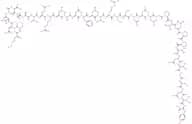
CAS:Please enquire for more information about (Glu9)-Exenatide (2-39) trifluoroacetate salt including the price, delivery time and more detailed product information at the technical inquiry form on this page
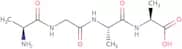
Formula:C179H277N47O59SPurity:Min. 95%Molecular weight:4,063.46 g/molH-Ala-Gly-Ala-Ala-OH
CAS:Please enquire for more information about H-Ala-Gly-Ala-Ala-OH including the price, delivery time and more detailed product information at the technical inquiry form on this page
Formula:C11H20N4O5Purity:Min. 95%Molecular weight:288.3 g/molAc-Gln-NH2
CAS:Ac-Gln-NH2 is a multifunctional protein that has been covalently immobilized on the surface of a glass fiber. It can be used to immobilize enzymes and other proteins, as well as being able to function as an enzyme itself. Ac-Gln-NH2 has been shown to conjugate with various molecules, including antibodies, DNA, and proteins. The immobilizing process involves cross-linking the protein to the glass surface through a chemical method that uses reagents such as glutaraldehyde or epoxy resin. Immobilization of Ac-Gln-NH2 onto a glass surface allows for easier use in applications such as diagnostics and industrial processes.
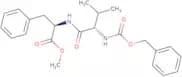
Formula:C7H13N3O3Purity:Min. 95%Molecular weight:187.2 g/molZ-Val-D-Phe-OMe
CAS:Please enquire for more information about Z-Val-D-Phe-OMe including the price, delivery time and more detailed product information at the technical inquiry form on this pageFormula:C23H28N2O5Purity:Min. 95%Molecular weight:412.48 g/molPKI-tide
CAS:PKI-tide is a potent, selective inhibitor of the calcium/calmodulin-dependent protein kinase. It inhibits the activity of this enzyme and prevents the activation of other protein kinases by this enzyme. PKI-tide binds to the ATP site of the calcium/calmodulin-dependent protein kinase and blocks the binding of ATP and calmodulin. This inhibition prevents the phosphorylation of target proteins, including myosin light chain in muscle cells.
Formula:C85H149N31O24Purity:Min. 95%Molecular weight:1,989.29 g/molAmylin (mouse, rat) trifluoroacetate
CAS:Amylin (mouse, rat) trifluoroacetate is a synthetic peptide, which is a derivative of the islet amyloid polypeptide (IAPP) found in rodent species. It is sourced from the pancreatic beta cells of mice and rats, where it is co-secreted with insulin. The mode of action involves regulation of glucose metabolism through its effects on gastric emptying, glucagon secretion, and satiety. These actions are crucial in managing postprandial blood glucose levels and provide insights into the pathophysiology of diabetes.Amylin (mouse, rat) trifluoroacetate is primarily used in research applications to study the mechanisms of amylin aggregation and its implications in type 2 diabetes. It also serves as a model for understanding the differences in amyloid fibril formation between human and rodent amylin, making it invaluable for the development of therapeutic strategies aimed at mitigating amyloid-related cellular toxicity. Researchers utilize this peptide to explore the potential compensatory roles of amylin analogs in diabetic models, advancing our understanding of diabetes progression and treatment options.Formula:C167H272N52O53S2•(C2HF3O2)xPurity:Min. 95%Molecular weight:3,920.4 g/molZ-Trp-Gly-OH
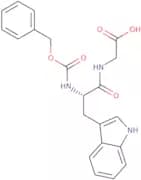
CAS:Please enquire for more information about Z-Trp-Gly-OH including the price, delivery time and more detailed product information at the technical inquiry form on this page
Formula:C21H21N3O5Purity:Min. 95%Molecular weight:395.41 g/molFmoc-D-Pro-D-Pro-D-Pro-D-Pro-OH
CAS:Please enquire for more information about Fmoc-D-Pro-D-Pro-D-Pro-D-Pro-OH including the price, delivery time and more detailed product information at the technical inquiry form on this pageFormula:C35H40N4O7Purity:Min. 95 Area-%Color and Shape:PowderMolecular weight:628.71 g/mol