Amino Acids (AA)
Amino acids (AAs) are the fundamental building blocks of proteins, playing a crucial role in various biological processes. These organic compounds are essential for protein synthesis, metabolic pathways, and cell signaling. In this category, you will find a comprehensive range of amino acids, including essential, non-essential, and modified forms, which are vital for research in biochemistry, molecular biology, and nutritional sciences. At CymitQuimica, we provide high-quality amino acids to support your research and development needs, ensuring accuracy and reliability in your experimental outcomes.
Subcategories of "Amino Acids (AA)"
- Amino Acid Derivatives(3,955 products)
- Amino Acid and Amino Acid Related Compounds(3,469 products)
- Amino Acids with Oxygen or Sulphur(168 products)
- Boc- Amino Acids(351 products)
- Fmoc Amino Acids(1,710 products)
Found 38260 products of "Amino Acids (AA)"
Sort by
Purity (%)
0
100
|
0
|
50
|
90
|
95
|
100
2-Chloro-1-methylquinolinium Tetrafluoroborate
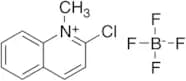
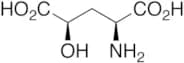
CAS:Controlled Product<p>Applications 2-Chloro-1-methylquinolinium tetrafluoroborate (cas# 16843-24-6) is a useful research chemical.<br></p>Formula:C10H9ClN·BF4Color and Shape:NeatMolecular weight:265.44(2S,4R)-4-Hydroxy-L-glutamic Acid
CAS:Controlled Product<p>Applications (2S,4R)-4-Hydroxy-L-glutamic Acid is a metabolite of Glutamic acid (G596960).<br>References Hampson, D., et al.: J. Biol. Chem., 274, 33488 (1999), Jensen, A., et al.: Eur. J. Pharmacol., 397, 247 (2000),<br></p>Formula:C5H9NO5Color and Shape:NeatMolecular weight:163.136-(METHYLAMINO)IMIDAZO[1,2-B]PYRIDAZINE-3-CARBOXYLIC ACID
CAS:Purity:95.0%Molecular weight:192.177993774414064-(2,4-dichlorobenzoyl)-8-methyl-1-oxa-4,8-diazaspiro[4.5]decane-3-carboxylic acid
CAS:Purity:95.0%Molecular weight:373.2300109863281Sucrose-13C6-glu-13C6-fru
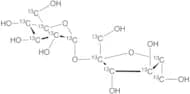
CAS:Controlled Product<p>Applications Labeled Sucrose (S697000). Yuanzhen sugar is a polysaccharide polymer, containing a certain amount of fructooligosaccharides.<br>References Watanabe, T., et al.: Biosci. Biotech. Biochem., 72, 3167 (2008), You, Y., et al.: J. Agric. Food Chem., 57, 709 (2009),<br></p>Formula:C12H22O11Color and Shape:NeatMolecular weight:354.21,2-Cyclohexanedicarboxylic Acid Mono 4-Methyl-7-carboxy-heptyl Ester
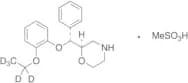
CAS:<p>Stability Hygroscopic<br>Applications 1,2-Cyclohexanedicarboxylic Acid Mono 4-Methyl-7-carboxy-heptyl Ester is a possible metabolite of the di(isononyl)cyclohexane-1,2-dicarboxylate (DINCH) monoester (MINCH).<br>References Koch, H., et al.: Arch. Toxicol., 87, 799 (2013)<br></p>Formula:C17H28O6Color and Shape:Colourless To Light YellowMolecular weight:328.4Reboxetine-d5 Mesylate
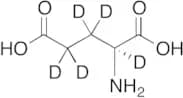
CAS:Controlled ProductFormula:C20H22D5NO6SColor and Shape:Off White SolidMolecular weight:414.53L-Glutamic Acid-d5
CAS:Controlled Product<p>Applications L-Glutamic Acid-d5 is an non-essential amino acid. Its salt form (glutamate) is an important neurotransmitter that plays a key role in long-term potentiation and is important for learning and memory. It is also a key molecule in cellular metabolism.<br>References McEntee, W., et al.: Psychopharmacology, 111, 391 (1993), Manev, H., et al.: Mol. Pharmacol., 36, 106 (1989)<br></p>Formula:C52H5H4NO4Color and Shape:NeatMolecular weight:152.164-Methoxyphenylacetic Acid
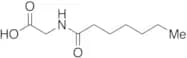
CAS:Controlled Product<p>Applications 4-Methoxyphenylacetic Acid is a compound that was found from microbial phenolic metabolites in human feces after the consumption of gin, red wine and dealcholized red wine.<br>References Jimenez-Giron, A., et. al.: J. Arg. Food Chem., 61, 3909 (2013);<br></p>Formula:C9H10O3Color and Shape:NeatMolecular weight:166.17N-Heptanoylglycine
CAS:<p>Applications An acylglycine present in urniary excretion that can be analyzed and be used as diagnostic tool for metabolic disorders, complementary to organic acids and acylcarnitine profiles.<br>References Bonafe, L. et al.: Mol. Genetics Metab., 69, 302 (2000);<br></p>Formula:C9H17NO3Color and Shape:WhiteMolecular weight:187.24N'-Methyl-N,N-diphenylurea
CAS:<p>Impurity Temozolomide USP Related Compound B<br>Applications N'-Methyl-N,N-diphenylurea is used in the stabilization of thermal propellants. Temozolomide USP Related Compound B.<br>References Bohn, M. et al.: Prop. Exp. Pyro.,et al.: 19, 266 (1994); Muthurajan, H. et al.: J. Hazard. Mat., 133, 30 (2006);<br></p>Formula:C14H14N2OColor and Shape:NeatMolecular weight:226.27L-Phenylalanine-13C6
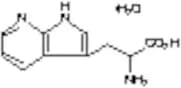
CAS:Controlled Product<p>Applications Labelled analogue of L-Phenylalanine, an essential amino acid. L-Phenylalanine is biologically converted into L-tyrosine, another one of the DNA-encoded amino acids, which in turn is converted to L-DOPA and further converted into dopamine, norepinephrine, and epinephrine. L-Phenylalanine is produced for medical, feed, and nutritional applications such as in the preparation of Aspartame.<br>References Hollunger, G. et al.: Acta Pharmacol. Toxicol., 34, 391 (1974); Bagchi, S.P. et al.: Biochem. Pharmacol., 26, 900 (1977);<br></p>Formula:C313C6H11NO2Color and Shape:White To Off-WhiteMolecular weight:171.15D,L-Azatryptophan Hydrate
CAS:Controlled ProductFormula:C10H13N3O3Color and Shape:NeatMolecular weight:223.235,6-Dihydro-4H-benzo[b]thieno[2,3-d]azepine-2-carboxylic acid
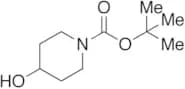
CAS:Purity:95.0%Molecular weight:245.3000030517578N-Boc-4-Hydroxypiperidine
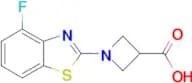
CAS:Controlled Product<p>Applications N-Boc-4-hydroxypiperidine is a 4-hydroxypyridine with a boc protecting group used in the preparation of neurologically active agents and other pharmaceutical compounds.<br>References Kwon, Y.E. et al.: Bioorg. Med. Chem., 15, 6596 (2007); Knutsen, L.J.S. et al.: J. Med. Chem., 42, 3463 (1999);<br></p>Formula:C10H19NO3Color and Shape:NeatMolecular weight:201.261-(4-fluoro-1,3-benzothiazol-2-yl)azetidine-3-carboxylic acid
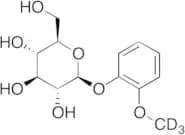
CAS:Purity:95.0%Molecular weight:252.25999450683594Guaiacol-β-D-glucopyranoside-d3
CAS:Controlled Product<p>Stability Hygroscopic<br>Applications Guaiacol-beta-D-glucopyranoside-d3, is a labeled analogue of Guaiacol-beta-D-glucopyranoside (G245565), a Guaiacol Conjugate, that has shown to present in fermentation of grapes that had been exposed to bushfire smoke and can potentially yield unpalatable, smoke-affected wine.<br>References Hayasaka, Y.m et al.: J. Arg. Food Chem., Vol. 58, Issue 4, P: 2076; 2081 (2010);<br></p>Formula:C13H15D3O7Color and Shape:NeatMolecular weight:289.3a-Chloro-p-methyltoluene
CAS:Controlled Product<p>Applications α-Chloro-p-methyltoluene is a building block that has been used as a reactant for the preparation of 6-aminoquinolone derivatives as submicromolar hepatitis C virus NS5B inhibitors<br> Not a dangerous good if item is equal to or less than 1g/ml and there is less than 100g/ml in the package<br>References Manfroni, G., et. al.: J. Med. Chem., Ahead of Print (2013)<br></p>Formula:C8H9ClColor and Shape:NeatMolecular weight:140.614-(3,5-dichlorobenzoyl)-8-ethyl-1-oxa-4,8-diazaspiro[4.5]decane-3-carboxylic acid
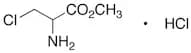
CAS:Purity:95.0%Molecular weight:387.260009765625D,L-b-Chloroalanine Methyl Ester Hydrochloride
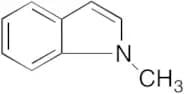
CAS:Controlled Product<p>Applications D,L-β-Chloroalanine Methyl Ester Hydrochloride (cas# 33646-31-0) is a compound useful in organic synthesis.<br></p>Formula:C4H8ClNO2·ClHColor and Shape:NeatMolecular weight:174.031-Methylindole
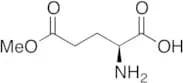
CAS:Controlled Product<p>Applications The selenocyanation and thiocyanation of electron rich arene, 1-Methylindole, achieved using N-iodosuccinimide (NIS) as a catalyst and aqueous tert-Bu hydroperoxide (TBHP) as an oxidant at room temperature.<br>References Muniraj, N., et al.: ChemistrySelect, 1, 1033-1038 (2016)<br></p>Formula:C9H9NColor and Shape:NeatMolecular weight:131.18L-Glutamic Acid 5-Methyl Ester
CAS:Controlled Product<p>Applications L-Glutamic acid 5-methyl ester is a protected form of L-Glutamic acid (G596960). L-Glutamic acid is a nonessential amino acid that is important to the mammalian central nervous system. L-Glutamic acid is also a neurotransmitter for cone photoreceptors in the human brain and is used as a treatment for patients who have liver disease accompanied by encephalopathy (a condition termed ‘hepatic coma’).<br>References Anderson, H., et al.: J. Nutr., 99, 82 (1969); Brandon, C. & Lam, D.: Proc. Nat. Acad. Sci., 80, 5117 (1983); McDermott Jr, W., et al.: New Engl. J. Med., 253, 1093 (1955)<br></p>Formula:C6H11NO4Color and Shape:NeatMolecular weight:161.1564-(3,4-dichlorophenyl)-3H,4H,5H,6H,7H-imidazo[4,5-c]pyridine-6-carboxylic acid
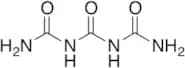
CAS:Purity:95.0%Molecular weight:312.1499938964844Triuret
CAS:<p>Applications Triuret is a byproduct of purine degradation in living organisms. It is a product from the pyrolsis of urea.<br>References Sergiu P. P., et al:. HHS Public Access, (2010);<br></p>Formula:C3H6N4O3Color and Shape:NeatMolecular weight:146.10H-Val-Gly-OH
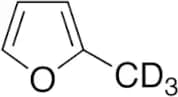
CAS:Controlled Product<p>Applications H-Val-Gly-OH (cas# 686-43-1) is a useful research chemical.<br></p>Formula:C7H14N2O3Color and Shape:NeatMolecular weight:174.22-Methylfuran-d3
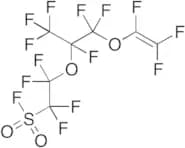
CAS:Controlled Product<p>Stability Light Sensitive, Volatile<br>Applications Labelled 2-Methylfuran (M305440). 2-Methylfuran is a volatile organic compound (VOCs) used as a potential non-intrusive tool for screening of lung cancer.<br> Not a dangerous good if item is equal to or less than 1g/ml and there is less than 100g/ml in the package<br>References McWilliams, et al.: Curr. Oncol. Rep., 4, 487 (2002), Buszewski, B., et al.: Biomed. Chromatogr., 21, 553 (2007), Ligor, T., et al.: J. Breath. Res., 1, 1 (2007),<br></p>Formula:C52H3H3OPurity:>90%Color and Shape:Light YellowMolecular weight:85.12Perfluoro(4-methyl-3,6-dioxaoct-7-ene)sulfonyl Fluoride
CAS:Controlled Product<p>Applications Perfluoro(4-methyl-3,6-dioxaoct-7-ene)sulfonyl Fluoride is used as a reagent in the synthesis of novel perfluorinated vinyl ether containing sulfonimide functionality which can be copolymered with tetrafluoroethylene to yield a novel perfluorinated copolymer.<br>References Zhu, S., et al.: Chinese J. Chem., 21, 921 (2003);<br></p>Formula:C7F14O4SColor and Shape:NeatMolecular weight:446.122-Methyl-5-morpholin-4-ylmethyl-furan-3-carboxylic acid
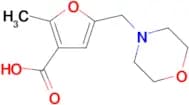
CAS:Formula:C11H15NO4Purity:98%Color and Shape:SolidMolecular weight:225.244Fructose-histidine
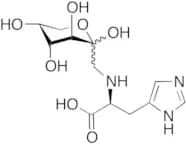
CAS:Controlled Product<p>Applications Fructose-histidine is an amadori compound formed in food.<br>References Wang, J., et al.: J. Mass Spec., 43, 262 (2008); Hashiba, H.: J. Agri. Food Chem., 24, 70 (1976)<br></p>Formula:C12H19N3O7Color and Shape:NeatMolecular weight:317.34-Chloro-2-methylaniline
CAS:Controlled Product<p>Stability Air Sensitive<br>Applications 4-Chloro-2-methylaniline<br> Not a dangerous good if item is equal to or less than 1g/ml and there is less than 100g/ml in the package<br></p>Formula:C7H8ClNColor and Shape:Light BrownMolecular weight:141.605-Methyl-4,5,6,7-tetrahydrothiazolo[5,4-c]pyridine-2-carboxylic Acid Hydrochloride
CAS:Controlled Product<p>Stability Hygroscopic<br>Applications 5-Methyl-4,5,6,7-tetrahydrothiazolo[5,4-c]pyridine-2-carboxylic Acid Hydrochloride is used as a reagent in the synthesis of N-(2-acylaminobenzyl or 2-acylaminoheterocyclylmethyl)thiophene-2-carboxamide derivatives as antithrombotics. It is also used as a reagent in the synthesis of diamide derivatives as FXa inhibitors. 5-Methyl-4,5,6,7-tetrahydrothiazolo[5,4-c]pyridine-2-carboxylic Acid Hydrochloride is an intermediate for Edoxaban (E555520).<br>References Mochizuki, A., et al.: Jpn. Kokai Tokkyo Koho. JP 2010120852 A 20100603. Jun 3, 2010; Mochizuki, A., et al.: PCT Int. Appl. WO 2008123017 A1 20081016. Oct 16, 2008<br></p>Formula:C8H11ClN2O2SColor and Shape:Light BrownMolecular weight:234.74-(2-phenylbutanoyl)-8-propyl-1-oxa-4,8-diazaspiro[4.5]decane-3-carboxylic acid
CAS:Purity:95.0%Molecular weight:374.4809875488281Boc-(S)-3-Amino-4-(2,4,5-trifluorophenyl)butyric Acid
CAS:Controlled Product<p>Applications Boc-(S)-3-Amino-4-(2,4,5-trifluorophenyl)butyric Acid is a reactant used in the preparation of peptidase IV inhibitors.<br>References Park, W. et al.: Bioorg. Med. Chem. Lett., 21, 1366 (2011);<br></p>Formula:C15H18F3NO4Color and Shape:NeatMolecular weight:333.35-Methylfurfural
CAS:Controlled Product<p>Applications 5-Methylfurfural is a common chemical reagent used in a wide variety of chemical reactions and organic synthesis. Polycyclic pyridazine based derivatives are synthesized with this compound to form antimicrobial agents. Also used in the preparation of antiinflammatory diarylpentanoid analogues.<br>References Deeb, A. et al.: Eur. Chem. Bull., 3, 897 (2014); Leong, S. et al.: Molecules, 19, 16058 (2014);<br></p>Formula:C6H6O2Color and Shape:Yellow-OrangeMolecular weight:110.114-Methylimidazole
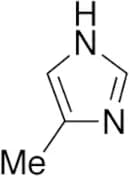
CAS:<p>Applications 4-Methylimidazole is a monomethylated imidazole that can be used as a building block in the preparation of a wide range of biologically active compounds. 4-Methylimidazole is a product which results from the interaction of reducing sugars with ammonia. 4-Methylimidazole showed convulsant activity in animals and is listed as a possible carcinogen.<br> Not a dangerous good if item is equal to or less than 1g/ml and there is less than 100g/ml in the package<br>References Nishie, K. et al.: Toxicol. Appl. Pharmacol., 14, 301 (1969): Cunha, S.C. et al.: J. Food Comp. Anal., 24, 609 (2011); Chan, P.C. et al.: Arch. Toxicol., 82, 55 (2008);<br></p>Formula:C4H6N2Color and Shape:Light YellowMolecular weight:82.103-Methyl-d3-indole
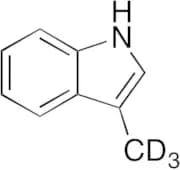
CAS:Controlled Product<p>Applications 3-Methyl-d3-indole has been used to prove that bioactivation of the pulmonary toxin 3-methylindole requires methyl carbon-hydrogen bond breakage in mice. 3-Methyl-d3-indole is the labeled analogue of 3-Methylindole (M313470), A naturally abundant pneumotoxin, found primarily in mammalian feces providing its strong fecal odor.<br> Not a dangerous good if item is equal to or less than 1g/ml and there is less than 100g/ml in the package<br>References Huijzer, J., et. al.: Toxicol. Appl. Pharm., 90, 60 (1987); Nakashima, T., et al.: Biol. Pharm. Bull., 32, 832 (2009); Xu, H., et al.: Chem. Pharm. Bull., 57, 321 (2009); Bodoor, K., et al.: J. Med. Chem., 52, 3753 (2009); Naskar, S., et al.: J. Chem. Res., 3, 174 (2009); Sollner, K., et al.: J. Agric. Food Chem., 57, 4319 (2009)<br></p>Formula:C92H3H6NColor and Shape:NeatMolecular weight:134.193-(1,2,4-Triazol-1-yl)-L-alanine
CAS:Controlled Product<p>Applications A metabolite common to all triazole fungicides: free triazole, 1,2,4-triazole (T), and its 2 conjugates: triazolylalanine (TA) and triazolylacetic acid (TAA).<br>References Hrudey, S., et al.: Water Sci. Technol., 20, 55 (1988), Froese, K., et al.: Water Res., 33, 1355 (1999), Hengel, M., et al.: J. Agric. Food Chem., 50, 3412 (2002),<br></p>Formula:C5H8N4O2Color and Shape:NeatMolecular weight:156.145-Methoxyresorcinol
CAS:<p>Applications 5-Methoxyresorcinol (cas# 2174-64-3) is a useful research chemical.<br></p>Formula:C7H8O3Color and Shape:NeatMolecular weight:140.1371-Methyl-4-(phenylmethyl)piperazine Hydrochloride
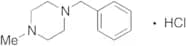
CAS:Controlled Product<p>Applications 1-Methyl-4-(phenylmethyl)piperazine hydrochloride is a useful synthetic intermediate.<br></p>Formula:C12H18N2·ClHColor and Shape:NeatMolecular weight:226.752-N-Boc-3-(4-Methoxy-phenyl)-2-methylaminomethyl-propionic acid
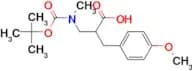
CAS:Formula:C17H25NO5Purity:97.0%Color and Shape:SolidMolecular weight:323.3895-(TERT-BUTOXYCARBONYLAMINO-METHYL)CYCLOHEX-1-ENECARBOXYLIC ACID
CAS:Purity:95.0%Molecular weight:255.31399536132812

![6-(METHYLAMINO)IMIDAZO[1,2-B]PYRIDAZINE-3-CARBOXYLIC ACID](/_next/image/?url=https%3A%2Fstatic.cymitquimica.com%2Fproducts%2F10%2Fthumb-webp%2FF530530.webp&w=3840&q=75)


![4-(2,4-dichlorobenzoyl)-8-methyl-1-oxa-4,8-diazaspiro[4.5]decane-3-carboxylic acid](/_next/image/?url=https%3A%2Fstatic.cymitquimica.com%2Fproducts%2F10%2Fthumb-webp%2FF525618.webp&w=3840&q=75)






![5,6-Dihydro-4H-benzo[b]thieno[2,3-d]azepine-2-carboxylic acid](/_next/image/?url=https%3A%2Fstatic.cymitquimica.com%2Fproducts%2F10%2Fthumb-webp%2FF215573.webp&w=3840&q=75)
![4-[(4-PHENYLQUINAZOLIN-2-YL)AMINO]BENZOIC ACID](/_next/image/?url=https%3A%2Fstatic.cymitquimica.com%2Fproducts%2F10%2Fthumb-webp%2FF531237.webp&w=3840&q=75)

![4-(3,5-dichlorobenzoyl)-8-ethyl-1-oxa-4,8-diazaspiro[4.5]decane-3-carboxylic acid](/_next/image/?url=https%3A%2Fstatic.cymitquimica.com%2Fproducts%2F10%2Fthumb-webp%2FF525701.webp&w=3840&q=75)
![4-(3,4-dichlorophenyl)-3H,4H,5H,6H,7H-imidazo[4,5-c]pyridine-6-carboxylic acid](/_next/image/?url=https%3A%2Fstatic.cymitquimica.com%2Fproducts%2F10%2Fthumb-webp%2FF522492.webp&w=3840&q=75)


![5-Methyl-4,5,6,7-tetrahydrothiazolo[5,4-c]pyridine-2-carboxylic Acid Hydrochloride](/_next/image/?url=https%3A%2Fstatic.cymitquimica.com%2Fproducts%2FTR%2Fthumb-webp%2FM330085.webp&w=3840&q=75)
![4-(2-phenylbutanoyl)-8-propyl-1-oxa-4,8-diazaspiro[4.5]decane-3-carboxylic acid](/_next/image/?url=https%3A%2Fstatic.cymitquimica.com%2Fproducts%2F10%2Fthumb-webp%2FF525728.webp&w=3840&q=75)