Amino Acids (AA)
Amino acids (AAs) are the fundamental building blocks of proteins, playing a crucial role in various biological processes. These organic compounds are essential for protein synthesis, metabolic pathways, and cell signaling. In this category, you will find a comprehensive range of amino acids, including essential, non-essential, and modified forms, which are vital for research in biochemistry, molecular biology, and nutritional sciences. At CymitQuimica, we provide high-quality amino acids to support your research and development needs, ensuring accuracy and reliability in your experimental outcomes.
Subcategories of "Amino Acids (AA)"
- Amino Acid Derivatives(3,969 products)
- Amino Acid and Amino Acid Related Compounds(3,474 products)
- Amino Acids with Oxygen or Sulphur(168 products)
- Boc- Amino Acids(351 products)
- Fmoc Amino Acids(1,710 products)
Found 38282 products of "Amino Acids (AA)"
Sort by
Purity (%)
0
100
|
0
|
50
|
90
|
95
|
100
2-sec-Butyl-3-methoxypyrazine
CAS:Controlled Product<p>Applications A compound contents in musts and wines from Vitis vinifera variety Cabernet Sauvignon.<br>References Murray, K., et al.: J. Sci. Food Agric., 26, 973 (1975), Maga, J., et al.: Food Rev. Int., 8, 479 (1992), Allen, M., et al.: J. Agric. Food Chem., 43, 769 (1995),<br></p>Formula:C9H14N2OColor and Shape:NeatMolecular weight:166.22Reboxetine-d5 Mesylate
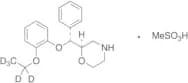
CAS:Controlled ProductFormula:C20H22D5NO6SColor and Shape:Off White SolidMolecular weight:414.53N-[(Benzyloxy)carbonyl]glycylglycine
CAS:<p>Applications N-[(Benzyloxy)carbonyl]glycylglycine is a reagent in the synthesis of Glycylglycyl-L-tyrosine (G718500), which is a fungal tyrosinases and their capability to oxidize peptide-bound tyrosine residues is important in a view of applicability of tyrosinases.<br>References Bowness, J., et al.: Biochem. J., 53, 620 (1953), Cuff, M., et al.: J. Mol. Biol., 278, 855 (1998), Kubo, I., et al.: Bioorg. Med. Chem., 12, 5349 (2004),<br></p>Formula:C12H14N2O5Color and Shape:NeatMolecular weight:266.253-Ethyl-2,5-dihydro-4-methyl-2-oxo-N-(2-phenylethyl)-1H-pyrrole-1-carboxamide
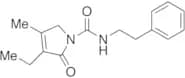
CAS:Controlled Product<p>Applications Intermediate for the preparation of Glimepiride.<br></p>Formula:C16H20N2O2Color and Shape:NeatMolecular weight:272.344-(3-bromophenyl)-3H,4H,5H,6H,7H-imidazo[4,5-c]pyridine-6-carboxylic acid
CAS:Purity:95.0%Molecular weight:322.1619873046875DL-norvaline
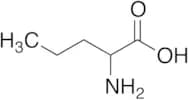
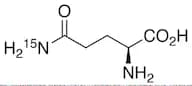
CAS:<p>Applications Norvaline, a hydrogen analogs of an amino acid, was found to be racemates from the Murchison meteorite show. Norvaline was used in chiral separation by electrokinetic chromatography.<br>References Cronin, J., et al.: Science, 275, 951 (1997); Pizzarello, S., et al.: Geochim. Cosmochim. Acta., 64, 329 (2000); Gerabe, S., et al.: J. Chromatogr., 480, 403 (1989);<br></p>Formula:C5H11NO2Color and Shape:NeatMolecular weight:117.15L-Glutamine-amide-¹⁵N
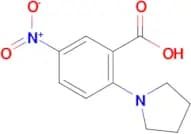
CAS:Controlled Product<p>Applications Labelled L-Glutamine (G597000). L-Glutamine is an essential amino acid that is a crucial component of culture media that serves as a major energy source for cells in culture. L-Glutamine is very stable as a dry powder and as a frozen solution. In liquid media or stock solutions, however, L-glutamine degrades relatively rapidly. Optimal cell performance usually requires supplementation of the media with L-glutamine prior to use.<br>References Rivett, A., et al.: J. Biol. Chem., 260, 300 (1985), Watford, M., et al.: Metabolism, 49, 141 (2000), Wilmore, D., et al.: J. Nutr., 131, 2543S (2001),<br></p>Formula:C5H1015NNO3Color and Shape:NeatMolecular weight:147.145-Nitro-2-(pyrrolidin-1-yl)benzoic acid
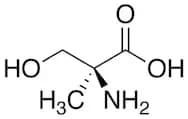
CAS:Formula:C11H12N2O4Purity:95.0%Color and Shape:SolidMolecular weight:236.227α-Methyl-L-serine
CAS:<p>Applications A potential chiral building blocks for the synthesis of different α -methyl α -amino acids.<br>References Rew, Y., et al.: J. Med. Chem., 45, 3746 (2002),<br></p>Formula:C4H9NO3Color and Shape:Off-WhiteMolecular weight:119.119L-Anserine Nitrate Salt
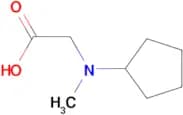
CAS:Controlled Product<p>Applications L-Anserine Nitrate Salt (cas# 10030-52-1) is a compound useful in organic synthesis.<br></p>Formula:C10H16N4O3·HNO3Color and Shape:NeatMolecular weight:303.27(Cyclopentyl-methyl-amino)-acetic acid
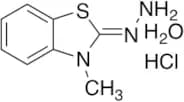
CAS:Purity:95.0%Color and Shape:SolidMolecular weight:157.21299743652344(2E)-3-Methyl-1,3-benzothiazol-2(3H)-one Hydrazone Hydrochloride (>85%)
CAS:Controlled Product<p>Applications (2E)-3-Methyl-1,3-benzothiazol-2(3H)-one Hydrazone Hydrochloride is used in method for synthesizing Methylbenzothiazolinone Hydrazone Hydrochloride Hydrate.<br>References Chen, W., et al.: Faming Zhuanli Shenqing, (2020);<br></p>Formula:C8H9N3S·HCl·H2OPurity:>85%Color and Shape:NeatMolecular weight:233.7184-Chloro-5-fluoro-2-methoxypyrimidine
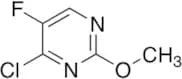
CAS:Controlled Product<p>Stability Moisture Sensitive<br>Applications 4-chloro-5-fluoro-2-methoxypyrimidine (cas# 1801-06-5) is a useful research chemical.<br></p>Formula:C5H4ClFN2OColor and Shape:ColourlessMolecular weight:162.549L-Glutamic Acid-d5
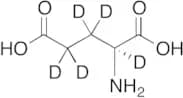
CAS:Controlled Product<p>Applications L-Glutamic Acid-d5 is an non-essential amino acid. Its salt form (glutamate) is an important neurotransmitter that plays a key role in long-term potentiation and is important for learning and memory. It is also a key molecule in cellular metabolism.<br>References McEntee, W., et al.: Psychopharmacology, 111, 391 (1993), Manev, H., et al.: Mol. Pharmacol., 36, 106 (1989)<br></p>Formula:C52H5H4NO4Color and Shape:NeatMolecular weight:152.164-(4-chlorophenyl)-3H,4H,5H,6H,7H-imidazo[4,5-c]pyridine-6-carboxylic acid
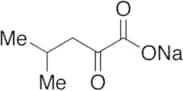
CAS:Purity:95.0%Molecular weight:277.70999145507814-Methyl-2-oxovaleric Acid Sodium Salt
CAS:Controlled Product<p>Stability Hygroscopic<br>Applications 4-Methyl-2-oxovaleric Acid is an α-ketomonocarboxylic acid that triggers insulin release by acting upon receptor sites which differ from those occupied by amino acids. 4-Methyl-2-oxovaleric Acid is an intermediate in the metabolism of Leucine.<br>References Panten, U. et al.: Naun.-Schmied. Arch. Pharmacol., 291, 405 (1975); Vague, P. et al.: Diab. Metab., 1, 185 (1975); Francois, G. et al.: Lancet, 1, 858 (1984);<br></p>Formula:C6H9O3·NaColor and Shape:NeatMolecular weight:152.121-Methyl-4-nitropyrrole-2-carboxylic Acid
CAS:Controlled Product<p>Applications 1-Methyl-4-nitropyrrole-2-carboxylic Acid is used in the synthesis of Lexitropsin and distamycin analogs with antimicrobial activities.<br>References Anthony, N., et al.: J. Med. Chem., 50, 6116 (2007); Khalaf, A., et al.: J. Med. Chem., 47, 2133 (2004)<br></p>Formula:C6H6N2O4Color and Shape:NeatMolecular weight:170.12Nateglinide-d5
CAS:Controlled Product<p>Applications A labelled version of Nateglinide, an amino-acid derivative that stimulates insulin secretion which is used as an antidiabetic.<br>References Shinkai, H., et al.: J. Med. Chem., 32, 1436 (1989), Sato, Y., et al.: Diabetes Res. Clin. Pract., 12, 53 (1991), Vicent, D., et al.: J. Clin. Invest., 111, 1373 (2003), Ceriello, A., et al.: Diabet. Med., 21, 171 (2004),<br></p>Formula:C192H5H22NO3Color and Shape:NeatMolecular weight:322.45Cyclosporin A-d4 (Major)
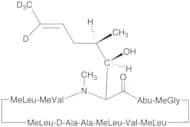
CAS:Controlled Product<p>Applications An immunosuppressant that has revolutionized organ transplantation through its use in the prevention of graft rejection.A group of nonpolar cyclic oligopeptides with immunosupppressant activity.<br>References van Wartburg, A., et al.: Prog. Med. Chem., 25, 1 (1988), Jorgensen, K.A., et al.: Scand. J. Imunol., 57, 93 (2003), Vollenbroeker, et al.: Transplant. Proc., 37, 1741 (2005),<br></p>Formula:C62H107D4N11O12Color and Shape:NeatMolecular weight:1206.664-(3,5-dichlorobenzoyl)-8-methyl-1-oxa-4,8-diazaspiro[4.5]decane-3-carboxylic acid
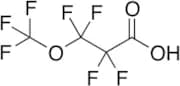
CAS:Purity:95.0%Molecular weight:373.2300109863281Perfluoro-3-methoxypropanoic Acid
CAS:<p>Applications Perfluoro-3-methoxypropanoic acid (cas# 377-73-1) is a useful research chemical.<br> Not a dangerous good if item is equal to or less than 1g/ml and there is less than 100g/ml in the package<br></p>Formula:C4HF7O3Color and Shape:NeatMolecular weight:230.04D-Glutamic Acid 1-tert-Butyl Ester
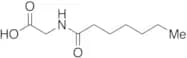
CAS:Controlled Product<p>Applications D-Glutamic acid 1-tert-butyl ester is a protected form of D-Glutamic acid (G596965). D-Glutamic acid is an unnatural isomer of L-Glutamic acid (G596960), and is found in bacterial cell wall peptidoglycan of gram-positive and gram-negative bacteria. D-Glutamic acid also occurs as poly-gamma-Glutamic acid, which is a weak immunogen but is capable of acting as a hapten (a small molecule that induces the production of antibodies, as well as binding to them).<br>References Dougherty, T., et al.: J. Bacteriol., 175, 111 (1993); Goodman, J. & Nitecki, D.: Immunology, 13, 577 (1967); Robinson, T.: Life Sci., 19, 1097 (1976)<br></p>Formula:C9H17NO4Color and Shape:NeatMolecular weight:203.24N-Heptanoylglycine
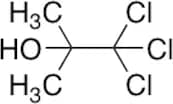
CAS:<p>Applications An acylglycine present in urniary excretion that can be analyzed and be used as diagnostic tool for metabolic disorders, complementary to organic acids and acylcarnitine profiles.<br>References Bonafe, L. et al.: Mol. Genetics Metab., 69, 302 (2000);<br></p>Formula:C9H17NO3Color and Shape:WhiteMolecular weight:187.241,1,1-Trichloro-2-methylpropan-2-ol
CAS:Controlled Product<p>Stability Hygroscopic<br>Applications Chlorobutanol is used as a preservative and sedative. It has also been shown to exhibit antibacterial properties.<br>References Dutta, T., et al.: PCT Int. Appl., 22, (2020); Ibibia, E., et al.: Asian. J. Pharm. Clin. Res., 9, 179-182 (2016)<br></p>Formula:C4H7Cl3OColor and Shape:Off-WhiteMolecular weight:177.463-(Carboxymethyl-methyl-amino)-pyrrolidine-1-carboxylic acid tert-butyl ester
CAS:Purity:95.0%Molecular weight:258.31799316406255-Carboxy-2-methylphenylboronic Acid
CAS:Controlled Product<p>Applications 5-Carboxy-2-methylphenylboronic Acid acts as a reagent in the synthesis of pyrazolopyridinone-based p38 MAP kinase inhibitor<br>References Milburn, R. R., et al.: Org. Process Res. Dev., 15, 31 (2011); Achmatowicz, M., et al.: J. Org. Chem., 74, 795 (2009)<br></p>Formula:C8H9BO4Color and Shape:NeatMolecular weight:179.97NG,NG-Dimethylarginine-D6 Dihydrochloride
CAS:Controlled Product<p>Stability Very Hygroscopic<br>Applications A potent inhibitor of NO synthase of adrenal glands, brain, and vascular endothelial cells.<br>References Vallence, P., et al.: Lancet, 339, 572 (1992),<br></p>Formula:C8H14D6Cl2N4O2Color and Shape:NeatMolecular weight:281.212-((tert-Butoxycarbonyl)amino)-3-hydroxy-2-methylpropanoic acid
CAS:Purity:95%Molecular weight:219.236999511718754-Methyl-d3-catechol
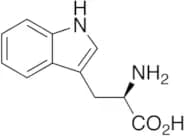
CAS:Controlled Product<p>Applications 4-Methyl-d3-catechol (CAS# 83719-41-9) is a useful isotopically labeled research compound.<br></p>Formula:C72H3H5O2Color and Shape:NeatMolecular weight:127.16D-Tryptophan
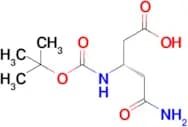
CAS:Controlled Product<p>Applications An essential amino acid found in naturally produced peptides. Unlike its stereoisomer, L-tryptophan, it is not used in structural or enzyme proteins.<br>References Karunakaran, S.et al.: Bochem. J., 414, 343 (2008); Pallaghy, P.K. et al.: Biochem., 38, 11553 (1999);<br></p>Formula:C11H12N2O2Color and Shape:NeatMolecular weight:204.23(S)-5-Amino-3-((tert-butoxycarbonyl)amino)-5-oxopentanoic acid
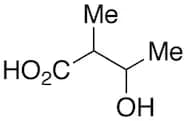
CAS:Purity:95+%Molecular weight:246.263000488281253-Hydroxy-2-methylbutanoic Acid
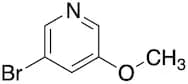
CAS:Controlled Product<p>Applications 3-Hydroxy-2-methylbutanoic Acid (cas# 473-86-9) is a compound useful in organic synthesis.<br></p>Formula:C5H10O3Color and Shape:Colourless To YellowMolecular weight:118.133-Bromo-5-methoxypyridine
CAS:Controlled Product<p>Applications 3-Bromo-5-methoxypyridine<br></p>Formula:C6H6BrNOColor and Shape:NeatMolecular weight:188.0223-Methyl-1,5-pentanediol Diacrylate (~0.5% 4-Hydroxy Anisole as a stabilizer)
CAS:Controlled Product<p>Stability Light sensitive, Temperature Sensitive<br>Applications 3-Methyl-1,5-pentanediol Diacrylate is a useful chemical reagent.<br></p>Formula:C12H18O4Color and Shape:NeatMolecular weight:226.271-Isobutyl-2,3,4,9-tetrahydro-1H-pyrido[3,4-b]indole-3-carboxylic acid
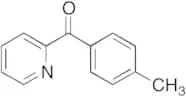
CAS:Purity:97%Molecular weight:272.3479919433594(4-Methylphenyl)-2-pyridinylmethanone
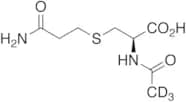
CAS:Controlled Product<p>Applications (4-Methylphenyl)-2-pyridinylmethanone is a useful reactant in organic synthesis.<br>References Hu, Zhiyuan, et al.: Org. & Biomol. Chem., 16(31), 5653-5660 (2018);Liao, Yang, et al.: J. of Organometallic Chem., 881, 1-12 (2019)<br></p>Formula:C13H11NOColor and Shape:NeatMolecular weight:197.2325N-Acetyl-S-(carbamoylethyl)-L-cysteine-d3
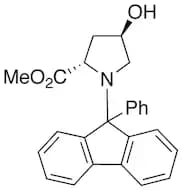
CAS:Controlled Product<p>Stability Hygroscopic<br>Applications Labelled N-Acetyl-S-(carbamoylethyl)-L-cysteine (A171870). N-Acetyl-S-(carbamoylethyl)-L-cysteine is the urinary metabolite of Acrylamide (AA). Acrylamide is formed during the heating of food and is classified as a genotoxic carcinogen.<br>References Besaratinia, A., et al.: Mutat. Res., 80, 31 (2005), Bjellaas, T., et al.: Xenobiotica, 35, 1003 (2005), Bjellaas, T., et al.: Food Chem. Toxicol., 45, 1020 (2007), Bjellaas, T., et al.: Toxicol. Sci., 98, 110 (2007),<br></p>Formula:C8H11D3N2O4SColor and Shape:Off-WhiteMolecular weight:237.29(4R, 2S)-4-Hydroxy-1-(9-phenyl-9H-fluoren-9-yl)-proline Methyl Ester
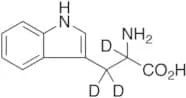
CAS:Controlled Product<p>Applications (4R, 2S)-4-Hydroxy-1-(9-phenyl-9H-fluoren-9-yl)-proline Methyl Ester (cas# 179990-59-1) is a compound useful in organic synthesis.<br></p>Formula:C25H23NO3Color and Shape:Light BrownMolecular weight:385.46D,L-Tryptophan-d3
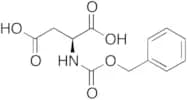
CAS:Controlled Product<p>Applications A labelled, essential amino acid.<br>References Liu, F., et al.: Bioorg. Med. Chem., 18, 4167 (2010), Kumar, R., et al.: Eur. J. Med. Chem., 45, 2265 (2010), Cai, W., et al.: Bioorg. Med. Chem., 18, 1899 (2010),<br></p>Formula:C112H3H9N2O2Color and Shape:NeatMolecular weight:207.24N-Cbz-L-aspartic Acid
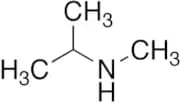
CAS:Controlled Product<p>Applications N-Cbz-L-aspartic acid is an N-Cbz-protected form of L-Aspartic acid (A790024). L-Aspartic acid is a nonessential amino acid that is used to biosynthesize other amino acids within the human body. L-Aspartic acid also increases membrane conductance of mammalian neurons by voltage-dependent means, causing depolarization and nerve impulses that travel to key areas of the central nervous system.<br>References Anderson, H., et al.: J. Nutr., 99, 82 (1969); Honey, C., et al.: Neurosci. Lett., 61, 135 (1985); MacDonald, J., et al.: Brain Res., 237, 248 (1982)<br></p>Formula:C12H13NO6Color and Shape:White To Off-WhiteMolecular weight:267.23N-Isopropyl-N-methylamine
CAS:Controlled Product<p>Stability Volatile<br>Applications N-Isopropyl-N-methylamine (cas# 4747-21-1) is a compound useful in organic synthesis.<br> E0<br></p>Formula:C4H11NColor and Shape:NeatMolecular weight:73.145-(TERT-BUTOXYCARBONYLAMINO-METHYL)CYCLOHEX-1-ENECARBOXYLIC ACID
CAS:Purity:95.0%Molecular weight:255.313995361328128-tert-butyl-4-[4-(dimethylamino)benzoyl]-1-oxa-4-azaspiro[4.5]decane-3-carboxylic acid
CAS:Purity:95.0%Molecular weight:388.507995605468751'-(Tert-butoxycarbonyl)-3H-spiro[isobenzofuran-1,4'-piperidine]-3-carboxylic acid
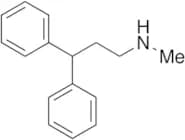
CAS:Purity:97%Molecular weight:333.3840026855469N-Methyl-3,3-diphenylpropylamine
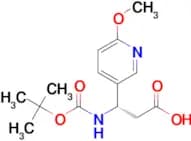
CAS:<p>Applications N-Methyl-3,3-diphenylpropylamine is an intermediate for the synthesis of SNRI-NMDA antagonist and neuroprotectants.<br>References Olney, J. et al.: Sci., 244, 1360 (1989); Williams, W., et al.: Mol. Pharmacol. 44, 851 (1993);<br></p>Formula:C16H19NColor and Shape:NeatMolecular weight:225.33(S)-3-((tert-Butoxycarbonyl)amino)-3-(6-methoxypyridin-3-yl)propanoic acid
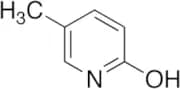
CAS:Purity:95.0%Molecular weight:296.3229980468752-Hydroxy-5-methylpyridine
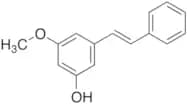
CAS:Controlled Product<p>Applications 2-Hydroxy-5-methylpyridine (cas# 1003-68-5) is a useful compound for organic synthesis. In particular it has been used for the diastereoselective preparation of cyclobutane-fused pyridinyl sulfonyl fluorides.<br>References Liu, J., et al.: Org. Biomol. Chem., 18, 4019 (2020)<br></p>Formula:C6H7NOColor and Shape:Light YellowMolecular weight:109.13(E)-3-Methoxy-5-styrylphenol
CAS:Controlled Product<p>Applications (E)-3-Methoxy-5-styrylphenol (cas# 35302-70-6) is a useful research chemical.<br></p>Formula:C15H14O2Color and Shape:NeatMolecular weight:226.27


![N-[(Benzyloxy)carbonyl]glycylglycine](/_next/image/?url=https%3A%2Fstatic.cymitquimica.com%2Fproducts%2FTR%2Fthumb-webp%2FB287100.webp&w=3840&q=75)

![4-(3-bromophenyl)-3H,4H,5H,6H,7H-imidazo[4,5-c]pyridine-6-carboxylic acid](/_next/image/?url=https%3A%2Fstatic.cymitquimica.com%2Fproducts%2F10%2Fthumb-webp%2FF522521.webp&w=3840&q=75)

![4-(4-chlorophenyl)-3H,4H,5H,6H,7H-imidazo[4,5-c]pyridine-6-carboxylic acid](/_next/image/?url=https%3A%2Fstatic.cymitquimica.com%2Fproducts%2F10%2Fthumb-webp%2FF522485.webp&w=3840&q=75)


![4-(3,5-dichlorobenzoyl)-8-methyl-1-oxa-4,8-diazaspiro[4.5]decane-3-carboxylic acid](/_next/image/?url=https%3A%2Fstatic.cymitquimica.com%2Fproducts%2F10%2Fthumb-webp%2FF525652.webp&w=3840&q=75)




![1-Isobutyl-2,3,4,9-tetrahydro-1H-pyrido[3,4-b]indole-3-carboxylic acid](/_next/image/?url=https%3A%2Fstatic.cymitquimica.com%2Fproducts%2F10%2Fthumb-webp%2FF695615.webp&w=3840&q=75)

![8-tert-butyl-4-[4-(dimethylamino)benzoyl]-1-oxa-4-azaspiro[4.5]decane-3-carboxylic acid](/_next/image/?url=https%3A%2Fstatic.cymitquimica.com%2Fproducts%2F10%2Fthumb-webp%2FF525783.webp&w=3840&q=75)
![1'-(Tert-butoxycarbonyl)-3H-spiro[isobenzofuran-1,4'-piperidine]-3-carboxylic acid](/_next/image/?url=https%3A%2Fstatic.cymitquimica.com%2Fproducts%2F10%2Fthumb-webp%2FF750353.webp&w=3840&q=75)