Amino Acids (AA)
Amino acids (AAs) are the fundamental building blocks of proteins, playing a crucial role in various biological processes. These organic compounds are essential for protein synthesis, metabolic pathways, and cell signaling. In this category, you will find a comprehensive range of amino acids, including essential, non-essential, and modified forms, which are vital for research in biochemistry, molecular biology, and nutritional sciences. At CymitQuimica, we provide high-quality amino acids to support your research and development needs, ensuring accuracy and reliability in your experimental outcomes.
Subcategories of "Amino Acids (AA)"
- Amino Acid Derivatives(3,955 products)
- Amino Acid and Amino Acid Related Compounds(3,451 products)
- Amino Acids with Oxygen or Sulphur(168 products)
- Boc- Amino Acids(351 products)
- Fmoc Amino Acids(1,710 products)
Found 38234 products of "Amino Acids (AA)"
Sort by
Purity (%)
0
100
|
0
|
50
|
90
|
95
|
100
N-Acetyl-S-(2-carboxyethyl)-L-cysteine Bis(dicyclohexylamine) Salt
CAS:<p>Applications A metabolite of S-propylcysteine.<br>References Jones, A.R., et al.: Xenobiotica, 10, 827 (1980), 25) Ramu, K., et al.: Chem. Res. Toxicol., 8, 515 (1995), Krause, R., et al.: Drug Metab. Dispos., 25, 1013 (1997), Powley, M., et al.: Chem. Res. Toxicol., 16, 1448 (2003),<br></p>Formula:C12H23N·C8H13NO5SColor and Shape:NeatMolecular weight:597.89Na-Boc-L-histidine
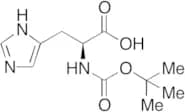
CAS:Controlled Product<p>Applications Nα-Boc-L-histidine is an N-Boc-protected form of L-Histidine (H456010). L-Histidine is an essential amino acid that plays an important role in mitochondrial glutamine transport and has potential of abolishing oxidative stress caused by brain edema.L-Histidine promotes zinc uptake in human erythrocyes and also has potential as an antioxidant therapy for acute mammary inflammation in cattle.<br>References Chaiyotwittayakun, A., et al.: J. Dairy Sci., 85, 60 (2002); Horn, N., et al.: J. Phys., 489, 73 (1995); Rama Rao, K., et al.: Am. J. Path., 176, 1400 (2010);<br></p>Formula:C11H17N3O4Color and Shape:NeatMolecular weight:255.27N-ε-acetyl-l-lysine
CAS:Controlled Product<p>Applications N-Epsilon-acetyl-l-lysine is used in the metabolomics study on the combined effect of cocaine and ethanol via liquid chromatography-mass spectrometry metabolomics approach.<br>References Sanchez-Lopez, E., et al.: J. Pharm. Biomed. Anal., 140, 313 (2017)<br></p>Formula:C8H16N2O3Color and Shape:NeatMolecular weight:188.22O-Phospho-L-tyrosine
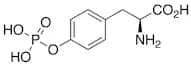
CAS:<p>Applications Useful in the study of tyrosine-phosphorylation, which has been linked with the malignant transformation of cells by some RNA tumour viruses.<br>References Sefton, B.M., et al.: Cell, 20, 807 (1980), Erikson, R., et al.: Perspect. Virol., 11, 93 (1981), Lee, E-S, et al.: J. Org. Chem., 59, 2086 (1994)<br></p>Formula:C9H12NO6PColor and Shape:NeatMolecular weight:261.17(±)-Aspartic Acid
CAS:<p>Applications (±)-Aspartic Acid, is a non-essential amino acid found in food sources. Its conjugate base D-aspartate has potential use as a a therapeutic agent in the treatment of schizophrenia-related symptoms.<br>References Errico, F. et al.: J. Neurosci., 28, 10404 (2008); Denu, J.M. et al.: Biochem., 34, 3396 (1995); Chen, P.E. et al.: Mol. Pharmacol., 67, 1470 (2005);<br></p>Formula:C4H7NO4Color and Shape:NeatMolecular weight:133.101-(2-Chloroethoxy)-2-methoxybenzene
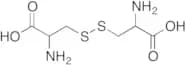
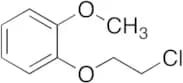
CAS:Controlled Product<p>Applications 1-(2-Chloroethoxy)-2-methoxy benzene, is an impurity of Carvedilol (C184625), a nonselective β-adrenergic blocker with α1-blocking activity. Carvedilol is an antihypertensive used in the treatment of congestive heart failure.<br>References Hirohashi, M., et al.: Arzneim.-Forsch., 40, 735 (1990); Packer, M., et al.: N. Engl. J. Med., 334, 1349 (1996);<br></p>Formula:C9H11ClO2Color and Shape:NeatMolecular weight:186.64N-Acetyl-L-cystine
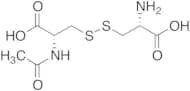
CAS:Controlled Product<p>Applications N-Acetyl-L-cystine is an antioxidant, used in the treatment of influenza A virus pandemic (1). N-Acetyl-L-cystine promotes fertilization by reducing disulfide bonds in zona pellucida of mouse (2).Releases N-Acetyl-L-cysteine, which is an antidote for paracetamol poisoning.<br>References (1) Zhang, R., et al.: (2014) Int. Immunopharmacol. 22: 1-8 (2) Takeo, T., et al.: Biol Reprod. (2015) 92: 1-7<br></p>Formula:C8H14N2O5S2Color and Shape:NeatMolecular weight:282.34Pantothenic Acid (Technical Grade, Contains Lactone)
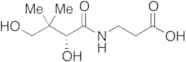
CAS:Controlled Product<p>Stability Hygroscopic<br>Applications Pantothenic Acid is a member of the B complex vitamins; essential vitamin for the biosynthesis of coenzyme A in mammalian cells. Occurs ubiquitously in all animal and plant tissue. The richest common source is liver, but jelly of the queen bee contains 6 times as much as liver. Rice bran and molasses are other good sources.<br>References Gardner, P., et al.: Food Chem., 68, 471 (2000); Ou, B., et al.: J. Agric. Food Chem., 50, 2772 (2002); Bahorun, T., et al.: J. Sci. Food Agric., 84, 1553 (2004)<br></p>Formula:C9H17NO5Color and Shape:NeatMolecular weight:219.24L-Phenylalanine-d7
CAS:Controlled Product<p>Applications Labelled analogue of L-Phenylalanine, an essential amino acid.<br>References Hollunger, G. et al.: Acta Pharmacol. Toxicol., 34, 391 (1974); Bagchi, S.P. et al.: Biochem. Pharmacol., 26, 900 (1977);<br></p>Formula:C9H4D7NO2Color and Shape:NeatMolecular weight:172.23(+)-a-Methyl-b-alanine
CAS:Controlled Product<p>Applications (+)-α-Methyl-β-alanine is a reactant for the chemoenzymatic assembly of cryptophycins as potent anticancer therapeutics.<br>References Magarvey, N.A., et al.: ACS Chem. Biol., 1, 766-779 (2006)<br></p>Formula:C4H9NO2Color and Shape:NeatMolecular weight:103.1204'-Methylacetanilide
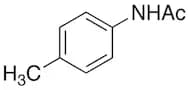
CAS:Controlled Product<p>Applications 4'-Methylacetanilide (cas# 103-89-9) is a compound useful in organic synthesis.<br></p>Formula:C9H11NOColor and Shape:NeatMolecular weight:149.192-Methyl-5-nitroimidazole
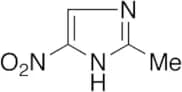
CAS:<p>Impurity Tinidazole EP Impurity A/ Metronidazole EP Impurity A<br>Applications 2-Methyl-5-nitroimidazole (Tinidazole EP Impurity A) is a Floconazole impurity.<br>References Sanderson, H., et al.: Toxicol. Lett., 187, 84 (2009), Kumar, L., et al.: Eur. J. Med. Chem., 45, 817 (2010),<br></p>Formula:C4H5N3O2Color and Shape:Light YellowMolecular weight:127.10N-Carbobenzoxyglycine
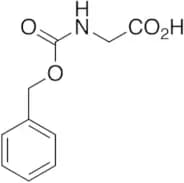
CAS:<p>Applications N-Carbobenzoxyglycine is used in the dipeptide synthesis.<br>References Hans, D., et al.: Med. Chem., 2, 627 (2006), Guzman, F., et al.: J. Biotechnol., 10, 279 (2007), Vlieghe, P., et al.: Drug Discov. Today, 15, 40 (2010),<br></p>Formula:C10H11NO4Color and Shape:NeatMolecular weight:209.2N-Isobutyrylglycine
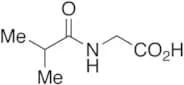
CAS:<p>Applications N-Isobutyrylglycine detection is a useful diagnostic tool in the diagnosis of many organic acidemias and mitochondrial fatty acid β-oxidation defects. N-Isobutyrylglycine detection is also used in the diagnosis of isobutyryl-CoA dehydrogenase deficiency.<br>References Costa, C. G. et al.: J. Pharmac. Biomed. Anal., 21, 1215 (2000); Bonafe, L. et al.: Mol. Gen. Metab., 69, 311 (2000); Sass, J. et al.: J. Inher. Metab. Dis., 27, 741 (2004);<br></p>Formula:C6H11NO3Color and Shape:NeatMolecular weight:145.16(2R)-3-Hydroxyisovaleroyl Carnitine
CAS:Controlled Product<p>Stability Very Hygroscopic<br>Applications Hydroxyisovaleroyl Carnitine is used as a diagnostic tool to identify the presence of orofacial clefts. Also used in the screening and diagnostics of inborn errors of metabolism.<br>References Denes, J. et al.: Anal. Chem., 84, 10113 (2012); Budner, M. et al.: Arch. Oral. Biol., 58, 459 (2013);<br></p>Formula:C12H23NO5Color and Shape:NeatMolecular weight:261.31L-2-Aminobutyric Acid-d6
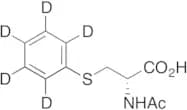
CAS:Controlled Product<p>Applications L-2-Aminobutyric Acid-d6 is the isotope labelled analog of L-2-Aminobutyric Acid (A602930); a receptor antagonist.<br>References Porter, D.J.T., et al.: Biochem. Pharmacol., 50, 1475 (1995)<br></p>Formula:C4D6H3NO2Color and Shape:Off-WhiteMolecular weight:109.162-(Acetylamino)-3-(phenylthio)propanoic Acid
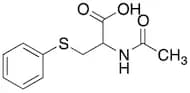
CAS:Controlled Product<p>Applications 2-(Acetylamino)-3-(phenylthio)propanoic acid is a useful chemical in research.<br></p>Formula:C11H13NO3SColor and Shape:NeatMolecular weight:239.29L-Homocysteine Thiolactone Hydrochloride
CAS:Controlled Product<p>Applications L-Homocysteine Thiolactone Hydrochloride is used to prepare substituted homocysteine analogs as inhibitors of peptidylglycine α-amidating monooxygenase. It is also used to synthesize (mercaptoacyl)alanylprolines as metalloprotease inhibitors.<br>References Erion, M., et al.: J. Med. Chem., 37, 4430 (1994); Slusarchyk, W., et al.: Bioorg. Med. Chem. Lett., 5, 753 (1995)<br></p>Formula:C4H8ClNOSColor and Shape:NeatMolecular weight:153.63N-[(Benzyloxy)carbonyl]glycylglycine
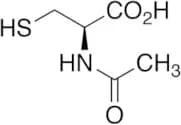
CAS:<p>Applications N-[(Benzyloxy)carbonyl]glycylglycine is a reagent in the synthesis of Glycylglycyl-L-tyrosine (G718500), which is a fungal tyrosinases and their capability to oxidize peptide-bound tyrosine residues is important in a view of applicability of tyrosinases.<br>References Bowness, J., et al.: Biochem. J., 53, 620 (1953), Cuff, M., et al.: J. Mol. Biol., 278, 855 (1998), Kubo, I., et al.: Bioorg. Med. Chem., 12, 5349 (2004),<br></p>Formula:C12H14N2O5Color and Shape:NeatMolecular weight:266.25N-Acetyl-L-cysteine
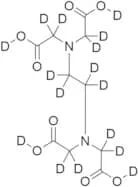
CAS:Controlled Product<p>Stability Air Sensitive<br>Applications A metabolite of Methyl Isocyanate.<br>References Slatter, J. G., et al.: Chem. Res. Toxicol., 4, 157 (1991),<br></p>Formula:C5H9NO3SColor and Shape:Light YellowMolecular weight:163.19Ethylenediaminetetraacetic Acid-d16
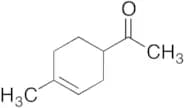
CAS:Controlled Product<p>Applications Ethylenediaminetetraacetic Acid-d16 (CAS# 203805-96-3) is a useful isotopically labeled research compound.<br></p>Formula:C10D16N2O8Color and Shape:White To Off-WhiteMolecular weight:308.341-(4-Methyl-3-cyclohexen-1-yl)ethanone
CAS:<p>Applications 1-(4-methyl-3-cyclohexen-1-yl)ethanone is an essential oil found in Cedrus atlantica wood and orange peels.<br>References Uehara, Ayaka, et al.: Phytochemistry, 144, 208-215 (2017); Liu, Bo, et al.: Yancao Keji, (9), 52-56 (2014)<br></p>Formula:C9H14OColor and Shape:NeatMolecular weight:138.207S-Phenylmercapturic Acid-d5
CAS:Controlled Product<p>Applications S-Phenylmercapturic Acid-d5 is the labelled analogue of S-Phenylmercapturic Acid (P335600), an important metabolite of Benzene.<br>References Qu, Q., et al.: Am. J. Ind. Med., 37, 522 (2000); Ghittori, S., et al.: Int. Arch. Occup. Environ. Health, 67, 195 (1995);<br></p>Formula:C11H8D5NO3SColor and Shape:NeatMolecular weight:244.32cis-4-Hydroxy-L-proline
CAS:<p>Applications Hydroxyprolines are valuable chiral building blocks for organic synthesis of pharmaceuticals. Several microorganisms producing proline trans-4- and cis-3-hydroxylase were discovered and these enzymes were applied to the industrial production of trans-4- and cis-3-hydroxy-L-proline.<br>References Lawrence, C., et al.: Biochem. J., 313, 185 (1996), Mori, H., et al.: J. Bacteriol., 179, 5677 (1997), Clifton, I., et al.: Eur. J. Biochem., 268, 6625 (2001),<br></p>Formula:C5H9NO3Color and Shape:Off White Crystalline PowderMolecular weight:131.13Fructose-leucine (mixture of diastereomers)
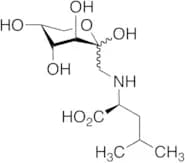
CAS:Controlled ProductFormula:C12H23NO7Color and Shape:White To BrownMolecular weight:293.31L-Methionine-3,3,4,4-d4
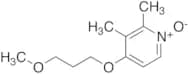
CAS:Controlled Product<p>Applications L-Methionine-3,3,4,4-d4 (CAS# 67866-75-5) is a useful isotopically labeled research compound.<br></p>Formula:C5D4H7NO2SColor and Shape:White To Off-WhiteMolecular weight:153.2364-(3-Methoxypropoxy)-2,3-dimethylpyridin-1-ium-1-olate
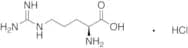
CAS:Controlled Product<p>Applications 4-(3-Methoxypropoxy)-2,3-dimethylpyridin-1-ium-1-olate is used in preparation of Picolylsulfides and related drugs by using Esterification and Thioetherification as the key steps.<br>References Wang, D., et al.: Faming Zhuanli Shenqing, (2019);<br></p>Formula:C11H17NO3Color and Shape:Light Yellow To Dark BrownMolecular weight:211.25L-Arginine Hydrochloride
CAS:<p>Applications An essential amino acid for human development. Precursor for nitric oxide. Ammonia detoxicant (hepatic failure); diagnostic aid (pituitary function).<br>References Miura, T., et al.: Anal. Biochem., 139, 432 (1984), Jones, et al.: Adv. Enzyme Regul., 9, 19 (1970), Borders, C.L., et al.: Protein. Sci., 3, 541 (1994),<br></p>Formula:C6H14N4O2·ClHColor and Shape:NeatMolecular weight:210.66D-Serine
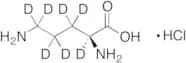
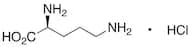
CAS:Controlled Product<p>Applications A proteinogenic amino acids involved in the biosynthesis of purines and pyrimidines. Inhibitor of serine palmitoyltransferase. A neuromodulator.<br>References Junjaud, G. et al.: J. Neurochem., 98, 1159 (2006); Hanada, K. et al.: FEBS Lett., 474, 63 (2000); Pollegionni, L. et al.: Cell. Mol. Life Sci., 67, 2387 (2010);<br></p>Formula:C3H7NO3Color and Shape:NeatMolecular weight:105.09L-Ornithine-2,3,3,4,4,5,5-d7 hydrochloride
CAS:Controlled Product<p>Applications L-Ornithine-2,3,3,4,4,5,5-d7 hydrochloride is the labelled analogue of L-Ornithine Hydrochloride (O695550), a non-essential amino acid for human development but is required intermediate in arginine biosynthesis. L-Ornithine is found in virtually all vertebrate tissues as well as incorporated into proteins, such as tyrocidine. Isolation from chicken excreta.<br>References Fattori, D., et al.: J. Med. Chem., 50, 550 (2007), Gomez-Alonso, S., et al.: J. Agric. Food Chem., 55, 608 (2007), Subramaniam, R., et al.: Bioorg. Med. Chem. Lett., 18, 3333 (2008),<br></p>Formula:C5D7H5N2O2·ClHColor and Shape:NeatMolecular weight:175.1104926088Boc-His(Trt)-OH
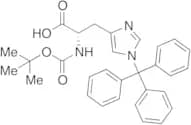
CAS:Controlled Product<p>Applications Boc-His(Trt)-OH was used in the study to prepare and study structure-activity relationship of amino acid amides as selective inhibitors for dipeptidyl peptidases.<br>References Senten, K., et al.: J. Med. Chem., 46, 5005 (2003);<br></p>Formula:C30H31N3O4Color and Shape:White To Off-WhiteMolecular weight:497.58Isobutyryl L-Carnitine Chloride
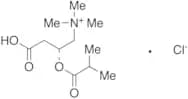
CAS:Controlled ProductFormula:C11H22NO4·ClColor and Shape:NeatMolecular weight:267.75D-Tryptophan-d5
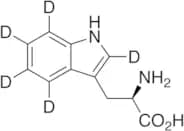
CAS:Controlled Product<p>Applications Labelled analogue of an essential amino acid found in naturally produced peptides. Unlike its stereoisomer, L-tryptophan, it is not used in structural or enzyme proteins.<br>References Karunakaran, S.et al.: Bochem. J., 414, 343 (2008); Pallaghy, P.K. et al.: Biochem., 38, 11553 (1999);<br></p>Formula:C112H5H7N2O2Color and Shape:NeatMolecular weight:209.265'-O-Methylthymidine
CAS:Controlled Product<p>Applications 5'-O-Methylthymidine (cas# 14504-60-0) is a useful research chemical.<br></p>Formula:C11H16N2O5Color and Shape:White To Off-WhiteMolecular weight:256.264-Aminohippuric Acid
CAS:Controlled Product<p>Applications 4-Aminohippuric Acid is used in the measurement of renal plasma flow as a diagnostic tool which may be applied towards kidney disorders.<br>References Phillips, R. et al.: Am. J. Physiol., 152, 523 (1948);<br></p>Formula:C9H10N2O3Color and Shape:Off White SolidMolecular weight:194.19L,L-Dityrosine Dihydrochloride
CAS:Controlled Product<p>Stability Hygroscopic<br>Applications Dityrosine (DY), a tyrosine dimer formed by 3,3’-biaryl bond formation can be used as a biomarker to detect oxidative protein damage and selective proteolysis. Fluorescence intensity decays of Dityrosine are generally characterized by two decay components, one with a lifetime in the range of 150 to 800 ps and another between 2.5 and 4.5 ns.<br>References Libertini, L., et al.: Biophys. J., 47, 765 (1985), Huggins, T., et al.: J. Biol. Chem., 268, 12341 (1993), Malencik, D., et al.: Biochemistry, 35, 4375 (1996),<br></p>Formula:C18H20N2O6·2ClHColor and Shape:NeatMolecular weight:433.283-Nitro-L-tyrosine-d3
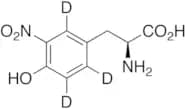
CAS:Controlled Product<p>Applications A labelled marker for peroxynitrite. Oxidant and cytotoxic agent.<br>References Sekiguchi, M., et al.: Brain Res., 978, 228 (2003), van den Tweel, E., et al.: J. Neurobiol., 167, 64 (2005), Shirakura, T., et al.: Biol. Pharm. Bull., 28, 1658 (2005),<br></p>Formula:C9D3H7N2O5Color and Shape:NeatMolecular weight:229.2D-Arginine
CAS:Controlled Product<p>Applications D-Arginine is an unnatural isomer of L-Arginine (A769505), and is used to inhibit glutamate-induced nitric oxide production in rats. Derivatives of D-Arginine are used for pharmaceutical purposes, one example is 1-Deamino-8-D-arginine vasopressin, which is used to treat various bleeding disorders.<br>References Castellano, M., et al.: Neurosci. Lett., 314, 127 (2001); Kobrinsky, N., et al.: Lancet, 323, 1145 (1984); Weyrich, A., et al.: Circulation, 86, 279 (1992)<br></p>Formula:C6H14N4O2Color and Shape:NeatMolecular weight:174.205-Aminolevulinic Acid Methyl Ester Hydrochloride
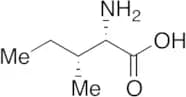
CAS:Controlled Product<p>Applications 5-Aminolevulinic Acid Methyl Ester Hydrochloride, is the methyl ester of Aminolevulinic Acid (ALA) (A611780), which has been shown to have higher lipophilicity, and to be highly efficient at inducing protoporphyrin IX (PpIX) production in cell culture.<br>References Morrow, D. I. J., et al.: J. Pharmac. Sci., 99, 3486 (2010); Peng, Q., et al.: Cancer, 79, 2282 (1997);<br></p>Formula:C6H11NO3·HClColor and Shape:NeatMolecular weight:181.62L-Allo-isoleucine
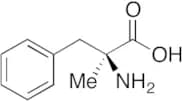
CAS:Controlled Product<p>Applications L-alloisoleucine is a stereo-isomer of L-isoleucine (I820175) and is produced as a byproduct of isoleucine via transamination. L-allo-isoleucine has been suggested to induce epithelial β-defensin expression. In addition, L-allo-isoleucine is utilized in the biosynthesis pathway for coronamic acid.<br>References Fehlbaum, P., et al.: Proc. Natl. Acad. Sci. USA 97, 12723 (2000); Parry, R. J., et al.: J. Am. Chem. Soc. 113, 1849 (1991)<br></p>Formula:C6H13NO2Color and Shape:NeatMolecular weight:131.17α-Methyl-L-phenylalanine
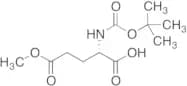
CAS:Controlled Product<p>Applications α-Methyl-L-phenylalanine is used to prepare hippuryl-α-methylphenylalanine and hippuryl-α-methylphenyllactic acid as substrates for carboxypeptidase A. It is also used in the synthesis of high affinity tachykinin NK2 receptor antagonists.<br>References Lee, M., et al.: Bioorg. Med. Chem., 8, 815 (2000); Boyle, S., et al.: Bioorg. Med. Chem., 2, 101 (1994)<br></p>Formula:C10H13NO2Color and Shape:NeatMolecular weight:179.22N-Boc-L-glutamic Acid 5-Methyl Ester
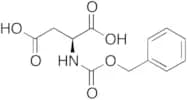
CAS:Controlled Product<p>Applications N-Boc-L-glutamic Acid 5-Methyl Ester is an intermediate used in the synthesis of Isodesmosine Chloride Hydrate (Synthetic) (I815051), which is a component of elastin and also it is extremely hygroscopic and must be stored over a desiccant such as silica gel.<br>References Partridge, S., et al.: Nature, 209, 399 (1966)<br></p>Formula:C11H19NO6Color and Shape:NeatMolecular weight:261.27N-Cbz-L-aspartic Acid
CAS:Controlled Product<p>Applications N-Cbz-L-aspartic acid is an N-Cbz-protected form of L-Aspartic acid (A790024). L-Aspartic acid is a nonessential amino acid that is used to biosynthesize other amino acids within the human body. L-Aspartic acid also increases membrane conductance of mammalian neurons by voltage-dependent means, causing depolarization and nerve impulses that travel to key areas of the central nervous system.<br>References Anderson, H., et al.: J. Nutr., 99, 82 (1969); Honey, C., et al.: Neurosci. Lett., 61, 135 (1985); MacDonald, J., et al.: Brain Res., 237, 248 (1982)<br></p>Formula:C12H13NO6Color and Shape:White To Off-WhiteMolecular weight:267.23L-Ornithine Hydrochloride
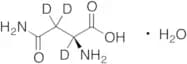
CAS:Controlled Product<p>Stability Hygroscopic<br>Applications L-Ornithine is a non-essential amino acid for human development but is required intermediate in arginine biosynthesis. L-Ornithine is found in virtually all vertebrate tissues as well as incorporated into proteins, such as tyrocidine. Isolation from chicken excreta.<br>References Fattori, D., et al.: J. Med. Chem., 50, 550 (2007), Gomez-Alonso, S., et al.: J. Agric. Food Chem., 55, 608 (2007), Subramaniam, R., et al.: Bioorg. Med. Chem. Lett., 18, 3333 (2008),<br></p>Formula:C5H12N2O2·ClHColor and Shape:White To Off-WhiteMolecular weight:168.62L-Asparagine-d3 Hydrate
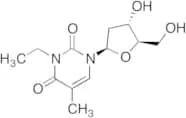
CAS:Controlled Product<p>Applications L-Asparagine-d3 Hydrate is an isotope labelled L-Asparagine Hydrate, a naturally occurring amino acid that is not a essential for humans and can be synthesized from central metabolic pathway intermediates.<br>References Burda, P., et al.: Biochim. Biophys. Acta., 1426, 239 (1999); Yamane, H., et al.: Animal. Sci. J., 80, 286 (2009);<br></p>Formula:C4D3H5N2O3·H2OColor and Shape:White To Off-WhiteMolecular weight:153.1517N3-Ethylthymidine
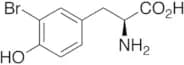
CAS:Controlled Product<p>Applications E677525<br>References Shimizu, T., et al.: Chem. Pharm. Bull., 53, 313 (2005)<br></p>Formula:C12H18N2O5Color and Shape:NeatMolecular weight:270.121573-Bromo-L-tyrosine
CAS:Controlled Product<p>Applications 3-Bromo-L-tyrosine is used in the preparation and synthesis of polyclonal antibodies that work against brominated protein related allergic responses and afflictions. Also effective in asthma control and prediction in children.<br>References Kambayashi, Y. et al.: J. Clin. Biochem., 44, 95 (2009); Wedes, S. et al.: J. Ped., 159, 248 (2011);<br></p>Formula:C9H10BrNO3Color and Shape:White To Light BrownMolecular weight:260.08L-Glutamine-amide-¹⁵N
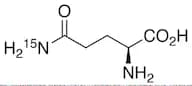
CAS:Controlled Product<p>Applications Labelled L-Glutamine (G597000). L-Glutamine is an essential amino acid that is a crucial component of culture media that serves as a major energy source for cells in culture. L-Glutamine is very stable as a dry powder and as a frozen solution. In liquid media or stock solutions, however, L-glutamine degrades relatively rapidly. Optimal cell performance usually requires supplementation of the media with L-glutamine prior to use.<br>References Rivett, A., et al.: J. Biol. Chem., 260, 300 (1985), Watford, M., et al.: Metabolism, 49, 141 (2000), Wilmore, D., et al.: J. Nutr., 131, 2543S (2001),<br></p>Formula:C5H1015NNO3Color and Shape:NeatMolecular weight:147.14








![N-[(Benzyloxy)carbonyl]glycylglycine](/_next/image/?url=https%3A%2Fstatic.cymitquimica.com%2Fproducts%2FTR%2Fthumb-webp%2FB287100.webp&w=3840&q=75)