Amino Acids (AA)
Amino acids (AAs) are the fundamental building blocks of proteins, playing a crucial role in various biological processes. These organic compounds are essential for protein synthesis, metabolic pathways, and cell signaling. In this category, you will find a comprehensive range of amino acids, including essential, non-essential, and modified forms, which are vital for research in biochemistry, molecular biology, and nutritional sciences. At CymitQuimica, we provide high-quality amino acids to support your research and development needs, ensuring accuracy and reliability in your experimental outcomes.
Subcategories of "Amino Acids (AA)"
- Amino Acid Derivatives(3,971 products)
- Amino Acid and Amino Acid Related Compounds(3,477 products)
- Amino Acids with Oxygen or Sulphur(168 products)
- Boc- Amino Acids(351 products)
- Fmoc Amino Acids(1,710 products)
Found 38321 products of "Amino Acids (AA)"
Sort by
Purity (%)
0
100
|
0
|
50
|
90
|
95
|
100
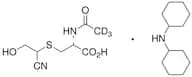
N-Acetyl-S-(1-cyano-2-hydroxyethyl)-L-cysteine-d3 Dicyclohexylamine Salt (Mixture of Diastereomers)
CAS:Controlled Product<p>Stability Hygroscopic<br>Applications A labelled metabolite of Acrylonitrile (ACN).<br>References Guengerich, F., et al.: Cancer Res., 41, 4925 (1981), Leonard, A., et al.: Mutation Res., 436, 263 (1999), Stadler, R., et al.: J. Agric. Food Chem., 52, 5550 (2004), Dybing, E., et al.: Food Chem. Toxicol., 43, 365 (2005), Rice, J., et al.: Mutation Res., 580, 3 (2005),<br></p>Formula:C20H32D3N3O4SColor and Shape:White To Off-WhiteMolecular weight:416.59(2S,4R)-4-Hydroxy-L-glutamic Acid
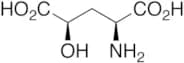
CAS:Controlled Product<p>Applications (2S,4R)-4-Hydroxy-L-glutamic Acid is a metabolite of Glutamic acid (G596960).<br>References Hampson, D., et al.: J. Biol. Chem., 274, 33488 (1999), Jensen, A., et al.: Eur. J. Pharmacol., 397, 247 (2000),<br></p>Formula:C5H9NO5Color and Shape:NeatMolecular weight:163.13(4-Hydroxyphenyl)glycine
CAS:<p>Applications (4-Hydroxyphenyl)glycine, is a key intermediate for the synthesis Cefpiramide (C243400), used as a β-lactam antibiotic.<br>References Xiao, R. Q., et al.: Guangzhou Huagong, 41, 111 (2013);<br></p>Formula:C8H9NO3Color and Shape:Off White PowderMolecular weight:167.162Folcysteine
CAS:Controlled Product<p>Applications A cysteine derivative as potential antitumor agent. (A609645)A vitamin needed to synthesize DNA, conduct DNA repair and methylate DNA, it also acts as a cofactor in biological reactions involving folate. (F680300)<br>References Paul, B., et al.: J. Med. Chem., et al.: 19, 1002 (1976), Xu, L., et al.: Mol. Pharm., 7, 1311 (2010), Everette, J., et al.: J. Agric. Food Chem., 58, 8139 (2010), Alshatwi, A., et al.: Food, Chem., Toxicol., 48, 1881 (2010), McKay, D., et al.: Nut. J., 9 (2010),<br></p>Formula:C19H19N7O6·C6H9NO3SColor and Shape:YellowMolecular weight:616.17N-Acetyl-S-(1-cyano-2-hydroxyethyl)-L-cysteine Dicyclohexylamine Salt (Mixture of Diastereomers)
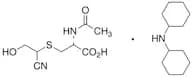
CAS:<p>Applications A metabolite of Acrylonitrile (ACN).<br>References Guengerich, F., et al.: Cancer Res., 41, 4925 (1981), Leonard, A., et al.: Mutation Res., 436, 263 (1999), Stadler, R., et al.: J. Agric. Food Chem., 52, 5550 (2004), Dybing, E., et al.: Food Chem. Toxicol., 43, 365 (2005), Rice, J., et al.: Mutation Res., 580, 3 (2005),<br></p>Formula:C12H23N·C8H12N2O4SColor and Shape:NeatMolecular weight:413.573-Amino-2-hydroxy-3-methylbutanoic Acid
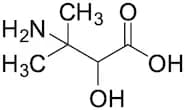
CAS:Controlled ProductFormula:C5H11NO3Color and Shape:NeatMolecular weight:133.146L-Histidinol Dihydrochloride
CAS:Controlled ProductFormula:C6H11N3O·2ClHColor and Shape:NeatMolecular weight:214.09S-Methyl-L-cysteine
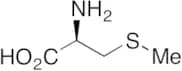
CAS:Controlled Product<p>Applications S-Methyl-L-cysteine is a substrate in the catalytic antioxidant system mediated by methionine sulfoxide reductase A (MSRA). It has been studied as a theurapeutic for neurodegenerative diseases including Parkinson′s.<br>References Wassef, R., et al.: J. Neurosci., 21, 12808 (2007)<br></p>Formula:C4H9NO2SColor and Shape:NeatMolecular weight:135.19L-Valine
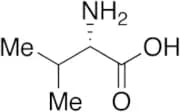
CAS:Controlled Product<p>Applications L-Valine is an essential amino acid and one of 20 proteinogenic amino acids. L-Valine cannot be manufactured by the body and must be acquired through diet or supplementation. L-valine is found in grains, dairy products, mushrooms, meats, peanuts and soy proteins. L-Valine has been used in studies to attenuate arrhythmias and induce hypotensive effects.<br>References Choi, C.W. et al.: Anim. Feed Sci. Technol., 102, 15 (2002); Kolarski, D. et al.: Krmiva, 30, 155 (1988); Oba, M. et al.: J. Dairy Sci., 93, 2044 (2010); Mitrega, K. et al.: Pharmacol. Res., 64, 218 (2011);<br></p>Formula:C5H11NO2Color and Shape:NeatMolecular weight:117.15Linoleoyl Carnitine
CAS:Controlled Product<p>Stability Hygroscopic, Temperature Sensitive<br>Applications A carnitine ester of unsaturated fatty acid. Used in the studies of fibroblasts in long-chain 3-hydroxyacyl-CoA dehydrogenase deficiency and fatty acid oxidation disorders.<br>References Gross R.W., et al.: J. Biol. Chem., 258, 5221 (1983),<br></p>Formula:C25H45NO4Color and Shape:NeatMolecular weight:423.63Homocysteine-13C4,15N
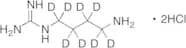
CAS:Controlled ProductFormula:C4H9NO2SColor and Shape:NeatMolecular weight:140.144-Aminobutyl-d8 Guanidine Dihydrochloride
CAS:Controlled Product<p>Applications 4-Aminobutyl-d8 Guanidine is the labelled analog of the decarboxylation product of the amino acid arginine (A769500) and also an intermediate in polyamine biosynthesis.<br>References Golding, B.T., et al.: Biochem. Soc. Trans., 22, 391S (1994);<br></p>Formula:C5H6D8N4·2HClColor and Shape:NeatMolecular weight:211.16263Arginine Vasopressin Diacetate
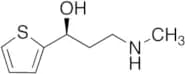
CAS:<p>Applications An endogenous antidiuretic hormone in most mammalian species. It is released into the blood from nerve terminals in the posterior pituitary and median eminence. It is a neurotransmitter in the central nervous system and also implicated in a variety of physiological processes such as regulating water balance by antidiuretic action. It is a peptidic V1a receptor agonist that produces vasoconstriction via V1aR-mediated vascular smooth muscle cell contraction and is being used to increase blood pressure in septic shock, a form of vasodilatory hypotension.<br>References Perucca, J. et al.: J. AM. Soc. Nephrol., 19, 1721 (2008); Toba, K. et al.: Prog. Brain Res., 119, 337 (1998); Berrada, K. et al.: J. Biol. Chem., 275, 27229 (2000);<br></p>Formula:C50H73N15O16S2Color and Shape:NeatMolecular weight:1204.34(S)-1-b-Hydroxy-1-(2-thienyl)-3-methylaminopropane
CAS:Controlled Product<p>Impurity Duloxetine EP Impurity B<br>Applications A Duloxetine intermediate. Duloxetine EP Impurity B.<br></p>Formula:C8H13NOSColor and Shape:NeatMolecular weight:171.262,2-Diselanediyldiethanamine Dihydrochloride
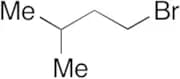
CAS:Controlled Product<p>Stability Hygroscopic<br>Applications 2,2-Diselanediyldiethanamine dihydrochloride (cas# 3542-13-0) is a useful research chemical.<br></p>Formula:C13H16N2O10Color and Shape:NeatMolecular weight:360.2741-Bromo-3-methylbutane
CAS:Controlled Product<p>Applications 1-Bromo-3-methylbutane, is used as an extraction solvent to determine various polycyclic aromatic hydrocarbons in water samples though dispersive liquid-liquid microextraction along with GC-MS (gas chromatography- mass spectrometry).<br> Not a dangerous good if item is equal to or less than 1g/ml and there is less than 100g/ml in the package<br>References Rezaee, M., et al.: J. Chromat. A., 1116, 1 (2006)<br></p>Formula:C5H11BrColor and Shape:NeatMolecular weight:151.04L-Homocysteine Thiolactone Hydrochloride
CAS:Controlled Product<p>Applications L-Homocysteine Thiolactone Hydrochloride is used to prepare substituted homocysteine analogs as inhibitors of peptidylglycine α-amidating monooxygenase. It is also used to synthesize (mercaptoacyl)alanylprolines as metalloprotease inhibitors.<br>References Erion, M., et al.: J. Med. Chem., 37, 4430 (1994); Slusarchyk, W., et al.: Bioorg. Med. Chem. Lett., 5, 753 (1995)<br></p>Formula:C4H8ClNOSColor and Shape:NeatMolecular weight:153.632',3',5',6'-Tetrahydrospiro[indoline-3,4'-pyran]-5-carboxylic acid
CAS:Purity:95%Molecular weight:233.26699829101562N-[(Benzyloxy)carbonyl]glycylglycine
CAS:<p>Applications N-[(Benzyloxy)carbonyl]glycylglycine is a reagent in the synthesis of Glycylglycyl-L-tyrosine (G718500), which is a fungal tyrosinases and their capability to oxidize peptide-bound tyrosine residues is important in a view of applicability of tyrosinases.<br>References Bowness, J., et al.: Biochem. J., 53, 620 (1953), Cuff, M., et al.: J. Mol. Biol., 278, 855 (1998), Kubo, I., et al.: Bioorg. Med. Chem., 12, 5349 (2004),<br></p>Formula:C12H14N2O5Color and Shape:NeatMolecular weight:266.25Fmoc-Ser(TBDMS)-OH
CAS:Controlled Product<p>Applications Fmoc-Ser(TBDMS)-OH (cas# 146346-81-8) is a useful research chemical.<br></p>Formula:C24H31NO5SiColor and Shape:NeatMolecular weight:441.592L-Aspartic Acid
CAS:<p>Applications L-Aspartic Acid is a non-essential amino acid found in food sources. L-Aspartic Acid is one of the 20 proteinogenic amino acids; the building blocks of proteins. Its conjugate base L-aspartate is an excitatory neurotransmitter in the central nervous system.<br>References Ager, D.J. et al.: J. Mol. Catal. Enzym., 11, 199 (2001); Velisek, J. et al.: Cze. J. Food. Sci., 24, 1 (2006); Nagahama, M. et al.: Cell Tiss. Res., 318, 483 (2004);<br></p>Formula:C4H7NO4Color and Shape:WhiteMolecular weight:133.101-(4-morpholinyl)cyclohexanecarboxylic acid hydrochloride hydrate
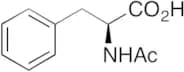
Purity:95.0%Molecular weight:267.75N-Acetyl-L-phenylalanine
CAS:Controlled Product<p>Applications N-Acetyl-L-phenylalanine is an protected analogue of L-Phenylalanine (P319415), an essential amino acid produced for medical, feed, and nutritional applications such as in the preparation of Aspartame.<br>References Sriram, S., et al.: J. Med. Chem., 56, 2540 (2013); Parker, B.M., et al.: J. Biotech., 155, 396 (2011);<br></p>Formula:C11H13NO3Color and Shape:NeatMolecular weight:207.231-(3-Methoxypropyl)-4-piperidinamine
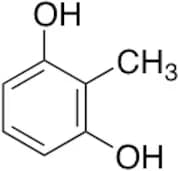
CAS:Controlled Product<p>Applications 1-(3-Methoxypropyl)-4-piperidinamine is a useful synthetic intermediate in the synthesis of Prucalopride Succinate (P838950); a selective 5-HT4 receptor agonist used effective for chronic constipation, but is not currently approved in the U.S. Prucalopride is approved for the treatment of chronic constipation in Europe.<br>References Shah, N., et al.: Am. J. Gastroenterol., 103, 1746 (2008); McKinnell, R., et al.: J. Med. Chem., 52, 5330 (2009); Shah, N., et al.: Am. J. Gastroenterol., 103, 1746 (2008); Yuan, Y., et al.: Zhongguo Yiyao Gongye Zazhi, 43, 5 (2012)<br></p>Formula:C9H20N2OColor and Shape:Colourless To Light YellowMolecular weight:172.2682-Methylresorcinol
CAS:Controlled Product<p>Applications 2-Methylresorcinol (cas# 608-25-3) is a useful research chemical.<br> Not a dangerous good if item is equal to or less than 1g/ml and there is less than 100g/ml in the package<br></p>Formula:C7H8O2Color and Shape:Light YellowMolecular weight:124.143-(2-(4-METHOXYPHENYLAMINO)BENZO[D]OXAZOL-5-YL)PROPANOIC ACID HCL
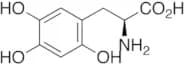
CAS:Purity:95.0%Molecular weight:348.77999877929696-Hydroxy-L-DOPA
CAS:Controlled Product<p>Impurity Levodopa EP Impurity A; Levodopa USP Related Compound A<br>Stability Hygroscopic<br>Applications 6-Hydroxy-L-DOPA (Levodopa EP Impurity A; Levodopa USP Related Compound A) is the 6-hydroxy derivative of the amino acid L-DOPA (D533751) with neurotoxic properties. Studies show that exogenously administered 6-Hydroxy-L-DOPA is biotransformed by amino acid decarboxylase to the highly potent and catecholamine-selective neurotoxin, 6-Hydroxydopamine. The treatment of 6-Hydroxy-L-DOPA in rats resulted in the stimulation of acetylcholinesterase.<br>References Jaim-Etcheverry, G. et al.: Brain Res., 100, 699 (1975); Kostrzewa, R.M. et al.: Amino Acids, 14, 175 (1998); Berthet, A. et al.: J. Neurosci., 29, 4829 (2009);<br></p>Formula:C9H11NO5Color and Shape:Brown To BlackMolecular weight:213.19L-Tryptophan-d3
CAS:Controlled Product<p>Applications L-Tryptophan-d3 is a deuterium labelled amino acid, which is a protein building block. The unlabelled L-Tryptophan (T947210) is also available.<br>References Goze, C., et al.: Eur. J. Pharmacol., 643, 153 (2010), Bhandare, P., et al.: J. Chem. Pharm. Res., 2, 372 (2010),<br></p>Formula:C11D3H9N2O2Color and Shape:NeatMolecular weight:207.24Isoleucine-d10 (mixture of diastereomers)
CAS:Controlled Product<p>Applications Isoleucine-d10 (mixture of diastereomers) (CAS# 29909-02-2) is a useful isotopically labeled research compound and can be used in gas liquid chromatography.<br>References VandenHeuvel, W., et.al., J. Chromatogr., 50, 405-412, (1970);<br></p>Formula:C6D10H3NO2Color and Shape:NeatMolecular weight:141.2345DL-Cysteine
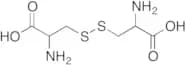
CAS:Controlled Product<p>Stability Hygroscopic<br>Applications Cysteine is a non-essential amino acid that can be synthesized by the human body under normal physiological conditions if a sufficient quantity of methionine is available. Cysteine is commonly used as a precursor in the food and pharmaceutical industries. Cysteine is used as a processing aid for baking, as an additive in cigarettes, as well as in the preparation of meat flavours.<br>References Hui, N. et al.: Meat Sci. Appl., 74 (2001); Kiviharju, K. et al.: J. Biotechnol., 117, 299 (2005); Pecivova, P. et al.: J. Sci. Food Agric., 90, 1681 (2010);<br></p>Formula:C3H7NO2SColor and Shape:NeatMolecular weight:121.162-Amino-5-methylhexanoic Acid
CAS:Controlled Product<p>Applications 2-amino-5-methylhexanoic acid (cas# 3558-32-5) is a useful research chemical.<br></p>Formula:C7H15NO2Color and Shape:NeatMolecular weight:145.2N-Pyrazinylcarbonyl-L-phenylalanine Methyl Ester
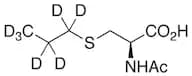
CAS:<p>Applications Used for the synthesis of Bortezomib from L-phenylalanine via dipeptidyl boronic acid ester intermediates.<br>References Zhu, Y., et al.: J. Med. Chem., 52, 4192 (2009),<br></p>Formula:C15H15N3O3Color and Shape:NeatMolecular weight:285.30N-Acetyl-S-(propyl-d7)-L-cysteine
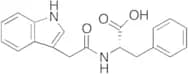
CAS:Controlled ProductFormula:C8D7H8NO3SColor and Shape:Off-WhiteMolecular weight:212.32indole-3-acetyl-L-phenylalanine
CAS:Controlled Product<p>Applications Indole-3-acetyl-L-phenylalanine is an indole-3-acetyl-amino acid conjugate involved in regulatory mechanisms for the control of auxin activity during physiological and pathophysiological responses.<br>References Ostrowski, M., et al.: J Plant Physiol, 191, 63-72 (2016)<br></p>Formula:C19H18N2O3Color and Shape:NeatMolecular weight:322.358L,L-Dityrosine Dihydrochloride
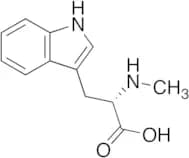
CAS:Controlled Product<p>Stability Hygroscopic<br>Applications Dityrosine (DY), a tyrosine dimer formed by 3,3’-biaryl bond formation can be used as a biomarker to detect oxidative protein damage and selective proteolysis. Fluorescence intensity decays of Dityrosine are generally characterized by two decay components, one with a lifetime in the range of 150 to 800 ps and another between 2.5 and 4.5 ns.<br>References Libertini, L., et al.: Biophys. J., 47, 765 (1985), Huggins, T., et al.: J. Biol. Chem., 268, 12341 (1993), Malencik, D., et al.: Biochemistry, 35, 4375 (1996),<br></p>Formula:C18H20N2O6·2ClHColor and Shape:NeatMolecular weight:433.28L-Abrine
CAS:Controlled Product<p>Applications L-Abrine is an indoleamino acid that displays radical scavenging and antioxidant properties.<br>References Yang, M., et al.: Food. Funct., 5, 2268 (2014);<br></p>Formula:C12H14N2O2Color and Shape:Off-WhiteMolecular weight:218.2518(R)-D-Methioninol
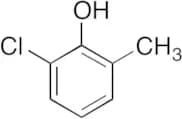
CAS:Controlled Product<p>Applications (R)-D-Methioninol<br></p>Formula:C5H13NOSColor and Shape:NeatMolecular weight:135.232-Chloro-6-methylphenol
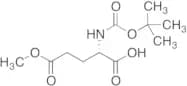
CAS:Controlled ProductFormula:C7H7ClOColor and Shape:NeatMolecular weight:142.58N-Boc-L-glutamic Acid 5-Methyl Ester
CAS:Controlled Product<p>Applications N-Boc-L-glutamic Acid 5-Methyl Ester is an intermediate used in the synthesis of Isodesmosine Chloride Hydrate (Synthetic) (I815051), which is a component of elastin and also it is extremely hygroscopic and must be stored over a desiccant such as silica gel.<br>References Partridge, S., et al.: Nature, 209, 399 (1966)<br></p>Formula:C11H19NO6Color and Shape:NeatMolecular weight:261.27N-Boc-L-cis-4,5-Methanoprolineamide
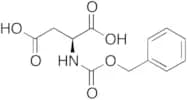
CAS:Controlled Product<p>Applications N-Boc-L-cis-4,5-Methanoprolineamide is an intermediate used to prepare methanoprolinenitrile-contg. dipeptide mimetics as DPP-IV inhibitors and as antidiabetic agents.<br>References Magnin, D., et al.: J. Med. Chem., 47, 2587 (2004)<br></p>Formula:C11H18N2O3Color and Shape:NeatMolecular weight:226.272N-Cbz-L-aspartic Acid
CAS:Controlled Product<p>Applications N-Cbz-L-aspartic acid is an N-Cbz-protected form of L-Aspartic acid (A790024). L-Aspartic acid is a nonessential amino acid that is used to biosynthesize other amino acids within the human body. L-Aspartic acid also increases membrane conductance of mammalian neurons by voltage-dependent means, causing depolarization and nerve impulses that travel to key areas of the central nervous system.<br>References Anderson, H., et al.: J. Nutr., 99, 82 (1969); Honey, C., et al.: Neurosci. Lett., 61, 135 (1985); MacDonald, J., et al.: Brain Res., 237, 248 (1982)<br></p>Formula:C12H13NO6Color and Shape:White To Off-WhiteMolecular weight:267.234-benzoyl-8-propyl-1-oxa-4,8-diazaspiro[4.5]decane-3-carboxylic acid
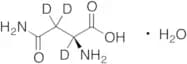
CAS:Purity:95.0%Molecular weight:332.3999938964844L-Asparagine-d3 Hydrate
CAS:Controlled Product<p>Applications L-Asparagine-d3 Hydrate is an isotope labelled L-Asparagine Hydrate, a naturally occurring amino acid that is not a essential for humans and can be synthesized from central metabolic pathway intermediates.<br>References Burda, P., et al.: Biochim. Biophys. Acta., 1426, 239 (1999); Yamane, H., et al.: Animal. Sci. J., 80, 286 (2009);<br></p>Formula:C4D3H5N2O3·H2OColor and Shape:White To Off-WhiteMolecular weight:153.15172'-Amino-5'-methyl-[1,1':3',1''-terphenyl]-3,3'',5,5''-tetracarboxylic acid
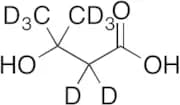
CAS:Purity:98%Molecular weight:435.38800048828125β-Hydroxyisovaleric Acid-d8
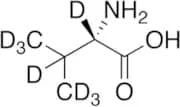
CAS:Controlled ProductFormula:C5H2D8O3Color and Shape:Colourless To YellowMolecular weight:126.18L-Valine-d8
CAS:Controlled Product<p>Applications Labelled analogue of L-Vailne. L-Valine is an essential amino acid and one of 20 proteinogenic amino acids. L-Valine cannot be manufactured by the body and must be acquired through diet or supplementation. L-valine is found in grains, dairy products, mushrooms, meats, peanuts and soy proteins. L-Valine has been used in studies to attenuate arrhythmias and induce hypotensive effects.<br>References Choi, C.W. et al.: Anim. Feed Sci. Technol., 102, 15 (2002); Kolarski, D. et al.: Krmiva, 30, 155 (1988); Oba, M. et al.: J. Dairy Sci., 93, 2044 (2010); Mitrega, K. et al.: Pharmacol. Res., 64, 218 (2011);<br></p>Formula:C52H8H3NO2Color and Shape:NeatMolecular weight:125.20











![2',3',5',6'-Tetrahydrospiro[indoline-3,4'-pyran]-5-carboxylic acid](/_next/image/?url=https%3A%2Fstatic.cymitquimica.com%2Fproducts%2F10%2Fthumb-webp%2FF609567.webp&w=3840&q=75)

![N-[(Benzyloxy)carbonyl]glycylglycine](/_next/image/?url=https%3A%2Fstatic.cymitquimica.com%2Fproducts%2FTR%2Fthumb-webp%2FB287100.webp&w=3840&q=75)



![3-(2-(4-METHOXYPHENYLAMINO)BENZO[D]OXAZOL-5-YL)PROPANOIC ACID HCL](/_next/image/?url=https%3A%2Fstatic.cymitquimica.com%2Fproducts%2F10%2Fthumb-webp%2FF534865.webp&w=3840&q=75)







![4-benzoyl-8-propyl-1-oxa-4,8-diazaspiro[4.5]decane-3-carboxylic acid](/_next/image/?url=https%3A%2Fstatic.cymitquimica.com%2Fproducts%2F10%2Fthumb-webp%2FF525714.webp&w=3840&q=75)
![2'-Amino-5'-methyl-[1,1':3',1''-terphenyl]-3,3'',5,5''-tetracarboxylic acid](/_next/image/?url=https%3A%2Fstatic.cymitquimica.com%2Fproducts%2F10%2Fthumb-webp%2FF693763.webp&w=3840&q=75)