Amino Acids (AA)
Subcategories of "Amino Acids (AA)"
- Amino Acid Derivatives(4,010 products)
- Amino Acid and Amino Acid Related Compounds(3,486 products)
- Amino Acids with Oxygen or Sulphur(168 products)
- Boc- Amino Acids(351 products)
- Fmoc Amino Acids(1,710 products)
Found 38355 products of "Amino Acids (AA)"
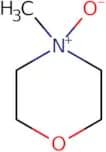
4-Methylmorpholine N-oxide
CAS:Intermediate for organic synthesis
Formula:C5H11NO2Purity:Min 97%Color and Shape:White PowderMolecular weight:117.15 g/mol3-Methyl-1,2,4-oxadiazole-5-carbohydrazide
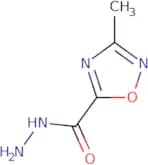
CAS:3-Methyl-1,2,4-oxadiazole-5-carbohydrazide is a versatile building block that can be used to synthesize complex compounds. It is a high quality reagent and has been shown to be useful as a reaction component in the synthesis of pharmaceuticals and other research chemicals. 3-Methyl-1,2,4-oxadiazole-5-carbohydrazide is also an intermediate in the synthesis of 1-(3,4-methylenedioxyphenyl)-2-(1H)-pyridinone. CAS No.: 40019-29-2Formula:C4H6N4O2Purity:Min. 95 Area-%Color and Shape:White Off-White PowderMolecular weight:142.12 g/mol5-Methylnicotinaldehyde
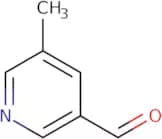
CAS:5-Methylnicotinaldehyde is a chemical compound that belongs to the group of tetrahydropyridines. It is a reagent for producing triphosgene and dimethylformamide. 5-Methylnicotinaldehyde has been shown to inhibit muscarinic acetylcholine receptors, leading to an increase in acetylcholine release from nerve endings. This may be due to its ability to bind with the receptor affinity site at the base of the nicotinic acetylcholine receptor. 5-Methylnicotinaldehyde also has anti-inflammatory properties and can be used as a pesticide.
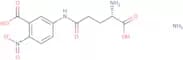
Formula:C7H7NOPurity:Min. 95%Color and Shape:PowderMolecular weight:121.14 g/molL-Glutamic acid gamma-(3-carboxy-4-nitroanilide) ammonium salt
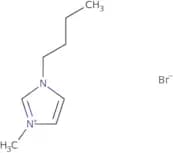
CAS:L-Glutamic acid gamma-(3-carboxy-4-nitroanilide) ammonium salt has been used as a synthetic substrate for gamma-glutamyltransferase (GGT) to determine GGT activity.Formula:C12H16N4O7Purity:Min. 99 Area-%Color and Shape:White PowderMolecular weight:328.28 g/mol1-Butyl-3-methylimidazolium bromide
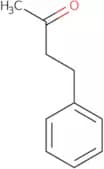
CAS:1-Butyl-3-methylimidazolium bromide is an ionic liquid that has been shown to be a good solvent for cellulose. It is also biocompatible and can be used as a polymer matrix for copper chloride. 1-Butyl-3-methylimidazolium bromide has been shown to be a good model system for studying the interaction between ions and water vapor in liquids. It has been observed that 1-butyl-3-methylimidazolium bromide undergoes hydrogen bonding interactions with water molecules, which may provide the driving force for its solvation of cellulose.Formula:C8H15BrN2Purity:(¹H-Nmr) Min. 95 Area-%Color and Shape:PowderMolecular weight:219.12 g/mol4-Phenyl-2-butanone
CAS:4-Phenyl-2-butanone is an organic compound that is used as a solvent. It has been shown to be effective against a wide range of bacteria, including Gram positive and Gram negative bacteria. 4-Phenyl-2-butanone disrupts the cell membrane by binding to glycol ether, which is an important part of the lipid bilayer. It also inhibits the synthesis of two important molecules in bacterial cells, dinucleotide phosphate and phospholipids. This process leads to bacterial cell death. 4-Phenyl-2-butanone also has antimicrobial properties due to its ability to destroy water vapor and inhibit growth of microorganisms on skin.
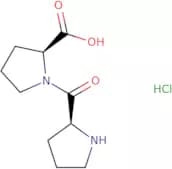
Formula:C10H12OPurity:Min. 97.5 Area-%Color and Shape:Colorless Clear LiquidMolecular weight:148.2 g/molH-Pro-Pro-OH·HCl
CAS:H-Pro-Pro-OH·HCl is a fine chemical that is commonly used as a building block for organic synthesis. This compound is soluble in water, making it an ideal reactant for use in reactions involving peptides and proteins. H-Pro-Pro-OH·HCl is also useful as an intermediate, research chemical, or speciality chemical. It has been used as a reagent for the preparation of other chemicals and has shown high quality performance in reactions with nucleophiles.Formula:C10H16N2O3·HClPurity:Min. 95%Color and Shape:White PowderMolecular weight:248.71 g/mol1-Deoxy-1-(methylamino)-D-glucitol [3-[[(2R,3S)-2-[(1R)-1-[3,5-bis(trifluoromethyl)phenyl]ethoxy]-3-(4-fluorophenyl)-4-morpholinyl]m ethyl]-2,5-dihydro-5-oxo-1H-1,2,4-triazol-1-yl]phosphonate
CAS:Fosaprepitant is a drug that belongs to the class of drugs used for chemotherapy. It is a prodrug that is converted in vivo to aprepitant, its active form. Fosaprepitant acts as an antagonist of the neurokinin-1 receptor (NK-1R) and inhibits the binding of substance P, which leads to an anti-inflammatory effect. Fosaprepitant has been shown to inhibit the production of substance P in animal models, leading to a reduction in inflammation. In clinical trials, fosaprepitant has been shown to be safe and well tolerated when used with other drugs such as cisplatin and docetaxel in patients with cancer.Formula:C23H22F7N4O6P•(C7H17NO5)2Purity:Min. 95%Color and Shape:White To Off-White SolidMolecular weight:1,004.83 g/molD-Ornithine hydrochloride
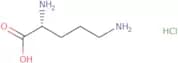
CAS:D-Ornithine hydrochloride is a synthetic amino acid that is used as a precursor for the synthesis of polyamines in the body. It is also used as an additive in food and animal feed. This amino acid has been shown to inhibit gramicidin production by inhibiting the enzyme acylase. D-Ornithine hydrochloride has also been shown to stimulate the production of ornithine by increasing ATP levels and activating enzymes such as pyruvate kinase, glutamic pyruvate transaminase, and phosphoenolpyruvate carboxykinase. In addition, it has been shown to have chemoenzymatic properties that allow for its use in reactions with fatty acids as substrates. The reaction yield increases with higher substrate concentrations, which can be achieved using immobilized cells or by adding cyclic peptides such as ornithine to the reaction mixture.Formula:C5H12N2O2•HClPurity:Min. 95%Color and Shape:PowderMolecular weight:168.62 g/molGlycine ethyl ester hydrochloride
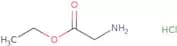
CAS:Used with EDC for carboxyl-foot printing studies of proteins
Formula:C4H9NO2•HClPurity:Min. 95%Color and Shape:PowderMolecular weight:139.58 g/mol2-Amino-5-methylbenzamide
CAS:2-Amino-5-methylbenzamide (2AMB) is a potent inhibitor of the enzyme dihydropyrimidine dehydrogenase and is used in cancer research for its ability to inhibit tumor cell line growth. 2AMB has been shown to inhibit the synthesis of DNA, RNA, and protein in various human cell lines. The mechanism of this inhibition is not well understood, but it may be due to its ability to inhibit the activity of synthetases involved in nucleotide biosynthesis or by inhibiting the reaction system that converts hydration into ATP.Formula:C8H10N2OPurity:Min. 95%Color and Shape:PowderMolecular weight:150.18 g/mol5-Nitro-m-phenylenediamine
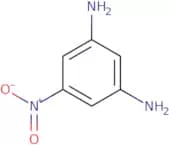
CAS:5-Nitro-m-phenylenediamine is an organic compound that has the chemical formula CHNO. It is a white crystalline solid with a melting point of 158 °C. The compound is soluble in water and other polar solvents but insoluble in nonpolar solvents such as hexane. 5-Nitro-m-phenylenediamine can be prepared by nitration of m-phenylenediamine, which produces the desired product in about 30% yield and with impurities that must be removed by fractional crystallization. The compound is used as an intermediate for making dyes and pharmaceuticals.Formula:C6H7N3O2Purity:Min. 95%Color and Shape:PowderMolecular weight:153.14 g/molL-Glutamic acid di-tert-butyl ester hydrochloride
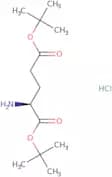
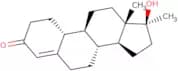
CAS:L-glutamic acid di-tert-butyl ester hydrochloride is a synthetic glutamic acid conjugate that can be used in the treatment of cancer. L-Glutamic acid di-tert-butyl ester hydrochloride is a substrate for many enzymes, such as glutamate transporters and glutaminase, which are found in tumor cells. It has been shown to decrease the uptake of docetaxel by tumor xenografts in mice. The expression of L-Glutamic acid di-tert-butyl ester hydrochloride has been observed in tissues during cancerous growth and it is expressed at higher levels than in normal tissues.Formula:C13H25NO4·HClPurity:Min. 95%Color and Shape:White PowderMolecular weight:295.8 g/mol17alpha-Methyl-19-nortestosterone
CAS:Controlled Product17alpha-Methyl-19-nortestosterone (17MT) is an anti-cancer agent that has been used as a contraceptive. It inhibits the conversion of testosterone to dihydrotestosterone by competitive inhibition of the enzyme 3beta-hydroxysteroid dehydrogenase, which is responsible for the first step in the biosynthesis of androgens. 17MT has also been shown to inhibit angiotensin II formation, thereby reducing blood pressure. This drug acts as a structural analogue of progesterone and binds to progesterone receptors, as well as other steroid receptors, with high affinity. 17MT also inhibits fatty acid synthesis in cancer cells, leading to decreased tumor growth.
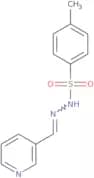
Formula:C19H28O2Purity:Min. 95%Color and Shape:PowderMolecular weight:288.42 g/molBenzenesulfonic acid, 4-methyl-2-(3-pyridinylmethylene)hydrazide
CAS:Please enquire for more information about Benzenesulfonic acid, 4-methyl-2-(3-pyridinylmethylene)hydrazide including the price, delivery time and more detailed product information at the technical inquiry form on this pagePurity:Min. 95%6-amino-4-(2-methoxyphenyl)-3-methyl-4H-pyrano[3,2-d]pyrazole-5-carbonitrile
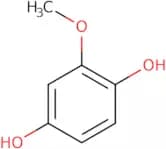
CAS:Please enquire for more information about 6-amino-4-(2-methoxyphenyl)-3-methyl-4H-pyrano[3,2-d]pyrazole-5-carbonitrile including the price, delivery time and more detailed product information at the technical inquiry form on this pageFormula:C15H14N4O2Purity:Min. 95%Color and Shape:PowderMolecular weight:282.30 g/mol2-Methoxyhydroquinone
CAS:2-Methoxyhydroquinone is a reactive phenolic compound that is used as an antioxidant in nutrient solutions. The compound reacts with a hydroxyl group to form 2,2-bis(4-hydroxyphenyl)propane through the addition of hydrogen bonds. It is also used for wastewater treatment and in radiation-induced polymerization reactions. 2-Methoxyhydroquinone can react with alcohol residues on proteins to form p-hydroxybenzoic acid esters. In addition, this compound has been shown to be an excellent enzyme substrate, which may result from its ability to undergo hydrogen bonding interactions with the enzyme active site.
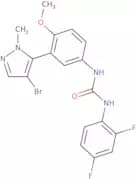
Formula:C7H8O3Color and Shape:PowderMolecular weight:140.14 g/molNelotanserin
CAS:1-[3-(4-Bromo-1-methyl-1H-pyrazol-5-yl)-4-methoxyphenyl]-3-(2,4-difluorophenyl)urea is the active ingredient in a drug that is used to treat chronic schizophrenia. It has been shown to have both antipsychotic and antidepressant properties. The drug works by blocking the 5HT2A receptor, which inhibits the effects of serotonin on heterocyclic amines at the postsynaptic membrane. This causes hyperpolarization of the membrane, which blocks neurotransmitter release and prevents further transmission of signals. It also blocks the H1 receptor, which decreases histamine release and reduces inflammation in the brain.Formula:C18H15BrF2N4O2Purity:Min. 95%Color and Shape:PowderMolecular weight:437.24 g/mol1,2-Distearoyl-sn-glycerol
CAS:1,2-Distearoyl-sn-glycerol (DAG) is a lipid molecule that is found in the cell membrane and can be used as an antimicrobial agent. DAG has been shown to inhibit the growth of bacteria by binding to their fatty acid chains. It also has been shown to bind to the receptor P2Y6, which is involved in mediating inflammatory responses, and inhibits its activity. This drug may be useful for treating diseases such as atherosclerosis and diabetes mellitus type 2.Formula:C39H76O5Color and Shape:PowderMolecular weight:625.02 g/molS-2-Propen-1-yl-L-cysteine ethyl ester hydrochloride
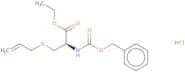
CAS:Please enquire for more information about S-2-Propen-1-yl-L-cysteine ethyl ester hydrochloride including the price, delivery time and more detailed product information at the technical inquiry form on this pageFormula:C8H15NO2S•HClPurity:Min. 95%Molecular weight:225.74 g/mol4,6-Dimethyl-N-phenylpyrimidin-2-amine
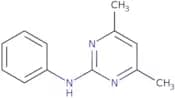
CAS:4,6-Dimethyl-N-phenylpyrimidin-2-amine is a fungicide that is effective against the production of nitrite ion in the liver. It has been shown to be a potent inhibitor of hepatic steatosis. 4,6-Dimethyl-N-phenylpyrimidin-2-amine was also shown to have an inhibitory effect on the growth of fungal strains in vitro. This compound has been demonstrated to be active against a number of plant pathogens and may be useful in postharvest applications. 4,6-Dimethyl-N-phenylpyrimidin-2-amine interacts with the hippocampus formation and may play a role in preventing neurodegenerative diseases such as Alzheimer's disease or Parkinson's disease.Formula:C12H13N3Purity:Min. 95%Color and Shape:PowderMolecular weight:199.25 g/molFmoc-O-benzylphospho-L-serine
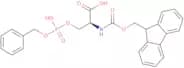
CAS:Fmoc-O-benzylphospho-L-serine is a fmoc-protected phosphoserine derivative for efficient synthesis of phosphoserine-containing peptides via standard fmoc SPPS. Compatible with common activators such as PyBOP or TBTU, it remains stable during piperidine deprotection and enables incorporation of multiple phosphoserine residues, for example successful syntheses of phospholamban and human salivary statherin. In certain cases, β-piperidinylalanine formation may occur during N-terminal Ser(PO(OBzl)OH) Fmoc deprotection, especially under microwave conditions.Formula:C25H24NO8PPurity:Min. 97 Area-%Color and Shape:White Off-White PowderMolecular weight:497.43 g/molBoc-Dap-OtBu hydrochloride salt
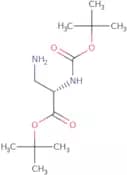
CAS:Boc-Dap-OtBu hydrochloride salt is a chemical that is synthesized by anhydride and trifluoroacetic acid. It can be used in the laboratory for protein visualization, as well as to detect proteins using LC-MS. The presence of trifluoroacetic acid makes the Boc-Dap-OtBu hydrochloride salt fluorescent, which makes it possible to visualize the reaction products under UV light. This chemical is often used in fluorescence spectrometry to identify amino acids and other compounds.Formula:C12H24N2O4Purity:Min. 95%Color and Shape:PowderMolecular weight:260.33 g/molFmoc-S-tert-butoxycarbonylmethyl-L-cysteine
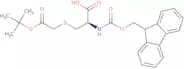
CAS:Fmoc-S-tert-butoxycarbonylmethyl-L-cysteine is a polylactic residue with a propenone cyclic structure. It is soluble in organic solvents and has an aromatic heterocyclic ring. Fmoc-S-tert-butoxycarbonylmethyl-L-cysteine can be used to synthesize pesticides, nicotine, and immunogens.Formula:C24H27NO6SPurity:Min. 97 Area-%Color and Shape:White PowderMolecular weight:457.54 g/molCyclo(L-Pro-L-Tyr)
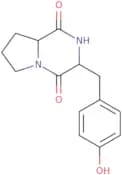
CAS:Cyclo(-Pro-Tyr) is a natural product that belongs to the class of antimicrobial agents. It has been shown to inhibit the growth of colorectal adenocarcinoma cells by reducing mitochondrial membrane potential and inhibiting protein synthesis. Cyclo(-Pro-Tyr) also has antimicrobial properties against bacteria, including Enterococcus faecalis and Escherichia coli. The biological properties of Cyclo(-Pro-Tyr) have been investigated in vitro with tissue culture and acetate extracts, demonstrating its ability to inhibit the production of fatty acids, as well as its wound healing abilities. Cyclo(-Pro-Tyr) is a synthetase that uses methyl myristate as a substrate and etoac extract as an electron donor. The enzyme converts methyl myristate into cyclopropane fatty acid ester, which can be used for the synthesis of polymers such as polypropylene and polyethylene terephthalate.
Formula:C14H16N2O3Purity:Min. 95%Color and Shape:PowderMolecular weight:260.29 g/mol4-Methoxy-2,3,5-trifluorobenzoic acid
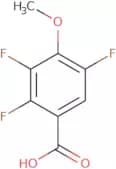
CAS:4-Methoxy-2,3,5-trifluorobenzoic acid is a versatile building block that can be used in the synthesis of complex compounds. It is a high quality chemical that can be used as a reagent or speciality chemical in research. This compound has been shown to have many uses including as an intermediate for the synthesis of other chemicals and as a reaction component. 4-Methoxy-2,3,5-trifluorobenzoic acid can also be used as an important scaffold in the design of new drugs.Formula:C8H5F3O3Purity:Min. 95%Color and Shape:White PowderMolecular weight:206.12 g/mol17-Hydroxy-6-methylpregna-4,6-diene-3,20-dione
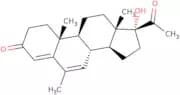
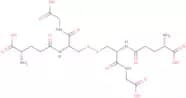
CAS:Controlled Product17-Hydroxy-6-methylpregna-4,6-diene-3,20-dione is a progestin that is used as an antiretroviral agent in the treatment of HIV. It has been shown to be effective for chronic cough and cancer. 17-Hydroxy-6-methylpregna-4,6-diene-3,20-dione can be used for the treatment of infectious diseases such as HIV by inhibiting viral replication and reducing the amount of virus in the blood. This drug can also be used to treat some cancers and solid tumours. It has been shown to have long term efficacy in these conditions due to its ability to block cell division. 17 hydroxy pregnane 4,6 diene 3,20 dione is also used in the treatment of geriatric patients with chronic illnesses or who are immunocompromised due to its ability to stimulate appetite.Formula:C22H30O3Purity:Min. 98 Area-%Color and Shape:White Off-White PowderMolecular weight:342.47 g/molL-Glutathione oxidized
CAS:Marker for oxidative stress; hydrogen acceptor in NADP and NADPH assay
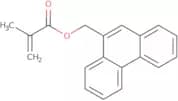
Formula:C20H32N6O12S2Purity:Min. 98.0 Area-%Color and Shape:White PowderMolecular weight:612.64 g/mol(9-Phenanthryl)methyl methacrylate
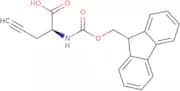
CAS:9-Phenanthryl)methyl methacrylate is a fluorescent pigment that is used as a nanomaterial. It is an acidic material and can be used in coatings to improve the properties of materials. 9-Phenanthryl)methyl methacrylate has been shown to have fluorescence resonance energy transfer (FRET) properties, which may be due to its monolayer structure and chromophore. The diameter of this particle ranges from 10-20 nm, with a water permeability of 20% at pH 7.0 and 0.1% at pH 2.0. This pigment has a high degree of surface roughness, which is due to its morphology and the microenvironment in which it exists.Formula:C19H16O2Purity:Min. 95 Area-%Color and Shape:PowderMolecular weight:276.33 g/molFmoc-L-propargylglycine
CAS:Fmoc-L-propargylglycine is a cyclic peptide that is synthesized by chemical ligation. It has antiviral, anti-tumor, and anti-inflammatory activities. Fmoc-L-propargylglycine inhibits the growth of cancer cells in vitro. The mechanism of action is not fully understood, but it may involve the inhibition of cellular proliferation and the induction of apoptosis. This compound also inhibits epidermal growth factor (EGF) induced cell proliferation in caco-2 cells.Formula:C20H17NO4Purity:Min. 98 Area-%Color and Shape:White PowderMolecular weight:335.35 g/mol2-Methoxy-1-[(4-methylphenyl)sulphinyl]benzene
CAS:2-Methoxy-1-[(4-methylphenyl)sulphinyl]benzene is a reagent and useful intermediate that is used in the synthesis of complex compounds. This chemical has been shown to be a useful scaffold for the synthesis of natural products. It can also be used as a building block in the synthesis of speciality chemicals and research chemicals, as well as versatile building blocks in reactions.Formula:C14H14O2SPurity:Min. 95%Molecular weight:246.33 g/molL-a-Glycerophosphorylcholine
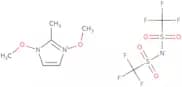
CAS:Precursor of neurotransmitter acetylcholineFormula:C8H20NO6PPurity:(%) Min. 95%Color and Shape:White PowderMolecular weight:257.22 g/mol1,3-Dimethoxy-2-methylimidazoliumbis(trifluoromethylsulfonyl)imide
CAS:Please enquire for more information about 1,3-Dimethoxy-2-methylimidazoliumbis(trifluoromethylsulfonyl)imide including the price, delivery time and more detailed product information at the technical inquiry form on this pageFormula:C8H11F6N3O6S2Purity:Min. 95%Color and Shape:PowderMolecular weight:423.31 g/molN-Acetyl-L-cysteine - Non-animal and non-human origin
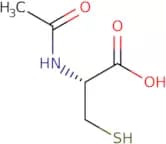
CAS:Antioxidant; mucolytic agent; anti-viral against influenza A virusesFormula:C5H9NO3SPurity:Min. 95%Color and Shape:White PowderMolecular weight:163.2 g/mol2-Methoxypropyl acetate
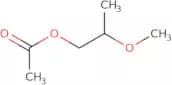
CAS:2-Methoxypropyl acetate is a cross-linking agent that is used in water treatment. It is used as an additive to deionized water and can be found in high concentrations in wastewater. 2-Methoxypropyl acetate reacts with xylene to produce light emission, which makes it suitable for use as a chemical marker. The optimum dose of 2-methoxypropyl acetate ranges from 0.025% to 0.2%. 2-Methoxypropyl acetate has been shown to be toxic when injected into rats at doses of 100 mg/kg body weight, but not at doses of 25 mg/kg body weight or less. This compound was also shown to cause protrusion and necrosis of the nasal septum in rats after administration at doses of 500 mg/kg body weight.Formula:C6H12O3Purity:Min. 95%Color and Shape:Colourless LiquidMolecular weight:132.16 g/mol3-Amino-4-methoxybenzanilide
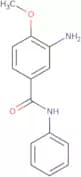
CAS:3-Amino-4-methoxybenzanilide is a white, crystalline solid that is soluble in organic solvents. It reacts with hydrochloric acid to form hydrogen chloride and 3-amino-4-methoxybenzoic acid. 3-Amino-4-methoxybenzanilide is used as an analytical reagent for determining the chloride content of various materials. The heat energy needed for the reaction to occur optimally is between 55 and 75 degrees Celsius. The optimal reaction system includes hydrochloric acid, an organic solvent, and diazonium salt activated by hydrogen chloride gas. The reaction time is 2 hours at room temperature and the analytical method used is titrimetric analysis using triticum aestivum as the particle.Formula:C14H14N2O2Purity:Min. 95%Color and Shape:PowderMolecular weight:242.27 g/mol2-Methylstyrene
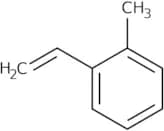
CAS:2-Methylstyrene is a synthetic compound that is used in the manufacture of various industrial chemicals and plastics. It is produced by the catalytic polymerization of styrene with sodium salts, calcium stearate, and sodium carbonate. 2-Methylstyrene can also be synthesized from chloroacetic acid and hydrogen chloride. This chemical has been shown to undergo cationic polymerization when it reacts with an amine or a hydroxyl group. 2-Methylstyrene is soluble in organic solvents such as benzene or chloroform. It has been used as a film-forming polymer in analytical chemistry due to its high volatility and low viscosity.Formula:C9H10Purity:Min. 95%Molecular weight:118.18 g/mol5-Chloro-2-methoxyacetophenone
CAS:5-Chloro-2-methoxyacetophenone is a byproduct of the synthesis of 2-hydroxybenzofuran. It is also used in the synthesis of tetracyclic benzopyrans, which are known to be potent analgesics and have been found to have anti-inflammatory properties. 5-Chloro-2-methoxyacetophenone can be obtained by decarbonylation (loss of carbon) or elimination reactions.
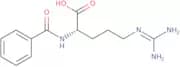
Formula:C9H9ClO2Purity:Min. 95%Color and Shape:Clear LiquidMolecular weight:184.62 g/molN-a-Benzoyl-L-arginine
CAS:N-a-Benzoyl-L-arginine is a fluorescent substrate for soybean trypsin. It is hydrolyzed by the enzyme to release an amide and p-nitrophenyl phosphate. The amide is then hydrolyzed by esterase to produce caproic acid, which can be detected at an excitation wavelength of 340 nm and emission wavelength of 495 nm. N-a-Benzoyl-L-arginine has been shown to have proteolytic activity in cell culture, with a pH optimum of 6.8 and temperature optimum of 37 degrees Celsius. This product has been shown to be effective in women as well as in men.Formula:C13H18N4O3Purity:Min. 95%Color and Shape:White PowderMolecular weight:278.31 g/mol3-Amino-4-methylpyridine
CAS:3-Amino-4-methylpyridine is a chemical compound that belongs to the group of organic compounds. It is used as an intermediate in the synthesis of podophyllotoxin, a cytotoxic agent that inhibits protein synthesis and cell division. 3-Amino-4-methylpyridine binds to mammalian cells with high affinity and inhibits protein synthesis by inhibiting the enzyme ribosomal protein S6 kinase. This compound also has an inhibitory effect on tofacitinib citrate, which is a drug used for treatment of rheumatoid arthritis. 3-Amino-4-methylpyridine has been shown to be effective against chloride ions in its reaction mechanism, making it suitable for use in organic synthesis.Formula:C6H8N2Purity:Min. 98 Area-%Color and Shape:PowderMolecular weight:108.14 g/mol2,4,6-Trimethoxy-3-methylbenzaldehyde
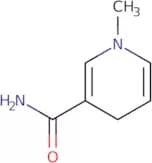
CAS:2,4,6-Trimethoxy-3-methylbenzaldehyde is a flavanone that is structurally related to the drug ciprofloxacin. The two molecules share a common molecular framework with the addition of a hydroxyl group on the 2 position of the benzene ring. In molecular docking studies, 2,4,6-Trimethoxy-3-methylbenzaldehyde has shown antitubercular activity against Mycobacterium tuberculosis and Mycobacterium avium complex. It is also an inhibitor of protein tyrosine phosphatase and has been shown to have antibacterial activity against various strains of bacteria.Formula:C11H14O4Purity:Min. 95%Color and Shape:PowderMolecular weight:210.23 g/mol1-Methyl-1,4-dihydronicotinamide
CAS:1-Methyl-1,4-dihydronicotinamide (1MDNA) is a flavine adenine dinucleotide analog that has been shown to be a potent inhibitor of the enzyme catalase. 1MDNA binds to the active site of the enzyme and prevents hydrogen peroxide from being converted into water and oxygen. This inhibition slows down or stops the reaction, which leads to reduced production of reactive oxygen species. 1MDNA inhibits other enzymes in a similar manner, including transferases and kinases. The kinetic properties of 1MDNA have been studied by performing kinetic studies on model systems at different temperatures. X-ray crystal structures have also been obtained for 1MDNA bound to catalase and ferredoxin.Formula:C7H10N2OPurity:Min. 95%Color and Shape:PowderMolecular weight:138.17 g/mol2-Amino-3-methylpyridine
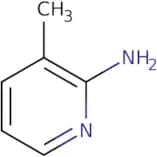
CAS:2-Amino-3-methylpyridine is a colorless crystalline compound. It has the molecular formula of CHN and a molecular weight of 115.2 g/mol. 2-Amino-3-methylpyridine has an asymmetric carbon atom, so it is chiral and can be found in two different forms, enantiomers. The intermolecular hydrogen bond between nitrogen atoms is responsible for the high melting point of -40°C. The coordination geometry of group P2 is pyramidal with the nitrogen atom at the apex and two hydrogen atoms bonded to each other on either side of the nitrogen atom at 120° angles. X ray crystal structures have shown that 2-amino-3-methylpyridine exists as a molecule with an acylation reaction mechanism and intramolecular hydrogen bonding. Methanol solvent was used in this study to dissolve 2 amino 3 methyl pyridine because it does not react with copper chloride
Formula:C6H8N2Purity:Min. 98 Area-%Color and Shape:Solidified MassMolecular weight:108.14 g/mol2-[Ethyl-[2-(3-hydroxy-2,6-dimethyl-anilino)-2-oxo-ethyl]amino]-N-(3-hydroxy-2,6-dimethyl-phenyl)acetamide
CAS:2-[Ethyl-[2-(3-hydroxy-2,6-dimethyl-anilino)-2-oxo-ethyl]amino]-N-(3-hydroxy-2,6-dimethylphenyl)acetamide is a reaction component that is used in the synthesis of complex compounds. It is a versatile building block and useful intermediate for the synthesis of fine chemicals. This chemical has been shown to be an effective reagent for the preparation of high quality research chemicals. CAS No. 2200280-96-0Formula:C22H29N3O4Purity:Min. 95%Color and Shape:White to off-white solid.Molecular weight:399.48 g/mol5-Nitro-1,10-phenanthroline
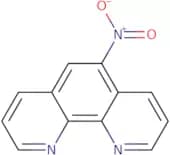
CAS:5-Nitro-1,10-phenanthroline is a coordination compound that belongs to the group of p2. It has been shown to have low toxicity and can be used as an ancillary ligand in coordination chemistry. 5-Nitro-1,10-phenanthroline has been used as a synchronous fluorescence probe for amines and is also useful for kinetic studies due to its high stability and sensitivity. FTIR spectroscopy has shown that this compound binds to glyoxal at neutral pH; it may also react with reactive oxygen species such as superoxide, hydrogen peroxide, or hydroxyl radicals.Formula:C12H7N3O2Purity:Min. 97 Area-%Color and Shape:PowderMolecular weight:225.2 g/mol1-(4-Methoxyphenyl)piperazine hydrochloride
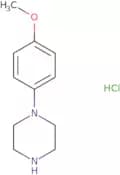
CAS:Controlled Product1-(4-Methoxyphenyl)piperazine hydrochloride is a high-potency inhibitor of the K+ channels. It has been shown to inhibit the activity of these channels in lead compound screening and optimization. The modification of potassium channels by 1-(4-Methoxyphenyl)piperazine hydrochloride has been evaluated using a patch clamp technique on rat erythrocytes. This inhibitory activity was found to be concentration dependent and voltage sensitive. 1-(4-Methoxyphenyl)piperazine hydrochloride was also shown to have pharmacological effects, such as analgesia, sedation and muscle relaxation.Formula:C11H16N2O•HClPurity:Min. 95%Molecular weight:228.72 g/molDL-Proline
CAS:A useful as an intermediate in the synthesis of peptides, proteins, and other organic molecules. It can be used as a reagent or as an additive to other chemicals.Formula:C5H9NO2Purity:Min. 99 Area-%Molecular weight:115.13 g/mol6-Methoxy-2-naphthaldehyde
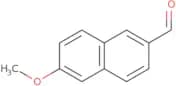
CAS:6-Methoxy-2-naphthaldehyde is a nonsteroidal antiinflammatory drug that belongs to the class of naphthalenes. It inhibits the formation of inflammatory prostaglandins, which are mediators of pain and inflammation. 6-Methoxy-2-naphthaldehyde has been shown to have cytotoxic effects on cancer cells and in vitro studies have shown that it can induce cell lysis. It has also been shown to be a potent fluorescence probe for use in biological applications. This compound binds to human serum proteins by hydrogen bonding interactions, which may affect its pharmacokinetic properties. In addition, this compound has been shown to inhibit the activity of detoxification enzymes such as CYP 2C9 and 2D6 at high concentrations, which may lead to unwanted side effects such as nausea or vomiting. The molecular docking analysis of 6-Methoxy-2-naphthaldehyde with the active site of human liver alcohol dehydrogenFormula:C12H10O2Purity:Min. 98 Area-%Color and Shape:PowderMolecular weight:186.21 g/mol1-Methyl-2-imidazolidinone
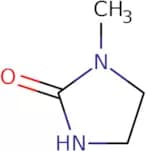
CAS:1-Methyl-2-imidazolidinone is an organic molecule that has nucleophilic attack properties. It is a chiral molecule that has mesomeric and lactam structures. The ligand has dipole, tetramethylurea, and hydroxy groups. 1-Methyl-2-imidazolidinone is used as a solvent for the preparation of some pharmaceuticals, such as ampicillin, amoxicillin, and cefditoren pivoxil. It is also used in the synthesis of other compounds such as ethyl acetate, chloroformates, and epoxy compounds. 1-Methyl-2-imidazolidinone is used as an additive to increase the volatility of solvents or to lower the melting point of polymers in order to make them more suitable for processing.Formula:C4H8N2OPurity:Min. 95%Color and Shape:PowderMolecular weight:100.12 g/mol1-Methyl-4-phenoxybenzene
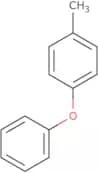
CAS:1-Methyl-4-phenoxybenzene is a monomer that is used in the synthesis of polymers and plastics. It reacts with sulfur and pentamethylbenzene to form 1,3-diphenyl ethers. This reaction takes place in three steps: methylation, radical mechanism, and nucleophilic substitution. The first step involves the addition of a methyl group to a double bond of an arene. The second step is the addition of chlorine to the molecule, which forms radicals that can react with other molecules. The third step is nucleophilic substitution, where a halide leaves the molecule to be replaced by another atom or group. 1-Methyl-4-phenoxybenzene can also be used as a reagent for the conversion of nitrobenzenes into amines.Formula:C13H12OPurity:Min. 95%Color and Shape:LiquidMolecular weight:184.23 g/mol

![1-Deoxy-1-(methylamino)-D-glucitol [3-[[(2R,3S)-2-[(1R)-1-[3,5-bis(trifluoromethyl)phenyl]ethoxy]-…](/_next/image/?url=https%3A%2Fstatic.cymitquimica.com%2Fproducts%2F3D%2Fthumb-webp%2FFD46503.webp&w=3840&q=75)

![6-amino-4-(2-methoxyphenyl)-3-methyl-4H-pyrano[3,2-d]pyrazole-5-carbonitrile](/_next/image/?url=https%3A%2Fstatic.cymitquimica.com%2Fproducts%2F3D%2Fthumb-webp%2FFA169804.webp&w=3840&q=75)

![2-Methoxy-1-[(4-methylphenyl)sulphinyl]benzene](/_next/image/?url=https%3A%2Fstatic.cymitquimica.com%2Fproducts%2F3D%2Fthumb-webp%2FFM66194.webp&w=3840&q=75)




![2-[Ethyl-[2-(3-hydroxy-2,6-dimethyl-anilino)-2-oxo-ethyl]amino]-N-(3-hydroxy-2,6-dimethyl-phenyl)a…](/_next/image/?url=https%3A%2Fstatic.cymitquimica.com%2Fproducts%2F3D%2Fthumb-webp%2FFE145458.webp&w=3840&q=75)