Amino Acids (AA)
Amino acids (AAs) are the fundamental building blocks of proteins, playing a crucial role in various biological processes. These organic compounds are essential for protein synthesis, metabolic pathways, and cell signaling. In this category, you will find a comprehensive range of amino acids, including essential, non-essential, and modified forms, which are vital for research in biochemistry, molecular biology, and nutritional sciences. At CymitQuimica, we provide high-quality amino acids to support your research and development needs, ensuring accuracy and reliability in your experimental outcomes.
Subcategories of "Amino Acids (AA)"
- Amino Acid Derivatives(3,955 products)
- Amino Acid and Amino Acid Related Compounds(3,465 products)
- Amino Acids with Oxygen or Sulphur(168 products)
- Boc- Amino Acids(351 products)
- Fmoc Amino Acids(1,710 products)
Found 38248 products of "Amino Acids (AA)"
Sort by
Purity (%)
0
100
|
0
|
50
|
90
|
95
|
100
3-Boc-amino-2,6-dioxopiperidine
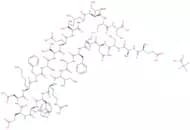
CAS:<p>Please enquire for more information about 3-Boc-amino-2,6-dioxopiperidine including the price, delivery time and more detailed product information at the technical inquiry form on this page</p>Formula:C10H16N2O4Purity:Min. 95%Molecular weight:228.25 g/mol(Pro34)-Peptide YY (human) trifluoroacetate salt
CAS:<p>Please enquire for more information about (Pro34)-Peptide YY (human) trifluoroacetate salt including the price, delivery time and more detailed product information at the technical inquiry form on this page</p>Formula:C194H294N54O56Purity:Min. 95%Molecular weight:4,278.74 g/mol(S)-(-)-3-Chloro-1-phenyl-1-propanol
CAS:<p>(S)-(-)-3-Chloro-1-phenyl-1-propanol is an efficient method for the synthesis of chiral propiophenone. It is synthesized by reacting a mixture of borane and tetrahydrofuran with (S)-(-)-3-chloro-1-phenylpropanol. This reaction produces the desired compound in good yield and high diastereoselectivity. The synthesis of this compound has been shown to be useful for the production of antidepressant drugs, such as κ-opioid receptor ligands, which are used to treat depression, anxiety, and chronic pain.</p>Formula:C9H11ClOPurity:Min. 95%Molecular weight:170.64 g/molSapecin
CAS:<p>Sapecin is an antimicrobial peptide, which is derived from the hemolymph of the silk moth (Bombyx mori) with potent bactericidal action. The source of Sapecin is the immune system of the silk moth, where it acts as a natural defense mechanism against microbial infections. Its mode of action involves disrupting bacterial cell membranes, leading to cell lysis and death. The peptide achieves this by inserting itself into the lipid bilayer, creating pores that compromise the structural integrity of the membrane.</p>Formula:C164H266N58O52S6Purity:Min. 95%Molecular weight:4,074.62 g/molH-Met-2-chlorotrityl resin (200-400 mesh) (Low Substitution)
<p>Please enquire for more information about H-Met-2-chlorotrityl resin (200-400 mesh) (Low Substitution) including the price, delivery time and more detailed product information at the technical inquiry form on this page</p>Purity:Min. 95%H-Gly-Gly-Lys-Arg-OH acetate salt
CAS:<p>The H-Gly-Gly-Lys-Arg-OH acetate salt is a diagnostic agent that belongs to the group of active analogues. It is an analogue of sialin, a compound that has been shown to be involved in the molecular pathogenesis of cancer tissues. Sialic acid is an important component of many glycoproteins and glycolipids found in the human body. This compound is metabolized by sialidase enzymes, which are present in various tissues and organs such as the brain, kidney, liver, and plasma. The H-Gly-Gly-Lys-Arg-OH acetate salt inhibits these enzymes by binding to them and preventing their action. This drug also inhibits ATP dependent transport systems for neuronal cells.</p>Formula:C16H32N8O5Purity:Min. 95%Molecular weight:416.48 g/molH-Cys-Thr-Thr-His-Trp-Gly-Phe-Thr-Leu-Cys-OH (Disulfide bond)
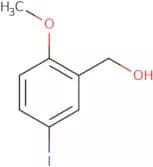
CAS:<p>Disulfide bond is a protein that regulates muscle cell assembly and interactions. Disulfide bonds are formed by the oxidation of two cysteine molecules, which can be found in the extracellular matrix (ECM). The protein is an important regulator of metalloproteinases, which are enzymes that regulate ECM turnover. When disulfide bond lacks, it causes a deficiency in collagen production. Disulfide bond also has interactions with MMP-2, which plays a role in the regulation of arteriosclerosis and genetic disorders such as muscular dystrophy.</p>Formula:C52H71N13O14S2Purity:Min. 95%Molecular weight:1,166.33 g/mol5-Iodo-2-methoxybenzyl alcohol
CAS:<p>5-Iodo-2-methoxybenzyl alcohol (5IMB) is a conjugate that inhibits tubulin polymerization and mitochondrial membrane integrity. It has significant inhibitory effects on colchicine-induced apoptosis in colon cancer cells, inducing apoptotic cell death by the activation of caspase 3 and annexin. 5IMB also has an inhibitory effect on mitochondria, leading to mitochondrial membrane depolarization and apoptotic cell death. This conjugate also induces the death of human cancer cells, specifically mcf-7, which are involved in tumour growth and metastasis. The mechanism of action for 5IMB is through its ability to induce mitochondrial membrane depolarization, leading to apoptotic cell death.</p>Formula:C8H9O2IPurity:Min. 95%Molecular weight:264.06 g/molAmyloid Bri Protein (1-23) trifluoroacetate salt
CAS:<p>Please enquire for more information about Amyloid Bri Protein (1-23) trifluoroacetate salt including the price, delivery time and more detailed product information at the technical inquiry form on this page</p>Formula:C116H175N31O35S2Purity:Min. 95%Molecular weight:2,627.95 g/molAc-Val-Met-[(2S,4S,5S)-5-amino-4-hydroxy-2-isopropyl-7-methyl-octanoyl]-Ala-Glu-Phe-OH trifluoroacetate salt
CAS:<p>Please enquire for more information about Ac-Val-Met-[(2S,4S,5S)-5-amino-4-hydroxy-2-isopropyl-7-methyl-octanoyl]-Ala-Glu-Phe-OH trifluoroacetate salt including the price, delivery time and more detailed product information at the technical inquiry form on this page</p>Formula:C41H66N6O11SPurity:Min. 95%Molecular weight:851.06 g/molLHRH (4-10) acetate salt
CAS:<p>Please enquire for more information about LHRH (4-10) acetate salt including the price, delivery time and more detailed product information at the technical inquiry form on this page</p>Formula:C33H53N11O9Purity:Min. 95%Molecular weight:747.84 g/molFmoc-D-Thr(tBu)-Wang resin (200-400 mesh)
<p>Please enquire for more information about Fmoc-D-Thr(tBu)-Wang resin (200-400 mesh) including the price, delivery time and more detailed product information at the technical inquiry form on this page</p>Purity:Min. 95%Fmoc-Thr(tBu)-Wang resin (100-200 mesh)
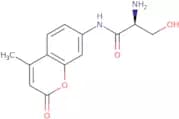
<p>Please enquire for more information about Fmoc-Thr(tBu)-Wang resin (100-200 mesh) including the price, delivery time and more detailed product information at the technical inquiry form on this page</p>Purity:Min. 95%H-Ser-AMC hydrochloride salt
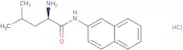
CAS:<p>Please enquire for more information about H-Ser-AMC hydrochloride salt including the price, delivery time and more detailed product information at the technical inquiry form on this page</p>Formula:C13H14N2O4Purity:Min. 95%Molecular weight:262.26 g/molH-D-Leu-bNA·HCl
CAS:<p>Please enquire for more information about H-D-Leu-bNA·HCl including the price, delivery time and more detailed product information at the technical inquiry form on this page</p>Formula:C16H20N2O·HClPurity:Min. 95%Molecular weight:292.8 g/molOsteoblast Activating Peptide (human) trifluoroacetate salt
<p>Please enquire for more information about Osteoblast Activating Peptide (human) trifluoroacetate salt including the price, delivery time and more detailed product information at the technical inquiry form on this page</p>Formula:C120H196N38O37SPurity:Min. 95%Molecular weight:2,795.14 g/molTyr-Bradykinin
CAS:<p>Bradykinin is a peptide with a variety of physiological effects. It is formed by the cleavage of kininogen by kallikrein, and it is involved in the regulation of vascular tone and blood pressure, as well as responses to pain and inflammation. Bradykinin stimulates the release of histamine from mast cells, which causes an inflammatory response. Bradykinin also has been shown to stimulate the release of leukotrienes, prostaglandins, and cytokines from human lung tissue. The interaction between bradykinin and its receptors has been studied extensively using in vitro assays. The conformational changes in this peptide have been characterized by spectroscopic studies such as nuclear magnetic resonance (NMR) and circular dichroism (CD). In addition, bradykinin can be detected using luminescence techniques such as chemiluminescence or bioluminescence. Studies have shown that micromolar concentrations of bradykinin</p>Formula:C59H82N16O13Purity:Min. 95%Molecular weight:1,223.38 g/mol(Ser4,Ile8)-Oxytocin
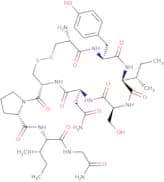
CAS:<p>Oxytocin is a neuropeptide hormone that regulates social behavior and the body's response to stress. It is produced by the hypothalamus, stored in the posterior pituitary gland, and released into the bloodstream. Oxytocin has been shown to regulate the release of prolactin from the anterior pituitary gland, as well as stimulate uterine contractions during labor. Oxytocin also plays a role in regulating blood pressure and vasopressin secretion. The activity of oxytocin is regulated by a number of factors including detection sensitivity, polyclonal antibodies, monoclonal antibodies, polymerase chain reaction (PCR), effective dose, salinity, neurosecretory sequences, and regulatory sequences such as linear regression analysis. Oxytocin has also been shown to have physiological activities including regulation of water balance through antidiuretic effects and modulation of appetite through action on receptors for ghrelin. Oxytocin is an endogenous molecule with a molecular weight of 3</p>Formula:C41H63N11O12S2Purity:Min. 95%Molecular weight:966.14 g/mol(Ala6,D-Trp8,L-alaninol15)-Galanin (1-15)
CAS:<p>Please enquire for more information about (Ala6,D-Trp8,L-alaninol15)-Galanin (1-15) including the price, delivery time and more detailed product information at the technical inquiry form on this page</p>Formula:C81H114N20O18Purity:Min. 95%Molecular weight:1,655.9 g/molBoc-Ser(Bzl)-PAM resin (200-400 mesh)
<p>Please enquire for more information about Boc-Ser(Bzl)-PAM resin (200-400 mesh) including the price, delivery time and more detailed product information at the technical inquiry form on this page</p>Purity:Min. 95%Atrial Natriuretic Factor (1-24) (frog)
CAS:<p>Please enquire for more information about Atrial Natriuretic Factor (1-24) (frog) including the price, delivery time and more detailed product information at the technical inquiry form on this page</p>Formula:C103H165N37O34S3Purity:Min. 95%Molecular weight:2,561.84 g/molBiphalin trifluoroacetate salt (
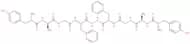
CAS:<p>Biphalin trifluoroacetate salt (H-Tyr-D-Ala-Gly-Phe-NH)2 trifluoroacetate salt is a peptide hormone. It has been shown to be an opioid that binds to the μ and δ opioid receptors and inhibits the production of inflammatory mediators. Biphalin trifluoroacetate salt (H-Tyr-D-Ala-Gly-Phe-NH)2 trifluoroacetate salt has also been shown to have neuroprotective effects. This drug has low potency and can only be used in vivo models. Biphalin trifluoroacetate salt (H-Tyr-D-Ala-Gly-Phe-NH)2 trifluoroacetate salt is not active against skin cancer cells, but does show activity against other types of cancer cells.</p>Formula:C46H56N10O10Purity:Min. 95%Molecular weight:909 g/molH-Ala-His-Lys-OH acetate salt
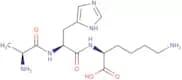
CAS:<p>H-Ala-His-Lys-OH acetate salt is a copper complex that has been shown to have antioxidant properties in vitro. It has been studied for use as an analog of the vitamin C, which is a cofactor for collagen synthesis and follicular keratinization. Copper complexes with H-Ala-His-Lys-OH acetate salt have been shown to inhibit the formation of reactive oxygen species (ROS) and to stimulate collagen production by human dermal fibroblasts in vitro. This compound also stimulates the growth of human skin cells in vitro, which may be due to its ability to induce fibroblast proliferation.</p>Formula:C15H26N6O4Purity:Min. 95%Molecular weight:354.4 g/mol(Des-Gly10,D-Tyr5,D-Ser(tBu)6,Pro-NHEt 9)-LHRH acetate salt
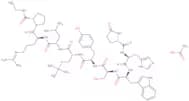
CAS:Controlled Product<p>Please enquire for more information about (Des-Gly10,D-Tyr5,D-Ser(tBu)6,Pro-NHEt 9)-LHRH acetate salt including the price, delivery time and more detailed product information at the technical inquiry form on this page</p>Formula:C60H86N16O13Purity:Min. 95%Molecular weight:1,239.42 g/molpTH (1-44) (human)
CAS:<p>Please enquire for more information about pTH (1-44) (human) including the price, delivery time and more detailed product information at the technical inquiry form on this page</p>Formula:C225H366N68O61S2Purity:Min. 95%Molecular weight:5,063.87 g/mol(Tyr0)-Stresscopin-Related Peptide (human)
CAS:<p>Please enquire for more information about (Tyr0)-Stresscopin-Related Peptide (human) including the price, delivery time and more detailed product information at the technical inquiry form on this page</p>Formula:C214H367N69O59Purity:Min. 95%Molecular weight:4,850.63 g/molIsopropyl 4-methylbenzenesulfonate
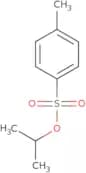
CAS:<p>Isopropyl 4-methylbenzenesulfonate is a chemical that is used in the preparation of pharmaceuticals. It is used as an intermediate in the production of sorafenib, an anticancer drug, and has been shown to be genotoxic. Isopropyl 4-methylbenzenesulfonate reacts with nucleophiles by nucleophilic attack. The compound has been found to be a competitive inhibitor of growth factor receptors and can inhibit uv absorption in skin cells. Isopropyl 4-methylbenzenesulfonate is typically analyzed using ionization techniques such as gas chromatography or liquid chromatography with mass spectrometry. This chemical can react with fatty acids, leading to the formation of carbonyl groups. Chemical ionization may also be used for sample preparation.</p>Formula:C10H14O3SPurity:Min. 95%Molecular weight:214.28 g/molBoc-D-Pro-Gly-OH
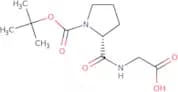
CAS:<p>Please enquire for more information about Boc-D-Pro-Gly-OH including the price, delivery time and more detailed product information at the technical inquiry form on this page</p>Formula:C12H20N2O5Purity:Min. 95%Molecular weight:272.3 g/molH-Asp(OtBu)-2-chlorotrityl resin (200-400 mesh)
<p>Please enquire for more information about H-Asp(OtBu)-2-chlorotrityl resin (200-400 mesh) including the price, delivery time and more detailed product information at the technical inquiry form on this page</p>Purity:Min. 95%Acetyl-Cholecystokinin Octapeptide (2-8) (sulfated)
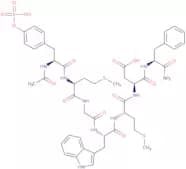
CAS:<p>Please enquire for more information about Acetyl-Cholecystokinin Octapeptide (2-8) (sulfated) including the price, delivery time and more detailed product information at the technical inquiry form on this page</p>Formula:C47H59N9O14S3Purity:Min. 95%Molecular weight:1,070.22 g/molN-Methyl-DL-alanine
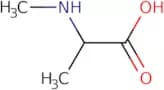
CAS:<p>N-Methyl-DL-alanine is an amino acid that is also known as d-alanine. It is a precursor for the synthesis of other amino acids such as histidine, methionine, and arginine. N-Methyl-DL-alanine is found in the mitochondria of cells and plays a role in energy metabolism. It has been shown to be taken up by cells through an active transport process and can act as a competitive inhibitor of mitochondrial uptake. At physiological concentrations, N-methyl DL-alanine inhibits fatty acid oxidation by decreasing the activity of carnitine palmitoyltransferase I (CPT I) and enhancing lipid accumulation in the liver. N-Methyl DL-alanine has been shown to inhibit cycloleucin A production by acting as an inhibitor of fatty acid synthase (FAS).</p>Formula:C4H9NO2Purity:Min. 95%Color and Shape:White PowderMolecular weight:103.12 g/molSuc-Ala-Ala-Pro-Nva-pNA
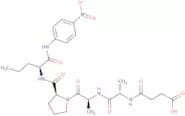
CAS:<p>Suc-Ala-Ala-Pro-Nva-pNA is a tetrapeptide. It is one of the most potent trypsin inhibitors that has been identified to date and it has been shown to inhibit pancreatic trypsin with a potency similar to that of the synthetic inhibitor benzamidine. Suc-Ala-Ala-Pro-Nva-pNA binds to the active site of trypsin, preventing proteolysis of peptides. This inhibition is reversible because it does not bind covalently to any other sites on the enzyme. Suc-Ala-Ala-Pro-Nva-pNA inhibits proteases by binding to their active site and blocking access by the substrate. The binding occurs through noncovalent hydrophobic interactions with amino acids in the active site, including valine, leucine, phenylalanine, and methionine.</p>Formula:C26H36N6O9Purity:Min. 95%Molecular weight:576.6 g/molPAR-4 (1-6) (mouse) trifluoroacetate salt
CAS:<p>Please enquire for more information about PAR-4 (1-6) (mouse) trifluoroacetate salt including the price, delivery time and more detailed product information at the technical inquiry form on this page</p>Formula:C33H45N7O8Purity:Min. 95%Molecular weight:667.75 g/molH-Phe-D-Met-Arg-Phe-NH2 trifluoroacetate salt
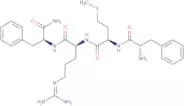
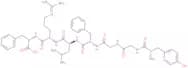
CAS:<p>Please enquire for more information about H-Phe-D-Met-Arg-Phe-NH2 trifluoroacetate salt including the price, delivery time and more detailed product information at the technical inquiry form on this page</p>Formula:C29H42N8O4SPurity:Min. 95%Molecular weight:598.76 g/molAc-Ala-Ala-Ala-OMe
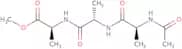
CAS:<p>Ac-Ala-Ala-Ala-OMe is a protease inhibitor. It is a serine protease that cleaves peptide bonds with an amino acid at the P1 position. Ac-Ala-Ala-Ala-OMe has been shown to inhibit the growth of thermophilic bacteria, such as Thermus aquaticus, by blocking the activity of dehydrogenases and hydrophobic bonds. Ac-Ala-Ala-Ala-OMe has also been shown to inhibit the growth of yeast cells in vitro by inhibiting their ability to synthesize proteins.</p>Formula:C12H21N3O5Purity:Min. 95%Molecular weight:287.31 g/molH-D-Ala-Leu-Lys-AMC hydrochloride salt
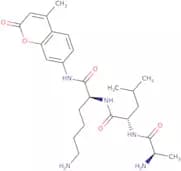
CAS:<p>H-D-Ala-Leu-Lys-AMC hydrochloride salt is a zymogen that is the substrate for tissue plasminogen activator (tPA). It has been shown to inhibit the activity of fibrinogen and thrombin, two proteins involved in coagulation. H-D-Ala-Leu-Lys-AMC hydrochloride salt also inhibits the hydrolysis of fibrin clots by serine proteases and prevents the formation of new clots by inhibiting the activation of annexin. This drug has been shown to be effective in animal models with established atherosclerosis.</p>Formula:C25H37N5O5Purity:Min. 95%Molecular weight:487.59 g/mol(Des-octanoyl)-Ghrelin (mouse, rat) trifluoroacetate salt
CAS:<p>Please enquire for more information about (Des-octanoyl)-Ghrelin (mouse, rat) trifluoroacetate salt including the price, delivery time and more detailed product information at the technical inquiry form on this page</p>Formula:C139H231N45O41Purity:Min. 95%Molecular weight:3,188.6 g/molH-D-Lys(Z)-OMe·HCl
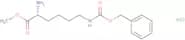
CAS:<p>H-D-Lys(Z)-OMe·HCl is a chemical compound that belongs to the group of organic nitrogen. It has been used in an experiment that monitored the population of a specific ecosystem. The experiment focused on the effects of organic nitrogen on the organisms living in this ecosystem. H-D-Lys(Z)-OMe·HCl was also used as a permission for an ecological research project, which focused on the behavioural patterns of animals in a natural environment. This compound has also been sponsored by science organisations, such as Ecological Society of America and Society for Experimental Biology.</p>Formula:C15H22N2O4·HClPurity:Min. 95%Molecular weight:330.81 g/molCD36 (93-110)-Cys
CAS:<p>Please enquire for more information about CD36 (93-110)-Cys including the price, delivery time and more detailed product information at the technical inquiry form on this page</p>Formula:C96H151N29O33SPurity:Min. 95%Molecular weight:2,271.47 g/molKemptide trifluoroacetate salt
CAS:<p>Kemptide is a substrate molecule that has been shown to inhibit the enzyme activity of some protein kinases. Kemptide is a 3-amino acid peptide that contains the amino acids L-leucine, L-arginine, and L-arginine. It was originally isolated from an extract of human brain tissue and has been shown to inhibit the activity of protein kinase C (PKC), phosphorylase kinase, and glycogen synthase kinase 3β in vitro assays. Kemptide also inhibits the expression of genes encoding PKCα1, PKCα2, PKCδ, PKCε, PKCγ1, PKCγ2, PKCζ in t84 cells. The inhibition of these genes suggests that kemptide may be useful as a drug candidate for inhibiting protein kinases in vivo.</p>Formula:C32H61N13O9·xC2HF3O2Purity:Min. 95%Molecular weight:771.91 g/mol(H-Cys-4MbNA)2 acetate salt (Disulfide bond)
CAS:<p>Please enquire for more information about (H-Cys-4MbNA)2 acetate salt (Disulfide bond) including the price, delivery time and more detailed product information at the technical inquiry form on this page</p>Formula:C28H30N4O4S2Purity:Min. 95%Molecular weight:550.69 g/molBoc-Arg(Tos)-Merrifield resin (200-400 mesh)
<p>Please enquire for more information about Boc-Arg(Tos)-Merrifield resin (200-400 mesh) including the price, delivery time and more detailed product information at the technical inquiry form on this page</p>Purity:Min. 95%Thrombospondin-1 (1016-1021) (human, bovine, mouse)
CAS:<p>Please enquire for more information about Thrombospondin-1 (1016-1021) (human, bovine, mouse) including the price, delivery time and more detailed product information at the technical inquiry form on this page</p>Formula:C39H59N9O8SPurity:Min. 95%Molecular weight:814.01 g/molLeucokinin II
CAS:<p>Leucokinin II is a fatty acid. It is a diagnostic agent that can be used to identify bacteria, such as Stenotrophomonas maltophilia, which produce β-amino acids. Leucokinin II can also be used for the diagnosis of cancer and inflammatory diseases. Its analogs are being studied for their potential use in diagnosing infectious diseases. Leucokinin II binds to the receptor and activates it, resulting in the production of biochemical or electrochemical signals that can be detected by a detector.</p>Formula:C39H50N10O12Purity:Min. 95%Molecular weight:850.87 g/molO-Methylisourea hemisulfate
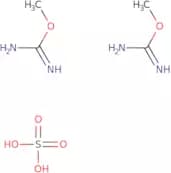
CAS:<p>O-Methylisourea hemisulfate is a chemical compound that has been used for wastewater treatment and as an anticancer agent. It is known to have multiple-reaction monitoring (MRM) techniques which are based on the detection of the reaction products with multiple wavelengths. O-Methylisourea hemisulfate has been shown to have anticancer activity in mammalian cells, and it enhances the antibacterial effect of ethyl formate. This chemical is also used as a sample preparation reagent in human serum protein analysis.</p>Formula:C2H6N2O·H2O4SMolecular weight:246.24 g/molDiazepam Binding Inhibitor (DBI) Fragment (human)
CAS:<p>Please enquire for more information about Diazepam Binding Inhibitor (DBI) Fragment (human) including the price, delivery time and more detailed product information at the technical inquiry form on this page</p>Formula:C91H148N26O32SPurity:Min. 95%Color and Shape:SolidMolecular weight:2,150.37 g/molBoc-(R)-3-Amino-4-(2,4,5-trifluorophenyl)butanoic acid
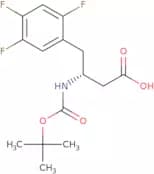
CAS:<p>Intermediate in the synthesis of sitagliptin</p>Formula:C15H18F3NO4Purity:Min. 95%Molecular weight:333.3 g/molHIV Protease Substrate VIII
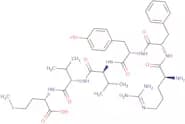
CAS:<p>HIV Protease Substrate VIII is a peptide that belongs to the HIV protease family. It is an active site residue of the HIV protease and has been shown to be essential for catalysis. The substrate binds to the aspartyl-proline termini, which are critical in preventing spontaneous hydrolysis of the amide bond. This peptide has also been used as an active analog to study HIV protease activity and as a model for developing new drugs with improved specificity and stability.</p>Formula:C42H66N10O13Purity:Min. 95%Molecular weight:919.03 g/molZ-Trp-Phe-OH
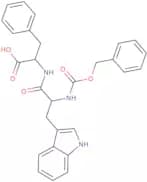
CAS:<p>Z-Trp-Phe-OH is a chiral molecule that can be used as a metal ion receptor. It has been shown to interact with zinc ions and form stable complexes in the presence of hydroxyl groups. The formation of these complexes depends on the isomer of Z-Trp-Phe-OH and the pH value. This interaction can be monitored by liquid chromatography and the identification of analytes can be done by means of an appropriate chiral selector.</p>Formula:C28H27N3O5Purity:Min. 95%Molecular weight:485.53 g/mol(Phe7)-Dynorphin A (1-7) acetate salt
CAS:<p>Dynorphin A (1-7) acetate salt is a potent analgesic that has been used to treat pain. It has been shown to be effective in the treatment of laryngitis and other laryngological disorders. Dynorphin A (1-7) acetate salt is a prodrug that is hydrolyzed in vivo to dynorphin A (1-7) by esterases, which can then bind to opioid receptors. This drug has been validated for use as a diagnostic agent in coatings and in algorithms for analysis of polygonal images from laryngoscopy. The dehydrogenase enzymes are added to the coating or algorithm for diagnosis of the presence of vocal cord pathology. Dynorphin A (1-7) acetate salt also shows promising results for analyzing waveforms from laryngoscopy, with the goal of classifying vocal cord pathology.</p>Formula:C43H58N10O9Purity:Min. 95%Molecular weight:858.98 g/mol



![Ac-Val-Met-[(2S,4S,5S)-5-amino-4-hydroxy-2-isopropyl-7-methyl-octanoyl]-Ala-Glu-Phe-OH trifluoroac…](/_next/image/?url=https%3A%2Fstatic.cymitquimica.com%2Fproducts%2F3D%2Fthumb-webp%2FFA111093.webp&w=3840&q=75)