Amino Acids (AA)
Amino acids (AAs) are the fundamental building blocks of proteins, playing a crucial role in various biological processes. These organic compounds are essential for protein synthesis, metabolic pathways, and cell signaling. In this category, you will find a comprehensive range of amino acids, including essential, non-essential, and modified forms, which are vital for research in biochemistry, molecular biology, and nutritional sciences. At CymitQuimica, we provide high-quality amino acids to support your research and development needs, ensuring accuracy and reliability in your experimental outcomes.
Subcategories of "Amino Acids (AA)"
- Amino Acid Derivatives(3,955 products)
- Amino Acid and Amino Acid Related Compounds(3,466 products)
- Amino Acids with Oxygen or Sulphur(168 products)
- Boc- Amino Acids(351 products)
- Fmoc Amino Acids(1,710 products)
Found 38249 products of "Amino Acids (AA)"
Sort by
Purity (%)
0
100
|
0
|
50
|
90
|
95
|
100
LHRH hydrochloride salt
CAS:<p>LHRH is a hormone that has been used to treat endometriosis, prostate cancer, and ovarian cysts. It is an agonist of the gonadotropin-releasing hormone receptor (GnRH receptor). LHRH binds to the GnRH receptor in the pituitary gland and stimulates the release of follicle-stimulating hormone and luteinizing hormone. This leads to increased production of estrogen and testosterone. LHRH has been shown to be effective in treating infectious diseases such as tuberculosis and HIV/AIDS. LHRH can also be used as a diagnostic aid for determining whether or not a tumor is cancerous by measuring its protein content.</p>Formula:C55H75N17O13·xHClPurity:Min. 95%Molecular weight:1,182.29 g/molAmyloid P Component (27-38) amide trifluoroacetate salt
CAS:<p>Please enquire for more information about Amyloid P Component (27-38) amide trifluoroacetate salt including the price, delivery time and more detailed product information at the technical inquiry form on this page</p>Formula:C68H107N19O17SPurity:Min. 95%Molecular weight:1,494.76 g/mol(Pro34)-Neuropeptide Y (porcine) trifluoroacetate salt
CAS:<p>Please enquire for more information about (Pro34)-Neuropeptide Y (porcine) trifluoroacetate salt including the price, delivery time and more detailed product information at the technical inquiry form on this page</p>Formula:C190H286N54O56Purity:Min. 95%Molecular weight:4,222.63 g/molLHRH (free acid) trifluoroacetate salt
CAS:<p>LHRH (free acid) trifluoroacetate salt Pyr-His-Trp-Ser-Tyr-Gly-Leu-Arg-Pro-Gly-OH trifluoroacetate salt is a decapeptide that is the most potent form of the hormone luteinizing hormone releasing hormone (LHRH). It has been shown to bind to surface receptors and activate a G protein, which activates adenyl cyclase. This leads to increased levels of cyclic adenosine monophosphate (cAMP) in cells. LHRH also binds to blood vessels and causes vasodilation. LHRH also binds to pyroglutamic acid, which is an amino acid found in peptides that have affinity for peptidases. This binding causes the release of peptidases from the cell membrane, uncovers receptor sites, and increases cAMP production. LHRH has also been shown to inhibit kidney function</p>Formula:C55H74N16O14Purity:Min. 95%Molecular weight:1,183.28 g/molBoc-Arg(Tos)-Merrifield resin (200-400 mesh)
<p>Please enquire for more information about Boc-Arg(Tos)-Merrifield resin (200-400 mesh) including the price, delivery time and more detailed product information at the technical inquiry form on this page</p>Purity:Min. 95%GM-CSF (17-31)
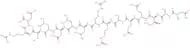
CAS:<p>Please enquire for more information about GM-CSF (17-31) including the price, delivery time and more detailed product information at the technical inquiry form on this page</p>Formula:C73H129N27O24Purity:Min. 95%Molecular weight:1,768.97 g/molZ-Leu-Glu(OMe)-Thr-DL-Asp(OMe)-fluoromethylketone
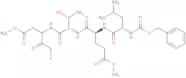
CAS:<p>Please enquire for more information about Z-Leu-Glu(OMe)-Thr-DL-Asp(OMe)-fluoromethylketone including the price, delivery time and more detailed product information at the technical inquiry form on this page</p>Formula:C30H43FN4O11Purity:Min. 95%Molecular weight:654.68 g/molH-Arg-Phe-Ala-OH acetate salt
CAS:<p>Please enquire for more information about H-Arg-Phe-Ala-OH acetate salt including the price, delivery time and more detailed product information at the technical inquiry form on this page</p>Formula:C18H28N6O4Purity:Min. 95%Molecular weight:392.45 g/molH-Phe-Glu-OH
CAS:<p>H-Phe-Glu-OH is a compound that has been shown to significantly increase the uptake of collagen in fibrosarcoma cells. H-Phe-Glu-OH binds to a receptor on the cell surface and activates it, which leads to an increase in collagen uptake. This drug also enhances the production of collagen molecules and can be used for diagnosing diseases such as cancer. H-Phe-Glu-OH does not affect normal cells, making it possible for this drug to be used as a diagnostic tool without harming healthy tissue.</p>Formula:C14H18N2O5Purity:Min. 95%Molecular weight:294.3 g/molH-Asp-Pro-Gln-Phe-Tyr-OH hydrochloride salt
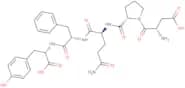
CAS:<p>Please enquire for more information about H-Asp-Pro-Gln-Phe-Tyr-OH hydrochloride salt including the price, delivery time and more detailed product information at the technical inquiry form on this page</p>Formula:C32H40N6O10Purity:Min. 95%Molecular weight:668.69 g/molH-Ala-Leu-Tyr-Leu-bNA
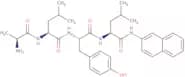
CAS:<p>Please enquire for more information about H-Ala-Leu-Tyr-Leu-bNA including the price, delivery time and more detailed product information at the technical inquiry form on this page</p>Formula:C34H45N5O5Purity:Min. 95%Molecular weight:603.75 g/molH-Gln(Trt)-2-chlorotrityl resin (200-400 mesh)
<p>Please enquire for more information about H-Gln(Trt)-2-chlorotrityl resin (200-400 mesh) including the price, delivery time and more detailed product information at the technical inquiry form on this page</p>Purity:Min. 95%H-Arg-Glu-OH
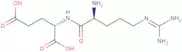
CAS:<p>H-Arg-Glu-OH is a small molecule that is used as a pharmacological agent for the treatment of diabetes. It has been shown to have anti-inflammatory properties, which may be due to its ability to inhibit the production of inflammatory mediators such as prostaglandin E2 and nitric oxide. H-Arg-Glu-OH also induces apoptosis in human monocytes and macrophages by binding to toll-like receptor 4 (TLR4) on the cell surface. This binding activates NFκB and JNK pathways, leading to the induction of apoptosis. H-Arg-Glu-OH binds with high affinity to monoclonal antibodies against glutamic acid and glycine, which are not present in humans. The compound may be toxic at a neutral pH because it is highly reactive due to intramolecular hydrogen bonding between carbonyl oxygens and amide hydrogens.</p>Formula:C11H21N5O5Purity:Min. 95%Molecular weight:303.32 g/molLQEQ-19 (human) trifluoroacetate salt
<p>Please enquire for more information about LQEQ-19 (human) trifluoroacetate salt including the price, delivery time and more detailed product information at the technical inquiry form on this page</p>Formula:C106H170N30O34Purity:Min. 95%Molecular weight:2,408.67 g/molH-Gly-His-OH·HCl
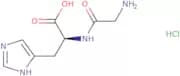
CAS:<p>H-Gly-His-OH·HCl is a methyl ester of histidine. It has an axial orientation, and the optical rotation is +25.4° (c=1 in methanol). H-Gly-His-OH·HCl is synthesized from glutamic acid, glutamate, and imidazole by using a method based on the catalytic properties of copper. H-Gly-His-OH·HCl can be used as a ligand for the enzyme peroxidase, which catalyzes oxidation reactions with hydrogen peroxide or organic peroxides to form water and oxidized products. The efficiency of this reaction increases with increasing concentrations of H-Gly-His-OH·HCl.<br>!--END--></p>Formula:C8H12N4O3·HClPurity:Min. 95%Molecular weight:248.67 g/molH-Lys-Lys-Arg-Ala-Ala-Arg-Ala-Thr-Ser-Asn-Val-Phe-Ala-NH2
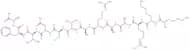
CAS:<p>Please enquire for more information about H-Lys-Lys-Arg-Ala-Ala-Arg-Ala-Thr-Ser-Asn-Val-Phe-Ala-NH2 including the price, delivery time and more detailed product information at the technical inquiry form on this page</p>Formula:C61H107N23O16Purity:Min. 95%Molecular weight:1,418.65 g/mol(Tyr(Me)21)-Neuropeptide Y (human, rat) trifluoroacetate salt
CAS:<p>Please enquire for more information about (Tyr(Me)21)-Neuropeptide Y (human, rat) trifluoroacetate salt including the price, delivery time and more detailed product information at the technical inquiry form on this page</p>Formula:C190H287N55O57SPurity:Min. 95%Molecular weight:4,285.71 g/molKisspeptin-13 (human) trifluoroacetate salt
CAS:<p>Please enquire for more information about Kisspeptin-13 (human) trifluoroacetate salt including the price, delivery time and more detailed product information at the technical inquiry form on this page</p>Formula:C78H107N21O18Purity:Min. 95%Molecular weight:1,626.81 g/molFmoc-Ser(tBu)-Wang resin (100-200 mesh)
<p>Please enquire for more information about Fmoc-Ser(tBu)-Wang resin (100-200 mesh) including the price, delivery time and more detailed product information at the technical inquiry form on this page</p>Purity:Min. 95%Z-Leu-Pro-OH·CHA
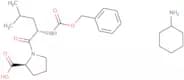
CAS:<p>Please enquire for more information about Z-Leu-Pro-OH·CHA including the price, delivery time and more detailed product information at the technical inquiry form on this page</p>Formula:C19H26N2O5·C6H13NPurity:Min. 95%Molecular weight:461.59 g/molH-Leu-Trp-Met-Arg-Phe-OH acetate salt
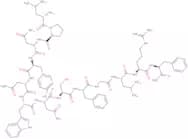
CAS:<p>H-Leu-Trp-Met-Arg-Phe-OH acetate salt is a molecule that transports amino acids across the cell membrane of bacteria, preventing bacterial growth. It is produced by proctolin and functional groups in dental plaque. This compound has been shown to inhibit the growth of bacteria in vitro by binding to hypochlorous acid, which is part of the antimicrobial activity of human neutrophils. H-Leu-Trp-Met-Arg-Phe-OH acetate salt has been used as a tracer for studying amino acid transport in E. coli cells and its uptake into extracellular vesicles. The product can also be used as an antiplaque agent due to its ability to inhibit the acid transport system and uptake of amino acids from the environment.</p>Formula:C37H53N9O6SPurity:Min. 95%Molecular weight:751.94 g/molZ-Phe-Arg-OMe·HCl
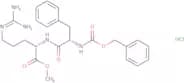
CAS:<p>Please enquire for more information about Z-Phe-Arg-OMe·HCl including the price, delivery time and more detailed product information at the technical inquiry form on this page</p>Formula:C24H31N5O5·HClPurity:Min. 95%Molecular weight:505.99 g/mol3-Bromo-6-methylpicolinic acid
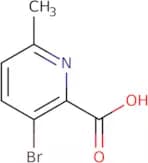
CAS:<p>Please enquire for more information about 3-Bromo-6-methylpicolinic acid including the price, delivery time and more detailed product information at the technical inquiry form on this page</p>Formula:C7H6BrNO2Purity:Min. 95%Molecular weight:252.49 g/molH-Ile-His-OH
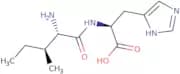
CAS:<p>H-Ile-His-OH is a peptide that has been found to be an antagonist of the epidermal growth factor receptor. It has been shown to decrease inflammation in animal models of bowel disease and may be useful in the treatment of inflammatory bowel disease. H-Ile-His-OH has also been shown to inhibit the production of inflammatory cytokines such as IL-1β, IL-6, and TNF α. This peptide also inhibits monoclonal antibody production by dendritic cells and can prevent resistant mutants from developing. H-Ile-His-OH is a potent antagonist of Toll-Like Receptor (TLR) 4, TLR2, TLR3, and TLR9. H-Ile-His-OH is currently being investigated for its possible role in the treatment of infectious diseases and autoimmune diseases.</p>Formula:C12H20N4O3Purity:Min. 95%Molecular weight:268.31 g/molZ-Gly-Asp-OH
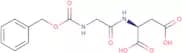
CAS:<p>Please enquire for more information about Z-Gly-Asp-OH including the price, delivery time and more detailed product information at the technical inquiry form on this page</p>Formula:C14H16N2O7Purity:Min. 95%Molecular weight:324.29 g/mol4-[2-(Fmoc-amino)ethyl]-1-piperazineacetic acid dihydrochloride
CAS:<p>Please enquire for more information about 4-[2-(Fmoc-amino)ethyl]-1-piperazineacetic acid dihydrochloride including the price, delivery time and more detailed product information at the technical inquiry form on this page</p>Formula:C23H27N3O4•2HClPurity:Min. 95%Color and Shape:PowderMolecular weight:482.4 g/molZ-Gly-Gly-Gly-Gly-Gly-Gly-OH
CAS:<p>Please enquire for more information about Z-Gly-Gly-Gly-Gly-Gly-Gly-OH including the price, delivery time and more detailed product information at the technical inquiry form on this page</p>Formula:C20H26N6O9Purity:Min. 95%Molecular weight:494.46 g/molGM-CSF (96-112)
CAS:<p>Please enquire for more information about GM-CSF (96-112) including the price, delivery time and more detailed product information at the technical inquiry form on this page</p>Formula:C88H139N21O29SPurity:Min. 95%Molecular weight:1,987.24 g/molIndole-3-acetic-L-alanine
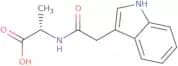
CAS:<p>Indole-3-acetic-L-alanine is a plant hormone that regulates root formation and transport. It is found in all plants, but the concentration varies depending on the plant, tissue type, and growth conditions. It has been shown to regulate root formation in triticum aestivum by inhibiting auxin transport to the roots. Indole-3-acetic acid also inhibits auxin transport to the shoot apex, leading to increased branching in triticum aestivum. This compound is hydrolyzed by root cell enzymes into indole-3-acetate and L-alanine. Genetic mechanisms underlying this phenomenon are not well understood at this time.</p>Formula:C13H14N2O3Purity:Min. 95%Color and Shape:PowderMolecular weight:246.26 g/mol(Met(O)5)-Enkephalin
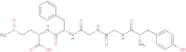
CAS:<p>Met-enkephalin is a molecule that is formed from two of the three parts of the endorphin molecule, which are Tyr-Gly-Gly-Phe and Met(O)OH. It is a neurotransmitter that has been shown to inhibit pain in humans and animals. In coelomocytes, met-enkephalin binds to receptors on the cell membrane and inhibits the release of dopamine by binding to dopamine receptors. The sulfoxide group of this molecule can be reduced to form enkephalinase, which is an enzyme that cleaves Met(O)OH from the peptide chain. This process is not known to occur in humans or other mammals. Met-enkephalin has been localized in ganglia cells in animals, but not humans. It has also been found in messenger RNA (mRNA) for translation into protein, but it does not appear to be translated into protein in humans or other mammals.</p>Formula:C27H35N5O8SPurity:Min. 95%Molecular weight:589.66 g/molEndotoxin Inhibitor
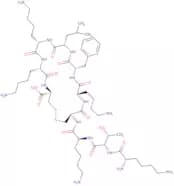
CAS:<p>Endotoxin inhibitor H-Lys-Thr-Lys-Cys-Lys-Phe-Leu-Lys-Lys-Cys-OH is a natural disulfide bond that inhibits cytosolic Ca2+ release and bacterial translocation. It has been shown to decrease the production of tumor necrosis factor alpha (TNFα) in vitro, which may be due to its effects on protein synthesis. It also has antimicrobial activity against bacteria such as Clostridium perfringens, Mycobacterium tuberculosis, and Mycobacterium avium complex. Endotoxin inhibitor H-Lys-Thr-Lys-Cys-Lys-Phe-Leu-Lys-- Lys -Cys -OH binds to the ribosomal RNA of bacteria, inhibiting protein synthesis by binding to the peptidyl transferase center</p>Formula:C55H97N15O12S2Purity:Min. 95%Molecular weight:1,224.58 g/molAcetyl-Exenatide trifluoroacetate salt
CAS:<p>Please enquire for more information about Acetyl-Exenatide trifluoroacetate salt including the price, delivery time and more detailed product information at the technical inquiry form on this page</p>Formula:C186H284N50O61SPurity:Min. 95%Molecular weight:4,228.61 g/molZ-Leu-Leu-Nle-aldehyde
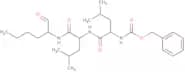
CAS:<p>Z-Leu-Leu-Nle (ZLL) is a small molecule that selectively inhibits the activity of the aspartyl protease, BACE1, which is an enzyme that cleaves amyloid precursor protein (APP) to produce amyloid beta peptides. The inhibition of this enzyme has been shown to be effective in preventing or delaying the onset of Alzheimer's disease. ZLL also inhibits estrogen receptor alpha and has antiestrogenic effects in breast cancer cells. This compound induces apoptosis by binding to apoptotic proteins, such as tumor necrosis factor receptor 1, Fas ligand, and TRAIL receptors. It also inhibits cell growth and induces chemoresistance in breast cancer cells.</p>Formula:C26H41N3O5Purity:Min. 95%Molecular weight:475.62 g/molHIV Protease Substrate IV
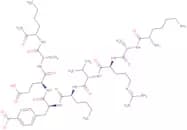
CAS:<p>Please enquire for more information about HIV Protease Substrate IV including the price, delivery time and more detailed product information at the technical inquiry form on this page</p>Formula:C49H83N15O13Purity:Min. 95%Molecular weight:1,090.28 g/mol2-Bromo-6-methylpyridin-3-ol
CAS:<p>2-Bromo-6-methylpyridin-3-ol is a heterocyclic organic compound. It is a pyridine ring with two methyl groups attached to the ring at positions 2 and 6. The bromine atom is at position 3. This is an important intermediate in the Suzuki coupling reaction, which uses it as a starting material for the synthesis of many other compounds. The dieckmann condensation reaction produces this compound from 2,6-dichloropyridine and other reagents. Fluorescent when exposed to UV light, this compound has been used as a probe for chloride ions in solution using mass spectroscopy. This substance also yields dieckmann condensation products with alkynes and chlorine or bromine. 2-Bromo-6-methylpyridin-3-ol can be produced by treating pyridine with methylacrylate in the presence of catalysts such as copper(II)</p>Formula:C6H6BrNOPurity:Min. 95%Molecular weight:188.02 g/mol3-Methylpyrazole
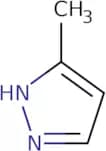
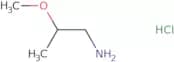
CAS:<p>3-Methylpyrazole is a heterocyclic compound that is an analogue of pyrazole. It has been shown to inhibit the growth of prostate cancer cells and may be used as an experimental model for human serum. 3-Methylpyrazole was able to decrease the expression of phosphorylated p38 mitogen-activated protein kinase (MAPK) in LNCaP cells. It also showed selectivity for group P2 protein kinases over group A, B, and C protein kinases. 3-Methylpyrazole is not active against methicillin resistant Staphylococcus aureus.</p>Formula:C4H6N2Purity:Min. 95%Color and Shape:Clear LiquidMolecular weight:82.1 g/mol(2-Methoxypropyl)amine hydrochloride
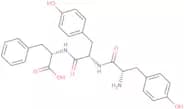
CAS:<p>2-Methoxypropyl)amine hydrochloride (2MPPA) is a versatile building block that can be used in the synthesis of complex compounds. It is a research chemical that is used as a reagent and as a speciality chemical for the production of pharmaceuticals, agrochemicals, and other organic chemicals. 2MPPA can be used as an intermediate in the manufacture of useful scaffolds or useful reaction components. This product has CAS number 70807-90-8 and is of high quality.</p>Formula:C4H11NO·HClPurity:Min. 95%Color and Shape:SolidMolecular weight:125.6 g/molH-Tyr-Tyr-Phe-OH acetate salt
CAS:<p>H-Tyr-Tyr-Phe-OH acetate salt is a reaction product of the matrix-assisted laser desorption ionization (MALDI) technique. It is an analog of tyrosine, with a hydroxyl group substituted for the amino group. The protonation state of this molecule has been determined by the hydration constant and the centroid to be a neutral pH. Using hydrogen bonding, H-Tyr-Tyr-Phe-OH acetate salt binds to the mitochondria in cells, which may lead to a higher rate of reaction.</p>Formula:C27H29N3O6Purity:Min. 95%Molecular weight:491.54 g/molEnterostatin (human, mouse, rat) acetate salt
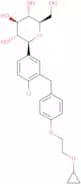
CAS:<p>Enterostatin is a peptide hormone that inhibits the release of insulin, gastric acid and pancreatic juices. Enterostatin has been shown to have a number of biological properties, including an anti-obesity effect in humans. In mice, enterostatin has been shown to decrease food intake, increase energy expenditure and weight loss. Enterostatin also decreases the levels of serum cholesterol and triglycerides in rats. This drug has a number of pharmacological activities including inhibition of platelet aggregation and vasodilation. Enterostatin is related to peptide hormones such as ghrelin, which stimulates appetite, and cholecystokinin (CCK), which reduces appetite. It may be used as an alternative treatment for obesity or metabolic disorders like diabetes mellitus type 2 or hyperlipidaemia.</p>Formula:C21H36N8O6Purity:Min. 95%Molecular weight:496.56 g/molBexagliflozin
CAS:<p>Bexagliflozin is a drug that is used to treat type II diabetes in adults. It helps to control blood sugar levels by inhibiting the enzyme DPP-IV and increasing insulin release from the pancreas. Bexagliflozin has been shown to be effective in lowering blood sugar levels in patients with chronic kidney disease and cancer, as well as those with a body mass index (BMI) of 30 or higher. This drug is an oral hypoglycaemic agent that can be used for diagnostic purposes. It has also been shown to be clinically effective for the treatment of diabetic nephropathy and diabetic retinopathy. The enantiomers of bexagliflozin can be differentiated according to their pharmacological properties, which may allow for more targeted therapy.</p>Formula:C24H29ClO7Purity:Min. 95%Molecular weight:464.94 g/molH-Gly-Gly-b-Ala-OH
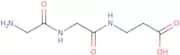
CAS:<p>Please enquire for more information about H-Gly-Gly-b-Ala-OH including the price, delivery time and more detailed product information at the technical inquiry form on this page</p>Formula:C7H13N3O4Purity:Min. 95%Molecular weight:203.2 g/mol(Lys(Z)2)-Tuftsin
CAS:<p>Please enquire for more information about (Lys(Z)2)-Tuftsin including the price, delivery time and more detailed product information at the technical inquiry form on this page</p>Formula:C29H46N8O8Purity:Min. 95%Molecular weight:634.72 g/mol(Des-Arg9,Leu8)-Bradykinin
CAS:<p>Bradykinin is a peptide hormone that is produced in the body and has been found to be involved in many physiological processes. Bradykinin is formed from the cleavage of a larger protein, kininogen, by the enzyme kallikrein. Bradykinin binds to two types of receptors, B1 and B2. This antibody reacts with both types of receptor. The B2 receptor is found mainly on muscle cells and causes contraction, while the B1 receptor is found mainly on endothelial cells and causes vasodilation. The maximal response of bradykinin occurs when it binds to extracellular receptors. When knockout mice lack either type of bradykinin receptor they have an increased inflammatory response following injection with carrageenan or formaldehyde.</p>Formula:C41H63N11O10Purity:Min. 95%Molecular weight:870.01 g/molPrepro-Neuromedin S (70-103) (human) trifluoroacetate salt
<p>Please enquire for more information about Prepro-Neuromedin S (70-103) (human) trifluoroacetate salt including the price, delivery time and more detailed product information at the technical inquiry form on this page</p>Formula:C180H271N49O44SPurity:Min. 95%Molecular weight:3,857.45 g/mol(Lys4)-Sarafotoxin C acetate salt
CAS:<p>A component of snake venom, this product contains disulfide bonds between Cys1 and Cys15/Cys3 and Cys11. <br>Due to their structural and functional homology to the endothelin peptides, Sarafotoxins can enhance vasoconstriction through stimulating the class A G-protein-coupled, endothelin ETA and ETB receptors. This in turn leads to left ventricular dysfunction and bronchoconstriction.</p>Formula:C105H153N27O36S5Purity:Min. 95%Molecular weight:2,529.83 g/molH-Glu(Ala-Gly-pNA)-OH trifluoroacetate salt
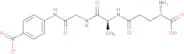
CAS:<p>Please enquire for more information about H-Glu(Ala-Gly-pNA)-OH trifluoroacetate salt including the price, delivery time and more detailed product information at the technical inquiry form on this page</p>Formula:C16H21N5O7Purity:Min. 95%Molecular weight:395.37 g/molH-Arg-Arg-Leu-Ile-Glu-Asp-Asn-Glu-Tyr-Thr-Ala-Arg-Gly-OH
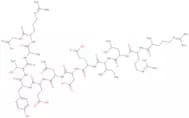
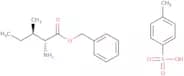
CAS:<p>H-Arg-Arg-Leu-Ile-Glu-Asp-Asn-Glu-Tyr-Thr-Ala-Arg-Gly-OH is a synthetic peptide that has been shown to have a homologous sequence with the amino acid sequence of a primary tumor. This peptide has strong binding affinity to tyrosine kinase, which is an enzyme involved in cellular signal transduction. H-Arg-Arg-Leu-Ile-Glu-Asp-Asn Glu Tyr Thr Ala Arg Gly OH has been shown to inhibit the growth of tumors and can be used as an analytical method for identifying carcinoma cells in vitro. HAAGLTEIGDATASNTTAHARGLTRALAGRGGYOH is also a potential drug for cardiovascular diseases, as it can be taken up intracellularly and may inhibit the proliferation of vascular smooth muscle cells.</p>Formula:C66H109N23O23Purity:Min. 95%Molecular weight:1,592.71 g/molH-D-Ile-OBzl·p-tosylate
CAS:<p>H-D-Ile-OBzl·p-tosylate is a synthetic compound that has been found to have an excitatory effect on the bitter taste receptor. The leaves of plants are mutant and agglutination tests for this compound show that it is a hexapeptide. H-D-Ile-OBzl·p-tosylate can be synthesized from erythritol and p-toluenesulfonyl chloride. The chemical data for this compound indicates that it has a molecular weight of 442.3 Da and the observed spectra indicate that it is a white solid with no charge.</p>Formula:C13H19NO2·C7H8O3SPurity:Min. 95%Molecular weight:393.5 g/molp-Hydroxyhippuryl-His-Leu-OH
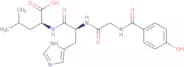
CAS:<p>P-hydroxyhippuryl-His-Leu-OH is a natriuretic that has been shown to have beneficial effects on diabetic patients. It can be used to prevent and treat proliferative diabetic retinopathy, which is a complication of diabetes. P-hydroxyhippuryl-His-Leu-OH increases the glomerular filtration rate and decreases the ventricular mass index, which may be due to its ability to inhibit angiotensin II receptors in the brain. P-hydroxyhippuryl-His-Leu-OH also inhibits angiotensin converting enzyme, an enzyme that converts angiotensin I into angiotensin II. This inhibition leads to an increase in levels of atrial natriuretic peptide (ANP), brain natriuretic peptide (BNP), and the downstream effectors of these peptides, namely nitric oxide synthase and cyclooxygenase</p>Formula:C21H27N5O6Purity:Min. 95%Molecular weight:445.47 g/molGalanin (1-19) (human)
CAS:<p>Please enquire for more information about Galanin (1-19) (human) including the price, delivery time and more detailed product information at the technical inquiry form on this page</p>Formula:C89H130N26O25Purity:Min. 95%Molecular weight:1,964.14 g/mol






![4-[2-(Fmoc-amino)ethyl]-1-piperazineacetic acid dihydrochloride](/_next/image/?url=https%3A%2Fstatic.cymitquimica.com%2Fproducts%2F3D%2Fthumb-webp%2FFF48264.webp&w=3840&q=75)