Amino Acids (AA)
Amino acids (AAs) are the fundamental building blocks of proteins, playing a crucial role in various biological processes. These organic compounds are essential for protein synthesis, metabolic pathways, and cell signaling. In this category, you will find a comprehensive range of amino acids, including essential, non-essential, and modified forms, which are vital for research in biochemistry, molecular biology, and nutritional sciences. At CymitQuimica, we provide high-quality amino acids to support your research and development needs, ensuring accuracy and reliability in your experimental outcomes.
Subcategories of "Amino Acids (AA)"
- Amino Acid Derivatives(3,955 products)
- Amino Acid and Amino Acid Related Compounds(3,464 products)
- Amino Acids with Oxygen or Sulphur(168 products)
- Boc- Amino Acids(351 products)
- Fmoc Amino Acids(1,710 products)
Found 38247 products of "Amino Acids (AA)"
Sort by
Purity (%)
0
100
|
0
|
50
|
90
|
95
|
100
4-Amino-2-methylbenzoic acid
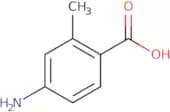
CAS:<p>4-Amino-2-methylbenzoic acid is a low molecular weight compound that has been shown to inhibit the neuraminidase enzyme. It interacts with the imine group of the enzyme and forms a covalent bond, which prevents the release of sialic acid from the terminal sugar residue of glycoproteins. The inhibition of this enzyme leads to decreased bacterial growth. 4-Amino-2-methylbenzoic acid has been shown to be active against Gram positive bacteria such as Staphylococcus aureus and Streptococcus pneumoniae, but not against Gram negative bacteria such as Escherichia coli or Pseudomonas aeruginosa. This compound is also able to inhibit the synthesis of c-reactive protein (CRP) in human erythrocytes.</p>Formula:C8H9NO2Purity:Min. 95%Color and Shape:PowderMolecular weight:151.16 g/molH-Glu-Ala-Gly-Asp-Asp-Ile-Val-Pro-Cys-Ser-Met-Ser-Tyr-Thr-Trp-Thr-Gly-Ala-OH
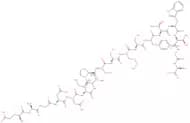
CAS:<p>H-Glu-Ala-Gly-Asp-Asp-Ile-Val-Pro-Cys-Ser-Met-Ser-Tyr-Thr-Trp-Thr-Gly-Ala is a peptide that is synthesized and expressed in the laboratory. It has been shown to have a constant amino acid sequence, which can be used as a control for protein studies. This peptide is unreactive with surrounding environments and does not undergo photochemical reactions. HAGGS has also been shown to be thermostable, yielding high yields of protein from it. The reactive nature of this peptide makes it unsuitable for use in solvents other than water or buffers containing water. HAGGS has been shown to have proteolytic activity against the hepatitis virus, HIV, and influenza virus. This peptide's fluorescence emission maxima is at 270 nm, which allows it to be observed under UV light.</p>Formula:C81H119N19O30S2Purity:Min. 95%Molecular weight:1,903.05 g/molStaphylococcus Aureus Protein A (SpA)-Derived Peptide
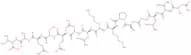
CAS:<p>Please enquire for more information about Staphylococcus Aureus Protein A (SpA)-Derived Peptide including the price, delivery time and more detailed product information at the technical inquiry form on this page</p>Formula:C68H118N20O22Purity:Min. 95%Molecular weight:1,567.79 g/molZ-Gly-Ala-OH
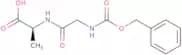
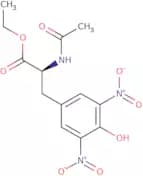
CAS:<p>Z-Gly-Ala-OH is an amide that is synthesized by the solid-phase synthesis of a protected amino acid. The amino acid sequence was determined by sequencing the product and comparing it to the amino acid composition of known glycyl-amides. The enzyme active site was found to be located on the side chain of Gly, which is a polar residue. This catalytic site is only occupied in one orientation, with Ala occupying the opposite side chain position. The yields for this reaction are very high and are not affected by changes in temperature or pH. Z-Gly-Ala-OH has a chiral center at position 3 and can exist as two enantiomers, Z-(+)-glycylalanine and its mirror image, Z-(−)-glycylalanine.</p>Formula:C13H16N2O5Purity:Min. 95%Molecular weight:280.28 g/molAc-3,5-dinitro-Tyr-OEt
CAS:<p>Please enquire for more information about Ac-3,5-dinitro-Tyr-OEt including the price, delivery time and more detailed product information at the technical inquiry form on this page</p>Formula:C13H15N3O8Purity:Min. 95%Molecular weight:341.27 g/molBoc-Asp(OcHex)-Merrifield resin (100-200 mesh)
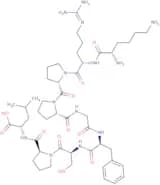
<p>Please enquire for more information about Boc-Asp(OcHex)-Merrifield resin (100-200 mesh) including the price, delivery time and more detailed product information at the technical inquiry form on this page</p>Purity:Min. 95%Lys-(Des-Arg9,Leu8)-Bradykinin trifluoroacetate salt
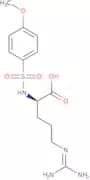
CAS:<p>Bradykinin is a peptide that is released in response to injury and inflammation. It has two receptors, B1 and B2. Bradykinin binds to the B2 receptor which leads to vasodilation, increased vascular permeability, and bronchoconstriction. Lys-(Des-Arg9,Leu8)-Bradykinin trifluoroacetate salt H-Lys-Arg-Pro-Pro-Gly-Phe-Ser-Pro-Leu (LBP) is a synthetic analogue of bradykinin that competes with bradykinin for binding sites on the bradykinin b2 receptor. LBP also inhibits lipoxygenase activity in vitro and in animals. This drug can be used as an antagonist against bradykinin b2 receptor or as an antiplatelet agent.</p>Formula:C47H75N13O11Purity:Min. 95%Molecular weight:998.18 g/molMbs-D-Arg-OH
CAS:<p>Please enquire for more information about Mbs-D-Arg-OH including the price, delivery time and more detailed product information at the technical inquiry form on this page</p>Formula:C13H20N4O5SPurity:Min. 95%Molecular weight:344.39 g/mol4-Nitro-D-phenylalanine methyl ester hydrochloride
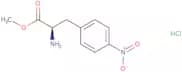
CAS:<p>Please enquire for more information about 4-Nitro-D-phenylalanine methyl ester hydrochloride including the price, delivery time and more detailed product information at the technical inquiry form on this page</p>Formula:C10H14N2O4·HClPurity:Min. 95%Molecular weight:262.69 g/mol2-Chloro-3-methoxyphenol
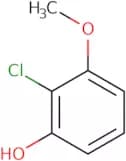
CAS:<p>Please enquire for more information about 2-Chloro-3-methoxyphenol including the price, delivery time and more detailed product information at the technical inquiry form on this page</p>Formula:C7H7ClO2Purity:Min. 95%Molecular weight:158.58 g/molH-Gly-Pro-Gly-OH
CAS:<p>H-Gly-Pro-Gly-OH is a glycan molecule. It is an artificially synthesized glycan that was designed to act as a neutralizing agent for HIV. It binds to the envelope protein gp120 and prevents it from binding to CD4 receptors on cells, thereby preventing viral entry into the cell. H-Gly-Pro-Gly-OH has also been shown to be effective in neutralizing collagenase activity, which may be useful in treating arthritis and other autoimmune disorders.<br>H-Gly-Pro-Gly-OH has been shown to bind to monoclonal antibodies that are used in the development of cancer treatments, such as Herceptin and Erbitux. This binding is thought to be due to sequences within the antibody that correspond with those found on gp120, the envelope protein of HIV.</p>Formula:C9H15N3O4Purity:Min. 95%Molecular weight:229.23 g/mol2-Hydroxy-6-methyl-4H-pyran-4-one
CAS:<p>2-Hydroxy-6-methyl-4H-pyran-4-one is a molecule that belongs to the class of acid lactones. It has been shown to have physiological effects in wild type strains of bacteria and fungi. This compound binds to nitrogen atoms and can inhibit enzyme activities, such as the diazonium salt. 2-Hydroxy-6-methyl-4H-pyran-4-one also has antimicrobial activity against Gram positive and Gram negative bacteria, along with some fungi. The antimicrobial activity is due to the hydroxy group on the compound's structure, which is a fatty acid with a hydroxyl group that gives it an acidic property. 2HMPA can be used in combination with other antimicrobial agents like triacetic acid or sodium chloride for greater effectivity against microorganisms.</p>Formula:C6H6O3Purity:Min. 95%Molecular weight:126.11 g/molH-Phe-Phe-Phe-OH
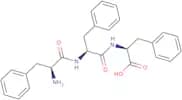
CAS:<p>H-Phe-Phe-Phe-OH is a molecule that belongs to the class of imidazolidinones. It is synthesized by reacting an amide with an imine. This synthetic molecule has been shown to have antihypertensive effects in a model system for hypertension. H-Phe-Phe-Phe-OH does not have any isomeric forms, but it can be present as different isotopic forms. The constant of this molecule is 2.5 kcal/mol and the molecular weight is 226 g/mol.br> <br>br><br>The molecules are represented by 3D structures, which show their spatial arrangements and interactions with other atoms in space. These structures can be calculated using molecular modeling techniques such as computational chemistry or quantum mechanics.br><br>br><br>Molecular modeling techniques have allowed researchers to design new molecules, predict their properties and evaluate their potential applications in medicine and other fields.</p>Formula:C27H29N3O4Purity:Min. 95%Molecular weight:459.54 g/molH-Arg-Arg-Glu-Glu-Glu-Thr-Glu-Glu-Glu-OH
CAS:<p>H-Arg-Arg-Glu-Glu-Glu-Thr-Glu-Glu-Glu-OH is a peptide that is an activator of casein kinase II. Casein kinase II is a serine/threonine protein kinase that plays an important role in the regulation of cell proliferation and differentiation, apoptosis, and immune response. It has been shown to be involved in restenosis after angioplasty, as well as in tumorigenesis and radiation therapy. H-Arg-Arg-Glu-Glu-Glu-Thr-Glu - Glu - Glu - OH has also been shown to inhibit the replication of influenza virus by interfering with viral transcription and viral maturation. This peptide has been used for the treatment of alopecia, which may be due to its ability to inhibit hair follicle growth.</p>Formula:C46H75N15O23Purity:Min. 95%Molecular weight:1,206.18 g/molFmoc-Leu-Wang resin (100-200 mesh)
<p>Please enquire for more information about Fmoc-Leu-Wang resin (100-200 mesh) including the price, delivery time and more detailed product information at the technical inquiry form on this page</p>Purity:Min. 95%Fmoc-Val-Wang resin (200-400 mesh)
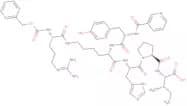
<p>Please enquire for more information about Fmoc-Val-Wang resin (200-400 mesh) including the price, delivery time and more detailed product information at the technical inquiry form on this page</p>Purity:Min. 95%Angiotensin II Receptor Ligand Nicotinoyl-Tyr-Lys(Z-Arg)-His-Pro-Ile-OH
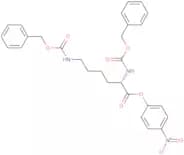
CAS:<p>Angiotensin II receptor ligand nicotinoyl-tyrosine-arginine-proline-ile (ANGII) is a peptide that acts as a potent angiotensin II receptor agonist. It can be used to anesthetize rats and cause bradykinin b2 receptor activation. ANGII has been shown to inhibit the growth of several types of tumors, such as human melanoma cells, in animal experiments. This drug also has antiangiogenic properties, which may be due to its ability to induce the production of tumor necrosis factor-α (TNF-α).</p>Formula:C52H69N13O11Purity:Min. 95%Molecular weight:1,052.19 g/molZ-Lys(Z)-ONp
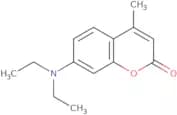
CAS:<p>Z-Lys(Z)-ONp is an intermediate in the synthesis of lysergic acid diethylamide (LSD). It is a hypotensive agent that has analgesic properties. Z-Lys(Z)-ONp has been patented for use as a hypotensive agent, although it has not yet been approved for this use.</p>Formula:C28H29N3O8Purity:Min. 95%Molecular weight:535.55 g/mol7-Diethylamino-4-methylcoumarin
CAS:<p>7-Diethylamino-4-methylcoumarin is a fluorescence probe that can be used in applications such as the study of hydrogen bonding interactions. It is excited by laser light and emits a red-shifted fluorescent light. 7-Diethylamino-4-methylcoumarin is a hydroxyl group analogue of coumarin, which has been shown to have physiological effects on the liver cells. The absorption spectrum of 7-Diethylamino-4-methylcoumarin is sensitive to changes in pH and chemical stability. A decrease in pH increases the intensity of the emission while an increase in pH decreases the intensity of the emission. This compound can also be used to label nucleic acids during polymerase chain reactions (PCR) or for sample preparation before analysis using nuclear magnetic resonance spectroscopy (NMR).</p>Formula:C14H17NO2Purity:Min. 98 Area-%Color and Shape:PowderMolecular weight:231.29 g/molSarafotoxin B trifluoroacetate salt
CAS:<p>Component of snake venom; part of a family of vasoconstrictor isopeptides</p>Formula:C110H159N27O34S5Purity:Min. 95%Molecular weight:2,563.93 g/molH-Asp-Ala-OH
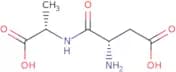
CAS:<p>Adriamycin is an anticancer drug that is a structural analogue of aspartic acid. It can be synthesized in a solid-phase synthesis using a polymeric resin with an acidic functional group, such as H-Asp-Ala-OH. Adriamycin inhibits the production of inflammatory cytokines and prostaglandins, which are involved in the development of inflammatory diseases. Adriamycin has been shown to have anti-inflammatory effects on human serum and to inhibit the production of proteins important for tumor cell proliferation. Adriamycin also has anti-inflammatory properties due to its ability to bind with hydrogen bonds to acidic residues on proteins.<br>END></p>Formula:C7H12N2O5Purity:Min. 98 Area-%Color and Shape:PowderMolecular weight:204.18 g/molBoc-Phe-PAM resin (200-400 mesh)
<p>Please enquire for more information about Boc-Phe-PAM resin (200-400 mesh) including the price, delivery time and more detailed product information at the technical inquiry form on this page</p>Purity:Min. 95%DABCYL-Glu-Arg-Nle-Phe-Leu-Ser-Phe-Pro-EDANS trifluoroacetate salt
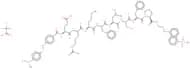
CAS:<p>Please enquire for more information about DABCYL-Glu-Arg-Nle-Phe-Leu-Ser-Phe-Pro-EDANS trifluoroacetate salt including the price, delivery time and more detailed product information at the technical inquiry form on this page</p>Formula:C76H98N16O15SPurity:Min. 95%Molecular weight:1,507.76 g/molH-Ala-Leu-Tyr-Leu-bNA
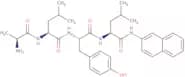
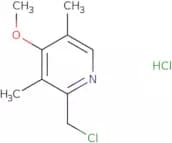
CAS:<p>Please enquire for more information about H-Ala-Leu-Tyr-Leu-bNA including the price, delivery time and more detailed product information at the technical inquiry form on this page</p>Formula:C34H45N5O5Purity:Min. 95%Molecular weight:603.75 g/mol2-(Chloromethyl)-4-methoxy-3,5-dimethylpyridine hydrochloride
CAS:<p>2-(Chloromethyl)-4-methoxy-3,5-dimethylpyridine hydrochloride is a benzimidazole derivative. It has a chemical stability and can be used for wastewater treatment. It is also a pump inhibitor and can be used for anhydrous sodium magnesium salts. This product is synthesized from the reaction of protonated 2-bromo-4-methoxyphenol with 2,6-dimethylpyridine in the presence of hydrochloric acid. The reaction was carried out in an asymmetric synthesis using a proton transport system. 2-(Chloromethyl)-4-methoxy-3,5-dimethylpyridine hydrochloride is soluble in water and has a pH of 1 to 3. It has been shown that this product can be used as an antioxidant and as a metal chelation agent.</p>Formula:C9H13Cl2NOPurity:Min. 95%Color and Shape:PowderMolecular weight:222.11 g/molSuc-Ala-Ala-Pro-Lys-pNA
CAS:<p>Suc-Ala-Ala-Pro-Lys-pNA is a hybrid peptide that was expressed and purified from the gene product of the human serine protease, pancreatic elastase. It has been shown to have high salt and pH stability and predominately exists as a single polypeptide chain. Suc-Ala-Ala-Pro-Lys-pNA has been shown to enhance the immunofluorescence of inflammatory cells in vitro, suggesting it may be used as a therapeutic agent for inflammatory diseases. In addition, this hybrid peptide has also demonstrated protease activity.</p>Formula:C27H39N7O9Purity:Min. 95%Molecular weight:605.64 g/molH-D-Arg(Pbf)-allyl ester hydrochloride
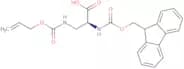
CAS:<p>Please enquire for more information about H-D-Arg(Pbf)-allyl ester hydrochloride including the price, delivery time and more detailed product information at the technical inquiry form on this page</p>Formula:C22H34N4O5S•HClPurity:Min. 95%Molecular weight:503.06 g/molN-α-Fmoc-Nβ-allyloxycarbonyl-L-2,3-diaminopropionic acid
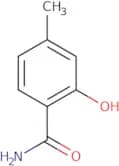
CAS:<p>Please enquire for more information about N-alpha-Fmoc-Nbeta-allyloxycarbonyl-L-2,3-diaminopropionic acid including the price, delivery time and more detailed product information at the technical inquiry form on this page</p>Formula:C22H22N2O6Purity:Min. 95%Molecular weight:410.53 g/mol4-Methylsalicylamide
CAS:<p>4-Methylsalicylamide is a chemical compound that belongs to the class of isonicotinic amides. It is a potent anti-inflammatory agent with minimal inhibitory concentration (MIC) values of 4 µg/mL for gram-positive bacteria and 8 µg/mL for gram-negative bacteria. This compound has been shown to be effective against methicillin-resistant Staphylococcus aureus (MRSA) and Clostridium perfringens, although is not active against acid-fast bacteria such as Mycobacterium tuberculosis or Mycobacterium avium complex. 4-Methylsalicylamide has been shown to have an inhibitory effect on ring-opening, which may be due to its ability to acetylate mitochondrial membranes, altering the membrane potential. The molecular modeling studies also showed that 4MSAM binds at the same site as antibiotics such as penicillin and erythromycin in bacterial ribos</p>Formula:C8H9NO2Purity:Min. 95%Color and Shape:PowderMolecular weight:151.16 g/molFmoc-Tyr-Ala-OH
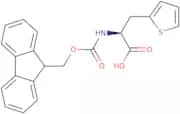
CAS:<p>Fmoc-Tyr-Ala-OH is a biochemical that is expressed in mammalian cells. It has been shown to activate enzymes and the production of proteins, which are essential for cell growth. Fmoc-Tyr-Ala-OH is also proteolytic and hydrolyzing, meaning it can be used to cleave proteins into smaller pieces. It has been shown to have acidic and neutral properties at different pH levels. This enzyme also has an inhibitory effect on the production of monoclonal antibodies in mcf-7 cells, which are derived from mouse mammary epithelial cells.</p>Formula:C27H26N2O6Purity:Min. 95%Molecular weight:474.51 g/molFmoc-b-(2-thienyl)-L-alanine
CAS:<p>Please enquire for more information about Fmoc-b-(2-thienyl)-L-alanine including the price, delivery time and more detailed product information at the technical inquiry form on this page</p>Formula:C22H19NO4SPurity:Min. 95%Molecular weight:393.46 g/molH-Gly-Gly-bNA·HBr
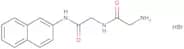
CAS:<p>Please enquire for more information about H-Gly-Gly-bNA·HBr including the price, delivery time and more detailed product information at the technical inquiry form on this page</p>Formula:C14H15N3O2·HBrPurity:Min. 95%Molecular weight:338.2 g/mol(R)-2-Methylmorpholine
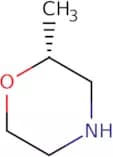
CAS:<p>(R)-2-Methylmorpholine is a protease inhibitor that has been shown to inhibit HIV-1 protease, a class of enzymes that are involved in the replication of HIV-1. It is used as a research tool to study the structure and function of HIV-1 protease. (R)-2-Methylmorpholine binds to the active site of the enzyme by forming hydrophobic interactions with residues in the active site. This binding leads to an inhibitory effect on ligand binding, protein synthesis, and other cellular processes. Molecular modeling studies have shown that (R)-2-Methylmorpholine inhibits HIV-1 protease by blocking the catalytic cleft and preventing access to substrate residues.</p>Formula:C5H11NOPurity:Min. 95%Molecular weight:101.15 g/molFluorescein-6-carbonyl-Val-Glu(OMe)-Ile-DL-Asp(OMe)-fluoromethylketone
CAS:<p>Please enquire for more information about Fluorescein-6-carbonyl-Val-Glu(OMe)-Ile-DL-Asp(OMe)-fluoromethylketone including the price, delivery time and more detailed product information at the technical inquiry form on this page</p>Formula:C44H49FN4O14Purity:Min. 95%Molecular weight:876.88 g/mol(Des-Gly10,D-His2,D-His(Bzl)6,Pro-NHEt 9)-LHRH
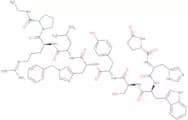
CAS:<p>Please enquire for more information about (Des-Gly10,D-His2,D-His(Bzl)6,Pro-NHEt 9)-LHRH including the price, delivery time and more detailed product information at the technical inquiry form on this page</p>Formula:C66H86N18O12Purity:Min. 95%Molecular weight:1,323.5 g/molAF-16 trifluoroacetate salt
CAS:<p>AF-16 trifluoroacetate salt is a synthetic peptide, which is derived from chemical synthesis with tailored modifications to enhance its stability and efficacy. This compound acts by specifically binding to target receptors or proteins, facilitating the study of biochemical pathways and mechanisms at the molecular level. It is particularly used in biological and biochemical research settings to probe cellular processes, offering insights into protein interactions and signaling pathways.</p>Formula:C71H119N25O25SPurity:Min. 95%Molecular weight:1,754.92 g/molH-Lys-Val-OH hydrochloride salt
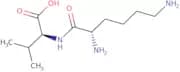
CAS:<p>H-Lys-Val-OH hydrochloride salt is a polymerase chain that has been synthesized from the amino acid lysine. It is an optical sensor that can be used to detect and quantify proteins. H-Lys-Val-OH hydrochloride salt binds to DNA in the cell nucleus and is sensitive to the concentration of adenosine triphosphate (ATP) in cells. This nucleotide plays an important role in cellular energy production. The binding constants for H-Lys-Val-OH hydrochloride salt are determined from the fluorescence emission spectrum, which changes with different concentrations of ATP. The method can be used to measure glomerular filtration rates and can be used as a low energy radiation source for cervical cancer treatment.</p>Formula:C11H23N3O3Purity:Min. 95%Molecular weight:245.32 g/molH-DL-Ala-DL-Ala-OH
CAS:<p>H-DL-Ala-DL-Ala-OH is a chemical that belongs to the group of amides. It has been shown to have an inhibitory effect on the growth of bacteria in vitro. The molecular weight and stability of H-DL-Ala-DL-Ala-OH are greater than those of vancomycin, which may be due to its higher nitrogen content. This chemical can be used as a model system for studying the reaction mechanism and structure of vancomycin, including the formation of intramolecular hydrogen bonds and carbonyl oxygens. H-DL-Ala-DL-Ala-OH also has antibiotic properties that are similar to penicillin.</p>Formula:C6H12N2O3Purity:Min. 95%Color and Shape:White PowderMolecular weight:160.17 g/molBz-Asn-pNA
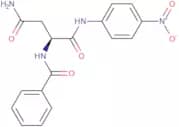
CAS:<p>Bz-Asn-pNA is a peptide that is synthesized by the enzyme phosphoenolpyruvate carboxykinase. It has been shown to be an effective inhibitor of proteolytic enzymes, such as aminopeptidases. Bz-Asn-pNA has also been shown to be stable in high salt concentrations and its activity does not change at physiological pH levels. The kinetic constants for Bz-Asn-pNA have been determined using dodecylphosphocholine and endogenous substrate (3H)lysine. The optimum pH for Bz-Asn-pNA is between 7 and 8, which is optimal for protein synthesis.</p>Formula:C17H16N4O5Purity:Min. 95%Molecular weight:356.33 g/molAc-Arg-Phe-Met-Trp-Met-Lys-NH2 TFA salt
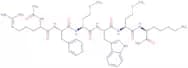
CAS:<p>Ac-Arg-Phe-Met-Trp-Met-Lys-NH2 is an opioid receptor agonist with a high affinity for the μ-, δ-, and κ-opioid receptors. Ac-Arg-Phe-Met-Trp-Met-Lys-NH2 binds to these receptors, thereby inhibiting the release of neurotransmitters that transmit pain signals from the peripheral nerves to the brain. Acetyl fentanyl also inhibits the binding of opioid receptor antagonists such as naloxone, which is used in emergency rooms to block or reverse the effects of opioids. Acetyl fentanyl has been shown to be an effective analgesic in animal studies.</p>Formula:C44H66N12O7S2•xC2HF3O2Purity:Min. 95%Molecular weight:939.2 g/molCarboxymethyl-Phe-Leu-OH
CAS:<p>Carboxymethyl-Phe-Leu-OH (CMPLE) is a metalloprotease inhibitor that inhibits the activity of proteases, such as serine proteases and cysteine proteases. CMPLE is used to treat infectious diseases caused by bacteria, fungi, or parasites. CMPLE also has been shown to inhibit the formation of inflammatory responses in autoimmune and inflammatory diseases. This drug can be used in combination with benzalkonium chloride or monoclonal antibodies to treat hematopoietic cells. The optimum pH for this drug is 7.5, and it denatures at high temperatures. It also binds to epithelial surface glycoproteins in the gastrointestinal tract and may be useful for treating ulcers caused by Helicobacter pylori infection.</p>Formula:C17H24N2O5Purity:Min. 95%Molecular weight:336.38 g/molIsovaleryl-Val-Val-Sta-OEt
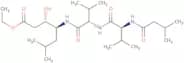
CAS:<p>Isovaleryl-Val-Val-Sta-OEt is a peptide hormone and active inhibitor of the enzyme pepsin. This drug has been shown to have proteolytic activity in vitro, with a pepsin rate constant of 0.0015 min−1. It also inhibits the protease activity of trypsin, chymotrypsin, and elastase at a similar rate. Isovaleryl-Val-Val-Sta-OEt has been shown to be an active inhibitor of polymerase chain reaction (PCR) and reverse transcriptase activities. This drug is not absorbed through skin and can be used as a nonimmunogenic reagent for biochemical studies on water permeability and signal peptide sequences in biological samples.</p>Formula:C25H47N3O6Purity:Min. 95%Molecular weight:485.66 g/molH-Asp-Arg-Val-Tyr-Ile-His-Pro-Phe-His-Leu-Val-Ile-His-OH
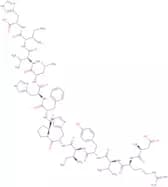
CAS:<p>H-Asp-Arg-Val-Tyr-Ile-His-Pro-Phe-His-Leu-Val-Ile-His (Daprodinam) is a peptide that binds to the response element in the promoter region of the gene encoding for the LDL receptor. Daprodinam inhibits atherosclerosis and has been shown to have an inhibitory effect on angiotensinogen production, which leads to decreased blood pressure. Daprodinam also has inhibitory properties against toll like receptor 4, which is involved in inflammatory bowel disease.</p>Formula:C79H116N22O17Purity:Min. 95%Molecular weight:1,645.9 g/molPresenilin-1 (331-349)-Cys (human, mouse) trifluoroacetate salt
CAS:<p>Please enquire for more information about Presenilin-1 (331-349)-Cys (human, mouse) trifluoroacetate salt including the price, delivery time and more detailed product information at the technical inquiry form on this page</p>Formula:C92H130N28O37SPurity:Min. 95%Molecular weight:2,252.25 g/molZ-Pro-D-Leu-D-Ala-NHOH
CAS:<p>Z-Pro-D-Leu-D-Ala-NHOH is a neutralizing peptide that inhibits the activity of elastase and collagenase. It also has potent inhibitory activities against experimental infection with various microorganisms, including Streptococcus pyogenes, Staphylococcus aureus, and Pseudomonas aeruginosa. This peptide is a molecule consisting of 11 amino acids, which is synthesized in vivo by the host as a response to bacterial infections. Z-Pro-D-Leu-D-Ala-NHOH can be used for pharmaceutical preparations or techniques that require an enzyme inhibitor. The biological function of this peptide is not fully understood but it has been shown to have antiestrogenic effects.</p>Formula:C22H32N4O6Purity:Min. 95%Molecular weight:448.51 g/molH-Leu-Trp-Met-Arg-Phe-OH acetate salt
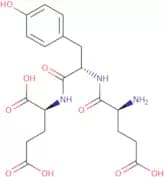
CAS:<p>H-Leu-Trp-Met-Arg-Phe-OH acetate salt is a molecule that transports amino acids across the cell membrane of bacteria, preventing bacterial growth. It is produced by proctolin and functional groups in dental plaque. This compound has been shown to inhibit the growth of bacteria in vitro by binding to hypochlorous acid, which is part of the antimicrobial activity of human neutrophils. H-Leu-Trp-Met-Arg-Phe-OH acetate salt has been used as a tracer for studying amino acid transport in E. coli cells and its uptake into extracellular vesicles. The product can also be used as an antiplaque agent due to its ability to inhibit the acid transport system and uptake of amino acids from the environment.</p>Formula:C37H53N9O6SPurity:Min. 95%Molecular weight:751.94 g/molH-Glu-Tyr-Glu-OH
CAS:<p>Please enquire for more information about H-Glu-Tyr-Glu-OH including the price, delivery time and more detailed product information at the technical inquiry form on this page</p>Formula:C19H25N3O9Purity:Min. 95%Molecular weight:439.42 g/molH-Thr-Asp-OH TFA salt
CAS:<p>Please enquire for more information about H-Thr-Asp-OH TFA salt including the price, delivery time and more detailed product information at the technical inquiry form on this page</p>Formula:C8H14N2O6C2F3HO2Purity:Min. 95%Molecular weight:348.23 g/molFmoc-rink amide resin
CAS:<p>Fmoc-rink amide resin is a synthetic, radionuclide, and constant polymer. It is used in chemical ligation to produce peptides from amines and growth factors. Fmoc-rink amide resin also has antimicrobial properties due to its ability to inhibit the growth of bacteria and fungi by binding to their cell membranes. This polymer can be conjugated with growth factor or antimicrobial peptides for use as a therapeutic agent or used in the production of antibodies against a particular protein. Fmoc-rink amide resin has been shown to increase epidermal growth factor (EGF) uptake into cells by targeting EGF receptors on the cell surface.</p>Purity:Min. 95%GLP-2 (1-34) (human) trifluoroacetate salt
CAS:<p>Structure/Function: human; Trifluoroacetate salt</p>Formula:C171H266N48O56SPurity:Min. 95%Molecular weight:3,922.3 g/mol