Amino Acids (AA)
Amino acids (AAs) are the fundamental building blocks of proteins, playing a crucial role in various biological processes. These organic compounds are essential for protein synthesis, metabolic pathways, and cell signaling. In this category, you will find a comprehensive range of amino acids, including essential, non-essential, and modified forms, which are vital for research in biochemistry, molecular biology, and nutritional sciences. At CymitQuimica, we provide high-quality amino acids to support your research and development needs, ensuring accuracy and reliability in your experimental outcomes.
Subcategories of "Amino Acids (AA)"
- Amino Acid Derivatives(3,957 products)
- Amino Acid and Amino Acid Related Compounds(3,472 products)
- Amino Acids with Oxygen or Sulphur(168 products)
- Boc- Amino Acids(351 products)
- Fmoc Amino Acids(1,710 products)
Found 38265 products of "Amino Acids (AA)"
Sort by
Purity (%)
0
100
|
0
|
50
|
90
|
95
|
100
5-Methyl-4,5-dihydro-1,2,4-triazino[5,6-b]indole-3-thione
CAS:<p>Please enquire for more information about 5-Methyl-4,5-dihydro-1,2,4-triazino[5,6-b]indole-3-thione including the price, delivery time and more detailed product information at the technical inquiry form on this page</p>Formula:C10H8N4SPurity:Min. 95%Color and Shape:PowderMolecular weight:216.26 g/molO-tert-Butyl-D-serine t-butyl ester hydrochloride
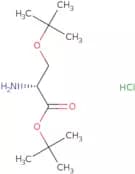
CAS:<p>O-tert-Butyl-D-serine t-butyl ester hydrochloride is a reaction component that can be used as a reagent in research and chemical synthesis. This compound is useful for the synthesis of complex compounds, such as pharmaceuticals and agrochemicals. It is also used in the production of fine chemicals, such as dyes and perfumes. CAS No. 179559-35-4</p>Formula:C11H23NO3·HClPurity:Min. 95%Color and Shape:PowderMolecular weight:253.77 g/molNelotanserin
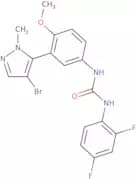
CAS:<p>1-[3-(4-Bromo-1-methyl-1H-pyrazol-5-yl)-4-methoxyphenyl]-3-(2,4-difluorophenyl)urea is the active ingredient in a drug that is used to treat chronic schizophrenia. It has been shown to have both antipsychotic and antidepressant properties. The drug works by blocking the 5HT2A receptor, which inhibits the effects of serotonin on heterocyclic amines at the postsynaptic membrane. This causes hyperpolarization of the membrane, which blocks neurotransmitter release and prevents further transmission of signals. It also blocks the H1 receptor, which decreases histamine release and reduces inflammation in the brain.</p>Formula:C18H15BrF2N4O2Purity:Min. 95%Color and Shape:PowderMolecular weight:437.24 g/mol2-Methoxyhydroquinone
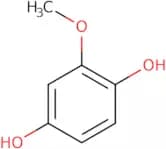
CAS:<p>2-Methoxyhydroquinone is a reactive phenolic compound that is used as an antioxidant in nutrient solutions. The compound reacts with a hydroxyl group to form 2,2-bis(4-hydroxyphenyl)propane through the addition of hydrogen bonds. It is also used for wastewater treatment and in radiation-induced polymerization reactions. 2-Methoxyhydroquinone can react with alcohol residues on proteins to form p-hydroxybenzoic acid esters. In addition, this compound has been shown to be an excellent enzyme substrate, which may result from its ability to undergo hydrogen bonding interactions with the enzyme active site.</p>Formula:C7H8O3Color and Shape:PowderMolecular weight:140.14 g/mol1-Phenanthrol
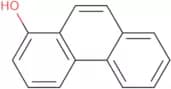
CAS:<p>1-Phenanthrol is a naturally occurring phenanthrene derivative that is used in the treatment of cervical cancer. It has been shown to be effective in the chemiluminescence method using urine samples, which indicates that it may have an effect on the body's metabolism. 1-Phenanthrol has also been shown to inhibit the production of s-phenylmercapturic acid, which is a metabolite of aromatic amines. This inhibition may be due to its receptor binding properties as it binds to and activates the peroxisome proliferator-activated receptor alpha (PPARα) and PPARγ. 1-Phenanthrol also inhibits angiotensin II type 1 receptors and can cause vasorelaxation by reducing blood pressure.</p>Formula:C14H10OPurity:Min. 95%Color and Shape:Off-White PowderMolecular weight:194.23 g/mol2-Methylnicotinic acid imidazolide
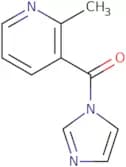
CAS:<p>2-Methylnicotinic acid imidazolide is a small molecule with the ability to regulate RNA splicing. It has been shown to inhibit the transcription of specific genes by binding to the RNA sequence and forming a stable complex with the mRNA. The chemical structure of 2-methylnicotinic acid imidazolide has also been shown to be similar to that of nicotinamide, which is a precursor for NAD+, a coenzyme involved in cellular metabolism. This may explain how 2-methylnicotinic acid imidazolide regulates gene expression and promotes neuronal health.</p>Formula:C10H9N3OPurity:Min. 95%Color and Shape:PowderMolecular weight:187.2 g/mol7-Diethylamino-3-(4'-maleimidylphenyl)-4-methylcoumarin
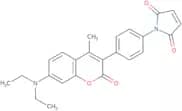
CAS:<p>7-Diethylamino-3-(4'-maleimidylphenyl)-4-methylcoumarin is a fluorescent probe that can be used to measure the cytosolic calcium concentration. This probe binds to heparin, which is a positive ionic charge and has been shown to cause an increase in cytosolic calcium levels in cultured cells. 7-Diethylamino-3-(4'-maleimidylphenyl)-4-methylcoumarin has been used to successfully monitor changes in cytosolic calcium levels in response to pharmacological agents, such as the monoclonal antibody TNF-α. 7-Diethylamino-3-(4'-maleimidylphenyl)-4-methylcoumarin has also been used as a marker for tissue culture studies, where it was found that this molecule binds to the ryanodine receptor and alters its redox potential.</p>Formula:C24H22N2O4Purity:Min. 95%Color and Shape:PowderMolecular weight:402.44 g/mol2-Chloro-5-methoxybenzonitrile
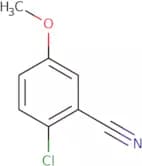
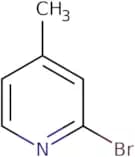
CAS:<p>2-Chloro-5-methoxybenzonitrile is an organic compound that has a chlorinated methoxy group and a cyano group. It is synthesized by the reaction of 2-chloro-5-hydroxybenzonitrile with sulfuryl chloride in the presence of potassium carbonate. The yield of this reaction can be increased by adding a chlorinated solvent such as dichloromethane or chloroform. 2-Chloro-5-methoxybenzonitrile is used in the synthesis of various drugs and other organic compounds, such as amides and benzene ring compounds.</p>Formula:C8H6ClNOColor and Shape:PowderMolecular weight:167.59 g/mol2-Bromo-4-methylpyridine
CAS:<p>2-Bromo-4-methylpyridine is an organic compound that is used in the synthesis of other compounds. It has been shown to be a potent anticancer agent, inhibiting cell function and inducing apoptosis. 2-Bromo-4-methylpyridine can be used to detect autofluorescent cells by photoreceptor cell fluorescence. This compound also induces lipofuscin accumulation in red blood cells as a result of its protonation, which leads to decreased membrane fluidity and oxidative stress.</p>Formula:C6H6BrNPurity:Min. 95%Color and Shape:PowderMolecular weight:172.02 g/molTetrakis[N-phthaloyl-(R)-tert-leucinato]dirhodium bis(ethyl acetate) adduct
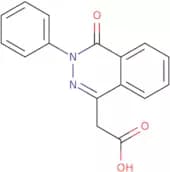
CAS:<p>Tetrakis[N-phthaloyl-(R)-tert-leucinato]dirhodium bis(ethyl acetate) adduct is a reagent that is used in organic synthesis and research. It has been shown to be useful as a scaffold for the synthesis of complex compounds, such as polymers. Tetrakis[N-phthaloyl-(R)-tert-leucinato]dirhodium bis(ethyl acetate) adduct can be used as an intermediate in the production of fine chemicals and speciality chemicals, as well as a versatile building block for the synthesis of diverse chemical compounds.</p>Formula:C56H56N4O16Rh2·C8H16O4Purity:Min. 95%Color and Shape:Yellow To Brown To Dark Green SolidMolecular weight:1423.083-Phenyl-4-phthalazinone-1-acetic acid
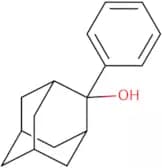
CAS:<p>3-Phenyl-4-phthalazinone-1-acetic acid (3PPAA) is an organic compound that can be used to synthesize gold nanoparticles. Gold nanoparticles are ferroelectric and have a dipole moment. 3PPAA can be modeled using simulations with the panthera program, which is able to predict the effect of various parameters on the morphology of the particles. The shape of the gold nanoparticles can be controlled by changing the concentration of 3PPAA in water and by adding or removing a stabilizing agent such as sodium bicarbonate. 3PPAA has been shown to have a strong interaction with mitochondrial DNA, which could lead to death of cells by interfering with mitochondrial function.</p>Formula:C16H12N2O3Purity:Min. 95%Color and Shape:SolidMolecular weight:280.28 g/mol2-Phenyl-2-adamantanol
CAS:<p>2-Phenyl-2-adamantanol is a deuterated analog of 2-phenyl-2-adamantane (C 10 H 16 ) with an isotopic weight of 128. The FTIR spectra show the presence of a new peak at 1728 cm−1, which is attributed to C=O stretching vibrations in the hydroxyl group. The IR spectrum of 2-phenyl-2-adamantanol shows that it has an azide group and two hydrogen bonds. It also interacts competitively with carbachol, but does not interact with atropine. Preparative oriented crystallization was used to isolate this compound from benzene.</p>Formula:C16H20OPurity:Min. 95%Color and Shape:PowderMolecular weight:228.33 g/mol1-Palmitoyl-rac-glycerol
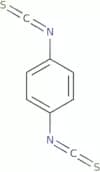
CAS:<p>1-Palmitoyl-rac-glycerol is a fatty acid that contains nitrogen atoms. It has hypoglycemic effects and is used to treat metabolic disorders. 1-Palmitoyl-rac-glycerol has been shown to have a protective effect on the liver by decreasing the levels of triglycerides in the blood and preventing lipid peroxidation. It also improves glucose metabolism and insulin sensitivity. 1-Palmitoyl-rac-glycerol is an important component of biological membranes, where it forms a hydrophobic region that helps maintain membrane structure. This compound also has hemolytic activity, which may be due to its ability to bind with phospholipids or cell membranes, leading to changes in their permeability or stability. The stability of 1-palmitoyl-rac glycerol can be tested by adding reagents such as sodium nitrite or potassium permanganate, which will cause a color change from yellow to brown if it reacts</p>Formula:C19H38O4Purity:Min. 95%Color and Shape:PowderMolecular weight:330.5 g/mol1,4-Phenylene diisothiocyanate
CAS:<p>1,4-Phenylene diisothiocyanate is a potent anthelmintic drug that inhibits the growth of parasites and has been used to treat infections caused by helminths. It binds to a chemoreceptor site on the parasite's surface and prevents the release of an inflammatory mediator, epidermal growth factor. This drug also interacts with other receptors, such as P2Y2, which are involved in inflammation. 1,4-Phenylene diisothiocyanate has been shown to be effective against cancer cells in experimental models and may be useful in chemotherapeutic treatments due to its ability to inhibit cell proliferation.</p>Formula:C8H4N2S2Purity:Min. 98 Area-%Color and Shape:Off-White PowderMolecular weight:192.26 g/molMethyl 3-amino-6-methylthieno[2,3-b]pyridine-2-carboxylate
CAS:<p>Please enquire for more information about Methyl 3-amino-6-methylthieno[2,3-b]pyridine-2-carboxylate including the price, delivery time and more detailed product information at the technical inquiry form on this page</p>Formula:C10H10N2O2SPurity:Min. 95%Molecular weight:222.27 g/molStyrenated phenol
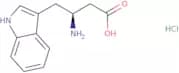
CAS:<p>2,4,6-Tris-(1-phenyl-ethyl)phenol is a phenolic compound that is used to manufacture polyvinyl chloride. It has been shown to be an effective antioxidant and can be used in treatments of polyvinyl chloride products. 2,4,6-Tris-(1-phenyl-ethyl)phenol is hydrophobic and can be used as a coating agent for surfaces that are exposed to water or moisture. 2,4,6-Tris-(1-phenyl-ethyl)phenol has been shown to inhibit the enzymatic reaction between chlorine and hydrophobic compounds. This chemical also has optical properties that are sensitive to changes in pH levels and temperature.</p>Formula:C30H30OPurity:Min. 95%Molecular weight:406.56 g/molL-β-Homotryptophan hydrochloride
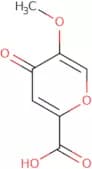
CAS:<p>L-beta-Homotryptophan hydrochloride is a fine chemical that is used in research, as well as in the production of other chemicals. It is a useful building block for complex compounds. It can be used to react with other compounds to produce reactions components or scaffolds. L-beta-Homotryptophan hydrochloride is also a versatile building block and can be used to synthesize other fine chemicals, such as pharmaceuticals, pesticides, and herbicides. L-beta-Homotryptophan hydrochloride belongs to the category of reagents that are available in high quality and are often used in research. The CAS number for this compound is 339994-86-4.</p>Formula:C12H14N2O2•HClPurity:Min. 95%Color and Shape:Off-White PowderMolecular weight:254.71 g/mol5-Methoxy-4-oxo-4H-pyran-2-carboxylic acid
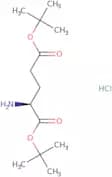
CAS:<p>5-Methoxy-4-oxo-4H-pyran-2-carboxylic acid is a building block for organic synthesis. It is a versatile building block that can be used to synthesize complex compounds. 5-Methoxy-4-oxo-4H-pyran-2-carboxylic acid has been shown to be useful as a reagent in organic synthesis and as a reaction component. It is also used in pharmaceutical research and development. CAS No.: 1199-60-6</p>Formula:C7H6O5Purity:Min. 95%Color and Shape:PowderMolecular weight:170.12 g/molL-Glutamic acid di-tert-butyl ester hydrochloride
CAS:<p>L-glutamic acid di-tert-butyl ester hydrochloride is a synthetic glutamic acid conjugate that can be used in the treatment of cancer. L-Glutamic acid di-tert-butyl ester hydrochloride is a substrate for many enzymes, such as glutamate transporters and glutaminase, which are found in tumor cells. It has been shown to decrease the uptake of docetaxel by tumor xenografts in mice. The expression of L-Glutamic acid di-tert-butyl ester hydrochloride has been observed in tissues during cancerous growth and it is expressed at higher levels than in normal tissues.</p>Formula:C13H25NO4·HClPurity:Min. 95%Color and Shape:White PowderMolecular weight:295.8 g/mol2-Phenoxybenzaldehyde
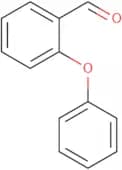
CAS:<p>2-Phenoxybenzaldehyde is an organic compound that belongs to the heterocyclic aldehyde family. It is a white solid with a strong, pleasant odor. 2-Phenoxybenzaldehyde is used as an intermediate in organic synthesis, and has been shown to inhibit the receptor activity of human leukocyte antigen (HLA) class II molecules. The reaction mechanism for this inhibition is not known. The reaction of 2-phenoxybenzaldehyde with hydrochloric acid produces phenylhydroxylamine, which can be oxidized by inorganic acids to form phenyloxalic acid. This compound also inhibits the production of inflammatory cytokines such as TNFα and IL-1β in vitro and in vivo.</p>Formula:C13H10O2Purity:Min. 95%Color and Shape:Clear LiquidMolecular weight:198.22 g/mol
![5-Methyl-4,5-dihydro-1,2,4-triazino[5,6-b]indole-3-thione](/_next/image/?url=https%3A%2Fstatic.cymitquimica.com%2Fproducts%2F3D%2Fthumb-webp%2FFM169526.webp&w=3840&q=75)

![Tetrakis[N-phthaloyl-(R)-tert-leucinato]dirhodium bis(ethyl acetate) adduct](/_next/image/?url=https%3A%2Fstatic.cymitquimica.com%2Fproducts%2F3D%2Fthumb-webp%2FFT60015.webp&w=3840&q=75)

![Methyl 3-amino-6-methylthieno[2,3-b]pyridine-2-carboxylate](/_next/image/?url=https%3A%2Fstatic.cymitquimica.com%2Fproducts%2F3D%2Fthumb-webp%2FFM142163.webp&w=3840&q=75)