Peptides
Subcategories of "Peptides"
Found 29672 products of "Peptides"
Ac-Val-Asp-Val-Ala-Asp-AMC
CAS:Controlled ProductAc-Val-Asp-Val-Ala-Asp-AMC is a research tool used to study the function of ion channels. It is an activator that binds to the receptor site on ATP sensitive potassium channels. Ac-Val-Asp-Val-Ala-Asp-AMC has been shown to inhibit calcium and sodium ion flux through ion channels, as well as high purity and good solubility. This peptide is useful for studying protein interactions, pharmacology, and life science research.
Formula:C33H44N6O12Purity:Min. 95%Molecular weight:716.74 g/molAmino-dPEG®24-t-Butyl Ester
CAS:Amino-dPEG®24-t-Butyl Ester is a PEG compound with two different functional groups (also known as heterobifunctional). Unlike homobifunctional PEG compounds (same functional group on both ends), this type of compounds are more versatile as have two different anchor points. Amino-dPEG®24-t-Butyl Ester is used as a linker and spacer to add a PEG moiety, via pegylation (a bioconjugation technique) to proteins, peptides, oligonucleotides, small molecules and nanoparticles.
Formula:C18H36O10Purity:Min. 95%Molecular weight:412.47 g/molSARS-CoV-2 Nucleoprotein (356-370)
The coronavirus (CoV) nucleoprotein is the major component of CoV structural proteins. The nucleoprotein has a critical role in virus assembly and RNA transcription. The nucleoprotein is essential in the formation of helical ribonucleoproteins and in regulating viral RNA synthesis. The nucleoprotein can also regulate infected host cellular mechanisms. It is highly expressed during infection and may induce protective immune responses against SARS-CoV and SARS-CoV-2.The nucleoprotein residues HIDAYKTFPPTEPKK (356-370) from SARS-CoV-2 have been identified as a T-cell epitope with a predicted HLA restriction. Immune targeting of confirmed epitopes may potentially offer protection against SARS-CoV-2 and help the development of vaccines for long-lasting immunity.
Molecular weight:1,770.9 g/molSer-Gln-Asn-Tyr-Pro-Ile-Val
CAS:Ser-Gln-Asn-Tyr-Pro-Ile-Val is a synthetic peptide. It has been shown to act as a competitive inhibitor of the GABA receptor, specifically in the alpha3 subunit. This inhibition has been found to be competitive with respect to GABA and benzodiazepine binding. Additionally, Ser-Gln-Asn-Tyr-Pro-Ile-Val has been shown to inhibit ion channels that are activated by extracellular potassium ions, such as KV7.1 and KV7.2 potassium channels.
Formula:C37H57N9O12Purity:Min. 95%Molecular weight:819.9 g/molZ-Gly-Pro-Arg-AMC
CAS:Z-Gly-Pro-Arg-AMC is a synthetic peptide that can inhibit the activity of various enzymes. It has been shown to be an inhibitor of protein interactions, activator of ligand, and receptor. This peptide is used as a research tool in cell biology and pharmacology studies. Z-Gly-Pro-Arg-AMC is also used in high purity applications (e.g., ion channels) and antibody production.
Formula:C31H37N7O7Purity:Min. 95%Molecular weight:619.67 g/molH-SLDDYNHLV-OH
Peptide H-SLDDYNHLV-OH is a Research Peptide with significant interest within the field academic and medical research. This peptide is available for purchase at Cymit Quimica in multiple sizes and with a specification of your choice.
H-NLYDIGEQLDSEDLASLK-OH
Peptide H-NLYDIGEQLDSEDLASLK-OH is a Research Peptide with significant interest within the field academic and medical research. This peptide is available for purchase at Cymit Quimica in multiple sizes and with a specification of your choice.
H-AKAKSR-OH
Peptide H-AKAKSR-OH is a Research Peptide with significant interest within the field academic and medical research. This peptide is available for purchase at Cymit Quimica in multiple sizes and with a specification of your choice.
MSH-Release Inhibiting Factor
CAS:MSH-Release Inhibiting Factor (MRIF) has been shown to be a potent inhibitor of the release of proinflammatory cytokines. It is derived from the acid methyl ester of mouse serum, and has been shown to inhibit the release of tumor necrosis factor-α (TNF-α) in animal studies. MRIF has also been shown to have anti-diabetic effects in mice. MRIF inhibits the production of inflammatory cytokines by blocking TNF-α at a molecular level. This protein binds to progesterone receptor and prevents it from interacting with its ligand, which is necessary for cancer cell growth. The expression system for this protein is E. coli, and it can be used as an immunosuppressant in animal studies.
MRIF also blocks TNF-α activity by inhibiting transcriptional activation of NFκB and AP-1, which are proteins that regulate gene expression.Formula:C13H24N4O3H2OPurity:Min. 95%Molecular weight:293.36 g/molSuc-Ala-Ala-pNA
CAS:Suc-Ala-Ala-pNA is a synthetic peptide that has been shown to inhibit the activity of enzymes in the metabolic pathway of cholesterol biosynthesis. It also inhibits the activity of phospholipase A2 and cyclooxygenase, which are involved in arachidonic acid metabolism. Suc-Ala-Ala-pNA is a hydrophobic molecule that can be used as an inhibitor for enzymes such as esterases, aminopeptidases, amidases, carboxypeptidases, and proteases. Suc-Ala-Ala-pNA has been shown to have antiatherosclerotic properties because it inhibits the production of lipid peroxides.
Formula:C16H20N4O7Purity:Min. 95%Molecular weight:380.35 g/molH-VLYVGSKT-OH
H-VLYVGSKT-OH is a custom research peptide; min purity 95%, TFA salt. For different specs please use the Peptide Quote Tool
Alyteserin-2a
Alyerserin-2a is a C-terminally α-amidated 17 residue cationic anti-microbial peptide (AMP). Anti-microbial peptides (AMPs) are produced by the innate immune system and are expressed when the host is challenged by a pathogen. The Alyerserin family of peptides was first identified in norepinephrine-stimulated skin secretions of the midwife toad-Alytes obstetricans-(Alytidae). Alyteserin-2a, 2b and -2c show some sequence identity with bombinin H6, a peptide from the skins Bombinatoridae family of frogs.Alyteserin-2a is most potent against the Gram-positive bacteria-Staphylococcus aureus and has weak haemolytic activity against human erythrocytes.Alyteserin contain at least 50% hydrophobic amino acids. Hydrophobic residues contribute to the insertion of the peptide into the hydrophobic membrane core which results in membrane disruption and death of the pathogen. Due to their mechanism of action it is thought to be less likely for resistance to develop towards them compared to conventional antibiotics. Alyteserin-2a has the tendency to adopt an α-helical conformation between residues 9-14 when in membrane-mimetic solvent.
Color and Shape:PowderMolecular weight:1,582 g/molUroguanylin Isomer A (Human)
CAS:Uroguanylin is a peptide that is released by cells in the intestine. It binds to the guanylate cyclase receptor, which stimulates the production of cyclic GMP (cGMP). This leads to an increase in intestinal water and electrolyte secretion. Uroguanylin Isomer A (Human) is a high-purity peptide that can be used as a research tool for studying ligand-receptor interactions and as an inhibitor of ion channels.
Formula:C64H102N18O26S4Purity:Min. 95%Molecular weight:1,667.9 g/molPHM-27 (Human)
CAS:PHM-27 is a peptide that is used as a research tool in the fields of cell biology, pharmacology and immunology. It is also used to study protein interactions and receptor/ligand interactions.
Formula:C135H214N34O40SPurity:Min. 95%Molecular weight:2,985.4 g/molH-QLAPVLGYLGSR-OH
Peptide H-QLAPVLGYLGSR-OH is a Research Peptide with significant interest within the field academic and medical research. This peptide is available for purchase at Cymit Quimica in multiple sizes and with a specification of your choice.
H-SGTLGHPGSL-OH
Peptide H-SGTLGHPGSL-OH is a Research Peptide with significant interest within the field academic and medical research. This peptide is available for purchase at Cymit Quimica in multiple sizes and with a specification of your choice.
m-dPEG®4-MAL
CAS:m-dPEG®4-MAL is a PEG compound with two different functional groups (also known as heterobifunctional). Unlike homobifunctional PEG compounds (same functional group on both ends), this type of compounds are more versatile as have two different anchor points. m-dPEG®4-MAL is used as a linker and spacer to add a PEG moiety, via pegylation (a bioconjugation technique) to proteins, peptides, oligonucleotides, small molecules and nanoparticles.
Formula:C32H63NO61Purity:Min. 95%Molecular weight:717.84 g/molBiotin-dPEG®11-Oxyamine HCl
Biotin-dPEG®11-Oxyamine HCl is a PEG compound with two different functional groups (also known as heterobifunctional). Unlike homobifunctional PEG compounds (same functional group on both ends), this type of compounds are more versatile as have two different anchor points. Biotin-dPEG®11-Oxyamine HCl is used as a linker and spacer to add a PEG moiety, via pegylation (a bioconjugation technique) to proteins, peptides, oligonucleotides, small molecules and nanoparticles.
Formula:C34H67CIN4O14SPurity:Min. 95%Molecular weight:823.43 g/molThiol-dPEG®8-Acid
CAS:Thiol-dPEG®8-Acid is a PEG compound with two different functional groups (also known as heterobifunctional). Unlike homobifunctional PEG compounds (same functional group on both ends), this type of compounds are more versatile as have two different anchor points. Thiol-dPEG®8-Acid is used as a linker and spacer to add a PEG moiety, via pegylation (a bioconjugation technique) to proteins, peptides, oligonucleotides, small molecules and nanoparticles.
Purity:Min. 95%Molecular weight:322.39 g/molEGF (Human)
CAS:EGF is a growth factor that is secreted by many types of cells, including endocrine cells and immune cells. It binds to the EGF receptor on the surface of cells. Binding activates tyrosine kinase receptors, which in turn promote cell growth and division. EGF has been used as a research tool for investigating protein interactions and studying ion channels. It can also be used to study the role of EGF in cell biology and as an inhibitor to study protein-protein interactions.
Formula:C270H395N73O83S7Purity:Min. 95%Molecular weight:6,215.9 g/molMAL-dPEG®8-TFP Ester
CAS:MAL-dPEG®8-TFP Ester is a PEG compound with two different functional groups (also known as heterobifunctional). Unlike homobifunctional PEG compounds (same functional group on both ends), this type of compounds are more versatile as have two different anchor points. MAL-dPEG®8-TFP Ester is used as a linker and spacer to add a PEG moiety, via pegylation (a bioconjugation technique) to proteins, peptides, oligonucleotides, small molecules and nanoparticles.
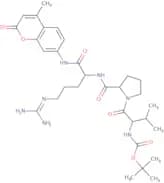
Formula:C58H91N5O19SPurity:Min. 95%Molecular weight:1,194.43 g/molBoc-Val-Pro-Arg-AMC
CAS:Boc-Val-Pro-Arg-AMC is a peptide that activates ion channels. It is an agonist of the nicotinic acetylcholine receptor (nAChR) and can be used in research to investigate the pharmacology of nAChRs. Boc-Val-Pro-Arg-AMC can also be used as a high purity ligand for antibody production, which has applications in cell biology and other life science research.Formula:C31H45N7O7Purity:Min. 95%Molecular weight:627.73 g/moldPEG®4 Biotin Acid
CAS:dPEG®4 Biotin Acid is a PEG compound with two different functional groups (also known as heterobifunctional). Unlike homobifunctional PEG compounds (same functional group on both ends), this type of compounds are more versatile as have two different anchor points. dPEG®4 Biotin Acid is used as a linker and spacer to add a PEG moiety, via pegylation (a bioconjugation technique) to proteins, peptides, oligonucleotides, small molecules and nanoparticles.
Purity:Min. 95%Molecular weight:491.6 g/molNHS-Biotin
CAS:NHS-Biotin is a biotin analog that can be used as an affinity label for the purification of specific proteins. NHS-Biotin is synthesized by reacting monoclonal antibody with lysine residues and a hydroxyl group, which form a covalent bond known as an amide linkage. The NHS-Biotin can then be covalently attached to the protein of interest. This attachment allows the protein to be purified by passing it over a column of immobilized streptavidin. NHS-Biotin has been shown to bind to actin filaments in humans and uptake peptide hormones in the bloodstream. It was also found that human serum contains chemical reactions with NHS-Biotin, forming a disulfide bond between two cysteine residues on the protein.
Formula:C28H39F3N6O9Purity:Min. 95%Molecular weight:660.64 g/molFRETS-25-STD1 (1 umol) (1umol)
FRETS-25-STD1 is a synthetic peptide that binds to and activates the TRPA1 receptor. It has been shown to inhibit the activity of the TRPA1 receptor in vitro, but has not been tested for in vivo activity. FRETS-25-STD1 competitively inhibits binding of various ligands to the TRPA1 receptor, including allyl isothiocyanate, cinnamaldehyde, and 4-hydroxybenzoic acid. FRETS-25-STD1 also inhibits activation of the TRPA1 receptor by agonists such as AITC or cinnamaldehyde.
Formula:C13H18N4O4Purity:Min. 95%Molecular weight:294.31 g/molAdjuvant Peptide
CAS:Adjuvant peptide is a research tool that can be used in the study of protein interactions, pharmacology and cell biology. It can also be used as an inhibitor for ion channels or receptors. Adjuvant peptide has a molecular weight of 638.2 Da and a purity of > 98%.
Formula:C19H32N4O11Purity:Min. 95%Molecular weight:492.48 g/molAnti ATP Receptor P2X4 (370-388) (Rat) Serum
Anti ATP Receptor P2X4 (370-388) (Rat) Serum is an antibody that binds to the extracellular domain of the P2X4 receptor. The antibody has been shown to inhibit the ATP-induced increase in intracellular calcium levels. It is a research tool for studying the function of P2X4 receptors and ion channels. It is also used as an inhibitor in pharmacology, cell biology, and protein interactions. Anti ATP Receptor P2X4 (370-388) (Rat) Serum has a CAS number of 12056-07-8.
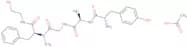
Purity:Min. 95%DAMGO acetate
CAS:Controlled Product?-opioid receptor agonist
Formula:C26H35N5O6·C2H4O2Purity:Min. 95%Color and Shape:PowderMolecular weight:573.64 g/mol4-[D10]Leu-M1
Please enquire for more information about 4-[D10]Leu-M1 including the price, delivery time and more detailed product information at the technical inquiry form on this page
Formula:C255H340D40N64O76S6Purity:Min. 95%Molecular weight:5,790.8 g/molCoV-2 Spike (1000-1200)
CoV-2 Spike (1000-1200) is a ProSpec that is used for the detection of Angiotensin Converting Enzyme 2 (ACE-2). The spike protein binds to ACE-2, which can be found in the human blood plasma. The CoV-2 Spike (1000-1200) can be used for the detection of coronavirus such as MERS-CoV and SARS-CoV. It can also be used to detect Proteins in samples such as COVID-19.
Purity:Min. 95%MAL-dPEG®4-Lys(t-Boc)-NH-m-dPEG®24
MAL-dPEG®4-Lys(t-Boc)-NH-m-dPEG®24 is a peptide containing polyethylene glycol (PEG) as spacer to alter their pharmacokinetic properties and pharmodynamics.
Formula:C78H147N5O35Purity:Min. 95%Molecular weight:1,715.01 g/molS-100ß ELISA (1ea)
The S-100ß ELISA kit is a solid phase sandwich enzyme-linked immunosorbent assay (ELISA) that detects the presence of S-100ß protein in serum, plasma, or cerebrospinal fluid. The assay employs an antibody specific for S-100ß protein and an enzyme-labeled anti-IgG antibody as a second antibody to detect bound S-100ß protein.
Purity:Min. 95%IL 10 Rat
IL 10 rat (IL-10) is a cytokine that belongs to the family of IL-10 cytokines. IL-10 binds to the IL-10 receptor and inhibits the release of proinflammatory cytokines, including TNF-α, IL-1β, and IL-6. This cytokine has been shown to inhibit the production of reactive oxygen species by macrophages and neutrophils. The physiological role of this cytokine is not yet fully understood, but it is believed to be important for immune regulation in response to bacterial infections.
Purity:Min. 95%IL 9 Mouse
IL-9 is a cytokine that is involved in the regulation of immune system. IL-9 signaling is essential for the induction of B cell responses and mast cell activation, and IL-9 is also expressed in epithelial cells. The IL-9 Mouse (CAS No. 207870-05-2) antibody reacts with IL-9 protein, which has a molecular weight of 18 kDa. This antibody detects an epitope corresponding to amino acids 1 to 13 of human Interleukin 9 (IL-9).
Purity:Min. 95%Phosphoramidon
CAS:Phosphoramidon is a peptide that is used as a research tool. It has been shown to activate the protein kinase C, which plays a role in the regulation of ion channels and other cellular functions. Phosphoramidon binds to the receptor site of protein A and inhibits the binding of phosphorylated erythropoietin (EPO) to its receptor. EPO is an important hormone for red blood cell production.
Formula:C23H34N3O10PPurity:Min. 95%Molecular weight:543.50 g/molCyclo(Arg-Gly-Asp-D-Phe-Val)
CAS:Cyclo(Arg-Gly-Asp-D-Phe-Val) is a cyclic peptide that inhibits the activity of surface glycoprotein enzymes. It has shown to be effective against malignant brain tumor cells and has anti-angiogenic effects. Cyclo(Arg-Gly-Asp-D-Phe-Val) also inhibits integrin receptor function by binding to the αVβ3 or αVβ5 integrin, which may be useful for biomarker identification. This compound is potent as an antagonist to epidermal growth factor (EGF), which may have potential use in treating benign prostatic hyperplasia.
Formula:C26H38N8O7Purity:Min. 95%Molecular weight:574.63 g/molSIVmac239-1
Custom research peptide; min purity 95%.
Formula:C65H115N21O23S1Purity:Min. 95%Molecular weight:1,590.83 g/molSuc-Ala-Ala-Ala-AMC
CAS:Suc-Ala-Ala-Ala-AMC is a peptide that is used as a research tool to study protein interactions. It can be used to activate an antibody or receptor and to inhibit the activity of ion channels. This compound has been shown to bind to the Ligand Binding Domain of the Beta2 adrenergic receptor, which is expressed in the heart and lungs. Suc-Ala-Ala-Ala-AMC is also known as 73617-90-0, and has CAS No. 73617-90-0.
Formula:C23H28N4O8Purity:Min. 95%Molecular weight:488.49 g/molH-RRRRRRRRR-OH
(Arg)9 is an cell-penetrating peptide made up of 9 arginine residues capable of traversing plasma membranes. It has been shown that Arg9 destabilize and disrupt the phospholipid bilayer allowing flow of ions across the membrane. (Arg)9 peptide plays an important role in efficient cellular uptake. The guanidinium group is a critical structural determinant for tight and rapid interactions with cell membrane. The cationic guanidinium group can form electrostatic interactions with anionic cell membranes components such as phospholipids and sulphated proteoglycans. This interaction can trigger the activation of specific intracellular signalling and cell internalization via various pathways. (Arg)9 peptide is used to deliver a variety of functionally active cargos such as peptides, small interfering RNA, oligonucleotides, plasmid DNA and liposomes into mammalian cells and plant cells with high translocation efficiency. (Arg)9 peptide can also be used to form chemical linkages with the cargo and act as a carrier peptide.
Polylysine
Custom research peptide; min purity 95%.
Formula:C60H122N20O11Purity:Min. 95%Molecular weight:1,299.77 g/molAIP-III
CAS:AIP-III is a peptide that belongs to the group of activators. It binds to the nicotinic acetylcholine receptor, thereby activating it. AIP-III has been shown to cause significant changes in the activity of ion channels and is used as a research tool for pharmacology and protein interactions. AIP-III has been found to be a potent inhibitor of various types of cancer cells in cell culture experiments, although its effects on humans are unknown.
Formula:C38H58N8O10SPurity:Min. 95%Molecular weight:818.98 g/molProtease-Activated Receptor-2, PAR-2 Agonist, amide
Custom research peptide; min purity 95%.
Formula:C28H54N8O7Purity:Min. 95%Molecular weight:614.79 g/molMBP (1-11), mouse
Custom research peptide; min purity 95%.
Formula:C53H95N21O18Purity:Min. 95%Molecular weight:1,314.48 g/molAmino-dPEG®24-t-Butyl Ester
CAS:Amino-dPEG®24-t-Butyl Ester is a PEG compound with two different functional groups (also known as heterobifunctional). Unlike homobifunctional PEG compounds (same functional group on both ends), this type of compounds are more versatile as have two different anchor points. Amino-dPEG®24-t-Butyl Ester is used as a linker and spacer to add a PEG moiety, via pegylation (a bioconjugation technique) to proteins, peptides, oligonucleotides, small molecules and nanoparticles.
Formula:C55H111NO26Purity:Min. 95%Molecular weight:1,202.46 g/molG-R-G-D-S-P
CAS:Custom research peptide; min purity 95%.
Formula:C22H37N9O10Purity:Min. 95%Molecular weight:587.59 g/molDynorphin A (1-8), porcine
Custom research peptide; min purity 95%.
Formula:C46H72N14O10Purity:Min. 95%Molecular weight:981.17 g/molGalanin-like Peptide (Human, 1-60)
Galanin-like peptide (GLP-1) is a human peptide that is a potent activator of the GLP-1 receptor. GLP-1 functions as a ligand for the GLP-1 receptor, which is coupled to G proteins. The activation of this receptor leads to increased calcium influx, which in turn triggers the release of insulin from pancreatic beta cells. GLP-1 also inhibits gastric acid secretion and motility, and functions as an inhibitor of glucagon secretion.
GLP-1 has been shown to be a potent inhibitor of ion channels. It binds to Kv3 potassium channels and voltage gated sodium channels, inhibiting their activity by binding to their pore region. In addition, GLP-1 inhibits amyloid beta production by inhibiting protein synthesis in rat brain cells.Formula:C292H451N83O84SPurity:Min. 95%Molecular weight:6,500.3 g/molAngiotensin II (3-8), human
Custom research peptide; min purity 95%.
Formula:C40H54N8O8Purity:Min. 95%Molecular weight:774.93 g/molAnti Luminal Cholecystokinin-Releasing Factor (LCRF) (Rat) Serum
Anti-Luminal Cholecystokinin Releasing Factor (LCRF) is a protein that binds to the LCRF receptor. It is a research tool that can be used in immunohistochemistry and Western blotting. This antibody can be used as a marker of LCRF, which is involved in regulating intestinal motility and gastric emptying.
Purity:Min. 95%POFUT1 Blocking Peptide
A synthetic peptide for use as a blocking control in assays to test for specificity of POFUT1 antibody, catalog no. 70R-9775
Purity:Min. 95%MAGEB3 Blocking Peptide
A synthetic peptide for use as a blocking control in assays to test for specificity of MAGEB3 antibody, catalog no. 70R-4427
Purity:Min. 95%SSR2 Blocking Peptide
A synthetic peptide for use as a blocking control in assays to test for specificity of SSR2 antibody, catalog no. 70R-1880
Purity:Min. 95%B4GALT3 Blocking Peptide
A synthetic peptide for use as a blocking control in assays to test for specificity of B4GALT3 antibody, catalog no. 70R-7312
Purity:Min. 95%SYDE1 Blocking Peptide
A synthetic peptide for use as a blocking control in assays to test for specificity of SYDE1 antibody, catalog no. 70R-3763
Purity:Min. 95%TMEM48 Blocking Peptide
A synthetic peptide for use as a blocking control in assays to test for specificity of TMEM48 antibody, catalog no. 70R-7215
Purity:Min. 95%C6ORF134 Blocking Peptide
A synthetic peptide for use as a blocking control in assays to test for specificity of C6orf134 antibody, catalog no. 70R-3866
Purity:Min. 95%USP36 Blocking Peptide
A synthetic peptide for use as a blocking control in assays to test for specificity of USP36 antibody, catalog no. 70R-3767
Purity:Min. 95%PEX19 Blocking Peptide
A synthetic peptide for use as a blocking control in assays to test for specificity of PEX19 antibody, catalog no. 70R-10334
Purity:Min. 95%FAM78A Blocking Peptide
A synthetic peptide for use as a blocking control in assays to test for specificity of FAM78A antibody, catalog no. 70R-9322
Purity:Min. 95%AVIL Blocking Peptide
A synthetic peptide for use as a blocking control in assays to test for specificity of AVIL antibody, catalog no. 70R-8279
Purity:Min. 95%CSTF3 Blocking Peptide
A synthetic peptide for use as a blocking control in assays to test for specificity of CSTF3 antibody, catalog no. 70R-4882
Purity:Min. 95%HSD3B7 Blocking Peptide
A synthetic peptide for use as a blocking control in assays to test for specificity of HSD3B7 antibody, catalog no. 70R-4491
Purity:Min. 95%RNF34 Blocking Peptide
A synthetic peptide for use as a blocking control in assays to test for specificity of RNF34 antibody, catalog no. 70R-8469
Purity:Min. 95%ZXDC Blocking Peptide
A synthetic peptide for use as a blocking control in assays to test for specificity of ZXDC antibody, catalog no. 70R-8902
Purity:Min. 95%TAC1 Blocking Peptide
A synthetic peptide for use as a blocking control in assays to test for specificity of TAC1 antibody, catalog no. 70R-9810
Purity:Min. 95%CPEB4 Blocking Peptide
A synthetic peptide for use as a blocking control in assays to test for specificity of CPEB4 antibody, catalog no. 70R-4969
Purity:Min. 95%ZNF660 Blocking Peptide
A synthetic peptide for use as a blocking control in assays to test for specificity of ZNF660 antibody, catalog no. 70R-8159
Purity:Min. 95%RASGEF1C Blocking Peptide
A synthetic peptide for use as a blocking control in assays to test for specificity of RASGEF1C antibody, catalog no. 70R-5807
Purity:Min. 95%PPIB Blocking Peptide
A synthetic peptide for use as a blocking control in assays to test for specificity of PPIB antibody, catalog no. 70R-1863
Purity:Min. 95%HIST1H1E Blocking Peptide
A synthetic peptide for use as a blocking control in assays to test for specificity of HIST1H1E antibody, catalog no. 70R-2889
Purity:Min. 95%ND6 Blocking Peptide
A synthetic peptide for use as a blocking control in assays to test for specificity of ND6 antibody, catalog no. 70R-6303Purity:Min. 95%METTL2B Blocking Peptide
A synthetic peptide for use as a blocking control in assays to test for specificity of METTL2B antibody, catalog no. 70R-3028
Purity:Min. 95%EFEMP1 Blocking Peptide
A synthetic peptide for use as a blocking control in assays to test for specificity of EFEMP1 antibody, catalog no. 70R-2375
Purity:Min. 95%ZNF668 Blocking Peptide
A synthetic peptide for use as a blocking control in assays to test for specificity of ZNF668 antibody, catalog no. 20R-1224
Purity:Min. 95%SPATC1 Blocking Peptide
A synthetic peptide for use as a blocking control in assays to test for specificity of SPATC1 antibody, catalog no. 70R-4277
Purity:Min. 95%SKIV2L Blocking Peptide
A synthetic peptide for use as a blocking control in assays to test for specificity of SKIV2L antibody, catalog no. 70R-4624
Purity:Min. 95%Carboxylesterase 7 Blocking Peptide
A synthetic peptide for use as a blocking control in assays to test for specificity of CES7 antibody, catalog no. 70R-5468
Purity:Min. 95%FDFT1 Blocking Peptide
A synthetic peptide for use as a blocking control in assays to test for specificity of FDFT1 antibody, catalog no. 70R-1132
Purity:Min. 95%GRLF1 Blocking Peptide
A synthetic peptide for use as a blocking control in assays to test for specificity of GRLF1 antibody, catalog no. 70R-8053
Purity:Min. 95%Ascc1 Blocking Peptide
A synthetic peptide for use as a blocking control in assays to test for specificity of Ascc1 antibody, catalog no. 70R-9440
Purity:Min. 95%ZNF442 Blocking Peptide
A synthetic peptide for use as a blocking control in assays to test for specificity of ZNF442 antibody, catalog no. 70R-9593
Purity:Min. 95%DDC Blocking Peptide
A synthetic peptide for use as a blocking control in assays to test for specificity of DDC antibody, catalog no. 70R-3369
ZNF570 Blocking Peptide
A synthetic peptide for use as a blocking control in assays to test for specificity of ZNF570 antibody, catalog no. 70R-8113
Purity:Min. 95%AS3MT Blocking Peptide
A synthetic peptide for use as a blocking control in assays to test for specificity of AS3MT antibody, catalog no. 70R-4474
Purity:Min. 95%TNRC6B Blocking Peptide
A synthetic peptide for use as a blocking control in assays to test for specificity of TNRC6B antibody, catalog no. 70R-4949
Purity:Min. 95%TLK1 Blocking Peptide
A synthetic peptide for use as a blocking control in assays to test for specificity of TLK1 antibody, catalog no. 70R-2084
Purity:Min. 95%OR2J2 Blocking Peptide
A synthetic peptide for use as a blocking control in assays to test for specificity of OR2J2 antibody, catalog no. 70R-9864
Purity:Min. 95%PLDN Blocking Peptide
A synthetic peptide for use as a blocking control in assays to test for specificity of PLDN antibody, catalog no. 70R-2857
Purity:Min. 95%C14ORF180 Blocking Peptide
A synthetic peptide for use as a blocking control in assays to test for specificity of C14orf180 antibody, catalog no. 70R-6428
Purity:Min. 95%LEMD2 Blocking Peptide
A synthetic peptide for use as a blocking control in assays to test for specificity of LEMD2 antibody, catalog no. 70R-6307
Purity:Min. 95%TCP11 Blocking Peptide
A synthetic peptide for use as a blocking control in assays to test for specificity of TCP11 antibody, catalog no. 70R-3458
Purity:Min. 95%FXYD1 Blocking Peptide
A synthetic peptide for use as a blocking control in assays to test for specificity of FXYD1 antibody, catalog no. 70R-5227Purity:Min. 95%AKR1C2 Blocking Peptide
A synthetic peptide for use as a blocking control in assays to test for specificity of AKR1C2 antibody, catalog no. 70R-4046
Purity:Min. 95%SLC25A24 Blocking Peptide
A synthetic peptide for use as a blocking control in assays to test for specificity of SLC25A24 antibody, catalog no. 70R-1831
Purity:Min. 95%OAS1 Blocking Peptide
A synthetic peptide for use as a blocking control in assays to test for specificity of OAS1 antibody, catalog no. 70R-5884
Purity:Min. 95%EIF3F Blocking Peptide
A synthetic peptide for use as a blocking control in assays to test for specificity of EIF3F antibody, catalog no. 70R-10401
Purity:Min. 95%MSH4 Blocking Peptide
A synthetic peptide for use as a blocking control in assays to test for specificity of MSH4 antibody, catalog no. 70R-5617
Purity:Min. 95%PHLDA2 Blocking Peptide
A synthetic peptide for use as a blocking control in assays to test for specificity of PHLDA2 antibody, catalog no. 70R-6017
Purity:Min. 95%TRIM55 Blocking Peptide
A synthetic peptide for use as a blocking control in assays to test for specificity of TRIM55 antibody, catalog no. 70R-2754
Purity:Min. 95%















![4-[D10]Leu-M1](/_next/image/?url=https%3A%2Fstatic.cymitquimica.com%2Fproducts%2F3D%2Fthumb-webp%2FTSI-3421-V.webp&w=3840&q=75)