Peptides
Peptides are short chains of amino acids linked by peptide bonds, serving as important biological molecules that play key roles in cellular processes. They function as hormones, neurotransmitters, and signaling molecules, and are widely used in therapeutic and diagnostic applications. Peptides are also crucial in research for studying protein interactions, enzyme activities, and cell signaling pathways. At CymitQuimica, we provide a diverse selection of high-quality peptides to support your research and development needs in biotechnology and pharmaceuticals.
Subcategories of "Peptides"
Found 30318 products of "Peptides"
Sort by
Purity (%)
0
100
|
0
|
50
|
90
|
95
|
100
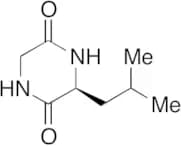
Cyclo(Leu-Gly)
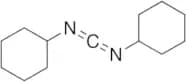
CAS:Controlled Product<p>Applications Cyclo(Leu-Gly) is an antimicrobial compound produced by Latobacillus plantarum.<br>References Niku-Paavola, M., et al.: J. Appl. Microbiol., 86, 29 (1999)<br></p>Formula:C8H14N2O2Color and Shape:Off-WhiteMolecular weight:170.21N,N'-Dicyclohexylcarbodiimide
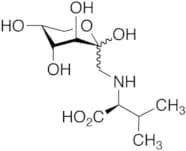
CAS:Controlled ProductFormula:C13H22N2Color and Shape:Off-White To Light YellowMolecular weight:206.33Fructose Valine (mixture of diastereomers)
CAS:Controlled Product<p>Applications An Amadori compound having the potential to alter cellular adhesion, inhibit cancer metastasis and induce apoptosis.<br>References Horiuchi, T., et al.: Agric. Biol. Chem., 55, 333 (1991), Sosnovsky, G., et al.: J. Pharm. Sci., 82, 649 (1993), Glinsky, G., et al.: Cancer Res., 56, 5319 (1996),<br></p>Formula:C11H21NO7Color and Shape:Off-White To Dark BrownMolecular weight:279.29AEBSF Hydrochloride
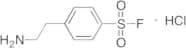
CAS:Controlled Product<p>Applications AEBSF Hydrochloride is an irreversible serine protease inhibitor.<br>References Diatchuk, V., et. al.: J. Biol. Chem., 272, 13292 (1997)<br></p>Formula:C8H11ClFNO2SColor and Shape:NeatMolecular weight:239.69D-Lactic Acid
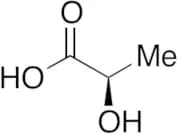
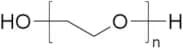
CAS:<p>Applications D-Lactic Acid occurs in small quantities in the blood and muscle fluid of man and animals. The lactic acid concentration increases in muscle and blood after vigorous activity.<br>References He, W. et al.: Comp. Biochem. Phys. Part A: Mol. Int. Phys., 166, 308 (2013)<br></p>Formula:C3H6O3Purity:90%Color and Shape:Colourless To Light YellowMolecular weight:90.08Poly(ethylene Glycol) ~6000
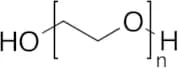
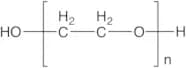
CAS:Controlled Product<p>Applications Poly(ethylene Glycol) molecules of an average molecular mass of 6000. Poly(ethylene Glycol) is used in various applications from industrial chemistry to biological chemistry. Recent research has shown PEG maintains the ability to aid the spinal cord injury recovery process, helping the nerve impulse conduction process in animals. In rats, it has been shown to aid in the repair of severed sciatic axons, helping with nerve damage recovery. It is industrially produced as a lubricating substance for various surfaces to reduce friction. PEG is also used in the preparation of vesicle transport systems in with application towards diagnostic procedures or drug delivery methods.<br>References Borgens, R. et al.: J. Neurosci. Res., 66, 1179 (2001); Stavisky, R. et al.: Neurosci. Lett., 376, 98 (2005); Nalam, P. et al.: Tribiol. Lett., 37, 541 (2010); Steinmetz, N. et al.: J. Am. Chem. Soc., 131, 17093 (2009); Li, X. et al.: J. Am. Chem. Soc., 133, 11147 (2011); Li, L. et al.: Int. J. Pharm., 447, 192 (2013)<br></p>Formula:H2O(C2H4O)nColor and Shape:White To Off-WhiteMolecular weight:62.07L-Cysteinylglycine
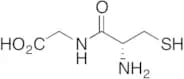
CAS:<p>Stability Air Sensitive<br>Applications L-Cysteinylglycine, is a biologically important compound since it is formed during the γ-glutamyl cycle. It is a cysteinyl peptide, that can be used in the studies of many peptides and important proteins.<br>References Marvin D., et al.: New J. Org. Synth., 12, 185 (1980); Sheehan, J. C., et al.: New Synth. Cysteinyl Peptide, 1159 (1958);<br></p>Formula:C5H10N2O3SColor and Shape:NeatMolecular weight:178.21Poly(ethylene Glycol) ~600
CAS:Controlled Product<p>Applications Poly(ethylene Glycol) molecules of an average molecular mass of 600. Poly(ethylene Glycol) is used in various applications from industrial chemistry to biological chemistry. Recent research has shown PEG maintains the ability to aid the spinal cord injury recovery process, helping the nerve impulse conduction process in animals. In rats, it has been shown to aid in the repair of severed sciatic axons, helping with nerve damage recovery. It is industrially produced as a lubricating substance for various surfaces to reduce friction. PEG is also used in the preparation of vesicle transport systems in with application towards diagnostic procedures or drug delivery methods.<br>References Borgens, R. et al.: J. Neurosci. Res., 66, 1179 (2001); Stavisky, R. et al.: Neurosci. Lett., 376, 98 (2005); Nalam, P. et al.: Tribiol. Lett., 37, 541 (2010); Steinmetz, N. et al.: J. Am. Chem. Soc., 131, 17093 (2009); Li, X. et al.: J. Am. Chem. Soc., 133, 11147 (2011); Li, L. et al.: Int. J. Pharm., 447, 192 (2013);<br></p>Formula:H2O(C2H4O)nColor and Shape:Colourless To Off-WhiteMolecular weight:62.07H-Glu-Lys-Oh
CAS:Controlled Product<p>Applications H-GLU-LYS-OH (cas# 5891-53-2) is a useful research chemical.<br></p>Formula:C11H21N3O5Color and Shape:NeatMolecular weight:275.31N-Boc-D-leucine
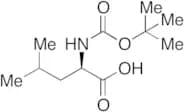
CAS:Controlled Product<p>Applications N-Boc-D-leucine is an N-Boc-protected form of D-Leucine (L330150). D-Leucine is an unnatural isomer of L-Leucine (L330110) that acts as an auto-inhibitor of lactic streptococci in culture. D-Leucine causes analgesia in humans and also exhibits inhibitory activity in bacterial cell cultures.<br>References Chuan, Y., et al.: Chin. J. Anim. Vet. Sci., 4, 003 (1985); Fox, S., et al.: J. Biol. Chem., 155, 465 (1944); Gillillad, S. & Speck, M.: J. Dairy Sci., 51, 1573 (1968); Schoenheimer, R., et al.: J. Biol. Chem., 130, 703 (1939); Seltzer, S., et al.: Pain, 11, 141 (1981)<br></p>Formula:C11H21NO4Color and Shape:NeatMolecular weight:231.29L-γ-Glutamyl-L-valine
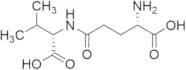
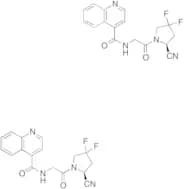
CAS:<p>Applications H-Glu(Val-OH)-OH (CAS# 2746-34-1) is a useful research chemical compound.<br></p>Formula:C10H18N2O5Color and Shape:NeatMolecular weight:246.26(S)-N-(2-(2-Cyano-4,4-difluoropyrrolidin-1-yl)-2-oxoethyl)quinoline-4-carboxamide (UAMC1110)
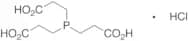
CAS:Controlled ProductFormula:C17H14F2N4O2Color and Shape:NeatMolecular weight:344.32TCEP Hydrochloride
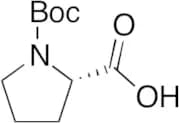
CAS:<p>Applications Biochemical tool for selective reduction of disulfide bridges at low pH; reductant for redox assay.<br> Not a dangerous good if item is equal to or less than 1g/ml and there is less than 100g/ml in the package<br>References Neuburger, M., et al.: Eur. J. Biochem., 267, 2882 (2000), Krijt, J., et al.: Clin. Chem., 47, 1821 (2001), Yen, T.-Y., et al.: J. Mass Spectrom., 37, 15 (2002),<br></p>Formula:C9H15O6P·ClHColor and Shape:NeatMolecular weight:286.65N-Boc-L-proline
CAS:Controlled Product<p>Applications N-Boc-L-proline is a useful synthetic intermediate. It is used to synthesize Daclatasvir (D101500) which nhibits the HCV protein NS5A. Daclatasvir (D101500) can be used as a drug candidate for the treatment of hepatitis C (HCV).<br>References Gao, M., et al.: Nature, 465(7294), 96 (2010); Bell, T. W., Chem. Med. Chem., 5(10), 1663 (2010);<br></p>Formula:C10H17NO4Color and Shape:NeatMolecular weight:215.25Fmoc-His-OH
CAS:Fmoc-His-OH (FMOC-L-Histidine) is a histidine derivative and a common material for peptide synthesis.Formula:C21H19N3O4Purity:98.38% - 99.82%Color and Shape:SolidMolecular weight:377.39Poly(ethylene Glycol) ~9000
CAS:Controlled ProductFormula:H2O(C2H4O)nColor and Shape:White To Off-WhiteMolecular weight:62.07Lactoferrin
CAS:Controlled Product<p>Applications Lactoferrin is a multifunctional protein of transferin family. A glycoprotein present in various secretions including milk, saliva and tears. Antiviral agent, it binds to liproproteins of cell membranes dispersing virus molecules from host cells.<br>References Sánchez L. et al.: Arch. Dis. CHild., 67, 657 (1992); Harmsen MC. et al.: J. Infect. Dis., 172, 380 (1995);<br></p>Formula:C141H224N46O29S3Color and Shape:NeatMolecular weight:3123.8Melittin
CAS:Melittin: principal bee venom toxin, 26 amino acids, activates low-weight PLA2, not high-weight PLA2.Formula:C131H229N39O31Purity:98.37% - 99.92%Color and Shape:SolidMolecular weight:2846.46