Peptides
Peptides are short chains of amino acids linked by peptide bonds, serving as important biological molecules that play key roles in cellular processes. They function as hormones, neurotransmitters, and signaling molecules, and are widely used in therapeutic and diagnostic applications. Peptides are also crucial in research for studying protein interactions, enzyme activities, and cell signaling pathways. At CymitQuimica, we provide a diverse selection of high-quality peptides to support your research and development needs in biotechnology and pharmaceuticals.
Subcategories of "Peptides"
Found 30316 products of "Peptides"
Sort by
Purity (%)
0
100
|
0
|
50
|
90
|
95
|
100
N-CBZ-Glycyl-glycyl-L-arginine 7-Amido-4-methylcoumarin Hydrochloride
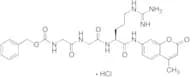
CAS:<p>Applications N-CBZ-Glycyl-glycyl-L-arginine 7-Amido-4-methylcoumarin Hydrochloride is a fluorogenic substrate for uPA (urokinase).<br>References Zimmerman, M., et al. Proc. Natl. Acad. Sci. USA 75, 750 (1978);<br></p>Formula:C28H33N7O7·HClColor and Shape:NeatMolecular weight:579.60 + (36.46)[Leu5]-Enkephalin Acetate
CAS:<p>Applications [Leu5]-Enkephalin is a neurotransmitter used in molecular dynamics studies for the insertion of neurotransmitters into lipid bilayer membranes and their implication on membrane stability.<br>References Shen, C., et al.: ChemPhysChem, pages ahead of print (2017)<br></p>Formula:C28H37N5O7·x(C2H4O2)Color and Shape:NeatMolecular weight:615.67TCEP Hydrochloride (0.5M in water)
CAS:Controlled ProductFormula:C9H15O6P·ClHColor and Shape:ColourlessMolecular weight:286.65CA-074 Methyl Ester
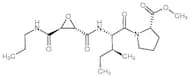
CAS:Controlled Product<p>Applications CA-074 methyl ester is a cell-permeable cathepsin B inhibitor.<br></p>Formula:C19H31N3O6Color and Shape:NeatMolecular weight:397.47N-Boc-D-leucine
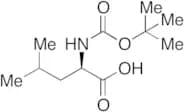
CAS:Controlled Product<p>Applications N-Boc-D-leucine is an N-Boc-protected form of D-Leucine (L330150). D-Leucine is an unnatural isomer of L-Leucine (L330110) that acts as an auto-inhibitor of lactic streptococci in culture. D-Leucine causes analgesia in humans and also exhibits inhibitory activity in bacterial cell cultures.<br>References Chuan, Y., et al.: Chin. J. Anim. Vet. Sci., 4, 003 (1985); Fox, S., et al.: J. Biol. Chem., 155, 465 (1944); Gillillad, S. & Speck, M.: J. Dairy Sci., 51, 1573 (1968); Schoenheimer, R., et al.: J. Biol. Chem., 130, 703 (1939); Seltzer, S., et al.: Pain, 11, 141 (1981)<br></p>Formula:C11H21NO4Color and Shape:NeatMolecular weight:231.29γ-L-Glutamyl L-Glutamic Acid
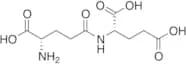
CAS:Controlled Product<p>Applications H-GAMMA-GLU-GLU-OH (cas# 1116-22-9) is a useful research chemical.<br></p>Formula:C10H16N2O7Color and Shape:NeatMolecular weight:276.24N-(2-Aminoethyl)-2-[phenyl(phenylmethyl)amino]acetamide
CAS:Controlled Product<p>Stability Hygroscopic<br>Applications This compound is an impurity in the synthesis of Antazoline (A678405) which acts as a histamine H1 receptor blocker, functioning as an antihistamine pharmaceutical.<br>References Constanti, A. et al.: Brit. J. Pharmacol. 58, 583 (1976);<br></p>Formula:C17H21N3OColor and Shape:NeatMolecular weight:283.37E-64d
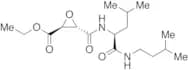
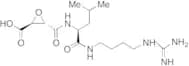
CAS:Controlled Product<p>Applications E-64d is an inhibitor of cathepsins B and L as well as a potential inhibitor of calpain. E-64d has been shown to inhibit lysosomal proteases. E-64d has been used in combination with Prepstatin A to interfere with autolysosomal digestion. E-64d displays neurovascular and neuronal protective effects after focal cerebral ischemia in rats.<br>References Wilcox, D. et al.: Biochem. J., 285, 495 (1992); McGowan, E.B. et al.: Biochem. Biophys. Res. Comm., 158, 432 (1989); Tsubokawa, T. et al.: J. Neurosci. Res., 84, 832 (2006);<br></p>Formula:C17H30N2O5Color and Shape:NeatMolecular weight:342.43N-Carbamoyl-2-fluoro-(β)-alanine
CAS:Controlled Product<p>Applications A metabolite of Capecitabine.<br>References Arellano, M., ET AL.: Br. J. Cancer, 77, 79 (1998), Budman, D., ET AL.: J. Clin. Oncol., 16, 1795 (1998), Khanna, R., et al.: Cancer Res., 60, 4725 (2000), Charasson, V., et al.: Drug Metab. Dispos., 30, 731 (2002),<br></p>Formula:C4H7FN2O3Color and Shape:NeatMolecular weight:150.11N-tert-Boc-L-alanine
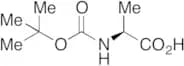
CAS:Controlled Product<p>Applications N-tert-Boc-L-alanine is the protected form of L-Alanine (A481500), a non-essential amino acid that can be found naturally in the human body and is obtained by our diet.<br>References Anderson, H., et al.: J. Nutr., 99, 82 (1969)<br></p>Formula:C8H15NO4Color and Shape:NeatMolecular weight:189.21Ilomastat
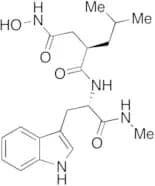
CAS:Controlled Product<p>Applications Ilomastat is a metalloprotease inhibitor.<br>References Dietrich, C., et. al.: J. Immunol., 192, 5382 (2014)<br></p>Formula:C20H28N4O4Color and Shape:NeatMolecular weight:388.46(S)-N-(2-(2-Cyano-4,4-difluoropyrrolidin-1-yl)-2-oxoethyl)quinoline-4-carboxamide (UAMC1110)
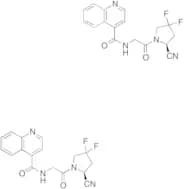
CAS:Controlled ProductFormula:C17H14F2N4O2Color and Shape:NeatMolecular weight:344.32MG-101 (ALLN)
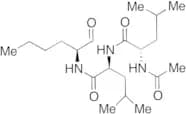
CAS:Controlled Product<p>Applications MG-101 (ALLN) is a potent inhibitor of cysteine proteases including caplains and cathespins. Used in the treatment of genotoxic agents or replication stress of cells. Neuroprotective product.<br>References Wang, H. et al.: Biochem., 54, 5781 (2015); Fukunaga, Y. et al.: Neurosci. Res., 101, 6 (2014);<br></p>Formula:C20H37N3O4Color and Shape:NeatMolecular weight:383.53DOTA-tris (t-Bu ester) (~90%)
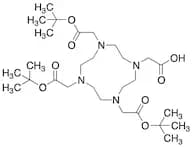
CAS:Controlled Product<p>Applications DOTA-tris (t-Bu ester), is a Bifunctional chelator, that can be used in the preparation of gadolinium complexes as MRI blood contrast agents.<br></p>Formula:C28H52N4O8Purity:~90%Color and Shape:NeatMolecular weight:572.73Fmoc N-Hydroxysuccinimide Ester
CAS:<p>Stability Moisture Sensitive<br>Applications Used in conjunction with Isothiocyanate to conduct partial Edman Degradation on biologically active peptides.<br> Not a dangerous good if item is equal to or less than 1g/ml and there is less than 100g/ml in the package<br>References Heidenreich, O., et al.: J. Biol. Chem., 269, 2131 (1994), Kothe, U., et al.: Anal. Biochem., 356, 148 (2006), Thakkar, A., et al.: Anal. Chem., 78, 5935 (2006),<br></p>Formula:C19H15NO5Color and Shape:NeatMolecular weight:337.33Poly(ethylene Glycol) ~6000
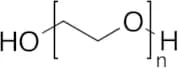
CAS:Controlled Product<p>Applications Poly(ethylene Glycol) molecules of an average molecular mass of 6000. Poly(ethylene Glycol) is used in various applications from industrial chemistry to biological chemistry. Recent research has shown PEG maintains the ability to aid the spinal cord injury recovery process, helping the nerve impulse conduction process in animals. In rats, it has been shown to aid in the repair of severed sciatic axons, helping with nerve damage recovery. It is industrially produced as a lubricating substance for various surfaces to reduce friction. PEG is also used in the preparation of vesicle transport systems in with application towards diagnostic procedures or drug delivery methods.<br>References Borgens, R. et al.: J. Neurosci. Res., 66, 1179 (2001); Stavisky, R. et al.: Neurosci. Lett., 376, 98 (2005); Nalam, P. et al.: Tribiol. Lett., 37, 541 (2010); Steinmetz, N. et al.: J. Am. Chem. Soc., 131, 17093 (2009); Li, X. et al.: J. Am. Chem. Soc., 133, 11147 (2011); Li, L. et al.: Int. J. Pharm., 447, 192 (2013)<br></p>Formula:H2O(C2H4O)nColor and Shape:White To Off-WhiteMolecular weight:62.07D-Lactic Acid
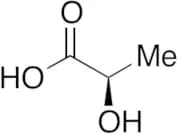
CAS:<p>Applications D-Lactic Acid occurs in small quantities in the blood and muscle fluid of man and animals. The lactic acid concentration increases in muscle and blood after vigorous activity.<br>References He, W. et al.: Comp. Biochem. Phys. Part A: Mol. Int. Phys., 166, 308 (2013)<br></p>Formula:C3H6O3Purity:90%Color and Shape:Colourless To Light YellowMolecular weight:90.08D,L-Homoglutamine
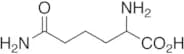
CAS:Controlled Product<p>Applications Glutamine analog.<br>References Hellberg, S., et al.: J. Med. Chem., 30, 1126 (1987), Blondelle, S., et al.: Antimicrob. Agents Chemother., 38, 2280 (1994), Jiracek, J., et al.: J. Biol. Chem., 270, 21701(1995),<br></p>Formula:C12H24N2O6Color and Shape:NeatMolecular weight:292.329Fructose Valine (mixture of diastereomers)
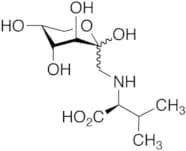
CAS:Controlled Product<p>Applications An Amadori compound having the potential to alter cellular adhesion, inhibit cancer metastasis and induce apoptosis.<br>References Horiuchi, T., et al.: Agric. Biol. Chem., 55, 333 (1991), Sosnovsky, G., et al.: J. Pharm. Sci., 82, 649 (1993), Glinsky, G., et al.: Cancer Res., 56, 5319 (1996),<br></p>Formula:C11H21NO7Color and Shape:Off-White To Dark BrownMolecular weight:279.29

![[Leu5]-Enkephalin Acetate](/_next/image/?url=https%3A%2Fstatic.cymitquimica.com%2Fproducts%2FTR%2Fthumb-webp%2FL330340.webp&w=3840&q=75)

![N-(2-Aminoethyl)-2-[phenyl(phenylmethyl)amino]acetamide](/_next/image/?url=https%3A%2Fstatic.cymitquimica.com%2Fproducts%2FTR%2Fthumb-webp%2FA609260.webp&w=3840&q=75)