Peptides
Subcategories of "Peptides"
Found 29713 products of "Peptides"
CGRP (Human, 8-37)
CAS:CGRP (Human, 8-37) is a peptide derived from the calcitonin gene-related peptide (CGRP) that is found in the nervous system and other tissues in humans. It is a truncated form of the full-length CGRP peptide, consisting of the last 30 amino acids of the CGRP sequence (amino acids 8-37).
CGRP is a potent vasodilator and plays a key role in regulating blood flow and blood pressure. It is also involved in pain perception, inflammation, and neurogenic inflammation. CGRP (Human, 8-37) is an antagonist of CGRP, meaning that it binds to the CGRP receptor without activating it, thereby blocking the effects of CGRP.
CGRP (Human, 8-37) has been used as a research tool to study the physiological and pathological roles of CGRP in various tissues and diseases, such as migraine headaches, cardiovascular diseases, and inflammatory disorders. It has also been investigated as a potential therapeutic agent for these conditions, as well as for the treatment of pain and other neurological disorders.
This product is available as a 0.5mg vial.Formula:C139H230N44O38Purity:Min. 95%Molecular weight:3,125.6 g/molNHS-dPEG®12 Biotin
CAS:NHS-dPEG®12 Biotin is a PEG compound with two different functional groups (also known as heterobifunctional). Unlike homobifunctional PEG compounds (same functional group on both ends), this type of compounds are more versatile as have two different anchor points. NHS-dPEG®12 Biotin is used as a linker and spacer to add a PEG moiety, via pegylation (a bioconjugation technique) to proteins, peptides, oligonucleotides, small molecules and nanoparticles.
Purity:Min. 95%Molecular weight:941.09 g/molCalciseptine
CAS:A synthetic snake toxin sourced from the black mamba, Dendroaspis polylepis polylepis which can be applied as a L-type Ca2+ channel blocker. This product has disulfide bonds between Cys3-Cys22, Cys17-Cys39, Cys41-Cys52, and Cys53-Cys58 and is available as a 0.1mg vial.
Formula:C299H468N90O87S10Purity:Min. 95%Molecular weight:7,036.1 g/molm-dPEG®36-Azide (Azido-m-dPEG®36)
CAS:m-dPEG®36-Azide (Azido-m-dPEG®36) is a PEG compound with two different functional groups (also known as heterobifunctional). Unlike homobifunctional PEG compounds (same functional group on both ends), this type of compounds are more versatile as have two different anchor points. m-dPEG®36-Azide (Azido-m-dPEG®36) is used as a linker and spacer to add a PEG moiety, via pegylation (a bioconjugation technique) to proteins, peptides, oligonucleotides, small molecules and nanoparticles.
Purity:Min. 95%Molecular weight:1,642.95 g/molGly-Pro-pNA • Tos [GPNT]
CAS:Gly-Pro-pNA • Tos is a peptide that is derived from the sequence of the human beta2 adrenergic receptor. It can be used as a research tool for studying receptor-ligand interactions and for identifying ligands for other receptors. Gly-Pro-pNA • Tos may also be used as an inhibitor of ion channels.Formula:C13H16N4O4•C7H8O3SPurity:Min. 95%Molecular weight:464.49 g/molFmoc-OSu
CAS:Fmoc-OSu is a synthetic amino acid that is used in the synthesis of peptides and other biomolecules. It can be synthesized by solid-phase peptide synthesis using Fmoc chemistry, which involves an acid-labile protecting group. Fmoc-OSu has been shown to inhibit cancer cell growth, although its mechanism is not known. Fmoc-OSu has been shown to have anti-inflammatory effects by inhibiting the proinflammatory cytokine TNFα. Fmoc-OSu has also been shown to have glycan binding properties, which may be due to its ability to bind with sialic acid residues on glycoproteins or glycolipids.Formula:C19H15NO5Purity:Min. 98.0 Area-%Molecular weight:337.33 g/molAzido-dPEG®8-Alcohol
CAS:Azido-dPEG®8-Alcohol is a PEG polymer categorised as monofunctional (OH-PEG-X). Used as a linker, azido-dPEG®8-Alcohol is used to attached PEG to proteins, peptides, oligonucleotides, nanoparticles and small molecules via pegylation, a bioconjugation technique.Purity:Min. 95%Molecular weight:395.45 g/molCCK-Octapeptide (26-33) (Non-Sulfated Form)
CAS:CCK-Octapeptide (26-33) is a peptide that is a member of the cholecystokinin family of peptides. CCK-Octapeptide (26-33) is an activator of the CCK receptor and can be used for research purposes. This peptide has been shown to inhibit ion channels, which are proteins that regulate the flow of ions across cell membranes, and may be used as a pharmacological tool or research tool.
Formula:C49H62N10O13S2Purity:Min. 95%Molecular weight:1,063.2 g/molBis-dPEG®7-NHS Ester
CAS:Bis-dPEG®7-NHS Ester is a PEG polymer categorised as homobifunctional PEG (X-PEG X). Used as a linker, bis-dPEG®7-NHS Ester is used to attached PEG to proteins, peptides, oligonucleotides, nanoparticles and small molecules via pegylation, a bioconjugation technique.
Formula:C26H40N2O15Purity:Min. 95%Molecular weight:620.6 g/molLys-Ala-AMC
CAS:Lys-Ala-AMC is an activator of ion channels and a ligand for receptors. It is used in research as a tool to study protein interactions, receptor pharmacology, and ion channel pharmacology. Lys-Ala-AMC binds to the α-subunit of voltage gated calcium channels and can activate these channels by increasing the rate of opening. This peptide also inhibits receptor binding by competing with the natural ligand. It has been shown to be an antagonist at the NMDA receptor and can inhibit the binding of glycine to this receptor.
Formula:C19H26N4O4Purity:Min. 95%Molecular weight:374.43 g/molm-dPEG®24-Azide (Azido-m-dPEG®24)
CAS:m-dPEG®24-Azide (Azido-m-dPEG®24) is a PEG compound with two different functional groups (also known as heterobifunctional). Unlike homobifunctional PEG compounds (same functional group on both ends), this type of compounds are more versatile as have two different anchor points. m-dPEG®24-Azide (Azido-m-dPEG®24) is used as a linker and spacer to add a PEG moiety, via pegylation (a bioconjugation technique) to proteins, peptides, oligonucleotides, small molecules and nanoparticles.
Formula:C32H44F4N2O13Purity:Min. 95%Molecular weight:740.69 g/molMAL-dPEG®24-Acid
CAS:MAL-dPEG®24-Acid is a PEG compound with two different functional groups (also known as heterobifunctional). Unlike homobifunctional PEG compounds (same functional group on both ends), this type of compounds are more versatile as have two different anchor points. MAL-dPEG®24-Acid is used as a linker and spacer to add a PEG moiety, via pegylation (a bioconjugation technique) to proteins, peptides, oligonucleotides, small molecules and nanoparticles.
Formula:C58H108N2O29Purity:Min. 95%Molecular weight:1,297.47 g/moldPEG®4 SATA (S-Acetyl-dPEG®4 NHS Ester)
CAS:dPEG®4 SATA (S-Acetyl-dPEG®4 NHS Ester) is a PEG compound with two different functional groups (also known as heterobifunctional). Unlike homobifunctional PEG compounds (same functional group on both ends), this type of compounds are more versatile as have two different anchor points. dPEG®4 SATA (S-Acetyl-dPEG®4 NHS Ester) is used as a linker and spacer to add a PEG moiety, via pegylation (a bioconjugation technique) to proteins, peptides, oligonucleotides, small molecules and nanoparticles.Formula:C17H27NO9SPurity:Min. 95%Molecular weight:421.46 g/molFmoc-N-Lys-(dPEG®4-Biotin)-OH-(Acid)
CAS:Fmoc-N-Lys-(dPEG®4-Biotin)-OH-(Acid) is an ion channel activator with a molecular weight of 921.5 Da. It has been shown to activate the voltage-gated potassium channels Kv1.2 and Kv1.3 in rat cortical neurons, and inhibit the activity of the voltage-gated sodium channels Nav1.6, Nav1.7, and Nav1.8 in rat dorsal root ganglia neurons. In addition, Fmoc-N-Lys-(dPEG®4-Biotin)-OH-(Acid) has been shown to activate the calcium release activated calcium channels (CRACs) in human erythrocytes and induce the release of arachidonic acid from human platelets. It is a high purity reagent for research purposes only, not for use in humans or animals for any reason other than scientific researchFormula:C89H163F4NO39S2Purity:Min. 95%Molecular weight:2,011.35 g/molm-dPEG®4-Azide (Azido-m-dPEG®4)
CAS:m-dPEG®4-Azide (Azido-m-dPEG®4) is a PEG compound with two different functional groups (also known as heterobifunctional). Unlike homobifunctional PEG compounds (same functional group on both ends), this type of compounds are more versatile as have two different anchor points. m-dPEG®4-Azide (Azido-m-dPEG®4) is used as a linker and spacer to add a PEG moiety, via pegylation (a bioconjugation technique) to proteins, peptides, oligonucleotides, small molecules and nanoparticles.
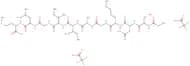
Formula:C72H145N3O36Purity:Min. 95%Molecular weight:1,628.92 g/molAmyloid Beta-Protein (Human, 25-35)
CAS:Amyloid beta-Protein (Human, 25-35) is the shortest amyloid fragment that forms β-sheet fibrils, while retaining toxicity, and may also induce the aggregation of N-tau protein and N-tau peptide 1/2R. Consequently this peptide may play a role in the pathogenesis of Alzheimer's disease, a neurodegenerative disorder that affects memory and cognitive function.
This product is available as a trifluoroacetate salt and as a 0.5mg vial.Formula:C45H81N13O14SPurity:Min. 95%Molecular weight:1,060.3 g/molSARS CoV-2 IgG S1
CoV-2 IgG S1 antibody binds to both SARS-CoV and SARS-CoV-2 (COVID-19) with high affinity at amino acids 318-510 in the S1 domain of the Spike protein and can be used in ELISA assays. SARS Coronavirus is an enveloped virus containing three outer structural proteins, namely the membrane (M), envelope (E), and spike (S) proteins. Spike (S)-glycoprotein of the virus interacts with a cellular receptor and mediates membrane fusion to allow viral entry into susceptible target cells. Accordingly, S-protein plays an important role in virus infection cycle and is the primary target of neutralizing antibodies. It has recently been shown that SARS is caused by a human coronavirus. Human coronaviruses are the major cause of upper respiratory tract illness in humans, such as the common cold. Coronaviruses are positive-stranded RNA viruses, featuring the largest viral RNA genomes known to date (27-31 kb). The first step in coronavirus infection is binding of the viral spike protein, a 139-kDa protein, to certain receptors on host cells. The spike protein is the main surface antigen of the coronavirus. The most prominent protein in the culture supernatants infected with SARS virus is a 46 kDa nucleocapsid protein. This suggests that the nucleocapsid protein is a major immunogen that may be useful for early diagnostics.
Recombinant Anti Human SARS CoV-2 IgG1 Kappa Spike S1 is a recombinant monoclonal antibody derived from HEL293 cells, which recognizes the SARS-CoV and SARS-CoV-2 Spike glycoprotein. CoV-2 IgG S1 Antibody binds to both SARS-CoV and SARS-CoV-2 with high affinity at amino acids 318-510 (RBD, Receptor Binding Domain) in the S1 subunit of the Spike protein. The native monoclonal antibody was generated by sequencing peripheral blood lymphocytes of a patient exposed to the SARS-CoV. The ELISA Plate was coated with the target proteins at 5 µg/ml. Primary antibodies were titrated on a 3-fold serial dilution starting at 125 ng/ml, CoV-2 IgG S1 antibody recognises SARS-CoV-2 spike protein subunit 1 (aa 1-674), or 41.6 ng/ml CoV-2 IgG S1 antibody recognised spike protein from SARS-CoV (subunit 1, aa 1-666) and SARS-CoV-2 (subunit 1, aa 1-674). Secondary antibody anti-human IgG conjugated to HRP used in the assay, at 1:4000 concentration. This product was purified through Protein A affinity and avaiable in the formulation: 1mg/ml in PBS and 0.02% Proclin 300F.Purity:Min. 95%NHS-m-dPEG® (MW = 509)
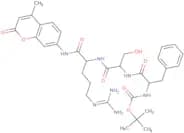
CAS:NHS-m-dPEG® (MW = 509) is a PEG compound with two different functional groups (also known as heterobifunctional). Unlike homobifunctional PEG compounds (same functional group on both ends), this type of compounds are more versatile as have two different anchor points. NHS-m-dPEG® (MW = 509) is used as a linker and spacer to add a PEG moiety, via pegylation (a bioconjugation technique) to proteins, peptides, oligonucleotides, small molecules and nanoparticles.Purity:Min. 95%Molecular weight:509.54 g/molBoc-Phe-Ser-Arg-AMC
CAS:Boc-Phe-Ser-Arg-AMC is a peptide that can be used as a research tool in the study of protein interactions, receptor activation and ligand binding. It is an inhibitor of ion channels and has been shown to be an antagonist of nicotinic acetylcholine receptors. This product may be used as a research tool for studying cell biology, pharmacology, and life sciences.Formula:C33H43N7O8Purity:Min. 95%Molecular weight:665.74 g/molSomatostatin
CAS:Somatostatin is a peptide hormone that is produced by the hypothalamus and inhibits the release of growth hormones, stimulates the release of insulin from the pancreas, and inhibits the release of glucagon from the pancreas. Somatostatin also has biological properties that inhibit neuronal death in combination therapy groups. It has been shown to have cell factor activity which may contribute to its antitumor activity. Somatostatin also has pro-apoptotic properties in vitro assays at physiological levels, making it an excellent target for cancer therapy.
Formula:C76H104N18O19S2Purity:Min. 95%Molecular weight:1,637.9 g/molBiotin-dPEG®3-MAL
CAS:Biotin-dPEG®3-MAL is a PEG compound with two different functional groups (also known as heterobifunctional). Unlike homobifunctional PEG compounds (same functional group on both ends), this type of compounds are more versatile as have two different anchor points. Biotin-dPEG®3-MAL is used as a linker and spacer to add a PEG moiety, via pegylation (a bioconjugation technique) to proteins, peptides, oligonucleotides, small molecules and nanoparticles.
Formula:C15H32N2O5Purity:Min. 95%Molecular weight:320.43 g/molMAL-dPEG®4-Acid
CAS:MAL-dPEG®4-Acid is a PEG compound with two different functional groups (also known as heterobifunctional). Unlike homobifunctional PEG compounds (same functional group on both ends), this type of compounds are more versatile as have two different anchor points. MAL-dPEG®4-Acid is used as a linker and spacer to add a PEG moiety, via pegylation (a bioconjugation technique) to proteins, peptides, oligonucleotides, small molecules and nanoparticles.
Purity:Min. 95%Molecular weight:416.42 g/molt-Boc-N-Amido-dPEG®3-Amine
CAS:t-Boc-N-Amido-dPEG®3-Amine is a PEG compound with two different functional groups (also known as heterobifunctional). Unlike homobifunctional PEG compounds (same functional group on both ends), this type of compounds are more versatile as have two different anchor points. t-Boc-N-Amido-dPEG®3-Amine is used as a linker and spacer to add a PEG moiety, via pegylation (a bioconjugation technique) to proteins, peptides, oligonucleotides, small molecules and nanoparticles.
Purity:Min. 95%Molecular weight:320.43 g/molSuc-Gly-Pro-Leu-Gly-Pro-AMC
CAS:Suc-Gly-Pro-Leu-Gly-Pro-AMC is a high purity, monoclonal antibody that can be used as a research tool or as an inhibitor. It has been shown to inhibit ion channels and protein interactions. Suc-Gly-Pro-Leu-Gly-Pro-AMC is also known as a ligand for the receptor. It has been shown to activate the receptor and cause a change in the cell membrane permeability by increasing calcium flux, which leads to an increase in intracellular calcium levels. Suc-Gly-Pro-Leu-Gly-Pro-AMC is found in Cell Biology and Pharmacology research studies.
Formula:C34H44N6O10Purity:Min. 95%Molecular weight:696.75 g/molMAL-dPEG®4- NHS Ester
CAS:MAL-dPEG®4- NHS Ester is a PEG compound with two different functional groups (also known as heterobifunctional). Unlike homobifunctional PEG compounds (same functional group on both ends), this type of compounds are more versatile as have two different anchor points. MAL-dPEG®4- NHS Ester is used as a linker and spacer to add a PEG moiety, via pegylation (a bioconjugation technique) to proteins, peptides, oligonucleotides, small molecules and nanoparticles.Purity:Min. 95%Molecular weight:513.5 g/molAzido-dPEG®8-NHS ester
CAS:Azido-dPEG®Sub>8-NHS Ester is a PEG compound with two different functional groups (also known as heterobifunctional). Unlike homobifunctional PEG compounds (same functional group on both ends), this type of compounds are more versatile as have two different anchor points. Azido-dPEG®Sub>8-NHS Ester is used as a linker and spacer to add a PEG moiety, via pegylation (a bioconjugation technique) to proteins, peptides, oligonucleotides, small molecules and nanoparticles.Formula:C23H40N4O12Purity:Min. 95%Molecular weight:564.58 g/molβ-Casomorphin-5 (Bovine)
CAS:Beta-casomorphin-5 (BCM-5) is a peptide that is released from the digestion of casein in milk. It is an analog of casomorphin-7, which has been shown to have opioid activity. BCM-5 has been found to inhibit the proliferation of cells and induce apoptosis by binding to P21, a protein that controls the cell cycle. BCM-5 also binds to the mu-opioid receptor and inhibits gastric acid secretion. The conformational properties of BCM-5 have been determined with analytical methods such as LC/MS/MS, NMR, and FTIR. These studies have shown that BCM-5 adopts a ß-sheet conformation when bound to mucin glycoprotein or other proteins.Formula:C30H37N5O7•(H2O)2Purity:Min. 95%Molecular weight:615.67 g/molSer-Gln-Asn-Tyr-Pro-Ile-Val
CAS:Ser-Gln-Asn-Tyr-Pro-Ile-Val is a synthetic peptide. It has been shown to act as a competitive inhibitor of the GABA receptor, specifically in the alpha3 subunit. This inhibition has been found to be competitive with respect to GABA and benzodiazepine binding. Additionally, Ser-Gln-Asn-Tyr-Pro-Ile-Val has been shown to inhibit ion channels that are activated by extracellular potassium ions, such as KV7.1 and KV7.2 potassium channels.
Formula:C37H57N9O12Purity:Min. 95%Molecular weight:819.9 g/molNPY (Porcine, Bovine)
CAS:NPY is a peptide that belongs to the family of neuropeptides. It is an endogenous regulator of appetite and energy expenditure in the central nervous system, which has been shown to act as a neurotransmitter and neuromodulator. NPY is also an activator of ion channels, such as potassium channels, sodium channels, and calcium channels. NPY has been shown to bind with high affinity to receptors in the brain, heart, lungs, kidneys, and intestines. The binding of NPY to its receptor leads to activation of protein interactions. This process can lead to changes in cell physiology or regulation of physiological functions by altering gene expression or changing the concentration of ions in the blood. NPY has also been shown as an inhibitor for many different ligands and receptors including dopamine D1 receptors and serotonin 5-HT2A/C receptors.Formula:C190H287N55O57Purity:Min. 95%Molecular weight:4,253.6 g/molMOCAc-Tyr-Val-Ala-Asp-Ala-Pro-Lys(Dnp)-NH₂
MOCAc-Tyr-Val-Ala-Asp-Ala-Pro-Lys(Dnp)-NH₂ is a protein inhibitor with a molecular weight of 1405.8 g/mol. It has a CAS number of 129857-88-6 and is available at high purity. MOCAc-Tyr-Val-Ala-Asp-Ala-Pro-Lys(Dnp)-NH₂ is used in research as an inhibitor, activator, or ligand for proteins. This product has been used in the study of ion channels, receptor binding, and cell biology.Formula:C53H65N11O18Purity:Min. 95%Molecular weight:1,144.1 g/molMSH-Release Inhibiting Factor
CAS:MSH-Release Inhibiting Factor (MRIF) has been shown to be a potent inhibitor of the release of proinflammatory cytokines. It is derived from the acid methyl ester of mouse serum, and has been shown to inhibit the release of tumor necrosis factor-α (TNF-α) in animal studies. MRIF has also been shown to have anti-diabetic effects in mice. MRIF inhibits the production of inflammatory cytokines by blocking TNF-α at a molecular level. This protein binds to progesterone receptor and prevents it from interacting with its ligand, which is necessary for cancer cell growth. The expression system for this protein is E. coli, and it can be used as an immunosuppressant in animal studies.
MRIF also blocks TNF-α activity by inhibiting transcriptional activation of NFκB and AP-1, which are proteins that regulate gene expression.Formula:C13H24N4O3H2OPurity:Min. 95%Molecular weight:293.36 g/molMethionine-Enkephalin (Human, Porcine, Bovine, Rat, Mouse)
CAS:Methionine-Enkephalin is a peptide that is derived from the amino acid methionine. It has been shown to act on ion channels and the receptor, as well as having a number of other biological effects. Methionine-Enkephalin can be used in research for pharmacology and protein interactions. This product is an antibody against methionine-enkephalin. It can be used for cell biology and immunology research, as it recognizes the peptide sequence of methionine-enkephalin. This antibody can also be used to inhibit the activity of this peptide.Formula:C27H35N5O7SPurity:Min. 95%Molecular weight:573.66 g/molm-dPEG®8-MAL
CAS:m-dPEG®8-MAL is a PEG compound with two different functional groups (also known as heterobifunctional). Unlike homobifunctional PEG compounds (same functional group on both ends), this type of compounds are more versatile as have two different anchor points. m-dPEG®8-MAL is used as a linker and spacer to add a PEG moiety, via pegylation (a bioconjugation technique) to proteins, peptides, oligonucleotides, small molecules and nanoparticles.Formula:C56H111NO28Purity:Min. 95%Molecular weight:1,246.47 g/molCoV-2 S1 (1-681)
A human infecting coronavirus (viral pneumonia) called 2019 novel coronavirus, 2019-nCoV was found in the fish market at the city of Wuhan, Hubei province of China on December 2019.The 2019-nCoV shares an 87% identity to the 2 bat-derived severe acute respiratory syndrome 2018 SARS-CoV-2 located in Zhoushan of eastern China. 2019-nCoV has an analogous receptor-BD-structure to that of 2018 SARS-CoV, even though there is a.a. diversity so thus the 2019-nCoV might bind to ACE2 receptor protein (angiotensin-converting enzyme 2) in humans.While bats are probably the host of 2019-nCoV, researchers suspect that animal from the ocean sold at the seafood market was an intermediate host. RSCU analysis proposes that the 2019-nCoV is a recombinant within the viral spike glycoprotein between the bat coronavirus and an unknown coronavirus. The HEK293-derived recombinant protein contains the Coronavirus 2019-nCoV Spike Glycoprotein S1, Wuhan-Hu-1 strain, amino acids 1-681 fused to Fc tag at C-terminal having a M.W. of 76 kDa. PNTA Sepharose-Affinity Purification was used to purify the product which is avaiable as the formulation: CoV-2 S1 protein solution is supplied PBS pH 7.4.Purity:Min. 95%PACAP27 (Human, 1-27 Amide)
CAS:PACAP27 is a peptide that is used as a research tool. PACAP27 binds to the receptor for pituitary adenylate cyclase-activating polypeptide (PACAP). The binding of PACAP27 to the receptor leads to activation of adenylyl cyclase, which increases intracellular levels of cAMP. This increase in cAMP may lead to cellular responses such as increased ion channel activity and increased protein synthesis.Formula:C142H224N40O39SPurity:Min. 95%Molecular weight:3,147.6 g/molAdrenomedullin (Human)
CAS:Adrenomedullin (human) is a research tool that has been shown to activate the ligand receptor. It is a member of the vasoactive peptide family, which includes adrenalin and noradrenaline. Adrenomedullin binds to the cell surface receptors on smooth muscle cells and endothelial cells and activates ion channels. This research tool is also known as AM.Formula:C264H406N80O77S3Purity:Min. 95%Molecular weight:6,028.7 g/molm-dPEG®4-MAL
CAS:m-dPEG®4-MAL is a PEG compound with two different functional groups (also known as heterobifunctional). Unlike homobifunctional PEG compounds (same functional group on both ends), this type of compounds are more versatile as have two different anchor points. m-dPEG®4-MAL is used as a linker and spacer to add a PEG moiety, via pegylation (a bioconjugation technique) to proteins, peptides, oligonucleotides, small molecules and nanoparticles.
Formula:C32H63NO61Purity:Min. 95%Molecular weight:717.84 g/molNeuroendocrine Regulatory Peptide-1 (Human)
CAS:This Neuroendocrine Regulatory Peptide-1 (human) product can be used as an endogenous suppressor of vasopressin release and is available as a 0.1mg vial. The neuroendocrine regulatory peptide-1 (NERP1) is derived from VGF and it colocalizes with vasopressin in the hypothalamus and it has been found that NERPs prevent vasopressin release from the hypothalamus. Thus NERP1 is involved in body fluid homeostasis through modulating the release of vasopressin.Formula:C113H192N36O39Purity:Min. 95%Molecular weight:2,679 g/molThiol-dPEG®8-Acid
CAS:Thiol-dPEG®8-Acid is a PEG compound with two different functional groups (also known as heterobifunctional). Unlike homobifunctional PEG compounds (same functional group on both ends), this type of compounds are more versatile as have two different anchor points. Thiol-dPEG®8-Acid is used as a linker and spacer to add a PEG moiety, via pegylation (a bioconjugation technique) to proteins, peptides, oligonucleotides, small molecules and nanoparticles.
Purity:Min. 95%Molecular weight:322.39 g/molAmastatin
CAS:Amastatin is a natural protease inhibitor that has been shown to bind to the active site of serine proteases, such as trypsin and chymotrypsin. It also binds to other peptide substrates, such as angiotensin II, vasopressin and bradykinin. Amastatin is used in research as a tool for the study of protein interactions, receptor-ligand binding and ion channel activity. Amastatin is an activator of the high-affinity state of the beta-adrenergic receptor.Formula:C21H38N4O8Purity:Min. 95%Molecular weight:474.55 g/molAc-Val-Glu-Ile-Asp-H (aldehyde)
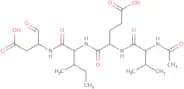
CAS:Ac-Val-Glu-Ile-Asp-H (aldehyde) is a synthetic peptide that is used as an inhibitor to study the effects of protein interactions. Ac-Val-Glu-Ile-Asp-H (aldehyde) binds to the active site of the enzyme, which prevents the enzyme from functioning and can be used as a research tool. Ac-Val-Glu-Ile-Asp-H (aldehyde) has been shown to activate some receptors and ligands, such as ion channels and antibodies.Formula:C22H36N4O9Purity:Min. 95%Molecular weight:500.54 g/molZ-Gly-Phe-NH2
CAS:Z-Gly-Phe-NH2 is a peptide that inhibits protein synthesis by binding to the ribosome. It has been shown to inhibit enzyme preparations containing peptides and proteins, such as hydrogen bond formation, phase transition temperature, uptake, and inhibitory effect. This molecule may be used in biochemical or molecular studies of protein synthesis. The uptake of Z-Gly-Phe-NH2 can be inhibited by ouabain binding. Z-Gly-Phe-NH2 also has a ca2+ response when calcium ionophores are applied to Xenopus oocytes.
Formula:C19H20N2O5Purity:Min. 95%Molecular weight:355.39 g/molOrexin-B (Human)
CAS:Orexin B, also known as hypocretin-2, is a neuropeptide that is produced by a small group of neurons in the hypothalamus, a region of the brain that plays a critical role in regulating various physiological functions, including sleep, appetite, and energy balance. Orexin B plays a role in promoting wakefulness and arousal and studies have shown that disruptions in the orexin system are associated with various sleep disorders, including narcolepsy and insomnia. In addition, orexin B has been shown to be involved in the regulation of appetite and energy metabolism, and is being explored as a potential target for the treatment of obesity and other metabolic disorders. Therefore, orexin B is an important neuropeptide and is an active area of research in neuroscience and medicine. This product is available as a 0.1mg vialFormula:C123H212N44O35SPurity:Min. 95%Molecular weight:2,899.3 g/molNHS-dPEG®24-Biotin
CAS:NHS-dPEG®24-Biotin is a PEG compound with two different functional groups (also known as heterobifunctional). Unlike homobifunctional PEG compounds (same functional group on both ends), this type of compounds are more versatile as have two different anchor points. NHS-dPEG®24-Biotin is used as a linker and spacer to add a PEG moiety, via pegylation (a bioconjugation technique) to proteins, peptides, oligonucleotides, small molecules and nanoparticles.Formula:C9H20O4SPurity:Min. 95%Molecular weight:224.32 g/molFibronectin Active Fragment (RGDS)
CAS:Fibronectin is an extracellular matrix protein that plays a critical role in cell adhesion, migration, and differentiation. Fibronectin subunits are composed of repeating units of three types of modules: type I, type II, and type III. The active fragment of fibronectin refers to a small peptide sequence within the type III modules of fibronectin that has been shown to have potent biological activity.
The fibronectin active fragment, also known as the cell-binding domain or RGD domain, is a short peptide sequence consisting of the amino acid sequence Arg-Gly-Asp (RGD). This peptide sequence interacts with cell surface receptors known as integrins, which are important for mediating cell adhesion, migration, and signaling.
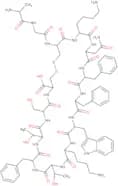
The fibronectin active fragment has been extensively studied as a research tool to investigate the mechanisms of cell adhesion and migration. It has also been used in tissue engineering applications to promote cell attachment and proliferation on synthetic biomaterials.Formula:C15H27N7O8CH3COOH•2H2OPurity:Min. 95%Molecular weight:499.48 g/molUrotensin II (Human)
CAS:A potent vasoconstrictor, available in the hydrochloride form with disulfide bonds between Cys5-Cys10 and as a 0.5mg vial. Urotensin II (UT-II) is a peptide that is found in humans and other vertebrates and is involved in biological systems such as the nervous, endocrine, cardiovascular and renal. Like that of urotensin II-related peptide, urotensin II contains the hexapeptide -CYS-TYR-LYS-TRP-PHE-CYS- known as the core and this is crucial to its biological function. Urotensin II can also increase the concentration of intercellular calcium through binding to its G protein coupled receptor: urotensin-II receptor which causes the activation of Protein kinase C followed by the activation of Phospholipase C. UT-II is widely distributed throughout the body, with highest concentrations found in the cardiovascular system, particularly in the heart and blood vessels. UT-II has been shown to have a wide range of physiological effects in humans, including vasoconstriction, modulation of blood pressure, and stimulation of the release of aldosterone and vasopressin. In addition to its physiological effects, UT-II has also been implicated in the pathogenesis of various cardiovascular and metabolic disorders, including hypertension, heart failure, and diabetes. Inhibition of UT-II signaling has been suggested as a potential therapeutic target for these conditions.Formula:C64H85N13O18S2Purity:Min. 95%Molecular weight:1,388.6 g/molm-dPEG®36-Amine
CAS:m-dPEG®36-Amine is a PEG compound with two different functional groups (also known as heterobifunctional). Unlike homobifunctional PEG compounds (same functional group on both ends), this type of compounds are more versatile as have two different anchor points. m-dPEG®36-Amine is used as a linker and spacer to add a PEG moiety, via pegylation (a bioconjugation technique) to proteins, peptides, oligonucleotides, small molecules and nanoparticles.
Formula:C73H149NO36Purity:Min. 95%Molecular weight:1,616.95 g/molParathyroid Hormone (Human, 39-68)
CAS:Amino acids 39-68 of the Parathyroid Hormone (PTH) which is a peptide hormone that is secreted from the parathyroid gland in the event of abnormal serum calcium levels and it ultimately regulates calcium and phosphate levels in the body. The PTH exerts its activity through binding to the G-protein coupled receptor type 1 PTH receptor, which activates adenylate cyclase or phospholipase C thus activating pathways involved in the mediation of bone resorption and bone formation. This product is suitable for life science applications and is available as a 0.5mg vial.
Formula:C139H234N46O46Purity:Min. 95%Molecular weight:3,285.6 g/molNeuromedin S (Rat)
CAS:Neuromedin S (Rat) is a peptide that is a potent inhibitor of protein interactions. It binds to the extracellular domain of the receptor and blocks its interaction with the ligand. This can be used as a research tool for studying the role of proteins in cell biology, pharmacology, or ion channels. Neuromedin S (Rat) is a high-purity peptide with CAS No. 843782-19-4 that has been shown to inhibit ligand binding to receptors in vitro and in vivo. Neuromedin S (Rat) also inhibits agonist-induced activation of ion channels at micromolar concentrations and blocks voltage-gated sodium currents at nanomolar concentrations. It has been used to study the role of neurexins in transmission at synapses between neurons by blocking their interaction with neuroligins.Formula:C193H307N57O49SPurity:Min. 95%Molecular weight:4,241.9 g/molAdrenomedullin (Human, 22-52)
CAS:This product is an antagonist of adrenomedulin which is a vasodilator peptide hormone and also plays a role in the stimulation of angiogenesis which can be seen as a negative to human health as it helps tumors to extend their blood supply. This product is available as a 0.5mg vial.Formula:C159H252N46O48Purity:Min. 95%Molecular weight:3,576 g/mol


![Gly-Pro-pNA • Tos [GPNT]](/_next/image/?url=https%3A%2Fstatic.cymitquimica.com%2Fproducts%2F3D%2Fthumb-webp%2FSGP-3074-V.webp&w=3840&q=75)