Enzyme Substrates
Subcategories of "Enzyme Substrates"
Found 1527 products of "Enzyme Substrates"
Dnp-pyaywmr trifluoroacetate
CAS:Dnp-pyaywmr trifluoroacetate is a fluorogenic substrate that can be used in the detection of enzymes. It has a CAS number of 135662-06-5 and an EC number of 231-610-7. This chemical is not intended for human or animal use, but it can be used to detect the presence of specific enzymes in food testing, environmental testing, and diagnostics. Dnp-pyaywmr trifluoroacetate is also used as a ligand for fluorescent probes. Chemiluminescence and bioluminescence are two forms of light emission that can occur when this chemical is added to a solution containing a living cell.Formula:C56H66F3N13O16SPurity:Min. 95%Molecular weight:1,266.3 g/molCaspase substrate
CAS:Caspase substrates are a class of pharmacological agents that regulate apoptosis. Caspases are proteases that cleave specific proteins in the cell, leading to apoptosis. Pro-apoptotic proteins activate caspases, while anti-apoptotic proteins inhibit them. Caspase substrates can be either pro-caspase or anti-caspase, depending on the desired effect. They may also be used to regulate caspases without affecting their activity. The caspase substrate is cleaved by caspases and releases a polypeptide fragment that triggers apoptosis in some cells, but not others. For example, the Hl-60 cell line is resistant to the pro-apoptotic effects of the substrate because it contains an anti-apoptotic protein called Bcl-2. In contrast, myocardial cells contain pro-apoptotic proteins and are sensitive to the pro-apoptotic effects of the substrate. In
Purity:Min. 95%Molecular weight:821.75 g/mol4-Nitrophenyl phosphate bis(tris) salt
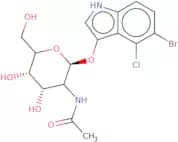
CAS:Please enquire for more information about 4-Nitrophenyl phosphate bis(tris) salt including the price, delivery time and more detailed product information at the technical inquiry form on this pageFormula:C14H28N3O12PMolecular weight:461.36 g/mol5-Bromo-4-chloro-3-indolyl 2-acetamido-2-deoxy-a-D-glucopyranoside
5-Bromo-4-chloro-3-indolyl 2-acetamido-2-deoxy-a-D-glucopyranoside is a fluorogenic substrate that reacts with horseradish peroxidase to produce light. It is used in the detection of β-galactosidase activity in food testing, staining, and environmental testing. This product is also used as a chromogenic substrate for the determination of β-galactosidase activity in immunological assays. 5BICAPG is a conjugate that can be used as a diagnostic ligand for the detection of β -galactosidase enzyme activity. This product has been shown to react with horseradish peroxidase and produce chemiluminescence or bioluminescence when exposed to oxygen. 5BICAPG has also been found to be an excellent enzyme substrate for various enzymes including alkaline phosphataseFormula:C16H18BrClN2O6Purity:Min. 95%Molecular weight:449.68 g/molThymidine 5′-monophosphate p-nitrophenyl ester sodium
CAS:Thymidine 5′-monophosphate p-nitrophenyl ester sodium is a fluorogenic substrate that is used in food testing and environmental testing. It is an important component of the Ligand Assay, a diagnostic test for the detection of antibodies to HIV. Thymidine 5′-monophosphate p-nitrophenyl ester sodium has been shown to be a good substrate for use in enzyme assays, such as DNA polymerase, DNA ligase, and RNA polymerase. This product is also used in bioluminescence and chemiluminescence reactions.Formula:C16H18N3O10P•NaPurity:Min. 95%Molecular weight:466.29 g/mol4-Methylumbelliferyl-a-D-mannopyranoside-2-phosphoethanolamine
4-Methylumbelliferyl-a-D-mannopyranoside-2-phosphoethanolamine is a fluorescent substrate used in enzyme assays. It is an analog of the natural substrate, 4-methylumbelliferyl-alpha-D-mannopyranoside, which is a phosphoethanolamine linked to alpha-D-mannose. This product can be used as a chromogenic or fluorogenic substrate for various enzymes, including beta glucosidase, beta galactosidase, and beta lactonase. 4MUMPE can also be used for bioluminescent studies and has been shown to have high purity and quality.Purity:Min. 95%4-Nitrophenyl 4,6-benzylidene-2-O-(2,3,4,6-tetra-O-[4-methoxybenzyl]-a-D-glucopyranosyl)-a-D-glucopyranoside
4-Nitrophenyl 4,6-benzylidene-2-O-(2,3,4,6-tetra-O-[4-methoxybenzyl]-a-D-glucopyranosyl)-a-D-glucopyranoside is a fluorogenic substrate that is used in diagnostic assays to measure the activity of enzymes such as β–galactosidase and β–glucuronidase. It is also an enzyme substrate for culture media and chemiluminescence. This product has a CAS number of 57316-92-8.Purity:Min. 95%Molecular weight:1,088.02 g/mol4-(Trifluoromethyl)umbelliferyl-b-D-cellotetraoside
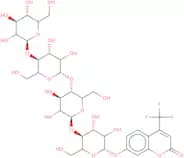
CAS:4-(Trifluoromethyl)umbelliferyl-b-D-cellotetraoside is a chemiluminescent substrate that can be used in the detection of peroxidase, horseradish peroxidase, and other enzymes. It is a fluorescent product that emits light upon reaction with hydrogen peroxide. This product has been tested for purity and quality and has shown to have no detectable levels of heavy metals or other contaminants. 4-(Trifluoromethyl)umbelliferyl-b-D-cellotetraoside is not cytotoxic and can be used for the detection of enzyme activity in living cells. 4-(Trifluoromethyl)umbelliferyl-b-D-cellotetraoside is also known as TMBECFDA, which stands for Trifluoromethyl)umbelliferone (Cellobiose) (BiotPurity:Min. 95%Molecular weight:878.7 g/mol4-Nitrophenyl 2,3,4-tri-O-levulinoyl-a-D-mannopyranoside
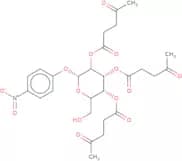
4-Nitrophenyl 2,3,4-tri-O-levulinoyl-a-D-mannopyranoside is a fluorogenic substrate that contains a reactive group of 2,3,4-tri-O-levulinoyl. This compound can be used to measure the activity of enzymes such as beta-glucosidase and alpha-galactosidase. 4NP2OMP is an excellent ligand for metal ions and has been shown to bind to copper in the presence of ATP. 4NP2OMP can also be used as a diagnostic agent for measuring the activity of bacterial beta-glucosidase and alpha galactosidase.Purity:Min. 95%Molecular weight:595.55 g/mol2-Nitrophenyl 2,3,4-tri-O-acetyl-b-D-galactopyranoside
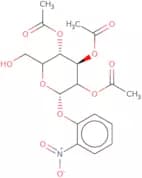
CAS:2-Nitrophenyl 2,3,4-tri-O-acetyl-b-D-galactopyranoside is a fluorogenic substrate that can be used to detect β-galactosidase activity. This specific substrate is one of the most commonly used substrates for detecting β-galactosidase activity in diagnostic assays. It reacts with the enzyme to produce a blue color and has a fluorescence emission maximum at about 480 nm. The product is available in high purity and high quality and it is also an enzyme substrate.Purity:Min. 95%Molecular weight:427.36 g/mol6-Chloro-7-hydroxy-4-(trifluoromethyl)coumarin
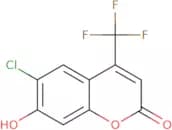
CAS:6-Chloro-7-hydroxy-4-(trifluoromethyl)coumarin is a fungicide that inhibits the growth of fungi by interfering with their DNA synthesis. It does this by inhibiting the activity of two enzymes: the fungal enzyme oxime and the enzyme cinerea, which is found in many fungi. 6-Chloro-7-hydroxy-4-(trifluoromethyl)coumarin has been shown to be effective against Alternaria and Botrytis cinerea. The compound also has an antifungal effect against other types of fungi, such as Penicillium roqueforti, when used in combination with a solvent such as ether.
Purity:Min. 95%Molecular weight:264.58 g/mol5-Bromo-4-chloro-3-indolyl 5-O-feruloyl a-L-arabinofuranoside
5-Bromo-4-chloro-3-indolyl 5-O-feruloyl a-L-arabinofuranoside is a chemiluminescent ligand that is used in the detection of DNA, RNA, and proteins. It has been shown to be an efficient fluorescence substrate for DNA and RNA polymerases. 5-Bromo-4-chloro-3-indolyl 5-O-feruloyl a-L-arabinofuranoside is suitable for use in diagnostic tests for bacteria, fungi, viruses, parasites, and toxins. This compound has been extensively tested for toxicity and carcinogenicity.Purity:Min. 95%6-Chloro-4-methylumbelliferyl b-D glucuronide
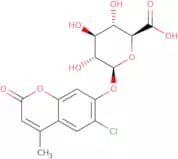
CAS:6-Chloro-4-methylumbelliferyl b-D glucuronide is a fluorogenic substrate for beta-glucuronidase that exhibits longer absorption/emission maxima (~385/500 nm) than typical 4MU-derived substrates.Formula:C16H15ClO9Purity:Min. 97 Area-%Color and Shape:White PowderMolecular weight:386.74 g/mol3-Carboxyumbelliferyl b-D-galactopyranoside
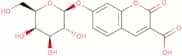
CAS:3-Carboxyumbelliferyl b-D-galactopyranoside is a fluorescent probe that can be used to study protein synthesis in live cells. It binds to the active site of the enzyme peptidyl transferase, which catalyzes the covalent linkage of amino acids to form a polypeptide chain. 3CMBG is specific for the amino acid proline and is a substrate for peptidyl transferase. The fluorescence of 3CMBG increases when it is bound to peptidyl transferase, making it useful as a marker for protein synthesis.
Purity:Min. 95%Molecular weight:368.28 g/mol4-Trifluoromethylumbelliferyl a-D-N-acetylneuraminic acid
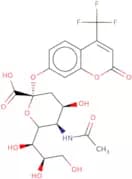
CAS:4-Trifluoromethylumbelliferyl a-D-N-acetylneuraminic acid is a fluorescent chemiluminescent substrate that is used in the detection of beta-galactosidase activity. Beta-galactosidase catalyzes the hydrolysis of 4-trifluoromethylumbelliferyl a-D-N-acetylneuraminic acid to form 4-trifluoromethylumbelliferone and D-galactose, which emits light at approximately 480 nm. This reaction can be detected by fluorescence spectrophotometry using a fluorometer or photometer. 4TFUNA is not toxic, does not inhibit enzymes, and has been tested for toxicity and mutagenicity using bacteria and mammalian cells.
Purity:Min. 95%Molecular weight:521.39 g/mol4-Methylumbelliferyl 3,4,6-tri-O-acetyl-2-deoxy-2-trifluoroacetamido-b-D-glucopyranoside
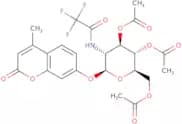
CAS:4-Methylumbelliferyl 3,4,6-tri-O-acetyl-2-deoxy-2-trifluoroacetamido-b-D-glucopyranoside is a fluorogenic substrate specifically designed for the detection and quantification of hexosaminidase enzymes. Upon cleavage by the target enzyme, it generates a bright fluorescent signal facilitating the investigation of enzyme activity, screening of inhibitors, and diagnostics.
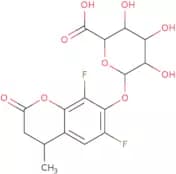
Purity:Min. 95%Molecular weight:559.44 g/mol6,8-Difluoro-4-methylumbelliferyl b-D-glucuronide
CAS:6,8-Difluoro-4-methylumbelliferyl b-D-glucuronide is a chemiluminescent substrate for the enzyme glucuronidase. The compound has been shown to be stable in the presence of a wide range of pHs and temperatures. It can be used in applications such as diagnostics, culture media and food testing. 6,8-Difluoro-4-methylumbelliferyl b-D-glucuronide has a high purity level and can be used as an indicator for other compounds such as acetaminophen or ibuprofen.Purity:Min. 95%Color and Shape:White To Off-White SolidMolecular weight:388.27 g/mol2-Nitrophenyl 2,3-di-O-acetyl-b-D-xylopyranoside
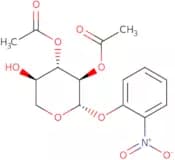
CAS:2-Nitrophenyl 2,3-di-O-acetyl-b-D-xylopyranoside is a chromogenic substrate used to assay the activity of xylosidase enzymes. It is hydrolyzed by xylosidase to yield a yellow-colored product, 2-nitrophenol, which absorbs light at 405 and 410 nm. This substrate is used in research to study the function of xylosidase enzymes and their role in various biological processes. It is also used in diagnostic tests for the detection of xylosidase activity in different microorganisms, including bacteria and fungi.
Purity:Min. 95%Molecular weight:355.3 g/molD-Ile-Pro-Arg p-nitroanilide dihydrochloride
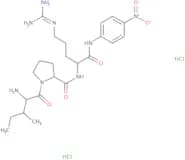
CAS:D-Ile-Pro-Arg p-nitroanilide dihydrochloride is a chromogenic substrate commonly used in research to assess the activity of various enzymes. It has been utilized in studies related to thrombin inhibition, enzyme assays of protease enzymes, activation and enzymatic activity analysis of Factor VII-activating protease, and as a substrate for measuring glandular kallikrein activity. This substrate has been employed in assays to study the amidolytic activity of enzymes such as thrombin, plasma kallikrein, plasmin, and other proteases.Formula:C23H38Cl2N8O5Purity:Min. 95%Molecular weight:577.5 g/mol4-Nitrophenyl 2-O-(2,3,4-tri-O-acetyl-a-L-fucopyranosyl)-6-O-benzoyl-3,4-O-isopropylidene-a-D-galactopyranoside
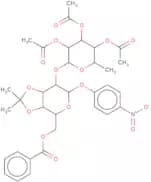
CAS:4-Nitrophenyl 2-O-(2,3,4-tri-O-acetyl-a-L-fucopyranosyl)-6-O-benzoyl-3,4-O-isopropylidene a D galactopyranoside is an analog of galactose that binds to the DNA and regulates gene expression. This compound has been shown to be able to regulate gene expression levels in cells. 4NP2B6OB was used as a probe for microarray analysis of gene expression profiles from environmental samples. It was found that 4NP2B6OB could be used as a probe for the identification of genes in high density arrays.Purity:Min. 95%Molecular weight:717.67 g/mol4-Nitrophenyl 2,3-di-O-(2,3,4,6-tetra-O-acetyl-b-D-glucopyranosyl)-4,6-benzylidene-b-D-glucopyranoside
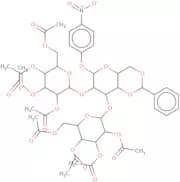
4-Nitrophenyl 2,3-di-O-(2,3,4,6-tetra-O-acetyl-b-D-glucopyranosyl)-4,6-benzylidene-b-D-glucopyranoside is a high purity, high quality 4nitrophenol derivative that is used as a food testing substrate. It is also used for the detection of fluorescence in environmental testing. This product can be conjugated with ligands for use in diagnostic assays.Purity:Min. 95%Molecular weight:1,049.93 g/mol5-Bromo-4-chloro-1H-indol-3-yl-b-D-glucuronide
CAS:5-Bromo-4-chloro-3-indolyl β-D-glucuronide (BCIG) is an chromogenic enzyme substrate used to detect the presence of glucuronidase enzyme activity. The reaction occurs when BCIG reacts with the enzyme beta-glucuronidase yielding an intense blue color. It is used in a variety of biochemical and biomedical applications, such as the detection of pathogenic bacteria, the diagnosis of genetic disorders, and the isolation of recombinant proteins.Formula:C14H13BrClNO7Purity:Min. 95%Molecular weight:422.61 g/mol4-Bromo-2-nitrophenyl b-D-galactopyranoside
4-Bromo-2-nitrophenyl b-D-galactopyranoside is a chemiluminescent substrate that reacts with an excess of luciferase to produce light. It is used as a reagent in the detection of ATP, NADH, and other compounds in biochemistry and biology. 4-Bromo-2-nitrophenyl b-D-galactopyranoside is also used in diagnostic kits for detecting bacterial or fungal contamination in food.
Formula:C12H14BrNO8Purity:Min. 95%Molecular weight:380.15 g/mol4-Nitrophenyl b-laminaritrioside
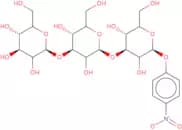
CAS:4-Nitrophenyl b-laminaritrioside is a chemiluminescent substrate that reacts with hydrogen peroxide to produce light. It is used in the detection of bacteria and other microorganisms in culture media, food testing, and diagnostics. 4-Nitrophenyl b-laminaritrioside is also used as a chromogenic or fluorogenic substrate in enzyme assays.Purity:Min. 95%Molecular weight:625.53 g/mol2-Chloro-4-nitrophenyl 2,3,4,6-tetra-O-acetyl-b-D-glucopyranoside
CAS:2-Chloro-4-nitrophenyl 2,3,4,6-tetra-O-acetyl-b-D-glucopyranoside is a chromogenic enzyme substrate used in the biochemical characterization of various enzymes. It produces a yellow color when cleaved by enzymes and is commonly used in assays to study enzyme kinetics and activity. It is commonly used is used to study the biochemical and physiological effects of glycosylation and acts as a substrate for glycosylation-dependent enzymes involved in carbohydrate metabolism. Glycosidases hydrolyse 2-Chloro-4-nitrophenyl-2,3,4,6-tetra-O-acetyl-beta-D-glucopyranoside, releasing 2-chloro-4-nitrophenyl moiety, and the substrate can then be further metabolized by other enzymes. It is also used in the investigate the effects and activity on glycoproteins and glycolipids.Purity:Min. 95%Molecular weight:503.84 g/mol4-Methylumbelliferyl 2-acetamido-2-deoxy-3,6-di-O-pivaloyl-b-D-galactopyranoside
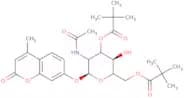
CAS:4-Methylumbelliferyl 2-acetamido-2-deoxy-3,6-di-O-pivaloyl-b-D-galactopyranoside is a chemiluminescent substrate that reacts with an enzyme to produce light. It is used in the detection of ATPase activity and in the diagnosis of diseases. This product has been tested for quality and environmental safety, and it does not contain any hazardous substances. It is highly pure and can be used for testing food, diagnosing diseases, or staining cells.Purity:Min. 95%Molecular weight:547.59 g/mol4-Methylumbelliferyl b-D-chitobiose heptaacetate
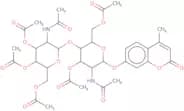
CAS:4-Methylumbelliferyl b-D-chitobiose heptaacetate is a fluorogenic substrate that is widely used in diagnostic and research applications. It can be used as a substrate for enzymes such as alkaline phosphatase, β-glucuronidase, β-galactosidase, β-glucosidase, α-amylase, α-glucosidase, α-mannosidase, and α-fucosidase. 4MUBH can also be used in the detection of bacterial growth. 4MUBH reacts with NADPH to produce light through chemiluminescence. This product has been shown to have a high purity and quality and should not be stored in UV light or strong acids. CAS No. 55900-34-0Purity:Min. 95%Molecular weight:792.74 g/mol4-Methylumbelliferyl 2-acetamido-3,4,6-tri-O-acetyl-2-deoxy-b-D-galactopyranoside
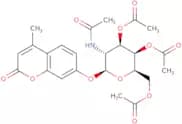
CAS:4-Methylumbelliferyl 2-acetamido-3,4,6-tri-O-acetyl-2-deoxy-b-D-galactopyranoside is a fluorescent marker that is used to measure the enzymatic activity of corynebacterium glutamicum. The enzyme catalyzes the conversion of 4-methylumbelliferyl glucopyranoside to 4-methylumbelliferone glucuronide. The production of 4 methylumbelliferone glucuronide can be quantified using fluorescence spectroscopy. This product can be used in research involving chronic inflammatory diseases and cancer.Purity:Min. 95%Molecular weight:505.47 g/molOstazin brilliant red H-3B hydroxyethylcellulose
Ostazin brilliant red H-3B hydroxyethylcellulose is a chromogenic enzyme substrate that produces a bright red color upon reaction with specific enzymes. This substrate is particularly useful for the detection and visualization of enzyme activity in histochemical and cytochemical staining techniques. The vibrant red color produced by the reaction allows for easy observation and analysis of enzyme distribution and localization in cells and tissues. Ostazin brilliant red H-3B hydroxyethylcellulose is often used in combination with other substrates to study the presence and activity of multiple enzymes simultaneously, providing valuable insights into the complex interactions and functions of enzymes in biological systems.Purity:Min. 95%4-Nitrophenyl 2-O-(2,3,4,6-tetra-O-acetyl-b-D-glucopyranosyl)-4,6-O-benzylidene-b-D-glucopyranoside
CAS:4-Nitrophenyl 2-O-(2,3,4,6-tetra-O-acetyl-b-D-glucopyranosyl)-4,6-O-benzylidene-b-D-glucopyranoside is a compound that is used in gene expression profiling. It has been shown to be an effective inhibitor of glutamicum and corynebacterium glutamicum. 4NPBG can inhibit the production of acid molecules by blocking the activity of cytochrome P450 enzymes in the cells of these bacteria. The compound also inhibits cellular transport and membrane transport genes in these species. This inhibition prevents the synthesis of nucleic acid molecules such as RNA and DNA.Purity:Min. 95%Molecular weight:719.64 g/mol4-Nitrophenyl 2-acetamido-2-deoxy-3-O-(2,3,4,6-tetra-O-acetyl-β-D-galactopyranosyl)-α-D-galactopyranoside
CAS:4-Nitrophenyl 2-acetamido-2-deoxy-3-O-(2,3,4,6-tetra-O-acetyl-β-D-galactopyranosyl)-α-D-galactopyranoside is a chemiluminescent substrate that has been used in the detection of bacterial activity. It is used in the detection of bacterial activity through chemiluminescence and can be conjugated to an enzyme or protein for increased sensitivity. This product has been shown to have high purity and quality and is suitable for use in diagnostic applications.Formula:C28H36N2O17Purity:Min. 95%Color and Shape:PowderMolecular weight:672.59 g/mol4-Nitrophenyl 2-azido-2-deoxy-a-D-galactopyranoside
CAS:4-Nitrophenyl 2-azido-2-deoxy-a-D-galactopyranoside is a superior chromogenic substrate for the precise determination of alpha-D-galactosidase enzyme activity. This substrate features a unique 2-azido moiety providing enhanced sensitivity and specificity in biochemical assays. Upon enzymatic cleavage, it releases the highly fluorescent compound 4-nitrophenol, which simplifies quantification and tracking of enzyme activity in applications such as drug discovery, genetic studies, and enzyme inhibition assays.Purity:Min. 95%Color and Shape:White PowderMolecular weight:326.26 g/molLuc-phosphate Na enhanced
Luc-phosphate Na enhanced is a chemiluminescent substrate for enzyme-linked immunosorbent assay (ELISA) and other immunoassays. It has been shown to have high purity, high quality, and good stability. Luc-phosphate Na enhanced has not been tested for toxicity in animals or humans. Luc-phosphate Na enhanced is a conjugated substrate that can be used in ELISA, where the enzyme substrate will react with the antigen in a sample to produce light. This product can also be used in diagnostic tests and in food testing.Purity:Min. 95%b-Naphthyl-b-maltotrioside
b-Naphthyl-b-maltotrioside is a fluorogenic substrate that is used in enzymatic and chromogenic assays. It is a bifunctional substrate that reacts with enzymes to produce light. b-Naphthyl-b-maltotrioside can be used as a conjugate for immunoassays, such as ELISA. This substrate is also suitable for use in diagnostics, food testing, and environmental testing.Purity:Min. 95%Molecular weight:630.59 g/mol4-Nitrophenyl 2,3,4-tri-O-acetyl-6-O-(a-D-glucopyranosyl)-a-D-glucopyranoside
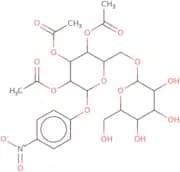
The 4-Nitrophenyl 2,3,4-tri-O-acetyl-6-O-(a-D-glucopyranosyl)-a-D-glucopyranoside is a fluorogenic substrate for β-galactosidase. This product has high purity and quality and is an enzyme substrate for β-galactosidase. The 4NPG2,3,4TRA can be used as a diagnostic tool in the diagnosis of bacterial infections. It is also used in the food testing industry and environmental testing industry. This product has CAS No.: 51743-71-1. This product is also a ligand that reacts with the enzyme β-galactosidase to produce light in chemiluminescence reactions. This product can be used for staining or bioluminescence applications.Purity:Min. 95%Molecular weight:589.51 g/mol2-Chloro-4-nitrophenyl a-D-fucopyranoside
CAS:2-Chloro-4-nitrophenyl a-D-fucopyranoside (CNPF) is a chromogenic enzyme substrate used primarily to detect fucosidase activity. CNPF is cleaved by the enzyme, which results in the release of a colored product that can be measured spectrophotometrically. Fucosidases are important enzymes that catalyze the hydrolysis of fucose-containing oligosaccharides, and CNPF is a commonly used substrate for the detection and quantification of these enzymes in various research studies.
Purity:Min. 95%Molecular weight:319.69 g/mol2-Nitrophenyl 2-acetamido-3,6-di-O-acetyl-4-O-[2-O-(2,3,4-tri-O-benzoyl-a-L-fucopyranosyl)]-2-deoxy-b-D-glucopyranoside
2-Nitrophenyl 2-acetamido-3,6-di-O-acetyl-4-O-[2-O-(2,3,4-tri-O-benzoyl-a-L-fucopyranosyl)]--2-deoxy--bDglucopyranoside is an acylated glucopyranoside that is used as a substrate for the enzyme β -galactosidase. When hydrolyzed by β -galactosidase, it yields a blue product that has been widely used in chemiluminescence and bioluminescence assays. It also can be used for staining and ligand binding studies.
Purity:Min. 95%Molecular weight:884.83 g/mol5-Bromo-6-chloro-3-indolyl palmitate
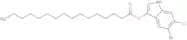
CAS:5-Bromo-6-chloro-3-indolyl palmitate is a magenta enzyme substrate that is widely used in the study of lipase and esterase enzymes. This compound consists of an indole ring with bromine and chlorine atoms at positions 5 and 6, respectively, and a palmitate moiety esterified to the indolyl ring. The palmitate group is a long-chain fatty acid, making this substrate particularly useful for investigating enzymes that hydrolyze ester bonds in lipids. Upon cleavage by lipases or esterases, 5-Bromo-6-chloro-3-indolyl palmitate releases a magenta-colored product, which can be easily detected and quantified to measure enzyme activity.
Purity:Min. 95%Molecular weight:484.9 g/mol6-Chloro-4-methylumbelliferyl b-xylobioside
CAS:6-Chloro-4-methylumbelliferyl b-xylobioside is a fluorogenic substrate that can be used for food testing, environmental testing and diagnostics. It is a chromogenic substrate that can be used in enzyme substrates. 6-Chloro-4-methylumbelliferyl b-xylobioside is also a conjugate and has high purity. This product has chemiluminescent properties and can be used for bioluminescence. It is an excellent ligand for fluorescence labeling and has been shown to have high quality. This product can be used in culture media as well as to detect the presence of bacteria.Purity:Min. 95%Molecular weight:474.84 g/molL-Alanine 3-thioindoxyl ester hydrochloride
L-Alanine 3-thioindoxyl ester hydrochloride is a fluorogenic substrate that is used for the detection of L-alanine in food, environmental, and diagnostic testing. It is a conjugate of L-alanine and 3-indoxyl beta-D-galactopyranoside. The presence of L-alanine can be detected by its conversion to alanine 3-thioindoxyl ester, which emits light when reacted with horseradish peroxidase. br>br> L-Alanine 3-thioindoxyl ester hydrochloride has high purity and quality. It is a bioluminescent compound that reacts with enzyme catalase to produce light via chemiluminescence.Formula:C11H13ClN2OSPurity:Min. 95%Molecular weight:256.76 g/molAldol® 515 L-proline amide, hydrochloride, Biosynth Patent: EP 2427431 and US 8940909
CAS:Aldol® 515 L-proline amide is a chromogenic and fluorogenic enzyme substrate used for detection of L-proline aminopeptidase activity. The colorless enzyme substrate is cleaved by L-proline aminopeptidase produced by microorganisms grown in liquid or solid media, yielding red-orange color. In addition, red fluorescence signals are generated when a fluorescence enhancer or a suitable matrix is present. Aldol® 515 L-proline amide is suitable for use under aerobic and anaerobic conditions.
Formula:C28H29ClN4O2Purity:Min. 95.0 Area-%Molecular weight:489.02 g/molResorufin phosphate disodium
Resorufin phosphate disodium is a fluorogenic substrate for phosphatase exhibiting a red color after cleavage that can be measured at ~ 585nm.Formula:C12H6NNa2O6PPurity:Max. 75 Area-%Color and Shape:Brown PowderMolecular weight:337.14 g/mol4-Nitrophenyl 2-acetamido-3-azido-2,3-dideoxy-b-D-galactopyranoside
4-Nitrophenyl 2-acetamido-3-azido-2,3-dideoxy-b-D-galactopyranoside is a fluorogenic substrate for beta-galactosidase. It has been used in the detection of beta-galactosidase activity in culture media, and for the detection of beta-galactosidase activity in environmental samples. 4NPAG can be conjugated to a variety of molecules, including antibodies, proteins, nucleotides, and oligonucleotides. 4NPAG can be used as an enzyme substrate for both chromogenic and fluoroquinolone substrates.Purity:Min. 95%4-Nitrophenyl 2-O-(b-L-fucopyranosyl)-b-D-galactopyranoside
CAS:4-Nitrophenyl 2-O-(b-L-fucopyranosyl)-b-D-galactopyranoside is a high-quality chromogenic substrate with excellent sensitivity specifically designed for enzymes' activity detection. This pNP substrate enables rapid, accurate, and measurable colorimetric visualization of enzymatic hydrolysis reactions. Researchers can easily and effectively monitor the release of 4-nitrophenol as a yellow product under laboratory conditions, allowing for convenient comparative analysis and identification of enzyme levels in various samples.Purity:Min. 95%Color and Shape:White SolidMolecular weight:447.39 g/molAldol® 544 β-D-galactopyranoside, Biosynth Patent: EP 2427431 and US 8940909
CAS:Aldol 544 beta-D-galactopyranoside is a chromogenic substrate for the detection of beta-galactosidase activity in food testing and diagnostics. Aldol 544 beta-D-galactopyranoside is used as a conjugate to detect the presence of an enzyme, such as beta-galactosidase, in biological samples. It has been used in environmental testing and as a fluorogenic substrate for the detection of β-galactosidase activity.Formula:C33H33ClN2O7Purity:Min. 95.0 Area-%Molecular weight:605.08 g/mol2-(5'-Chloro-2'-hydroxyphenyl)-6-chloro-4(3H)-quinazolinonyl a-D-N-acetylgalactosamine
2-(5'-Chloro-2'-hydroxyphenyl)-6-chloro-4(3H)-quinazolinonyl a-D-N-acetylgalactosamine is an inhibitor of bacterial cell wall synthesis. It has been shown to inhibit the enzymatic activity of beta-lactamase, which is an enzyme that breaks down beta-lactam antibiotics. 2-(5'-Chloro-2'-hydroxyphenyl)-6-chloro-4(3H)-quinazolinonyl a-D-N-acetylgalactosamine can be used for the treatment of infections caused by bacteria such as methicillin resistant Staphylococcus aureus. This compound has been shown to have low toxicity and does not cause any significant side effects in animals.Purity:Min. 95%Molecular weight:510.32 g/mol4-Methylumbelliferyl nonanoate
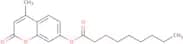
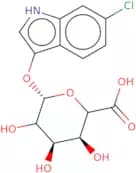
CAS:4-Methylumbelliferyl nonanoate is a synthetic fluorogenic substrate for lipase. It is used to measure the activity of lipases in vitro. 4-Methylumbelliferyl nonanoate reacts with a lipid substrate, such as sodium taurocholate, to produce 4-methylumbelliferone and dodecanol. The fluorescent product can be detected by fluorimetric or spectrophotometric methods. This compound is activated by an enzyme preparation, such as proteolytic enzymes, and can be used to measure the activity of these enzymes in vitro.Formula:C19H24O4Purity:Min. 99 Area-%Molecular weight:316.40 g/mol6-Chloro-1H-indol-3-yl b-D-glucuronide
CAS:6-Chloro-1H-indol-3-yl b-D-glucuronide is a chemiluminescence substrate that can be used in immunoassays and other biochemical analyses. 6CIG is a highly purified, high quality product with a CAS No. 138182-19-1. This product has been tested for bacterial contamination and found to be free of detectable levels of mycoplasma, yeast, mold, or other microbial agents. It has also been tested for its ability to support the growth of various types of cells and found to be suitable for cell culture media. This chemical has been shown to produce an intense blue chemiluminescent reaction when reacted with horseradish peroxidase enzyme and hydrogen peroxide.Purity:Min. 95%Molecular weight:343.72 g/mol2-Bromo-4-nitrophenyl b-D-galactopyranoside
2-Bromo-4-nitrophenyl b-D-galactopyranoside is a chemiluminescent substrate that is used for the detection of β-galactosidase activity in the biochemical reaction. It has been shown to be an excellent ligand for metal ions and can be used as a reagent in the determination of metal ions in biological systems. This product is manufactured with high purity and quality, which ensures its suitability for use in culture media, environmental testing, and diagnostics. 2-Bromo-4-nitrophenyl b-D-galactopyranoside has been tested as a fluorogenic substrate for β-galactosidase. It has also been used as a chromogenic substrate for β-galactosidase and an enzyme substrate for β-galactosidase. This product can be conjugated with other molecules such as biotin to enable rapid analysis of proteins or
Formula:C12H14BrNO8Purity:Min. 95%Molecular weight:380.15 g/mol



![4-Nitrophenyl 4,6-benzylidene-2-O-(2,3,4,6-tetra-O-[4-methoxybenzyl]-a-D-glucopyranosyl)-a-D-gluco…](/_next/image/?url=https%3A%2Fstatic.cymitquimica.com%2Fproducts%2F3D%2Fthumb-webp%2FEN04828.webp&w=3840&q=75)






![2-Nitrophenyl 2-acetamido-3,6-di-O-acetyl-4-O-[2-O-(2,3,4-tri-O-benzoyl-a-L-fucopyranosyl)]-2-deox…](/_next/image/?url=https%3A%2Fstatic.cymitquimica.com%2Fproducts%2F3D%2Fthumb-webp%2FEN04919.webp&w=3840&q=75)