Enzyme Substrates
Subcategories of "Enzyme Substrates"
Found 1526 products of "Enzyme Substrates"
5-Cyano-3-indoxyl-β-D-galactopyranoside
For detection of beta-galactosidase activity. The colors of the chromogen can be adjusted by incorporating different functional groups, e.g. cyano or nitro group, which yields purple or black green colonies with beta-galactosidase positive strain.Formula:C15H16N2O6Molecular weight:320.3 g/mol5-Bromo-4-chloro-3-indoxyl butyrate
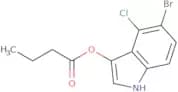
CAS:5-Bromo-4-chloro-3-indoxyl butyrate is a colorimetric substrate used to detect and quantify esterase activity. Upon hydrolysis by esterases, it yields a blue-green dye, allowing the detection and quantification of enzyme activity. It is commonly used in assays for the screening of esterase-producing microorganisms and in research aimed at understanding the role of esterases in various cellular processes.
Formula:C12H11BrClNO2Purity:Min. 95%Color and Shape:PowderMolecular weight:316.58 g/mol4-Methylumbelliferyl nonanoate
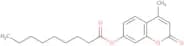
CAS:4-Methylumbelliferyl nonanoate is a fluorogenic substrate for lipase. After enzymatic cleaveage, free 4-methylumbelliferone (also known as hymecromone) is released, exhibiting blue fluorescence upon excitation with UV light. The strongest fluorescence of 4-methylumbelliferone requires deprotonation of the hydroxyl group (thus requires alkaline pH), with a maximal fluorescence intensity obtained with excitation at 350 to 370 nm and emission at 440 to 470 nm. The use of 4-methylumbelliferyl nonanoateas a substrate for measuring the lipase activity is used for the detection of lipase deficiency that could lead to pancreatic insufficiency.Formula:C19H24O4Purity:Min. 95%Color and Shape:PowderMolecular weight:316.39 g/mol4-Methylumbelliferyl 3-O-(N-acetylneuraminyl)-b-D-glucopyranoside
4-Methylumbelliferyl 3-O-(N-acetylneuraminyl)-b-D-glucopyranoside is a chromogenic substrate. It is used for the detection of glycoproteins and glycolipids in food testing, staining, environmental testing, and diagnostics. It can also be used as a fluorogenic substrate for the detection of glycoproteins and glycolipids in fluorescence microscopy. 4-methylumbelliferyl 3-O-(N-acetylneuraminyl)-b-D-glucopyranoside has been shown to be a ligand for the lectin receptor Galectin 9, which is involved in inflammation and cancer cell growth. 4-methylumbelliferyl 3-O-(N-acetylneuraminyl)-b-D-glucopyranoside has been shown to be an enzyme substrate for alkaline phosphatase, βPurity:Min. 95%Naphthol AS-D chloroacetate
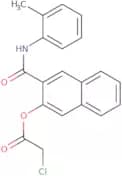
CAS:Histochemical substrate for esteraseFormula:C20H16ClNO3Purity:Min. 98 Area-%Color and Shape:PowderMolecular weight:353.8 g/mol5-Bromo-4-chloro-3-indoxyl phosphate p-toluidine, micronized
CAS:A substrate for alkaline phosphatase yielding a blue insoluble product upon cleavage. Colour can be further enhanced when used together with Nitroblue tetrazolium. The substrate system is versatile and has functions in a variety of applications, including Northern, Southern, and Western blotting, in situ hybridization, ELISAs, microarray and immunohistochemistry. The micronized structure enhances solubility.Formula:C8H6BrClNO4P•C7H9NPurity:Min. 95%Color and Shape:PowderMolecular weight:433.63 g/mol2-Nitrophenyl b-D-xylopyranoside
CAS:Chromogenic substrates targeting beta-xylosidasePurity:Min. 95%Color and Shape:PowderMolecular weight:271.22 g/mol4-Trifluoromethylumbelliferyl-β-D-galactopyranoside
CAS:4-Trifluoromethylumbelliferyl-beta-D-galactopyranoside is a fluorogenic substrate for beta-galactosidase. It is used in the detection of beta-galactosidase activity in cell lysates and culture media, as well as in food testing. This compound has been shown to be highly pure, with a purity greater than 98%. 4-Trifluoromethylumbelliferyl-beta-D-galactopyranoside has also been shown to have high chemiluminescence, making it an ideal candidate for use in diagnostics.Formula:C16H15F3O8Molecular weight:392.29 g/mol5-Bromo-4-chloro-3-indoxyl-beta-D-glucuronic acid, sodium salt trihydrate
CAS:Chromogenic substrate for beta-glucuronidase (GUS) yielding blue precipitate upon cleavage. Used for identification of beta-glucuronidase. X-beta-D-glucuronide has been reported as chromogenic substrate in a number of chromogenic E. coli/ coliform culture media. About 95% of common E. coli possess beta-D-glucuronidase activity. Such chromogenic culture media are used for detection and enumeration of E. coli in food samples such as meat, dairy products and shellfish and have clinical applications in the assessment of urinary infections. It has gained international acceptance as highly accurate test for the presence of E. coli in drinking water samples. It is also used for the detection of the expression of GUS (E. coli beta-glucuronidase) gene fusion marker constructs in plants. The sodium salt has advantages over the cyclohexylammonium salt as being non-electrostatic and possessing a naturally-occurring cation.Formula:C14H18BrClNNaO10Purity:Min. 99.0 Area-%Molecular weight:498.65 g/molL-Phenylalanine 7-amido-4-methylcoumarin, trifluoroacetate salt
CAS:Please enquire for more information about L-Phenylalanine 7-amido-4-methylcoumarin, trifluoroacetate salt including the price, delivery time and more detailed product information at the technical inquiry form on this pageFormula:C21H19F3N2O5Purity:Min. 99 Area-%Molecular weight:436.39 g/mol6-Chloro-3-indoxyl caprylate
CAS:6-Chloro-3-indoxyl caprylate is a high quality, enzyme substrate, chromogenic substrate, bioluminescence, chemiluminescence ligand, staining and diagnostics reagent. It has CAS No. 159954-35-5 and is used in food testing, culture media and environmental testing. 6-Chloro-3-indoxyl caprylate is also a fluorogenic substrate that is used for high purity applications such as conjugation with other molecules.
Formula:C16H20ClNO2Molecular weight:293.80 g/mol4-Nitrophenyl-beta-D-xylopyranoside
CAS:Chromogenic β-xylosidase substrate yielding a yellow solution upon cleavage.Formula:C11H13NO7Purity:Min. 99 Area-%Molecular weight:271.23 g/molNaphthol AS-BI N-acetyl-beta-D-glucosaminide
CAS:Naphthol AS-BI N-acetyl-beta-D-glucosaminide is a fluorogenic substrate for the pararosaniline-glyoxalase (PG) reaction. This substrate is used to study enzymatic activity in two human isoenzymes of PG, PG I and PG II. The conversion of this substrate by PG I or PG II results in a color change from yellow to red. Naphthol AS-BI N-acetyl-beta-D-glucosaminide may be used as an experimental tool to measure the activity of these enzymes and to study the effect of inhibitors on their activity. It can also be used as a marker for studying enzyme transfer between cells.Formula:C26H27BrN2O8Purity:Min. 97.0 Area-%Molecular weight:575.42 g/mol4-Methylumbelliferyl-N-acetyl-β-D-glucosaminide-6-sulfate, sodium salt
CAS:4-Methylumbelliferyl 2-acetamido-2-deoxy-beta-D-glucopyranoside-6-sulfate sodium salt is a high-quality fluorogenic substrate specifically designed for the detection and quantification of various enzymes, including beta-glucosidases and sulfatases. Upon hydrolysis by the target enzyme, this substrate releases the highly fluorescent 4-methylumbelliferone, allowing for real-time monitoring and accurate measurement of enzyme activities in biochemical assays, diagnostic tests, and research applications. 4-Methylumbelliferyl 2-acetamido-2-deoxy-beta-D-glucopyranoside-6-sulfate sodium salt has excellent solubility in water, ensuring a consistent and reliable performance in different experimental conditions. This versatile substrate is an essential tool for researchers and industry professionals who require a sensitive and reproducible detection method for enzymes of interest.Formula:C18H20NNaO11SPurity:Min. 98.0 Area-%Molecular weight:481.41 g/molRef: 3D-M-5505
5mgTo inquire25mgTo inquire50mgTo inquire100mgTo inquire250mgTo inquire-Unit-ggTo inquireFLsharp™ - Phosphate, disodium salt
FLsharp™ - Phosphate, disodium salt is a fluorogenic water-soluble substrate for phosphatase enzymes. Its chemical name is 6-Chloro-2-[5-chloro-2-(phosphonooxy)phenyl]-4(1H)-quinazolinone disodium salt and was developed by Molecular Probes in the 1990s. After cleavage of the substrate by phosphatase activity, an insoluble product is formed that is highly fluorescent in the solid state. Upon UV irradiation this very stable fluorophore emits green light in the 530 nm range for an extended period of time. FLsharp™ is a unique substrate - optimized for the detection of phosphatase activity in solid matrices such as agar media, tissue sections or microscopic preparations. FLsharp™ - Phosphate, disodium salt is used in microbiology as a substrate for bacterial phosphatases.
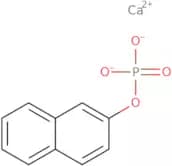
Purity:Min. 95%Calcium 2-naphthylphosphate
CAS:Calcium 2-naphthylphosphate, which is the calcim salt of 2-naphthylphosphate, is a chromogenic substrate to measure alkaline phosphatase activity. After enzymatic cleavage, the product yielded (2-naphthol) generates a red-colored complex upon reaction with a diazonium salt like Fast Blue RR or Fast Garnet GBC.
Purity:(%) Min. 95%Color and Shape:PowderMolecular weight:282.24 g/mol4-Methylumbelliferyl palmitate
CAS:Fluorogenic substrate for esterase yielding a blue fluorescent solution upon cleavage.Formula:C26H38O4Purity:Min. 99 Area-%Molecular weight:414.59 g/molRef: 3D-M-5750
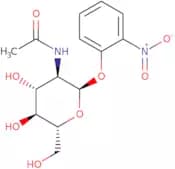
1gTo inquire5gTo inquire250mgTo inquire500mgTo inquire2500mgTo inquire-Unit-ggTo inquire2-Nitrophenyl 2-acetamido-2-deoxy-a-D-glucopyranoside
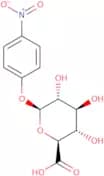
CAS:2-Nitrophenyl 2-acetamido-2-deoxy-alpha-D-glucopyranoside is a chromogenic substrate used to assay the activity of enzymes that cleave N-acetyl-alpha-D-glucosaminide, such as chitinases and lysozymes. Upon cleavage by the enzyme of interest, the substrate releases a yellow-colored 2-nitrophenol that can be measured spectrophotometrically. This substrate is widely used in the food industry to monitor the activity of lysozyme in cheese, as well as in biomedical research for studying cellular and molecular mechanisms involved in conditions such as inflammation and cancer.Purity:Min. 95%Color and Shape:PowderMolecular weight:342.3 g/mol4-Nitrophenyl-beta-D-glucuronic acid
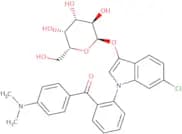
CAS:Chromogenic β-glucuronidase substrate yielding a yellow solution upon cleavage. Used to detect E. coli contamination in food and drinking water due to their β-glucuronidase activity.Formula:C12H13NO9Purity:Min. 98.0 Area-%Molecular weight:315.24 g/molAldol® 518 alpha-D-galactopyranoside, Biosynth Patent: EP 2427431 and US 8940909
CAS:Aldol® 518 alpha-D-galactopyranoside is a chromogenic and fluorogenic enzyme substrate used for detection of alpha-galactosidase activity. The enzyme substrate is cleaved by alpha-galactosidase positive bacteria and yeasts in liquid or solid media, yielding red color and red fluorescence signal. Aldol® 518 alpha-D-galactopyranoside can also be used to detect alpha-galactosidase (encoded by the Mel1 gene) in yeast gene reporter assays or for identification of alpha-gal positive transformants on agar plates. Aldol® 518 alpha-D-galactopyranoside can be used under aerobic and anaerobic conditions.Formula:C29H29ClN2O7Purity:Min. 95.0 Area-%Molecular weight:553.01 g/mol6-Chloro-3-indolyl β-D-cellobioside
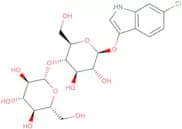
CAS:6-Chloro-3-indolyl b-D-cellobioside is a chromogenic substrate that produces a salmon-pink color after enzymatic cleavage. It is used for detecting the activity of beta-D-cellobiosidase in enzyme assays.
Purity:Min. 95%Color and Shape:White To Off-White SolidMolecular weight:491.87 g/molL-Alanine-7-amido-4-methylcoumarin hydrochloride
CAS:L-Alanine-7-amido-4-methylcoumarin hydrochloride is a synthetic peptide substrate used as a fluorogenic substrate for alanine aminopeptidase.Formula:C13H14N2O3·HClPurity:Min. 90%Color and Shape:PowderMolecular weight:282.72 g/mol1-Naphthyl β-D-glucuronide
CAS:1-Naphthyl beta-D-glucuronide (NPG) is a chromogenic enzyme substrate used to detect the presence of β-glucuronidase activity. Upon hydrolysis by the enzyme, it produces a yellow product that can be detected by spectrophotometry or visually. It is commonly used in clinical assays to detect the presence of the enzyme in urine samples, as elevated levels can indicate liver or urinary tract diseases. It is also utilized in environmental testing, as some bacteria strains can produce the enzyme as a by-product, making NPG a useful tool for detecting these strains in contaminated water or food sources.Formula:C16H16O7Purity:Min. 95%Color and Shape:White PowderMolecular weight:320.29 g/mol2-Naphthyl caprylate
CAS:Chromogenic substrate for carboxylesterase and lipase. 2-naphthol is released upon hydrolyzation. By simultaneous coupling with a diazonium salt, the corresponding azo-dye is formed. Naphthols can also be detected by fluorescence analysis. Used in an colorimetric assay for the extracellular lipase of Pseudomonas fluorescens B52.
Formula:C18H22O2Purity:Min. 98.0 Area-%Molecular weight:270.37 g/molRef: 3D-N-2220
1gTo inquire5gTo inquire250mgTo inquire500mgTo inquire2500mgTo inquire-Unit-ggTo inquire2-(N-Hexadecanoylamino)-4-nitrophenylphosphocholine hydroxide
CAS:2-(N-Hexadecanoylamino)-4-nitrophenylphosphocholine hydroxide, often abbreviated as HDA-PC, is a chromogenic substrate for acid sphingomyelinase enzyme. HDA-PC is used as a key substrate for measuring the activity of this enzyme, responsible for catalyzing the hydrolysis of sphingomyelin to ceramide. The activity assay for this measuring this enzyme's acitivy is to detect a deficiency (or lack) of the enzyme which is directly related to the Niemann-Pick disease.Formula:C27H50N3O8PPurity:Min. 95%Color and Shape:Off-White PowderMolecular weight:575.68 g/molFluorescein-dipalmitoylphosphatidylethanolamine triethylammonium salt
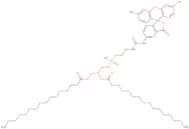
CAS:Fluorescein-dipalmitoylphosphatidylethanolamine triethylammonium salt is a fluorescent phospholipid derivative for phospholipase. This substrate consists of a fluorescein conjugated to DPPE (dipalmitoylphosphatidylethanolamine), a key component of biological membranes. This compound is frequently used in membrane dynamics studies and lipid metabolism research. The fluorescein moiety allows visualization of lipid interactions in model membranes, liposomes, or live-cell imaging applications. The triethylammonium salt form enhances solubility and stability, property that facilitates its use in aqueous and lipid-based environments.
Purity:Min. 95%Color and Shape:PowderMolecular weight:1,182.53 g/molAldol® 458 nonanoate, Biosynth Patent: EP 2427431 and US 8940909
CAS:Controlled ProductAldol 458 nonanoate is a high quality, chromogenic and fluorogenic substrate for use in enzymatic, chemiluminescent, and immunochemical reactions. Aldol 458 nonanoate is used as a chromogenic substrate for the detection of glucose oxidase activity in culture media and as a fluorogenic substrate for the detection of glucose oxidase activity in environmental testing. This product has CAS number 2484872-52-6.Formula:C25H29NO4Purity:Min. 98.0 Area-%Molecular weight:407.5 g/molNaphthol AS-BI sulphate potassium
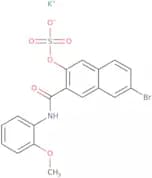
CAS:Naphthol AS-BI sulphate potassium salt is a modified naphtol AS substrate used for alkaline and acid phosphatase.Formula:C18H14BrNO6S•KPurity:Min. 95%Molecular weight:491.38 g/molNaphthol AS-E acetate
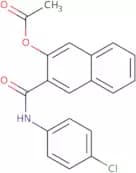
CAS:Modified naphtol AS substrate used in histochemical and cytochemical staining
Formula:C19H14ClNO3Purity:Min. 95%Molecular weight:339.77 g/molDehydroluciferin
CAS:Dehydroluciferin is a synthetic analogue of luciferin, which is naturally found in fireflies. It has a high resistance to degradation by the target enzymes and is used as a substrate in chemiluminescent assays. Dehydroluciferin reacts with luciferase to produce light that can be measured using a photomultiplier tube. The light emission is proportional to the amount of enzyme activity present in the sample and may be used to determine the presence of specific enzymes in test samples. This compound also reacts with disulfide bonds, which are found in proteins, such as cytochrome P450, that are involved in metabolism.Formula:C11H6N2O3S2Purity:Min. 97.0 Area-%Molecular weight:278.31 g/molRef: 3D-W-201759
25mgTo inquire50mgTo inquire100mgTo inquire250mgTo inquire500mgTo inquire-Unit-ggTo inquire4-Methylumbelliferyl beta-D-apiofuranoside
4-Methylumbelliferyl beta-D-apiofuranoside is a fluorescent substrate that is used in the detection of enzyme activity. It is a yellow crystalline powder with a melting point of 132°C and an optical rotation of +27°. 4-Methylumbelliferyl beta-D-apiofuranoside can be used as a conjugate for fluorescence, chemiluminescence, or bioluminescence detection of enzymes such as β-galactosidase, phosphatases, esterases, and peroxidases. It is also used to stain cells and tissues for microscopic analysis. This product has been tested for its effects on the environment and found to have little potential for harm to the environment. 4-Methylumbelliferyl beta-D-apiofuranoside has been shown to be high purity with no significant impurities detected in testing. The chemical has shown high quality characteristics inFormula:C15H16O7Purity:Min. 95 Area-%Molecular weight:308.29 g/molAldol® 470 butyrate, Biosynth Patent: EP 2427431 and US 8940909
CAS:Controlled ProductAldol® 470 butyrate, a chromogenic substrate manufactured by Cymit Quimica and used for enzymatic assays that produces a yellow-orange color upon enzymatic cleavage.Formula:C27H25NO5Purity:Min. 95%Color and Shape:PowderMolecular weight:443.5 g/mol6-Chloro-4-(trifluoromethyl)umbelliferyl β-D-cellotrioside
6-Chloro-4-(trifluoromethyl)umbelliferyl b-D-cellotrioside is a fluorogenic substrate for cellulases and beta-glucosidases. After hydrolisis, the fluorophore TFMU is released generating a blue fluorescence.Formula:C28H34ClF3O18Purity:Min. 95%Color and Shape:White to off-white powder.Molecular weight:751.01 g/molN-Methylindoxyl-beta-D-galactopyranoside monohydrate
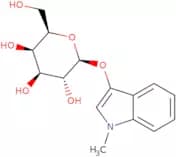
CAS:N-Methylindoxyl-beta-D-galactopyranoside monohydrate (MG) is a chromogenic probe that interacts with galactose residues found on glycoproteins, which are found on cell surfaces, leading to activation of cells. MG also binds specifically to the surface of lung cells and can inhibit the development of certain types of infections..Formula:C15H21NO7Purity:Min. 98 Area-%Color and Shape:PowderMolecular weight:327.33 g/mol4-Methylumbelliferyl 2-deoxy-2-sulfamino-a-D-glucopyranoside sodium salt - Moscerdam™ biochemical purity
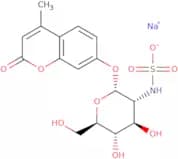
CAS:4-Methylumbelliferyl 2-deoxy-2-sulfamino-a-D-glucopyranoside sodium salt (M3A or MU-GlcNS) is a fluorogenic substrate of heparin sulfamidase, used in the diagnosis of Mucopolysaccharidosis III type A (MPS III A). MPS III A, also known as Sanfilippo syndrome type A, is caused by the deficiency of heparan N-sulfatase. Heparin sulfamidase in the assay desulfates MU-GlcNS to 4-methylumbelliferyl 2-amino-2-deoxy-α-D-glucopyranoside (MU-GlcNH2). To release fluorometrically measurable 4-methylumbelliferone (MU) and by-product glucosamine, MU-GlcNH2 is further hydrolysed by an enzyme such as yeast α-glucosidase during a second incubation.Formula:C16H18NO10SNaPurity:Min. 95 Area-%Color and Shape:White PowderMolecular weight:439.37 g/mol5-Bromo-4-chloro-3-indoxyl phosphate, dilithium salt hydrate
5-Bromo-4-chloro-3-indoxyl phosphate, dilithium salt hydrate is a chromogenic substrate used to detect the specific enzymatic activity of alkaline phosphatase. After cleavage, 5-bromo-4-chloro-indoxyl is released, resulting in a blue to blue-green color change in bacterial colonies or media. 5-Bromo-4-chloro-3-indoxyl phosphate, dilithium salt hydrate is used in ELISA and molecular biology assays such as lacZ reporter systems.
Formula:C8H4BrClLi2NO4P(anhydrousbasis)Purity:Min. 98 Area-%Color and Shape:PowderMolecular weight:338.34 g/mol4-Nitrophenyl sulfate potassium salt
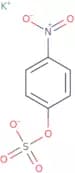
CAS:4-Nitrophenyl sulfate potassium salt is a chromogenic substrate for arylsulfatase. Upon hydrolysis, para-nitrophenol is released yielding a yellowish colour. 4-Nitrophenyl sulfate potassium salt is used in different applications such as the Metachromatic leukodystrophy diagnosis, sulfatase activity assaysFormula:C6H4KNO6SPurity:Min. 95%Color and Shape:PowderMolecular weight:257.26 g/mol2-Naphthyl butyrate
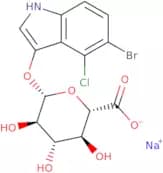
CAS:2-Naphthyl butyrate is used as a chromogenic substrate in hematological studies via measuring esterase activity. This type of assays are important as it can help in distinguishing acute leukemias with monocytic or granulocytic differentiation. After hydrolysis of 2-naphthyl butyrate by the esterase (for example acylase), b-napthol is released that can be quantified spectrophotometrically (Exc 320 nm; Em 410 nm).Formula:C14H14O2Purity:Min. 98 Area-%Color and Shape:Colorless Clear LiquidMolecular weight:214.26 g/mol5-Bromo-4-chloro-3-indolyl b-D-glucuronide sodium salt
CAS:Chromogenic substrate for beta-glucuronidase
Formula:C14H12BrClNNaO7Purity:Min. 98 Area-%Color and Shape:White Off-White PowderMolecular weight:444.59 g/mol4-Methylumbelliferyl-α-L-rhamnopyranoside
CAS:4-Methylumbelliferyl-alpha-L-rhamnopyranoside is a fluorogenic substrate used in enzyme assays. It is a substrate of the enzyme beta-galactosidase, which catalyzes the hydrolysis of terminal galactose residues from polysaccharides and glycoproteins. The fluorescent product 4-methylumbelliferone (4MU) is formed by cleavage of the terminal galactose residue and can be measured spectrophotometrically at 360 nm. 4-Methylumbelliferone has been used for chemiluminescent detection in immunoassays and as a substrate for bioluminescence reactions.
Formula:C16H18O7Purity:Min. 98.0 Area-%Molecular weight:322.32 g/molRef: 3D-M-6185
1gTo inquire5gTo inquire10gTo inquire500mgTo inquire2500mgTo inquire-Unit-ggTo inquire4-Methylumbelliferyl-beta-D-glucopyranoside
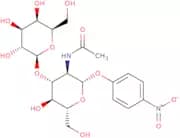
CAS:Fluorogenic substrate for beta-glucosidase yielding a blue fluorescent solution. Used for the detection of beta-glucosidase as an indicator of Enterococci.Formula:C16H18O8Purity:Min. 99 Area-%Molecular weight:338.32 g/mol4-Nitrophenyl 2-acetamido-2-deoxy-3-O-(b-D-galactopyranosyl)-b-D-glucopyranoside
CAS:Chromogenic substrate for fucosyltransferasesFormula:C20H28N2O13Purity:Min. 98 Area-%Color and Shape:White PowderMolecular weight:504.44 g/mol4-Methylumbelliferyl phosphate, free acid
CAS:A sensitive fluorogenic substrate for fluorometric and UV-spectrophotometric assays of phosphatases. It is used for the detection of C. perfringens because acid phosphatase is a highly specific indicator for C. perfringens.Formula:C10H9O6PMolecular weight:256.15 g/molAquaSpark® beta-D-glucuronide, 10 mM in DMSO, Ramot at Tel-Aviv University Ltd. Patent family WO 2017/130191
CAS:For use in bacterial detection
Formula:C34H37ClO13Purity:Min. 95%Color and Shape:Clear LiquidMolecular weight:688.19 g/mol4-Methylumbelliferyl phosphate, bis(cyclohexylammonium) salt, trihydrate
CAS:Sensitive fluorogenic substrate for fluorometric and UV-spectrophotometric assays of phosphatases. This may also be used for in-gel assaysFormula:C22H41N2O9PMolecular weight:508.55 g/mol4-Methylumbelliferyl-β-L-fucopyranoside
CAS:4-Methylumbelliferyl-beta-L-fucopyranoside is a fluorogenic substrate that is used in food testing. It also has uses as a chromogenic substrate and a ligand for biological studies. 4-Methylumbelliferyl-beta-L-fucopyranoside is a conjugate of 4-methylumbelliferone and beta-D-fucopyranosyl ester, which is an enzyme substrate for the detection of phosphatases. This product can be used to detect the activity of phosphatase enzymes in various media, including culture media, environmental testing, and staining. 4MUFBPY also has chemiluminescent properties that can be used for bioluminescence assays.Formula:C16H18O7Molecular weight:322.31 g/molRef: 3D-M-5541
1gTo inquire5gTo inquire250mgTo inquire500mgTo inquire2500mgTo inquire-Unit-ggTo inquire3-(4,4-Difluoro-5,7-dimethyl-4-bora-3a,4a-diaza-s-indacene-3-propionamido)propyl b-D-lactoside
3-(4,4-Difluoro-5,7-dimethyl-4-bora-3a,4a-diaza-s-indacene-3-propionamido)propyl b -D -lactoside (FDPBP) is a substrate for alkaline phosphatase. It reacts with the enzyme to produce a blue color. FDPBP is used in diagnostic applications such as food testing and bioluminescence.Purity:Min. 95%Color and Shape:PowderMolecular weight:675.48 g/molLuc-S.aureus K
Luc-S.aureus K is a fluoro-ligand that is used as a diagnostic to detect and quantify the activity of S.aureus in any given sample. It is a detection substrate for the enzyme β-galactosidase, which catalyzes the hydrolysis of the luciferin. When luciferin is cleaved by β-galactosidase, it emits light that can be detected using a luminometer to measure the amount of light produced and calculate the quantity of bacteria present in the sample. Luc-S.aureus K has been approved for use as a detector for bioluminescence in food testing, environmental testing, and other diagnostic applications.Purity:Min. 95%4-Nitrophenyl laurate
CAS:4-Nitrophenyl laurate is a chromogenic substrate for lipase. Upon hydrolysis, para-nitrophenol is released yielding a yellowish colour. 4-Nitrophenyl laurate is used in different applications such as the Lipase activity screening, clinical diagnosticsFormula:C18H27NO4Purity:Min. 95%Color and Shape:White PowderMolecular weight:321.41 g/molalpha-N-Bz-L-Arg-aminoluciferin
alpha-N-Bz-L-Arg-aminoluciferin is a modified form of D-luciferin used as a luminescent enzyme substrate for protease.
Formula:C24H25N7O4S2Purity:Min. 95 Area-%Molecular weight:539.63 g/mol