Chromogenic Substrates
Found 529 products for "Chromogenic Substrates".
Aldol® 458 beta-D-galactopyranoside, Biosynth Patent: EP 2427431 and US 8940909
CAS:Aldol® 458 beta-D-galactopyranoside is a chromogenic and fluorogenic enzyme substrate used for detection of beta-galactosidase activity. The colorless enzyme substrate is cleaved by lactose utilizing bacteria grown in liquid or solid media, yielding yellow coloration and green fluorescence. Aldol® 458 beta-D-galactopyranoside can also be used in beta-galactosidase gene reporter assays or immunoassay applications (ELISA). Aldol® 458 beta-D-galactopyranoside can be used under aerobic and anaerobic conditions.Formula:C22H23NO8Purity:Min. 95 Area-%Color and Shape:PowderMolecular weight:429.42 g/mol3-Nitrophenyl β-D-glucopyranoside
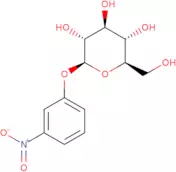
CAS:3-Nitrophenyl beta-D-glucopyranoside is a chromogenic enzyme substrate commonly used to assay for beta-glucosidase activity. Upon hydrolysis by the enzyme, it produces a yellow product that can be easily detected by spectrophotometry. This substrate is often used in the field of carbohydrate chemistry and biochemistry to study enzyme kinetics and inhibition in both in vitro and in vivo systems.Formula:C12H15NO8Purity:Min. 95%Color and Shape:White Yellow PowderMolecular weight:301.25 g/mol6-Chloro-3-indoxyl nonanoate
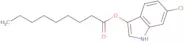
CAS:6-Chloro-3-indoxyl nonanoate is a fluorescent substrate that is used in the detection of beta-galactosidase activity. It has been used to detect the enzyme levels in various culture media and as a high quality, food testing, and environmental testing. The product is also used as a ligand for enzyme inhibition studies. 6-Chloro-3-indoxyl nonanoate has shown to be an excellent fluoroquinolone substrate for chemiluminescence assays. This product is CAS No. 133950-72-8 and is of high purity and high quality.
Purity:Min. 95%Molecular weight:307.81 g/mol4-Nitrophenyl laurate
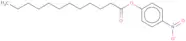
CAS:4-Nitrophenyl laurate is a chromogenic substrate for lipase. Upon hydrolysis, para-nitrophenol is released yielding a yellowish colour. 4-Nitrophenyl laurate is used in different applications such as the Lipase activity screening, clinical diagnosticsFormula:C18H27NO4Purity:Min. 95%Color and Shape:White PowderMolecular weight:321.41 g/mol4-Nitrophenyl sulfate potassium salt
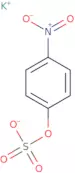
CAS:4-Nitrophenyl sulfate potassium salt is a chromogenic substrate for arylsulfatase. Upon hydrolysis, para-nitrophenol is released yielding a yellowish colour. 4-Nitrophenyl sulfate potassium salt is used in different applications such as the Metachromatic leukodystrophy diagnosis, sulfatase activity assaysFormula:C6H4KNO6SPurity:Min. 95%Color and Shape:PowderMolecular weight:257.26 g/mol5-Bromo-4-chloro-3-indolyl N-acetyl-a-D-neuraminic acid ammonium salt
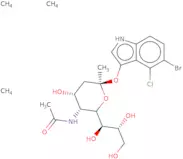
CAS:5-Bromo-4-chloro-3-indolyl N-acetyl-a-D-neuraminic acid ammonium salt is a substrate used to detect and quantify sialidase activity. Sialidases are enzymes that cleave sialic acid residues from glycoconjugates, and their activity is important in various cellular processes. The substrate is commonly used in research aimed at understanding the role of sialidases in diseases such as influenza and cancer.
Formula:C19H22BrClN2O9·NH3·2H2OPurity:Min. 95%Color and Shape:PowderMolecular weight:590.8 g/molNaphthol AS-TR phosphate
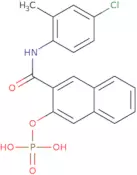
CAS:Modified naphtol AS substrate used in histochemical and cytochemical staining
Formula:C18H15ClNO5PPurity:Min. 95%Color and Shape:Off-White PowderMolecular weight:391.74 g/molbeta-Naphthyl stearate
CAS:Beta-naphthyl stearate is a chromogenic substrate for measuring enzymatic activity.Purity:Min. 95%Color and Shape:PowderMolecular weight:410.63 g/mol4-Chloro-1-naphthol
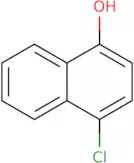
CAS:Substrate for horseradish peroxidase
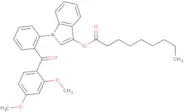
Formula:C10H7ClOPurity:Min. 96.0 Area-%Color and Shape:Brown PowderMolecular weight:178.61 g/molAldol® 470 nonanoate, Biosynth Patent: EP 2427431 and US 8940909
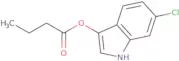
CAS:Controlled ProductAldol® 470 nonanoate is a chemiluminescent substrate that can be used as a ligand for the detection of C8/C9-esterases, lipases activity, to result in an orange/green color. Aldol® 470 nonanoate has been shown to be active with horseradish peroxidase in a number of different assay systems. The purity and quality of Aldol® 470 nonanoate has been tested with culture media, environmental testing, bioluminescence, staining, fluorogenic substrate, chromogenic substrate, enzyme substrate, food testing and conjugates.Formula:C32H35NO5Purity:Min. 95%Color and Shape:PowderMolecular weight:513.62 g/mol6-Chloro-3-indolyl butyrate
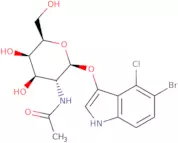
CAS:6-Chloro-3-indolyl butyrate is a chromogenic substrate for lipases. Use in lipid digestion and metabolism studies, it produces a salmon-pink color when 6-chloro-3-indolyl is released after enzymatic cleavage.Formula:C12H12ClNO2Purity:Min. 95%Color and Shape:PowderMolecular weight:237.68 g/mol5-Bromo-4-chloro-3-indoxyl-N-acetyl-beta-D-galactosaminide
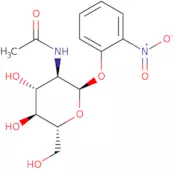
CAS:5-Bromo-4-Chloro-3-Indoxyl-N-Acetyl-Beta-D-Galactosaminide is a chromogenic substrate for detecting beta-galactosidase and GalNAc-transferase enzymes. Upon hydrolysis by the enzyme, it produces a blue-green colored compound that can be detected visually or measured spectrophotometrically. This substrate is useful in characterizing the activity of Beta-Galactosidase and GalNAc-transferase enzymes involved in glycobiology research and diagnostic applications.Formula:C16H18BrClN2O6Purity:Min. 98 Area-%Color and Shape:Crystalline PowderMolecular weight:449.68 g/mol2-Nitrophenyl 2-acetamido-2-deoxy-a-D-glucopyranoside
CAS:2-Nitrophenyl 2-acetamido-2-deoxy-alpha-D-glucopyranoside is a chromogenic substrate used to assay the activity of enzymes that cleave N-acetyl-alpha-D-glucosaminide, such as chitinases and lysozymes. Upon cleavage by the enzyme of interest, the substrate releases a yellow-colored 2-nitrophenol that can be measured spectrophotometrically. This substrate is widely used in the food industry to monitor the activity of lysozyme in cheese, as well as in biomedical research for studying cellular and molecular mechanisms involved in conditions such as inflammation and cancer.Purity:Min. 95%Color and Shape:PowderMolecular weight:342.3 g/molAldol® 470 beta-D-galactopyranoside, Biosynth Patent: EP 2427431 and US 8940909
CAS:Aldol® 470 beta-D-galactopyranoside is a chromogenic and fluorogenic enzyme substrate used for detection of beta-galactosidase activity. The colorless enzyme substrate is cleaved by lactose-utilizing bacteria grown in liquid or solid media, yielding yellow coloration and green fluorescence. Aldol® 470 beta-D-galactopyranoside can also be used in beta-galactosidase gene reporter assays or immunoassay applications (ELISA). Aldol® 470 beta-D-galactopyranoside can be used under aerobic and anaerobic conditions.Formula:C29H29NO9Purity:Min. 95 Area-%Color and Shape:PowderMolecular weight:535.54 g/mol5-Bromo-6-chloro-3-indolyl acetate
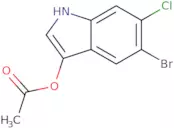
CAS:5-Bromo-6-chloro-3-indolyl acetate is a chromogenic substrate that yields a magenta-colored product after cleavage. The chromophore 5-bromo-6-chloro-indoxyl is released, generating the observable color. It is used in bacterial esterase detection (e.g. Staphylococcus spp.).
Formula:C10H7BrClNO2Purity:Min. 98 Area-%Color and Shape:PowderMolecular weight:288.52 g/mol3-Nitrophenyl b-D-galactopyranoside
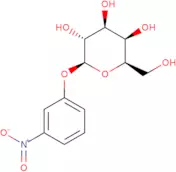
CAS:Chromogenic substrate targeting beta-galactosidaseFormula:C12H15NO8Color and Shape:PowderMolecular weight:301.25 g/molN-Methylindoxyl-beta-D-galactopyranoside monohydrate
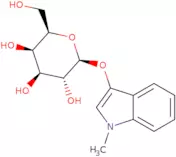
CAS:N-Methylindoxyl-beta-D-galactopyranoside monohydrate (MG) is a chromogenic probe that interacts with galactose residues found on glycoproteins, which are found on cell surfaces, leading to activation of cells. MG also binds specifically to the surface of lung cells and can inhibit the development of certain types of infections..Formula:C15H21NO7Purity:Min. 98 Area-%Color and Shape:PowderMolecular weight:327.33 g/mol4-Nitrophenyl α-L-fucopyranoside
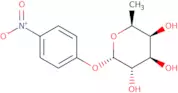
CAS:Chromogenic substrate for alpha-L-fucosidaseFormula:C12H15NO7Purity:(%) Min. 98.0%Color and Shape:PowderMolecular weight:285.25 g/mol2-Chloro-4-nitrophenyl phosphate
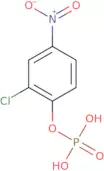
CAS:2-Chloro-4-nitrophenyl phosphate is a chromogenic substrate for phosphatases. Afer cleavage of the substrate, 2-chloro-4-nitrophenol is released, which can be quantified at 405 nm. 2-Chloro-4-nitrophenyl phosphate is used in clinical diagnostics to for prostate cancer, diagnosis of liver and bone diseases.Formula:C6H5ClNO6PPurity:Min. 95 Area-%Molecular weight:253.53 g/mol2-Naphthyl a-D-glucopyranoside
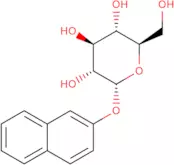
CAS:2-Naphthyl-lpha-D-glucopyranoside is a substrate for α-glucosidase. 2-Naphthol is released upon hydrolyzation. By simultaneous coupling with a suitable staining reagent, such as hexazonium p-rosaniline, the corresponding reddish-brown azo-dye is formed. Naphthols can also be detected by fluorescence analysis.Formula:C16H18O6Purity:Min. 98 Area-%Color and Shape:PowderMolecular weight:306.31 g/mol