Metabolismo
Los inhibidores del metabolismo son compuestos que interfieren con las vías metabólicas, alterando la producción y utilización de energía dentro de las células. Estos inhibidores se utilizan para estudiar la regulación del metabolismo, el papel de las vías metabólicas en enfermedades como el cáncer y la diabetes, y para desarrollar nuevas estrategias terapéuticas. Los inhibidores del metabolismo pueden dirigirse a diversas enzimas y procesos involucrados en la glucólisis, la oxidación de ácidos grasos y otras funciones metabólicas. En CymitQuimica, ofrecemos una amplia gama de inhibidores del metabolismo de alta calidad para apoyar su investigación en bioquímica, trastornos metabólicos y desarrollo de fármacos.
Subcategorías de "Metabolismo"
- AhR(41 productos)
- Aminopeptidasa(67 productos)
- CETP(18 productos)
- Anhídrido carbónico(178 productos)
- Caseína quinasa(130 productos)
- DHFR(33 productos)
- Descarboxilasa(4 productos)
- Deshidrogenasa(270 productos)
- FAAH(64 productos)
- FXR(58 productos)
- Factor Xa(80 productos)
- Ácido graso sintasa(33 productos)
- Ferroptosis(215 productos)
- GR(3 productos)
- GSNOR(3 productos)
- Glucoquinasa(54 productos)
- HIF / HIF Prolilhidroxilasa(142 productos)
- HMG-CoA reductasa(33 productos)
- Hidroxilasa(30 productos)
- IDO(82 productos)
- LDL(8 productos)
- Lipasa(97 productos)
- Lípido(59 productos)
- Lipoxigenasa(125 productos)
- MAO(87 productos)
- MPO(2 productos)
- NAMPT(36 productos)
- P450(6 productos)
- PAI-1(25 productos)
- PDE(166 productos)
- PED(1 productos)
- PKM(15 productos)
- PPAR(164 productos)
- Fosfolipasa(82 productos)
- ROR(42 productos)
- Receptor de retinoides(29 productos)
- SGK(11 productos)
- Tiorredoxina(12 productos)
- Transferasa(30 productos)
- Transportador(42 productos)
- UGT(4 productos)
- Inhibidores de la xantina oxidasa (XO)(9 productos)
Mostrar 34 subcategorías más
Se han encontrado 8626 productos de "Metabolismo"
Ordenar por
Pureza (%)
0
100
|
0
|
50
|
90
|
95
|
100
Lipid 11
CAS:<p>Lipid 11 (Compound Lipid 1) is a cationic lipid designed for nucleic acid delivery. It forms lipid nanoparticles (LNPs) through electrostatic interactions with nucleic acids, such as ceDNA. By using its cationic amine groups, Lipid 11 complexes with negatively charged nucleic acids, enabling cellular uptake and release of the nucleic acid cargo. Lipid 11 shows potential for use in the development of gene therapy drug delivery systems.</p>Fórmula:C43H85NO4Forma y color:SolidPeso molecular:680.144-MDM
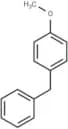
CAS:<p>4-MDM (4-Methoxydiphenylmethane) is an orally active anti-inflammatory compound that selectively enhances the aminopeptidase activity of leukotriene A4 hydrolase (LTA4H). By promoting the degradation of proline-glycine-proline by LTA4H, 4-MDM reduces neutrophil recruitment in the lungs, alleviating inflammation without affecting the epoxide hydrolase activity of LTA4H. This compound is useful for research in pulmonary diseases.</p>Fórmula:C14H14OForma y color:SolidPeso molecular:198.26Quinapril
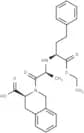
CAS:<p>Quinapril is an orally active, non-peptide, and non-thiol angiotensin-converting enzyme (ACE) inhibitor. It primarily blocks the conversion of angiotensin I to angiotensin II in both plasma and tissues. Upon enzymatic hydrolysis, Quinapril is converted into the pharmacologically active Quinaprilat and is effective in hypertension models.</p>Fórmula:C25H30N2O5Forma y color:SolidPeso molecular:438.516Retezorogant
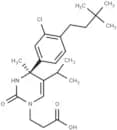
CAS:<p>Retezorogant is a retinoic acid receptor-related orphan receptor gamma (RORγ) antagonist.</p>Fórmula:C23H33ClN2O3Forma y color:SolidPeso molecular:420.97UGT1A1-IN-1
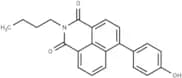
CAS:<p>UGT1A1-IN-1 (compound 2) acts as a non-competitive inhibitor of UGT1A1, effectively inhibiting the 1-O-glucuronidation process mediated by UGT1A1 with a Ki value of 5.02 μM. This compound binds to the same ligand-binding site on UGT1A1 as bilirubin and additionally functions as a 'turn-on' fluorescent probe substrate for UGT1A1 [1].</p>Fórmula:C22H19NO3Forma y color:SolidPeso molecular:345.39EC33
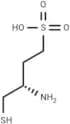
CAS:<p>EC33, a selective aminopeptidase A (APA) inhibitor, blocks the pressor response of exogenous Ang II and does not cross the blood-brain barrier, making it a potential candidate for salt-dependent hypertension research [1].</p>Fórmula:C4H11NO3S2Forma y color:SolidPeso molecular:185.27MAGL-IN-15
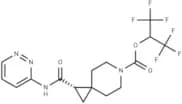
CAS:<p>MAGL-IN-15 (Compound 6), a MAGL inhibitor, holds potential for research into diseases and disorders associated with the regulation of endocannabinoid system signaling activities [1].</p>Fórmula:C16H16F6N4O3Forma y color:SolidPeso molecular:426.31Glycerophosphoglycerol
CAS:<p>Glycerophosphoglycerol is a precursor in phospholipid synthesis. By enhancing phospholipid formation, it aids in the reconstruction and proliferation of membrane structures in tumor cells. Glycerophosphoglycerol holds promise for research in breast cancer cells.</p>Fórmula:C6H15O8PForma y color:SolidPeso molecular:246.15SGK1-IN-3
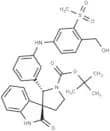
<p>SGK1-IN-3: Potent oral inhibitor of SGK1, may target osteoarthritis.</p>Fórmula:C23H20Cl2N6O3SForma y color:SolidPeso molecular:531.41CYP11B1-IN-2
<p>CYP11B1-IN-2 selectively inhibits human and rat CYP11B1 (IC50: 9/25 nM) orally to research cortisol-related diseases.</p>Forma y color:SolidAChE/hCA I-IN-1
CAS:<p>AChE/hCA I-IN-1 (Compound L3) is an inhibitor of acetylcholinesterase (AChE) and carbonic anhydrase (CA), effectively inhibiting AChE, hCA I, and hCA II with IC50 values of 302 nM, 265 nM, and 283 nM, respectively.</p>Fórmula:C13H9BrNNaO4SForma y color:SolidPeso molecular:378.174S-15176
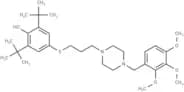
CAS:<p>S-15176 is an inhibitor of the mitochondrial permeability transition pore (PTP). It effectively suppresses mitochondrial swelling induced by tert-butyl hydroperoxide, with an IC50 value of 45.7 μM. S-15176 prevents the opening of PTP, thus averting the dissipation of mitochondrial membrane potential and the oxidation of NAD(P)H, while enhancing mitochondrial calcium loading capacity. It holds potential for research into ischemia-reperfusion injury.</p>Fórmula:C31H48N2O4SForma y color:SolidPeso molecular:544.79CK2-IN-3
<p>CK2-IN-3: potent, selective CK2 inhibitor; Kd=12 nM, IC50: 1.51 μM (CK2α), 7.64 μM (CK2α'). For cancer research.</p>Fórmula:C22H26N4O7Forma y color:SolidPeso molecular:458.46Glucosylceramide synthase-IN-4
CAS:<p>Glucosylceramide Synthase-IN-4 (compound 12) serves as a potent inhibitor of glucosylceramide synthase (GCS), exhibiting an IC50 of 6.8 nM. It demonstrates superior pharmacokinetic properties and robust stability in human hepatocytes. Additionally, this compound is noted for its effective CNS penetration and acceptable PXR selectivity [1].</p>Fórmula:C22H18F5N3O3Forma y color:SolidPeso molecular:467.392R,4S-Sacubitril
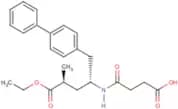
CAS:<p>2R,4S-Sacubitril (Sacubitril Enantiomer) is the impurity of Sacubitril which is a neprilysin inhibitor.</p>Fórmula:C24H28NO51CaPureza:98%Forma y color:SolidPeso molecular:430.49DC371739
CAS:<p>DC371739 is an effective oral PCSK9 inhibitor that decreases both PCSK9 and ANGPTL3 mRNA expression. It also reduces PCSK9 protein expression while enhancing that of LDLR. Given its properties, DC371739 has potential applications in the study of hyperlipidemia.</p>Fórmula:C29H30N2O4Forma y color:SolidPeso molecular:470.56AD015
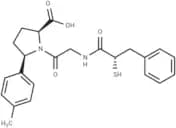
CAS:<p>AD015 is a dual inhibitor of angiotensin-converting enzyme (ACE) and neprilysin (NEP), effectively inhibiting NEP, nACE, and cACE with IC50 values of 0.009, 0.019, and 0.0008 μM, respectively.</p>Fórmula:C23H26N2O4SForma y color:SolidPeso molecular:426.53LXRβ agonist-3
CAS:<p>LXRβ agonist-3 is a potent and selective LXRβ (liver X receptor β) agonist (EC50: 0.095 μM).</p>Fórmula:C30H33N3O6SForma y color:SolidPeso molecular:563.66BAR-2227
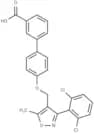
CAS:<p>BAR-2227 (compound 3a) functions as an FXR agonist and a LIFR inhibitor. It is utilized in the study of liver fibrosis and inflammation.</p>Fórmula:C24H17Cl2NO4Forma y color:SolidPeso molecular:454.30Calcipotriol Impurity C
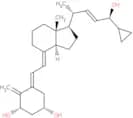
CAS:<p>Calcipotriol Impurity C is the impurity of Calcipotriol. Calcipotriol is a VDR-like receptors ligand.</p>Fórmula:C27H40O3Pureza:98%Forma y color:SolidPeso molecular:412.614