Métabolisme
Les inhibiteurs du métabolisme sont des composés qui interfèrent avec les voies métaboliques, modifiant ainsi la production et l'utilisation de l'énergie au sein des cellules. Ces inhibiteurs sont utilisés pour étudier la régulation du métabolisme, le rôle des voies métaboliques dans des maladies telles que le cancer et le diabète, et pour développer de nouvelles stratégies thérapeutiques. Les inhibiteurs du métabolisme peuvent cibler diverses enzymes et processus impliqués dans la glycolyse, l'oxydation des acides gras et d'autres fonctions métaboliques. Chez CymitQuimica, nous offrons une large gamme d'inhibiteurs de métabolisme de haute qualité pour soutenir vos recherches en biochimie, troubles métaboliques et développement de médicaments.
Sous-catégories appartenant à la catégorie "Métabolisme"
- AhR(42 produits)
- Aminopeptidase(76 produits)
- CETP(20 produits)
- Anhydrase carbonique(197 produits)
- Caséine Kinase(139 produits)
- DHFR(30 produits)
- Décarboxylase(4 produits)
- Déshydrogénase(302 produits)
- FAAH(64 produits)
- FXR(63 produits)
- Facteur Xa(87 produits)
- Synthase des acides gras(37 produits)
- Ferroptose(233 produits)
- GR(3 produits)
- GSNOR(3 produits)
- Glucokinase(56 produits)
- Prolyl-Hydroxylase de HIF/HIF(146 produits)
- HMG-CoA Réductase(36 produits)
- Hydroxylase(36 produits)
- IDO(84 produits)
- LDL(7 produits)
- Lipase(107 produits)
- Lipides(62 produits)
- Lipoxygénase(134 produits)
- MAO(84 produits)
- MPO(2 produits)
- NAMPT(40 produits)
- P450(6 produits)
- PAI-1(26 produits)
- PDE(169 produits)
- PED(1 produits)
- PKM(17 produits)
- PPAR(170 produits)
- Phospholipase(84 produits)
- ROR(47 produits)
- Récepteur de rétinoïdes(16 produits)
- SGK(10 produits)
- Thioredoxine(12 produits)
- Transférase(30 produits)
- Tansporteur(43 produits)
- UGT(4 produits)
- Inhibiteurs de la xanthine oxydase (XO)(9 produits)
Affichez 34 plus de sous-catégories
9197 produits trouvés pour "Métabolisme"
Trier par
Degré de pureté (%)
0
100
|
0
|
50
|
90
|
95
|
100
CYP11A1-IN-1
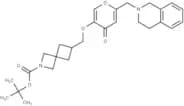
CAS :CYP11A1-IN-1 (compound 30) is a selective inhibitor of the enzyme CYP11A1, displaying an IC50 ranging from 201-2000 nM.Formule :C27H34N2O5Couleur et forme :SolidMasse moléculaire :466.5712-POHSA
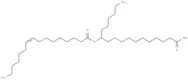
CAS :Branched fatty acid esters of hydroxy fatty acids (FAHFAs) have emerged as significant regulators of metabolic processes, influenced by dietary changes such as fasting and high-fat diets, and are linked to improved insulin sensitivity in mice. These compounds typically feature a fatty acid chain, either C-16 or C-18 in length (for example, palmitoleic, palmitic, oleic, or stearic acid), esterified to a hydroxy fatty acid of similar length. A specific FAHFA, 12-POHSA, involves the esterification of palmitoleic acid to the 12th carbon of stearic acid. Notably, 12-POHSA levels are markedly higher in the serum of AG4OX mice, which exhibit enhanced glucose tolerance due to overexpression of the Glut4 glucose transporter in adipose tissue. Given the capacity of FAHFAs to enhance glucose tolerance, stimulate insulin secretion, and exert anti-inflammatory actions, 12-POHSA holds potential as a bioactive lipid implicated in managing metabolic syndrome and inflammation.Formule :C34H64O4Couleur et forme :SolidMasse moléculaire :536.9C24:1 1-Deoxyceramide (m18:1/24:1(15Z))
CAS :C24:1 1-Deoxyceramide (m18:1/24:1(15Z)) is a lipid molecule that can be used in life science related research. The CAS number of C24:1 1-Deoxyceramide (m18:1/24:1(15Z)) is 1246298-58-7.Formule :C42H81NO2Couleur et forme :SolidMasse moléculaire :632.1KRP-109
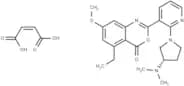
CAS :KRP-109, a neutrophil elastase (NE) inhibitor, acts by decreasing expression of TGF-ß Signal Related Genes.Formule :C26H30N4O7Degré de pureté :98%Couleur et forme :SolidMasse moléculaire :510.547ICMT-IN-41
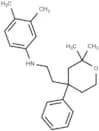
CAS :ICMT-IN-41 (compound 20) serves as a potent inhibitor of isoprenylcysteine carboxyl methyltransferase (ICMT), demonstrating an IC50 value of 0.069 μM [1].Formule :C23H31NOCouleur et forme :SolidMasse moléculaire :337.5Indeloxazine
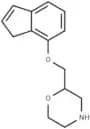
CAS :Indeloxazine is a cerebral activator and anticonvulsant.Formule :C14H17NO2Couleur et forme :SolidMasse moléculaire :231.29PF-915275
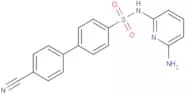
CAS :PF-915275 inhibits 11βHSD1 in humans (Ki=2.3 nM, EC50=15 nM) and affects cortisone-cortisol conversion in hepatocytes.Formule :C18H14N4O2SDegré de pureté :99.58% - 99.61%Couleur et forme :SolidMasse moléculaire :350.39Ref: TM-T16510
1mg35,00€2mg50,00€5mg77,00€1mL*10mM (DMSO)85,00€10mg120,00€25mg241,00€50mg472,00€100mg685,00€500mg1.431,00€1-O-hexadecyl-2-Arachidonoyl-sn-glycero-3-PC
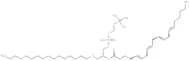
CAS :1-O-Hexadecyl-2-arachidonoyl-sn-glycero-3-PC undergoes acylation through the action of CoA-independent transacylase, transforming lyso-PAF C-16 into this compound. It serves as the predominant precursor in the biosynthesis of PAF C-16 via the remodeling pathway.Formule :C44H83NO7PCouleur et forme :SolidMasse moléculaire :769.1215-PAHSA
CAS :5-PAHSA, a FAHFA formed through the formal condensation of the carboxy group of palmitic acid with the hydroxy group of 5-hydroxystearic acid, serves as a human metabolite, possesses anti-inflammatory and hypoglycemic properties, and is categorized as a long-chain fatty acid. This compound, deriving from hexadecanoic acid and octadecanoic acid, is the conjugate acid of a 5-PAHSA(1-).Formule :C34H66O4Couleur et forme :SolidMasse moléculaire :538.8983'-hydroxy Lidocaine
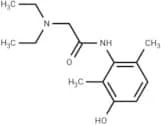
CAS :3'-Hydroxy Lidocaine, an active metabolite of Lidocaine, is produced through the metabolism by the cytochrome P450 (CYP) isoforms CYP1A2 and CYP3A4.Formule :C14H22N2O2Couleur et forme :SolidMasse moléculaire :250.3421,3-Dioleoyl-2-Octanoyl Glycerol
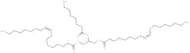
CAS :1,3-Dioleoyl-2-octanoyl glycerol, a triacylglycerol, features oleic acid at the sn-1 and sn-3 positions and octanoic acid at the sn-2 position. Its utility lies in the characterization of R. oryzae lipase functionality, specifically for regiodistribution analysis of fats that comprise medium- and short-chain fatty acids.Formule :C47H86O6Couleur et forme :SolidMasse moléculaire :747.18O-Desmethyl Metoprolol
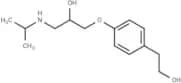
CAS :O-Desmethyl metoprolol, a metabolite of metoprolol, acts as a β1-adrenergic receptor (β1-AR) antagonist. This compound is produced through the metabolism of metoprolol by the cytochrome P450 (CYP) isoform CYP2D6.Formule :C14H23NO3Couleur et forme :SolidMasse moléculaire :253.342(+/-)- Adomeglivant
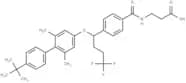
CAS :Adomeglivant (LY2409021) is a potent glucagon receptor blocker, reducing blood glucose in type 2 diabetes with minimal side effects.Formule :C32H36F3NO4Couleur et forme :SolidMasse moléculaire :555.63Glyoxalase I inhibitor 3
CAS :Compound 22g: potent GLO1 inhibitor; IC50=0.011 μM; potential for depression, anxiety research.Formule :C22H21N3O3Couleur et forme :SolidMasse moléculaire :375.42FM26
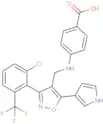
CAS :FM26, an isoxazole-based RORγt inverse agonist, cuts EL4 IL-17a mRNA; potent with 264 nM IC50.Formule :C22H15ClF3N3O3Degré de pureté :98%Couleur et forme :SolidMasse moléculaire :461.82B 581
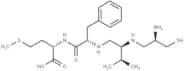
CAS :B 581 is an inhibitor that specifically blocks farnesylated.Formule :C22H38N4O3S2Degré de pureté :98%Couleur et forme :SolidMasse moléculaire :470.69hUP1-IN-1 potassium
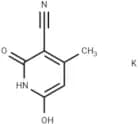
CAS :hUP1-IN-1 potassium (compound 6a), a hUP1 inhibitor, demonstrates inhibitory activity with Ki and Kis values of 375 nM and 635 nM, respectively. It achieves 70% inhibition of hUP1-catalyzed reactions at a concentration of 1 μM. This compound is utilized in cancer research [1].Formule :C7H5KN2O2Couleur et forme :SolidMasse moléculaire :188.23Dioleyldimethylammonium chloride
CAS :Dioleyldimethylammonium chloride (DODAC) is a cationic lipid utilized as a transfection reagent [1].Formule :C38H76ClNCouleur et forme :SolidMasse moléculaire :582.47Therapeutic agent-1
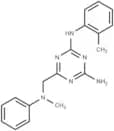
CAS :Therapeutic Agent-1, a heteroaryl compound, serves as an enzyme replacement therapy to enhance glucocerebrosidase activity in the treatment of Gaucher disease [Formule :C18H20N6Couleur et forme :SolidMasse moléculaire :320.39Chloramine-T hydrate
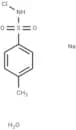
CAS :Chloramine-T serves as a versatile reagent in numerous synthetic procedures, including aminohydroxylation, allylic amination, as a nitrogen source in aziridination reactions of alkenes and olefins, and for the deprotection of thio groups in sulfur-containing molecules. Additionally, it plays a role in the synthesis of Factor Xa inhibitors. At a concentration of 0.2% w/v, Chloramine-T acts as an effective antiseptic agent with bactericidal properties against S. epidermidis, S. aureus, E. faecalis, E. coli, P. mirabilis, and E. cloacae.Formule :C7H7ClNO2SNaXH2OCouleur et forme :SolidMasse moléculaire :227.6