Glucides et Glycoconjugués
Les glucides sont des composés organiques constitués de carbone, d’hydrogène et d’oxygène, avec une structure de base formée par des monosaccharides. Ceux-ci peuvent s’assembler pour former des disaccharides, des oligosaccharides ou des polysaccharides, selon le nombre d’unités monomériques. Les glucides jouent un rôle fondamental dans le stockage de l’énergie, la structure cellulaire et la communication cellulaire. Leurs dérivés sont utilisés dans les produits pharmaceutiques, tels que les édulcorants et les excipients.
Chez CymitQuimica, nous proposons une large gamme de glucides et de leurs dérivés pour la recherche et les applications industrielles.
5010 produits trouvés pour "Glucides et Glycoconjugués"
Trier par
Degré de pureté (%)
0
100
|
0
|
50
|
90
|
95
|
100
D-Mannitol
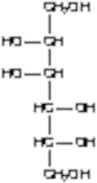
CAS :Produit contrôlé<p>Applications D-Mannitol is widespread in plants and plant exudates; obtained from manna and seaweeds. D-Mannitol is used in the food industry as anticaking and free-flow agent, flavoring agent, lubricant and release agent, stabilizer and thickener and nutritive sweetener.<br>References Pigman, W., et al.: The Carbohydrates, 249 (1957), Makkee, M., et al.: Chem. Commun., 930 (1980),<br></p>Formule :C6H14O6Couleur et forme :NeatMasse moléculaire :182.171-Bromo-6-(trimethylammonium)hexyl Bromide
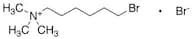
CAS :Produit contrôléFormule :C9H21BrN·BrCouleur et forme :NeatMasse moléculaire :303.08rac Biotin-d4
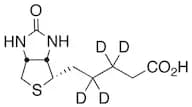
CAS :Produit contrôlé<p>Applications Growth factor present in minute amounts in every living cell. Plays an indispensable role in numerous naturally occurring carboxylation reactions. Occurs mainly bound to proteins or polypeptides. The richest sources are liver, kidney, pancreas, yeast, and milk. The biotin content of cancerous tumors is higher than that of normal tissue.<br>References du Vigneaud, et al.: J. Biol. Chem., 146, 475 (1942), Traub, et al.: Nature, 178, 649 (1956), Siegel, H., et al.: Experienta, 37, 789 (1981), Vesely, D.L., Science, 216, 1329 (1982), Hugues, M., et al.: Biochemistry, 31, 12 (1992),<br></p>Formule :C10D4H12N2O3SCouleur et forme :NeatMasse moléculaire :248.34Lauramine Oxide
CAS :Produit contrôlé<p>Applications Lauramine Oxide, is an frequently-used amine oxide surfactant. It is strongly hydrophilic , and it forms normal micelles and normal liquid crystalline phases.<br> Not a dangerous good if item is equal to or less than 1g/ml and there is less than 100g/ml in the package<br>References Kocherbitov, v., et al.: J. Molec. Struct.: Theochem., 808, 111 (2007); Kocherbitov, v., et al.: J. Phys. Chem. B., 110 (27), 13649 (2006);<br></p>Formule :C14H31NOCouleur et forme :NeatMasse moléculaire :229.40Carbocisteine
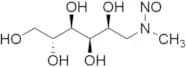
CAS :Produit contrôlé<p>Applications Carbocisteine is a mucolytic agent used in the treatment of respiratory disorders ranging from the influenza virus infection to chronic obstructive pulmonary disease (COPD).<br>References Stevenson, G.B. et al.: Eur. Resp. J., 27, 865 (2006); Suer, E. et al.: J. Infect. Chemother., 14, 333 (2008); Yamaya, M. et al.: Am. J. Physiol., 299, L160 (2010);<br></p>Formule :C5H9NO4SCouleur et forme :White To Off-WhiteMasse moléculaire :179.191-Deoxy-1-(methylnitrosoamino)-D-glucitol
CAS :Formule :C7H16N2O6Couleur et forme :White To Off-WhiteMasse moléculaire :224.21D-Biotin Dimer Acid
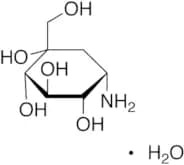
CAS :<p>Impurity Biotin EP Impurity A<br>Applications D-Biotin Dimer Acid (Biotin EP Impurity A) is an impurity of D-Biotin that can be used in the synthesis of D-Biotin.<br>References Hanka, L.J., Antimicrob. Agents Chemother., 1, 135 (1972), Corey, E.J., et al.: Tetrahedon Lett., 29, 57 (1988),<br></p>Formule :C18H28N4O4S2Couleur et forme :NeatMasse moléculaire :428.5694-Amino-3.4-dideoxy-2-C-(hydroxymethyl)-D-epi-inositol
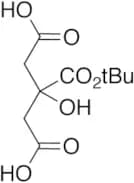
CAS :Produit contrôlé<p>Applications Valiolamine is a aminocyclitol that exhibits potent alpha-D-glucosidase inhibitory activity against porcine intestinal sucrase, maltase and isomaltase.<br>References Kameda, Y., et al.: J. Antibiot., 11, 1301 (1984); Horii, S., et al.: J. Med. Chem., 29, 1038 (1986);<br></p>Formule :C7H15NO5Couleur et forme :NeatMasse moléculaire :193.20Citric Acid tert-Butyl Ester
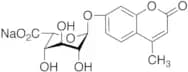
CAS :Produit contrôlé<p>Applications Protected Citric Acid (C521000). Used in the preparation of siderophore derivatives.<br>References Fadeev, E. et al.: Bioorg. Med. Chem. Lett., 15, 3771 (2005); Guo, H. et al.: J. Med. Chem., 45, 2056 (2002)<br></p>Formule :C10H16O7Couleur et forme :NeatMasse moléculaire :248.234-Methylumbelliferyl a-L-Idopyranosiduronic Acid, Sodium
CAS :Produit contrôléFormule :C16H15O9·NaCouleur et forme :White To Light YellowMasse moléculaire :374.27Sucralose
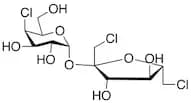
CAS :<p>Applications A low-calorie artificial sweetener<br>References Agresti, C., et al.: Eur. J. Pharm. Biopharm., 70, 226 (2008), Kidd, M., et al.: Am. J. Physiol., 295, G260 (2008),<br></p>Formule :C12H19Cl3O8Couleur et forme :WhiteMasse moléculaire :397.63N-Butyldeoxynojirimycin Hydrochloride-d9
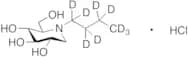
CAS :Produit contrôlé<p>Applications N-Butyldeoxynojirimycin Hydrochloride-d9 is labelled N-Butyldeoxynojirimycin Hydrochloride (B691000) which is an inhibitor of a-glucosidase 1 as well as being an inhibitor of HIV cytopathicity.<br>References Hettkamp, H., et al.: Eur. J. Biochem., 142, 85 (1984), Szumilo, T., et al.: Arch. Biochem. Biophys., 247, 261 (1986), Fleet, G.W.J., et al.: FEBS Letters, 237, Number 1,2, 128 (1988), Kolter, T., et al.: Angew. Chem. Int. Ed. Engl., 36, 1955 (1997),<br></p>Formule :C10H13D9ClNO4Couleur et forme :NeatMasse moléculaire :264.79Fructose Valine (mixture of diastereomers)
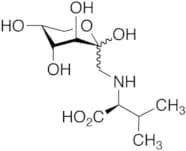
CAS :Produit contrôlé<p>Applications An Amadori compound having the potential to alter cellular adhesion, inhibit cancer metastasis and induce apoptosis.<br>References Horiuchi, T., et al.: Agric. Biol. Chem., 55, 333 (1991), Sosnovsky, G., et al.: J. Pharm. Sci., 82, 649 (1993), Glinsky, G., et al.: Cancer Res., 56, 5319 (1996),<br></p>Formule :C11H21NO7Couleur et forme :Off-White To Dark BrownMasse moléculaire :279.299-Methyl Biotin (mixture of diastereomers)
CAS :Produit contrôlé<p>Impurity Biotin EP Impurity D<br>Applications Biotin (B389040) impurity. Biotin EP Impurity D.<br>References Trotter, J., et al.: Biochemistry, 5, 713 (1966), Suurkuusk, J., et al.: Eur. J.Biochem., 28, 438 (1972),<br></p>Formule :C11H18N2O3SCouleur et forme :NeatMasse moléculaire :258.34Sucrose Heptasulfate Potassium Salt (>95% purity)
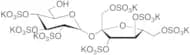
CAS :<p>Stability Hygroscopic<br>Applications Sucrose Heptasulfate Potassium Salt is used as a reference standard for the drug Sucralfate.<br></p>Formule :C12H15O32S7·7KDegré de pureté :>95%Couleur et forme :NeatMasse moléculaire :1169.37Acarbose D-Fructose Impurity
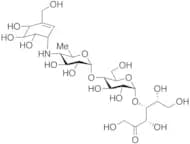
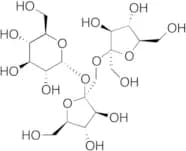
CAS :Produit contrôlé<p>Impurity Acarbose EP Impurity A<br>Applications Acarbose D-Fructose (Acarbose EP Impurity A) is an impurity of Acarbose (A123500) (1,2,3,4). Acarbose impurity A.<br>References (1) Kim, I., et al.: J. Biol. Chem., 267, 22108 (1992) (2) Tonozuka, T., et al.: Carbohydr. Res., 261, 157 (1994) (3) Brzozowski, A., et al.: Biochemistry, 36, 10837 (1997) (4) Cha, H., et al.: Eur. J. Biochem., 253, 251 (1998)<br></p>Formule :C25H43NO18Couleur et forme :NeatMasse moléculaire :645.601-Kestose
CAS :<p>Applications 1-Kestose is a fructooligosaccharide with prebiotic properties which displays antihyperglycemic activity suggesting that it may be used in treating diabetes.<br>References Bharti, S., et al.: Process Biochem., 50, 317 (2015); Mutanda, T., et al.: J. Ind. Microbiol. Biot., 41, 893 (2014);<br></p>Formule :C18H32O16Couleur et forme :NeatMasse moléculaire :504.44Citric Acid 1,2-Diethyl Ester
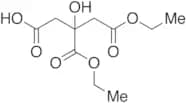
CAS :Produit contrôlé<p>Applications Citric Acid 1,2-Diethyl Ester is an ethyl citrate found in lemon juice.<br>References Neurath, G. et al.: Zeitsch. Lebens.-Untersuch. Forsch., 136, 284 (1968);<br></p>Formule :C10H16O7Couleur et forme :Off-WhiteMasse moléculaire :248.23Citric Acid Monohydrate
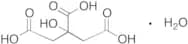
CAS :Produit contrôlé<p>Applications Citric Acid Monohydrate is a useful buffer component for antigen and epitope unmasking.<br></p>Formule :C6H8O7·H2OCouleur et forme :White To Off-WhiteMasse moléculaire :210.14D-Maltotriose
CAS :Produit contrôlé<p>Applications D-Maltotriose is a trisaccharide resulting from the digestion of Amalose by α-Amalase.<br>References Carvalho, G., et al.: App. Biochem. Biotechnol., 155, 356 (2009), Huuskonen, A., et al.: App. Environ. Microbiol., 76, 1563 (2010), Chang, S., et al.: J. Agric. Food Chem., 58, 2908 (2010),<br></p>Formule :C18H32O16Couleur et forme :Off-WhiteMasse moléculaire :504.444-Methylumbelliferyl a-L-Idopyranosiduronic Acid 2-Sulfate Disodium Salt
CAS :<p>Stability Hygroscopic<br>Applications 4-Methylumbelliferyl ?-L-Idopyranosiduronic Acid 2-Sulfate Disodium Salt is a fluorogenic substrate in the assay of ?-L-Iduronidase. A fluorimetric enzyme assay for the diagnosis of MPS II (Hunter disease).<br>References Matalon, R., et al.: Biochem. Biophys. Res. Commun., 47, 959 (1972), Voznyi, Y.V., et al.: J. Inherit. Metab. Dis., 24, 675 (2001)<br></p>Formule :C16H14Na2O12SCouleur et forme :NeatMasse moléculaire :476.32D-Mannose
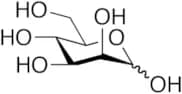
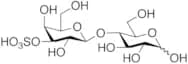
CAS :Produit contrôlé<p>Applications D-Mannose is a carbohydrate that is important in the glycosylation of molecules in a variety of cellular processes. It is involved in N and O glycosylation of bovine why protein products, used in infant formulas. It is also responsible for the O-glycosylation of the T helper cell-derived cytokine interlukin-17A, an important cell-signaling molecule.<br>References van Leeuwen, S. et al.: J. Agri. Food Chem., 60, 12553 (2012); Geoghegan, K. et al.: Prot. Express. Purif., 87, 27 (2013);<br></p>Formule :C6H12O6Couleur et forme :NeatMasse moléculaire :180.16Lactose-3’-sulfate
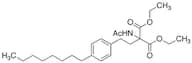
CAS :Produit contrôlé<p>Stability Very Hygroscopic<br>Applications Lactose-3’-sulfate (cas# 159358-51-7) is a compound useful in organic synthesis.<br></p>Formule :C12H22O14SCouleur et forme :Light Brown To BrownMasse moléculaire :422.36Diethyl 2-Acetamido-2-[2-(4-octylphenylethyl)malonate
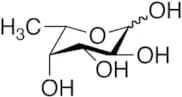
CAS :Produit contrôlé<p>Applications An impurity found in fingolimod (F805000).<br></p>Formule :C25H39NO5Couleur et forme :NeatMasse moléculaire :433.58L-Fucose
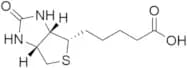
CAS :Produit contrôlé<p>Applications L-Fucose was isolated from seaweed.<br>References Clark, et al.: J. Biol. Chem., 54, 65 (1922),<br></p>Formule :C6H12O5Couleur et forme :WhiteMasse moléculaire :164.16Biotin
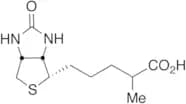
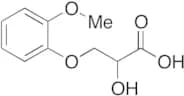
CAS :<p>Applications Biotin is a growth factor present in minute amounts in every living cell. Plays an indispensable role in numerous naturally occurring carboxylation reactions. Occurs mainly bound to proteins or polypeptides. The richest sources are liver, kidney, pancreas, yeast, and milk. The biotin content of cancerous tumors is higher than that of normal tissue.<br>References du Vigneaud, et al.: J. Biol. Chem., 146, 475 (1942); Traub, et al.: Nature, 178, 649 (1956); Siegel, H., et al.: Experienta, 37, 789 (1981); Vesely, D.L., Science, 216, 1329 (1982); Hugues, M., et al.: Biochemistry, 31, 12 (1992);<br></p>Formule :C10H16N2O3SCouleur et forme :WhiteMasse moléculaire :244.313-(2-Methoxyphenoxy) Lactic Acid
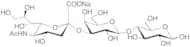
CAS :Produit contrôlé<p>Applications 3-(2-Methoxyphenoxy) Lactic Acid is a metabolite of the Guaifenesin (G810500), a centrally acting muscle relaxant with expectorant properties.<br>References D.G. Workmann et. al. Curr. Ther. Res. 41 1751 (1980).<br></p>Formule :C10H12O5Couleur et forme :NeatMasse moléculaire :212.23'-Sialyllactose Sodium Salt
CAS :Formule :C23H38NO19·NaCouleur et forme :Off-WhiteMasse moléculaire :655.53Glycoaldehyde Dimer
CAS :Produit contrôléFormule :C4H8O4Couleur et forme :NeatMasse moléculaire :120.16,6'-Iminobis(N,N,N-trimethyl-1-hexanaminium) Dibromide Hydrobromide
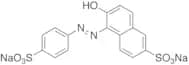
CAS :<p>Applications 6,6'-Iminobis[N,N,N-trimethyl-1-hexanaminium is an impurity of the pharmaceutical Welchol (Colesevelam).<br>References Schoftner, R., et al.: J. Chromatogr., 920, 333 (2001),<br></p>Formule :C18H44Br3N3Couleur et forme :NeatMasse moléculaire :542.27Sunset Yellow FCF
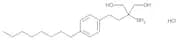
CAS :<p>Stability Light Sensitive<br>Applications Provisionally listed for use in food, drugs and cosmetics. Sunset Yellow is useful in fermented foods which must be heat treated. It may be found in orange sodas, orange jelly, marzipan, Swiss rolls, apricot jam, citrus marmalade, lemon curd, sweets, hot chocolate mix and packet soups, trifle mix, breadcrumbs, snack chips, shelf fresh noodles, cheese sauce mixes. Sunset Yellow is a sulfonated version of Sudan I, a possible carcinogen. Sunset Yellow itself may be responsible for causing an allergic reaction in people with an aspirin intolerance, resulting in various symptoms, including gastric upset, diarrhea, vomiting, nettle rash (urticaria), swelling of the skin (angioedema) and migraines. Dyes and metabolites, Environmental Testing<br>References Radomski, J.L., et al.: J. Pharmacol. Exp. Ther., 136, 259 (1962), Gaunt, I.F., et al.: Food Cosmet. Toxicol., 5, 747 (1967),<br></p>Formule :C16H10N2O7S2·2NaCouleur et forme :NeatMasse moléculaire :452.37Fingolimod Hydrochloride
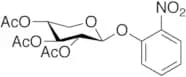
CAS :Formule :C19H33NO2·ClHCouleur et forme :White To Off-WhiteMasse moléculaire :343.932’-Nitrophenyl 2,3,4-Tri-O-acetyl-β-D-xylopyranoside
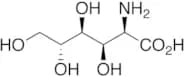
CAS :Produit contrôlé<p>Stability Store in Freezer<br>Applications 2’-Nitrophenyl 2,3,4-Tri-O-acetyl-β-D-xylopyranoside (cas# 10256-24-3) is a compound useful in organic synthesis.<br></p>Formule :C17H19NO10Couleur et forme :NeatMasse moléculaire :397.33D-Glucosaminic Acid
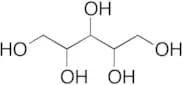
CAS :<p>Applications D-Glucosaminic Acid is a useful starting material for the synthesis of aldonic acids containing a free carboxyl group and having all hydroxyl functions esterified with a simple carboxylic acid are well established deriviatives.<br>References Major, R.T., et al.: J.A.C.S., 58, 2474 (1936), Hurd, C.D., et al.: J.A.C.S., 60, 235 (1938), Wolfrom, M., et al.: J.A.C.S., 61, 574 (1939)<br></p>Formule :C6H13NO6Couleur et forme :NeatMasse moléculaire :195.17Xylitol
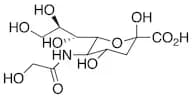
CAS :Produit contrôlé<p>Applications Xylitol, is a lower-calorie alternative to table sugar. Studies have shown xylitol chewing gum can help prevent acute otitis media. Xylitol is categorized by the U.S. Food and Drug Administration as a food additive.<br>References Code of Federal Regulations Title 21, US., FDA (2012); Azarparzhooh, A., et al.,: Cochrane data. Sys. Revi. (online) (11), (2011);<br></p>Formule :C5H12O5Couleur et forme :NeatMasse moléculaire :152.15N-Glycolyl Neuraminic Acid
CAS :<p>Applications Regulation of N-glycolylneuraminic acid biosynthesis in rat and mouse liver.<br>References Malykh, Y., et al.: Biochimie, 83, 623 (2001), Angata, T., et al.: Chem. Rev., 102, 439 (2002), Soh, N., et al.: Anal. Sci., 18, 1159 (2002), Taylor, P., et al.: Clin. Biochem., 38, 328 (2005),<br></p>Formule :C11H19NO10Couleur et forme :White To Off-WhiteMasse moléculaire :325.272-Methylcitric Acid
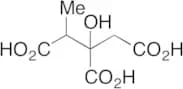
CAS :<p>Applications 2-Methylcitric Acid is a metabolite of Citric Acid (C521000). It is formed from the condensation of propionoyl-CoA and oxaloacetic acid catalyzed by a citrate synthase enzyme.<br>References Allen, R. H., et al.: Metabolism, 42, 978 (1993)<br></p>Formule :C7H10O7Couleur et forme :NeatMasse moléculaire :206.15Sucralose-d6
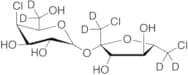
CAS :Produit contrôlé<p>Applications Sucralose-d6 is a useful isotopically labelled analog of sucralose with an isotopic purity of greater than 98% with no D0.<br></p>Formule :C12H13D6Cl3O8Couleur et forme :WhiteMasse moléculaire :403.66Cytidine 5’-Monophosphate Methyl Ester Sodium Salt
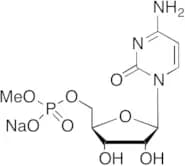
CAS :<p>Applications Cytidine 5’-Phosphate Methyl Ester Sodium Salt is an byproduct formed in the synthesis of analogs of Cytidine 5’-Diphosphate with an important role in the metabolism of phospholipids.<br>References Trotter, P., et al.: J. Biol. Chem., 270, 6062 (1995), Janssen, M., et al.: Yeast, 16, 641 (2000), Henneberry, A., et al.: Mol. Biol. Cell, 12, 511 (2001), Boumann, H., et al.: Biochemistry, 42, 3054 (2003),<br></p>Formule :C10H15N3NaO8PCouleur et forme :White To Off-WhiteMasse moléculaire :359.21,7-Di(2-methoxyphenoxy)-2,6-dihydroxy-4-oxaheptane
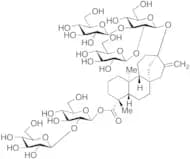
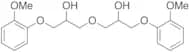
CAS :Produit contrôlé<p>Impurity Guaifenasin EP Impurity C<br>Applications 1,7-Di(2-methoxyphenoxy)-2,6-dihydroxy-4-oxaheptane is an impurity of Atenolol l (A790075), a cardioselective β-adrenergic blocker.<br>References Caplar, V., et al.: Anal. Profiles Drug Subs., 13, 1 (1984),<br></p>Formule :C20H26O7Couleur et forme :Colourless To YellowMasse moléculaire :378.42Steviol Acyl Glucuronide Potassium Salt
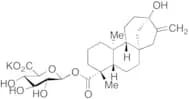
Formule :C26H37KO9Couleur et forme :NeatMasse moléculaire :532.66Linarine
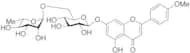
CAS :Produit contrôlé<p>Impurity Diosmin EP Impurity E<br>Stability Hygroscopic<br>Applications Linarine (Diosmin EP Impurity E) is a naturally occurring flavone glycoside that was identified to possess potential sedative and anticonvulsant properties.<br>References Nugroho, A., et al.: Arch. Pharma. Res., 36, 51 (2013); Jung, H.A., et al.: Arch. Pharma. Res., 35, 1021 (2012); Shen, H.J., et al.: J. Med. Plants. Res., 5, 6555 (2011);<br></p>Formule :C28H32O14Couleur et forme :White To Light BeigeMasse moléculaire :592.545Biotin 5-Bromopentylamide
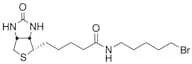
CAS :Produit contrôléFormule :C15H26BrN3O2SCouleur et forme :NeatMasse moléculaire :392.35D-Glucose
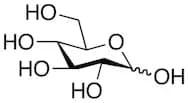
CAS :<p>Applications D-Glucose is a simple sugar that is present in plants. A monosaccharide that may exist in open chain or cyclic conformation if in solution. It plays a vital role in photosynthesis and fuels the energy required for cellular respiration. D-Glucose is used in various metabolic processes including enzymic synthesis of cyclohexyl-α and β-D-glucosides. Can also be used as a diagnostic tool in detection of type 2 diabetes mellitus and potentially Huntington's disease through analysis of blood-glucose in type 1 diabetes mellitus.<br>References Wang, R., et al.: J. Mol. Catal. B. Enz., 56, 131 (2009); Springhorn, C. et al.: J. Clin. Endocrinol. Metab., 97, 4640 (2012); Hashimoto, K. et al.: J. Clin. Endocrinol. Metab., 97, 3016 (2012); Avelange, M. et al.: Plant. Phys., 94, 1157 (1990); Cramer, C. et al.: J. Chem. Soc., 115, 5745 (1993);<br></p>Formule :C6H12O6Couleur et forme :NeatMasse moléculaire :180.16D-Tagatose
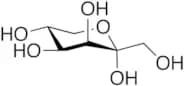
CAS :<p>Applications A monosaccharide (hexose) that can be used as a low-calorie sweetener, as an intermediate for synthesis of other optically active compounds, and as an additive in detergent, cosmetic, and pharmaceutical formulation.<br>References Oh, D. et al.: Appl. Microbiol. Biotech., 76, 76, 1 (2007); Lu, Y. et al.: Int. J. Cosm. Sci., 24, 225 (2002); Donner, T.W. et al.: Diab. Obes. Metab., 1, 285 (1999);<br></p>Formule :C6H12O6Couleur et forme :WhiteMasse moléculaire :180.164-Methylumbelliferyl 6-Sulfo-2-acetamido-2-deoxy-(β)-D-glucopyranoside Potassium Salt
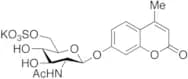
CAS :Formule :C18H20NO11S·KCouleur et forme :NeatMasse moléculaire :497.51