Apoptosi
Sottocategorie di "Apoptosi"
- ASK(9 prodotti)
- BCL(8 prodotti)
- Caspasi(147 prodotti)
- FOXO1(3 prodotti)
- IAP(67 prodotti)
- Mdm2(12 prodotti)
- PD-1/PD-L1(140 prodotti)
- PDK(9 prodotti)
- PERK(26 prodotti)
- Chinasi di serina/treonina(19 prodotti)
- Survivin(14 prodotti)
- TNF(91 prodotti)
- c-RET(61 prodotti)
- p53(63 prodotti)
Trovati 6114 prodotti di "Apoptosi"
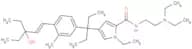
VDR agonist 1
CAS:Compound 28 is a nonsteroidal VDR agonist with 690 nM potency, inducing cell cycle arrest and apoptosis in MCF-7 cells.Formula:C32H51N3O2Purezza:98%Colore e forma:SolidPeso molecolare:509.77RIPK1-IN-28
CAS:RIPK1-IN-28 (compound 13) is an orally active inhibitor of RIPK1. It exhibits inhibitory effects on human I2.1 and Hepa1-6 cells, with IC50 values of 0.4 and 1.2 nM, respectively.
Formula:C27H24N4O4Colore e forma:SolidPeso molecolare:468.504PLK1-IN-13
CAS:PLK1-IN-13 is a selective, orally active PLK1 inhibitor with an IC50 of 0.27 nM. It also inhibits PLK2 (IC50: 12.72 nM) and PLK3 (IC50: 4.12 nM). PLK1-IN-13 induces cell cycle arrest at the G2 phase, promotes apoptosis, and downregulates the transcription of the cancer-associated oncogene c-MYC. This compound inhibits tumor growth and is applicable for research in acute myeloid leukemia (AML).Formula:C29H39N9O2SColore e forma:SolidPeso molecolare:577.744Microtubulin-IN-1
CAS:Microtubulin-IN-1 (Compound 8g) is an inhibitor of microtubulin, targeting the colchicine-binding site to disrupt tubulin integrity and induce upregulation of p53 protein expression. It exhibits antiproliferative activity across various cancer cell lines, including NCI-H460, BxPC-3, and HT-29, with IC50 values of 2.4, 1.6, and 2.07 nM, respectively. Additionally, Microtubulin-IN-1 induces cell cycle arrest at the G2/M phase and apoptosis in NCI-H460 cells.Formula:C25H21FN4O3Colore e forma:SolidPeso molecolare:444.458SL-176
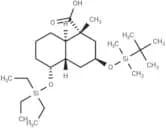
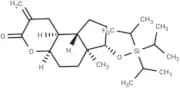
CAS:SL-176, a WIP1 inhibitor, when combined with GSK-J4, can induce cell cycle arrest and apoptosis (apoptosis), thereby inhibiting tumor growth both in vitro and in vivo.Formula:C24H48O4Si2Colore e forma:SolidPeso molecolare:456.806CDK2/9-IN-1
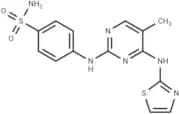
CAS:CDK2/9-IN-1 (compound 20a) is an orally active dual inhibitor of CDK2 and CDK9, with IC50 values of 0.004 μM and 0.009 μM for CDK2 and CDK9, respectively. It induces apoptosis by regulating G2/M cell cycle arrest and exhibits antitumor activity.Formula:C14H14N6O2S2Colore e forma:SolidPeso molecolare:362.43Antitumor agent-58
Antitumor agent-58 suppresses tumor growth, colony formation, cell migration, and induces mitochondrial dysfunction in MGC-803 cells.Formula:C27H28F3N9SColore e forma:SolidPeso molecolare:567.63Silvestrol
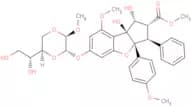
CAS:Silvestrol is a eukaryotic translation initiation factor 4A inhibitor. Silvestrol causes autophagy and caspase-mediated apoptosis.Formula:C34H38O13Purezza:98%Colore e forma:SolidPeso molecolare:654.66Microtubule inhibitor 2
Microtubule inhibitor 2: potent, selective, oral, induces ferroptosis, strong antitumor effect.Formula:C20H23NO7Colore e forma:SolidPeso molecolare:389.4microRNA-21-IN-1
CAS:microRNA-21-IN-1: microRNA inhibitor, curbs HeLa/HCT-116 growth (IC50: 5.5/2.8 μM), induces HeLa apoptosis, elevates PTEN/EGR1/SLIT2, for cancer research.Formula:C30H37FN6O3Colore e forma:SolidPeso molecolare:548.65APD-94
CAS:APD-94 is a dual inhibitor targeting tubulin and Bmi-1. It disrupts the normal polymerization of tubulin and suppresses the expression of Bmi-1. This compound induces cell cycle arrest at the G2/M phase and triggers apoptosis, thereby inhibiting cancer cell proliferation. Additionally, APD-94 inhibits the growth of HT29 cell xenograft tumors in NOD/SCID mice and is applicable to colorectal cancer research.Formula:C18H17N3O4Colore e forma:SolidPeso molecolare:339.345M3258
CAS:LMP7-IN-1 may used in the research of inflammatory and autoimmune diseases, neurodegenerative diseases, proliferative diseases and cancer, is an inhibitor ofFormula:C17H20BNO5Purezza:98%Colore e forma:SolidPeso molecolare:329.16STAT3-IN-9
STAT3-IN-9 hinders STAT3 at Tyr705, doesn't affect STAT1 Tyr701, induces apoptosis, and arrests cells in G2/M phase.Formula:C22H21N3O4Colore e forma:SolidPeso molecolare:391.42LL-Z 1640-4
CAS:A signal-specific JNK/p38 pathway and TAK 1 inhibitorFormula:C19H24O7Purezza:98%Colore e forma:SolidPeso molecolare:364.39IMB5046
CAS:IMB5046 is a microtubule inhibitor that induces apoptosis (cell death) by obstructing the G2/M phase of the cell cycle. It possesses antitumor properties.Formula:C19H20N2O5SColore e forma:SolidPeso molecolare:388.438MRK003
CAS:MRK003, a γ-secretase inhibitor, induces apoptosis, halts cell growth in myeloma/NHL, and affects notch signaling and PI3K/Akt pathway.Formula:C25H31F6N3O2SColore e forma:SolidPeso molecolare:551.59EGFR-IN-161
CAS:EGFR-IN-161 (Compound DD-8) is a potent and reversible inhibitor of the L858R/T790M/C797S mutant EGFR kinase, with an IC50 value of 0.87 nM. EGFR-IN-161 effectively inhibits tumor cell apoptosis, G1 phase arrest, and migration.Formula:C33H36Cl2N8O2Colore e forma:SolidPeso molecolare:647.597NSD2-IN-1
CAS:NSD2-IN-1: potent, selective NSD2-PWWP1 inhibitor, IC50 0.11 μM, induces gene expression changes, apoptosis, cell cycle arrest.Formula:C29H31N5Colore e forma:SolidPeso molecolare:449.59PD-1/PD-L1-IN-17
PD-1/PD-L1-IN-17 (Compound P20) is a potent PD-1/PD-L1 inhibitor (IC50: 26.8 nM).
Formula:C23H20ClN3O4Colore e forma:SolidPeso molecolare:437.88Topoisomerase I/II inhibitor 4
Topoisomerase I/II inhibitor 4 halts cell growth and spread, induces apoptosis, and is used in liver cancer research.Formula:C27H21N5O6Colore e forma:SolidPeso molecolare:511.49MI-888 TFA
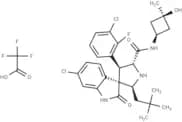
CAS:MI-888 (TFA) is an orally active inhibitor of the MDM2-p53 interaction with a Ki of 0.44 nM. It can induce rapid, complete, and durable tumor regression in xenograft mouse models.Formula:C30H33Cl2F4N3O5Colore e forma:SolidPeso molecolare:662.52-Deoxy-L-ribose
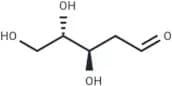
CAS:2-Deoxy-L-ribose is the stereoisomer of 2-Deoxy-D-ribose and can inhibit the anti-apoptotic effects of 2-Deoxy-D-ribose. Additionally, 2-Deoxy-L-ribose is capable of suppressing tumor cell metastasis by downregulating thymidine phosphorylase overexpression.Formula:C5H10O4Colore e forma:SolidPeso molecolare:134.13(R)-SL18
CAS:(R)-SL18 is a degrader of ANXA3 that facilitates its breakdown via ubiquitination. This compound can inhibit the proliferation, migration, invasion, and colony formation of breast cancer cells, while also inducing apoptosis. (R)-SL18 is applicable for research in triple-negative breast cancer.Formula:C26H21ClN6O5S2Colore e forma:SolidPeso molecolare:597.065PD-L1/VISTA-IN-1
CAS:PD-L1/VISTA-IN-1 (Compound P17) is an orally active dual inhibitor targeting PD-L1 and VISTA. It effectively hinders the PD-1/PD-L1 interaction (IC50: 0.1492 μM) and the VISTA pathway (KD: 0.2723 μM), leading to the reactivation of T cells. Additionally, PD-L1/VISTA-IN-1 exhibits antitumor activity.
Formula:C22H24N4O4Colore e forma:SolidPeso molecolare:408.45SIRT-IN-7
CAS:SIRT-IN-7 (Compound 7ba) is a SIRT inhibitor. It effectively suppresses the expression of SIRT1, SIRT2, and SIRT3, leading to increased acetylation and activation of p53. Additionally, SIRT-IN-7 inhibits the proliferation of breast cancer cells and induces apoptosis and autophagy, demonstrating antitumor activity.Formula:C24H16BrClN2OSColore e forma:SolidPeso molecolare:495.819PKM2 modulator 2
CAS:PKM2 modulator 2 (compound C599) is a potent inhibitor of PKM2, displaying antiproliferative activity and inducing apoptosis. This compound holds potential for research in glioblastoma.Formula:C21H13FN4O3Colore e forma:SolidPeso molecolare:388.351DDO-8958
CAS:DDO-8958 is an orally active and selective BET BD1 inhibitor, exhibiting a KD of 5.6 nM for BRD4 BD1. It shows low nanomolar inhibitory activity across all BET BD1 bromodomains except for BRDT BD1. DDO-8958 inhibits tumor cell proliferation and migration, induces apoptosis and cell cycle arrest, and demonstrates antitumor activity.Formula:C22H22FN5O2Colore e forma:SolidPeso molecolare:407.441SSB-2548
CAS:SSB-2548 is a CXCR-4 inhibitor that suppresses the proliferation and migration of acute myeloid leukemia cells and induces apoptosis (apoptosis). It is well absorbed in the gastrointestinal tract and can be used for leukemia research.Formula:C18H17N5O2Colore e forma:SolidPeso molecolare:335.36MG28
CAS:MG28 exhibits significant cytotoxic effects, likely stemming from its direct and potent DNA-damaging activity. The compound is utilized in cancer research.Formula:C27H25NO3SColore e forma:SolidPeso molecolare:443.56PD-L1/HDAC6-IN-1
CAS:PD-L1/HDAC6-IN-1 (Compound HP29) is an inhibitor targeting both PD-L1 and HDAC6, effectively disrupting the PD-L1/PD-1 interaction and inhibiting HDAC6 activity, with IC50 values of 26.8 nM and 69 nM, respectively. This compound enhances the cytotoxicity of Jurkat T cells against HepG2 cells, exhibiting an IC50 of 3.4 μM. In rats, PD-L1/HDAC6-IN-1 demonstrates favorable pharmacokinetics, showing a drug exposure level of 871.62 ng·h/mL, and displays antitumor activity in a B16-F10 xenograft mouse model.Formula:C27H33N3O3Colore e forma:SolidPeso molecolare:447.569Apoptosis inducer 36
CAS:Apoptosisinducer 36 (Compound 42) exhibits anti-leukemic activity by reducing leukemia stem cells (LSC) and inducing differentiation. It inhibits proliferation of AML cells by causing cell cycle arrest in the G1 phase, and induces PANoptosis, which includes apoptosis, pyroptosis, and necrosis.Formula:C23H40O3SiColore e forma:SolidPeso molecolare:392.647EMT inhibitor-3
CAS:EMT inhibitor-3 (compound 11i) is an epithelial-mesenchymal transition (EMT) inhibitor that effectively suppresses the proliferation, migration, and invasion of SK-N-SH neuroblastoma cells, with an IC50 value of 2.5 μM. It induces mitochondrial-mediated intrinsic apoptosis in tumor cells by enhancing the Bax/Bcl-2 protein expression ratio, promoting the release of cytochrome C from mitochondria, and activating caspase 9 and caspase 3. EMT inhibitor-3 is applicable for cancer research.Formula:C29H21F2N3O4SeColore e forma:SolidPeso molecolare:592.45TZEP7
CAS:TZEP7 functions as an EGFR kinase inhibitor in cancer cells. It exhibits cytotoxicity and induces apoptosis within these cells. TZEP7 downregulates the anti-apoptotic protein Bcl-2, upregulates the pro-apoptotic protein Bax, and increases caspase levels. This compound holds potential for research in anticancer drug development.Formula:C27H19ClFNSColore e forma:SolidPeso molecolare:443.963TrxR/EGFR-IN-1
CAS:TrxR/EGFR-IN-1 (Compound L1Au2) is a TrxR/EGFR inhibitor with activity against both gefitinib-sensitive and -resistant lung cancer, effectively suppressing tumor proliferation and promoting apoptosis. It enhances GPX4 degradation through autophagosome-lysosome and proteasome pathways, leading to ferroptosis. Additionally, it induces endoplasmic reticulum stress and triggers immunogenic cell death, making it applicable for studies on gefitinib-resistant lung cancer.Formula:C24H24AuClFN6O2PColore e forma:SolidPeso molecolare:710.878Decarbamoylmitomycin C
CAS:Decarbamoylmitomycin C, an analog of Mitomycin C (MC), functions as a DNA alkylating agent. It is capable of activating chromatin relaxation by the ataxia-telangiectasia and Rad3-related protein (ATR) in a p53-independent manner.Formula:C14H17N3O4Colore e forma:SolidPeso molecolare:291.302c-Myc inhibitor 16 iodide
CAS:c-Myc inhibitor16 iodide (Compound W11) is a selective inhibitor of the c-MycG-quadruplex (c-MycG4). It suppresses the transcription and translation of the c-Myc gene, disrupts the tumor cell cycle by halting growth at the G0/G1 phase, and activates mitochondrial apoptotic pathways, leading to early apoptosis in cancer cells. This compound shows potential for research in breast cancer.Formula:C26H24INOColore e forma:SolidPeso molecolare:493.379CAR-2
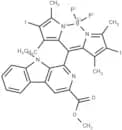
CAS:CAR-2 is a BODIPY-based photosensitizer that induces ferroptosis in photodynamic therapy (PDT) by targeting the endoplasmic reticulum (ER) and lipid droplets (LD). It exhibits phototoxicity against breast cancer cells with an IC50 of 0.01-0.02 μM and demonstrates antitumor efficacy in a 4T1 xenograft mouse model.
Formula:C27H23BF2I2N4O2Colore e forma:SolidPeso molecolare:738.114BNN27
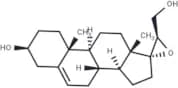
CAS:BNN27 is an agonist of the TrkA receptor (TrkAreceptor) and the p75NTR receptor (p75NTR receptor), exhibiting neurotrophic and anti-apoptotic properties. It enhances levels of glutamate, GABA, and glutamine in the hippocampus and prefrontal cortex of rats, improving glutamate turnover. In a mouse model of amyotrophic lateral sclerosis (ALS), BNN27 demonstrates neuroprotective effects, shows anti-inflammatory properties in an experimental autoimmune encephalomyelitis (EAE) model, and exhibits retinal protection in a rat diabetes model. BNN27 also possesses blood-brain barrier permeability.Formula:C21H32O3Colore e forma:SolidPeso molecolare:332.477MJC13
CAS:MJC13 is an FKBP52-targeting agent with antitumor activity, suitable for prostate cancer research.
Formula:C13H15Cl2NOColore e forma:SolidPeso molecolare:272.17Enpp-1-IN-25
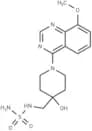
CAS:Enpp-1-IN-25 (Compound 30) is an ENPP1 inhibitor with an IC50 of 8.05 nM and exhibits low oral bioavailability. By inhibiting cGAMP degradation, it effectively activates the intracellular STING pathway. Enpp-1-IN-25 can enhance immune cell infiltration and type I interferon response in the tumor microenvironment, thereby increasing the antitumor efficacy of anti-PD-L1 antibodies. It is applicable for research in cancer immunotherapy.Formula:C15H21N5O4SColore e forma:SolidPeso molecolare:367.423Ac-DMLD-CMK
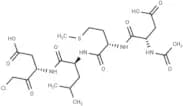
CAS:Ac-DMLD-CMK is a peptide designed to target the caspase3-Gsdme signaling pathway in mice. It specifically inhibits the activation of caspase 3 and Gsdme, preventing the cleavage of Gsdme by caspase 3, which reduces pyroptosis. This process helps alleviate damage to renal tubular epithelial cells and decrease the secretion of inflammatory cytokines. Ac-DMLD-CMK can lower serum creatinine and blood urea nitrogen levels in mice induced by Cisplatin, thereby mitigating the progression of renal dysfunction. It holds potential for research into chemotherapy-induced nephrotoxicity.Formula:C22H35ClN4O9SColore e forma:SolidPeso molecolare:567.053Autophagy inducer 7
CAS:Autophagyinducer 7 (Compound SSA) serves as an inducer of autophagy (Autophagy) and apoptosis (Apoptosis). It stimulates autophagy by inhibiting Akt/mTOR signaling and the expression of downstream proteins. Additionally, Autophagyinducer 7 suppresses DNA synthesis and causes G0-G1 cell cycle arrest, ultimately inhibiting the growth of tumor cells.
Formula:C24H27FN2OSColore e forma:SolidPeso molecolare:410.547PD-L1/HDAC-IN-1
CAS:PD-L1/HDAC-IN-1 (Compound 14) is an inhibitor of PD-L1 and HDAC, effectively blocking PD-1/PD-L1 interaction as well as HDAC2 and HDAC3 with IC50 values of 88.10, 27.98, and 14.47 nM, respectively. It exhibits mild cytotoxicity in MCF-7 cells (IC50=19.34 μM) and enhances the expression of PD-L1 and CXCL10, promoting antitumor immune responses by recruiting T cell infiltration into the tumor microenvironment (TME).Formula:C42H46ClN3O7Colore e forma:SolidPeso molecolare:740.284MP-010
CAS:MP-010 is an FKBP12 ligand that regulates cytosolic calcium by stabilizing RyR channel activity. It facilitates functional improvement in SOD1G93A mice with amyotrophic lateral sclerosis (ALS), evidenced by enhanced motor coordination, increased integrity of neuromuscular junctions, and significantly higher spinal motor neuron survival rates. MP-010 is applicable for research in the field of neurological disorders.Formula:C14H20N4O2SColore e forma:SolidPeso molecolare:308.399PSP205
CAS:PSP205 is an effective anticancer agent with cytotoxic properties. It induces apoptosis and triggers autophagy mediated by ER stress. Furthermore, PSP205 enhances the expression of LC3BII protein and increases the expression of CHOP and spliced XBP1 at both mRNA and protein levels.Formula:C28H32ClN7O5S2Colore e forma:SolidPeso molecolare:646.181KIM-161
CAS:KIM-161 is a PIK3CA inhibitor. It demonstrates significant antiproliferative activity, with IC50 values of 1.428 and 1.562 µM against PI3KCA-mutant breast cancer cell lines MCF7 and T47D, respectively. KIM-161 induces apoptosis and cell cycle arrest by inhibiting the PI3K/AKT/mTOR signaling pathway, leading to ROS production. It is applicable for research on breast cancer and its PI3KCA-mutant subtypes.Formula:C27H25N3O3Colore e forma:SolidPeso molecolare:439.51ST362
CAS:ST362, an anticancer agent, acts by disrupting DNA repair and halting growth in prostate, colon, lung and breast cancer cells.Formula:C25H21NO6SPurezza:98%Colore e forma:SolidPeso molecolare:463.5Casuarinin
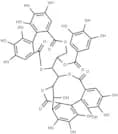
CAS:Casuarinin, an ellagitannin found in pomegranates and certain Casuarina/Stachyurus plants, is a carbonic anhydrase inhibitor and astringent.Formula:C41H28O26Colore e forma:SolidPeso molecolare:936.65FGFR4-IN-7
FGFR4-IN-7 is a covalent, reversible FGFR4 inhibitor (IC50: 0.42 μM) that blocks the FGFR4 signaling pathway, thereby inducing apoptosis.Formula:C26H25Cl2N5O3Colore e forma:SolidPeso molecolare:526.41Siphonaxanthin
CAS:Siphonaxanthin is a carotenoid found in green algae, known for targeting the death receptor 5 (DR5) on cancer cells to induce apoptosis. In human leukemia HL-60 cells, it increases DR5 expression, reduces Bcl-2 levels, and activates caspase-3. It also inhibits fibroblast growth factor receptor-1 (FGFR-1) signaling in endothelial cells. Siphonaxanthin suppresses the proliferation, migration, and tubular formation of human umbilical vein endothelial cells (HUVECs), as well as the growth of microvessels in rat aorta rings. Additionally, it has anti-inflammatory properties by blocking the translocation of high-affinity IgE receptors (FcεRI) to lipid rafts in mast cells. Siphonaxanthin shows potential for research into diseases such as cancer, diabetic retinopathy, and rheumatoid arthritis.Formula:C40H56O4Colore e forma:SolidPeso molecolare:600.87