Proteina G/GPCR
Gli inibitori dei GPCR/proteine G sono composti che bersagliano i recettori accoppiati alle proteine G (GPCR) e le proteine G associate, che svolgono ruoli critici nella trasmissione dei segnali dall'esterno all'interno delle cellule. Questi inibitori sono essenziali per studiare le vie di segnalazione mediate dai GPCR, coinvolte in numerosi processi fisiologici, tra cui la percezione sensoriale, la risposta immunitaria e la neurotrasmissione. Gli inibitori dei GPCR sono anche importanti nello sviluppo di farmaci, poiché molti agenti terapeutici prendono di mira questi recettori. Presso CymitQuimica, offriamo una vasta gamma di inibitori dei GPCR/proteine G di alta qualità per supportare le tue ricerche in farmacologia, biologia cellulare e campi correlati.
Sottocategorie di "Proteina G/GPCR"
- recettore 5-HT(993 prodotti)
- Recettore dell'adenosina(246 prodotti)
- Recettore adrenergico(3.004 prodotti)
- Recettore della bombesina(33 prodotti)
- Recettore della bradichinina(59 prodotti)
- CXCR(153 prodotti)
- CaSR(33 prodotti)
- Recettore dei cannabinoidi(212 prodotti)
- Recettore della dopamina(433 prodotti)
- Recettore dell'endotelina(79 prodotti)
- Recettore GNRH(77 prodotti)
- GPCR19(32 prodotti)
- GRK(32 prodotti)
- GTPase(22 prodotti)
- Recettore del glucagone(182 prodotti)
- Proteina Hedgehog/Smoothened(47 prodotti)
- Recettore dell'istamina(381 prodotti)
- Recettore LPA(21 prodotti)
- Recettore della melatonina(26 prodotti)
- Recettore OX(41 prodotti)
- Recettore degli oppioidi(310 prodotti)
- PAFR(12 prodotti)
- PKA(51 prodotti)
- Recettore S1P(18 prodotti)
- SGLT(31 prodotti)
- Recettore Sigma(46 prodotti)
Mostrare 18 più sottocategorie
Trovati 5745 prodotti di "Proteina G/GPCR"
Ordinare per
Purezza (%)
0
100
|
0
|
50
|
90
|
95
|
100
5-HT2A receptor agonist-3
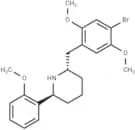
CAS:<p>5-HT2A receptor agonist-3 represents the highest selectivity for the human 5-HT2A receptor currently identified, exhibiting a K i of 2.5 nM.</p>Formula:C21H26BrNO3Purezza:98%Colore e forma:SolidPeso molecolare:420.34L-796568 dihydrochloride
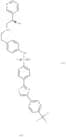
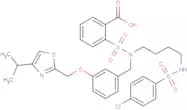
CAS:<p>L-796568: potent β3 agonist (EC50 = 3.6 nM), >600-fold selectivity vs β1/β2, good oral bioavailability, long action.</p>Formula:C31H29Cl2F3N4O3S2Colore e forma:SolidPeso molecolare:697.6211-keto Fluprostenol
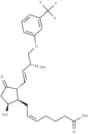
CAS:<p>11-Keto Fluprostenol, a potent analog of prostaglandin F2α (PGF2α), primarily interacts with the FP receptor. It is a structurally modified derivative of prostaglandin D2 (PGD2) designed to enhance its potency and extend its half-life. The compound is produced by oxidizing fluprostenol at the C-11 position, which results in 11-keto fluprostenol. This modification allows 11-keto Fluprostenol to exhibit moderate affinity for the CRTH2/DP2 receptor, though it shows negligible activity at the DP1 receptor, distinguishing its action from that of PGD2.</p>Formula:C23H27F3O6Colore e forma:SolidPeso molecolare:456.458Domesticine, (-)-
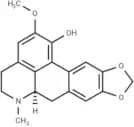
CAS:Domesticine, (-)- is an antagonist of alpha-1D-adrenoceptor.Formula:C19H19NO4Purezza:98%Colore e forma:SolidPeso molecolare:325.36YM-543 choline
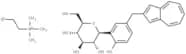
CAS:YM-543/ASP-543: Potent, selective SGLT2 inhibitor, reduces blood sugar and improves glucose tolerance in diabetic mice.Formula:C28H37NO7Colore e forma:SolidPeso molecolare:499.6KP496
CAS:<p>KP496 is a selective, dual antagonist for Thromboxane A2 receptor and Leukotriene D4 receptor.</p>Formula:C31H34ClN3O7S3Purezza:98%Colore e forma:SolidPeso molecolare:692.27PF-184563
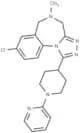
CAS:PF-184563 is an effective and selective non-peptide antagonist of the V1a receptor with oral activity, suitable for studying Raynaud's disease dysmenorrhoea.Formula:C21H23ClN6Purezza:99.67%Colore e forma:SolidPeso molecolare:394.915(S)-Fluprostenol isopropyl ester
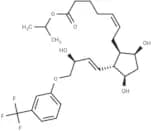
CAS:15(S)-Fluprostenol isopropyl ester, an isomer of the prostaglandin F2α analog, fluprostenol isopropyl ester, serves as a possible prodrug to 15(S)-fluprostenol. It has the potential to act as an agonist at FP receptors, albeit with lower potency compared to the 15(R) epimer and the FP receptor agonist, fluprostenol. Additionally, it may be present as a potential impurity in commercial formulations of fluprostenol isopropyl ester.Formula:C26H35F3O6Colore e forma:SolidPeso molecolare:500.555AC-099 hydrochloride
CAS:AC-099 hydrochloride is a full agonist of neuropeptide FF2 receptor NPFF2R and a partial agonist of neuropeptide FF1 receptor NPFF1R.Formula:C9H9Cl2F3N4Purezza:99.86%Colore e forma:SolidPeso molecolare:301.1(2R,3S)-E1R
CAS:(2R,3S)-E1R, an enantiomer of E1R, is a sigma-1 receptor modulator for treating cognitive disorders.Formula:C13H16N2O2Purezza:98%Colore e forma:SolidPeso molecolare:232.288,12-iso-iPF2α-VI
CAS:8,12-iso-iPF2α-VI, an isoprostane, arises from non-enzymatic, free radical-induced peroxidation of membrane lipids. It is the predominant isoprostane formed during lipid peroxidation and serves as a biomarker for oxidative stress. Detectable in hepatic tissue post CCl4-induced oxidative damage, 8,12-iso-iPF2α-VI levels are also elevated in the urine, blood, and cerebrospinal fluid of Alzheimer's disease patients.Formula:C20H34O5Colore e forma:SolidPeso molecolare:354.517-phenyl trinor Prostaglandin F2α diethyl amide
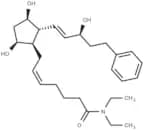
CAS:17-Phenyl trinor Prostaglandin F2αdiethyl amide (17-phenyl trinor PGF2αdiethyl amide) is a Prostaglandin F2α(PGF2α) analog characterized by the substitution of the C-1 carboxyl group with an N-diethyl amide. Prostaglandin (PG) esters and N-ethyl amides have demonstrated ocular hypotensive properties, with N-ethyl amides introduced as alternative options for PG hypotensive prodrugs. Studies indicate that both bovine and human corneal tissues can convert N-ethyl amides of various PGs into their free acid forms at a rate of approximately 2.5 µg/g corneal tissue/hr. However, dialkyl amides like 17-phenyl trinor PGF2αdiethyl amide resist conversion by corneal amidase, showing no detectable transformation into free acids. This characteristic suggests their potential as valuable investigative tools for assessing the intrinsic intraocular hypotensive activities of PG amides.Formula:C27H41NO4Colore e forma:SolidPeso molecolare:443.6Ubrogepant
CAS:Ubrogepant (MK-1602) is an antagonist of calcitonin gene-related peptide receptor that can be used in the acute treatment of migraine studies.Formula:C29H26F3N5O3Purezza:99.452% - 99.78%Colore e forma:SolidPeso molecolare:549.54CP-122288
CAS:<p>CP-122288: potent, selective 5-HT1B/D/F agonist; inhibits plasma protein extravasation, neurogenic inflammation.</p>Formula:C16H23N3O2SPurezza:98%Colore e forma:SolidPeso molecolare:321.44SDZ-NVI-085
CAS:SDZ-NVI-085 is an α1 adrenergic receptor agonist and a competitive antagonist of 5-hydroxytryptamine.Formula:C15H21NO2SColore e forma:SolidPeso molecolare:279.4GSK-1004723
CAS:GSK-1004723 is a novel antagonist of histamine H(1) and H(3) receptor. It represents a potential novel therapy for allergic rhinitis.Formula:C39H49ClN4O2Colore e forma:SolidPeso molecolare:641.28TA-1887
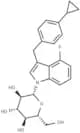
CAS:TA-1887: Selective SGLT2 inhibitor, treats type 2 diabetes, lowers glucose in high-fat diet mice, boosts UGE, has good pharmacokinetics.Formula:C24H26FNO5Colore e forma:SolidPeso molecolare:427.47Indacaterol xinafoate
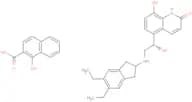
CAS:Indacaterol xinafoate is an ultra-long-acting beta-adrenoceptor agonist.Formula:C35H36N2O6Colore e forma:SolidPeso molecolare:580.67Hemopressin(rat) TFA
CAS:Hemopressin(rat) TFA, a nonapeptide from hemoglobin α1-chain, selectively inhibits CB1 receptors and reduces inflammatory pain.Formula:C55H78F3N13O14Colore e forma:SolidPeso molecolare:1202.28Prostaglandin F2α serinol amide
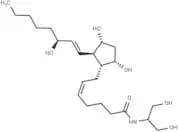
CAS:Prostaglandin F2α serinol amide, a serinolamide G protein-coupled receptor, elevates calcium levels in human non-small cell lung cancer cells. Additionally, Prostaglandin F2α functions as a luteinizing hormone in sheep and potentially serves as a nociceptive mediator in the spinal cord [1] [2] [3].Formula:C23H41NO6Colore e forma:SolidPeso molecolare:427.582