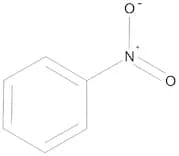
AC-12842 - nitrobenzene-99-extra-pure | 98-95-3
Sorry, no product with reference AC-12842 been found, but please check out the following similar products:
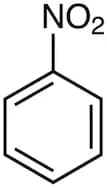
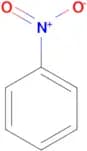
Nitrobenzene
CAS:Formula:C6H5NO2Purity:>99.5%(GC)Color and Shape:Light yellow to Yellow to Orange clear liquidMolecular weight:123.11Nitrobenzene
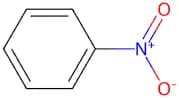
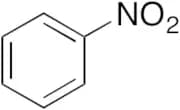
CAS:Controlled Product<p>Applications Nitrobenzene is a compound that exhibits chromosomal genotoxicity against hamster lung cells, and has the potential to cause cancer in humans (1,2). Nitrobenzene is also used as a starting material to synthesize 4-Aminophenol (A618920) through catalytic hydrogenation (3). Drinking water contaminant candidate list 3 (CCL 3) compound as per United States Environmental Protection Agency (EPA), environmental, and food contaminants.<br> Not a dangerous good if item is equal to or less than 1g/ml and there is less than 100g/ml in the package<br>References 1. Bonacker, D. et al.: Arch. Toxicol. 2004 Jan;78(1):49-57.2. Hsu, C. et al.: J. Environ. Sci. Health. C. Environ. Carcinog. Ecotoxicol. Rev. 2007 Apr-Jun;25(2):155-843. Rode, C. et al.: Org. Proc. Res. Dev. 1999 Nov;3(6), pp 465–470<br></p>Formula:C6H5NO2Color and Shape:Light YellowMolecular weight:123.11Nitrobenzene
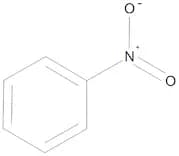
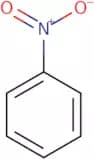
CAS:<p>Nitrobenzene is a chemical that is used in wastewater treatment. It reacts with sodium carbonate to form sodium nitrite and hydrogen fluoride. The reaction mechanism is not well understood, but it is thought that the hydrogen fluoride acts as a catalyst for the reaction. Nitrobenzene has been shown to have transport properties in natural water systems. It can be found in the environment from industrial waste or from the combustion of fossil fuels. Nitrobenzene has been shown to cause chronic exposure when ingested by humans and animals, as well as structural changes in DNA, which may lead to cancer. Nitrobenzene can also react with an inorganic acid to form an organic compound called a nitrosamine. These compounds are carcinogenic and mutagenic, and have been linked to various cancers such as bladder cancer, stomach cancer, pancreatic cancer, lung cancer, breast cancer, esophageal cancer and liver cancer. The most common nitrosamines are N-nit</p>Formula:C6H5NO2Purity:Min. 98 Area-%Color and Shape:Colorless Clear LiquidMolecular weight:123.11 g/molNitrobenzene Mixture for HJ 738-2015 2000 µg/mL in Hexane
CAS:Controlled ProductColor and Shape:MixtureNitrobenzene 10 µg/mL in Methanol
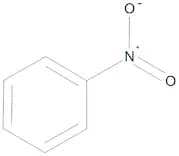
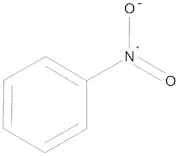
CAS:Controlled ProductFormula:C6H5NO2Color and Shape:Single SolutionMolecular weight:123.11Nitrobenzene 100 µg/mL in Methanol
CAS:Controlled ProductFormula:C6H5NO2Color and Shape:Single SolutionMolecular weight:123.11