Categories matching "anhydrous solvent" search:
Sort by
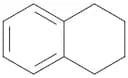
Naphthalene, 1,2,3,4-tetrahydro-
CAS:Formula:C10H12Purity:95%Color and Shape:LiquidMolecular weight:132.2023Sodium sulfate, Puratronic™, 99.9955% (metals basis)
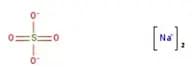
CAS:Sodium sulfate anhydrous is used primarily for drying non-aqueous solvents by removing traces of water. It is used as a fining agent for molten glass, levelling agent in textile processing, and filler in detergents. It is also used in Kraft process for paper pulping, defrosting windows, manufacturFormula:Na2O4SPurity:99.9955%Molecular weight:142.04Sodium sulfate, ACS, 99.0% min
CAS:In drying organic liquids, in Kjeldahl nitrogen determination, in manufacturing of glass. Sodium sulfate anhydrous is used primarily for drying non-aqueous solvents by removing traces of water. It is used as a fining agent for molten glass, levelling agent in textile processing, and filler in deteFormula:Na2O4SPurity:99.0%Molecular weight:142.04Dichloromethane, anhydrous, 99.7+%, packaged under Argon in resealable ChemSeal™ bottles, stab. with amylene
CAS:Controlled ProductSolvent for anhydrous reactions, water 0.01%.Dichloromethane is employed in pharmaceutical applications. Its utilization is as a solvent in manufacturing of fine chemicals, drugs, drug intermediates and pharmaceuticals, and also in food engineering. It is the solvent of choice for caffeine extractioFormula:CH2Cl2Purity:99.7+%Molecular weight:84.93Sodium sulfate, anhydrous, 99.99% (metals basis)
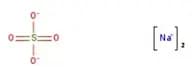
CAS:Sodium sulfate anhydrous is used primarily for drying non-aqueous solvents by removing traces of water. It is used as a fining agent for molten glass, levelling agent in textile processing, and filler in detergents. It is also used in Kraft process for paper pulping, defrosting windows, manufacturFormula:Na2O4SPurity:99.99%Molecular weight:142.042,4,6-Collidine, 99%
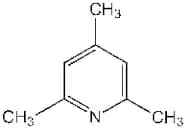
CAS:2,4,6-Collidine is used as a tissue fixative for electron microscopy. It is useful in dehydrohalogenation reactions and acts as a solvent for the cleavage of hindered esters by anhydrous lithium iodide. This Thermo Scientific Chemicals brand product was originally part of the Alfa Aesar product portFormula:C8H11NPurity:99%Color and Shape:Clear, colorless to yellow, LiquidMolecular weight:121.18Diethyl sulfide, 96%
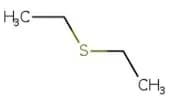
CAS:Diethyl sulfide is used as a solvent for anhydrous mineral salts and in plating baths for coating metals with gold or silver. It is used as a flavoring agent. It is also used in the addition reaction with platinum dichloride to prepare platinum ethynyl dimers and polymers with pendant ferrocenyl groFormula:C4H10SPurity:96%Color and Shape:Clear colorless to yellow, LiquidMolecular weight:90.18Diethyl disulfide, 99%
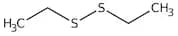
CAS:Diethyl sulfide is used as a solvent for anhydrous minerals and in plating baths for gold and silver This Thermo Scientific Chemicals brand product was originally part of the Alfa Aesar product portfolio. Some documentation and label information may refer to the legacy brand. The original Alfa AesarFormula:C4H10S2Purity:99%Color and Shape:Liquid, Clear colorless to pale yellowMolecular weight:122.24tert-Butyl [(tert-butoxycarbonyl)oxy]carbamate
CAS:tert-Butyl [(tert-butoxycarbonyl)oxy]carbamate is a compound that belongs to the class of hydroxylamine derivatives. It is used as a monomer for polystyrene and can be synthesized by reacting tert-butyl alcohol with hydrochloric acid and anhydrous ammonia. This substance has two main functions in the synthesis process: 1) it protects the hydroxamic acid group from hydrolysis by water; 2) it facilitates the extraction of the product from solvent. In addition, tert-Butyl [(tert-butoxycarbonyl)oxy]carbamate is also used in other applications such as the production of carboxylic acid analogues and their use in trackable aminolysis reactions. This substance is not likely to cause adverse effects at low doses, but may have lethal effects at higher doses because of its potential to inhibit protein synthesis.Formula:C10H19NO5Purity:Min. 95%Molecular weight:233.26 g/mol2-Chloro-5-methyl-1,3-benzoxazole
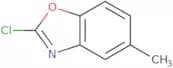
CAS:2-Chloro-5-methyl-1,3-benzoxazole (CMB) is a regioselective synthetic intermediate that can be used to synthesize other compounds. It is produced by the reaction of chloromethyl methyl ether with anhydrous magnesium chloride in the presence of a solvent such as THF or diethyl ether. CMB can also be prepared by the reaction of 2,4,6-trichlorobenzoyl chloride with magnesium metal and a solvent such as THF or diethyl ether. This intermediate can be used in cross-coupling reactions with Grignard reagents to produce different compounds.Formula:C8H6ClNOPurity:Min. 95 Area-%Color and Shape:PowderMolecular weight:167.59 g/mol(-)-Corey lactone benzoate
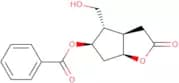
CAS:(-)-Corey lactone benzoate is a compound that was synthesized from a reaction between a primary alcohol and an acylating agent. It has been shown that (-)-Corey lactone benzoate can be used to synthesize the drug clofazimine, which is an anti-tuberculosis drug. The reaction system contains a constant pressure, organic solvent, and anhydrous conditions. (-)-Corey lactone benzoate is produced as a white solid with a melting point of 167 °C. It has been found to be impure and contain chloride and other impurities that are difficult to remove.Formula:C15H16O5Purity:Min. 95 Area-%Color and Shape:White Off-White PowderMolecular weight:276.28 g/molChlorsulfuron
CAS:Controlled ProductChlorsulfuron is a herbicide that inhibits the enzyme acetolactate synthase. This inhibition prevents plants from synthesizing three essential amino acids, which leads to plant death. Chlorsulfuron has been shown to be highly resistant to photosynthetic activity and transport properties, and it has no effect on soybean extract or chlorsulfuron enzyme activities in vitro. The anhydrous sodium salt of chlorsulfuron is stable in water and other solvents, making it a good choice for analytical methods such as HPLC.
Formula:C12H12ClN5O4SPurity:Min. 95%Color and Shape:White Off-White PowderMolecular weight:357.77 g/mol2,4-Dihydroxypyrimidine-5-carboxylic acid anhydrous
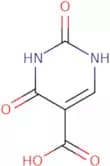
CAS:2,4-Dihydroxypyrimidine-5-carboxylic acid anhydrous (2,4DPA) is a metabolite of the drug 2,4-diaminopyrimidine. It inhibits protein synthesis in cells through hydrogen bonding interactions with dna duplexes and has been shown to be toxic to bacteria by inhibiting fatty acid biosynthesis. 2,4DPA is used as a standard in biological assays to measure uptake and light exposure. The analytical method for measuring 2,4DPA relies on hydrochloric acid (HCl) as a solvent that converts the material into its dimethyl ester derivative. This derivative can be quantified by gas chromatography/mass spectrometry (GCMS).Formula:C5H4N2O4Purity:Min. 94.0 Area-%Color and Shape:White Off-White PowderMolecular weight:156.1 g/mol2,5-Dimethylnitrobenzene
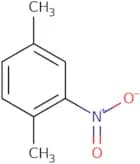
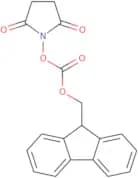
CAS:2,5-Dimethylnitrobenzene is a glyoxal compound that can be used as an antifreeze or as a solvent. 2,5-Dimethylnitrobenzene is also a byproduct of the reaction between benzyl esters and deuterium isotope. The reactivity of 2,5-dimethylnitrobenzene has been studied in detail using techniques such as anhydrous sodium and fatty acid to activate it. It has also been shown to produce nitrous oxide when reacted with nitric acid in deionized water. The effects of the deuterium isotope have been studied on the reaction rate of 2,5-dimethylnitrobenzene with various chemicals.Formula:C8H9NO2Purity:Min. 95%Molecular weight:151.16 g/molFmoc-OSu
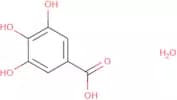
CAS:Fmoc-OSu is a matrix that can be used as an absorption enhancer in biological and biochemical studies. The ester hydrochloride form of Fmoc-OSu is soluble in water and methanol, but not in organic solvents such as chloroform or ether. Fmoc-OSu is also a fluorescent derivative that can be used to label glycan structures in primary cells. The reaction solution with anhydrous sodium carbonate and glycan produces a cyclic peptide. This reaction is carried out at room temperature with analytical methods using a spectrophotometer or high performance liquid chromatography (HPLC).Formula:C19H15NO5Purity:Min. 95%Color and Shape:White PowderMolecular weight:337.33 g/molGallic acid monohydrate
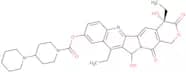
CAS:Gallic acid monohydrate is a natural phenolic compound present in plants, such as oak and sumac. It has been shown to have anticarcinogenic properties in animal models of cancer. Gallic acid monohydrate inhibits the growth of tumor cells by binding to the DNA of tumor cells and inhibiting the synthesis of RNA and proteins. It also possesses antioxidant properties, which may be due to its ability to scavenge free radicals. Gallic acid monohydrate is soluble in water, but not in organic solvents such as ether or chloroform. It exists as two crystalline polymorphs: one anhydrous form that occurs at room temperature and a hydrated form that appears when heated above 40 degrees Celsius. In vitro assays have shown that gallic acid monohydrate is stable when exposed to heat, light, and pH changes.END>Formula:C7H8O6Purity:Min. 95%Color and Shape:White PowderMolecular weight:188.13 g/mol12-Hydroxy irinotecan
CAS:12-Hydroxy irinotecan is a fine chemical that is used as a versatile building block for the synthesis of complex compounds. It has been found to be useful in research and development of new drugs, including anticancer agents. 12-Hydoxy irinotecan is also a reagent for use in organic synthesis; as well as being a speciality chemical and a useful scaffold for chemists to design new compounds. 12-Hydroxy irinotecan can be used in reactions involving anhydrous solvents and does not react with oxidizing agents.Formula:C33H38N4O7Purity:Min. 95%Color and Shape:PowderMolecular weight:602.68 g/mol




![tert-Butyl [(tert-butoxycarbonyl)oxy]carbamate](/_next/image/?url=https%3A%2Fstatic.cymitquimica.com%2Fproducts%2F3D%2Fthumb-webp%2FFB130830.webp&w=3840&q=75)