Fluorogenic Substrates
Found 217 products for "Fluorogenic Substrates".
- Lower prices
- Higher prices
- Lower purities
- Higher purities
- Faster estimated delivery
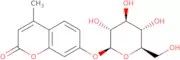
4-Methylumbelliferyl-beta-D-glucopyranoside
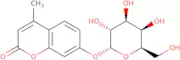
CAS:Fluorogenic substrate for beta-glucosidase yielding a blue fluorescent solution. Used for the detection of beta-glucosidase as an indicator of Enterococci.Formula:C16H18O8Purity:Min. 99 Area-%Molecular weight:338.32 g/mol4-Methylumbelliferyl-alpha-D-galactopyranoside
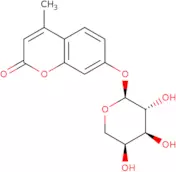
CAS:Fluorogenic substrate for α-galactosidase yielding a blue fluorescent solution upon cleavage. It is used for species differentiation within the family of Enterobacteriaceae. It is also utilized for the localization of the enzyme in plants.Formula:C16H18O8Purity:Min. 99.0 Area-%Molecular weight:338.32 g/mol4-Methylumbelliferyl-alpha-L-arabinopyranoside
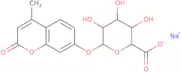
CAS:Fluorogenic substrate for α-L-arabinosidase yielding a blue fluorescent solution upon cleavage.Formula:C15H16O7Purity:Min. 98.0 Area-%Molecular weight:308.29 g/mol4-Methylumbelliferyl-alpha-L-idopyranosiduronic acid, sodium salt - high fluorescence grade
CAS:4MU-alpha-L-idopyranosiduronic acid is a fluorogenic substrate for alpha-L-iduronidase. Active alpha-L-iduronidase cleaves the MU moiety from the synthetic substrate, which results in release of a fluorescent signal (Ex 360 nm / Em 455 nm). The reaction is stopped by the addition of sodium carbonate. 4MU-alpha-L-idopyranosiduronic acid is used in alpha-L-iduronidase assays in the context of biochemical characterisation of samples from patients affected by lysosomal storage disease mucopolysaccharidosis I (MPS I).Formula:C16H15NaO9Purity:Min. 98.0 Area-%Molecular weight:374.27 g/mol4-Methylumbelliferyl dodecanoate
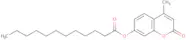
CAS:4-Methylumbelliferyl dodecanoate is a fluorogenic substrate for lipase. After enzymatic cleaveage, free 4-methylumbelliferone (also known as hymecromone) is released, exhibiting blue fluorescence upon excitation with UV light. The strongest fluorescence of 4-methylumbelliferone requires deprotonation of the hydroxyl group (thus requires alkaline pH), with a maximal fluorescence intensity obtained with excitation at 350 to 370 nm and emission at 440 to 470 nm. The use of 4-methylumbelliferyl dodecanoateas a substrate for measuring the lipase activity is used for detecting pancreatic insufficiency in diagnosis assays as well as the screening of lipase deficiency.Formula:C22H30O4Purity:Min. 95%Color and Shape:PowderMolecular weight:358.47 g/molRef: 3D-EM168113
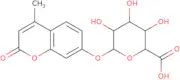
Discontinued product4-Methylumbelliferyl-beta-D-glucuronic acid dihydrate
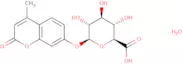
CAS:4-Methylumbelliferyl beta-D-glucuronide (MUG) is commonly used as a substrate for detecting beta-glucuronidase. MUG is used for identifying E. coli contamination in food, drinking water, clinical samples and for rapid bacterial identification in blood cultures. It is recommended in international normatives (ISO, DIN) as a fluorogenic substrate for detection of E. coli. MUG is also a tool assaying the glucuronidase gene in plants.Formula:C16H20O11Purity:Min. 99 Area-%Molecular weight:388.33 g/mol4-Methylumbelliferyl decanoate
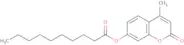
CAS:Fluorogenic substrate for carboxylesterasesFormula:C20H26O4Purity:Min. 98 Area-%Color and Shape:White PowderMolecular weight:330.42 g/mol4-Methylumbelliferyl-beta-D-glucuronic acid methyl ester, Biosynth Patent: EP 2718458 and US 9127303
4-Methylumbelliferyl-beta-D-glucuronic acid methyl ester is a chromogenic substrate for β-glucuronidase. It is used in diagnostic applications and as a substrate in enzyme kinetics experiments. 4-Methylumbelliferyl-beta-D-glucuronic acid methyl ester has fluorescence properties that allow it to be detected by chemiluminescence and bioluminescence.
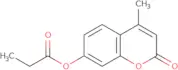
Purity:Min. 95%4-Methylumbelliferyl propionate
CAS:4-Methylumbelliferyl propionate is a fluorogenic substrate for esterase. After enzymatic cleaveage, free 4-methylumbelliferone (also known as hymecromone) is released, exhibiting blue fluorescence upon excitation with UV light. The strongest fluorescence of 4-methylumbelliferone requires deprotonation of the hydroxyl group (thus requires alkaline pH), with a maximal fluorescence intensity obtained with excitation at 350 to 370 nm and emission at 440 to 470 nm. The use of 4-methylumbelliferyl propionateas a substrate for measuring the esterase activity is used for esterase deficiency screening assays.
Formula:C13H12O4Purity:Min. 95 Area-%Color and Shape:PowderMolecular weight:232.23 g/molRef: 3D-EM52254
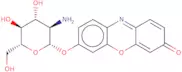
Discontinued productResorufin N-acetyl-b-D-glucosamine
CAS:Resorufin N-acetyl-b-D-glucosamine is fluorogenic substrate for N-acetyl-beta-D-glucosaminidase (NAG).
Formula:C20H20N2O8Purity:Min. 98 Area-%Color and Shape:Orange PowderMolecular weight:416.38 g/molRef: 3D-ER58683
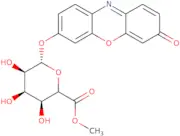
Discontinued productRUG ®, Resorufin-beta-D-glucuronic acid methyl ester, Biosynth Patent: EP 2718458 and US 9127303
CAS:Living cells of Escherichia coli can be reliably detected with media that contain a chromogenic or fluorogenic substrate for beta-glucuronidase (also termed β-D-glucuronidase), an enzyme that occurs almost exclusively in E. coli. RUG®, Resorufin-beta-D-glucuronic acid methyl ester is a highly sensitive chromogenic and fluorogenic indicator for E. coli. After removal of the methyl ester group by unspecific hydrolysis, orange colored product is cleaved by beta-glucuronidase in liquid media or on agar plates and yields an intense pink color. Red fluorescence is obtained upon excitation at 560-570 nm.Formally ER175455.
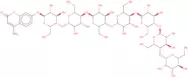
Formula:C19H17NO9Purity:Min. 90.0 Area-%Molecular weight:403.34 g/mol4-Methylumbelliferyl b-D-celloheptaoside
CAS:A fluorogenic MOSCERDAM® substrate targeting cellulasesPurity:Min. 95%Molecular weight:1,311.15 g/mol4-Methylumbelliferyl β-D-glucuronide
CAS:Fluorogenic substrate for b-glucuronidase GUSFormula:C16H16O9Purity:Min. 95%Molecular weight:352.29 g/molRef: 3D-EM58443
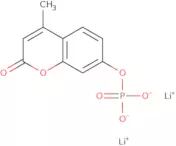
Discontinued product4-Methylumbelliferyl phosphate dilithium
CAS:4-Methylumbelliferyl phosphate dilithium is a fluorogenic substrate for alkaline phosphatase. After enzymatic cleaveage, free 4-methylumbelliferone (also known as hymecromone) is released, exhibiting blue fluorescence upon excitation with UV light. The strongest fluorescence of 4-methylumbelliferone requires deprotonation of the hydroxyl group (thus requires alkaline pH), with a maximal fluorescence intensity obtained with excitation at 350 to 370 nm and emission at 440 to 470 nm. The use of 4-methylumbelliferyl phosphate dilithiumas a substrate for measuring the alkaline phosphatase activity is used for bone metabolism disorder studies and hypophosphatasia diagnosis.Formula:C10H7O6P•Li2Purity:Min. 95%Color and Shape:PowderMolecular weight:268.01 g/molMethyl 4-methylumbelliferyl hexyl phosphonate
CAS:Methyl 4-methylumbelliferyl hexyl phosphonate is a lipase suicide inhibitor that is a fluorogenic substrate for lipases which upon enzymatic action, binds irreversibly to the lipase and inactivates it. The substrate can be used for the determination of active sites in lipases and the fluorescent signal can be detected at Ex 363 nm and Em 465 nm.
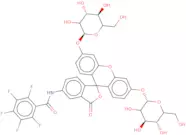
Purity:Min. 95%Molecular weight:338.345-(Pentafluorobenzoylamino)fluoroscein di-b-D-galactopyranoside
CAS:5-(Pentafluorobenzoylamino)fluoroscein di-b-D-galactopyranoside, commonly referred as PFB-FDG or PFB-FDGal, is a cell-permeable enzyme substrate for β-galactosidase used in live cell imaging assays. After cleavage, 5-(pentafluorobenzoylamino)fluorescein (PFB-F) is released, generating a green fluorescence (Em ~520 nm)) of a higher intensity than fluorescein. Its main use is for bacterial detection (e.g. E. coli LacZ assays), but also for flow cytometry analytical assays.
Formula:C39H32F2NO16Purity:Min. 95%Color and Shape:PowderMolecular weight:865.67 g/molRef: 3D-EP06469
Discontinued productRhodamine 110 bis-(N-CBZ-L-aspartyl-L-glutamyl-L-valyl-L-aspartic acid amide
For fluorogenic detection of caspase 3
Purity:Min. 95%Molecular weight:974.96 g/molRef: 3D-ER58698
Discontinued productResorufin ethyl ether
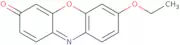
CAS:Resorufin ethyl ether is a fluorescent substrate that is used to measure the activity of cytochrome P450 enzymes. It can be used in vitro to study the effects of drugs on enzyme activities and in vivo to study liver lesions. Resorufin ethyl ether is also used as a model system for studying synchronous fluorescence, which is the emission of light by two or more substances at the same time. The nitrogen atoms in resorufin ethyl ether can be substituted with other atoms such as magnesium or zinc, which will affect its activity and fluorescence properties. Resorufin ethyl ether binds to cytochrome P450 enzymes and therefore inhibits their activity. This inhibition is reversible, and it can be reversed by adding a substance that competes with the substrate for binding sites on the enzyme.Purity:Min. 95%Molecular weight:241.24 g/molRef: 3D-ER22912
Discontinued productMaltotetraose 2-aminobenzamide
Maltotetraose 2-aminobenzamide is a chemiluminescent substrate that emits light in the presence of certain oxidizing agents. It provides high quality and environmental testing, as well as staining and ligand capability. Maltotetraose 2-aminobenzamide is used in diagnostics to identify bacteria and other microorganisms. Maltotetraose 2-aminobenzamide can be used for the detection of bacterial colonies on agar plates using a fluorogenic substrate, or for the detection of fungi using a chromogenic substrate. Maltotetraose 2-aminobenzamide is also used as an enzyme substrate in food testing or conjugate with enzymes for bioluminescence.
Purity:Min. 95%4-Methylumbelliferyl-phosphoethanolamine
4-Methylumbelliferyl-phosphoethanolamine is a phosphorylated substrate that can be used in the detection of enzymes such as alkaline phosphatase, esterase, and lipase. This compound has been shown to be a fluorescent and chromogenic substrate for many diagnostic purposes. 4-Methylumbelliferyl-phosphoethanolamine is also used as a fluorogenic substrate for chemiluminescent reactions that are found in culture media and environmental testing.
Purity:Min. 95%