Fluorogenic Substrates
Found 217 products for "Fluorogenic Substrates".
- Lower prices
- Higher prices
- Lower purities
- Higher purities
- Faster estimated delivery
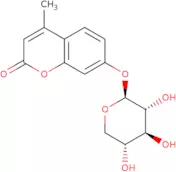
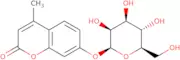
4-Methylumbelliferyl-beta-D-xylopyranoside
CAS:Fluorogenic substrate for β-D-xylosidase. Identification within the family of Enterobacteriaceae.Formula:C15H16O7Purity:Min. 99.0 Area-%Molecular weight:308.29 g/mol4-Methylumbelliferyl nonanoate
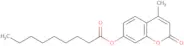
CAS:4-Methylumbelliferyl nonanoate is a fluorogenic substrate for lipase. After enzymatic cleaveage, free 4-methylumbelliferone (also known as hymecromone) is released, exhibiting blue fluorescence upon excitation with UV light. The strongest fluorescence of 4-methylumbelliferone requires deprotonation of the hydroxyl group (thus requires alkaline pH), with a maximal fluorescence intensity obtained with excitation at 350 to 370 nm and emission at 440 to 470 nm. The use of 4-methylumbelliferyl nonanoateas a substrate for measuring the lipase activity is used for the detection of lipase deficiency that could lead to pancreatic insufficiency.Formula:C19H24O4Purity:Min. 95%Color and Shape:PowderMolecular weight:316.39 g/molRef: 3D-EM52253
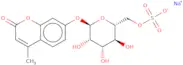
Discontinued product4-Methylumbelliferyl a-D-mannopyranoside 6-sulfate sodium salt
4-Methylumbelliferyl alpha-D-mannopyranoside 6-sulfate sodium salt is a fluorogenic substrate for sulfatase. After enzymatic cleaveage, free 4-methylumbelliferone (also known as hymecromone) is released, exhibiting blue fluorescence upon excitation with UV light. The strongest fluorescence of 4-methylumbelliferone requires deprotonation of the hydroxyl group (thus requires alkaline pH), with a maximal fluorescence intensity obtained with excitation at 350 to 370 nm and emission at 440 to 470 nm. The use of 4-methylumbelliferyl alpha-D-mannopyranoside 6-sulfate sodium saltas a substrate for measuring the sulfatase activity is used for Mucopolysaccharidosis (MPS) screening and other lysosomal storage disorder diagnosis.
Formula:C16H17O11SNaPurity:Min. 98 Area-%Color and Shape:White PowderMolecular weight:440.36 g/mol4-Methylumbelliferyl pyrophosphate diester disodium salt
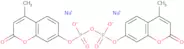
CAS:4-Methylumbelliferyl pyrophosphate diester disodium salt is a fluorogenic substrate for pyrophosphatases or diphosphatases. After enzymatic cleaveage, free 4-methylumbelliferone (also known as hymecromone) is released, exhibiting blue fluorescence upon excitation with UV light. The strongest fluorescence of 4-methylumbelliferone requires deprotonation of the hydroxyl group (thus requires alkaline pH), with a maximal fluorescence intensity obtained with excitation at 350 to 370 nm and emission at 440 to 470 nm. The use of 4-methylumbelliferyl pyrophosphate diester disodium saltas a substrate for measuring the pyrophosphatases or diphosphatases activity is used for monitoring and diagnosis of pyrophosphatase deficiency and bone metabolism disorder.Formula:C20H14Na2O11P2Purity:Min. 95%Color and Shape:White PowderMolecular weight:538.25 g/molRef: 3D-EM52292
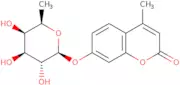
Discontinued product4-Methylumbelliferyl-beta-D-fucopyranoside
CAS:4-Methylumbelliferyl-beta-D-fucopyranoside is a fluorogenic substrate for beta-fucosidase. After enzymatic cleaveage, free 4-methylumbelliferone (also known as hymecromone) is released, exhibiting blue fluorescence upon excitation with UV light. The strongest fluorescence of 4-methylumbelliferone requires deprotonation of the hydroxyl group (thus requires alkaline pH), with a maximal fluorescence intensity obtained with excitation at 350 to 370 nm and emission at 440 to 470 nm. The use of 4-methylumbelliferyl-beta-D-fucopyranosideas a substrate for measuring the beta-fucosidase activity is used for the diagnosis of fucosidosis and the study of glycoprotein metabolism disorder.Formula:C16H18O7Purity:Min. 99 Area-%Molecular weight:322.31 g/mol4-Methylumbelliferyl 2-acetamido-2-deoxy-a-D-glucopyranoside
CAS:4-Methylumbelliferyl 2-acetamido-2-deoxy-alpha-D-glucopyranoside is a fluorogenic substrate for alpha-N-acetylglucosaminidase. After enzymatic cleaveage, free 4-methylumbelliferone (also known as hymecromone) is released, exhibiting blue fluorescence upon excitation with UV light. The strongest fluorescence of 4-methylumbelliferone requires deprotonation of the hydroxyl group (thus requires alkaline pH), with a maximal fluorescence intensity obtained with excitation at 350 to 370 nm and emission at 440 to 470 nm. The use of 4-methylumbelliferyl 2-acetamido-2-deoxy-alpha-D-glucopyranosideas a substrate for measuring the alpha-N-acetylglucosaminidase activity is used for Sanfilippo syndrome B screening and mucopolysaccharidosis diagnosis.Formula:C18H21NO8Purity:Min. 98 Area-%Color and Shape:PowderMolecular weight:379.36 g/molRef: 3D-EM182013
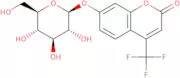
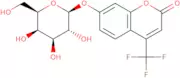
Discontinued product4-Trifluoromethylumbelliferyl b-D-glucopyranoside
CAS:4-Trifluoromethylumbelliferyl b-D-glucopyranoside is a fluorogenic substrate for beta-glucosidase. Upon hydrolysis, the fluorogenic moiety (blueish) 4-trifluoromethylumbelliferone (also known as TFMU) is released. 4-Trifluoromethylumbelliferyl b-D-glucopyranoside is commonly used in bacterial detection and in Gaucher disease diagnosis.
Purity:Min. 95%Color and Shape:White To Off-White SolidMolecular weight:392.28 g/molRef: 3D-ET04970
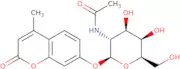
Discontinued product4-Methylumbelliferyl-N-acetyl-beta-D-galactosaminide
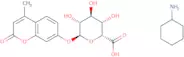
CAS:Fluorogenic substrate for N-acetyl-β-D-galactosaminidase. Detection of Candida albicans.Formula:C18H21NO8Purity:Min. 98.0 Area-%Molecular weight:379.37 g/mol4-Methylumbelliferyl-alpha-L-iduronic acid, cyclohexylammonium salt
CAS:4-Methylumbelliferyl-alpha-L-iduronic acid, cyclohexylammonium salt is a fluorogenic substrate for the detection of alpha-L-iduronidase activity. It has been used to measure the activity of this enzyme in cells and tissues and as an indicator of tissue damage. The product is also used in food testing, diagnostics, and environmental testing.
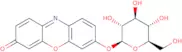
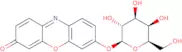
Formula:C22H29NO9Molecular weight:451.48 g/molResorufin b-D-glucopyranoside
CAS:Resorufin b-D-glucopyranoside is a stable red fluorogenic galactosidase substrate.
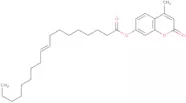
Purity:Min. 95%Color and Shape:Orange PowderMolecular weight:375.33 g/mol4-Methylumbelliferyl elaidate
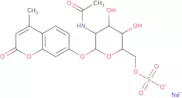
CAS:4-Methylumbelliferyl elaidate is a fluorogenic substrate for lipase. After enzymatic cleaveage, free 4-methylumbelliferone (also known as hymecromone) is released, exhibiting blue fluorescence upon excitation with UV light. The strongest fluorescence of 4-methylumbelliferone requires deprotonation of the hydroxyl group (thus requires alkaline pH), with a maximal fluorescence intensity obtained with excitation at 350 to 370 nm and emission at 440 to 470 nm. The use of 4-methylumbelliferyl elaidateas a substrate for measuring the lipase activity is used for assessment of lipase activity to identify pancreatitis.Formula:C28H40O4Purity:Min. 95%Color and Shape:PowderMolecular weight:440.61 g/mol4-Methylumbelliferyl 2-acetamido-2-deoxy-a-D-glucopyranoside-6-sulfate sodium salt - Moscerdam™ biochemical purity
CAS:A substrate used for the diagnosis of Sanfilippo disease type D (MPS IIID).
Formula:C18H20NNaO11SPurity:Min. 95%Color and Shape:White PowderMolecular weight:481.41 g/molRef: 3D-EM31027
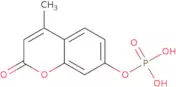
Discontinued product4-Methylumbelliferyl phosphate, free acid
CAS:A sensitive fluorogenic substrate for fluorometric and UV-spectrophotometric assays of phosphatases. It is used for the detection of C. perfringens because acid phosphatase is a highly specific indicator for C. perfringens.Formula:C10H9O6PMolecular weight:256.15 g/molRef: 3D-M-5800
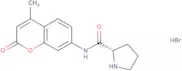
Discontinued productL-Proline 7-amido-4-methylcoumarin hydrobromide salt
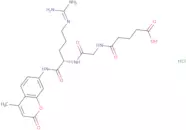
CAS:L-Proline 7-amido-4-methylcoumarin hydrobromide salt is a fluorogenic peptide substrate for proline-specific peptidase. This AMC peptide substrate is normally used to rapidly profile the N-terminal specificity of proteases.Formula:C15H17BrN2O3Purity:Min. 95%Color and Shape:PowderMolecular weight:353.22 g/molGlutaryl-glycyl-L-arginine 7-amido-4-methylcoumarin hydrochloride
CAS:Glutaryl-glycyl-L-arginine 7-amido-4-methylcoumarin hydrochloride is a synthetic peptide substrate used as a fluorogenic substrate for aminopeptidase.
Formula:C23H30N6O7·HClPurity:Min. 95%Color and Shape:PowderMolecular weight:538.98 g/molRef: 3D-EG138823
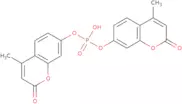
Discontinued productBis-(4-methylumbelliferyl)phosphate
CAS:Bis-(4-methylumbelliferyl)phosphate, or bis-4MU-phopshate, is a fluorogenic substrate used to study phosphatase activity, particularly in enzyme-linked immunosorbent assays (ELISAs).
Formula:C20H15O8PPurity:Min. 95 Area-%Color and Shape:White PowderMolecular weight:414.3 g/molRef: 3D-EB15696
Discontinued product4-Methylumbelliferyl-beta-D-mannopyranoside
CAS:Fluorogenic substrate for detection of β-D-mannosidase.Formula:C16H18O8Purity:Min. 99.0 Area-%Molecular weight:338.31 g/molResorufin-beta-D-galactopyranoside
CAS:Resorufin β-D-galactopyranoside is a non-fluorescent compound and is orange-yellow in color. It is hydrolyzed by the enzyme β-galactosidase (β-Gal) to yield fluorescent resorufin.Formula:C18H17NO8Purity:Min. 98.0 Area-%Molecular weight:375.34 g/mol4-Trifluoromethylumbelliferyl β-D-galactopyranoside
CAS:4-Trifluoromethylumbelliferyl β-D-galactopyranoside is a fluorogenic substrate for beta-galactosidase . Upon hydrolysis, the fluorogenic moiety (blueish) 4-trifluoromethylumbelliferone (also known as TFMU) is released. 4-Trifluoromethylumbelliferyl β-D-galactopyranoside is commonly used in bacterial detection and in LacZ gene expression assays.
Formula:C16H15F3O8Purity:Min. 95%Color and Shape:PowderMolecular weight:392.28 g/molRef: 3D-ET06963
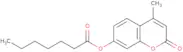
Discontinued product4-Methylumbelliferyl heptanoate
CAS:Lipase targeting MOSCERDAM® substrateFormula:C17H20O4Purity:Min. 95%Color and Shape:White PowderMolecular weight:288.34 g/molRef: 3D-EM67746
Discontinued product