Fmoc Amino Acids
Fmoc-amino acids are amino acids protected with a 9-fluorenylmethoxycarbonyl (Fmoc) group, widely used in solid-phase peptide synthesis (SPPS). The Fmoc group is easily removable under mild conditions, making it ideal for iterative peptide synthesis. At CymitQuimica, we offer a comprehensive selection of high-quality Fmoc-amino acids to support your peptide synthesis and research needs, ensuring high purity and reliable performance in your synthetic processes.
Found 1710 products of "Fmoc Amino Acids"
Sort by
Purity (%)
0
100
|
0
|
50
|
90
|
95
|
100
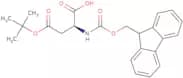
Fmoc-D-Ser(tBu)-OH
CAS:Formula:C22H25NO5Purity:>98.0%(T)(HPLC)Color and Shape:White to Light yellow powder to crystalMolecular weight:383.44(1R,2S)-1-[(tert-Butoxycarbonyl)amino]-2-vinylcyclopropanecarboxylic Acid
CAS:Formula:C11H17NO4Purity:>98.0%(GC)Color and Shape:White to Light yellow to Light orange powder to crystalMolecular weight:227.26Boc-DL-Phg-OH
CAS:Formula:C13H17NO4Purity:>98.0%(T)(HPLC)Color and Shape:White to Light yellow powder to crystalMolecular weight:251.28N-(tert-Butoxycarbonyl)-L-tyrosine Methyl Ester
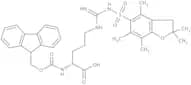
CAS:Formula:C15H21NO5Purity:>98.0%(HPLC)(N)Color and Shape:White to Almost white powder to crystalMolecular weight:295.34Fmoc-D-Arg(Pbf)-OH
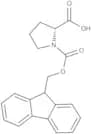
CAS:Formula:C34H40N4O7SPurity:≥ 98.0%Color and Shape:White to almost white powder or crystalsMolecular weight:648.77Fmoc-D-Pro-OH
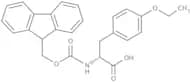
CAS:Formula:C20H19NO4Purity:≥ 99.0%Color and Shape:White or almost white powderMolecular weight:337.38Fmoc-O-ethyl-D-tyrosine
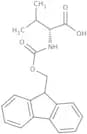
CAS:Formula:C26H25NO5Purity:≥ 98.0%Color and Shape:White or almost white powderMolecular weight:431.48Fmoc-D-Val-OH
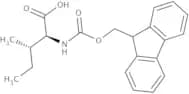
CAS:Formula:C20H21NO4Purity:≥ 98.0%Color and Shape:White to almost white powder or crystalline powderMolecular weight:339.39Fmoc-D-Ile-OH
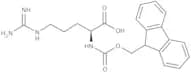
CAS:Formula:C21H23NO4Purity:≥ 98.0%Color and Shape:White to almost white powder or crystalsMolecular weight:353.41Fmoc-Arg-OH
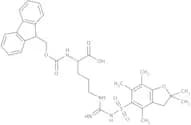
CAS:Formula:C21H24N4O4Purity:≥ 95.0%Color and Shape:White to off-white powder or crystalsMolecular weight:396.44Fmoc-Arg(Pbf)-OH
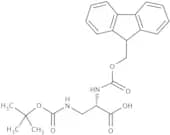
CAS:Formula:C34H40N4O7SPurity:≥ 99.0%Color and Shape:White to almost white powderMolecular weight:648.77Fmoc-Dap(Boc)-OH
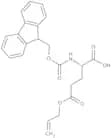
CAS:Formula:C23H26N2O6Purity:≥ 98.0%Color and Shape:White to off-white powderMolecular weight:426.47Fmoc-Glu(OAll)-OH
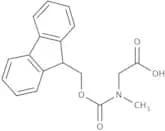
CAS:Formula:C23H23NO6Purity:≥ 98.0%Color and Shape:White to off-white powderMolecular weight:409.43Fmoc-Sar-OH
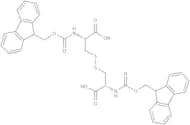
CAS:Formula:C18H17NO4Purity:(Titration) ≥ 98.0%Color and Shape:White to almost white powderMolecular weight:311.33Nα,Nα-Bis-Fmoc-L-cystine (disulfide bond)
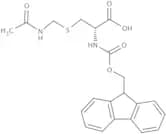
CAS:Formula:C36H32N2O8S2Purity:≥ 98.0%Color and Shape:White powderMolecular weight:684.78Fmoc-D-Cys(Acm)-OH
CAS:Formula:C21H22N2O5SPurity:≥ 98.0%Color and Shape:White to almost white powderMolecular weight:414.48Fmoc-Trp(Boc)-OH
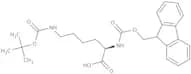
CAS:Formula:C31H30N2O6Purity:≥ 98.0%Color and Shape:White to almost white powderMolecular weight:526.58Fmoc-D-Lys(Boc)-OH
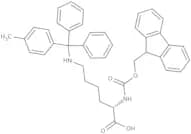
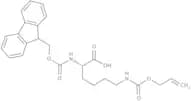
CAS:Formula:C26H32N2O6Purity:≥ 98.0%Color and Shape:White to almost white powder or crystalsMolecular weight:468.54Fmoc-Lys(Alloc)-OH
CAS:Formula:C25H28N2O6Purity:≥ 98.0%Color and Shape:White powder or crystalsMolecular weight:452.50Fmoc-D-Ala-OH
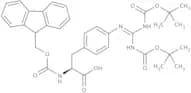
CAS:Formula:C18H17NO4Purity:≥ 99.0%Color and Shape:White to off-white, beige or faint yellow powderMolecular weight:311.33Fmoc-Phe(4-Boc2-guanidino)-OH
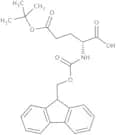
CAS:Formula:C35H40N4O8Purity:≥ 97.0%Color and Shape:White, off-white or pale beige powderMolecular weight:644.71Fmoc-D-Glu(OtBu)-OH
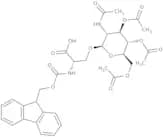
CAS:Formula:C24H27NO6Purity:≥ 98.0%Color and Shape:White to almost white powder or crystalsMolecular weight:425.47Fmoc-Ser(β-D-GlcNAc(Ac)3)-OH
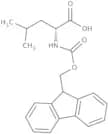
CAS:Formula:C32H36N2O13Purity:≥ 95.0%Color and Shape:White to off-white solidMolecular weight:656.63Fmoc-D-Leu-OH
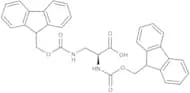
CAS:Formula:C21H23NO4Purity:≥ 99.0%Color and Shape:White to almost white powder or crystalsMolecular weight:353.42Fmoc-Dap(Fmoc)-OH
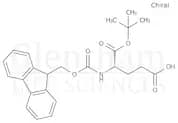
CAS:Formula:C33H28N2O6Purity:≥ 97.0%Color and Shape:White or off-white powderMolecular weight:548.59Fmoc-Glu-OtBu
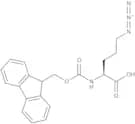
CAS:Formula:C24H27NO6Purity:≥ 98.0%Color and Shape:White to almost white powderMolecular weight:425.47(S)-5-Azido-2-(Fmoc-amino)pentanoic acid
CAS:Formula:C20H20N4O4Purity:≥ 98.5%Color and Shape:White powderMolecular weight:380.40Fmoc-N-(2-Boc-aminoethyl)-Gly-OH
CAS:Formula:C24H28N2O6Purity:≥ 99.0% (HPLC)Color and Shape:White crystalline powderMolecular weight:440.49Fmoc-(R)-3-amino-3-(3-trifluoromethyl-phenyl)-propionic acid
CAS:Please enquire for more information about Fmoc-(R)-3-amino-3-(3-trifluoromethyl-phenyl)-propionic acid including the price, delivery time and more detailed product information at the technical inquiry form on this pageFormula:C25H20F3NO4Purity:Min. 95%Color and Shape:PowderMolecular weight:455.43 g/molFmoc-5-hydroxy-L-Nva-OH
CAS:Fmoc-5-hydroxy-L-Nva-OH is a useful building block and reagent that belongs to the group of speciality chemicals. It is a versatile compound that can be used as a reaction component, useful intermediate, or useful scaffold. Fmoc-5-hydroxy-L-Nva-OH is an important building block for organic synthesis. It has been shown to be a good substitute for expensive natural products in the synthesis of pharmaceuticals and other organic compounds.Formula:C20H21NO5Purity:(¹H-Nmr) Min. 95 Area-%Color and Shape:PowderMolecular weight:355.4 g/molFmoc-Trp(5-OH)-OH
CAS:Fmoc-Trp(5-OH)-OH is a molecule that has been shown to have anticancer activity. It inhibits the proliferation of cancer cells and inhibits the production of fatty acids. It also has antiinflammatory properties and inhibits the growth of bacteria by inhibiting chloride channels. Fmoc-Trp(5-OH)-OH has been shown to inhibit the binding of 4-methylumbelliferone (4MU) to human erythrocytes, which is an indicator of its capability as a coumarin derivative. Fmoc-Trp(5-OH)-OH has also been found to be effective against tuberculosis through hydrogen bond interactions with the enzyme mycobacterium tuberculosis DNA polymerase.Formula:C26H22N2O5Purity:Min. 95%Color and Shape:PowderMolecular weight:442.5 g/molFmoc-Glu-OMe
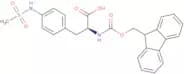
CAS:Fmoc-Glu-OMe is a small molecule that is synthesized by N-Fmoc chemistry. It has been shown to have synergistic effects with nitrate and antimicrobial agents, such as chloramphenicol, in the inhibition of bacterial growth. Fmoc-Glu-OMe also has strong antibacterial activity against Gram-positive bacteria such as Staphylococcus aureus and Streptococcus pyogenes. In addition, this compound is soluble in water and can be used for the delivery of hydrophobic drugs. This compound may be prepared using natural products or other chemical reactions.Formula:C21H21NO6Purity:Min. 95%Color and Shape:PowderMolecular weight:383.39 g/molN-Fmoc-4-methanesulfonylamino-L-phenylalanine
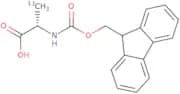
CAS:N-Fmoc-4-methanesulfonylamino-L-phenylalanine is a versatile building block that is used in the synthesis of complex compounds. It can be used as a reagent or speciality chemical, and has been shown to be an effective building block for the synthesis of high quality compounds. N-Fmoc-4-methanesulfonylamino-L-phenylalanine is soluble in water and meets USP requirements for purity. This compound can be used as an intermediate, scaffold, or reaction component.Formula:C25H24N2O6SPurity:Min. 95%Color and Shape:PowderMolecular weight:480.54 g/molFmoc-Ala-OH-3-13C
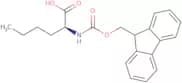
CAS:Fmoc-Ala-OH-3-13C is a versatile building block that can be used to synthesize a variety of compounds. It is an intermediate in the synthesis of more complex compounds and has been shown to possess high reactivity in peptide coupling reactions. Fmoc-Ala-OH-3-13C has a CAS number of 201489-21-6 and is a fine chemical that can be used for research, development, and other purposes.Formula:CC17H17NO4Purity:Min. 98 Area-%Color and Shape:PowderMolecular weight:312.32 g/molFmoc-L-norleucine
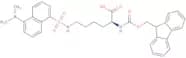
CAS:Fmoc-L-norleucine is a non-natural amino acid that can be used to study the interactions of proteins with cellular receptors. It is synthesized from methylandrostenediol and caproic acid, which are then reacted with sodium salt. The resultant product contains a tertiary amine group that interacts with the surface receptor. Fmoc-L-norleucine has shown affinity for endogenous ligands such as nucleobases and phospholipids on cell membranes. In addition, it has been shown to interact with other proteins through its side chain, including erythrocyte band 3 protein. Fmoc-L-norleucine also has a high affinity for binding to divalent metal ions such as calcium and magnesium in aqueous solution, giving it potential applications in the field of analytical chemistry.Formula:C21H23NO4Purity:Min. 98 Area-%Color and Shape:White PowderMolecular weight:353.41 g/molN-alpha-Fmoc-Nepsilon-dansyl-L-lysine
CAS:N-alpha-Fmoc-Nepsilon-dansyl-L-lysine is a fluorescent molecule that is synthesized by attaching an allyl group to the amino acid lysine. This fluorescence can be used as a probe for specific interactions with proteins. N-alpha-Fmoc-Nepsilon-dansyl-L-lysine has been shown to interact with copolymers of poly(ethylene glycol) and poly(allylamine). The interaction results in a supramolecular, or self assembling, structure. The molecule's fluorescence can be activated by irradiation and this makes it useful for studying protein target binding.Formula:C33H35N3O6SPurity:Min. 97 Area-%Color and Shape:PowderMolecular weight:601.71 g/molFmoc-Asp(OtBu)-OH
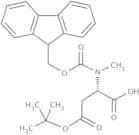
CAS:Fmoc-Asp(OtBu)-OH is a fluorescent probe that binds to the integrin receptor. This protein is a cell-surface receptor that binds to collagen, fibronectin and other extracellular matrix proteins. Fmoc-Asp(OtBu)-OH has been shown to inhibit the binding of human cells to collagen in a homogenous assay. The chemical ligation of this amino acid with an amine results in an isopeptide bond, which can be cleaved by trifluoroacetic acid. Fmoc-Asp(OtBu)-OH can be used for the detection of integrin receptors in mammalian cells and sectioned tissues.Formula:C23H25NO6Purity:Min. 98.0 Area-%Color and Shape:White PowderMolecular weight:411.45 g/molFmoc-4,4-difluoro-L-proline
CAS:Fmoc-4,4-difluoro-L-proline is an antibacterial that binds to the bacterial cell wall by competitive inhibition. Fmoc-4,4-difluoro-L-proline has been shown to be effective in treating inflammatory bowel disease and other inflammatory diseases, such as traumatic brain injury and Alzheimer's disease. Fmoc-4,4-difluoro-L-proline also has inhibitory effects on a number of enzymes, including dehydrogenase and caspases. This drug may also have therapeutic potential for degenerative diseases and autoimmune diseases such as infectious diseases. 6 Fluoro 3 indoxyl beta D galactopyranoside Rifapentine is an anti tuberculosis drug that belongs to the class of rifamycins. It is the most active of the rifamycins for the treatment of tuberculosis. Rifapentine inhibits bacterial growth by bindingFormula:C20H17F2NO4Purity:Min. 95%Color and Shape:White To Off-White SolidMolecular weight:373.35 g/molFmoc-OSu
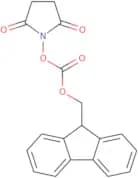
CAS:Fmoc-OSu is a matrix that can be used as an absorption enhancer in biological and biochemical studies. The ester hydrochloride form of Fmoc-OSu is soluble in water and methanol, but not in organic solvents such as chloroform or ether. Fmoc-OSu is also a fluorescent derivative that can be used to label glycan structures in primary cells. The reaction solution with anhydrous sodium carbonate and glycan produces a cyclic peptide. This reaction is carried out at room temperature with analytical methods using a spectrophotometer or high performance liquid chromatography (HPLC).Formula:C19H15NO5Purity:Min. 95%Color and Shape:White PowderMolecular weight:337.33 g/molFmoc-Tyr-OH
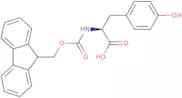
CAS:Fmoc-Tyr-OH is a peptide that can be used as an agent for the treatment of epidermal growth factor receptor (EGFR) related diseases. It has been shown to be effective in inhibiting the replication of RNA and DNA, which may contribute to the inhibition of tumor growth. Fmoc-Tyr-OH is synthesized through solid phase synthesis where it is reacted with trifluoroacetic acid and particle. This reaction is enhanced by adding an iodination reaction and phosphatase. The polymerase chain reaction then occurs in order to produce more Fmoc-Tyr-OH peptides. Fmoc-Tyr-OH also has a high affinity for acidic ph, making it suitable for use in acidic environments such as tumors.Formula:C24H21NO5Purity:Min. 95%Color and Shape:White PowderMolecular weight:403.43 g/molFmoc-D-Arg(Pbf)-OH
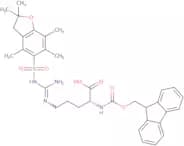
CAS:Fmoc-D-Arg(Pbf)-OH is a synthetic peptide that can inhibit the growth of cancer cells. It has been shown to inhibit protease activity in mitochondria and inhibit mitochondrial membrane potential. The uptake of Fmoc-D-Arg(Pbf)-OH by neutrophils is dependent on the presence of superparamagnetic iron nanoparticles, which are taken up by phagocytic cells and used for oxidative burst. Fmoc-D-Arg(Pbf)-OH has a high affinity for mammalian cells but not for bacterial or fungal cells.Formula:C34H40N4O7SPurity:Min. 95%Molecular weight:648.77 g/mol


![(1R,2S)-1-[(tert-Butoxycarbonyl)amino]-2-vinylcyclopropanecarboxylic Acid](/_next/image/?url=https%3A%2Fstatic.cymitquimica.com%2Fproducts%2F3B%2Fthumb-webp%2FB5322.webp&w=3840&q=75)