Tyrosine Kinase/Adaptors
Tyrosine kinase and adaptor inhibitors are compounds that target tyrosine kinases and their associated adaptor proteins, which play pivotal roles in cell signaling, growth, and differentiation. These inhibitors are essential tools in cancer research, as many tyrosine kinases are involved in the signaling pathways that drive tumor growth and metastasis. By inhibiting tyrosine kinases, these compounds can block critical signaling cascades, offering potential therapeutic strategies for various cancers and other diseases involving abnormal cell signaling. At CymitQuimica, we provide a comprehensive range of high-quality tyrosine kinase and adaptor inhibitors to support your research in oncology, molecular biology, and targeted therapy development.
Subcategories of "Tyrosine Kinase/Adaptors"
- ALK(129 products)
- CSF-1R(42 products)
- EGFR(591 products)
- Ephrin Receptor(25 products)
- FLT(90 products)
- Fibroblast Growth Factor Receptor (FGFR)(183 products)
- HER(3 products)
- Hck(3 products)
- IGF-1R(104 products)
- PDGFR(127 products)
- PYK2(7 products)
- Src(81 products)
- TAM Receptor(33 products)
- Tie-2(20 products)
- Trk receptor(57 products)
- Tyrosine Kinases(25 products)
- VEGFR(246 products)
- c-Fms(112 products)
- c-Kit(115 products)
- c-Met/HGFR(137 products)
- c-RET(62 products)
Show 13 more subcategories
Found 1167 products of "Tyrosine Kinase/Adaptors"
Sort by
Purity (%)
0
100
|
0
|
50
|
90
|
95
|
100
KRC-00715
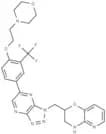
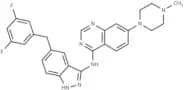
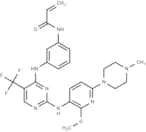
CAS:KRC-00715 is an orally effective inhibitor of c-Met, exhibiting high selectivity with an IC50 of 9.0 nM. This compound specifically inhibits the growth of gastric cancer cell lines with high c-Met expression by inducing G1/S phase block, and reduces the activity of downstream signals, including Akt, Erk, and c-Met itself. In the gastric cancer cell line Hs746T, KRC-00715 demonstrates cytotoxicity with an IC50 of 39 nM and selectively inhibits the proliferation of cell lines that overexpress c-Met. Additionally, KRC-00715 decreases tumor size in Hs746T xenograft mouse models.Formula:C25H25F3N8O3Color and Shape:SolidMolecular weight:542.51AZ8010
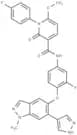
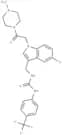
CAS:AZ8010 (AZ12908010) serves as an effective inhibitor of FGFR1-3 and exhibits antiproliferative properties, making it useful for cancer research.Formula:C27H34N4O3Color and Shape:SolidMolecular weight:462.58DYRKs-IN-1
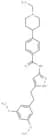
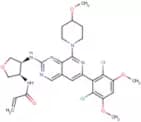
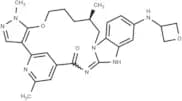
CAS:<p>DYRKs-IN-1 has antitumor activity.</p>Formula:C30H30ClN7O4Purity:98%Color and Shape:SolidMolecular weight:588.068-Br-cGMP-AM
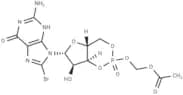
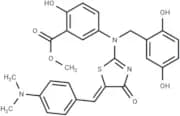
CAS:8-Br-cGMP-AM, a derivative of 8-Br-cGMP, acts as an activator of PKG (cGMP-dependent protein kinase), inducing various biological effects such as vasodilation and platelet inhibition. This compound is utilized in the research of cardiovascular diseases.Formula:C13H15BrN5O9PColor and Shape:SolidMolecular weight:496.16EGFR-IN-17
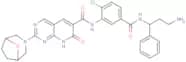
EGFR-IN-17: potent, selective EGFR inhibitor, IC50 of 0.2 nM, overcomes C797S drug resistance.Formula:C27H31ClN7O3PColor and Shape:SolidMolecular weight:568.01TRK-IN-28
CAS:TRK-IN-28 (compound 30f) functions as a TRK inhibitor, displaying potencies with IC 50 values of 0.55 nM for TRK WT, 25.1 nM for TRK G595R, and 5.4 nM for TRK G667C. Another TRK inhibitor, TRK-IN-2, exhibits antiproliferative effects with IC 50 values against multiple cell lines: 9.5 nM for Ba/F3-ETV6-TRKA WT, 3.7 nM for Ba/F3-ETV6-TRKB WT, 205.0 nM for Ba/F3-LMNA-TRK G595R, and 48.3 nM for Ba/F3-LMNA-TRKA G667C [1].Formula:C27H25F2N7Color and Shape:SolidMolecular weight:485.53TRK-IN-26
CAS:TRK-IN-26 (compound 12), a TRK inhibitor, holds potential for use in cancer research [1].Formula:C30H22F2N6O4Color and Shape:SolidMolecular weight:568.53EGFR-IN-18
EGFR-IN-18 strongly inhibits L858R/T790M/C797S mutant EGFR (4.9 nM) and also targets wild-type EGFR (47 nM).Formula:C33H28N6O3SColor and Shape:SolidMolecular weight:588.68FGFR4-IN-4
CAS:FGFR4-IN-4 is a FGFR4 inhibitor with anti-tumor activity.Formula:C28H32Cl2N6O5Purity:98%Color and Shape:SolidMolecular weight:603.5EGFR-IN-130
EGFR-IN-130 (compound 14b) is an EGFR inhibitor and an inducer of apoptosis (apoptoosis). It effectively kills HeLa cancer cells by inducing apoptosis.Formula:C27H25N3O6SColor and Shape:SolidMolecular weight:519.57EGFR-IN-135
EGFR-IN-135 (compound 3d) is an EGFR inhibitor with an IC50 value of 0.086 µM. It inhibits cell growth and arrests the cell cycle in the S phase in breast cancer cell lines.Formula:C12H14N4OS2Color and Shape:SolidMolecular weight:294.4EG31
CAS:EG31 is an EGFR inhibitor that effectively suppresses the proliferation of triple-negative breast cancer (TNBC) cells by inhibiting the EGFR signaling pathway. It demonstrates a GI50 value of 498.90 nM for MDA-MB-231 cells and 740.73 nM for Hs578T cells, while also inducing apoptosis. Additionally, EG31 retains its antiproliferative activity against 5-fluorouracil (5-FU) resistant TNBC cells, with a GI50 of 519.5 nM. EG31 is applicable in research on TNBC resistance.Formula:C30H13Br2N3O6Color and Shape:SolidMolecular weight:671.25DDR1/2 inhibitor-3
CAS:DDR1/2 inhibitor-3 (5n) is an inhibitor of DDR1/2, with IC50 values of 9.4 nM and 20.4 nM, respectively. It is applicable in anti-inflammatory research.Formula:C31H31F3N6OColor and Shape:SolidMolecular weight:560.613BNN-20
CAS:BNN-20 is a synthetic micro-neurotrophic factor that mimics Brain-Derived Neurotrophic Factor (BDNF) and exhibits region-specific neuroprotective and neurogenesis-promoting effects. It is applicable in research related to Parkinson's disease.Formula:C20H30O2Color and Shape:SolidMolecular weight:302.45ES-072
CAS:ES-072, a selective inhibitor targeting the EGFR mutant (EGFR-T790M), is administered orally. By hindering EGFR-T790M activity, it activates GSK3α, which subsequently leads to the phosphorylation of PD-L1 at Ser279 and Ser283. This phosphorylation facilitates the recruitment of the E3 ubiquitin ligase ARIH1, resulting in the ubiquitination and proteasomal degradation of PD-L1. Such a process not only curtails the growth of cancer cells but also amplifies the anti-tumor immune response by diminishing PD-L1 levels. ES-072 has shown efficacy in impeding the proliferation of non-small cell lung cancer (NSCLC) cells.Formula:C25H27F3N8O2Color and Shape:SolidMolecular weight:528.53DDR1-IN-10
CAS:DDR1-IN-10 (compound 7q) is an inhibitor of DDR1. It is applicable in research related to pancreatic cancer, non-small cell lung cancer, and gastric cancer.Formula:C24H25F4N5O2Color and Shape:SolidMolecular weight:491.481Tesevatinib tosylate
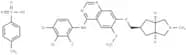
CAS:Tesevatinib tosylate (XL-647 tosylate) is an orally administered epidermal growth factor receptor (EGFR) inhibitor that can cross the blood-brain barrier. It significantly reduces cell viability with IC50 values of 11 nM and 102 nM in GBM12 and GBM6, respectively. Additionally, Tesevatinib tosylate inhibits HER2 (IC50=16.1 nM), VEGFR2 (IC50=1.5 nM), and Src (IC50=10.3 nM), demonstrating antitumor activity by inhibiting tumor proliferation.Formula:C31H33Cl2FN4O5SColor and Shape:SolidMolecular weight:663.59EGFR-IN-160
CAS:EGFR-IN-160 is an EGFR inhibitor with IC50 values of 1.62, 0.49, and 0.98 μM for EGFRWT, EGFRT790M, and EGFRL858R/T790M/C797S, respectively. It can induce cell cycle arrest at the G2/M and S phases and apoptosis (Apoptosis) in NCI-H522 cells, demonstrating anticancer properties. Additionally, EGFR-IN-160 exhibits antioxidant activity against DPPH (IC50: 12.11 µM) and H2O2 (IC50: 8.89 µM).Formula:C15H12N2O4Color and Shape:SolidMolecular weight:284.27EGFR-IN-132
CAS:EGFR-IN-132 (Compound 23) is an EGFR inhibitor effective against various EGFR mutations including the wild-type, L858R/T790M, d19/T790M, L858R/T790M/C797S, and d19/T790M/C797S with IC50 values of 1.6, 0.025, 0.019, 0.022, and 0.029 nM, respectively. This compound demonstrates favorable pharmacokinetics with high oral bioavailability.Formula:C27H31N7O3Color and Shape:SolidMolecular weight:501.58D-69491 hydrochloride
CAS:D-69491 hydrochloride is an inhibitor of HER-2 tyrosine kinase activity, blocking the phosphorylation of HER-2 and inhibiting the proliferation of SKOV-3 cells. It exhibits antitumor activity.Formula:C25H26Cl2FN7O3Color and Shape:SolidMolecular weight:562.42