


Dyes, Stains and Tinctures
Subcategories of "Dyes, Stains and Tinctures"
- Acid Dyes(49 products)
- Azobenzenes(270 products)
- Azoic Dyes(7 products)
- Basic Dyes(27 products)
- Coumarin Dyes(72 products)
- Cyanine Dyes, Squarylium Dyes(53 products)
- DCM Dyes(4 products)
- Diarylethenes(12 products)
- Dipyrromethene Dyes(26 products)
- Direct Dyes(17 products)
- Disperse Dyes(2 products)
- Dye Sensitizers(12 products)
- Dyes(418 products)
- Dyes & Stains(911 products)
- Generating Insoluble Dyes(14 products)
- Generating Soluble Dyes(11 products)
- Hexaarylbiimidazole(4 products)
- Indicators(575 products)
- Mordant Dyes(10 products)
- Near-Infrared (NIR) Dyes(28 products)
- Oil Dyes(15 products)
- Other Stains and Dyes(2 products)
- Perylene Dyes(17 products)
- Photochromic Dyes(40 products)
- Phthalocyanine Dyes, Porphyrin Dyes(101 products)
- Quinacridone Dyes(8 products)
- Spiropyrans(16 products)
- Stains and Dyes(243 products)
- Stains and Dyes for Microscopy(5 products)
- Vat Dyes(5 products)
- Xanthene Dyes(67 products)
Found 758 products of "Dyes, Stains and Tinctures"
SDS PAGE Sample Buffer (5X) (Reducing) w/ DTT w/ BPB
It is the most commonly used sample buffer for SDS-PAGE of denatured proteins. It is a ready-to-use 5X solution with dithiothreitol (DTT) as a reducing agent. It can be used for SDS-PAGE protein loading of conventional proteins. The use of sample buffer ensures optimal band resolution when preparing proteins for SDS-PAGE with Tris-glycine-SDS running buffer. :It is the most commonly used sample buffer for SDS-PAGE of denatured proteins. It is a ready-to-use 5X solution with dithiothreitol (DTT) as a reducing agent. It can be used for SDS-PAGE protein loading of conventional proteins. The use of sample buffer ensures optimal band resolution when preparing proteins for SDS-PAGE with Tris-glycine-SDS running buffer. :It is the most commonly used sample buffer for SDS-PAGE of denatured proteins. It is a ready-to-use 5X solution with dithiothreitol (DTT) as a reducing agent. It can be used for SDS-PAGE protein loading of conventional proteins. The use of sample buffer ensures optimal band resolution when preparing proteins for SDS-PAGE with Tris-glycine-SDS running buffer.Role of reagents: Tris-HCl: as a buffering substance. The pH play an essential role in preserving peptide bonds from breaking apart. SDS: Proteins comes in different sizes and charges. SDS is an anionic detergent that helps in linearizing (by denaturing) the proteins and bringing a net negative charge to the proteins irrespective of the initial charge. Glycerol: The high density (thickening of the solution) of glycerol ensures the sample moves down into the well. DL-Dithiothreitol (DTT): is a strong reducing agent. Its specific role in sample denaturation is to remove the last bit of tertiary and quaternary structure by reducing disulfide bonds. Bromophenol Blue: visually indicates the location (tracking dye) of the sample in the gel.Color and Shape:Liquid, Dark Blue, ClearBiolit SpryBlue Stain for SDS Page
SpryBlue stain is a staining solution used for staining SDS Polyacrylamide gels. It is a ready-to-use stain for proteins that is quick and sensitive. Based on Coomassie blue G-250 dye’s properties, the stain is more sensitive than Coomassie blue R-250. The added advantage is that it requires no destaining procedures.
Quick staining procedure
- Bands are seen with good intensity within one hour.
- Faint bands seen within 15 minutes of addition of the stain
- No destaining procedures, thus reducing time and effort
- No shrinkage of gels, no background from overnight staining.
- Optional wash with water helps increase sensitivity of fainter bands.Color and Shape:Liquid, BlueSDS PAGE Sample Buffer (2X) (Reducing) (Laemmli Buffer 2X)
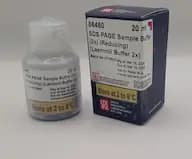
A ready-to-use 2X solution with beta-mercaptoethanol as a reducing agent. Used in SDS-PAGE for loading of conventional proteins. The use of Laemmli sample buffer ensures optimal band resolution when preparing proteins for SDS-PAGE with Tris-glycine-SDS running buffer. Role of 2X SDS PAGE Sample buffer : 1 .Tris-HCl is a buffer and it’s pH plays an essential role in preserving peptide bonds from breaking apart. 2. Sodium dodecyl sulphate is an anionic detergent that helps in linearizing (by denaturing) the proteins and bringing a net negative charge to the proteins irrespective of the initial charge. 3. The high density of glycerol ensures the sample moves down into the well. 4. Beta-mercaptoethanol, along with SDS, ensure the bands are individual polypeptide instead of molecular complexes. 5. The dye visually indicates the location (tracking) of the sample in the gel.Color and Shape:Liquid, Dark Blue, ClearBorate Buffer (20X) (Amine-free)
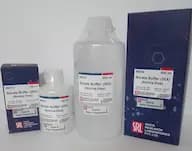
20X Borate Buffer is a stock solution that is ideal for preparing sodium borate buffer solutions for use in protein modification procedures requiring amine-free buffer at alkaline pH. Simply dilute the stock solution with pure water and proceed with your experiment. The 20X Borate Buffer pH remains 8.5, when diluted to 1X with water.Color and Shape:Liquid, Clear, ColourlessSDS PAGE Sample Buffer (5X) (Reducing) (Laemmli Buffer 5X)
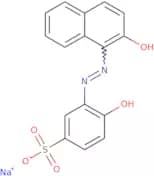
A ready-to-use 5X solution with beta-mercaptoethanol as a reducing agent. Used in SDS-PAGE for loading of conventional proteins. The use of Laemmli sample buffer ensures optimal band resolution when preparing proteins for SDS-PAGE with Tris-glycine-SDS running buffer. Role of 5X SDS PAGE Sample buffer :1. Tris is a buffer and it’s pH plays an essential role in preserving peptide bonds from breaking apart. 2. Sodium dodecyl sulphate is an anionic detergent that helps in linearizing (by denaturing) the proteins and bringing a net negative charge to the proteins irrespective of the initial charge. 3. The high density of glycerol ensures the sample moves down into the well. 4. Beta-mercaptoethanol, along with SDS, ensure the bands are individual polypeptide instead of molecular complexes. 5. The dye visually indicates the location (tracking) of the sample in the gel.Color and Shape:Liquid, Dark Blue, ClearAcid Alizarin Violet N
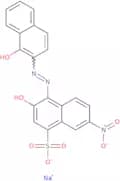
CAS:Darkred/purple acid-base indicator dyeFormula:C16H11N2NaO5SPurity:Min. 95%Molecular weight:366.3 g/molSandoal gold 4N
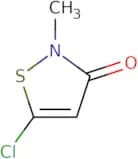
Please enquire for more information about Sandoal gold 4N including the price, delivery time and more detailed product information at the technical inquiry form on this pagePurity:Min. 95%5-Chloro-2-methyl-3-isothiazolone - Active Ingredient >14%, CMI/MI 2.5 - 4.0
CAS:5-Chloro-2-methyl-3-isothiazolone (CMIT) is a highly water-soluble apoptotic agent and preservative with numerous applications. It is used in anti-microbial coatings, latex formulations, hydraulic fracturing fluids, pesticides and cosmetics. CMIT in conjunction with 2-methyl-4-isothiazolin-3-one (MIT) is marketed as Kathon. CMIT is also an allergen. CMIT is active against gram-positive and gram-negative bacteria, yeasts and fungi. CMIT is believed to form mixed disulfides with protein thiol groups which then undergo thiol-disulfide exchange reactions to give mixed protein thiol disulfides leading to cell apoptosis and necrosis.
Formula:C4H4ClNOSColor and Shape:Yellow Clear LiquidMolecular weight:149.6 g/molC.I.Acid Red 35
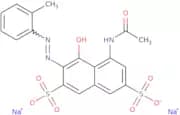
CAS:C.I. Acid Red 35 is a diacid with a hydroxyl group that belongs to the group of dyes. It is used in cosmetics for its color and as a polymerization initiator for polyesters, epoxy resins and silicone elastomers. C.I. Acid Red 35 is also used as a control agent in textile dyeing, papermaking, and leather tanning to prevent the formation of unwanted color reactions or cross-linking reactions with other chemicals. The dye has been shown to react with metal hydroxides to form metal complexes and reactive molecules when exposed to ammonia or acidified sodium nitrite. C.I. Acid Red 35 is soluble in organic solvents, but insoluble in water due to its intramolecular hydrogen bonding and intermolecular hydrogen bonding with fatty acids on the surface of cellulose fibers or unsaturated alkyl chains on the surface of nylon fibers. This dye has been shown to be reactive with carbPurity:Min. 95%Solvent yellow 98
CAS:Solvent Yellow 98 is a fluorescent dye that belongs to the class of organic solvents. It is used in a variety of applications, such as deionized water, emulsions, and fluorescent light. The Solvent Yellow 98 molecule consists of an aliphatic hydrocarbon chain with a cationic surfactant at one end. This surfactant is responsible for the fluorescence of this compound.Formula:C36H45NO2SPurity:Min. 95%Color and Shape:PowderMolecular weight:555.81 g/mol16alpha-Butyloxyprednisolone
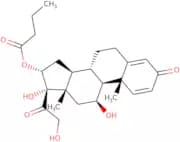
CAS:Controlled ProductPlease enquire for more information about 16alpha-Butyloxyprednisolone including the price, delivery time and more detailed product information at the technical inquiry form on this pageFormula:C25H34O7Purity:Min. 95%Color and Shape:PowderMolecular weight:446.53 g/mol(E)-8-Methyl-6-nonenoic acid - predominantly trans
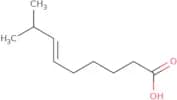
CAS:(E)-8-Methyl-6-nonenoic acid is a fatty acid that is found in the acetate extract of Capsicum annuum. It is an analog of the natural compound (E)-8-methyl-6-nonenal, which has been shown to have anticancer properties. The synthesis of this compound has been achieved using a novel approach based on enzymatic reactions and chemical transformations. This compound has been shown to have potential anticancer activity against human prostate cancer cells in vitro and to inhibit the growth of triticum aestivum seeds.Formula:C10H18O2Purity:Min. 95%Molecular weight:170.25 g/molMordant black 11 - Technical
CAS:Mordant Black 11 is a water-soluble dye that is used in the treatment of wastewater. Mordant Black 11 binds to surface particles and enhances the removal of organic matter from wastewater. It has been shown to be effective for the treatment of human serum, which contains high levels of proteins and other macromolecules. Mordant Black 11 efficiently adsorbs onto the surface of these macromolecules, leading to a decrease in the amount of protein adsorbed on the surface. The kinetic data for this process have been obtained by electrochemical impedance spectroscopy (EIS) and by measuring changes in pH due to ionization. A magnesium salt is required for the synthesis of Mordant Black 11, as well as potassium dichromate or other chromium salts and fatty acids.Formula:C20H12N3NaO7SPurity:Min. 95%Molecular weight:461.38 g/molResazurin
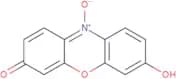
CAS:Weakly fluorescent blue dye; indicator of mitochondrial activity. The reduction of resazurin has been ascribed to a putative reductase or diaphorase-type enzymes from the mitochondria and cytosol but also it might play a role as an intermediate electron acceptor in the electron transport chain between the final reduction of oxygen and cytochrome oxidase.Formula:C12H7NO4Purity:Min. 95%Molecular weight:229.19 g/molN-methyl-N'-(azide-PEG3)-Cy3
CAS:Please enquire for more information about N-methyl-N'-(azide-PEG3)-Cy3 including the price, delivery time and more detailed product information at the technical inquiry form on this pageFormula:C32H42N5O3•ClPurity:Min. 95%Molecular weight:580.16 g/molDulbecco's phosphate buffered saline
Controlled ProductDulbecco's phosphate buffered saline is a sterile solution of the following components: • Sodium chloride • Potassium chloride • Calcium chloride • Magnesium chloride • Disodium phosphate dodecahydrate • Monopotassium phosphate • Potassium dihydrogenphosphate • Sodium dihydrogenphosphate • Glucose • Dextrose • Sodium pyruvate • L-Lysine hydrochloride Dulbecco's phosphate buffered saline is commonly used in cardiovascular research to simulate the fluid environment of the heart. It is also used for blood sampling and as a culture medium for animal cells. This solution has been shown to have high cholesterol concentrations, which may be due to its uptake of fatty acids from the environment.Purity:Min. 95%Color and Shape:Clear LiquidAlizarin blue S
CAS:Acid-base indicator dye, copper detection, blue colorFormula:C17H11NNa2O10S2Purity:Min. 95%Molecular weight:499.4 g/molPigment Yellow 120
CAS:Pigment Yellow 120 is a pigment that belongs to the group of amide colorants. It has a yellow-orange hue and high thermal stability. Pigment Yellow 120 has been shown to be soluble in organic solvents, such as n-propyl ether, but insoluble in water. The molecular weight of pigment yellow 120 ranges from 800 to 1200 g/mol. Pigment Yellow 120 is produced by the polymerization reaction of monomers containing an amide group and a hydroxyl or basic group with a metal ion, such as copper or nickel, as a catalyst. This process also produces polycarboxylic acid groups and particles with diameters ranging from 0.1 micrometers to 2 micrometers.Formula:C21H19N5O7Purity:Min. 95%Color and Shape:PowderMolecular weight:453.41 g/molMethyl orange
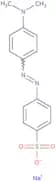
CAS:Methyl orange is a dye that is used as an indicator in acid-base titrations. It has a basic structure and can be prepared by the oxidation of para-aminobenzoic acid with hydrogen peroxide. Methyl orange has been shown to exhibit synergistic effects with other antimicrobial agents, such as phenol, methylene blue, and chlorhexidine at pH levels of 4.5 to 7.0. The optimum concentration for the matrix effect is 0.01% at pH range from 2.5 to 4.5 and 1% at pH range from 5 to 7.5. Methyl orange is activated by light with wavelengths between 300 nm and 500 nm and can be used in wastewater treatment processes where there are high levels of organic matter or radiation, such as carthamus tinctorius or zirconium oxide.
Formula:C14H15N3O3S•NaPurity:Min. 95%Color and Shape:PowderMolecular weight:328.34 g/mol9,10-Bis[2-(4-methoxyphenyl)ethynyl]anthracene
CAS:9,10-Bis[2-(4-methoxyphenyl)ethynyl]anthracene is a reagent for chemiluminescence research.Formula:C32H22O2Purity:Min. 98.0 Area-%Molecular weight:438.52 g/mol






![9,10-Bis[2-(4-methoxyphenyl)ethynyl]anthracene](/_next/image/?url=https%3A%2Fstatic.cymitquimica.com%2Fproducts%2F3D%2Fthumb-webp%2FJ-650272.webp&w=3840&q=75)