Dyes, Stains and Tinctures
Subcategories of "Dyes, Stains and Tinctures"
- Acid Dyes(49 products)
- Azobenzenes(270 products)
- Azoic Dyes(7 products)
- Basic Dyes(27 products)
- Coumarin Dyes(72 products)
- Cyanine Dyes, Squarylium Dyes(53 products)
- DCM Dyes(4 products)
- Diarylethenes(12 products)
- Dipyrromethene Dyes(26 products)
- Direct Dyes(17 products)
- Disperse Dyes(2 products)
- Dye Sensitizers(12 products)
- Dyes(418 products)
- Dyes & Stains(911 products)
- Generating Insoluble Dyes(14 products)
- Generating Soluble Dyes(11 products)
- Hexaarylbiimidazole(4 products)
- Indicators(575 products)
- Mordant Dyes(10 products)
- Near-Infrared (NIR) Dyes(28 products)
- Oil Dyes(15 products)
- Other Stains and Dyes(2 products)
- Perylene Dyes(17 products)
- Photochromic Dyes(40 products)
- Phthalocyanine Dyes, Porphyrin Dyes(101 products)
- Quinacridone Dyes(8 products)
- Spiropyrans(16 products)
- Stains and Dyes(243 products)
- Stains and Dyes for Microscopy(5 products)
- Vat Dyes(5 products)
- Xanthene Dyes(67 products)
Found 758 products of "Dyes, Stains and Tinctures"
Disperse Orange 11
CAS:Disperse Orange 11 is a diazo dye that is used in wastewater treatment. It has been shown to have genotoxic effects and is capable of damaging DNA. Disperse Orange 11 is also toxic, causing damage to the liver and kidneys. Disperse Orange 11 has been shown to be highly reactive in supercritical water and can react with other molecules to form new compounds. The reaction mechanism of Disperse Orange 11 involves intramolecular hydrogen transfer from the nitrogen atom on the diazonium group to an electron-deficient carbon atom on the dye molecule, forming a new compound with a different structure. Experimental solubility data for Disperse Orange 11 shows that it has higher solubility in orange juice than water.
Formula:C15H11NO2Purity:Min. 95%Color and Shape:Orange To Amber To Dark Red SolidMolecular weight:237.07898C.I.Direct Blue 6
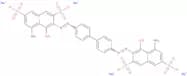
CAS:Direct Blue 6 is a reactive dye that is used in wastewater treatment. It is used for the removal of basic dyes and other contaminants from industrial wastewater. Direct Blue 6 is a reactive dye that has been shown to have carcinogenic potential. Direct Blue 6 has been shown to bind with aminotransferase activity and amines, which may lead to toxicity in mammals. The optimum concentration of Direct Blue 6 is 0.5 parts per million (ppm). This product can be hazardous if inhaled or ingested, and should not be handled without gloves or safety glasses.Formula:C32H20N6Na4O14S4Purity:Min. 75 Area-%Color and Shape:Brown PowderMolecular weight:932.76 g/molAniline Blue W/S Certified
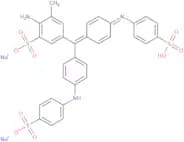
CAS:Aniline blue is a dye that is used in microbiological testing. It is used to detect the presence of aromatic and aliphatic hydrocarbons, as well as to diagnose skin conditions. Aniline blue has been shown to have an inhibitory effect on the growth of bacteria and has been used in clinical studies to test for infectious diseases such as tuberculosis. The dye binds with nucleic acids, which prevents further synthesis of DNA, RNA, or protein. Aniline blue also reacts with carbonyl groups in proteins and light exposure can lead to cross-linking between amino acid residues, which can reduce its effectiveness against bacteria.Formula:C32H25N3O9S3Na2Purity:(%) Min. 98%Color and Shape:Brown PowderMolecular weight:737.73 g/molSolvent red 27
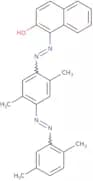
CAS:Solvent Red 27 is a dye that reacts with α7 nicotinic acetylcholine receptors. It inhibits the activity of ATP-binding cassette transporter, which is an enzyme that transports various molecules across cell membranes, and prevents the development of atherosclerotic lesions. Solvent Red 27 also inhibits the activities of enzymes such as dapagliflozin and dpp-iv inhibitors. It also has been shown to be involved in energy metabolism and body formation by inhibiting leukemia inhibitory factor. This compound has been used in experimental models to study 3t3-l1 preadipocytes and human serum.Formula:C26H24N4OColor and Shape:PowderMolecular weight:408.5 g/mol6α-Methyl prednisolone 21-acetate
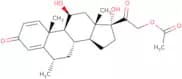
Controlled Product6a-Methyl prednisolone 21-acetate is a corticosteroid that binds to the glucocorticoid receptor, which regulates gene transcription. It has been used as an injection solution for bowel disease, but has also been shown to have anti-inflammatory and immunosuppressive effects. 6a-Methyl prednisolone 21-acetate reduces the production of inflammatory cytokines and may be a useful treatment for patients with inflammatory bowel disease (IBD). 6a-Methyl prednisolone 21-acetate has also been shown to decrease inflammation in experimental models of tissue infection, such as sepsis in mice. This drug may be useful as an adjuvant therapy for the treatment of sepsis in humans. 6a-Methyl prednisolone 21-acetate is not recommended for use in patients with congestive heart failure or severe kidney impairment because it can cause fluid retention and aggravation of these conditions.
Formula:C24H32O6Purity:Min. 95%Color and Shape:PowderMolecular weight:416.51 g/molOrange IV
CAS:Orange IV is a surfactant that is used to remove nitrogen from wastewater. It has been shown to be effective in removing nitrogen from wastewater, and can be used as a substitute for sodium dodecyl sulfate (SDS). Orange IV has been shown to have similar properties as SDS, but does not contain any sulfur atoms. This surfactant has been shown to have less of an effect on the ph of the water being treated, and can be considered for use in natural water where the ph is already acidic. The surface methodology for this surfactant includes flow assay, which uses fluorescence spectrometry and synchronous fluorescence. Fluorescence spectrometry involves measuring the amount of light emitted by a substance when irradiated with light of a certain wavelength. Synchronous fluorescence involves using two lasers with different wavelengths to measure how quickly or slowly molecules react with each other. In this case, it measures how quickly or slowly Orange IV reacts with other substances in order to determine
Formula:C18H14N3O3SNaColor and Shape:PowderMolecular weight:375.38 g/molPigment Red 23 - Technical
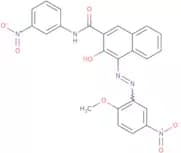
CAS:Pigment Red 23 - Technical is a pigment that is used in the textile industry. It has a particle size of 0.1-1 micron, and it is activated with nitrogen atoms. Pigment Red 23 - Technical has high values for analytical methods and it can be used to measure enzyme activities. Pigment Red 23 - Technical is an organic compound that reacts with glycol esters by a reaction mechanism involving hydroxyl groups. This reaction is catalyzed by basic structure, which may be water or an alcohol molecule. Pigment Red 23 - Technical can also be used in wastewater treatment to remove color and other pollutants from wastewater, as well as being used in radiation protection to absorb energy and convert it into heat.Formula:C24H17N5O7Purity:Min. 95%Color and Shape:PowderMolecular weight:487.42 g/molPigment Yellow 83 - Technical grade
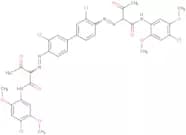
CAS:Pigment Yellow 83 is an organic compound that belongs to the group of glycol esters. It is a reactive dye that can be used for coloring textiles, plastics, and other materials. Pigment Yellow 83 has been shown to contain nitrogen atoms in its chemical structure and contains a reactive hydrogen atom (H) on the hydroxyl group. This reactive form may have carcinogenic potential due to its ability to cause DNA damage. Pigment Yellow 83 also contains a hydroxyl group (-OH) attached to an amine (-NH2). The presence of this amine makes this compound chemically reactive and capable of forming bonds with other molecules or particles.Formula:C36H32Cl4N6O8Purity:Min. 95%Color and Shape:PowderMolecular weight:818.49 g/molOil blue A - Technical grade
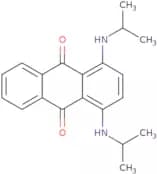
CAS:Oil Blue A is a blue pigment that is used as an initiator for the polymerization of thermoset plastics. It is synthesized by combining copper oxide and methylene blue in a microassay, which then undergoes thermal polymerization. The particle size of Oil Blue A ranges from 10 to 30 μm, with an average diameter of 15 μm. This product has a hydrophilic nature and can be used in the manufacture of paint and ink.Purity:Min. 95%Color and Shape:PowderMolecular weight:322.4Pigment orange 13, technical grade
CAS:Pigment orange 13 is a methoxylated, advances, photosensitive pigment. It is used in the manufacture of plastics and paints. Pigment orange 13 has been shown to be resistant to ionization mass spectrometry and laser desorption ionization techniques. This pigment is analyzed using analytical techniques such as ionization mass spectrometry and laser desorption ionization with a macroscopic approach. Pigment orange 13 can be dimerized into other compounds by heat or acid treatment.Formula:C32H24Cl2N8O2Color and Shape:PowderMolecular weight:623.49 g/molAcid Orange 3
CAS:Acid Orange 3 is a cationic surfactant that belongs to the family of dyes. It is used as a granulosa cell stain in histology, with the basic structure of a monosodium salt. Acid Orange 3 exhibits chronic oral toxicity in rats and mice, but does not show liver lesions at doses up to 4000 mg/kg. It has been shown to cause increased incidence of fatty acid oxidation, carcinogenic potential, and carcinogenesis studies in rats. Acid Orange 3 may also cause allergic reactions, such as skin irritation and erythema when applied topically. In some cases, it has been reported to cause contact dermatitis.
Formula:C18H13N4NaO7SPurity:Min. 95%Color and Shape:PowderMolecular weight:452.37 g/molDisperse yellow 3, dye content 30%
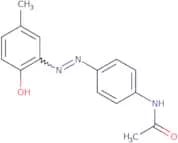
CAS:Disperse Yellow 3 is an organic compound that is used in wastewater treatment. It is a yellow, non-volatile dye with genotoxic activity and can be used as an analytical method for determining the concentration of fatty acids in a sample. Disperse Yellow 3 has been shown to have allergic reactions and is believed to be carcinogenic. The particle size of this substance is 6-8 microns. Disperse Yellow 3 can also be found in basic dyes and chemical analyses.Formula:C15H15N3O2Purity:Min. 95%Color and Shape:PowderMolecular weight:269.3 g/molNile blue chloride
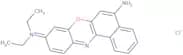
CAS:Nile blue chloride is a dye used in wastewater treatment. It can be used to measure the dry weight of a sample of material. Nile blue chloride has been shown to be a reliable fluorescent probe for bacterial detection in cell culture and tissue culture, as well as for the detection of infectious diseases. This compound has also been shown to have an effect on the oxygen transport in living cells, which may be due to its high affinity for fatty acids.
Formula:C20H20N3OClPurity:Min. 95%Color and Shape:PowderMolecular weight:353.85 g/molDirect Red 28
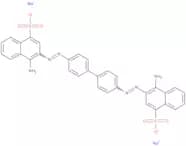
CAS:Direct Red 28 is a dye that can be used in wastewater treatment. It can be adsorbed onto activated sludge, which reduces the amount of sludge needing to be treated. Direct Red 28 reacts with hydrogen peroxide to form a fluorescent derivative that has antimicrobial properties. Direct Red 28 also has been shown to have an effect on the enzyme activities of kidney bean extract and to inhibit the growth of bacteria in model systems. This dye is not toxic for body formation. However, it can react with potassium dichromate and hl-60 cells, which may lead to side effects such as skin irritation.Formula:C32H24N6O6S2·2NaPurity:Min. 95%Color and Shape:Red PowderMolecular weight:698.68 g/molSolvent Blue 5
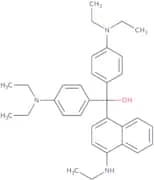
CAS:Solvent Blue 5 is a film-forming polymer that is used in the production of radiation-sensitive materials. It is soluble in many organic solvents and can be used as a coating for paper, textiles, metals, and plastics. Solvent Blue 5 has been found to be an excellent solvent for the removal of aliphatic hydrocarbons from water. The optical properties of Solvent Blue 5 are dependent on the length of the polymers chains and the concentration of sulfonic acids. This chemical also has a liquid crystal composition that has been shown to have metal ion activity. The functional groups on this polymer are mainly basic dyes that react with other substances to create new compounds.
Formula:C33H41N3OPurity:Min. 95%Color and Shape:Blue PowderMolecular weight:495.7 g/molC.I.Disperse Orange 76
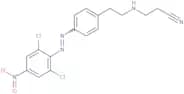
CAS:C.I.Disperse Orange 76 (CIDO76) is a photostable, fluorescent dye that is used as a particle marker in analytical chemistry and other fields. It has shown to be genotoxic and carcinogenic in animal models, but the clinical relevance of these findings is unclear. CIDO76 can be prepared by reacting amines with diazonium salt, which produces azo dyes. It is also used as an optical sensor for thermally activated reactions and can be detected using chromatographic methods. CIDO76 emits light at 675 nm when irradiated with ultraviolet light, which makes it useful for many applications including wastewater treatment and detection of model systems.Formula:C17H15Cl2N5O2Purity:Min. 95%Color and Shape:Orange To Red SolidMolecular weight:392.24 g/molPigment red 210
CAS:Pigment Red 210 (PR210) is a chemical with an orange-red color. PR210 is a hydroxyl compound with a glycol ether and glycol ester as the major components. It has been used as a control agent for plasma mass spectrometry. PR210 has good chemical stability and does not react with nitrogen atoms. It is also a molecule that consists of particles with a diameter of about 1 micrometer. The radiation from this pigment can cause allergic reactions in some people, and it may be toxic if inhaled or ingested because it can cross-link proteins in the body.
PR210 was first synthesized in the 1930s by reacting phenol with 2,4-dichloro-1,3-benzenediol to produce hydroquinone monomethyl ether and 2,4-dichloro-1,3-benzenediol monomethyl ether. The reaction products are then mixed in an acid solutionFormula:C20H10Cl2N2O2Color and Shape:PowderMolecular weight:381.21 g/molCresol Red Sodium Salt
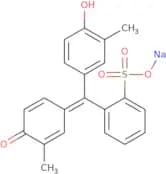
CAS:Cresol Red Sodium Salt is a reagent, complex compound, and useful intermediate. It is CAS No. 62625-29-0 and has the molecular formula C10H8O4Na2S. It can be used as a building block for the synthesis of speciality chemicals, research chemicals, and versatile building blocks. This chemical can be used as a reaction component in organic syntheses.
Formula:C21H17NaO5SColor and Shape:PowderMolecular weight:404.41 g/molSDS PAGE Sample Buffer (5X) (Non-Reducing) w/o DTT w/ BPB
It is the most commonly used sample buffer for SDS-PAGE of non-denatured proteins It is a ready-to-use 5X solution without dithiothreitol (DTT) and Beta-mercaptoethanol (BME) as a reducing agent. This buffer can be used as a loading buffer in all kinds of denaturing gels and are compatible with Coomassie, silver staining and Western blotting. The 5X concentration of this buffer facilitates the loading of larger sample volume per well compared to the traditional 2X loading buffer.Role of reagents: Tris-HCl: as a buffering substance. The pH play an essential role in preserving peptide bonds from breaking apart. SDS: Proteins comes in different sizes and charges. SDS is an anionic detergent that helps in linearizing (by denaturing) the proteins and bringing a net negative charge to the proteins irrespective of the initial charge. Glycerol: The high density (thickening of the solution) of glycerol ensures the sample moves down into the well. Bromophenol Blue: visually indicates the location (tracking dye) of the sample in the gel.Color and Shape:Liquid, Dark Blue, ClearRIPA Protein Extraction Reagent
RIPA (Radio-Immuno Precipitation Assay) Buffer is a ready- to-use versatile solution and widely used lysis buffer for preparing cell lysates for a variety of protein-related applications. Radio Immuno Precipitation Assay buffer (RIPA buffer) is used for rapid, efficient cell lysis and solubilization of proteins from both adherent and suspension cultured mammalian cells. RIPA lysis extraction buffer contains non-ionic and ionic detergents which are able to extract protein from wide variety of cell types and membrane structuresProtein lysis can be completed within 45 to 60 minutes.Purity:Suits BCA assayColor and Shape:Colourless, Liquid, Clear