Dyes, Stains and Tinctures
Subcategories of "Dyes, Stains and Tinctures"
- Acid Dyes(49 products)
- Azobenzenes(270 products)
- Azoic Dyes(7 products)
- Basic Dyes(27 products)
- Coumarin Dyes(72 products)
- Cyanine Dyes, Squarylium Dyes(53 products)
- DCM Dyes(4 products)
- Diarylethenes(12 products)
- Dipyrromethene Dyes(26 products)
- Direct Dyes(17 products)
- Disperse Dyes(2 products)
- Dye Sensitizers(12 products)
- Dyes(418 products)
- Dyes & Stains(911 products)
- Generating Insoluble Dyes(14 products)
- Generating Soluble Dyes(11 products)
- Hexaarylbiimidazole(4 products)
- Indicators(575 products)
- Mordant Dyes(10 products)
- Near-Infrared (NIR) Dyes(28 products)
- Oil Dyes(15 products)
- Other Stains and Dyes(2 products)
- Perylene Dyes(17 products)
- Photochromic Dyes(40 products)
- Phthalocyanine Dyes, Porphyrin Dyes(101 products)
- Quinacridone Dyes(8 products)
- Spiropyrans(16 products)
- Stains and Dyes(243 products)
- Stains and Dyes for Microscopy(5 products)
- Vat Dyes(5 products)
- Xanthene Dyes(67 products)
Found 758 products of "Dyes, Stains and Tinctures"
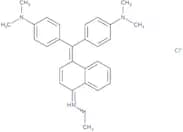
Victoria Blue R
CAS:Victoria Blue R is a dye that is used in histology and cytology to stain tissue sections and cell smears. It binds to the amyloid protein in the extracellular matrix of cells, which causes them to turn blue when stained with this dye. Victoria Blue R is a synthetic dye that has been prepared by various methods, including synthesis from diazotized benzidine and phenol. The specific antibody for Victoria Blue R binds to an epitope on the amyloid protein, which is then stained by the dye. The main use of Victoria Blue R is as a counterstain in immunohistochemistry, where it can be used to identify glandular cells or tissues containing mitochondria. Victoria Blue R can also be used as an analytical method for determining phosphotungstic acid-haematoxylin reactions or as a reaction mechanism for polymeric matrix formation.Formula:C29H32N3ClColor and Shape:PowderMolecular weight:458.04 g/molFluprednisolone
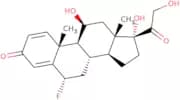
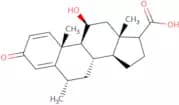
CAS:Controlled ProductFluprednisolone is an anti-inflammatory corticosteroid that has been used for the treatment of a number of conditions, such as autoimmune diseases and eye disorders. This drug is administered topically and can be used to treat eye disorders such as choroidal neovascularization. Fluprednisolone has been shown to inhibit the production of growth factors in animal models, which may be due to its interaction with mineralocorticoid receptors. It also has a detergent effect on proteins, which may help to dissolve protein aggregates that can form in ocular tissues.Formula:C21H27FO5Purity:Min. 95%Color and Shape:White PowderMolecular weight:378.43 g/molPatent blue V Calcium salt
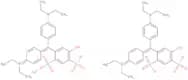
CAS:Patent Blue V calcium salt is a calcium salt of Patent Blue V, which is a light-sensitive dye with an absorption peak at 450 nm. It has been used in analytical chemistry to measure the fatty acid content of oils and fats. Patent Blue V calcium salt has also been used as a reagent in kinetic studies to measure the rate of reactions involving detergent compositions, cationic surfactants, and hydroxyl groups. The lymphatic vessels react to this dye by showing an increase in permeability. The activation energies for these reactions have been determined using kinetic data.Formula:C27H31N2O7S2·5CaPurity:Min. 85.0 Area-%Color and Shape:PowderMolecular weight:582.7 g/molPigment Red 48:1
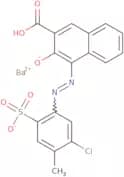
CAS:Pigment Red 48:1 is a red pigment that is used in coatings, plastics, and inks. Pigment Red 48:1 is non-toxic to humans, and has been shown to be lightfast and resistant to pollution. The red pigment has been analysed for its potential to cause skin irritation. Pigment Red 48:1 does not cause skin irritation when tested on human volunteers. It was found that the pigment did not produce any irritation or sensitization reactions when applied to the skin of rabbits at a concentration of 0.5% for four weeks.Formula:C18H11BaClN2O6SPurity:Min. 95%Color and Shape:PowderMolecular weight:556.14 g/molMethylene blue
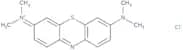
CAS:Methylene blue is a basic dye that has been used as an antibacterial agent. It binds to DNA and inhibits the synthesis of proteins and cell division. Methylene blue has been shown to be effective against Gram-positive bacteria, including Bacillus subtilis and Staphylococcus aureus, but not Gram-negative bacteria. Methylene blue also has optical properties that allow it to be detected by an optical sensor. This dye is sensitive to water vapor and light, which may limit its effectiveness in humid environments. The rate constant for methylene blue's adsorption on the surface of bacterial cells was determined using x-ray diffraction data from squamous cell carcinomas in mice. The rate constant for methylene blue's antimicrobial activity was determined by measuring the concentration–time curve for inhibiting growth of Escherichia coli K12 bacteria in a synchronized fluorescence assay. Nitrite ion levels were found to correlate with methylene blue's antimicrobial activityFormula:C16H18ClN3SPurity:Min. 95%Color and Shape:Green PowderMolecular weight:319.85 g/molPigment Red 13
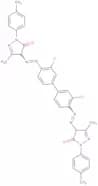
CAS:Pigment Red 13 is a diazonium salt that is used as a cross-linking agent in the preparation of substrate film. It is also utilized as an electrophotographic developer for high detection of molecules and has a viscosity of 5,000 cps. Pigment Red 13 has a hydroxyl group with a diameter of 0.5 nm and low energy radiation with particle size of 25 nm. Pigment Red 13 contains functional groups such as carboxylic acid and amide, which are cationic surfactants.Formula:C25H20N4O4Purity:Min. 95%Color and Shape:PowderMolecular weight:440.45 g/molFast Yellow
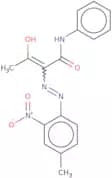
CAS:Fast Yellow is a liquid crystal composition that is used in the production of devices and liquid crystal compositions. It has a high molecular weight, low surface tension, and excellent solvency and dispersing properties. Fast Yellow is also a disinfectant with good water absorption, which makes it suitable for use as an additive in polymer films. Fast Yellow consists of arylalkyl groups that are hydrophobic, making this product highly suitable for use in devices with hydrophobic surfaces.Formula:C17H16N4O4Purity:Min. 95%Color and Shape:PowderMolecular weight:340.33 g/molReactive black 39
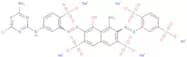
CAS:Reactive black 39 is a benzalkonium chloride molecule that penetrates bacterial cell walls and reacts with the hydroxy groups, resulting in the formation of a reactive intermediate. This intermediate interacts with other molecules on the surface of bacteria, leading to the production of oxygen radicals. The radical initiates reactions such as oxidation and nitration, which damage the DNA and proteins in the cell. Reactive black 39 is used as a conditioning agent for wastewater treatment because it can be used to remove organic matter and heavy metals from wastewater. It also has been shown to have interactive effects with methyl glycine when treating water contaminated with phenols.Formula:C25H19ClN10O16S5•Na5Purity:Min. 95%Molecular weight:1,026.21 g/molDisperse Blue 14, technical grade dye content
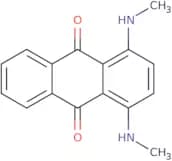
CAS:Disperse Blue 14 is a dye that is used as a colorant. It has been shown to have good optical properties, such as high solubility, low toxicity, and low cost. Disperse Blue 14 has been used in the textile industry and in the production of paints and coatings. The dye can also be used in wastewater treatment because it can reduce the amount of bacteria present by absorbing light energy from ultraviolet radiation. Disperse Blue 14 has also been shown to bind with fatty acids, which are known for their ability to activate reactive oxygen species (ROS). This reactive property may be due to its ability to bind with styryl dyes, which are often activated by UV radiation or heat. A molecular docking analysis was conducted using Disperse Blue 14 and found that it binds with the electron-rich region of cytochrome c oxidase, a protein involved in respiration in mitochondria. This binding inhibits electron transfer between cofactors Q and cytochrome c oxidaseFormula:C16H14N2O2Purity:Min. 95%Molecular weight:266.29 g/molMethylprednisolone EP impurity E
CAS:Controlled ProductPlease enquire for more information about Methylprednisolone EP impurity E including the price, delivery time and more detailed product information at the technical inquiry form on this pageFormula:C21H28O4Purity:Min. 95%Color and Shape:PowderMolecular weight:344.44 g/molPigment orange 34
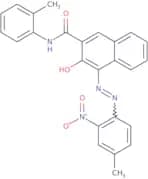
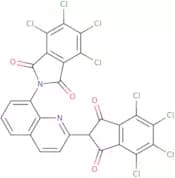
CAS:Pigment orange 34 is a cross-linking agent that can be used as a hydroxyl radical scavenger. It has also been shown to have an inhibitory effect on the reaction of formaldehyde with protein, and is a molecule that contains both a hydroxyl group and a carboxylic acid group. Pigment orange 34 reacts with various substances such as glycol esters, fatty acids, or phenols to produce reaction products. This product is synergistic with other control agents such as magnetic particles or radiation. Pigment orange 34 is in its bound form when it is synthesized, but becomes reactive when it is mixed with other agents during surface methodology.Formula:C34H28Cl2N8O2Color and Shape:PowderMolecular weight:651.54 g/molPigment Yellow 138;3,4,5,6-Tetrachloro-N-[2-(4,5,6,7-tetrachloro-2,3-dihydro-1,3-dioxo-1H-inden-2-yl)-8-Quinolyl]phthalimide
CAS:Pigment Yellow 138 is a polycarboxylic acid with the chemical formula C8H6Cl4O2. Pigment Yellow 138 has a molecular weight of 434.07 and can be used as a yellow pigment in paint, plastics, and textiles. Pigment Yellow 138 has an acidic pH and can be prepared by reacting phthalic anhydride with sodium hydroxide in aqueous solution to produce the sodium salt of pigment yellow 138. Pigment Yellow 138 is also soluble in hydroxide solutions, which makes it an excellent cross-linking agent for polymers. The color of pigments depends on the size of their particles; pigments with larger particle sizes are more opaque than those with smaller particle sizes.
Formula:C26H6Cl8N2O4Purity:Strengh Min 95%.Molecular weight:693.96 g/molVat green 9
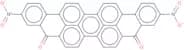
CAS:Vat green 9 is a high-stability pigment that is used in many industries to add highlighting effects. It is also used as a dye for textiles, plastics, and paper. Vat green 9 has been shown to be toxic to daphnia when tested at long-term exposure levels. This chemical belongs to the class of silico compounds, which are chemicals that are ecotoxicological active. The experimental results show that this compound can cause an ecological imbalance in the environment and can lead to changes in the population of aquatic organisms.Formula:C34H14N2O6Purity:Min. 95%Color and Shape:PowderMolecular weight:546.48 g/molXylenol orange
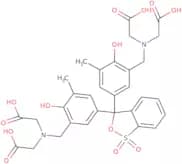
CAS:Xylenol orange is a dye used as a pH indicator. It is typically present as the monosodium salt of xylenol and has an optimum concentration of 0.2-0.5 mg/L. Xylenol orange is highly soluble in water and can be used in aqueous solutions, but it should not be used with strong acids or alkalis, as they will cause the dye to precipitate out of solution. Xylenol orange reacts with acidic substances and changes colour from orange to yellow at pH 7.0 or higher. The mechanism behind this reaction involves the deprotonation of xylenol by acid, followed by protonation of the conjugate base, which then undergoes electrophilic substitution by hydroxide ions (OH−). This reaction is shown below: XO+H+→XO−+H+ XO−+OH−→HO−+X The LangmuirFormula:C31H32N2O13SPurity:Min. 95%Molecular weight:672.66 g/molAcid red 26
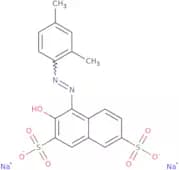
CAS:Acid Red 26 is a water-soluble dye that can be used in the textile industry and as an indicator for wastewater treatment. It has been shown to have significant up-regulation in biological samples, such as human serum and human immunoglobulin. Acid Red 26 has been tested for its toxicity in a number of studies, with little evidence of carcinogenic potential. The rate constant is not available for this compound.
Formula:C18H14N2Na2O7S2Purity:Min. 95%Molecular weight:480.42 g/molAcid blue 182
CAS:Acid blue 182 is an alkali metal salt of a polycarboxylic acid. It is used as a detergent builder, where it regulates the pH and viscosity of hard water. Acid Blue 182 is bactericidal and has been shown to have good detergency properties at low concentrations. This compound also has surfactant properties, which make it effective in removing oils, fats, greases and other organic substances from surfaces. Acid Blue 182 is often used in laundry detergent compositions because it does not cause color fading or bleeding.
Formula:C23H17N3O9S2·2NaPurity:Min. 95%Color and Shape:Blue PowderMolecular weight:589.51 g/molDisperse Blue 366
CAS:Disperse Blue 366 is a hydrophobic, particle-forming dye that is used in the optimization of surface methodology for cytotoxic effect. Disperse Blue 366 has a particle size of about 10 nm and an intense blue color. It is soluble in organic solvents but insoluble in water. The film-forming polymer, which can be polystyrene or polypropylene, absorbs Disperse Blue 366 and forms a thin film on the surface to which it has been applied. This film has a low energy and is supercritical, leading to cytotoxic effects.Purity:Min. 95%Reactive Blue 4
CAS:Reactive Blue 4 is a reactive dye that is used in the treatment of wastewater. It has been shown to be effective against microbial and fungal infections. Reactive Blue 4 binds to the cell membrane, preventing the transport of ions and other essential components into the cell, leading to its death. The binding mechanism is thought to involve steric interactions and hydrogen bonding. This dye also inhibits enzymes such as benzalkonium chloride and sodium carbonate, which are involved in bacterial processes such as photosynthesis or respiration.
Formula:C23H14Cl2N6O8S2Purity:Min. 95%Color and Shape:PowderMolecular weight:637.43 g/molC.I.Reactive Red 180
CAS:C.I.Reactive Red 180 is a reactive dye with a red color that is used in experiments to monitor the electrochemical oxidation of metal ions, such as copper and iron. The dye is also used in the textile industry for coloring fabrics and paper. Reactive Red 180 has a density of 1.00 g/cm3 and an optimum pH of 4.0-5.5 depending on the environment it is exposed to. It has been shown to have an efficiency of around 80% when used as an electrode in electrolysis reactions and can be electrochemically oxidized at an optimum voltage of 0.2 V. The color produced by this dye ranges from yellow-red to deep red depending on the concentration of the solution or amount of exposure time to light or heat.Formula:C29H23N3O17S5·4NaPurity:Min. 95%Color and Shape:Red PowderMolecular weight:937.79 g/molVat Blue 6 - Technical grade
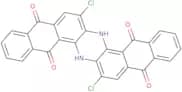
CAS:Vat Blue 6 is a reactive dye that can be used in the production of textiles and paper. The name Vat Blue 6 comes from the vat dyeing process, which is a type of textile dyeing. It reacts with sulfonic acids and light exposure to form a hydroxyl group. This reactive dye also has a glycol ester in its molecule, which makes it soluble and more reactive than other types of dyes. Vat Blue 6 is anhydrous and has a diameter between 0.1-0.3 microns, making it small enough to be used as a cross-linking agent or as a particle for surface treatment. Vat Blue 6 has been shown to have high reactivity in the presence of monocarboxylic acids and fatty acids, which are both found in natural fibers such as wool or silk.Formula:C28H12Cl2N2O4Purity:Min. 95%Color and Shape:Blue PowderMolecular weight:511.31 g/mol