Dyes, Stains and Tinctures
Subcategories of "Dyes, Stains and Tinctures"
- Acid Dyes(49 products)
- Azobenzenes(270 products)
- Azoic Dyes(7 products)
- Basic Dyes(27 products)
- Coumarin Dyes(72 products)
- Cyanine Dyes, Squarylium Dyes(53 products)
- DCM Dyes(4 products)
- Diarylethenes(12 products)
- Dipyrromethene Dyes(26 products)
- Direct Dyes(17 products)
- Disperse Dyes(2 products)
- Dye Sensitizers(12 products)
- Dyes(418 products)
- Dyes & Stains(911 products)
- Generating Insoluble Dyes(14 products)
- Generating Soluble Dyes(11 products)
- Hexaarylbiimidazole(4 products)
- Indicators(575 products)
- Mordant Dyes(10 products)
- Near-Infrared (NIR) Dyes(28 products)
- Oil Dyes(15 products)
- Other Stains and Dyes(2 products)
- Perylene Dyes(17 products)
- Photochromic Dyes(40 products)
- Phthalocyanine Dyes, Porphyrin Dyes(101 products)
- Quinacridone Dyes(8 products)
- Spiropyrans(16 products)
- Stains and Dyes(243 products)
- Stains and Dyes for Microscopy(5 products)
- Vat Dyes(5 products)
- Xanthene Dyes(67 products)
Found 758 products of "Dyes, Stains and Tinctures"
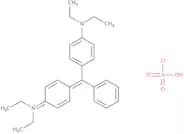
Brilliant green
CAS:Brilliant green is a polymerase chain reaction (PCR) reagent that is used to monitor the progress of DNA amplification. It has been shown to bind specifically to double-stranded DNA and prevent the RNA polymerase from binding, thereby preventing transcription and replication. This dye may be used as an antimicrobial agent in wastewater treatment, where it can inhibit the growth of Aerobacter aerogenes. The adsorption properties of Brilliant green have been studied using an electrochemical impedance spectroscopy and Langmuir adsorption isotherm techniques. The hydrophobic interactions between this dye and the anhydrous sodium surface have also been investigated by structural analysis.Formula:C27H34N2O4SColor and Shape:Green PowderMolecular weight:482.64 g/molC.I.Direct Red 83:1
CAS:C.I.Direct Red 83:1 is a dye that has been used in wastewater treatment to remove color. It is a polymerized dye that has been shown to be more efficient than the decolouration process, which is the traditional method of removing color from wastewater. The light source for this process must be within the range of 350-500 nm and at least 100 mW/cm2 intensity. This dye has also been shown to be an effective photolysis agent for organic compounds such as phenols, amines, and sulfides.Purity:Min. 95%C.I.Solvent red 197
CAS:C.I.Solvent Red 197 is a dye that is soluble in organic solvents and has a particle size of less than 10 microns. It is used in the textile industry as an extracellular dye and can be used for the production of polyols, uv irradiation, corrosion inhibitor, high concentrations, condensation products, high resistance, organic solvent, volatile oil, substrate film and polymerization initiator. The dye also exhibits affinity ligand properties which are used in microcapsules to bind to substances such as proteins or nucleic acids.Formula:C23H19N5OPurity:Min. 85 Area-%Molecular weight:381.43 g/molDirect black 38
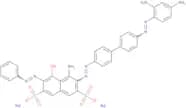
CAS:Direct Black 38 (DB38) is a carbonate pigment with the chemical formula of Na2CO3. It has been used as a black pigment in paints, textiles, and plastics. DB38 has been shown to be genotoxic, meaning that it can cause mutations in cells by interacting with DNA. DB38 has also been shown to be toxic to animals and humans when ingested or inhaled at high concentrations. DB38 is not mutagenic, meaning that it does not cause genetic changes in cells or organisms. The toxicity of DB38 is dose-dependent: the higher the concentration of DB38, the more toxic it becomes.
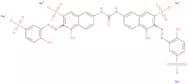
Formula:C34H27N9O7S2·2NaPurity:Min. 95%Color and Shape:Brown PowderMolecular weight:783.75 g/molC.I.Disperse Orange 25
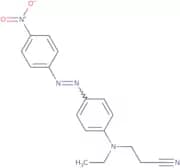
CAS:C.I. Disperse Orange 25 is a dye that has been used in the textile industry for over 30 years. It is soluble in water and has low toxicity, and is not considered hazardous to health. C.I. Disperse Orange 25 is used as an optical sensor and fluorescent agent in kinetic studies of biological treatment of wastewater, and it can also be used as a reactive or activated antimicrobial agent. The dye can be synthesized using supercritical fluid technology, which makes it a potential candidate for use with radiation-sensitive polymers to form polymer matrices with antimicrobial properties that are resistant to microbial attack by radiation.Formula:C17H17N5O2Purity:Min. 95%Molecular weight:323.35 g/molXTT sodium
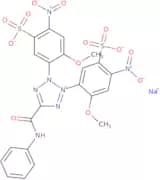
CAS:XTT sodium salt is a tetrazolium salt, which forms water-soluble formazan on bioreduction and has been used to assess cell viability by production of an orange colour.Formula:C22H17N7O13S2•NaPurity:Min. 95%Color and Shape:PowderMolecular weight:674.53 g/molAcid Yellow 3 Aluminum Lake
CAS:Please enquire for more information about Acid Yellow 3 Aluminum Lake including the price, delivery time and more detailed product information at the technical inquiry form on this pagePurity:Min. 95%Color and Shape:PowderBenz[b]indeno[1,2-d]pyran-3,4,6a,9,10(6H)-pentol, 7,11b-dihydro-,(6aS,11bR)-
CAS:Formula:C16H14O6Purity:97%Color and Shape:SolidMolecular weight:302.27876Pigment yellow 12, technical grade dye content
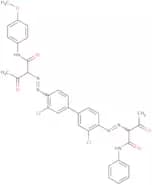
CAS:Pigment Yellow 12 is a yellow dye that belongs to the class of copper-complex dyes. It has a particle size of around 20 nm and an intramolecular hydrogen bonding with a hydroxyl group. Pigment Yellow 12 reacts with diazonium salt in the presence of hydrochloric acid, cationic surfactant, and amines to produce a bright yellow color. This dye is used as an indicator for urine samples, as well as in the production of textiles and plastics. Pigment Yellow 12 is not carcinogenic and does not have any known adverse effects on human health.
Formula:C32H26Cl2N6O4Color and Shape:PowderMolecular weight:629.49 g/molRef: 3D-FP40727
Discontinued productC.I.Basic Yellow 29
CAS:Please enquire for more information about C.I.Basic Yellow 29 including the price, delivery time and more detailed product information at the technical inquiry form on this page
Purity:Min. 95%C.I.Direct Red 83
CAS:C.I.Direct Red 83 is a complex of copper and polycarboxylic acid that is used in wastewater treatment. It is also used as an indicator dye in biological studies to measure the rate of reaction between carboxylic acids and amino-groups, which are both necessary for the formation of nucleic acids. C.I.Direct Red 83 has been shown to have strong absorptive properties, with a maximum absorption at 546 nm in aqueous solution. This dye has also been shown to bind to receptors on the cell membrane, specifically those receptors that are involved in thermally induced reactions.
Purity:Min. 95%New Fuchsin
CAS:Please enquire for more information about New Fuchsin including the price, delivery time and more detailed product information at the technical inquiry form on this page
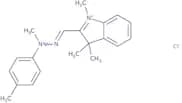
Formula:C22H24ClN3Molecular weight:365.91 g/molSolvent Orange 14, Technical grade Dye content
CAS:Please enquire for more information about Solvent Orange 14, Technical grade Dye content including the price, delivery time and more detailed product information at the technical inquiry form on this page
Formula:C22H17N5Purity:Min. 95%Molecular weight:351.4 g/molPigment Red 58:2
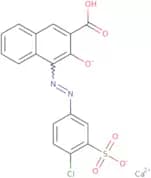
CAS:Please enquire for more information about Pigment Red 58:2 including the price, delivery time and more detailed product information at the technical inquiry form on this page
Purity:Min. 95%Xylenol orange tetrasodium salt
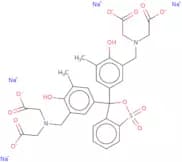
CAS:Xylenol orange tetrasodium salt is a fluorescent dye that can be used to measure the degree of mineralization in animal tissue. The dye is composed of xylenol, which is a fatty acid, and sodium chloride. Xylenol orange tetrasodium salt is used for measuring the rate of enzyme reactions by incubating it with the enzyme and measuring the formation rate. It has been shown to have damaging effects on mitochondria and tissues when exposed to an acidic environment. Xylenol orange tetrasodium salt binds to the membrane potential of cells in order to measure reactive oxygen species (ROS) production. This dye can also be used as a marker for autofluorescence of mitochondria and lipase activity.
Formula:C31H28Na4O13SN2Color and Shape:PowderMolecular weight:760.58 g/molPigment yellow 126
CAS:Pigment Yellow 126 is a nitro-fatty acid ester, which has an average particle diameter of 3.5 microns and a hydroxyl group at the terminal position of the molecule. This product can be used in coatings, plastics, paper, textiles, and paints. Pigment Yellow 126 is also used as a radiation absorber in x-ray films and fluorescent lamps. This product reacts with deionized water to form fatty acids and aliphatic hydrocarbons.
Purity:Min. 95%Color and Shape:PowderRef: 3D-FP41686
Discontinued productC.I.Reactive Orange 20
CAS:Please enquire for more information about C.I.Reactive Orange 20 including the price, delivery time and more detailed product information at the technical inquiry form on this page
Purity:Min. 95%Bromocresol green
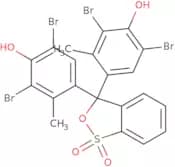
CAS:Bromocresol green is a cationic surfactant that is used as a fluorescent indicator dye. It binds to proteins and can be detected with an optical sensor. Bromocresol green has been shown to react with hydrochloric acid, which may be due to the protonation of the cationic group. This reaction is reversible and depends on pH. The binding of bromocresol green to serum proteins results in a decrease in fluorescence intensity due to quenching by adsorption at the protein-protein interface. The kinetic data for this dye have been found to depend on α1-acid glycoprotein concentration.
Formula:C21H14Br4O5SColor and Shape:PowderMolecular weight:698.01 g/molC.I. Acid Blue 93:1
CAS:Please enquire for more information about C.I. Acid Blue 93:1 including the price, delivery time and more detailed product information at the technical inquiry form on this page
Formula:C37H29N3O9S3•(H3N)2Purity:Min. 95%Color and Shape:PowderMolecular weight:789.91 g/molRef: 3D-FA184067
Discontinued product


![Benz[b]indeno[1,2-d]pyran-3,4,6a,9,10(6H)-pentol, 7,11b-dihydro-,(6aS,11bR)-](/_next/image/?url=https%3A%2Fstatic.cymitquimica.com%2Fproducts%2FIN%2Fthumb-webp%2FDA00I98R.webp&w=3840&q=75)