Dyes, Stains and Tinctures
Subcategories of "Dyes, Stains and Tinctures"
- Acid Dyes(49 products)
- Azobenzenes(270 products)
- Azoic Dyes(7 products)
- Basic Dyes(27 products)
- Coumarin Dyes(72 products)
- Cyanine Dyes, Squarylium Dyes(53 products)
- DCM Dyes(4 products)
- Diarylethenes(12 products)
- Dipyrromethene Dyes(26 products)
- Direct Dyes(17 products)
- Disperse Dyes(2 products)
- Dye Sensitizers(12 products)
- Dyes(418 products)
- Dyes & Stains(911 products)
- Generating Insoluble Dyes(14 products)
- Generating Soluble Dyes(11 products)
- Hexaarylbiimidazole(4 products)
- Indicators(575 products)
- Mordant Dyes(10 products)
- Near-Infrared (NIR) Dyes(28 products)
- Oil Dyes(15 products)
- Other Stains and Dyes(2 products)
- Perylene Dyes(17 products)
- Photochromic Dyes(40 products)
- Phthalocyanine Dyes, Porphyrin Dyes(101 products)
- Quinacridone Dyes(8 products)
- Spiropyrans(16 products)
- Stains and Dyes(243 products)
- Stains and Dyes for Microscopy(5 products)
- Vat Dyes(5 products)
- Xanthene Dyes(67 products)
Found 758 products of "Dyes, Stains and Tinctures"
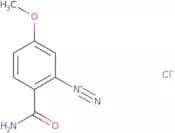
Fast red KL salt
CAS:Fast red KL salt is an organic solvent that is used in the production of zearalanone and zeranol. It has been shown to be carcinogenic to tissues in the presence of sulfoxide and diazonium salt. Fast red KL salt has a visualizing effect on chromatographic experiments and can be used as a color indicator for chloride ions. Fast red KL salt also reacts with estradiol, which is a postulated mechanism for its carcinogenic effects.
Formula:C8H8N3O2•(ZnCl2)0Purity:Min. 95%Color and Shape:PowderMolecular weight:246.17 g/molRef: 3D-FF47064
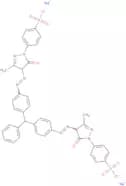
Discontinued productC.I.Acid Yellow 117
CAS:C.I. Acid Yellow 117 is a dye that has been used in the textile industry, but is now used primarily as a food colorant. It is not metabolized by the body and is excreted unchanged in urine and feces. C.I. Acid Yellow 117 may cause symptoms such as nausea, vomiting, abdominal pain, diarrhea, headache and dizziness at high levels of exposure (above 10 milligrams per day). The dye can also cause methemoglobinemia in children who have glucose-6-phosphate dehydrogenase deficiency or who are taking an oxidizing drug such as sulfonamides or nitrofurantoin. C.I. Acid Yellow 117 binds to form a water-soluble complex with calcium ions when it enters wastewater treatment plants where it can be removed by activated sludge treatment processes or by precipitation with lime or aluminum sulfate before release into rivers or oceans. C.I. Acid Yellow 117 has been shown to inhibit cell
Purity:Min. 95%C.I.Reactive Yellow 107
CAS:Please enquire for more information about C.I.Reactive Yellow 107 including the price, delivery time and more detailed product information at the technical inquiry form on this page
Purity:Min. 95%C.I.Reactive Red 239
CAS:Please enquire for more information about C.I.Reactive Red 239 including the price, delivery time and more detailed product information at the technical inquiry form on this page
Purity:Min. 95%C.I.Solvent Yellow 147
CAS:Please enquire for more information about C.I.Solvent Yellow 147 including the price, delivery time and more detailed product information at the technical inquiry form on this page
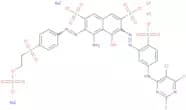
Purity:Min. 95%C.I.Reactive Yellow 145
CAS:C.I.Reactive Yellow 145 is an azo dye that is used in the treatment of wastewater. It has been shown to be a reactive dye, meaning that it will react with other materials in the environment and break down into smaller molecules. C.I.Reactive Yellow 145 has been used for the treatment of wastewater due to its high hydroxyl group content and its chemical stability in the presence of sodium carbonate, which is usually added to wastewater for pH control purposes. This dye has also been used for kinetic studies when combined with surface methodology techniques such as sodium carbonate activation or anhydrous sodium analytical chemistry.
Formula:C28H24ClN9O16S5•Na4Purity:Min. 95%Color and Shape:PowderMolecular weight:1,030.28 g/molC.I.Disperse Orange 62
CAS:Please enquire for more information about C.I.Disperse Orange 62 including the price, delivery time and more detailed product information at the technical inquiry form on this page
Purity:Min. 95%Lipoic acid, reduced
CAS:Lipoic acid, reduced (LAR) is a naturally occurring compound that is found in many living organisms. It has been used to study the mechanisms of DNA binding and protein oxidation. Lipoic acid, reduced has been shown to have anti-inflammatory properties by inhibiting the production of prostaglandins. The rate constant for LAR is 10-3 M-1s-1 at 25°C and pH 7.0, which can be measured using a polymer composition method. This compound also has an optical sensor and chemiluminescence method that are able to measure the rate constant and determine its concentration.
Formula:C8H16O2S2Purity:Min. 95%Color and Shape:PowderMolecular weight:208.34 g/molRef: 3D-FL29290
Discontinued productPigment Yellow 55
CAS:Pigment Yellow 55 is a polycarboxylic acid with hydroxyl groups. It is used as a polymerization initiator in the production of polyester resins. Pigment Yellow 55 has been identified as a reactive pollutant, and its toxicity depends on the environment and conditions. Pigment Yellow 55 is soluble in organic solvents such as tetrahydrofuran and dimethylformamide, but insoluble in water. Pigment Yellow 55 is an electrophotographic agent for printing photographs, with an average particle diameter of 1 to 5 micrometers.
Formula:C34H30Cl2N6O4Color and Shape:PowderMolecular weight:657.55 g/molC.I.Sulphur Blue 13
CAS:Please enquire for more information about C.I.Sulphur Blue 13 including the price, delivery time and more detailed product information at the technical inquiry form on this page
Purity:Min. 95%Sanodal deep black MLW
CAS:Sanodal Deep Black MLW is a water-soluble dye that is used to temporarily color animal tissue sections. It has a viscosity of 1000 mPa·s and can be mixed with deionized water to produce the desired concentration. This dye will not stain cells, but rather will only color the extracellular matrix. The dye is also non-toxic and does not contain aluminum or lead. Sanodal Deep Black MLW produces a black color in tissue sections that can be seen under an optical microscope, which makes it useful for imaging purposes.
Color and Shape:PowderRef: 3D-FS32658
Discontinued productC.I.Acid Yellow 158:1
CAS:Please enquire for more information about C.I.Acid Yellow 158:1 including the price, delivery time and more detailed product information at the technical inquiry form on this page
Purity:Min. 95%Tetranitroblue tetrazolium chloride
CAS:Tetranitroblue tetrazolium chloride (TNBT) is a reagent that is used to measure the activity of enzymes in biological samples. TNBT can be used as a histological stain for myocardial infarcts and other areas of necrosis. It has been shown to be reactive with toll-like receptors, which are proteins that play a role in the immune response. The reaction mechanism of TNBT starts with its conversion to blue formazan crystals by peroxidase or other oxidizing enzymes. These crystals are reduced back to their original colorless form by reducing agents such as NADH or glutathione, which are present in most cells. This reduction process generates an electron that is then transferred to NAD+, forming NADH and releasing H2O2 as a byproduct.
Formula:C40H28Cl2N12O10Purity:Min. 95%Color and Shape:PowderMolecular weight:907.63 g/molC.I.Solvent Orange 41
CAS:Please enquire for more information about C.I.Solvent Orange 41 including the price, delivery time and more detailed product information at the technical inquiry form on this page
Purity:Min. 95%C.I.Reactive blue 225
CAS:Please enquire for more information about C.I.Reactive blue 225 including the price, delivery time and more detailed product information at the technical inquiry form on this page
Formula:C28H17ClF2Li2N8Na2O16S5Purity:Min. 95%Molecular weight:1,015.12 g/molC.I.Direct green 28
CAS:C.I.Direct green 28 is a site-specific fluorescent dye that binds to guanine nucleotide-binding proteins, which are involved in the regulation of heart function and signal pathways. The α subunit of these proteins has been shown to bind C.I.Direct green 28, with a hydroxyl group on the amino terminus and an ubiquitin ligase at the carboxyl terminus. This binding inhibits polymerase chain reaction (PCR) amplification by interfering with the ubiquitin proteasome pathway, which results in decreased light emission and hematopoietic cell production. This activity is hypothesized to be due to the inhibition of ATPase activity by C.I.Direct green 28, which leads to decreased phosphorylation of E1A-activating enzyme and increased phosphorylation of E2F-repressing enzyme, preventing DNA replication through transcriptional activation of erythroid transcription factors and halting progression through G1/S phase
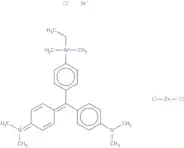
Purity:Min. 95%Methyl green, zinc chloride
CAS:Methyl green zinc chloride is a reagent that is used as a building block for research chemicals, speciality chemicals, and fine chemicals. It is also an intermediate in the synthesis of many biologically active compounds. Methyl green zinc chloride can be used as a versatile building block in the preparation of complex compounds. It is soluble in water and has CAS number 7114-03-6.
Formula:C27H35BrClN3•ZnCl2Purity:Min. 95%Color and Shape:PowderMolecular weight:653.23 g/molRef: 3D-FM40148
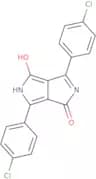
Discontinued productPigment Red 254
CAS:Pigment Red 254 is a red dyestuff with the chemical formula of C. It is a basic dye that has a hydroxyl group, malonic acid, and diethyl succinate. Pigment Red 254 is usually used in wastewater treatment as it has an affinity for chlorinated organic compounds such as dichlorophenol indophenol, which are commonly found in wastewater. It also absorbs ultraviolet light very well and can be used as a polarizer in liquid chromatography experiments. Pigment Red 254 contains an aromatic hydrocarbon and particle, which makes it useful for organic solutions and liquid chromatography methods.
Formula:C18H10Cl2N2O2Purity:Min. 95%Color and Shape:PowderMolecular weight:357.19 g/molRef: 3D-FP41758
Discontinued productTrypan blue
CAS:Dye used in microscopy for assessment of cell viability
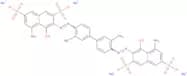
Formula:C34H24N6O14S4Na4Color and Shape:PowderMolecular weight:960.81 g/molRef: 3D-FT47140
Discontinued productC.I.Vat Yellow 2
CAS:C.I.Vat Yellow 2 is an organic solvent that is used in the formulation of sulfate solutions and additives for various industrial applications. It has been used as a diluent to prepare polycarboxylic acid, which is a reactive compound that can be thermally decomposed to produce polyvinyl pyrrolidone (PVP). C.I.Vat Yellow 2 has shown mitochondrial membrane potential disruption in the presence of light exposure and high concentrations of potassium sulfate.
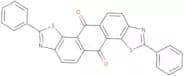
Formula:C28H14N2O2S2Purity:Min. 95%Color and Shape:PowderMolecular weight:474.56 g/mol