Organometallic Ligands
In this category, you will be able to find a large number of organometallic molecules used as ligands in biomolecules. These organometallic ligands can be used in organic chemistry and synthesis in the laboratory. They play a critical role in forming coordination complexes and catalyzing various chemical reactions. At CymitQuimica, we offer a diverse selection of high-quality organometallic ligands to support your research and industrial needs.
Subcategories of "Organometallic Ligands"
- Buchwald Ligands(22 products)
- DPEN(4 products)
- DPHEN(4 products)
- JOSIPHOS(4 products)
- Phosphine(497 products)
- Porphirines(75 products)
Found 2887 products of "Organometallic Ligands"
Sort by
Purity (%)
0
100
|
0
|
50
|
90
|
95
|
100
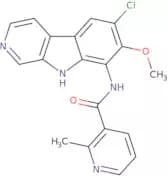
MLN120B
CAS:<p>Inhibitor of IKKβ serine kinase</p>Formula:C19H15ClN4O2Purity:Min. 95%Color and Shape:PowderMolecular weight:366.8 g/molRosuvastatin lactone
CAS:<p>HMG-CoA reductase inhibitor</p>Formula:C22H26FN3O5SPurity:Min. 98%Color and Shape:PowderMolecular weight:463.52 g/molMLi-2
CAS:<p>A brain-penetrant inhibitor of leucin-rich repeat kinase 2 (LRRK2) with IC50 = 0.76 nM and anti-parkinsonian activity. Gain-of-function mutations in LRRK2 gene lead to increased familial and idiopathic risk of developing the disease. The inhibitors of the kinase activity have therapeutic potential against Parkinson’s disease.</p>Formula:C21H25N5O2Purity:Min. 98 Area-%Color and Shape:PowderMolecular weight:379.46 g/molEpalrestat - Bio-X ™
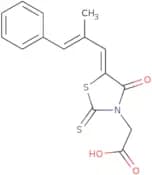
CAS:<p>Epalrestat is a carboxylic acid derivative that is used for the treatment of diabetic neuropathy. This drug is an aldose reductase inhibitor and aims to reduce the accumulation of intracellular sorbitol. Studies in rats have shown this drug to improve morphological abnormalities of nerves.</p>Formula:C15H13NO3S2Purity:Min. 95%Color and Shape:PowderMolecular weight:319.4 g/molTenatoprazole
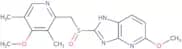
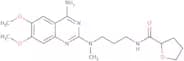
CAS:<p>H+/K+ ATPase inhibitor</p>Formula:C16H18N4O3SPurity:Min. 95%Color and Shape:PowderMolecular weight:346.41 g/molAlfuzosin - Bio-X ™
CAS:<p>Alfuzosin is an alpha-1 adrenoreceptor antagonist drug that is used in treatment and management of benign prostatic hyperplasia. This drug works by relaxing the muscles in the prostate and bladder neck which results in symptom improvement.</p>Formula:C19H27N5O4Purity:Min. 95%Color and Shape:PowderMolecular weight:389.45 g/molAutocamtide-2 Related Inhibitory Peptide
<p>Autocamtide-2-related inhibitory peptide is a calmodulin-dependent protein kinase II (CaMKII) inhibitor.CAMK represents a class of Ca2+/calmodulin-dependent protein kinase enzymes. CAMKs are activated by increases in the concentration of intracellular calcium ions (Ca2+) and transfers phosphates from ATP to defined serine or threonine residues in other proteins. Activated CAMK is involved in the phosphorylation of transcription factors and therefore, in the regulation of expression of responding genes.</p>Purity:Min. 95%Color and Shape:PowderMolecular weight:1,707.1 g/molERKtide amide
<p>ERKtide Substrate Peptide.</p>Purity:Min. 95%Color and Shape:PowderMolecular weight:1,674.9 g/molCHZ868
CAS:<p>CHZ868 is a chemical compound primarily used in experimental research settings. It is synthesized through a series of organic reactions, often involving specific reagents to ensure high purity and stability. The compound operates by interacting with specific cellular pathways, influencing key biochemical processes that are crucial for its intended applications.</p>Formula:C22H19F2N5O2Purity:Min. 95%Color and Shape:PowderMolecular weight:423.42 g/mol[CGG]-GSK3B (Human 359-409)
<p>Amino acids 359-409 of human glycogen synthase kinase 3 β (GSKβ), a multifunctional serine/threonine kinase widely expressed in most mammalian cells. GSKβ is highly active under basal conditions and acts downstream of phosphoinositide 3-kinase (PI3K) signalling. PI3K activation results in Akt phosphorylation and the subsequent phosphorylation of GSKβ at serine-9 and its inactivation. GSKβ in turn activates the production of pro-inflammatory cytokines including IL-1β, IL-6, IL-12, IL-17, TNFalpha and IFNγ, and supresses the production of IL-10, IL-1Ra, and IFNβ by immune cells. Under resting conditions, GSKβ is constitutively active due to tyrosine-216 phosphorylation, and it phosphorylates and inhibits a diverse group of pro-oncogenic substrates, such as: β-catenin- cyclin D1- c-Jun- c-Myc and CREB. GSKβ is also involved in Wnt signalling pathways.Aberrant expression of GSKβ has been shown to promote cell growth in some cancers and to suppress it in others. GSKβ inhibition leads to the accumulation of β-catenin in the nucleus, enhancing the progression of many cancers. However the inhibition of GSKβ also induces apoptosis in various types of cancers, such as pancreatic, colorectal and bladder cancer. Inhibition of GSKβ can also have neuroprotective effects on dopaminergic neurons such as in Parkinson's disease.</p>Purity:Min. 95%Color and Shape:PowderMolecular weight:1,658.8 g/molPNU 159682
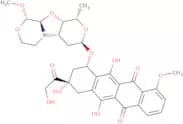
CAS:<p>DNA alkylating agent; highly potent metabolite of nemorubicin</p>Formula:C32H35NO13Purity:Min. 90 Area-%Color and Shape:Red PowderMolecular weight:641.62 g/molPAC 1
CAS:<p>PAC 1 is a small-molecule apoptosis inducer, derived from synthetic sources, with a unique mode of action targeting the apoptotic pathways in cancer cells. PAC 1 functions by selectively activating procaspase-3, an inactive precursor of the caspase enzymes, which play a crucial role in the execution phase of cell apoptosis. By facilitating the conversion of procaspase-3 to its active form, PAC 1 enhances the apoptotic response in cancer cells, promoting cell death and offering potential therapeutic advantages.</p>Formula:C23H28N4O2Purity:Min. 98 Area-%Color and Shape:White PowderMolecular weight:392.49 g/molAMG 510
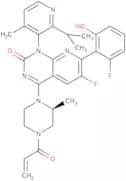
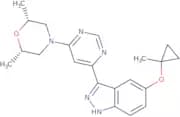
CAS:<p>KRAS G12C inhibitor</p>Formula:C30H30F2N6O3Purity:(%) Min. 98%Color and Shape:PowderMolecular weight:560.59 g/molGNE 371
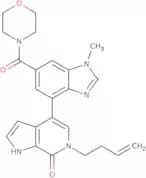
CAS:<p>A chemical probe for the dual bromodomains of human transcription-initiation-factor TFIID subunit 1 (TAF1). GNE 371 binds TAF1 with an IC50 of 10 nM and is selective over other bromodomain family members. Exerts anti-proliferative effects in synergy with BET inhibitor JQ1.</p>Formula:C24H25N5O3Purity:(Hplc-Ms) Min. 98 Area-%Molecular weight:431.49 g/molPentoxifylline
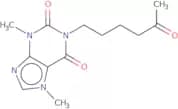
CAS:Controlled Product<p>Phosphodiesterase inhibitor</p>Formula:C13H18N4O3Purity:Min. 95%Color and Shape:White PowderMolecular weight:278.31 g/molAPTO 253
CAS:<p>Induces Kruppel like factor 4 (KLF4) and reduces the expression of MYC. Anti-tumor activity of APTO 253 has been demonstrated in AML and haematological malignancies. Inducing KLP4 expression in ovarian cancer cells using APT0 253 sensitises cells to cisplatin and paclitaxel. BRCA1/2-deficient cancer cells are hypersensitive to APTO 253, which mediates its action by causing DNA damage.</p>Formula:C22H14FN5Purity:Min. 95%Color and Shape:SolidMolecular weight:367.38 g/molIQVPL (EYGF-56)
<p>During extraction of lecithin from egg yolk, peptide by-products can be isolated and purified by gel filtration. Within the by-products this has led to the discovery of biologically active value-added products. The egg yolk gel filtration (EFGF) fractions were analysed for their antioxidant and angiotensin converting enzyme (ACE) inhibitory activities. EYGF-56 predominantly contained 3 peptides - SDNRNQGY, IQVPL, and KGLWE. IQVPL in EYGF-56 was found to have minimal antioxidant activity. YPSPV showed some angiotensin converting enzyme (ACE) inhibitory activity.</p>Purity:Min. 95%Molecular weight:567.4 g/molKLSDW (EYGF-33)
<p>During extraction of lecithin from egg yolk, peptide by-products can be isolated and purified by gel filtration. Within the by-products this has led to the discovery of biologically active value-added products. The egg yolk gel filtration (EFGF) fractions were analysed for their antioxidant and angiotensin converting enzyme (ACE) inhibitory activities. EYGF-33 predominantly contained 3 peptides - KLSDW, YPSPV, and MPVHTDAD). KLSDW in EYGF-33 was found to have strong antioxidant activity linked to the presence of the tryptophan residue. KLSDW had nearly comparable activity to the synthetic antioxidant BHA. KLSDW did not show any notable angiotensin converting enzyme (ACE) inhibitory activity.</p>Purity:Min. 95%Molecular weight:646.3 g/molDAPKtide Substrate Peptide
<p>DARKtide is a substrate peptide for death-associated protein kinase (DAPK) for use in kinases assays. DAPK is involved in several cellular pathways including: apoptosis, tumour suppression, stress response, anti-viral immunity and IL-1-associated inflammatory diseases. In C. elegans DAPK-1 regulates epidermal morphogenesis, innate immunity and wound repair.</p>Purity:Min. 95%Color and Shape:PowderMolecular weight:1,577.9 g/molGSK 583
CAS:<p>A potent and selective inhibitor of cell death-inducing kinase RIP2 (IC50 = 5 nM). Reduces release of pro-inflammatory cytokines. Inhibits production of TNF-α and IL-6 in intestinal explants from patients with Crohn's disease and ulcerative colitis.</p>Formula:C20H19FN4O2SPurity:Min. 95%Color and Shape:PowderMolecular weight:398.46 g/mol



![[CGG]-GSK3B (Human 359-409)](/_next/image/?url=https%3A%2Fstatic.cymitquimica.com%2Fproducts%2F3D%2Fthumb-webp%2FCRB1000551.webp&w=3840&q=75)