


Organosilicon Compounds
In this section, you will find a large number of organosilicon compounds. Organosilicon compounds are characterized by carbon atoms bonded to silicon atoms. Other non-metallic compounds may also be present. These compounds are widely used in organic synthesis, materials science, and pharmaceuticals due to their unique chemical properties. At CymitQuimica, we provide a broad range of high-quality organosilicon compounds to support your research and industrial projects.
Subcategories of "Organosilicon Compounds"
Found 4327 products of "Organosilicon Compounds"
Sort by
Purity (%)
0
100
|
0
|
50
|
90
|
95
|
100
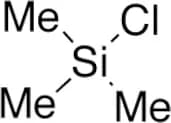
Chlorotrimethylsilane
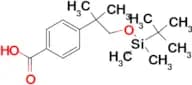
CAS:<p>Stability Moisture Sensitive<br>Applications Chlorotrimethylsilane have been used in the preparation of volatile derivatives of a wide range of compounds for GC analysis. Chlorotrimethylsilane has been used for silylation and as a protection group in the process of various organic synthesis.<br> E0<br>References Casimiro, M., et al.: Org. Lett., 15, 2378 (2013); Lifchits, O., et al.: J. Am. Chem. Soc., 135, 6677 (2013);<br></p>Formula:C3H9ClSiColor and Shape:NeatMolecular weight:108.644-(1-((TERT-BUTYLDIMETHYLSILYL)OXY)-2-METHYLPROPAN-2-YL)BENZOIC ACID
CAS:Purity:90.0%Molecular weight:308.4930114746094(3-Cyanopropyl)dimethylchlorosilane
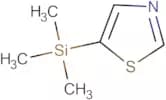
CAS:Purity:98%Color and Shape:LiquidMolecular weight:161.69999694824225-Trimethylsilylthiazole
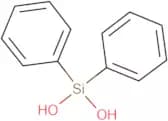
CAS:<p>S20280 - 5-Trimethylsilylthiazole</p>Formula:C6H11NSSiPurity:98%Color and Shape:Liquid, ClearMolecular weight:157.31Diphenylsilanediol
CAS:<p>S08075 - Diphenylsilanediol</p>Formula:C12H12O2SiPurity:>98.0%(GC)Color and Shape:White powderMolecular weight:216.311Di-n-hexyldichlorosilane
CAS:Purity:95%Color and Shape:Liquid, ClearMolecular weight:269.3299865722656Tris(trimethylsiloxy)silane
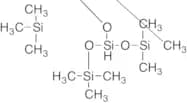
CAS:Controlled Product<p>Stability Moisture Sensitive<br>Applications Tris(trimethylsiloxy)silane functions as a modified siloxane elastomer for controlled cell growth or as a biomaterial surface that induces a desired cellular response.<br> Not a dangerous good if item is equal to or less than 1g/ml and there is less than 100g/ml in the package<br>References Gibson, A. L., et al.: Mater. Res. Soc. Symp. Proc., 711, 169 (2002)<br></p>Formula:C9H28O3Si4Color and Shape:NeatMolecular weight:296.66N-Hexylsilane
CAS:<p>S09900 - n-Hexylsilane</p>Formula:C6H16SiColor and Shape:Liquid, ClearMolecular weight:116.27899932861328Trimethylsilyloxyfuran
CAS:<p>S19920 - Trimethylsilyloxyfuran</p>Formula:C7H12O2SiPurity:98%Color and Shape:LiquidMolecular weight:156.2561,5-Divinyl-3,3-diphenyl-1,1,5,5-tetramethyl-trisiloxane
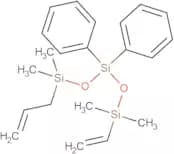
CAS:<p>S08360 - 1,5-Divinyl-3,3-diphenyl-1,1,5,5-tetramethyl-trisiloxane</p>Formula:C21H30O2Si3Color and Shape:LiquidMolecular weight:398.724(E)-2-(1-Butenyl)-1,3,2-benzodioxaborole
CAS:Controlled Product<p>Applications (E)-2-(1-Butenyl)-1,3,2-benzodioxaborole (cas# 106094-36-4) is a compound useful in organic synthesis.<br></p>Formula:C10H11BO2Color and Shape:NeatMolecular weight:174.0Di-tert-butyldichlorosilane
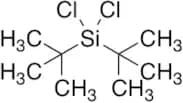
CAS:Controlled Product<p>Applications Di-tert-butyldichlorosilane (cas# 18395-90-9) is a useful research chemical.<br></p>Formula:C8H18Cl2SiColor and Shape:NeatMolecular weight:213.221H,1H,2H,2H-Perfluorooctyltrimethoxysilane
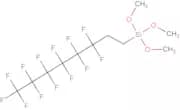
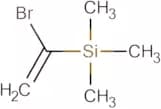
CAS:<p>S13160 - 1H,1H,2H,2H-Perfluorooctyltrimethoxysilane</p>Formula:C11H13F13O3SiPurity:95%Color and Shape:LiquidMolecular weight:468.2861(Bromovinyl)trimethylsilane
CAS:<p>S03150 - 1(Bromovinyl)trimethylsilane</p>Formula:C5H11BrSiPurity:97%Color and Shape:Liquid, ClearMolecular weight:179.132triisopropyl chlorosilane
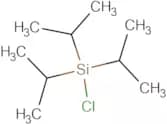
CAS:<p>S17950 - triisopropyl chlorosilane</p>Formula:C9H21ClSiPurity:97%Color and Shape:LiquidMolecular weight:192.80000305175783-(2-Aminoethyl)3-Aminopropyltrimethoxy silane
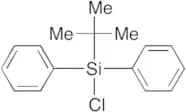
CAS:Formula:C8H22N2O3SiPurity:98%Color and Shape:LiquidMolecular weight:222.36tert-Butyldiphenylchlorosilane
CAS:Controlled Product<p>Applications tert-Butyldiphenylchlorosilane is used to synthesize interphenylene phenyloxazoles, compounds that have antagonistic activity against thromboxane receptors which can be used for treatment of circulatory disorders, angina and stroke.<br> Not a dangerous good if item is equal to or less than 1g/ml and there is less than 100g/ml in the package<br>References Hadjipavlou–Litina, D. & Kontogiorgis, C.: Int. Elect. J. Mol. Des., 1, 300 (2002); Misra, R., et al.: Bioorg. Med. Chem. Lett., 2, 937 (1992)<br></p>Formula:C16H19ClSiColor and Shape:NeatMolecular weight:274.86Triphenylsilanethiol
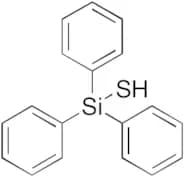
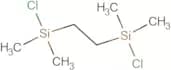
CAS:Controlled Product<p>Applications Triphenylsilanethiol is a useful organic building block used for carboxyl activation via silylthioesterification, and in the preparation of synthesis of tetraphenylporphyrinate manganese(III) siloxides.<br>References Lamar, A. A.; et al.: Tetrahedron Lett., 56, 6034 (2015); Meininger, D. J.; et al.: J. Coord. Chem., 69, 1970 (2016).<br></p>Formula:C18H16SSiColor and Shape:NeatMolecular weight:292.471,2-Bis(chlorodimethylsilyl)ethane
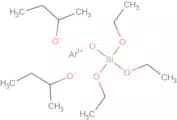
CAS:Purity:95%Color and Shape:SolidMolecular weight:215.25999450683594Di-s-butoxyaluminoxytriethoxysilane
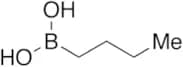
CAS:<p>S05725 - Di-s-butoxyaluminoxytriethoxysilane</p>Formula:C14H33AlO6SiColor and Shape:Liquid, ClearMolecular weight:352.479Butylboronic Acid
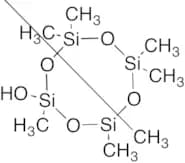
CAS:Controlled Product<p>Applications Butylboronic Acid is a boronic acid derivative that can be used as a transport carriers in membrane-based sugar separations. Butylboronic Acid is used as an analytical reagent in the determination of serum glucose.<br>References Smith, B.D. et al.: ACS Symp. Ser., 642, 194 (1996); Prendergast, J.L. et al.: Anal. Bional. Chem., 397, 1779 (2010);<br></p>Formula:C4H11BO2Color and Shape:NeatMolecular weight:101.94Heptamethylcyclotetrasiloxan-2-ol
CAS:Controlled Product<p>Applications Heptamethylcyclotetrasiloxan-2-ol is a derivative of Octamethylcyclotetrasiloxane (O237145), which is an organometallic reagent that can be used in the preparation of siloxane polymers, with high surface-hydrophobicity restoration.<br>References Fritz, O., et al.: MRS Online Proceedings Library, 1535 (2012); Vanossi, A., et al.: Condensed Matter (2013);<br></p>Formula:C7H22O5Si4Color and Shape:NeatMolecular weight:298.593-Carboxyphenylboronic Acid
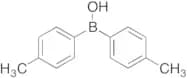
CAS:Controlled Product<p>Applications 3-Carboxyphenylboronic Acid is used in phenylboronic acid-decorated gelatin nanoparticles for enhanced tumor targeting and penetration.<br>References Wang, X., et al.: Nanotechnology, 27, 385101 (2016); Wang, X., et al.: Eur. J. Pharm. Biopharm., 113, 168 (2017)<br></p>Formula:C7H7BO4Color and Shape:Off WhiteMolecular weight:165.94Hydroxydi-p-tolylborane
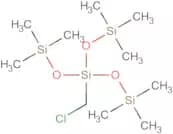
CAS:Controlled Product<p>Applications Hydroxydi-p-tolylborane is a building block used as a reactant in the nickel-catalyzed cross-coupling of diarylborinic acids with aryl chlorides.<br>References Chen, X., et al.: ACS Catalys., 4, 379 (2014);<br></p>Formula:C14H15BOColor and Shape:NeatMolecular weight:210.08Chloromethyltris(trimethylsiloxy)silane
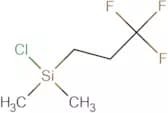
CAS:<p>S04435 - Chloromethyltris(trimethylsiloxy)silane</p>Formula:C10H29ClO3Si4Color and Shape:Liquid, ClearMolecular weight:345.13(3,3,3-Trifluoropropyl)dimethylchlorosilane
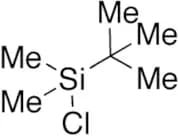
CAS:Purity:90%Color and Shape:LiquidMolecular weight:190.6699981689453tert-Butyldimethylsilyl Chloride
CAS:<p>Applications Used to protect alcohols during organic synthesis.<br>References Shen, H., et al.: J. Med. Chem., 53, 2666 (2010), Qiang, L., et al.: Bioorg. Med. Chem. Lett., 20, 836 (2010),<br></p>Formula:C6H15ClSiColor and Shape:White SolidMolecular weight:150.721-Triethylsilyl-4-(Triethlylsilyloxy)-1-Butyne
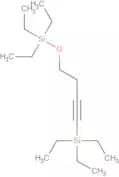
CAS:<p>S17624 - 1-Triethylsilyl-4-(Triethlylsilyloxy)-1-Butyne</p>Formula:C16H34OSi2Purity:97%Color and Shape:LiquidMolecular weight:298.617Vinyltrimethoxysilane
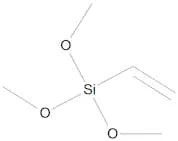
CAS:<p>Applications Vinyltrimethoxysilane (cas# 2768-02-7) is a useful research chemical.<br></p>Formula:C5H12O3SiColor and Shape:Light YellowMolecular weight:148.2325Dodecamethylpentasiloxane
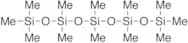
CAS:Controlled Product<p>Applications A non-cyclic polydimethyl siloxane. Study shows that it can be transformed by a specific microflora and in the natural environment degraded by mechanisms similar to other organic compounds.<br>References Watanabe, N. et al.: Ecotoxic. Env. Safety, 11, 174 (1986); Wasserbauer, R. et al.: Folia Microbiologica, 35, 384 (1990);<br></p>Formula:C12H36O4Si5Color and Shape:NeatMolecular weight:384.84Tetramethylammonium Triacetoxyborohydride (>90%)
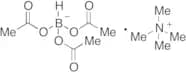
CAS:Controlled Product<p>Applications Tetramethylammonium Triacetoxyborohydride is used in the synthesis of Peloruside A. Epoxypropanoate is a neurokinin substance P receptor antagonist synthesized from this compound.<br> Not a dangerous good if item is equal to or less than 1g/ml and there is less than 100g/ml in the package<br>References Gazaille, J. et al.: Org. Lett., 14, 178 (2012); Prevost, S. et al.: Tetrahedron Asymm., 21, 16 (2010);<br></p>Formula:C10H22BNO6Purity:>90%Color and Shape:NeatMolecular weight:263.1Trimethylsilyl Azide
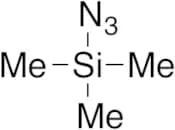
CAS:Controlled Product<p>Applications Trimethylsilyl azide is used to mediate Schmidt rearragement reactions and is also used as a nucleophile in organic synthesis. Versatile azidonation reagent for amines, amides, aldehydes, and ketones.<br> Not a dangerous good if item is equal to or less than 1g/ml and there is less than 100g/ml in the package<br>References Mphahlele, M.: J. Chem. Soc. Perk. T. 1, 23, 3477 (1999); Pastor, I. & Yus, M.: Org. Chem., 9, 1 (2005)<br></p>Formula:C3H9N3SiColor and Shape:NeatMolecular weight:115.21Diisopropyldimethoxysilane
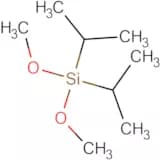
CAS:<p>S06810 - Diisopropyldimethoxysilane</p>Formula:C8H20O2SiPurity:95+%Color and Shape:Liquid, ClearMolecular weight:176.3314-Amino-3,3-dimethylbutyltrimethoxysilane
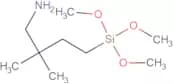
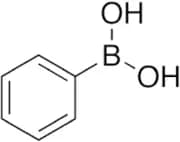
CAS:<p>S25031 - 4-Amino-3,3-dimethylbutyltrimethoxysilane</p>Formula:C9H23NO3SiPurity:97%Color and Shape:LiquidMolecular weight:221.372Phenylboronic Acid (95%)
CAS:Controlled Product<p>Applications Phenylboronic Acid is a compound used in organic synthesis of various pharmaceutical goods.<br>References Ainley, A.D., et al.: J. Chem. Soc., 2171 (1930);<br></p>Formula:C6H7BO2Purity:95%Color and Shape:NeatMolecular weight:121.93Triisopropylsilane
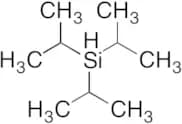
CAS:Controlled Product<p>Applications Triisopropylsilane is used in the design of internalizing PSMA-specific Glu-ureido-based radiotherapeuticals for prostrate cancers. Reagent for the rational design of dual peptides targeting ghrelin and Y2 receptors to regulate food intake and body weight. Also functions as a highly selective reducing agent used in the preparation of anti-1,2-diols.<br> Not a dangerous good if item is equal to or less than 1g/ml and there is less than 100g/ml in the package<br>References Wuestemann, T., et al.: Theranostics, 6, 1085 (2016); Kilian, T., et al.: J. Med. Chem., 58, 4180 (2015); Horners, L.; et al.: Organomet. Chem., 282, 155 (1985)<br></p>Formula:C9H22SiColor and Shape:NeatMolecular weight:158.361-(Trimethylsiloxy)cyclohexene
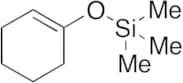
CAS:Controlled Product<p>Stability Moisture Sensitive<br>Applications 1-(Trimethylsiloxy)cyclohexene is used as a reagent in the synthesis of 6-Methyl Chrysene (M265140); an aryl hydrocarbon receptor (AhR) agonist that has been listed as possibly carcinogenic to humans.<br> Not a dangerous good if item is equal to or less than 1g/ml and there is less than 100g/ml in the package<br>References Amin, S. et al.: Cancer Res., 45, 6406 (1985); Blaha, L. et al.: Toxicol. Sci., 65, 43 (2002); Brack, W. et al.: Environ. Sci. Technol., 37, 3062 (2003); Andrysik, Z. et al.: Mutat. Res., 615, 87 (2007)<br></p>Formula:C9H18OSiColor and Shape:NeatMolecular weight:170.32Aminophenyltrimethoxysilane
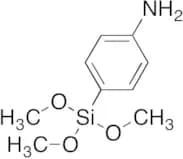
CAS:Controlled Product<p>Applications Aminophenyltrimethoxysilane is a useful intermediate for the preparation of aromatic silanes as high thermal stability coupling agents.<br>References Pan, Y., et al.: Adv. Mat. Res., 690, 1483 (2013)<br></p>Formula:C9H15NO3SiColor and Shape:NeatMolecular weight:213.31Decaborane
CAS:Controlled Product<p>Applications Decaborane is a useful building block mostly used in the preparation of carboranes. On its own, Decaborane is able to undergo reduction via acetate as a neat liquid.<br> E0<br>References Marsh, A. V.; et al.: Angew. Chem. Int. Ed., 57, 10640 (2018); Kelley, S. P.; et al.: ACS Omega, 3, 8491 (2018).<br></p>Formula:B10H14Color and Shape:NeatMolecular weight:122.22N-(triethoxysilylpropyl)-O-polyethyleneoxideurethane
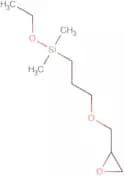
CAS:Purity:95%Color and Shape:Liquid, ClearMolecular weight:353.186978862(3-Glycidoxypropyl)dimethylethoxysilane
CAS:<p>S09075 - (3-Glycidoxypropyl)dimethylethoxysilane</p>Formula:C10H22O3SiColor and Shape:LiquidMolecular weight:218.3679962158203o-Carborane-1-carboxylic Acid
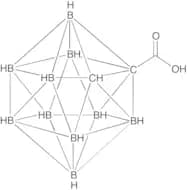
CAS:Controlled ProductFormula:C3H12B10O2Color and Shape:NeatMolecular weight:188.24N,O-Bis(trimethylsilyl)trifluoroacetamide (~90%)
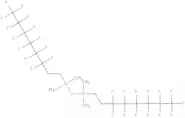
CAS:Controlled Product<p>Applications Used as a reactant in the preparation of pyrimidinone ribosides and analogs that show anti-tumor properties.<br> Not a dangerous good if item is equal to or less than 1g/ml and there is less than 100g/ml in the package<br>References Driscoll, J.S. et al.: J. Med. Chem., 34, 3280 (1991); Pan, L. et al.: J. Pharm. Biomed. Anal., 52, 589 (2010);<br></p>Formula:C8H18F3NOSi2Purity:~90%Color and Shape:Colourless To Light YellowMolecular weight:257.40Bis(tridecafluoro-1,1,2,2-tetrahydrooctyl)tetra-methyldisiloxane
CAS:<p>S02106 - Bis(tridecafluoro-1,1,2,2-tetrahydrooctyl)tetra-methyldisiloxane</p>Formula:C20H20F26OSi2Color and Shape:Clear to straw liquidMolecular weight:826.507N-(3-Trimethoxysilylpropyl)-4-azido-2,3,5,6-tetrafluorobenzamide >90%
CAS:<p>Stability Light and Temperature sensitive<br>Applications PFPA-silane is a functionalized perfluorophenyl azides for covalent immobilization of ultrathin polymer films.<br>References Mosbach, K., et al.: Biotechnology, 14, 163 (1996), Keren, K., et al.: Science, 297, 72 (2002), Lidstrom, M., et al.: Nature Rev. Microbiol., 1, 158 (2003),<br></p>Formula:C13H16F4N4O4SiPurity:>90%Color and Shape:Off White SolidMolecular weight:396.37Tris(trimethylsiloxy)-3-methacryloxypropylsilane <4% Dimer
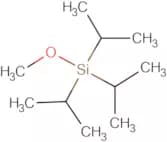
CAS:<p>S21125 - Tris(trimethylsiloxy)-3-methacryloxypropylsilane <4% Dimer</p>Formula:C16H38O5Si4Purity:>98.0%(GC)Color and Shape:ClearMolecular weight:422.815Triisopropylmethoxysilane
CAS:<p>S17960 - Triisopropylmethoxysilane</p>Formula:C10H24OSiColor and Shape:Liquid, ClearMolecular weight:188.386Hexamethylcyclotrisiloxane
CAS:Controlled Product<p>Applications Hexamethylcyclotrisiloxane is used in the preparation of Silicone coated Celgard-2400 for the adhesion of canine platelets and leucocytes.<br> Not a dangerous good if item is equal to or less than 1g/ml and there is less than 100g/ml in the package<br>References Chawla, A.S.: Biomaterials, 2, 83 (1981)<br></p>Formula:C6H18O3Si3Color and Shape:NeatMolecular weight:222.461,3-Dichloro-1,1,3,3-tetraisopropyldisiloxane
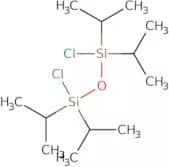
CAS:<p>1,3-Dichloro-1,1,3,3-tetraisopropyldisiloxane is a chromatographic stationary phase that has been used for the analysis of oligosaccharides and hydrogen bonds. 1,3-Dichloro-1,1,3,3-tetraisopropyldisiloxane has been shown to be useful in the separation of uridine from other nucleotides. It also has been shown to be useful as a titration calorimetry standard. This stationary phase can be used with fluorescence spectrometry and tryptophan fluorescence for structural analysis of pyrimidine compounds. Molecular modeling studies have also demonstrated that this stationary phase is stereoselective with regards to hydroxyl group emissions. The 1,3-Dichloro-1,1,3,3-tetraisopropyldisiloxane stationary phase is</p>Formula:C12H28Cl2OSi2Purity:Min. 95%Color and Shape:Colorless Slightly Yellow Clear LiquidMolecular weight:315.43 g/mol(3R,4R)-4-Acetoxy-3-[(R)-1-(tert-butyldimethylsilyloxy)ethyl]-2-azetidinone
CAS:<p>(3R,4R)-4-Acetoxy-3-[(R)-1-(tert-butyldimethylsilyloxy)ethyl]-2-azetidinone is a versatile building block that can be used as a reagent and speciality chemical. It is also a useful scaffold for the synthesis of complex compounds. It has been shown to be useful in the manufacture of research chemicals and other fine chemicals. This compound is characterized by its high quality and can be used as an intermediate in reactions involving nucleophilic substitution, alkylation, acylation, esterification, and amination.</p>Formula:C13H25NO4SiPurity:Min. 98 Area-%Color and Shape:White PowderMolecular weight:287.43 g/molTriphenylchlorosilane
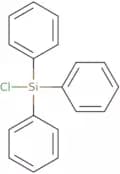
CAS:<p>Triphenylchlorosilane is a reactive compound that has been used as a model system for studying the reaction of congestive heart failure. It has been shown to inhibit energy metabolism and cell factor, which are important factors in the progression of congestive heart failure. Triphenylchlorosilane also reacts with p-hydroxybenzoic acid to form an unstable intermediate, which undergoes intramolecular hydrogen transfer to give the final product. The reaction mechanism is proposed to be a coordination geometry involving three chlorine atoms. This compound is not reactive with sodium salts or structural analysis, but it does bind signal peptide in vivo models and can be used as a probe for protein-protein interactions.</p>Formula:C18H15ClSiPurity:Min. 95%Color and Shape:PowderMolecular weight:294.85 g/molPyrimidine-4-boronic acid
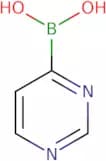
CAS:<p>Pyrimidine-4-boronic acid is a pyrimidine derivative that is used as a building block or intermediate in organic chemistry. It has the CAS number 852362-24-4 and can be found in research chemicals and speciality chemicals. Pyrimidine-4-boronic acid is a versatile chemical with many uses, including as a reaction component or reagent. This compound has many properties that make it useful for synthesis, such as its low toxicity and high quality.</p>Formula:C4H5BN2O2Purity:Min. 95 Area-%Color and Shape:PowderMolecular weight:123.91 g/molN-ε-(1-Carboxymethyl)-L-lysine
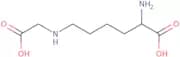
CAS:<p>N-ε-(1-Carboxymethyl)-L-lysine (NEM) is a versatile building block that is used in the synthesis of complex compounds. It is a reagent and speciality chemical that can be used as an intermediate to produce other useful chemicals or as a reaction component. It has been shown to be useful in the synthesis of peptides, oligonucleotides, and organic molecules. NEM has also been shown to have high quality and purity, making it a useful scaffold for further research into new compounds.</p>Formula:C8H16N2O4Purity:Min. 97%Color and Shape:White PowderMolecular weight:204.22 g/moltert-Butyl diphenylchlorosilane
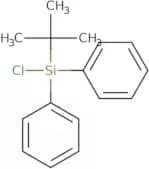
CAS:<p>Tert-butyl diphenylchlorosilane is a chemical compound that belongs to the group of organosilicon compounds. It is used for the preparation of various organosilicon compounds, such as trifluoroacetic acid, which is used in analytical chemistry. The synthesis of tert-butyl diphenylchlorosilane starts with the reaction between hydrochloric acid and sodium citrate. This yields a phosphate bond and a hydroxyl group. In order to form the desired product, tert-butyl diphenylchlorosilane, this intermediate is reacted with trifluoroacetic acid in an asymmetric synthesis to yield the desired product. The reaction mechanism of this process involves hydrogen chloride as an electrophile attacking the carbonyl carbon atom in trifluoroacetic acid, leading to an elimination reaction. This elimination reaction results in two possible products: tert-butyl acetate or tert-butyl chloros</p>Formula:C16H19ClSiPurity:Min. 97 Area-%Color and Shape:Clear LiquidMolecular weight:274.87 g/mol(1R,2R,3S,5R)-Pinanediol pyrrolidine-2S-boronate hydrochloride
CAS:<p>(1R,2R,3S,5R)-Pinanediol pyrrolidine-2S-boronate hydrochloride is a reagent that can be used in the synthesis of complex compounds. It is a fine chemical with CAS No. 149716-73-4. (1R,2R,3S,5R)-Pinanediol pyrrolidine-2S-boronate hydrochloride has a number of uses including as an intermediate for the preparation of speciality chemicals and as a building block for reactions in research. This compound is also useful as a versatile building block for many reactions.</p>Formula:C14H25BClNO2Purity:Min. 95%Color and Shape:PowderMolecular weight:285.62 g/mol4-Hydroxyphenylboronic acid pinacol ester
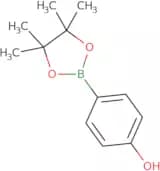
CAS:<p>4-Hydroxyphenylboronic acid pinacol ester is a hydrophilic compound that has been used as a long-acting iron chelator. It has been shown to be active in the treatment of anemic patients with chronic kidney disease. 4-Hydroxyphenylboronic acid pinacol ester has been shown to bind to hepcidin, which is a peptide hormone that regulates iron homeostasis in the body by decreasing its absorption from the gut and increasing its excretion. It also binds to functional groups on proteins and other molecules, which allow for selective targeting of certain tissues or cells. This compound can be activated by light, making it photochromic. The addition of an active oxygen atom enables this molecule to react at a faster rate than most compounds and also creates reactive oxygen species (ROS) in humans when activated.</p>Formula:C12H17BO3Purity:Min. 95%Color and Shape:White PowderMolecular weight:220.1 g/molN-Boc-pyrroyl-boronic acid
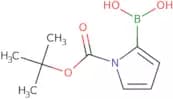
CAS:<p>N-Boc-pyrroyl-boronic acid is a linker that is used in organic synthesis. It reacts with chloride to form an organochlorine compound, which can be used as an inhibitor of s. aureus or other bacteria. The reaction time for this chemical is shorter than for the corresponding boronic acid, and it does not require the presence of a Lewis acid. This chemical has been shown to have anticancer activity in vitro, and its optimization has been studied using fluorescent carbonyl groups as the active component.</p>Formula:C9H14BNO4Purity:Min. 95%Molecular weight:211.02 g/mol4-Biphenylboronic acid
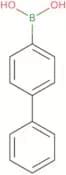
CAS:<p>4-Biphenylboronic acid is a molecule that belongs to the group of amines. It is used in plant science to study the effects of amines on plants. The molecule has been shown to have a high UV absorption and catalysis activity. 4-Biphenylboronic acid has also been shown to bind with p-hydroxybenzoic acid, which inhibits binding with proteins, leading to a change in morphology. 4-Biphenylboronic acid can be used as a chemical inhibitor for root formation and other biological functions.</p>Formula:C12H11BO2Purity:Min. 95%Color and Shape:White Off-White PowderMolecular weight:198.03 g/molN,N'-4,4'-Bis(benzyl-2-boronic acid)-bipyridinium dibromide
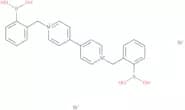
CAS:<p>N,N'-4,4'-Bis(benzyl-2-boronic acid)-bipyridinium dibromide is a high quality reagent that can be used as an intermediate for the synthesis of complex organic compounds. It is a complex compound that contains boronic acid and bipyridinium moieties. N,N'-4,4'-Bis(benzyl-2-boronic acid)-bipyridinium dibromide is useful in the synthesis of fine chemicals and speciality chemicals. It has versatile building block properties and can be used as a reaction component in many chemical reactions.</p>Formula:C24H24B2N2O4Br2Purity:Min. 95%Color and Shape:PowderMolecular weight:585.89 g/molN-α-Fmoc-N-ε-4-methyltrityl-L-lysine
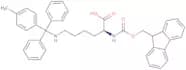
CAS:<p>N-alpha-Fmoc-Nepsilon-methyltrityl-L-lysine is a synthetic amino acid that is used in the industrial production of peptides. It has been used for the synthesis of polypeptides, which are made up of chains of amino acids, and to analyze uptake in urine samples. The uptake was tracked by using a trifluoroacetic acid analog to radiolabel the N-alpha-Fmoc-Nepsilon-methyltrityl-L-lysine. This analog was synthesized from histidine and butyric acid, and its carboxy terminal sequence was determined by solid phase synthesis. N-alpha-Fmoc-Nepsilon methyltrityl L Lysine binds to the receptor site on cells that is responsible for binding histidine residues on proteins.</p>Formula:C41H40N2O4Purity:Min. 95%Color and Shape:White To Off-White SolidMolecular weight:624.77 g/molN-Ethylamine-2,4,6-triphenyl pyridinium tetrafluoroborate
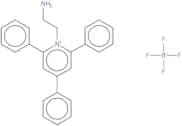
CAS:<p>N-Ethylamine-2,4,6-triphenyl pyridinium tetrafluoroborate is a chemical reagent that belongs to the group of fine chemicals. It is soluble in water and ethanol, and has a melting point of around 100°C. N-Ethylamine-2,4,6-triphenyl pyridinium tetrafluoroborate is used in organic synthesis as a useful building block or as a research chemical for the production of other compounds. This compound is a versatile building block that can be used in the preparation of complex compounds such as pharmaceuticals. N-Ethylamine-2,4,6-triphenyl pyridinium tetrafluoroborate has been classified as an extremely hazardous substance by the US Department of Transportation due to its high reactivity with water.</p>Formula:C25H23N2·BF4Purity:Min. 95%Molecular weight:438.27 g/molDimethoxy(methyl)silane - 90%
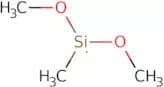
CAS:<p>Dimethoxy(methyl)silane is a fluorescing hydrocarbon that is used as a sealant. It has been shown to react with calcium carbonate and chloride, forming stable complexes. Dimethoxy(methyl)silane reacts with hydrogen chloride to form a divalent hydrocarbon and can be used to produce polymer films.</p>Formula:C3H10O2SiPurity:Min. 95%Color and Shape:Clear LiquidMolecular weight:106.2 g/mol2-Aminophenylboronic acid pinacol cyclic ester
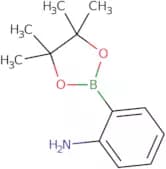
CAS:<p>This compound is a drug target that is an organic molecule found in many pharmaceuticals. It is an acidic, ammonium persulfate-sensitive biomolecule, which can be introduced into cells and tissues to study their function. This compound has been shown to have cancer-fighting abilities, and has potent inhibitory activity against microbial infections. The compound also has suzuki coupling properties, which are used to introduce hemicyanine groups onto other molecules.</p>Formula:C12H18BNO2Purity:Min. 95%Color and Shape:White PowderMolecular weight:219.09 g/mol3-Aminopropyldiisopropylethoxysilane
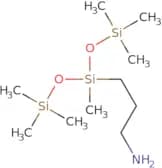
CAS:<p>3-Aminopropyldiisopropylethoxysilane (APDS) is a monolayer chemical that is used to modify the surface properties of a variety of substrates. This chemical can be used for patterning, functionalization, and immobilization of biomolecules. APDS has been shown to have a protective effect on cells in culture by preventing oxidation and denaturation of proteins. APDS also has been used for detection methods such as electron microscopy and photoelectron spectroscopy.</p>Formula:C10H29NO2Si3Purity:Min. 95%Color and Shape:Clear LiquidMolecular weight:279.6 g/mol3,7-Dibromo-5,5-dioctyl-5H-dibenzo[b,d]silole
CAS:<p>3,7-Dibromo-5,5-dioctyl-5H-dibenzo[b,d]silole is a fine chemical that belongs to the group of versatile building blocks for organic synthesis. It is a complex compound that has been used in research as a reagent and speciality chemical. It also has many applications in the production of commercial chemicals such as pharmaceuticals and agrochemicals. This compound can be used as an intermediate for the production of other compounds with pharmaceutical or agricultural uses.</p>Formula:C28H40Br2SiPurity:Min. 95%Color and Shape:Colorless PowderMolecular weight:564.51 g/molArsenazo III
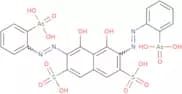
CAS:<p>Arsenazo III is a metal-binding dye that has been shown to bind to the cytosolic calcium ion. The binding of Arsenazo III to calcium has been shown to inhibit the voltage-dependent calcium channels, leading to a decrease in cytosolic calcium concentration. This reduction in cytosolic calcium is associated with energy metabolism and human serum titration calorimetry experiments. The binding of Arsenazo III to calcium is also responsible for its light signal. Arsenazo III binds to copper chloride and forms an insoluble precipitate when reacted with acidic solutions. This reaction can be used for analytical purposes as it produces a quantifiable end-point with plasma mass spectrometry.</p>Formula:C22H18As2N4O14S2Purity:(%) Min. 85%Molecular weight:776.37 g/mol4-Amino-2-chlorophenylboronic acid pinacol ester
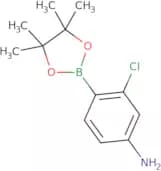
CAS:<p>4-Amino-2-chlorophenylboronic acid pinacol ester is a versatile building block that is used in the synthesis of complex compounds. It can be used as a research chemical, reagent, or speciality chemical depending on the desired use. 4-Amino-2-chlorophenylboronic acid pinacol ester reacts with nucleophiles to form covalent bonds and is also useful as a scaffold for synthesizing other compounds. This compound has been shown to be useful in the synthesis of many different types of chemicals.</p>Formula:C12H17BClNO2Purity:Min. 95%Color and Shape:PowderMolecular weight:253.53 g/molTris(trimethylsilyl)silane
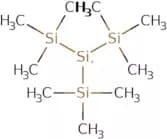
CAS:<p>Tris(trimethylsilyl)silane is a reactive functional group that is used in the synthesis of monoclonal antibodies. It reacts with halides to form an intermediate, which then undergoes chain reactions with other molecules to form the final product. Tris(trimethylsilyl)silane can be used for cancer therapy and for the detection of antibodies. It has been shown that tris(trimethylsilyl)silane will react with a light emitting compound (e.g., 4-dimethylaminopyridine) and a cationic polymerization initiator (e.g., diallyldimethylammonium chloride). This reaction produces high values of light emission, which can be detected by x-ray crystal structures.</p>Formula:C9H28Si4Purity:Min. 97 Area-%Color and Shape:Clear LiquidMolecular weight:248.66 g/mol3-Dansylaminophenylboronic acid
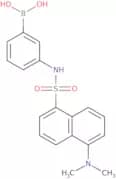
CAS:<p>3-Dansylaminophenylboronic acid is a boronic acid that forms reversible covalent bonds with dopamine. It can be used in the diagnosis of cancer, as it binds to histone lysine and magnetic particles. The fluorescence resonance of 3-Dansylaminophenylboronic acid can also be used in the diagnosis of cancer, as it produces a strong signal. This compound has been shown to have homogeneous assays for the detection of dopamine and lipoprotein lipase in urine samples. 3-Dansylaminophenylboronic acid has also been found to be effective against cancer cells in culture, although it is not active against polysialic-expressing cells.</p>Formula:C18H19BN2O4SPurity:Min. 95%Color and Shape:PowderMolecular weight:370.23 g/mol4-Formylphenylboronic acid pinacol cyclic ester
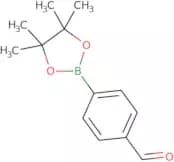
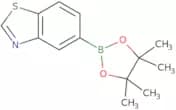
CAS:<p>4-Formylphenylboronic acid pinacol cyclic ester is a boronic ester that can be used in cross-coupling reactions. It reacts with a variety of halides and metal surfaces, including palladium. 4-Formylphenylboronic acid pinacol cyclic ester has been shown to be a useful model system for the synthesis of conjugates and has been used in clinical development as a fluorophore for cancer diagnosis. The photophysical properties of 4-Formylphenylboronic acid pinacol cyclic ester have been studied extensively and the chromophore is sensitive to changes in the environment. The boronic acids are responsible for the reactivity of 4-Formylphenylboronic acid pinacol cyclic ester, which undergoes an oxidative addition reaction mechanism.</p>Formula:C13H17BO3Color and Shape:PowderMolecular weight:232.08 g/molBenzothiazole-5-boronic acid pinacol ester
CAS:<p>Benzothiazole-5-boronic acid pinacol ester is a fine chemical that is used as a versatile building block in the synthesis of complex compounds. It can be used for research purposes, as a reagent in organic synthesis, or as a speciality chemical. This compound has been shown to be useful in the preparation of high quality and useful intermediates, which are then used in the production of other chemicals. Benzothiazole-5-boronic acid pinacol ester is also an important reaction component and can be used as a scaffold for the synthesis of new compounds.</p>Formula:C13H16BNO2SPurity:Min. 95%Color and Shape:PowderMolecular weight:261.15 g/molEthylboronic acid
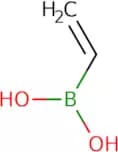
CAS:<p>Ethylboronic acid is a β-amino acid with a serine protease inhibitory effect. It has been shown to inhibit the Toll-like receptor cascade, which is involved in the inflammatory response. Ethylboronic acid also inhibits the serine proteases that are responsible for cleaving peptides at their carboxy termini. This inhibition leads to an increase in the level of active peptides and a decrease in the level of inactive peptides, which can lead to an antimicrobial effect. Ethylboronic acid also inhibits chloride ion channels, which may lead to new treatments for asthma and cancer.</p>Formula:C2H7BO2Purity:Min. 95%Color and Shape:PowderMolecular weight:73.89 g/molOctakis(trimethylsiloxy)silsesquioxane
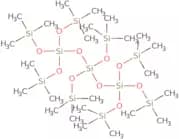
CAS:<p>Octakis(trimethylsiloxy)silsesquioxane is a cross-linking agent that forms covalent bonds with ethylene diamine and aluminium ions. It has been shown to be active against bacterial species such as Staphylococcus aureus, Pseudomonas aeruginosa, and Escherichia coli. Octakis(trimethylsiloxy)silsesquioxane binds to the calcium carbonate of the cell wall, forming a complex that prevents the bacteria from adhering to surfaces. The fluidity of octakis(trimethylsiloxy)silsesquioxane particles allows them to penetrate the cell membrane and inhibit protein synthesis by binding to ribosomes. Octakis(trimethylsiloxy)silsesquioxane can also be used as an encapsulation agent for drugs in order to prevent their degradation by enzymes in the gastrointestinal tract.</p>Formula:C24H72O20Si16Purity:Min. 95%Color and Shape:Clear LiquidMolecular weight:1,130.18 g/molN-Ethylbenzene-2,4,6-triphenyl pyridinium tetrafluoroborate
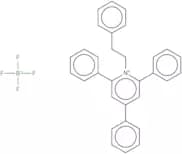
CAS:<p>N-Ethylbenzene-2,4,6-triphenyl pyridinium tetrafluoroborate is a reagent that can be used in chemical reactions. It is a fine chemical and research chemicals with high quality and a versatile scaffold. It is useful as an intermediate in the synthesis of complex compounds. N-Ethylbenzene-2,4,6-triphenyl pyridinium tetrafluoroborate has CAS number 66310-06-3.</p>Formula:C31H26N·BF4Purity:Min. 95%Color and Shape:PowderMolecular weight:499.35 g/mol9-Mesityl-2,7-dimethyl-10-phenylacridinium tetrafluoroborate
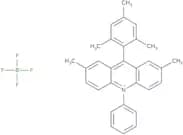
CAS:<p>9-Mesityl-2,7-dimethyl-10-phenylacridinium tetrafluoroborate is a versatile building block and reagent for organic synthesis. It is a fine chemical that is used in the production of research chemicals and speciality chemicals. 9-Mesityl-2,7-dimethyl-10-phenylacridinium tetrafluoroborate can be used as a reaction component to synthesize complex compounds with various functional groups. It has been reported to have high quality, being both useful and stable. CAS NO: 1621020-00-5</p>Formula:C30H28BF4NColor and Shape:Yellow PowderMolecular weight:489.35 g/mol1-Cyano-4-(dimethylamino)pyridinium tetrafluoroborate
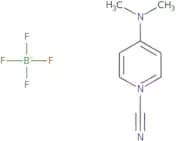
CAS:<p>1-Cyano-4-(dimethylamino)pyridinium tetrafluoroborate (CDAP) is an organic cyanylating agent. It is reactive under acidic conditions giving CDAP an advantage over other sulfhydryl labeling agents, as it can avoid potential thiol-disulfide exchange.</p>Formula:C8H10N3BF4Purity:Min. 98 Area-%Color and Shape:PowderMolecular weight:234.99 g/mol3,5-Dibromophenylboronic acid
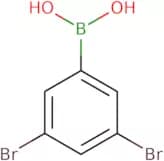
CAS:<p>3,5-Dibromophenylboronic acid is a boronic acid with the chemical formula B(OH)Br. The boron atom in this molecule has a unique electron configuration that allows it to form strong bonds with other atoms and molecules. This reactive compound can be used as a ligand in cross-coupling reactions or to modify an organic molecule by coupling it to another molecule. 3,5-Dibromophenylboronic acid is typically used as a precursor for the synthesis of nanomaterials and can be synthesized from monomers at temperatures ranging from -78°C to 80°C.</p>Formula:C6H5BBr2O2Purity:Min. 95%Molecular weight:279.72 g/mol2,4-Dimethoxypyrimidine-5-boronic acid, pinacol ester
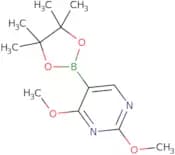
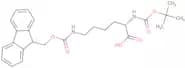
CAS:<p>2,4-Dimethoxypyrimidine-5-boronic acid is a high quality chemical that can be used as a reagent or a complex intermediate. It is an important building block for the synthesis of many compounds and has been shown to be useful in the synthesis of 2,4-dimethoxybenzaldehyde. This compound has been used in the preparation of 2,4-dimethoxypyrimidin-5(6H)-ones and as a reaction component in organic chemistry.</p>Formula:C12H19BN2O4Purity:Min. 97%Molecular weight:266.1 g/molN-α-Boc-N-ε-Fmoc-L-lysine
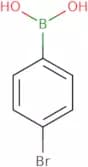
CAS:<p>N-alpha-Boc-N-epsilon-Fmoc-L-lysine is a cyclic peptide that has antimicrobial properties. The peptide is synthesized from the amino acid lysine and contains a sequence of lysine residues. N-alpha-Boc-N-epsilon-Fmoc-L-lysine can be used to treat herpes simplex virus infections and influenza virus infections. It also has the potential to neutralize glycopeptide antibiotics, such as vancomycin, by binding to their cell wall targets and interfering with the function of these molecules. In addition, this peptide can be used to manufacture insulin analogues with improved pharmacokinetic properties and increased stability in blood plasma.</p>Formula:C26H32N2O6Purity:Min. 95%Color and Shape:White To Off-White SolidMolecular weight:468.54 g/mol4-Bromophenylboronic acid
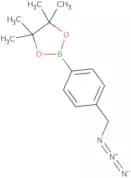
CAS:<p>4-Bromophenylboronic acid is a boronic acid with a basic structure. It has been used to synthesize picolinic acid, which is a water-soluble drug with light emission and anhydrous sodium. 4-Bromophenylboronic acid has been shown to have diagnostic properties because of its ability to enhance the concentration–time curve of sodium salts in human serum. It can also be used as an asymmetric synthesis agent for the production of fatty acids.</p>Formula:C6H6BBrO2Purity:Min. 97.5 Area-%Color and Shape:PowderMolecular weight:200.83 g/mol2-(4-(AzidoMethyl)phenyl)-4,4,5,5-tetraMethyl-1,3,2-dioxaborolane
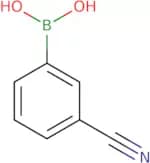
CAS:<p>2-(4-(AzidoMethyl)phenyl)-4,4,5,5-tetraMethyl-1,3,2-dioxaborolane is a high quality reagent that is useful for complex compound synthesis. It has CAS No. 1239481-05-0 and has been shown to be a useful intermediate in many reactions. 2-(4-(AzidoMethyl)phenyl)-4,4,5,5-tetraMethyl-1,3,2-dioxaborolane is also a fine chemical that can be used as a research chemical or as a building block for speciality chemicals. This compound has shown to be versatile because it can react with nucleophiles and electrophiles to produce diverse products.</p>Formula:C13H19BN3O2Purity:Min. 95%Molecular weight:260.12 g/mol3-Cyanophenylboronic acid
CAS:<p>3-Cyanophenylboronic acid is an organic compound that has been shown to have antimicrobial activity against Pseudomonas aeruginosa. The synthetic pathway of this compound begins with the benzamidine, which reacts with dibutyltin oxide to form 3-cyanophenylboronic acid. This molecule can then be reacted with a cationic polymerization agent such as polyethyleneimine or polyallylamine, producing a polymerized product. When tested in humans, 3-cyanophenylboronic acid showed a high oral bioavailability and low plasma protein binding. It also has a short serum half-life and is metabolized by serine proteases in the liver.</p>Formula:C7H6BNO2Purity:Min. 95%Color and Shape:PowderMolecular weight:146.94 g/molTrimethoxy(3,3,3-trifluoropropyl)silane
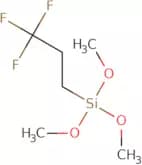
CAS:<p>Trimethoxy(3,3,3-trifluoropropyl)silane is a chemical that is used as a coating for metals and plastics. It has been shown to be an excellent lubricant and can be used as a fuel additive. Trimethoxy(3,3,3-trifluoropropyl)silane is also used in analytical chemistry for gravimetric analysis. This chemical can undergo reactions with other compounds such as hydrogen gas to form trimethoxysilane (SiH), which can be detected by FT-IR spectroscopy. Trimethoxy(3,3,3-trifluoropropyl)silane also reacts with metal ions in the presence of light to form metal complexes that have potential applications in photovoltaic devices and electrochemical studies. !--END--> !--END--></p>Formula:C6H13F3O3SiPurity:Min. 95%Color and Shape:Clear LiquidMolecular weight:218.25 g/molB-(4-Fluoro-2-hydroxyphenyl)-boronic acid
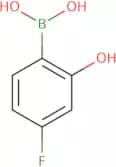
CAS:<p>B-(4-Fluoro-2-hydroxyphenyl)-boronic acid is a fungicide that has been synthesized to inhibit the growth of fungi. This compound is an effective fungicide against a wide variety of plant pathogens. It has been shown to be highly efficient in catalyzing intramolecular cyclization reactions, which are sometimes difficult to perform with traditional methods. The regulatory nature of this compound makes it an excellent candidate for commercial applications in agroscience and industry.</p>Formula:C6H6BFO3Purity:Min. 95%Color and Shape:PowderMolecular weight:155.92 g/moltert-Butyldimethylsilyl trifluoromethanesulfonate
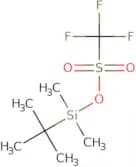
CAS:<p>tert-Butyldimethylsilyl trifluoromethanesulfonate is a nucleophilic reagent that forms an addition product with metal carbonyls. It can be used for the synthesis of indacaterol maleate, which is a phosphite prodrug for the treatment of asthma and chronic obstructive pulmonary disease. Tert-butyldimethylsilyl trifluoromethanesulfonate has been shown to catalyze asymmetric hydrogenation reactions in the presence of ammonia as a chiral auxiliary. This reagent has also been shown to inhibit the growth of bacteria and fungi through its ability to inhibit protein synthesis.</p>Formula:C7H15F3O3SSiColor and Shape:Colorless Clear LiquidMolecular weight:264.34 g/mol4-Isopropylphenylboronic acid
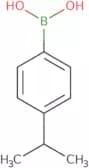
CAS:<p>4-Isopropylphenylboronic acid is a chiral organic chemical that is used as a Grignard reagent. It is an optically pure compound that can be isolated by recrystallization. The optical purity of 4-isopropylphenylboronic acid has been confirmed by the red shift observed in its IR spectrum. This compound undergoes nucleophilic substitution reactions, and it also catalyses the hydrostannylation of styrene with phenyllithium or butyllithium. The synthesis of this molecule requires relatively mild reaction conditions, and it can be obtained in high yield.</p>Formula:C9H13BO2Purity:Min. 95%Color and Shape:PowderMolecular weight:164.01 g/mol4-Borono-L-phenylalanine
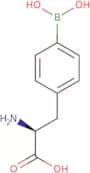
CAS:<p>4-Borono-L-phenylalanine is a boron-containing compound that has been used to study the biological effects of radiation. 4-Borono-L-phenylalanine is an analytical tool for measuring neutron scattering and other physical properties. It has also been used as a biochemical probe in studies of DNA duplexes. 4-Borono-L-phenylalanine is toxic to cells, inhibiting protein synthesis, and it can induce apoptosis in tumor cells. In experimental models, 4-borono-L phenylalanine can be administered orally or intravenously and has shown acute toxicity in animals at doses of up to 1000 mg/kg body weight.</p>Formula:C9H12BNO4Purity:Min. 95%Color and Shape:White PowderMolecular weight:209.01 g/mol1,1,1,3,5,7,7,7-Octamethyltetrasiloxane
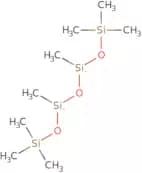
CAS:<p>1,1,1,3,5,7,7,7-Octamethyltetrasiloxane is a volatile liquid that is used as a fumigant. It is used in the manufacture of silicone elastomers and sealants. This chemical has been shown to be an effective sealant and to have good adhesion properties. It also has excellent resistance to high temperatures and chemicals. The mechanism of 1,1,1,3,5,7,7,7-octamethyltetrasiloxane is not fully understood but it may involve hydrogen bonding with the organic solvent. In addition to its use as a sealant and fumigant this chemical can be used as a ligand for bifunctional catalysts for polymerization reactions or for kinetic studies on polyolefins</p>Formula:C8H26O3Si4Purity:Min. 95%Color and Shape:Clear LiquidMolecular weight:282.63 g/molFerroceneboronic acid
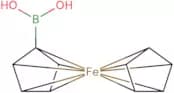
CAS:<p>Ferroceneboronic acid is a reagent, complex compound, useful intermediate, fine chemical and useful scaffold. It is also a versatile building block for the synthesis of speciality chemicals. Ferroceneboronic acid reacts with an organic halide to form a ferrocenyl-containing boronate ester that is useful as a reaction component in organic synthesis. The CAS number for ferroceneboronic acid is 12152-94-2.</p>Formula:C5H6BO2·C5H5·FePurity:Min. 95 Area-%Color and Shape:PowderMolecular weight:229.85 g/molTrimethylsilylacetylene
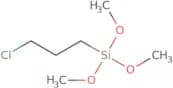
CAS:<p>Trimethylsilylacetylene is a chemical compound that belongs to the class of organic compounds. It is an intermediate in the production of fatty acids and has been shown to be involved in the metabolism of other compounds, such as halides. Trimethylsilylacetylene is also used to inhibit inflammatory diseases and metabolic disorders, such as diabetes mellitus and Alzheimer's disease. Trimethylsilylacetylene inhibits replication by binding to the amine group on purine bases or DNA at the replication fork. This prevents DNA synthesis, which prevents cell division, causing cells to die. Trimethylsilylacetylene also inhibits cell division by reacting with carbonyl groups on proteins during replication.</p>Formula:C5H10SiPurity:Min. 95%Color and Shape:Colorless Clear LiquidMolecular weight:98.22 g/molγ-Chloropropyl trimethoxysilane
CAS:<p>Gamma-chloropropyl trimethoxysilane (CPS) is a chemical compound with the formula Cl3Si(OCH3)2. It is an organosilicon compound that is used in surface preparation and modification to improve hydrophobicity, chemical stability, and mechanical properties. CPS forms covalent linkages with organic compounds on the surface by reaction with hydroxyl groups. It has been shown to react with fatty acids such as oleic acid, forming a metal chelate. CPS reacts with sodium carbonate (Na2CO3) to form sodium chloropropoxide (NaClOCH3). This reaction is exothermic and can be used for sample preparation. The mechanism of this reaction is thought to involve the formation of a copper complex followed by its hydrolysis.</p>Formula:C6H15ClO3SiPurity:Min. 95%Color and Shape:Clear LiquidMolecular weight:198.72 g/molAdrenochrome monoaminoguanidine mesilate
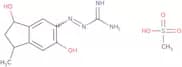
CAS:<p>Adrenochrome monoaminoguanidine mesilate is a synthetic drug that has been used in the treatment of cellulite, obesity, and chronic fatigue syndrome. It is an orally administered drug that causes the body to release adrenaline and noradrenaline. Adrenochrome monoaminoguanidine mesilate is a crystalline substance with a melting point of 130-140°C. The drug contains no additives or excipients other than gelatinization and cellulose.</p>Formula:C11H17N5O5SPurity:Min. 95%Color and Shape:PowderMolecular weight:331.35 g/moltert-Butylboronic acid pinacol ester
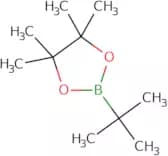
CAS:<p>tert-Butylboronic acid pinacol ester is a fine chemical reagent that is used as a building block in the synthesis of complex compounds. It is an intermediate in reactions involving the conversion of alcohols to esters with the use of acid catalysts. Tert-butylboronic acid pinacol ester has been shown to be a useful scaffold for organic synthesis, and can be used as a high quality reaction component. It also has applications as a research chemical and speciality chemical.</p>Formula:C10H21BO2Purity:Min. 95%Color and Shape:Clear LiquidMolecular weight:184.08 g/molImidazo[1,2-α]pyridin-3-yl-boronic acid pinacol ester
CAS:<p>Imidazo[1,2-a]pyridin-3-yl-boronic acid pinacol ester is a reagent that is used as an intermediate in the synthesis of complex compounds. The compound has been shown to be useful for research purposes and can be used as a building block in the synthesis of chemical compounds. Imidazo[1,2-a]pyridin-3-yl-boronic acid pinacol ester has an CAS number of 1238337-02-4 and is a versatile building block that can be used to synthesize speciality chemicals.</p>Formula:C13H17BN2O2Purity:Min. 95%Color and Shape:PowderMolecular weight:244.1 g/molCalcium dobesilate
CAS:<p>Calcium dobesilate is a calcium salt that emits chemiluminescence in the presence of an oxidant. It has been used as a treatment for hypercalcemia, which is caused by high levels of calcium in the blood, and to prevent skin cancer. The experimental model was conducted on human serum and showed that calcium dobesilate reduced the enzyme activities in serum samples by 30% after 15 minutes of incubation. This reduction was statistically significant when compared to untreated groups. Calcium dobesilate also inhibited the growth of skin cancer cells in a pharmacological agent-induced experimental model.</p>Formula:C8H6O5S•Ca0Purity:Min. 98 Area-%Color and Shape:PowderMolecular weight:418.41 g/molN-[3-(4,4,5,5-TetraMethyl-[1,3,2]dioxaborolan-2-yl)-phenyl]succinamic acid
CAS:<p>N-[3-(4,4,5,5-TetraMethyl-[1,3,2]dioxaborolan-2-yl)-phenyl]succinamic acid is an intermediate in the synthesis of a variety of compounds. It is also a useful building block in the synthesis of complex compounds. In addition to its use as a research chemical and reagent, N-[3-(4,4,5,5-TetraMethyl-[1,3,2]dioxaborolan-2-yl)-phenyl]succinamic acid can be used as a speciality chemical.</p>Formula:C16H22BNO5Purity:Min. 95%Molecular weight:319.16 g/molCarboxyethylsilanetriol sodium salt - 25% in water
CAS:<p>Carboxyethylsilanetriol sodium salt - 25% in water is a reagent that is used to form complex compounds. It can be used as a reaction component or a building block to create more complex compounds, such as new medicines. Carboxyethylsilanetriol sodium salt - 25% in water has been shown to be an efficient and versatile scaffold for the production of fine chemicals and research chemicals. CAS No. 18191-40-7 is a speciality chemical that can react with other organic compounds to form new compounds for research purposes. Carboxyethylsilanetriol sodium salt - 25% in water is a useful intermediate and building block for various synthetic reactions because it can easily react with other organics to form new compounds which are useful in pharmaceuticals, agrochemicals, and other industries.</p>Formula:C3H6Na2O5SiPurity:Approximately 25%Color and Shape:Clear LiquidMolecular weight:196.14 g/mol
















![(3R,4R)-4-Acetoxy-3-[(R)-1-(tert-butyldimethylsilyloxy)ethyl]-2-azetidinone](/_next/image/?url=https%3A%2Fstatic.cymitquimica.com%2Fproducts%2F3D%2Fthumb-webp%2FFA16979.webp&w=3840&q=75)

![3,7-Dibromo-5,5-dioctyl-5H-dibenzo[b,d]silole](/_next/image/?url=https%3A%2Fstatic.cymitquimica.com%2Fproducts%2F3D%2Fthumb-webp%2FFD141100.webp&w=3840&q=75)

![Imidazo[1,2-α]pyridin-3-yl-boronic acid pinacol ester](/_next/image/?url=https%3A%2Fstatic.cymitquimica.com%2Fproducts%2F3D%2Fthumb-webp%2FFI51745.webp&w=3840&q=75)

![N-[3-(4,4,5,5-TetraMethyl-[1,3,2]dioxaborolan-2-yl)-phenyl]succinamic acid](/_next/image/?url=https%3A%2Fstatic.cymitquimica.com%2Fproducts%2F3D%2Fthumb-webp%2FFT39771.webp&w=3840&q=75)
