Opiate Alkaloids
Found 159 products for "Opiate Alkaloids".
- Lower prices
- Higher prices
- Lower purities
- Higher purities
- Faster estimated delivery
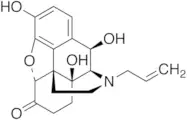
10Beta-Hydroxy Naloxone
CAS:Controlled ProductImpurity Naloxone EP Impurity F
Applications 10β-Hydroxy Naloxone is hydroxylated analog of the opioid antagonist Naloxone (N285000).
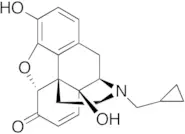
References Jasinski, D.R., et al.: J. Pharmacol. Exp. Ther., 157, 420 (1967), McNicholas, L.F., et al.: Drugs, 27, 81 (1984), Hasson, M.M.A., et al.: Anal. Profiles Drug Subs., 14, 453 (1985), Stowe, C., et al.: Ann. Pharmacother., 27, 447 (1993)Formula:C19H21NO5Color and Shape:NeatMolecular weight:343.377,8-Didehydronaltrexone
CAS:Controlled ProductApplications 7,8-Didehydronaltrexone is an intermediate in synthesizing Oripavine (O675000), the major metabolite of Thebaine. Oripavine possesses an analgesic potency comparable to Morphine; it is not clinically useful due to severe toxicity and low therapeutic index. An opiate.
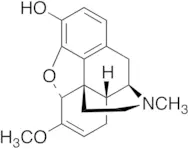
References Barber, R., et al.: J. Med. Chem., 18, 1074 (1975); Yamazoe, Y., et al.: J. Pharmacol., 31, 433 (1981)Formula:C20H21NO4Color and Shape:NeatMolecular weight:339.3858,14beta-Dihydrooripavine
CAS:Controlled ProductApplications 8,14β-Dihydrooripavine is a Hydromorphone(H714650) impurity. Hydromorphone is an analgesic(narcotic).
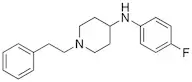
References Buchwald, M.E., et al.: J. Pharmacol. Exp. Ther., 71, 197 (1941), Zernig, G., et al.: Life Sci., 57, 2113 (1995), Keith, D., et al.: J. Biol. Chem., 271, 19021 (1996), Pawar, M., et al.: Eur. J. Pharmacol., 563, 92 (2007),Formula:C18H21NO3Color and Shape:NeatMolecular weight:299.36Despropionyl p-Fluoro Fentanyl
CAS:Controlled ProductApplications An intermediate in the production of fentanyl analogs.
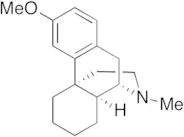
Formula:C19H23FN2Color and Shape:NeatMolecular weight:298.4Dextromethorphan
CAS:Applications Dextromethorphan is an antitussive compound showing analgesic properties. Used in cough medication formulations.
Not a dangerous good if item is equal to or less than 1g/ml and there is less than 100g/ml in the package
References Church J. et al.: Can J Physiol Pharmacol., 67, 561 (1989); Carliss, R. et al.: Neurotoxicology., 28, 813 (2007);Formula:C18H25NOColor and Shape:NeatMolecular weight:271.397Efaproxiral
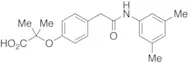
CAS:Controlled ProductApplications Allosteric modifier of hemoglobin (HB). Binds in the central water cavity of the Hb molecule causing a conformational change such that bound oxygen is released more readily. Antineoplastic adjunct (radiosensitizer).
References Abraham, D.J., et al.: Biochemistry, 31, 9141 (1992), Pagel, P.S., et al.: J. Pharmacol. Exp. Ther., 285, 1 (1998), Kleinberg, L., et al.: J. Clin. Oncol., 17, 2593 (1999),Formula:C20H23NO4Color and Shape:NeatMolecular weight:341.44-Aminophenyl-1-phenethylpiperidine
CAS:Controlled ProductImpurity Fentanyl Impurity D / Fentanyl USP Related Compound E
Applications 4-Aminophenyl-1-phenethylpiperidine is a metabolite of 3H-Fentanyl (F274990), which is used as an analgesic.Controlled Substance.
References Labroo, R., et al.: Drug Metab., Disposition, 25, 1072 (1997); Zernig, G., et al.: Life Sci., 57, 2113 (1995); Bot, G., et al.: J. Pharmacol. Exper. Therap., 285, 1207 (1998);Formula:C19H24N2Color and Shape:NeatMolecular weight:280.41Tilidine Impurity D Hydrochloride
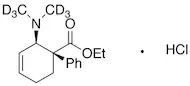
CAS:Controlled ProductApplications Tilidine Impurity D Hydrochloride is an imourity of Tilidine, which is a controlled substance (opiate). Analgesic. It is used in clinical trial in comparison with Nefopam. Tilidine is one of the most widely used narcotics in Germany and Belgium.
References Vollmer, K.-O., et al.: Arzneim.-Forsch., 20, 990 (1970), Abeloos, J., et al.: Acta Anaesthesiol. Belg., 34, 283 (1983), Van Cauwenberge, H., et al.: Int. J. Clin. Pharmacol. Res., 12, 1 (1992),Formula:C13H19NO2·ClHColor and Shape:NeatMolecular weight:257.76Dextromethorphan Hydrobromide Monohydrate
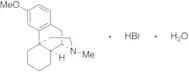
CAS:Formula:C18H25NO·BrH·H2OColor and Shape:NeatMolecular weight:370.324omega-Hydroxyfentanyl
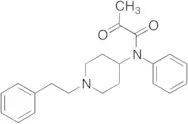
CAS:Controlled ProductFormula:C22H28N2O2Color and Shape:NeatMolecular weight:352.47Pyruvyl Fentanyl
CAS:Controlled ProductApplications Pyruvyl Fentanyl is used in the degradation, identification and in analysis of impurities of fentanyl.
Not a dangerous good if item is equal to or less than 1g/ml and there is less than 100g/ml in the package
References Garg, A., et al.: J. Pharm. Biomed. Anal., 53, 325 (2010)Formula:C22H26N2O2Color and Shape:NeatMolecular weight:350.4514-Hydroxy Codeinone
CAS:Controlled ProductApplications An intermediate in the preparation of Oxycodone and other alkaloid based opiate antagonists.
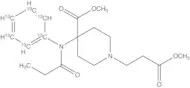
References Brogle, K., et al.: J. Pharm. Biomed. Anal., 19, 669 (1999), Szentesi, A., et al.: Anal. Bioanal. Chem., 374, 427 (2002), Lattanzi, R., et al.: J. Med. Chem., 48, 3372 (2005),Formula:C18H19NO4Color and Shape:NeatMolecular weight:313.35Remifentanil-13C6 Hydrochloride
CAS:Controlled ProductApplications Synthetic mu-opioid agonist. This is a controlled substance (opiate).
References James, M.K., et al.: J. Pharmacol. Exp. Ther., 259, 712 (1991), Hoffman, W.E., et al.: Anesthesiology, 79, 107 (1993), Selinger, K., et al.: J. Pharm. Biomed. Anal., 12, 243 (1994), Richardson, T.D., et al.: Expert Opin. Drug Saf., 4, 643 (2005),Formula:C1413C6H29ClN2O5Color and Shape:NeatMolecular weight:418.865-Hydroxy Propafenone Hydrochloride
CAS:Controlled ProductApplications A metabolite of Propafenone (P757500).
References Hege, H.G., et al.: Eur. J. Drug Metab. Pharmacokinet., 9, 41 (1984),Formula:C21H27NO4·ClHColor and Shape:NeatMolecular weight:393.9(-)-a-Methadol
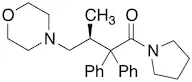
CAS:Controlled ProductApplications: The enatiomer of (+)-α-Methadol (M225860) and is more effective in binding to opiate receptors. The relative activities of (-)-α-Methadol and (+)-α-Methadol are reversed upon acetylation. A metabolite of (-)-α-Acetylmethadol (A186325).
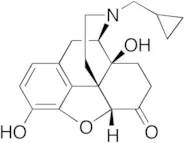
References Horng, J.S. et al.: Res. Comm. Chem. Pathol. Pharmacol., 14, 621 (1976); Casy, A.F. et al.: J. Med. Chem., 11, 601 (1968); Ruemmler, R., et al.: Arzneim.-Forsch., 20, 281 (1970);Formula:C21H29NOColor and Shape:NeatMolecular weight:311.46Naltrexone
CAS:Controlled ProductApplications Naltrexone is an opioid antagonist shown to reduce the occurrence of addictive behaviours such as eating, smoking and drinking excessively. in addition to curbing drug use it has recently been used in flavor avoidance studies.
References Mannelli, P. et al.: Drug Alc. Dep. 138, 83 (2014); Rotella, F. et al.: 128, 133 (2014);Formula:C20H23NO4Color and Shape:NeatMolecular weight:341.4Tilidine-d6 Hydrochloride
CAS:Controlled ProductFormula:C172H6H17NO2·ClHColor and Shape:NeatMolecular weight:315.87