Organic Halides
Subcategories of "Organic Halides"
Found 20442 products of "Organic Halides"
4-(2- fluorophenyl)-6,8-dihydro-1,3,8-trimethyl-Pyrazolo[3,4-e][1,4]diazepin-7(1H)-one mixt. with 2-(ethylamino)-2-(2-thienyl)cycloh exanone hydrochloride
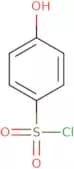
CAS:Controlled ProductTelazol is an anesthetic that belongs to the class of nonbenzodiazepine drugs. It is used as a short-term sedative and analgesic in preoperative, obstetrical, and diagnostic procedures. Telazol is a prodrug that is metabolized in vivo to its active form, 4-(2-fluorophenyl)-6,8-dihydro-1,3,8-trimethyl-Pyrazolo[3,4-e][1,4]diazepin-7(1H)-one (TFD). Telazol has been shown to have low toxicity when administered at low doses (0.5 mg/kg) to rats.Formula:C27H33ClFN5O2SPurity:Min. 95%Molecular weight:546.1 g/mol4-Hydroxybenzenesulfonyl chloride
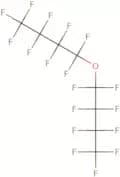
CAS:4-Hydroxybenzenesulfonyl chloride is a thionyl chloride derivative that reacts with pyridine in the presence of an dehydrating agent to form a polyurethane. The dehydration of 4-hydroxybenzenesulfonyl chloride is conducted by reacting it with magnesium and carboxylate in xylene, with subsequent reaction with chlorine to produce thiomorpholine. Thiomorpholine can be further reacted with thionyl chloride to produce sulfate. This compound has been shown to induce TNF-α production in mouse macrophages, which may be due to its ability to inhibit protein synthesis and induce apoptosis. 4-Hydroxybenzenesulfonyl chloride also has high yield for the synthesis of polyurethane, making it a popular choice for use in industrial applications.Formula:C6H5ClO3SPurity:Min. 85 Area-%Color and Shape:PowderMolecular weight:192.62 g/mol1,1,1,2,2,3,3,4,4-Nonafluoro-4-(1,1,2,2,3,3,4,4,4-Nonafluorobutoxy)Butane
CAS:Controlled Product1,1,1,2,2,3,3,4,4-Nonafluoro-4-(1,1,2,2,3,3-hexafluorobutoxy)butane is a reactive acyl halide. It is used as a fluorine source in the production of polymers and coatings with amines. It can also be used as a polymerization initiator in the synthesis of primary amino compounds. This chemical has been shown to be nonpolar and insoluble in water. It is not flammable or explosive.
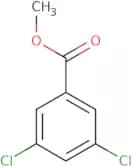
Formula:C8F18OPurity:Min. 95%Molecular weight:454.06 g/molMethyl 3,5-dichlorobenzoate
CAS:Methyl 3,5-dichlorobenzoate is an organic compound that belongs to the class of dihalo benzoates. It is a colorless solid with a melting point of -28 °C. The molecule consists of three asymmetric carbon atoms, two of which are in the terminal positions and one in the middle. This molecule has acidic properties due to its carboxylic acid group. Methyl 3,5-dichlorobenzoate has been shown to have antibacterial activity against bacteria such as Staphylococcus and Mycobacterium tuberculosis. Methyl 3,5-dichlorobenzoate is typically used for formylation reactions and analytical methods such as covid-19 pandemic testing.Formula:C8H6Cl2O2Purity:Min. 95%Molecular weight:205.04 g/mol1-[2-[(2,4-Dimethylphenyl)thio]phenyl]piperazine hydrobromide
CAS:Controlled Product1-[2-[(2,4-Dimethylphenyl)thio]phenyl]piperazine hydrobromide is an atypical antidepressant that is used for the treatment of major depressive disorder. It has been shown to be effective in animal models of depression and in clinical trials with humans. 1-[2-[(2,4-Dimethylphenyl)thio]phenyl]piperazine hydrobromide blocks the serotonin 5HT1B receptor subtype, which is responsible for regulating mood and emotional response. This drug does not block the 5HT1A or 5HT2 receptors, so it does not cause some of the side effects associated with selective serotonin reuptake inhibitors (SSRIs). In addition, 1-[2-[(2,4-Dimethylphenyl)thio]phenyl]piperazine hydrobromide has a chemical stability that lasts longer than other drugs in its class.Formula:C18H22N2S·HBrPurity:Min. 98 Area-%Color and Shape:PowderMolecular weight:379.36 g/mol1-Fluoro-3-methoxy-2-nitrobenzene
CAS:1-Fluoro-3-methoxy-2-nitrobenzene is a versatile building block that can be used as a scaffold for the synthesis of complex compounds. It is also used as a reaction component in research and development, especially in the production of pharmaceuticals, pesticides and other chemicals. 1-Fluoro-3-methoxy-2-nitrobenzene has many uses in the production of high quality reagents, such as pharmaceutical intermediates, dyes, and explosives.Formula:C7H6FNO3Purity:Min. 95%Molecular weight:171.13 g/mol1-Bromo-3,4-dihydroxy-5-methoxybenzene monohydrate
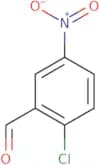
CAS:1-Bromo-3,4-dihydroxy-5-methoxybenzene monohydrate is a versatile building block for the creation of complex compounds. It is a useful intermediate and can be used as a reagent in organic synthesis. This chemical is also used as an additive in plastics and rubber production. 1-Bromo-3,4-dihydroxy-5-methoxybenzene monohydrate is synthesized from 3,4,5-trimethoxyphenol and bromine. It has been assigned the CAS number 205748-04-5.Formula:C7H7BrO3·H2OPurity:Min. 95%Color and Shape:PowderMolecular weight:237.05 g/mol2-Chloro-5-nitrobenzaldehyde
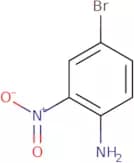
CAS:2-Chloro-5-nitrobenzaldehyde (2CNB) is an antibacterial agent that has been shown to be effective against a number of bacterial species. It is a nucleophilic compound and reacts with the sulfhydryl group in cysteine. 2CNB also reacts with the thiol group of proteins, which are involved in many cellular processes. 2CNB has industrial uses, such as for the production of cyclohexanone and cyclopentanone. The structures of 2CNB and its homologues have been studied by 13CNMR spectroscopy, which provides information about the type of bonds present in the molecule and their lengths.Formula:C7H4ClNO3Purity:Min. 95%Color and Shape:PowderMolecular weight:185.56 g/mol4-Bromo-2-nitroaniline
CAS:4-Bromo-2-nitroaniline is an inhibitor of histone deacetylase (HDAC) that has been shown to inhibit the growth of cancer cells. The apoptotic effect of 4-bromo-2-nitroaniline was found in epithelial mesenchymal transition cells, which may be due to inhibition of DNA methyltransferases and DNA replication. This compound also has a wide range of biological activities, including anti-inflammatory, antimicrobial, and antitumor properties. 4-Bromo-2-nitroaniline is a nonmetal with a nitro group and can bind to the metal surface through its nitro group. It has been used as a molecular docking ligand for zinc ions and copper ions in the past.
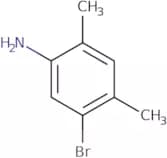
Formula:C6H5BrN2O2Purity:Min. 95%Color and Shape:White PowderMolecular weight:217.02 g/mol4-Bromo-6-amino-m-xylene
CAS:4-Bromo-6-amino-m-xylene is a chemical that is used to synthesize other chemicals. It is a versatile building block and can be used as an intermediate in organic synthesis. It has been shown to react with nucleophiles, such as alcohols, amines, and thiols. 4-Bromo-6-amino-m-xylene also reacts with metal halides to form complexes. This compound has been shown to have high quality and can be used in research or as a reagent for further reactions.
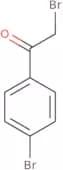
Formula:C8H10BrNPurity:Min. 95%Color and Shape:PowderMolecular weight:200.08 g/mol4-Bromophenacyl bromide
CAS:4-Bromophenacyl bromide is an inhibitor of phospholipase A2. It inhibits the enzyme phospholipase A2, which is responsible for the release of arachidonic acid from membrane phospholipids. This product has been shown to inhibit the growth of cancer cells in vitro and in vivo. 4-Bromophenacyl bromide also inhibits human phospholipase A2 and is used as a research tool to study this enzyme's function.Formula:C8H6Br2OPurity:Min. 95%Color and Shape:White PowderMolecular weight:277.94 g/mol3-(4'-Bromo[1,1'-biphenyl]-4-yl)-1,2,3,4-tetrahydro-1-naphthalenol
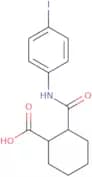
CAS:3-(4'-Bromo[1,1'-biphenyl]-4-yl)-1,2,3,4-tetrahydro-1-naphthalenol is a chemical compound that belongs to the group of bromonaphthalenes. It has been used as a reaction component in organic synthesis and as a reagent for detection of DNA binding. 3-(4'-Bromo[1,1'-biphenyl]-4-yl)-1,2,3,4-tetrahydro-1-naphthalenol can be used as a building block for complex compounds with speciality applications. The compound is an intermediate in the production of pharmaceuticals such as selective estrogen receptor modulators.Formula:C22H19BrOPurity:Min. 95%Color and Shape:PowderMolecular weight:379.29 g/mol2-(N-(4-iodophenyl)carbamoyl)cyclohexanecarboxylic acid
CAS:Please enquire for more information about 2-(N-(4-iodophenyl)carbamoyl)cyclohexanecarboxylic acid including the price, delivery time and more detailed product information at the technical inquiry form on this pageFormula:C14H16INO3Purity:Min. 95%Color and Shape:PowderMolecular weight:373.19 g/mol3,6-Dichlorocarbazole
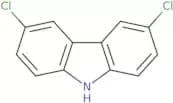
CAS:3,6-Dichlorocarbazole is a potential mechanism that has been shown to be degradable in chlorine. The median concentration of 3,6-dichlorocarbazole in the dry weight of marine organisms is 0.0007% and it reacts at an average rate of 10%. 3,6-Dichlorocarbazole has been observed to have anthropogenic origins and can be found in low concentrations in the environment. There are four isomers that are produced by this reaction: 2,4-, 2,5-, 2,6-, and 3,4-dichlorocarbazole.
3,6-Dichlorocarbazole has been shown to cause functional changes in organisms due to its effects on gene transcription. This chemical has been shown to alter the transcriptomic profile of a number of gene families involved with cellular stress response pathways in both aquatic invertebrates and fish.Formula:C12H7Cl2NPurity:Min. 96 Area-%Molecular weight:236.1 g/mol6α-Fluoro-17,21-Dihydroxy-16α-Methylpregna-4,9(11)-Diene-3,20-Dione 21-Acetate
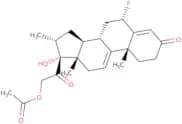
CAS:Controlled Product6alpha-Fluoro-17,21-Dihydroxy-16alpha-Methylpregna-4,9(11)-Diene-3,20-Dione 21-Acetate is a synthetic angiostatic agent that inhibits the angiogenic process by affecting the growth of new blood vessels. It has been shown to inhibit proteolytic activity and to have an inhibitory effect on tumour necrosis factor-α (TNF-α) induced activation of endothelial cells and their proliferation. 6alpha-Fluoro-17,21-Dihydroxy-16alpha-Methylpregna-4,9(11)-Diene 3,20 Dione 21 Acetate also inhibits the growth of fetal bovine aortic endothelial cells in culture. The drug was also found to significantly reduce the monolayer cell viability after uptake by endothelial cells.Formula:C24H31FO5Purity:Min. 95%Molecular weight:418.5 g/molBis(1,5-cyclooctadiene)rhodium(I) trifluoromethanesulfonate
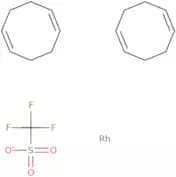
CAS:Bis(1,5-cyclooctadiene)rhodium(I) trifluoromethanesulfonate is a fine chemical that is used as a reagent for organic synthesis. It has been shown to be useful in the preparation of diverse compounds, including pharmaceuticals and agrochemicals. Bis(1,5-cyclooctadiene)rhodium(I) trifluoromethanesulfonate may also be used as a reaction component or building block for the synthesis of more complex compounds. This compound can be used to form a variety of scaffolds with different functional groups and has been found to be an effective intermediate in reactions involving palladium catalysts.
Formula:C17H24F3O3RhSPurity:Min. 95%Color and Shape:Red PowderMolecular weight:468.34 g/molMethyl 3-bromopropionate
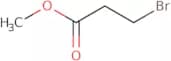
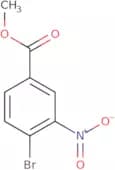
CAS:Methyl 3-bromopropionate is a short-chain halogen ester compound widely used in organometallic chemistry as a building block. Methyl 3-bromopropionate is quite useful in click chemistry for reductive cleavage and as alkylation agent.Formula:C4H7BrO2Purity:Min. 98%Color and Shape:Clear LiquidMolecular weight:167 g/molMethyl 4-bromo-3-nitrobenzoate
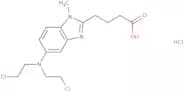
CAS:Methyl 4-bromo-3-nitrobenzoate is a methoxy-substituted methyl ester of 3-nitrobenzoic acid. It has been shown to bind to copper ions with high affinity, and can be used to regulate the uptake of copper ions in cells. Methyl 4-bromo-3-nitrobenzoate is a ligand for many metal ions, and can be used as a predictable, conformationally constrained framework for drug design. Selectivities are achieved by carboxylate substituents and nitro groups on the benzene ring. The asymmetric center allows for conformational control of the molecule, which can be exploited in drug design.Formula:C8H6BrNO4Purity:Min. 95%Color and Shape:PowderMolecular weight:260.04 g/molBendamustine hydrochloride
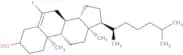
CAS:DNA alkylator; purine analogFormula:C16H22Cl3N3O2Purity:Min. 98 Area-%Color and Shape:White PowderMolecular weight:394.72 g/mol(17α)-6-Fluorocholest-5-en-3-ol
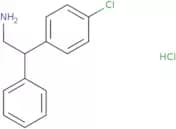
CAS:Controlled Product(17alpha)-6-Fluorocholest-5-en-3-ol is a fluorinated cholesterol derivative that inhibits the cholesterol acyltransferase enzyme, which is responsible for the enzymatic esterification of cholesterol to form cholesteryl esters. This product has been shown to inhibit cellular growth and may be useful in treating bacterial infections. (17alpha)-6-Fluorocholest-5-en-3-ol has also been shown to inhibit the growth of bacteria by binding to the hmg coa reductase enzyme, which is involved in cholesterol metabolism. This product has been found to increase membrane fluidity and promote cell growth. It also prevents the formation of foam cells by inhibiting cholesterol uptake from peripheral tissues into macrophages.Formula:C27H45FOPurity:Min. 95%Molecular weight:404.64 g/mol2-(4-Chlorophenyl)-2-Phenylethylamine hydrochloride
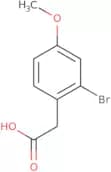
CAS:2-(4-Chlorophenyl)-2-Phenylethylamine hydrochloride is a fine chemical that is used as a building block in research, the synthesis of speciality chemicals, and as a reagent. Its CAS number is 21998-50-5. This compound has been shown to be an intermediate in reactions for the synthesis of complex compounds, and it can also be used as a scaffold for the preparation of other compounds.Formula:C14H14ClN·HClPurity:Min. 95 Area-%Color and Shape:PowderMolecular weight:268.18 g/mol2-(2-Bromo-4-methoxyphenyl)acetic acid
CAS:2-(2-Bromo-4-methoxyphenyl)acetic acid is a versatile building block that is used as a research chemical, reaction component, and reagent. It is also used as a speciality chemical and complex compound. This compound has the CAS number 66916-99-2.Formula:C9H9BrO3Color and Shape:SolidMolecular weight:245.07 g/mol(4-Bromophenyl)cyclopropylmethanone
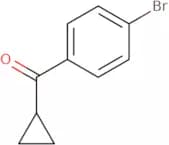
CAS:(4-Bromophenyl)cyclopropylmethanone is a cyclopropane derivative that can be synthesized from 4-bromobenzaldehyde and cyclopropylmagnesium bromide. It is an important precursor to fluoroquinolones in the pharmaceutical industry, as well as to other derivatives used in the synthesis of antihistamines and antimalarial drugs. This compound has been shown to have biomolecular mediated intramolecular cyclopropane ring formation and pentacyclic cyclopropane ring formation.
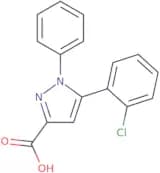
Formula:C10H9BrOPurity:Min. 95%Color and Shape:PowderMolecular weight:225.09 g/mol3-Carboxy-5-(2-chlorophenyl)-1-phenylpyrazole
CAS:Controlled Product3-Carboxy-5-(2-chlorophenyl)-1-phenylpyrazole is a white solid that is soluble in organic solvents. It is a useful scaffold that can be used as a starting material for the synthesis of complex compounds. 3-Carboxy-5-(2-chlorophenyl)-1-phenylpyrazole has been shown to be an intermediate in the synthesis of speciality chemicals and fine chemicals, such as pesticides and pharmaceuticals.Formula:C16H11ClN2O2Purity:Min. 95%Molecular weight:298.72 g/molFluorescein-5-thiosemicarbazide hydrochloride
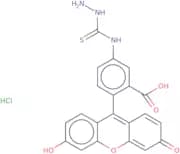
CAS:Fluorescein-5-thiosemicarbazide HCl is a fluorescent compound that has been used extensively as a dye in biological research. It is commonly used with other compounds to measure the transfer of resonance energy, the interaction between two molecules, or the solubility of one molecule in another. Fluorescein-5-thiosemicarbazide HCl can be used to measure cellulose because it reacts with hydroxyl groups on the surface of the material. The quantum yield for this compound is 0.06%.
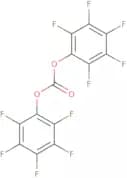
Formula:C21H15N3O5S•HClPurity:Min. 95%Color and Shape:PowderMolecular weight:457.89 g/molBis(pentafluorophenyl)carbonate
CAS:Bis(pentafluorophenyl)carbonate is a carbonate with a reactive hydroxyl group. It is activated by amines and reacts with alkynes to form new bonds. Bis(pentafluorophenyl)carbonate can be used in the synthesis of monoclonal antibodies, which are important for diagnostic purposes. This reagent can also be used in ring-opening reactions, which are efficient methods for the synthesis of butyric acid.Formula:C13F10O3Purity:Min. 99%Color and Shape:White Off-White PowderMolecular weight:394.12 g/mol(3-(2,6-dichlorophenyl)-5-methylisoxazol-4-yl)-N-(5-methylisoxazol-3-yl)formamide
CAS:Please enquire for more information about (3-(2,6-dichlorophenyl)-5-methylisoxazol-4-yl)-N-(5-methylisoxazol-3-yl)formamide including the price, delivery time and more detailed product information at the technical inquiry form on this page
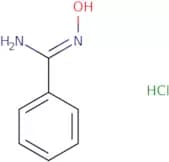
Purity:Min. 95%Benzamidoxime hydrochloride
CAS:Benzamidoxime hydrochloride is an activator that can be used in the synthesis of 6-membered alkylaryl compounds. It contains a six-membered amidine ring and a six-membered ring.
Formula:C7H8N2O·HClPurity:Min. 95%Color and Shape:PowderMolecular weight:172.61 g/molN-[(S)-(2,3,4,5,6-Pentafluorophenoxy)phenoxyphosphinyl]-L-alanine 1-methylethyl ester
CAS:Intermediate in the synthesis of sofosbubirFormula:C18H17F5NO5PPurity:Min. 97 Area-%Color and Shape:White PowderMolecular weight:453.3 g/mol1,1,1,2,2,3,3-Heptachloro-3-Fluoropropane
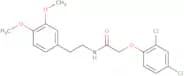
CAS:Controlled Product1,1,1,2,2,3,3-Heptachloro-3-Fluoropropane (HFC-227ea) is a synthetic chlorofluorocarbon that was developed as an environmentally friendly substitute for chlorodifluoromethane. HFC-227ea is used in refrigeration and air conditioning systems due to its high heat capacity. This chemical has been shown to inhibit serotonin reuptake and may play a role in the control of moods. HFC-227ea can also be used as a solvent for organic materials that cannot be dissolved by other chemicals. It is reactive with water and may react with other chemicals or cause fires if exposed to open flames. HFC 227ea has been shown to have toxic effects on the nervous system when injected into rats. The LD50 (the dose at which 50% of animals die) for this chemical is between 2 and 6 milligrams per kilogram of body weightFormula:C3Cl7FPurity:Min. 95%Molecular weight:303.2 g/mol2-(2,4-dichlorophenoxy)-N-(2-(3,4-dimethoxyphenyl)ethyl)ethanamide
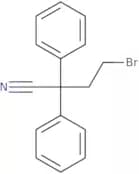
CAS:Please enquire for more information about 2-(2,4-dichlorophenoxy)-N-(2-(3,4-dimethoxyphenyl)ethyl)ethanamide including the price, delivery time and more detailed product information at the technical inquiry form on this pagePurity:Min. 95%4-Bromo-2,2-diphenyl butyronitrile
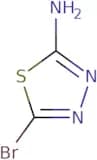
CAS:4-Bromo-2,2-diphenyl butyronitrile is an industrial chemical used in the production of other chemicals. It is a white solid that is soluble in organic solvents such as hydrochloric acid. 4-Bromo-2,2-diphenyl butyronitrile may be used to produce morphine by reacting with acetic anhydride and pyridine. This reaction occurs at a rate that is dependent on the concentration of 4-bromo-2,2-diphenyl butyronitrile. The product of this reaction has been shown to bind to opioid receptors in vitro, and it has been used as a model for pain relief in vivo. 4-Bromo-2,2-diphenyl butyronitrile also acts as a substrate for Pgp efflux pumps, which can lead to its accumulation in tissues such as the brain.Formula:C16H14BrNPurity:Min. 95%Color and Shape:White PowderMolecular weight:300.19 g/mol5-Bromo-1,3,4-thiadiazol-2-amine
CAS:5-Bromo-1,3,4-thiadiazol-2-amine is a synthetic antiplatelet agent that belongs to the thiosemicarbazide class. It has been shown to have broad-spectrum antimicrobial activity against Gram-positive and Gram-negative bacteria. 5-Bromo-1,3,4-thiadiazol-2-amine is an orally bioavailable drug that can be used in the treatment of bacterial infections caused by Gram negative bacteria. The molecular modeling study suggests that this compound binds to the enzyme active site of DNA gyrase and inhibits its activity. 5Bromo-1,3,4-thiadiazol-2 amine is deuterated and can be used for molecular modeling studies because it is soluble in organic solvents.Formula:C2H2BrN3SPurity:Min. 95%Color and Shape:PowderMolecular weight:180.03 g/mol5-Bromo-6-chloropyrazin-2-amine
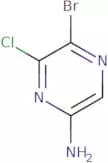
CAS:5-Bromo-6-chloropyrazin-2-amine is a high quality, versatile building block for the synthesis of a variety of chemical compounds. It is also a reagent used in organic chemistry for the conversion of alcohols to alkyl chlorides and bromides. It can be used as an intermediate for the preparation of various complex compounds with potential use as pharmaceuticals or fine chemicals. This compound has been shown to have potential as a useful scaffold for the development of novel drugs which could be used to treat bacterial infections such as tuberculosis. 5-Bromo-6-chloropyrazin-2-amine has also been shown to be an excellent starting material for the synthesis of research chemicals and speciality chemicals.Formula:C4H3BrClN3Purity:Min. 95%Molecular weight:208.44 g/mol5-(6)-Carboxynaphthofluoroscein N-succinimidyl ester
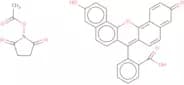
CAS:5-(6)-Carboxynaphthofluoroscein N-succinimidyl ester is a versatile building block for the synthesis of complex compounds. It is used as a reagent or speciality chemical that is useful in research and development. 5-(6)-Carboxynaphthofluoroscein N-succinimidyl ester has CAS No. 150347-58-3, which is an intermediate in the synthesis of other pharmaceuticals with potential clinical use. The compound has been used to develop new drugs, such as those for the treatment of cancer, cardiovascular disease, and diabetes.Formula:C33H19NO9Purity:Min. 90 Area-%Color and Shape:PowderMolecular weight:573.51 g/molEthyl 3,5-dichloro-4-hydroxybenzoate
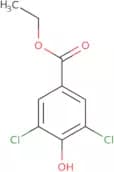
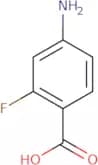
CAS:Ethyl 3,5-dichloro-4-hydroxybenzoate is a reactant in organic synthesis. It is a byproduct of the chlorination of ethyl acetate and reacts with potassium chloride to yield 3,5-dichloro-4-hydroxybenzoic acid. This reaction is catalyzed by alkali metal hydroxides or alkali metal carbonates. The esters of this acid are used as raw materials for the production of pesticides, herbicides, and pharmaceuticals. The chloride can be hydrolyzed to produce 3,5-dichloro-4-hydroxybenzoic acid.Formula:C9H8Cl2O3Purity:Min. 95%Color and Shape:PowderMolecular weight:235.06 g/mol4-Amino-2-fluorobenzoic acid
CAS:4-Amino-2-fluorobenzoic acid is a potent inhibitor of formylating enzymes, such as carbonyl reductase and amino acid formyltransferase. It has been shown to be an effective inhibitor of cancer cells in vivo and inhibits the growth of prostate cancer cells. This compound has also been shown to inhibit nitro reduction reactions, which are involved in the carcinogenic process. 4-Amino-2-fluorobenzoic acid reacts with chloride ions to produce a functional group that can react with carbon nanotubes, making it a candidate for use in cancer therapy.Formula:C7H6FNO2Purity:Min. 95%Color and Shape:SolidMolecular weight:155.13 g/molN-[2-(Fmoc-amino)-ethyl]glycine tert-butylester hydrochloride
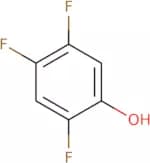
CAS:Please enquire for more information about N-[2-(Fmoc-amino)-ethyl]glycine tert-butylester hydrochloride including the price, delivery time and more detailed product information at the technical inquiry form on this pageFormula:C23H28N2O4·HClPurity:Min. 95%Color and Shape:PowderMolecular weight:432.94 g/mol2,4,5-Trifluorophenol
CAS:2,4,5-Trifluorophenol is a chemical compound that is used in the production of plastics and synthetic fibers. It is also found as an environmental pollutant when released into the environment from industrial waste. Trichloroacetic acid reacts with 2,4,5-trifluorophenol to produce dibenzodioxins that are toxic and mutagenic. Trifluorophenol has been shown to activate rat hepatocytes by increasing the rate of synthesis of messenger RNA (mRNA) for proteins involved in drug metabolism. This activation may be due to its ability to induce oxidative stress or because it can react with DNA bases to form covalent adducts. The photoelectron spectrum includes bands at 1210 and 1240 cm-1 that correspond to chlorine atoms attached to arene rings.
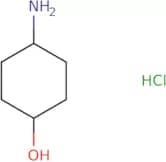
2,4,5-Trifluorophenol has been shown to inhibit the growth of primary cultures of rat hepatocytesFormula:C6H3F3OPurity:Min. 95%Color and Shape:PowderMolecular weight:148.08 g/moltrans-4-Aminocyclohexanol hydrochloride
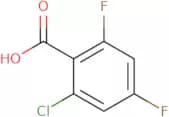
CAS:Trans-4-aminocyclohexanol hydrochloride is a monomer that has been used in the synthesis of polymers, which are used in the production of medical devices. Trans-4-aminocyclohexanol hydrochloride has shown anticancer activity and is used to inhibit the growth of murine leukemia cells. It has also shown uptake in different tissues and amination reaction with amino acids. The melting point of trans-4-aminocyclohexanol hydrochloride is 198°C, constant at 1.0, and impurities are less than 0.2%. Trans-4-aminocyclohexanol hydrochloride has been found to be a colorless solid with a molecular weight of 154.2 g/mol, an amorphous morphology, and a particle size distribution between 5 nm and 10 μm.Formula:C6H13NO·HClColor and Shape:White Off-White PowderMolecular weight:151.63 g/mol2-Chloro-4,6-difluorobenzoic acid
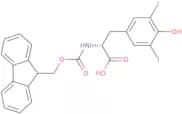
CAS:2-Chloro-4,6-difluorobenzoic acid is the product of a reaction between 2-chloro-4,6-difluoroaniline and 4,6-dichlorobenzonitrile. It is used as a building block in the synthesis of pharmaceuticals and other specialty chemicals. 2-Chloro-4,6-difluorobenzoic acid is also used as a reagent in organic synthesis reactions. This chemical is soluble in water and has a boiling point of 190°C. 2CDFBA is found in CAS No. 1242339-67-8 and can be stored at room temperature.Formula:C7H3ClF2O2Purity:Min. 95%Color and Shape:PowderMolecular weight:192.55 g/molFmoc-3,5-diiodo-D-tyrosine
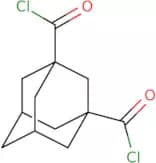
CAS:Please enquire for more information about Fmoc-3,5-diiodo-D-tyrosine including the price, delivery time and more detailed product information at the technical inquiry form on this pageFormula:C24H19I2NO5Purity:Min. 95%Color and Shape:PowderMolecular weight:655.22 g/mol1,3-Adamantanedicarbonylchloride
CAS:1,3-Adamantanedicarbonylchloride is a monomer that can be used in anticancer drug development. It is an analog of 1,3-diaminopropane, which has been shown to inhibit the growth of cancer cells and induce their apoptosis. The structure of 1,3-Adamantanedicarbonylchloride has been characterized by NMR spectroscopy under various conditions. The compound reacts with amines to form chlorides and alicyclic compounds. Friedel-Crafts acylation with chloride gives the corresponding carboxylate derivative. This reaction is reversible and can be carried out at room temperature or above.
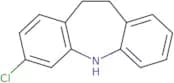
Formula:C12H14Cl2O2Purity:Min. 95%Color and Shape:PowderMolecular weight:261.14 g/mol3-Chloroiminodibenzyl
CAS:3-Chloroiminodibenzyl is a synthetic chemical that has electron-donating properties. It is used as a building block for the synthesis of other chemicals, including pharmaceuticals and pesticides. 3-Chloroiminodibenzyl is insoluble in water and can form hydrogen chloride when exposed to hydrochloric acid. The compound reacts with metal ions to form an unpaired electron, which may be responsible for its reactivity. This chemical has been shown to produce reactive aliphatic hydrocarbons when treated with hydroxide solution, which are useful in industrial chemical processes.
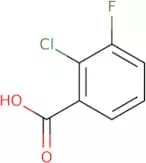
Formula:C14H12ClNPurity:Min. 95 Area-%Color and Shape:Off-White PowderMolecular weight:229.7 g/mol2-Chloro-3-fluorobenzoic acid
CAS:2-Chloro-3-fluorobenzoic acid is a common intermediate used in organic synthesis. It can be synthesized by the halogenation of 2,4-dichlorophenol with
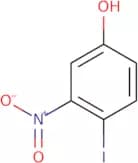
chlorine or bromine followed by nitration and reduction. This compound is an important reagent for generating various heterocycles. It is characterized by a coefficient of 0.5 (palladium), which makes it useful for analytical methods that require a high level of purity, such as spectroscopic analysis. The chemical diversity descriptor demonstrates the variety of chemical reactions that this compound has undergone during its synthesis.Formula:C7H4ClFO2Purity:Min. 95%Color and Shape:PowderMolecular weight:174.56 g/mol4-Iodo-3-nitrophenol
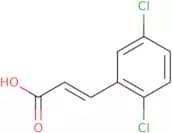
CAS:4-Iodo-3-nitrophenol is a chemical compound that is used in the synthesis of decanoic acid, an ester. It also has pharmacological properties and can be used as a cataleptic or neuroleptic agent. 4-Iodo-3-nitrophenol has been shown to have stimulant effects on the central nervous system, which may be due to its ability to inhibit the metabolism of acetylcholine by blocking cholinesterase enzymes. 4-Iodo-3-nitrophenol is also used in the preparation of analogues and it has been tested for use as a treatment for Parkinson's disease.Formula:C6H4INO3Purity:90%Color and Shape:Brown Yellow PowderMolecular weight:265.01 g/mol2,5-Dichlorocinnamic acid
CAS:2,5-Dichlorocinnamic acid is a chemical compound with the formula CHClCOCHCl. It is typically used as a reagent or building block in organic synthesis. 2,5-Dichlorocinnamic acid is an alpha-hydroxycarboxylic acid that exists in two tautomeric forms: the enol form (2,5-dichloro-3-oxopentanoic acid) and the keto form (2,5-dichlorohexanedioic acid). The enol form predominates at pH 7 and above. The keto form predominates at pH 1 and below.Formula:C9H6Cl2O2Purity:Min. 95%Color and Shape:PowderMolecular weight:217.05 g/mol2-Amino-4-hydroxy-6-chloro-s-triazine
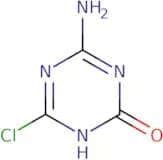
CAS:2-Amino-4-hydroxy-6-chloro-s-triazine is a type strain of a chemical compound with clinical pharmacology. It is an active substance that can be used to treat cancer. 2-Amino-4-hydroxy-6-chloro-s-triazine has been shown to inhibit the growth of prostate cancer cells and phosphatase in hematopoietic cells. This drug also inhibits kinase receptor, which leads to the inhibition of protein synthesis and cell division. The reaction mechanism for 2-amino 4 hydroxy 6 chloros triazine is nucleophilic substitution.
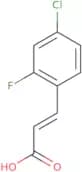
Formula:C3H3ClN4OPurity:Min. 95%Color and Shape:White PowderMolecular weight:146.53 g/mol4-Chloro-2-fluorocinnamic acid
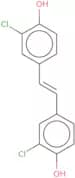
CAS:4-Chloro-2-fluorocinnamic acid is a chemical intermediate that can be used as a building block for the synthesis of other compounds. It has been shown to be useful in the preparation of pharmaceuticals, agrochemicals, and dyestuffs. This chemical has many uses in research, such as being used as a reactant in organic synthesis or as a reagent for derivitization. 4-Chloro-2-fluorocinnamic acid is also an important intermediate for the production of more complex compounds. 4-Chloro-2-fluorocinnamic acid is a versatile building block that can be used in the preparation of many fine chemicals, with its versatility making it an important scaffold for drug discovery.Formula:C9H6ClFO2Purity:Min. 95%Color and Shape:PowderMolecular weight:200.59 g/mol3,3'-Dichloro-4,4'-dihydroxystilbene
CAS:3,3'-Dichloro-4,4'-dihydroxystilbene is a chemical compound that is used as a reagent and intermediate. It has been shown to be an effective building block in organic synthesis. 3,3'-Dichloro-4,4'-dihydroxystilbene can be used for the production of speciality chemicals and research chemicals. This versatile compound is also used to make a variety of reactions components.Formula:C14H10Cl2O2Purity:Min. 95%Color and Shape:PowderMolecular weight:281.13 g/mol
![4-(2- fluorophenyl)-6,8-dihydro-1,3,8-trimethyl-Pyrazolo[3,4-e][1,4]diazepin-7(1H)-one mixt. with …](/_next/image/?url=https%3A%2Fstatic.cymitquimica.com%2Fproducts%2F3D%2Fthumb-webp%2FFF104101.webp&w=3840&q=75)

![1-[2-[(2,4-Dimethylphenyl)thio]phenyl]piperazine hydrobromide](/_next/image/?url=https%3A%2Fstatic.cymitquimica.com%2Fproducts%2F3D%2Fthumb-webp%2FFD157097.webp&w=3840&q=75)


![3-(4'-Bromo[1,1'-biphenyl]-4-yl)-1,2,3,4-tetrahydro-1-naphthalenol](/_next/image/?url=https%3A%2Fstatic.cymitquimica.com%2Fproducts%2F3D%2Fthumb-webp%2FFB164965.webp&w=3840&q=75)

![N-[(S)-(2,3,4,5,6-Pentafluorophenoxy)phenoxyphosphinyl]-L-alanine 1-methylethyl ester](/_next/image/?url=https%3A%2Fstatic.cymitquimica.com%2Fproducts%2F3D%2Fthumb-webp%2FFP59695.webp&w=3840&q=75)

![N-[2-(Fmoc-amino)-ethyl]glycine tert-butylester hydrochloride](/_next/image/?url=https%3A%2Fstatic.cymitquimica.com%2Fproducts%2F3D%2Fthumb-webp%2FFF49771.webp&w=3840&q=75)