Organic Halides
Subcategories of "Organic Halides"
Found 20442 products of "Organic Halides"
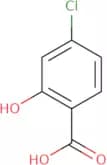
4-Chlorosalicylic acid
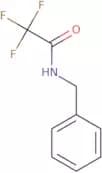
CAS:4-Chlorosalicylic acid is an inhibitor of bacterial growth that belongs to the group of phenolic compounds. It has been shown to inhibit the growth of bacteria in cell culture and be effective against a wide range of species, including Escherichia coli and Staphylococcus aureus. 4-Chlorosalicylic acid inhibits bacterial enzyme activities, such as 5-nitrosalicylic acid hydroxylase and diphenolase activities. This compound has also been shown to have anti-inflammatory properties, which may be due to its ability to inhibit prostaglandin synthesis. 4-Chlorosalicylic acid is an active intermediate in the production of other drugs such as 2,4-dichloroacetophenone and 2,5-dichlorobenzonitrile.Formula:C7H5ClO3Purity:Min. 95%Color and Shape:PowderMolecular weight:172.57 g/molN-Benzyltrifluoroacetamide
CAS:N-Benzyltrifluoroacetamide is an amide that inhibits the activity of the enzyme fatty acid synthase, which catalyzes the synthesis of fatty acids. It has been shown to be effective against a number of cancers and has been used in the treatment of patients infected with HIV. N-Benzyltrifluoroacetamide is active against a range of cancer cell lines, including breast, pancreatic, ovarian, prostate, and colorectal carcinomas. Its mechanism of action is not known but may involve inhibition of protein synthesis or induction of apoptosis.Formula:C9H8F3NOPurity:Min. 95%Color and Shape:White To Off-White SolidMolecular weight:203.16 g/mol3,4,5-Tribromobenzoic acid - technical grade
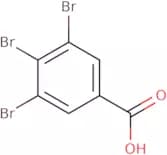
CAS:3,4,5-Tribromobenzoic acid is a benzoic acid with the molecular formula C6H3Br3O2. It is used as a plant growth regulator in agriculture and gardening. 3,4,5-Tribromobenzoic acid may be applied to the surface of plants to stimulate abscission (the natural shedding of leaves) or excision (the removal of flowers). This chemical also has been shown to inhibit physiological activity in plants by inhibiting 2,3,5-triiodobenzoic acid synthesis. This inhibition leads to a reduction in the production of substances that are involved in physiological processes such as photosynthesis and protein synthesis.Formula:C7H3Br3O2Purity:Min. 95%Molecular weight:358.81 g/mol2-Fluorobenzoic acid methyl ester
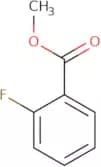
CAS:2-Fluorobenzoic acid methyl ester is a chemical compound that belongs to the group of borohydride reduction. It is a colorless liquid that can be used as a solvent for chemical reactions. 2-Fluorobenzoic acid methyl ester is used in synthetic methods, such as the reduction of benzoate to benzyl alcohol. The borohydride reduction produces a mixture of regioisomers, which can be separated by fractional distillation. 2-Fluorobenzoic acid methyl ester is also used in the synthesis of hydrogen peroxide, which is produced by the reaction of sodium borohydride with hydrogen peroxide. Hydrogen peroxide can then react with 2-fluoro benzoic acid methyl ester to produce 2-fluoro benzaldehyde and water.
Formula:C8H7FO2Purity:Min. 95%Color and Shape:Clear LiquidMolecular weight:154.14 g/mol1-Octyl-3-methylimidazolium hexafluorophosphate
CAS:1-Octyl-3-methylimidazolium hexafluorophosphate is a polymerase chain reaction (PCR) reagent that has been widely used in DNA amplification. It has been shown to have a low thermal expansion coefficient, which makes it an ideal material for the preparation of PCR tubes. 1-Octyl-3-methylimidazolium hexafluorophosphate is also used in the analysis of fatty acids and can be used to determine the constant pressure volume at which these molecules are soluble. The analytical method is based on hydrogen bonding interactions, enzyme activities, and plasma mass spectrometry. This extractant can also be used to remove excess water from samples prior to extraction by using electrophoresis or other methods.Formula:C12H23F6N2PPurity:Min. 95%Color and Shape:Colorless Clear LiquidMolecular weight:340.29 g/mol[(1,2-Dimethyl-1H-benzimidazol-5-yl)methyl]amine dihydrochloride
CAS:[(1,2-Dimethyl-1H-benzimidazol-5-yl)methyl]amine dihydrochloride is a reagent that is used as a reaction component in the synthesis of organic and inorganic compounds. It is used as a high quality research chemical for use in the production of fine chemicals and pharmaceuticals. This compound has many uses as a versatile building block, useful intermediate, or useful building block in the synthesis of complex compounds. It can also be used to make various speciality chemicals. [(1,2-Dimethyl-1H-benzimidazol-5-yl)methyl]amine dihydrochloride is stable at room temperature and can be stored under ambient conditions indefinitely.Formula:C10H13N3·2HClPurity:Min. 95%Color and Shape:White PowderMolecular weight:248.15 g/mol3-Bromo-5-chlorobenzonitrile
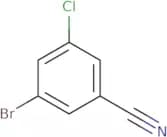
CAS:3-Bromo-5-chlorobenzonitrile is a reactive compound that is used in the preparation of sulfur. It is an electrophile and reacts with thiols to form disulfides. 3-Bromo-5-chlorobenzonitrile can also form a complex with elemental sulfur, which can be used for the preparation of sodium sulfide. Sodium sulfide can be prepared by converting 3-bromo-5-chlorobenzonitrile into a sodium salt with sodium hydroxide, followed by hydrolysis to produce hydrogen sulfide and sodium chloride. The reaction of 3-bromo-5-chlorobenzonitrile with xanthate leads to the formation of carbon disulphide.Formula:C7H3BrClNPurity:Min. 95%Color and Shape:PowderMolecular weight:216.46 g/mol5-Iodocytosine
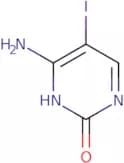
CAS:5-Iodocytosine (5-IC) is an analog of cytosine that can be used as a precursor for the synthesis of thymine. 5-IC has been shown to cross-couple with DNA, which may contribute to its antiviral potency. 5-IC is also a potent inhibitor of dna replication and herpes simplex virus. The biochemical properties of 5-IC have been extensively studied, including its ability to react with hydrochloric acid to form the corresponding tautomers. The hydrolysis rate increases at higher pH values and decreases at lower pH values. Bioconjugate chemistry has been applied to synthesize a bioconjugated prodrug of 5-IC for cancer treatment.
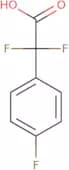
Formula:C4H4IN3OPurity:Min. 95%Color and Shape:PowderMolecular weight:237 g/mol2,2-Difluoro-2-(4-fluorophenyl)acetic acid
CAS:2,2-Difluoro-2-(4-fluorophenyl)acetic acid is a versatile building block that can be used as a reagent in the synthesis of complex compounds. This chemical is also an intermediate in the synthesis of pharmaceuticals and agrochemicals. It can be used as a speciality chemical for research purposes. The compound has been shown to have high quality and is useful as a scaffold for the synthesis of other compounds.Formula:C8H5F3O2Purity:Min. 95%Color and Shape:White To Off-White SolidMolecular weight:190.12 g/mol3'-Chlorophenylacetylene
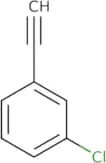
CAS:3'-Chlorophenylacetylene is an organic compound that is used in the production of styrene via a macroinitiator. 3'-Chlorophenylacetylene reacts with azides to form diazo compounds, which are then hydrolyzed to produce terminal alkynes. These terminal alkynes can be dehydrogenated to produce acrylonitrile and vinyl acetate. The compound can also react with silicon to produce organometallic complexes. 3'-Chlorophenylacetylene is commonly analyzed using nuclear magnetic resonance spectroscopy (NMR). This molecule has been used as a conjugate for drug delivery systems and as a supramolecular catalyst for organic reactions.Formula:C8H5ClPurity:Min. 95%Molecular weight:136.58 g/mol3',5'-Dichloroacetophenone
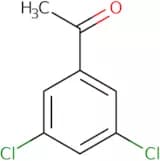
CAS:3',5'-Dichloroacetophenone is a synthetic pyrazoline that is a colorless liquid with an aromatic odor. It is soluble in ethyl acetate, chloroform, benzene, and other organic solvents. 3',5'-Dichloroacetophenone has significant effects on the protonation of amines, which are compounds containing nitrogen and hydrogen. This chemical has been shown to be able to react with anions like chloride or sulfide to form hypophosphorous acid. The symmetric structure of 3',5'-dichloroacetophenone is also susceptible to halide attack and can be synthesized from phenylhydrazine and piperidine.Formula:C8H6Cl2OPurity:Min. 95%Color and Shape:LiquidMolecular weight:189.04 g/molH-Chg-OMe hydrochloride
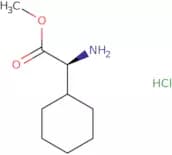
CAS:H-Chg-OMe hydrochloride is a fine chemical and reagent that is used in the synthesis of complex organic compounds and pharmaceuticals. This compound can be used as a versatile building block for a variety of reactions, such as reductive amination, reductive amination, reductive amination, and reductive amination. H-Chg-OMe hydrochloride has been shown to react with primary amines to form secondary amines. It has also been shown to react with alcohols to form ethers. CAS No. 14328-63-3Formula:C9H18ClNO2Purity:Min. 95%Color and Shape:White/Off-White SolidMolecular weight:207.7 g/mol2-Bromobiphenyl
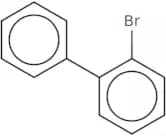
CAS:2-Bromobiphenyl is a halogenated aromatic hydrocarbon that is used in the synthesis of phenanthrene. It can be synthesized by the reaction of sodium carbonate with biphenyl and bromine. This reaction produces 2-bromobiphenyl, sodium chloride, and hydrogen bromide. The synthesis of 2-bromobiphenyl can also be achieved by the Suzuki coupling reaction of n-dimethyl formamide and boron trichloride. 2-Bromobiphenyl has a high melting point (269 degrees Celsius) and is a solid at room temperature (25 degrees Celsius). Due to its hydrophobic properties, it is insoluble in water but soluble in organic solvents such as ethylene dichloride or chloroform. 2-Bromobiphenyl is used as an analytical method for determining fatty acids in lipids, which are present in many industrial chemicals such asFormula:C12H9BrPurity:Min. 95%Color and Shape:Colourless To Yellow SolidMolecular weight:233.1 g/mol7-Bromo-2,3-dioxoindoline
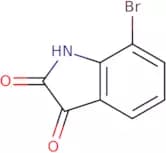
CAS:7-Bromo-2,3-dioxoindoline is a synthetic compound with a vibrational frequency of 249.2 cm−1. It is an inhibitor of the enzyme synthetase and has been shown to have an inhibitory effect on cancer cell viability in vitro. 7-Bromo-2,3-dioxoindoline inhibits the production of cancerous cells by interfering with their ability to synthesize DNA, which is necessary for cell division. This inhibition may be due to its ability to form intermolecular hydrogen bonding interactions with the amine group on the enzyme synthetase. 7-Bromo-2,3-dioxoindoline has also been shown to block the synthesis of 5-chloroisatin, one of its reaction products. The bioassay was carried out by measuring the amount of granulosa cells that were able to produce estrogen after treatment with this compound.Formula:C8H4BrNO2Purity:Min. 98 Area-%Color and Shape:PowderMolecular weight:226.03 g/mol2-Cyano-5-fluorobenzoic acid
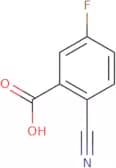
CAS:2-Cyano-5-fluorobenzoic acid (2C5FBA) is a chemical that is synthesized by the reaction of sodium nitrite with methyl ester. It can be used in organic synthesis as a target product and can also be used as an intermediate for the synthesis of other chemicals. 2C5FBA has been shown to react with nitrogen to produce cyanide, which is toxic to humans and animals. 2C5FBA also reacts with acid methyl to produce methyl esters, which are often used as solvents in industrial settings.
Formula:C8H4FNO2Purity:Min. 95%Color and Shape:PowderMolecular weight:165.12 g/mol(3-Bromopropoxy)-tert-butyldimethylsilane
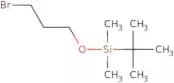
CAS:(3-Bromopropoxy)-tert-butyldimethylsilane is a synthetic molecule that has been shown to inhibit prostate cancer cells. It binds to the phosphate group on the enzyme and inhibits its activity. (3-Bromopropoxy)-tert-butyldimethylsilane can be used as a chemical probe for identifying enzymes involved in phosphatase activity. This molecule has also been shown to have anti-cancer effects in vitro and in vivo assays, by preventing tumor growth and metastasis.Formula:C9H21BrOSiPurity:Min. 95%Color and Shape:PowderMolecular weight:253.25 g/mol2-(3-Bromophenyl)ethanamine
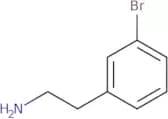
CAS:Controlled Product2-(3-Bromophenyl)ethanamine is an affinity ligand for the 5-hydroxytryptamine receptor 7 (5-HT7). It has a high affinity for the 5-HT7 receptor and can also be used to study other serotonin receptors. This compound has been shown to bind to the 5-HT7 with a Kd of 0.3 nM and no significant binding at other serotonin receptors. It was found that 2-(3-bromophenyl)ethanamine does not inhibit the uptake of serotonin from synaptosomal preparations, but does inhibit the uptake of serotonin from cerebrospinal fluid. These results were confirmed in vitro using radioligand binding assays and autoradiography, demonstrating that 2-(3-bromophenyl)ethanamine binds selectively to the 5-HT7 receptor.Formula:C8H10BrNPurity:Min. 95%Color and Shape:Colorless PowderMolecular weight:200.08 g/mol3-Fluoro-2-methylphenylacetone
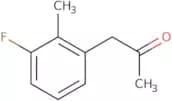
CAS:3-Fluoro-2-methylphenylacetone is a reaction component and reagent that is useful in the synthesis of complex compounds. 3-Fluoro-2-methylphenylacetone, also known as 2-fluoromethylbenzaldehyde, is a versatile building block that can be used to synthesize a wide variety of chemical compounds. It has been shown to be an excellent intermediate and building block for the synthesis of pharmaceuticals, pesticides, agrochemicals, specialty chemicals, and other organic compounds. 3-Fluoro-2-methylphenylacetone is a fine chemical that has CAS No. 1017060-34-2.
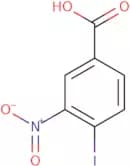
Formula:C10H11FOPurity:Min. 95%Molecular weight:166.19 g/mol4-Iodo-3-nitrobenzoic acid
CAS:4-Iodo-3-nitrobenzoic acid (4-INBA) is a nitro derivative of the aromatic acid. It is used as a chemotherapeutic agent and an intermediate in the synthesis of other drugs. 4-INBA has been shown to be cytotoxic to hamsters and inhibit cellular growth by binding to DNA polymerase and inhibiting DNA synthesis. 4-INBA also binds to RNA polymerase, inhibiting RNA synthesis and protein production, which causes cell death.Formula:C7H4INO4Purity:90%Color and Shape:PowderMolecular weight:293.02 g/molMethyl 3-chlorosulfonylthiophene-2-carboxylate
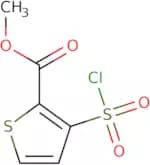
CAS:Methyl 3-chlorosulfonylthiophene-2-carboxylate is a chemical compound that belongs to the family of thiophene carboxylic acid esters. It has been used for the synthesis of bioactive molecules, such as tenoxicam, and heteroarylations. Methyl 3-chlorosulfonylthiophene-2-carboxylate can be used in cross-coupling reactions with chloride as a reagent and is regiospecific. This chemical has also been shown to be reactive towards proteins, nucleic acids, and other biomolecules.
Formula:C6H5ClO4S2Purity:Min. 95%Color and Shape:PowderMolecular weight:240.69 g/mol


![[(1,2-Dimethyl-1H-benzimidazol-5-yl)methyl]amine dihydrochloride](/_next/image/?url=https%3A%2Fstatic.cymitquimica.com%2Fproducts%2F3D%2Fthumb-webp%2FFD135142.webp&w=3840&q=75)