


Organic Halides
Subcategories of "Organic Halides"
Found 20443 products of "Organic Halides"
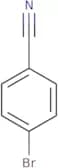
4-Bromobenzonitrile
CAS:4-Bromobenzonitrile is an aryl halide that is used in organic synthesis. It has been shown to form a palladium complex with hydrochloric acid, and can be used as a model system for the reaction of halides with palladium complexes. 4-Bromobenzonitrile forms a variety of products when it reacts with sodium hydroxide solution, including 4-cyanobiphenyl, which can then be chlorinated to produce chloroform. This reactant also reacts with palladium metal to form the corresponding pdCl2P(4-bromophenyl)-CH2Cl product. In addition, 4-bromobenzonitrile has been shown to react with an aryl halide in the presence of uv light and sodium hydroxide solution to form an aryl chloride. The reaction proceeds through the intermediate formation of benzylic chloride by reaction with hydrogen chloride and sodium hydFormula:C7H4BrNPurity:Min. 95%Color and Shape:White PowderMolecular weight:182.02 g/mol1-Butyl-3-methylimidazolium bis(trifluoromethanesulfonyl)imide
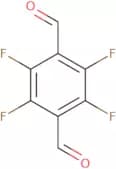
CAS:1-Butyl-3-methylimidazolium bis(trifluoromethanesulfonyl)imide (BMIMTFSI) is a cationic electrolyte that is used in a variety of electrochemical applications. BMIMTFSI has been shown to be able to form hydrogen bonds with water and other hydroxyl groups. Hydrogen bonding interactions are important for the ionic conductivity of BMIMTFSI. These interactions allow the formation of an ionic solution in which the ions can conduct electricity. This property of BMIMTFSI makes it useful in electrochemical detectors, such as gas sensors and pH monitors, where it can be used to measure changes in pH or detect gases such as carbon dioxide or ammonia. The frequency shift of this material is due to its ability to undergo an acylation reaction, which is the addition of an acyl group onto a molecule. The activation energies for this process are determined by the chemical interactions betweenFormula:C10H15F6N3O4S2Purity:Min. 98 Area-%Color and Shape:Clear LiquidMolecular weight:419.37 g/molTetrafluoroterephthaldehyde
CAS:Tetrafluoroterephthaldehyde (TFPA) is a reactive aldehyde that can be synthesized in the laboratory by the reaction of trifluoromethanesulfonic acid with an aromatic hydrocarbon or ester compound. TFPA has been used to study the synthesis of supramolecular assemblies and supramolecular chemistry. The radiation-induced formation of TFPA is a useful method for the synthesis of polymers, and the thermal expansion of TFPA is high enough to be used as a thermometer. TFPA has shown chemical stability in both acidic and alkaline media, as well as resistance to radiation and oxidation. TFPA also has a high boiling point, making it useful for desolvation during gas chromatography experiments.
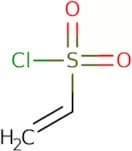
Formula:C8H2F4O2Purity:Min. 95%Color and Shape:PowderMolecular weight:206.09 g/molEthenesulfonyl chloride
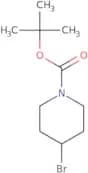
CAS:Ethenesulfonyl chloride is a chemical that is used as an inhibitor of amine oxidases in the treatment of inflammatory and autoimmune diseases. It also inhibits the formation of reactive oxygen species by inhibiting intracellular amines, which are required for the generation of reactive oxygen species. Ethenesulfonyl chloride is a nucleophile that reacts with protons from water to form a hydroxyl group, which can then react with chlorine atoms to form hydrogen chloride. This reaction results in the release of heat, which may be useful for killing bacteria or other microbes.Formula:C2H3ClO2SPurity:Min. 95%Molecular weight:126.56 g/mol1-N-Boc-4-bromopiperidine
CAS:1-N-Boc-4-bromopiperidine is a Grignard reagent that is used for the preparation of amines. It can be prepared by reacting 1-bromo-4-methylpiperidine with magnesium metal in an ether solution. This compound has been shown to be efficient for the synthesis of biologically active molecules, such as dihydropyridones and isoquinolines. This product may cause skin irritation.Formula:C10H18BrNO2Purity:Min. 95%Color and Shape:White To Light (Or Pale) Yellow Solid Or Liquid (May Vary)Molecular weight:264.16 g/mol1-[(2-Chlorophenyl)-N-(methylimino)methyl]cyclopentanol hydrochloride
CAS:Controlled ProductPlease enquire for more information about 1-[(2-Chlorophenyl)-N-(methylimino)methyl]cyclopentanol hydrochloride including the price, delivery time and more detailed product information at the technical inquiry form on this pageFormula:C13H16ClNO•HClPurity:Min. 95%Molecular weight:274.19 g/mol4-[4-(Dimethylamino)-1-(4-fluorophenyl)-1-hydroxybutyl]-3-(hydroxymethyl)benzonitrile hydrobromide
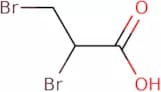
CAS:4-[4-(Dimethylamino)-1-(4-fluorophenyl)-1-hydroxybutyl]-3-(hydroxymethyl)benzonitrile hydrobromide is an antagonist of the nicotinic acetylcholine receptor (nAChR) that has been shown to be prophylactic against mediated nitrogen. It was isolated from a marine sponge and shows high affinity for nAChRs, with low nanomolar binding constants. The prophylactic properties of 4-[4-(dimethylamino)-1-(4-fluorophenyl)-1-hydroxybutyl]-3-(hydroxymethyl)benzonitrile hydrobromide are mediated by its ability to antagonize the function of nAChRs and prevent the release of neurotransmitters such as acetylcholine.Formula:C20H23FN2O2•HBrPurity:Min. 95%Molecular weight:423.32 g/mol2,3-Dibromopropanoic acid
CAS:2,3-Dibromopropanoic acid is a carcinogenic chemical that has been shown to cause liver tumors in rats. It is a nucleophile that reacts with amide groups to form an amide bond. The analytical method for 2,3-dibromopropanoic acid is gas chromatography with flame ionization detection. Its structural formula is CHBrCHBrCOH. It has a carbonyl group and acidic properties, as well as a chloride ion present on the molecule. 2,3-Dibromopropanoic acid is an anxiolytic drug that has been shown to have health effects such as drowsiness and headache.
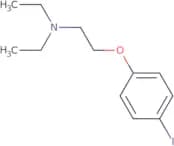
Formula:C3H4Br2O2Purity:Min. 95%Color and Shape:PowderMolecular weight:231.87 g/mol2- (4-Iodophenoxy) - N, N- diethylethanamine
CAS:Controlled ProductPlease enquire for more information about 2- (4-Iodophenoxy) - N, N- diethylethanamine including the price, delivery time and more detailed product information at the technical inquiry form on this page
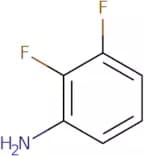
Formula:C12H18INOPurity:Min. 95%Molecular weight:319.18 g/mol2,3-Difluoroaniline
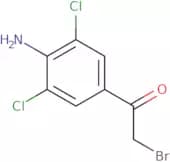
CAS:2,3-Difluoroaniline is an organic chemical compound with the formula CHF2NH. It has a molecular weight of 138.24 and a melting point of -70°C. 2,3-Difluoroaniline is soluble in water, but it will react with hydrochloric acid to produce hydrogen fluoride and chloride ions. This compound is used as an optical reagent for pH measurements and ion-exchange chromatography. 2,3-Difluoroaniline has been shown to have antimicrobial activity against bacterial strains such as Escherichia coli, Enterobacter aerogenes, Pseudomonas aeruginosa, Klebsiella pneumoniae, Proteus vulgaris, Salmonella enterica serovar Typhimurium, Staphylococcus aureus (MRSA), Streptococcus pyogenes (Group A Streptococcus), and Vibrio chFormula:C6H5F2NPurity:Min. 95%Molecular weight:129.11 g/mol1-(4-Amino-3,5-dichloro-phenyl)-2-bromo-ethanone
CAS:Please enquire for more information about 1-(4-Amino-3,5-dichloro-phenyl)-2-bromo-ethanone including the price, delivery time and more detailed product information at the technical inquiry form on this pageFormula:C8H6BrCl2NOPurity:Min. 95%Molecular weight:282.95 g/molS-Ethylisothio urea, hydrobromide
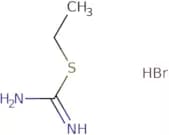
CAS:S-Ethylisothio urea, hydrobromide is a nitric oxide (NO) synthase inhibitor that prevents the conversion of arginine to NO. It has been shown to inhibit protein synthesis in cells, which may be due to its ability to inhibit guanylate cyclase and intracellular calcium concentrations. S-Ethylisothio urea, hydrobromide has been used in experimental models as an anti-inflammatory drug for the treatment of autoimmune diseases like rheumatoid arthritis. This compound also blocks the production of NO by inhibiting the oxygen transport system in the lungs, which is required for redox potential. S-Ethylisothio urea, hydrobromide is a cyclase inhibitor that prevents the conversion of dehydroascorbic acid to ascorbic acid. It can be used as an antioxidant by scavenging reactive oxygen species and preventing oxidative damage.Formula:C3H9BrN2SPurity:Min. 95%Molecular weight:185.09 g/mol2-Amino-5-chloropyridine
CAS:2-Amino-5-chloropyridine is an organic compound that is a metabolite of nicotinic acid. 2-Amino-5-chloropyridine has been detected in urine samples and can be extracted from urine with hydrochloric acid. It can also be prepared by the reaction of picolinic acid and malonic acid, which are both found in the human body. The compound has been shown to have pharmacokinetic properties, including a half life of approximately 1 hour and a volume of distribution of 0.3 L/kg. 2-Amino-5-chloropyridine has also been shown to have structural analysis and binding properties with hydrogen bonding interactions. The structure was determined by X-ray crystal structures, which revealed the presence of a reactive group p2 and the absence of any other reactive groups. 2-Amino-5-chloropyridine is used as an analytical method for fluorescence detection in combination
Purity:Min. 95%Color and Shape:White To Off-White SolidMolecular weight:128.56 g/mol2-Chloro-5-methylpyrazine
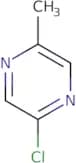
CAS:Please enquire for more information about 2-Chloro-5-methylpyrazine including the price, delivery time and more detailed product information at the technical inquiry form on this pageFormula:C5H5ClN2Purity:Min. 95%Molecular weight:128.56 g/mol3-(Piperazin-1-ylmethyl)phenol dihydrochloride
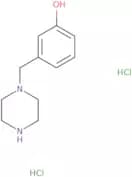
CAS:Controlled ProductPlease enquire for more information about 3-(Piperazin-1-ylmethyl)phenol dihydrochloride including the price, delivery time and more detailed product information at the technical inquiry form on this pageFormula:C11H16N2OPurity:Min. 95%Molecular weight:192.26 g/molMethyl dichlorophosphite
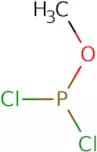
CAS:Methyl dichlorophosphite is a chemical compound that is used as an antimicrobial agent. It reacts with hydroxyl groups on the surface of bacteria, forming a polymerase chain reaction (PCR) product that inhibits the growth and reproduction of bacteria. Methyl dichlorophosphite also reacts with β-amino acids to form amides, which are then hydrolyzed to produce fatty acids and phosphites. This chemical can be used as a solid catalyst for reactions involving alkylthio groups or amides.Formula:CH3Cl2OPPurity:Min. 95%Color and Shape:Clear LiquidMolecular weight:132.91 g/mol4-Iodotoluenedifluoride
CAS:4-Iodotoluenedifluoride is a molecule that can be produced by the Friedel-Crafts reaction of iodotoluene with sulfoxides. It has been shown to be a bioactive molecule and an efficient method for the stereoselective synthesis of sulfoxides. 4-Iodotoluenedifluoride is also used in the synthesis of phenoxy compounds, which have been shown to have anti-inflammatory properties. The phenoxy group can be replaced with fluorine, which increases the lipophilicity of these molecules and makes them useful for lipid lowering drugs. These molecules are also capable of inhibiting cholesterol biosynthesis and increasing density lipoprotein (HDL).Formula:C7H7F2IPurity:Min. 95%Molecular weight:256.03 g/mol1-fluoro-2-iodobenzene
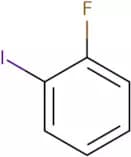
CAS:1-Fluoro-2-iodobenzene is a reactive compound that can be used in the cross-coupling of terminal alkynes and aldehydes. The reaction rate is dependent on the type of halide, but with an increase in acidity, the rate increases. This reaction is efficient because it does not require any solvents and can be performed at room temperature. 1-Fluoro-2-iodobenzene has been shown to react with many different functional groups, such as alcohols, amines, ethers, nitriles, sulfides, and carboxylic acids.
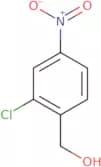
Formula:C6H4FIPurity:Min. 95%Molecular weight:222 g/mol(2-Chloro-4-nitrophenyl)methanol
CAS:Please enquire for more information about (2-Chloro-4-nitrophenyl)methanol including the price, delivery time and more detailed product information at the technical inquiry form on this pageFormula:C7H6ClNO3Purity:Min. 95%Color and Shape:PowderMolecular weight:187.58 g/molN-[3-Fluoro-4-[(methylamino)carbonyl]phenyl]-2-methylalanine
CAS:Please enquire for more information about N-[3-Fluoro-4-[(methylamino)carbonyl]phenyl]-2-methylalanine including the price, delivery time and more detailed product information at the technical inquiry form on this pageFormula:C12H15FN2O3Purity:Min. 95%Molecular weight:254.26 g/mol


![1-[(2-Chlorophenyl)-N-(methylimino)methyl]cyclopentanol hydrochloride](/_next/image/?url=https%3A%2Fstatic.cymitquimica.com%2Fproducts%2F3D%2Fthumb-webp%2FFC146990.webp&w=3840&q=75)
![4-[4-(Dimethylamino)-1-(4-fluorophenyl)-1-hydroxybutyl]-3-(hydroxymethyl)benzonitrile hydrobromide](/_next/image/?url=https%3A%2Fstatic.cymitquimica.com%2Fproducts%2F3D%2Fthumb-webp%2FFD102304.webp&w=3840&q=75)


![N-[3-Fluoro-4-[(methylamino)carbonyl]phenyl]-2-methylalanine](/_next/image/?url=https%3A%2Fstatic.cymitquimica.com%2Fproducts%2F3D%2Fthumb-webp%2FFF99416.webp&w=3840&q=75)