Biochemicals and Reagents
Biochemicals and reagents are fundamental substances for research and development in fields such as biotechnology, molecular biology, pharmacology, and medicine. These products are essential for a variety of applications, including compound synthesis, biological sample analysis, metabolic process research, and drug production. At CymitQuimica, we offer a wide selection of high-quality, high-purity biochemicals and reagents suitable for various scientific and industrial needs. Our catalog includes enzymes, antibodies, nucleic acids, amino acids, and many other products, all designed to support researchers and professionals in their research and development projects, ensuring reliable and reproducible results.
Subcategories of "Biochemicals and Reagents"
- Biomolecules(99,118 products)
- By Biological Target(99,156 products)
- By Pharmacological Effects(6,788 products)
- Cryopreservatives(21 products)
- Desinfectants and Related Compounds(28 products)
- Hormones(346 products)
- Plant Biology(6,748 products)
- Secondary Metabolites(14,233 products)
Found 130579 products of "Biochemicals and Reagents"
Sort by
Purity (%)
0
100
|
0
|
50
|
90
|
95
|
100
Zinquin Ethyl Ester
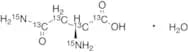
CAS:Controlled Product<p>Applications A fluorescent reagent and indicator of intracellular zinc ions. An analogue of widely used indicator, TS-Q. Zinquin ethyl ester is membrane permeable therefore useful to detect intracellular zinc ions. Zinquin ethyl ester forms a complex with a zinc ion with two nitrogen atoms in the structure. Used for studying the role of zinc in apoptosis.Fluorescence: max. Abs. l = 368nm, max. Em. l = 490nm<br>References Zalewski, P.D., et al.: Biochem.J., 296, 403 (1993), Zalewski, P.D., et al.: J. Histochem. Cytochem., 42, 877 (1994), Zalewski, P.D., et al.: Biochem.J., 303, 278 (1994), Zalewski, P.D., et al.: Chemistry & Biology, 1, 153 (1994)<br></p>Formula:C21H22N2O5SColor and Shape:NeatMolecular weight:414.47L-Asparagine-13C4, 15N2 Hydrate
CAS:Controlled ProductFormula:C4H815N2O3H2OColor and Shape:NeatMolecular weight:138.081802(+/-)-trans Taxifolin
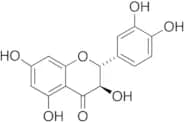
CAS:Controlled ProductFormula:C15H12O7Color and Shape:NeatMolecular weight:304.25Plumbagin
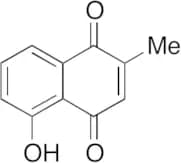
CAS:<p>Applications Plumbagin induces apoptosis in cancer cells. It also inhibits NADPH oxidase 4 in a time- and dose-dependent manner.<br> Not a dangerous good if item is equal to or less than 1g/ml and there is less than 100g/ml in the package<br>References Klotz, L., et al.: Molecules, 19 14902 (2014); Gupta, S., et al.: Cancer Metastasis Rev., 29, 405 (2010); Schramm, A., et al.: Vascul. Pharmacol., 56, 216 (2012)<br></p>Formula:C11H8O3Color and Shape:Dark OrangeMolecular weight:188.18Glyceryl 1,3-Distearate
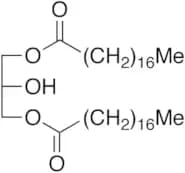
CAS:<p>Applications Glyceryl derivative.<br></p>Formula:C39H76O5Color and Shape:NeatMolecular weight:625.021,3-Dipalmitoyl-2-oleoyl Glycerol
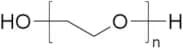
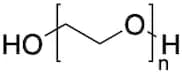
CAS:Controlled Product<p>Applications 1,3-Dipalmitoyl-2-oleoyl Glycerol is a triglyceride found in oils from various natural sources such as palm kernels, sunflower seeds and soybean. 1,3-Dipalmitoyl-2-oleoyl Glycerol is used to study the effects of specific synthetic triglycerides on atherosclerosis.<br>References Kritchevsky, D. et al.: LIpids, 35, 621 (2000); Mayamol, P.et al.: J. Food Sci. Technol., 45, 305 (2008);<br></p>Formula:C53H100O6Color and Shape:NeatMolecular weight:833.36Poly(ethylene Glycol) ~4000
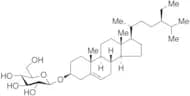
CAS:Controlled ProductFormula:H2O(C2H4O)nColor and Shape:White To Off-WhiteMolecular weight:62.07β-Sitosterol β-D-Glucoside
CAS:<p>Applications β-Sitosterol and β-sitosteryl-β-D-glucoside were isolated as analgesic constituents from the leaves of Mentha cordifolia Opiz.<br>References Tanaka, et al.: J. Biochem., 17, 483 (1933), Nigro, N.D., et al.: J. Natl. Cancer Inst., 69, 103 (1982),<br></p>Formula:C35H60O6Color and Shape:Off-White To Light BrownMolecular weight:576.854-Aminohippuric Acid
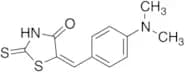
CAS:Controlled Product<p>Applications 4-Aminohippuric Acid is used in the measurement of renal plasma flow as a diagnostic tool which may be applied towards kidney disorders.<br>References Phillips, R. et al.: Am. J. Physiol., 152, 523 (1948);<br></p>Formula:C9H10N2O3Color and Shape:Off White SolidMolecular weight:194.194-(Dimethylaminobenzylidene)rhodanine
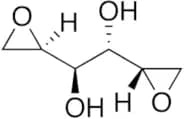
CAS:Controlled Product<p>Applications 4-(Dimethylaminobenzylidene)rhodanine is a useful research chemical in analytical techniques such as electrochemistry that investigate adsorption and corrosion inhibition by metals.<br>References Solmaz, R. et al.: Corrosion. Sci., 79, 169 (2014);<br></p>Formula:C12H12N2OS2Color and Shape:NeatMolecular weight:264.366Dulcitol Diepoxide
CAS:Controlled Product<p>Applications Dulcitol Diepoxide is a cytostatic drug. Dulcitol Diepoxide can be used for treatment of leukemia, lung cancer, multiple myeloma, and nasopharyngeal carcinoma.<br> Not a dangerous good if item is equal to or less than 1g/ml and there is less than 100g/ml in the package<br>References Ren, S., et al.: J. Drug Target, 4, 103 (1996), Ren, S., et al.: Prog. Drug Res., 54, 1 (2000), Brustle, M., et al.: J. Med. Chem., 45, 3345 (2002), McGuire, J., et al.: Curr. Pharm. Design, 9, 2593 (2003),<br></p>Formula:C6H10O4Color and Shape:NeatMolecular weight:146.145-Aminolevulinic Acid Methyl Ester Hydrochloride
CAS:Controlled Product<p>Applications 5-Aminolevulinic Acid Methyl Ester Hydrochloride, is the methyl ester of Aminolevulinic Acid (ALA) (A611780), which has been shown to have higher lipophilicity, and to be highly efficient at inducing protoporphyrin IX (PpIX) production in cell culture.<br>References Morrow, D. I. J., et al.: J. Pharmac. Sci., 99, 3486 (2010); Peng, Q., et al.: Cancer, 79, 2282 (1997);<br></p>Formula:C6H11NO3·HClColor and Shape:NeatMolecular weight:181.62p-Nitrophenyl β-D-Cellotetraoside
CAS:Controlled Product<p>Applications p-Nitrophenyl β-D-Cellotetraoside (cas# 129411-62-7) is a compound useful in organic synthesis.<br></p>Formula:C30H45NO23Color and Shape:NeatMolecular weight:787.6720-HETE (>80%)
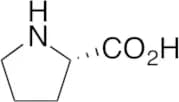
CAS:Controlled Product<p>Applications 20-HETE is a cytochrome P450 (CYP450) metabolite that may play an autacoid role in cerebral and renal vasculature.<br>References McGiff, J.C., et al.: Am J Physiol, 277, R607-R623 (1999);<br></p>Formula:C20H32O3Purity:>80%Color and Shape:NeatMolecular weight:320.466L-Proline
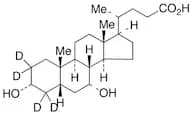
CAS:<p>Applications L-Proline is an amino acid and precursor (with vitamin C) for collagen, the building block of the structure of tendons, ligaments, arteries, veins and muscles. It is important in wound healing.<br>References Bondarenko, L.B., et al.: Int. J. Peptides., 2, 1687 (2012); Rimer, T., et al.: Biomacromolecules, 13, 2110 (2012);<br></p>Formula:C5H9NO2Color and Shape:NeatMolecular weight:115.13Chenodeoxycholic Acid-d4
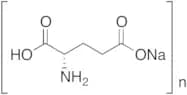
CAS:Controlled Product<p>Applications Labelled Chenodiol (Chenodeoxycholic acid). A major bile acid in many vertebrates, occurring as the N-glycine and/or N-taurine conjugate. With other bile acids, forms mixed micelles with lecithin in bile which solubilize cholesterol and thus facilitates its excretion. Fcilitates fat absorption in the small intestine by micellar solubilization of fatty acids and monoglycerides. Anticholelithogenic. Epimeric with Ursodiol.<br>References Danzinger, et al.: N. Engl. J. Med., 286, 1 (1972), Iser, J.H., et al.: Drugs, 21, 90 (1981), Tint, G.S., et al.: Gastroenterology, 91, 1007 (1986),<br></p>Formula:C24D4H36O4Color and Shape:White To Off-WhiteMolecular weight:396.60γ-Polyglutamic Acid Sodium Salt (Technical Grade)
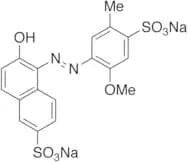
CAS:Controlled Product<p>Stability Hygroscopic<br>Applications gamma-Polyglutamic acid - sodium salt (cas# 25513-46-6) is a useful research chemical.<br></p>Formula:(C5H8NNaO4)nColor and Shape:NeatMolecular weight:NAAcid Red 1 (Technical Grade)
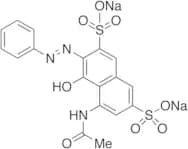
CAS:<p>Stability Light Sensitive<br>Applications Acid Red 1, tech. is a synthetic red azo dye used as food additive. Studies have shown that Red Acid 1 is converted to toxic compound aniline and may ultimately interfere with blood haemoglobin. Dyes and metabolites, Environmental Testing.<br>References Ordoudi, S.A., et al.: Food. Add. Contamin., 28, 417 (2011); Ganesan, L., et al.: Biochem. Pharmacol., 81, 810 (2011);<br></p>Formula:C18H13N3O8S2·2NaColor and Shape:RedMolecular weight:509.425'-O-[Bis(4-methoxyphenyl)phenylmethyl]-N-(2-methyl-1-oxopropyl)-guanosine
CAS:Controlled Product<p>Applications 5'-O-[Bis(4-methoxyphenyl)phenylmethyl]-N-(2-methyl-1-oxopropyl)-guanosine is used to prepare ppGpp analogs as inhibitors of RelA from Gram-negative/-positive bacteria. It is also used to synthesize guanosine 5'-conjugates as initiator molecules for transcription priming.<br>References Wexselblatt, E., et al.: Bioorg. Med. Chem., 18, 4485 (2010); Wolf, J., et al.:Org. Biomol. Chem., 6, 899 (2008)<br></p>Formula:C35H37N5O8Color and Shape:NeatMolecular weight:655.697Hexadecanal
CAS:Controlled Product<p>Stability Air and Moisture sensitive<br>Applications It is used in the production of lipid and fatty acids.<br>References Cerniglia, C., et al.: J. Bacteriol., 118, 844 (1974), Leahy, J., et al.: Microbiolog. Rev., 54, 305 (1990),<br></p>Formula:C16H32OColor and Shape:NeatMolecular weight:240.42Estra-5(10),9(11)-diene-3,17-dione
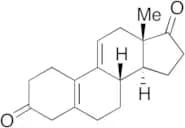
CAS:<p>Applications Estra-5(10),9(11)-diene-3,17-dione, can be used as an intermediate for the synthesis of 3-keto-desogestrel.<br>References Wang, R., et al.: Zhongguo Yaowu Huaxue Zazhi, 4, 187 (1994);<br></p>Formula:C18H22O2Color and Shape:NeatMolecular weight:270.3664-Methylumbelliferyl 2-Sulfamino-2-deoxy-α-D-glucopyranoside Sodium Salt
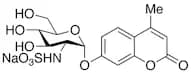
CAS:<p>Stability Hygroscopic<br>Applications 4-Methylumbelliferyl 2-Sulfamino-2-deoxy-α-D-glucopyranoside Sodium Salt is a substrate for the lysosomal heparin sulphamidase. It is a fluorometric enzyme assay for the diagnosis of Sanfilippo disease type A (MPS IIIA). It is also a fluorogenic substrate for sulfamidase.<br>References Karpova, E.A., et al.: J. Inher. Metab. Dis., 19, 278 (1996), Dasgupta, F., et al.: Carbohydrate Res., 337, 1055 (2002),<br></p>Formula:C16H18NO10S·NaColor and Shape:White To Off-WhiteMolecular weight:439.37Nutriacholic Acid
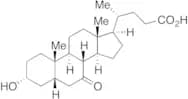
CAS:<p>Impurity Ursodeoxycholic Acid EP Impurity F<br>Applications Nutriacholic Acid (Ursodeoxycholic Acid EP Impurity F) is derivative of Lithocholic Acid (L469180), a cholic acid derivative as TGR5 modulator.<br>References Schneider, H., et al.: Bioorg. Med. Chem. Lett., 6, 637 (1996); Takamine, F., et al.: Microbiol. Immunol., 39, 11 (1995); Yamashita, H., et al.: Hepatol., 20, 663 (1994);<br></p>Formula:C24H38O4Color and Shape:White To Off-WhiteMolecular weight:390.562'-Deoxy-6-thio Guanosine
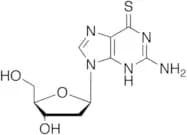
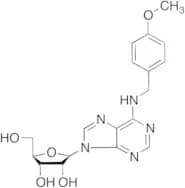
CAS:Controlled Product<p>Applications Guanosine (G837900) derivative with cancer chemotherapeutic properties. It is involved in the inhibition of human RNase H-mediated RNA cleavage from DNA-RNA duplexes via incorporation into DNA.<br>References Momparler, R.L. et al.: Cancer Treat. Rep., 62, 135 (1978); Krynetskaia, N.F. et al.: Mol. Pharmacol., 56, 841 (1999);<br></p>Formula:C10H13N5O3SColor and Shape:NeatMolecular weight:283.31N6-(4-Methoxybenzyl)adenosine
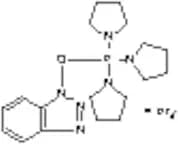
CAS:Controlled Product<p>Applications para-Topolin Riboside can be used as reagent/reactant for synthetic preparation and cytotoxicity of platinum complexes with hydroxy-, methoxy-, fluoro- and chloro-substituted N-benzyladenosine ligands as anti-tumor agents.<br>References Starha, P., et al.: Molecules, 18, 6990-7003 (2013)<br></p>Formula:C18H21N5O5Color and Shape:NeatMolecular weight:387.39Benzotriazol-1-yl-oxytripyrrolidinphosphonium Hexafluorophosphate
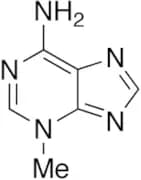
CAS:Controlled Product<p>Applications Benzotriazol-1-yl-oxytripyrrolidinphosphonium Hexafluorophosphate (cas# 128625-52-5) is a compound useful in organic synthesis.<br></p>Formula:C18H28N6OP·F6PColor and Shape:NeatMolecular weight:520.393-Methyl Adenine
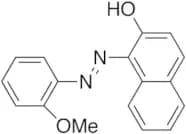
CAS:<p>Applications 3-Methyl Adenine is a selective autophagy and phosphoinositide 3-kinase (PI3K) inhibitor (1,2,3). 3-MA inhibits autophagy by blocking autophagosome formation via the inhibition of type III Phosphatidylinositol 3-kinases (PI-3K).<br>References (1) Munafo, D., et al.: J. Cell Sci., 114, 3619 (2001) (2) Aggarwal, B., et al.: Biochem. Pharmacol., 71, 1397 (2006) (3) Hayat, M., et al.: Oncologist, 12, 20 (2007)<br></p>Formula:C6H7N5Color and Shape:White SolidMolecular weight:149.15Sudan R
CAS:<p>Applications Sudan dyes and para red in food. Dyes and metabolites, Environmental Testing.<br>References Cornet, V., et al.: J. Agricult. Food Chem., 54, 639 (2006), Ertas, E., et al.: Food Chem., 105, 756 (2007),<br></p>Formula:C17H14N2O2Color and Shape:RedMolecular weight:278.31PSA Sorbent
<p>Applications PSA sorbent is useful in food residue cleanup removing food matrix interferences.<br>References F.J. Schenck, et al.: J. Chromatogr. A., 868, 51-61 (2000);F.J. Schenck, et al.: J. Sep. Sci. 25, 883-890 (2002)<br></p>Color and Shape:NeatL-Valine-d8
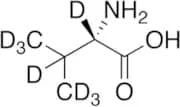
CAS:Controlled Product<p>Applications Labelled analogue of L-Vailne. L-Valine is an essential amino acid and one of 20 proteinogenic amino acids. L-Valine cannot be manufactured by the body and must be acquired through diet or supplementation. L-valine is found in grains, dairy products, mushrooms, meats, peanuts and soy proteins. L-Valine has been used in studies to attenuate arrhythmias and induce hypotensive effects.<br>References Choi, C.W. et al.: Anim. Feed Sci. Technol., 102, 15 (2002); Kolarski, D. et al.: Krmiva, 30, 155 (1988); Oba, M. et al.: J. Dairy Sci., 93, 2044 (2010); Mitrega, K. et al.: Pharmacol. Res., 64, 218 (2011);<br></p>Formula:C52H8H3NO2Color and Shape:NeatMolecular weight:125.205-Bromo-2'-deoxyuridine
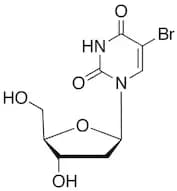
CAS:Controlled Product<p>Applications 5-Bromo-2'-deoxyuridine is a thymidine analogue used as a mutagen in genetic research. Selectively incorporated into cellular DNA during S-phase.<br>References Boccadoro, M., et al.: Tumor, 72, 135 (1986), Fivan, A. L.: Flow Cytometry, First Principles, New York, (1992),<br></p>Formula:C9H11BrN2O5Color and Shape:WhiteMolecular weight:307.102-Oleoyl-1-stearoyl-sn-glycero-3-phosphocholine
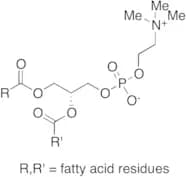
CAS:Controlled Product<p>Applications 2-Oleoyl-1-stearoyl-sn-glycero-3-phosphocholine is used in the assembly of various supported lipid bilayers.<br>References Wu, H-L., et al.: J. Chem. Phys., 144, 154904/1-154904/9 (2016);<br></p>Formula:C44H86NO8PColor and Shape:NeatMolecular weight:788.135,6-Dihydro-5-methyluridine
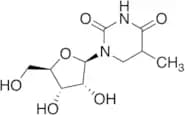
CAS:Controlled Product<p>Applications 5,6-Dihydro-5-methyluridine (cas# 23067-10-9) is a useful research chemical.<br></p>Formula:C10H16N2O6Color and Shape:NeatMolecular weight:260.24Adenosine 5'-monophosphate monohydrate
CAS:Controlled ProductFormula:C10H14N5O7P·H2OColor and Shape:NeatMolecular weight:365.234-Oxo Cyclophosphamide
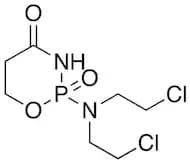
CAS:<p>Applications A minor metabolite of Cyclophosphamide<br> Not a dangerous good if item is equal to or less than 1g/ml and there is less than 100g/ml in the package<br>References Juma, F., et al.: Br. J. Clin. Pharmacol., 10, 327 (1980), Powers, J., et al.: Cancer Res., 43, 1101 (1983), Hardy, R., et al.: Ther. Drug Monit., 9, 221 (1987),<br></p>Formula:C7H12Cl2NO4PColor and Shape:NeatMolecular weight:276.0511-Deoxy Corticosterone
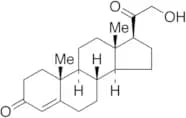
CAS:Controlled Product<p>Applications A mineralocorticoid that occurs in adrenal cortex. It acts as a precursor to Aldosterone (A514700).<br>References Bohl, C., et al.: J. Med.Chem., 47, 3765 (2004), Smith, J., et al.: Steroids, 73, 1160 (2008),<br></p>Formula:C21H30O3Color and Shape:White To Light YellowMolecular weight:330.46ThioGlo1
CAS:Controlled Product<p>Applications ThioGlo1 is thiol-reactive dye used for fluorescence labeling of proteomic samples.<br>References Tyagarajan, K., et al.: Electrophoresis, 24, 2348 (2003);<br></p>Formula:C20H13NO7Color and Shape:NeatMolecular weight:379.322-Amino-1-naphthalenesulfonic Acid
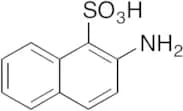
CAS:Controlled Product<p>Applications 2-Amino-1-naphthalenesulfonic Acid has been used in the preparation of oligomeric acid azo dyes and yields a reddish orange color in the dye.<br>References Shah, T.B., et. al.: Int. J. Polyemric Mater., 58, 681 (2009); Smith, K., et. al.: J. Environ., Res. Development, 2, 20 (2007)<br></p>Formula:C10H9NO3SColor and Shape:NeatMolecular weight:223.25Lecithin (Technical Grade)
CAS:Controlled Product<p>Stability Moisture Sensitive<br>Applications Lecithin has emulsification and lubricant properties, and is a surfactant.<br>References Shah, D.: J. Colloid and Interface Sci., 37, 744 (1971); Scholfield, C.: J. Am. Oil. Chem. Soc., 58, 889 (1981)<br></p>Formula:C7H7N3O4SColor and Shape:Light Yellow To Dark BrownPoly(ethylene Glycol) ~9000
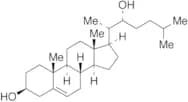
CAS:Controlled ProductFormula:H2O(C2H4O)nColor and Shape:White To Off-WhiteMolecular weight:62.0722α-Hydroxy Cholesterol
CAS:Controlled Product<p>Applications The 22R-metabolite of Cholesterol (C432501). 22-Hydroxycholesterol inhibits chemokine receptor activity.<br>References Samson, M., et al.: J. Biol. Chem., 272, 24934 (1997), Mackay, C., et al.: Nature Immunol., 2, 95 (2001), Navenot, J., et al.: J. Mol. Biol., 313, 1181 (2001),<br></p>Formula:C27H46O2Color and Shape:NeatMolecular weight:402.652-Methylbutyrylglycine-d9
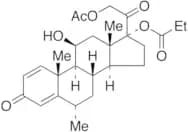
CAS:Controlled Product<p>Applications Labelled 2-Methylbutyrylglycine (M294340). 2-Methylbutyrylglycine is one of the acylglycines, an important class of metabolites that have been used in the diagnosis of several inborn errors of metabolism (IEM).<br>References Costa, C., et al.: J. Pharmaceut. Biomed. Anal., 21, 1215 (2000), Garcia-Villoria, J., et al.: Clin. Biochem., 42, 2 (2009), Scalbert, A., et al.: Metabolomics, 5, 435 (2009),<br></p>Formula:C72H9H4NO3Color and Shape:Off-WhiteMolecular weight:168.246α-Methyl Prednisolone Aceponate
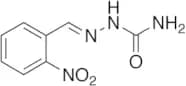
CAS:<p>Applications Used in treatment of seborrhoeic dermatitis includes topical treatments such as corticosteroids, antifungals, metronidazole and pimecrolimus.<br>References Miyachi, Y., et al.: Br. J. Dermatol., 114, 231 (1986), Rallis, E., et al.: Drugs Exp. Clin. Res., 30, 191 (2004), Ozcan, H., et al.: Eur. J. Dermatol., 17, 313 (2007),<br></p>Formula:C27H36O7Color and Shape:White To Off-WhiteMolecular weight:472.572-Nitrobenzaldehyde Semicarbazone
CAS:Controlled ProductFormula:C8H8N4O3Color and Shape:NeatMolecular weight:208.17C2 Ceramide
CAS:Controlled Product<p>Stability Moisture Sensitive<br>Applications A biologically active, cell permeable, but nonphysiologic ceramide analog. It inhibits cell proliferation and induces monocytic differentiation of HL-60 cells and induces apoptosis. It stimulates protein phosphatase 2A and activates MAP Kinase2.<br>References Inoue, T., et al.: J. Biol. Chem., 284, 9566 (2009), Kang, J., et al.: Bioorg. Med. Chem., 17, 1498 (2009), Rath, G., et al.: Int. J. Biochem. Cell Biol., 41, 1165 (2009),<br></p>Formula:C20H39NO3Color and Shape:Off White PowderMolecular weight:341.53Allura Red AC (Technical Grade)
CAS:<p>Stability Very Hygroscopic, Light Sensitive<br>Applications Color additive in foods, drugs and cosmetics. It is used as a food dye and has the E number E129. The study found increased levels of hyperactivity and attention deficit hyperactivity disorder and lower IQs were observed in children consuming the chemicals. It is banned in Denmark, Belgium, France, Switzerland, Sweden. Dyes and metabolites, Environmental Testing.<br>References Kirschbaum, J., et al.: Eur. Food Res. Technol., 222, 572 (2006), Yoshioka, N., et al.: Talanta, 74, 1408 (2008), Al-Degs, Y., et al.: Food Chem., 117, 485 (2009),<br></p>Formula:C18H14N2O8S2·2NaColor and Shape:NeatMolecular weight:496.42






![5'-O-[Bis(4-methoxyphenyl)phenylmethyl]-N-(2-methyl-1-oxopropyl)-guanosine](/_next/image/?url=https%3A%2Fstatic.cymitquimica.com%2Fproducts%2FTR%2Fthumb-webp%2FB415160.webp&w=3840&q=75)