Biochemicals and Reagents
Subcategories of "Biochemicals and Reagents"
- Biomolecules(98,560 products)
- By Biological Target(101,040 products)
- By Pharmacological Effects(6,954 products)
- Cryopreservatives(21 products)
- Desinfectants and Related Compounds(28 products)
- Hormones(531 products)
- Plant Biology(6,903 products)
- Secondary Metabolites(14,368 products)
Found 130639 products of "Biochemicals and Reagents"
Apoa-1 from rat
CAS:Apoa-1 is a rat protein that belongs to the Apolipoprotein class. It has been shown to activate receptor tyrosine kinase and ion channels, which may be involved in the regulation of cell growth and differentiation. Apoa-1 is also a ligand for the human scavenger receptor class B type I (SR-BI) and has been shown to inhibit tumor necrosis factor alpha (TNFα) production.
Purity:Min. 95%Alniditan dihydrochloride
CAS:Alniditan dihydrochloride is a drug that belongs to the class of 5-HT1A receptor agonists. It has been shown to have significant effects on carotid artery blood flow in vivo and has been found to be an effective treatment for patients with carotid artery stenosis. Alniditan dihydrochloride also has significant effects on hippocampal formation, which may be due to its ability to inhibit the production of messenger RNA and protein synthesis.
Formula:C17H28Cl2N4OPurity:Min. 95%Molecular weight:375.3 g/molmTOR Kinase Inhibitor II, WYE-354
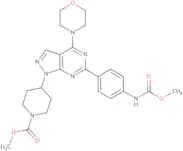
CAS:WYE-354 is a pyrimidine compound that inhibits mTOR kinase, the target of rapamycin. It has been shown to inhibit the production of pro-angiogenic factors and to be an immunosuppressant in vitro and in vivo. WYE-354 also reduces senescent cells, metabolic disorders, and prostate cancer cell growth. The drug increases autophagy levels and induces autophagy in vitro. This drug has not been tested on infectious diseases or autoimmune diseases as of yet.
Formula:C24H29N7O5Purity:Min. 95%Molecular weight:495.53 g/molGW779439X
CAS:GW779439X is a novel chemical compound that has been shown to inhibit the growth of Staphylococcus aureus at nanomolar concentrations. It is an inhibitor of DNA replication, which may be due to inhibition of RNA polymerase or topoisomerase II. This compound has also shown anti-cancer properties in vitro and in vivo models, which are likely due to the inhibition of protein synthesis by binding to ribosomes. GW779439X is able to sensitize S. aureus isolates with decreased susceptibility for vancomycin and methicillin, as well as other antibiotic resistant bacteria.Formula:C22H21F3N8Purity:Min. 95%Molecular weight:454.5 g/molTASP 0390325
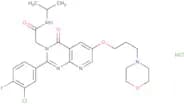
CAS:TASP 0390325 is a drug that modulates the thermoregulatory center in the brain. It is currently being studied for its use as a treatment for cancer and autoimmune diseases. TASP 0390325 is able to activate or inhibit the thermoregulatory center, which can lead to hyperthermia or hypothermia. This drug has been shown to suppress tumor growth in mice with cancer, and also has anti-cancer effects on human breast and prostate cancer cells grown in culture. More studies are needed to determine whether TASP 0390325 will be effective as an anti-cancer drug in humans.Formula:C25H30Cl2FN5O4Purity:Min. 95%Molecular weight:554.4 g/molPDD 00017238
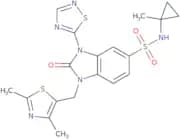
CAS:PDD 00017238 is a synthetic compound with high purity. It is a research tool for studying ion channels and protein interactions. PDD 00017238 has been used to study the activation of G-protein coupled receptors (GPCRs) by ligands. It has also been used to study protein-protein interactions in cell biology, such as the interaction between calcium channel alpha 1 subunits and beta 1 subunits. PDD 00017238 can be used as an inhibitor or activator of peptide binding to protein targets. This compound binds reversibly to peptides in solution, with a dissociation constant of 0.1 µM and inhibition constant of 0.5 µM.Formula:C19H20N6O3S3Purity:Min. 95%Molecular weight:476.6 g/molBifemelane Hydrochloride
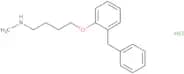
CAS:Bifemelane hydrochloride is a compound that has been shown to inhibit neuronal death by lowering intracellular Ca2+ levels. It also protects cells from oxidative stress and increases the activity of ATPase in mitochondria. Bifemelane hydrochloride has been used in experimental models of infectious diseases and metabolic disorders. It has also been shown to decrease locomotor activity, cell nuclei size, and cholinergic neurotransmission in low-dose groups. Bifemelane hydrochloride may be a promising pharmacological agent for brain functions and locomotor activity.Formula:C18H23NO·HClPurity:Min. 95%Molecular weight:269.38 g/molEmiglitate
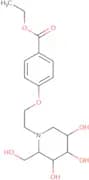
CAS:Emiglitate is a postprandial plasma enzyme inhibitor that has been shown to have an inhibitory effect on pancreatic enzymes. It is used as an antidiabetic agent and has been shown in clinical trials to be effective in controlling the blood glucose levels of diabetic patients. Emiglitate inhibits the activity of guanylate cyclase, which is involved in the synthesis of cyclic guanosine monophosphate (cGMP). This drug also inhibits dpp-IV, which is involved in the degradation of glucagon-like peptide-1 (GLP-1), a hormone that stimulates insulin secretion. The inhibition of GLP-1 may contribute to Emiglitate's ability to lower blood sugar levels.Formula:C17H25NO7Purity:Min. 95%Molecular weight:355.4 g/molPPZ2
CAS:Please enquire for more information about PPZ2 including the price, delivery time and more detailed product information at the technical inquiry form on this pageFormula:C22H29N3O2Purity:Min. 95%Molecular weight:367.5 g/mol2-Methyl-3-(3,5-diiodo-4-carboxymethoxybenzyl)benzofuran
CAS:2-Methyl-3-(3,5-diiodo-4-carboxymethoxybenzyl)benzofuran is a synthetic benzofuran derivative, which is a compound often used in a range of biochemical applications. This compound is typically sourced through chemical synthesis, involving specific reactions that introduce iodine atoms into the structural configuration of the benzofuran framework. Its mode of action primarily revolves around its interaction with thyroid-related pathways, due to the presence of iodine atoms — an essential element in thyroid hormone synthesis and function.Formula:C18H14I2O4Purity:Min. 95%Molecular weight:548.1 g/molCEP 32496 hydrochloride
CAS:Inhibits BRAF proto-oncogene mutant V600E
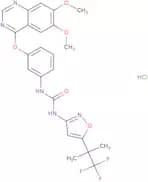
Formula:C24H22F3N5O5•HClPurity:Min. 95%Molecular weight:553.92 g/molAzd-8529 mesylate
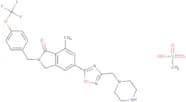
CAS:Azd-8529 mesylate is a novel ion channel activator that has been shown to activate the TRPV1 receptor, which is involved in pain sensation. It has also been shown to inhibit the activity of potassium channels. Azd-8529 mesylate is an excellent research tool for studying protein interactions and can be used in the study of cell biology, including activation or inhibition of cells.Formula:C25H28F3N5O6SPurity:Min. 95%Molecular weight:583.6 g/mol18:1 Dansyl ps
CAS:18:1 Dansyl ps is a fluorescent lipid probe, which is a synthetic derivative of phosphatidylserine. It is labeled with a dansyl group, providing unique fluorescent properties. This product is sourced from synthetic lipid modification processes, allowing for precise incorporation of the fluorescent moiety into the lipid structure. The mode of action of 18:1 Dansyl ps involves its integration into lipid bilayers, where its fluorescent properties can be used to investigate membrane dynamics, interactions, and organization.Formula:C54H95N4O12PSPurity:Min. 95%Molecular weight:1,055.39 g/molDebio 0932
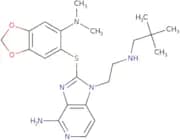
CAS:Debio 0932 is a peptide-based protein that has potent antitumor activity against solid tumors and has the potential to interact with tumor cells. This protein is a potent inhibitor of HSP90, which is an important cellular chaperone and regulator of cell growth. Debio 0932 has been shown to inhibit the proliferation of cancer cells in animal models and xenograft tumor growth in vitro. It is also able to induce an antitumor response in mice, leading to complete regression of established tumours. Debio 0932 has been shown to be active against all tested carcinoma cell lines, including those resistant to conventional chemotherapeutic agents such as doxorubicin.Formula:C22H30N6O2SPurity:Min. 95%Molecular weight:442.58 g/molElacestrant dihydrochloride
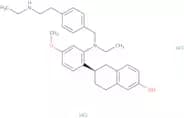
CAS:Controlled ProductElacestrant dihydrochloride is a potential drug for the treatment of breast cancer. This agent has been shown to inhibit the activity of CDK4/6, which are enzymes that regulate the cell cycle and prevent progression from G1 to S phase. Elacestrant dihydrochloride also causes apoptosis in tumor cells by binding to death receptors, causing them to trigger the release of proteins that activate apoptosis. The uptake of elacestrant dihydrochloride into tumor cells is increased by epidermal growth factor (EGF) and other receptor binding drugs. A study found that elacestrant dihydrochloride at a dose of 100 mg/kg was effective in reducing tumor growth in xenograft mice models when combined with palbociclib.
Formula:C30H40Cl2N2O2Purity:Min. 95%Molecular weight:531.56 g/molCD 1530
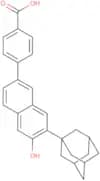
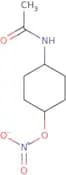
CAS:CD 1530 is a synthetic retinoid that is structurally similar to all-trans retinoic acid. CD 1530 stimulates the synthesis of growth factor-β1 and inhibits the release of inflammatory cytokines such as IL-6, TNF-α, and IL-1β. It has been shown to have anticancer activity in vitro and in vivo with efficacy against multiple myeloma, colorectal cancer, pancreatic cancer, and pancreatic adenocarcinoma cell lines. CD 1530 also has anti-inflammatory properties against different types of acute hepatitis viruses (hepatitis A virus, hepatitis B virus, hepatitis C virus) and may be useful for the treatment of hepatic steatosis. The chemical structure of CD 1530 includes a synthetic retinoid backbone that contains a variety of side chains that can be modified to target specific cellular functions.Formula:C27H26O3Purity:Min. 95%Molecular weight:398.49 g/mol(4-Acetamidocyclohexyl) nitrate
CAS:4-Acetamidocyclohexyl) nitrate is an organic nitrate that is used as a vasodilator drug. It has been shown to be metabolized by the liver and excreted in the urine, with only a small amount being found in the feces. The elimination of 4-Acetamidocyclohexyl) nitrate is largely unchanged when healthy subjects are given it orally or intravenously. 4-Acetamidocyclohexyl) nitrate has a high bioavailability and low toxicity, making it a good choice for use in humans.
Formula:C8H14N2O4Purity:Min. 95%Molecular weight:202.21 g/molN-[2-(4-Aminophenoxy)ethyl]-4-bromo-N,N-dimethylbenzeneethanaminium bromide hydrobromide
CAS:2-Aminoacridone is a fluorescent chemical that can be used to detect the presence of α1-acid glycoprotein in human serum. 2-Aminoacridone is used as an analytical tool for measuring the activity of enzymes that catalyze nucleic acid synthesis, such as polymerases and transcription factors. It is also used to measure the activity of enzymes involved in polysaccharide synthesis, such as glycosyltransferases and glucuronidases. This chemical reacts with basic fibroblast cells and macrophages, which are white blood cells that play a role in inflammation. 2-Aminoacridone is also effective at detecting the presence of acidic oligosaccharides in polymers. The fluorescence detector is used to measure the intensity of this reaction by measuring the emission spectrum. The enzyme substrates are added to provide energy for this reaction, while trifluoroacetic acid removes any water molecules that may interfereFormula:C18H24N2O·HBr·BrPurity:Min. 95%Molecular weight:525.12 g/molITIC
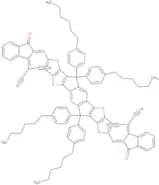
CAS:ITIC is a low energy dye with a wide absorption band in the visible region. ITIC has been used to detect fatty acids and cholesterol, as well as other molecules like human serum albumin, hemoglobin, and proteins. The molecule can be detected using laser ablation-inductively coupled plasma-mass spectrometry (LA-ICPMS) and x-ray absorption spectroscopy (XAS). The detection sensitivity of ITIC is much higher than that of other dyes. The chemical stability of ITIC has been shown by its photostability, which means it does not degrade when exposed to light. ITIC can be used for many applications such as for detecting fatty acids in milk or for determining the concentration of cholesterol in blood samples.Formula:C94H82N4O2S4Purity:Min. 95%Molecular weight:1,427.94 g/molBr-PBTC
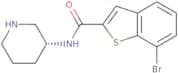
CAS:Br-PBTC is a potentiator of the effects of estradiol. It has been shown to have allosteric modulating activity on α subunit nicotinic acetylcholine receptors, which are involved in the pharmacological effect of Br-PBTC. The sequence analysis of the receptor revealed that Br-PBTC interacts with 17β-estradiol and enhances its binding affinity to the receptor. This interaction may be due to an increase in the number of estradiol molecules bound to the receptor, or by increased conformational changes induced by Br-PBTC at the receptor site.Formula:C14H15BrN2OSPurity:Min. 95%Molecular weight:339.25 g/mol







![N-[2-(4-Aminophenoxy)ethyl]-4-bromo-N,N-dimethylbenzeneethanaminium bromide hydrobromide](/_next/image/?url=https%3A%2Fstatic.cymitquimica.com%2Fproducts%2F3D%2Fthumb-webp%2FBZB98428.webp&w=3840&q=75)