Biochemicals and Reagents
Subcategories of "Biochemicals and Reagents"
- Biomolecules(98,575 products)
- By Biological Target(100,710 products)
- By Pharmacological Effects(6,937 products)
- Cryopreservatives(21 products)
- Desinfectants and Related Compounds(28 products)
- Hormones(421 products)
- Plant Biology(6,907 products)
- Secondary Metabolites(14,367 products)
Found 130493 products of "Biochemicals and Reagents"
(S,S,S)-Aprepitant
CAS:(S,S,S)-Aprepitant is a peptide that is used as a research tool to study protein interactions and the pharmacology of receptor ligands. It can be used in the study of ion channels and life science. (S,S,S)-Aprepitant has been shown to inhibit the activity of several ion channels such as Na+, K+, and Ca2+ channels. This peptide also inhibits the binding of opioid receptors and is classified as an antagonist.Formula:C23H21F7N4O3Purity:Min. 95%Molecular weight:534.4 g/molSetipiprant(ACT-129968)
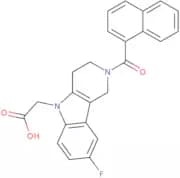
CAS:Setipiprant is a CRTH2-selective antagonist, which has been shown to be effective in reducing the incidence of asthma exacerbations and bronchoconstriction. It also has a good safety profile with no significant adverse effects observed in clinical studies. Setipiprant binds to the CRTH2 receptor and blocks its activation by prostaglandin D2 (PGD2) or leukotriene B4 (LTB4). This inhibition prevents the release of inflammatory mediators from mast cells, which are responsible for airway inflammation in asthma. Setipiprant is being developed as a potential treatment for chronic asthma, allergic rhinitis, and chronic obstructive pulmonary disease (COPD). The molecule has been shown to bind to the CRTH2 receptor with an affinity that is about 10 times higher than that of cetirizine, another anti-inflammatory drug. This binding profile makes setipiprant an ideal candidate for treatment of inflammatory diseasesFormula:C24H19FN2O3Purity:Min. 95%Molecular weight:402.42 g/molRLN2
RLN2 is an oncogene that encodes a protein with a sequence of amino acids similar to the anti-cancer drug docetaxel. It is expressed in resistant prostate cancer cells and has been shown to modulate cytogenetics, haematology, and tissue microarrays. The RLN2 gene is also expressed in ligaments and may be associated with chemoresistance.Purity:Min. 95%Selonsertib hydrochloride
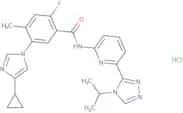
CAS:Selonsertib hydrochloride is a potent ASK1 (Apoptosis signal-regulating kinase 1) inhibitor, which is a targeted small molecule therapeutic derived from chemical synthesis. Its mode of action involves the inhibition of ASK1, a kinase enzyme involved in cellular apoptosis and inflammation pathways. Specifically, ASK1 is upstream in the MAPK signaling cascade that modulates oxidative stress responses, often implicated in various pathological states.
Formula:C24H25ClFN7OPurity:Min. 95%Molecular weight:482 g/molParoxetine maleate
CAS:Controlled ProductA serotonin reuptake inhibitor with anticholinergic activity and mild inhibitory activity on noradrenaline reuptake. Paroxetine has been used for the treatment of depression, anxiety disorders, post-traumatic stress disorder, premenstrual dysphoric disorder and obsessive-compulsive disorder. Also inhibits nitric oxide synthase and cytochrome isoenzyme P450 2D6.Formula:C19H20NO3F•C4H4O4Purity:Min. 95%Molecular weight:445.44 g/molM2698
CAS:M2698 is a monoclonal antibody that binds to the epithelial growth factor receptor (EGFR) and inhibits tumor cell growth. M2698 has been shown to inhibit tumor cell proliferation in vitro and in vivo, as well as decrease tumor size in mice. The drug also has therapeutic potential for breast cancer patients who have HER2+ tumors. M2698 is currently undergoing Phase I clinical trials for the treatment of breast cancer with high levels of HER2 protein expression.Formula:C21H19ClF3N5OPurity:Min. 95%Molecular weight:449.9 g/molMRS 4062 triethylammonium
CAS:MRS 4062 triethylammonium is a purinergic receptor agonist that can be used for the treatment of cancer and other conditions. The purinergic receptors are G protein-coupled receptors that bind to adenosine or ATP, which are molecules involved in the regulation of many cellular processes. MRS 4062 triethylammonium acts as a stimulatory agent by binding to the purinergic receptor and stimulating cell proliferation. This drug has been shown to increase levels of interferon in cells, which may be due to its ability to stimulate cell proliferation. MRS 4062 triethylammonium is also a potent antagonist of the A1 receptor, which may be useful for treating chronic pain.Formula:C42H86N7O15P3Purity:Min. 95%Molecular weight:1,022.1 g/molDaidzein diglucuronide
CAS:Daidzein diglucuronide is a glucuronide metabolite of daidzein, which is a natural product. It has shown anticancer activity in vitro and in vivo. Daidzein diglucuronide binds to the enzyme carboxylesterase and inhibits its activity, leading to an increase in the levels of carboxylic acids in the blood. These metabolites are then excreted through urine and bile. Daidzein diglucuronide may also be used as an anti-inflammatory agent due to its ability to inhibit prostaglandin synthesis.Formula:C27H26O16Purity:Min. 95%Molecular weight:606.49 g/molPF05020182
CAS:PF05020182 is an antibody that binds to the extracellular domain of human epidermal growth factor receptor-2 (HER2) and inhibits HER2 signaling. It is a recombinant protein consisting of heavy chains and light chains. PF05020182 is a research tool used in cell biology, pharmacology, and biochemistry. This antibody has been shown to inhibit the proliferation of breast cancer cells in vitro by targeting HER2 receptors on the surface of tumor cells. The binding affinity for this antibody is high with a Kd = 0.05 nM. PF05020182 also binds to other receptor proteins such as epidermal growth factor receptor (EGFR), vascular endothelial growth factor receptor (VEGFR), and platelet-derived growth factor receptor beta (PDGFβR).Formula:C18H30N4O4Purity:Min. 95%Molecular weight:366.5 g/molPF-04957325
CAS:PF-04957325 is a drug that inhibits phosphodiesterase enzymes. It has been shown to inhibit cyclic nucleotide phosphodiesterases, which are enzymes that break down cyclic nucleotides, preventing the accumulation of cAMP in cells. This accumulation leads to cell death and cancer cell death. PF-04957325 has shown promising effects in animal models for breast cancer treatment. It also has shown synergistic effect with other drugs, such as camp levels and potential drug targets for autoimmune diseases and brain functions. PF-04957325 is effective against cancer tissues and inhibits phosphorylation of the inhibitor protein (IκB), leading to increased production of proinflammatory cytokines.Formula:C14H15F3N8OSPurity:Min. 95%Molecular weight:400.38 g/molWHI-P180
CAS:WHI-P180 is a potential anticancer agent that has been shown to be effective in inhibiting the growth of human colon cancer cells (HCT116) and CD-1 mice with cancer. WHI-P180 binds to the intracellular targets of mcf-7, a growth factor involved in cell proliferation, which leads to neuronal death. This agent has also been demonstrated to be cytotoxic against monoclonal antibodies and epidermal growth factor receptor (EGFR). WHI-P180 targets ABCG2, an enzyme involved in drug efflux, which may lead to increased efficacy of this drug.
Formula:C16H15N3O3Purity:Min. 95%Molecular weight:297.31 g/mol3-(4-Methoxyphenyl)-N-(2-morpholin-4-ylpyrimidin-4-yl)-1,2-oxazol-5-amine
CAS:3-(4-Methoxyphenyl)-N-(2-morpholin-4-ylpyrimidin-4-yl)-1,2-oxazol-5-amine is a networked interface that provides information on the drug's chemical structure, molecular weight, and 3D molecular structure. It also provides information on related drugs, as well as drug targets.
Formula:C18H19N5O3Purity:Min. 95%Molecular weight:353.4 g/molRG 102240
CAS:RG 102240 (RG) is a small molecule that inhibits GTPase-activating protein, which is a molecular switch that controls the activity of many proteins. RG binds to the target protein's ATP-binding site and prevents it from functioning. RG has been shown to inhibit the growth of cancer cells in culture and to downregulate the expression of genes involved in tumorigenesis. It has also been shown to have anti-inflammatory properties. In addition, it has been shown to act as an insulin-like growth factor receptor agonist, which may be useful for treating prostate cancer cells with multidrug resistance, and as an inhibitor of atp-dependent transport, which may be useful for treating cardiac disease.Formula:C23H30N2O3Purity:Min. 95%Molecular weight:382.5 g/molCarbasulam
CAS:Carbasulam is an anticancer drug that inhibits the growth of cancer cells by inducing apoptosis. It acts by binding to protein kinases, which are enzymes that play a crucial role in cell signaling and regulation. Carbasulam has been shown to be effective in inhibiting the growth of tumors in human and Chinese hamster ovary cells. It is a medicinal analog of urine-derived kinase inhibitors, which have been used as potential anticancer agents. Carbasulam is a potent inhibitor of several kinases involved in cancer cell proliferation, including Akt, ERK1/2, and JNK1/2. Its ability to selectively target these kinases makes it a promising candidate for the treatment of various types of cancer.
Formula:C10H12N2O6SPurity:Min. 95%Molecular weight:288.28 g/molSK-216
CAS:SK-216 is a small molecule that inhibits the activation of FoxO1, which is a transcription factor. SK-216 also prevents oxidative injury and mitochondrial dysfunction by inhibiting the production of growth factor-β1, as well as inhibiting the activation of Toll-like receptor 2 (TLR2) and TLR4. SK-216 has been shown to have anti-inflammatory effects and can inhibit cyclin D2 expression, which leads to inhibition of energy metabolism in cancer cells. SK-216 also has an effect on epithelial mesenchymal transition (EMT), leading to suppression of EMT, tumorigenesis, migration, and metastasis.
Formula:C18H22FN3O3Purity:Min. 95%Molecular weight:347.4 g/molTopfluor lyso pe
CAS:Topfluor lyso pe is a cationic peptide that is selective for the activation of the nicotinic acetylcholine receptor. It has been shown to bind to the alpha-7 subunit of this receptor, which may be responsible for its high affinity and selectivity. Topfluor lyso pe can also inhibit ion channels and is a potent ligand for the beta-2 adrenergic receptor. This product is used as a research tool in cell biology and pharmacology studies. Topfluor lyso pe has been shown to have potential as an inhibitor in cancer treatment due to its ability to inhibit cell proliferation.Formula:C29H47BF2N3O7PPurity:Min. 95%Molecular weight:629.48 g/mol2B-(SP)
CAS:2B-(SP) is a monoclonal antibody that inhibits the phosphorylation of proteins by inhibiting the activity of protein phosphatase. This, in turn, prevents activation of tyrosine kinases and blocks dopamine-induced locomotor activity. 2B-(SP) also blocks cholinergic signaling in h9c2 cells, which may be due to its ability to inhibit the enzyme acetylcholinesterase. 2B-(SP) has been shown to inhibit cardiac hypertrophy in vivo, as well as cardiac fibrosis and cardiomyopathy in rats.
Formula:C71H123N26O29PPurity:Min. 95%Molecular weight:1,835.9 g/molArphamenine B
CAS:Arphamenine B is a potent, selective, and reversible inhibitor of the protein tyrosine phosphatase 1B (PTP1B). Arphamenine B binds to PTP1B with high affinity and specificity. It is a useful tool for studying protein-protein interactions and protein function. Arphamenine B can also be used as an activator or ligand for receptors, especially G-protein coupled receptors. This peptide has been shown to inhibit ion channels such as calcium channels, potassium channels, and sodium channels.
Formula:C16H24N4O4Purity:Min. 95%Molecular weight:336.39 g/molmonoFITC INSL4
MonoFITC INSL4 is a peptide that is used as a research tool. It is an activator of the Insulin-like Growth Factor Receptor 4 (IGF-1R) and can be used to study the protein interactions of the receptor. MonoFITC INSL4 has shown to inhibit the binding of insulin and IGF-1, which are ligands for the receptor. This peptide has also been shown to activate phosphatidylinositol 3-kinase, which is a cellular signalling pathway involved in many cellular processes such as proliferation and apoptosis.
Purity:Min. 95%Methionyl-Lysyl-Bradykinin (Human, Bovine)
Methionyl-Lysyl-Bradykinin is a peptide that is used as a research tool to study the interactions of bradykinin, its receptor, and ion channels. This product can be used in the study of pharmacology and cell biology. Methionyl-Lysyl-Bradykinin has been shown to inhibit the activity of ion channels by binding to their receptors. This product may also be used as an antibody or ligand in order to study protein interactions.Formula:C61H94N18O13S•3CH3COOH•2H2OPurity:Min. 95%Molecular weight:1,535.79 g/mol