Biochemicals and Reagents
Subcategories of "Biochemicals and Reagents"
- Biomolecules(98,620 products)
- By Biological Target(100,451 products)
- By Pharmacological Effects(6,928 products)
- Cryopreservatives(21 products)
- Desinfectants and Related Compounds(28 products)
- Hormones(353 products)
- Plant Biology(6,913 products)
- Secondary Metabolites(14,363 products)
Found 130328 products of "Biochemicals and Reagents"
SLC5A5 Blocking Peptide
A synthetic peptide for use as a blocking control in assays to test for specificity of SLC5A5 antibody, catalog no. 70R-7363
Purity:Min. 95%CD25 antibody (PE-CY7)
CD25 antibody (PE-CY7) was raised in rat using IL-2-dependent BALB/c mouse helper T-cell clone HT-2 as the immunogen.
Purity:Min. 95%Molecular weight:0 g/molZP2 Blocking Peptide
A synthetic peptide for use as a blocking control in assays to test for specificity of ZP2 antibody, catalog no. 70R-1732
Purity:Min. 95%Ac-Gly-Asp-Tyr-Ser-His-Cys-Ser-Pro-Leu-Arg-Tyr-Tyr-Pro-Trp-Trp-Lys-Cys-Thr-Tyr-Pro-Asp-Pro-Glu-Gly-Gly-Gly-NH2 trifluoroacetate salt (Disulfide bond)
CAS:Please enquire for more information about Ac-Gly-Asp-Tyr-Ser-His-Cys-Ser-Pro-Leu-Arg-Tyr-Tyr-Pro-Trp-Trp-Lys-Cys-Thr-Tyr-Pro-Asp-Pro-Glu-Gly-Gly-Gly-NH2 trifluoroacetate salt (Disulfide bond) including the price, delivery time and more detailed product information at the technical inquiry form on this page
Formula:C141H185N35O40S2Purity:Min. 95%Molecular weight:3,074.32 g/molRef: 3D-FA109841
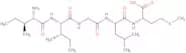
Discontinued product[Leu144, Arg147]-PLP (139-151), [L144, R147-PLP(139-151)]
Catalogue peptide; min. 95% purity
Formula:C67H110N20O17Molecular weight:1,467.75 g/mol05:0 PC
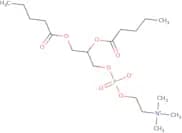
CAS:05:0 PC is a peptide binding sequence that has been shown to inhibit the replication of viral sequences. 05:0 PC binds to the amino acid sequence in protein, which is a model system for peptide binding. The endoplasmic reticulum, or ER, is the site of synthesis for proteins and its low efficiency may be due to the spontaneous nature of the protein synthesis process. The ER can also be seen as an inhibitor molecule that prevents the virus from replicating. 05:0 PC has been shown to inhibit papillomavirus and HIV-1 replication in vitro. This peptide has also been shown to block interactions between viruses and cells that allow viral replication.
Formula:C18H36NO8PPurity:Min. 95%Molecular weight:425.45 g/molRef: 3D-RCA41434
Discontinued productBoc-Lys(Tfa)-AMC
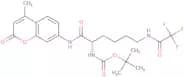
CAS:Boc-Lys(Tfa)-AMC is a small molecule that inhibits the acetylation of histone H3 and has anticancer activity. Acetylation increases the rate of transcription and replication, whereas Boc-Lys(Tfa)-AMC inhibits this process by preventing acetylation. This drug also binds to δ-opioid receptors in cancer cells, triggering a redox signal that leads to inhibition of cancer cell proliferation. The mechanism of this drug's anticancer activity is unknown, but it may be due to its ability to inhibit enzyme activities or disulfide bond formation in vivo.
Formula:C23H28F3N3O6Purity:Min. 95%Molecular weight:499.48 g/molRef: 3D-FB110609
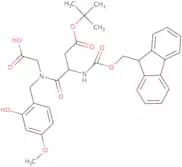
Discontinued productFmoc-D-Asp(OtBu)-(Hmb)Gly-OH
CAS:Please enquire for more information about Fmoc-D-Asp(OtBu)-(Hmb)Gly-OH including the price, delivery time and more detailed product information at the technical inquiry form on this page
Formula:C33H36N2O9Purity:Min. 95%Molecular weight:604.65 g/mol[Ile12, Val15] MUC5AC Analog 3
Catalogue peptide; min. 95% purity
Formula:C67H112N16O25Molecular weight:1,541.73 g/molZ-Ile-Glu(OtBu)-Ala-Leu-aldehyde
CAS:Z-Ile-Glu(OtBu)-Ala-Leu-aldehyde, also known as ZILEAL, is a potent immunosuppressant that binds to the Toll-like receptor (TLR) and inhibits NF-κB binding activity. It has been shown to reduce the activation of macrophages by inhibiting the production of proinflammatory cytokines such as tumor necrosis factor alpha (TNFα), IL-1β, and IL-6. This drug has been shown to inhibit HIV replication in vitro and was also found to have an antiviral effect against herpes simplex virus type 1 in vivo. ZILEAL also inhibits dsDNA binding activity, which may have potential applications in cancer treatment.
Formula:C32H50N4O8Purity:Min. 95%Molecular weight:618.76 g/molRef: 3D-FI111570
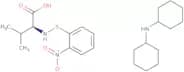
Discontinued productNps-Val-OH·DCHA
CAS:Controlled ProductPlease enquire for more information about Nps-Val-OH·DCHA including the price, delivery time and more detailed product information at the technical inquiry form on this page
Formula:C11H14N2O4S·C12H23NPurity:Min. 95%Molecular weight:451.62 g/molRef: 3D-FN107891
Discontinued productZ-Ala-Arg-Arg-AMC hydrochloride salt
CAS:Z-Ala-Arg-Arg-AMC hydrochloride salt is a synthetic amino acid that inhibits aminopeptidase activity. It is used to study the enzyme's role in the degradation of muscle proteins, and as a pharmaceutical drug for treating inflammatory bowel disease. The target enzyme is inhibited by binding to its active site, thereby preventing the breakdown of peptides. Z-Ala-Arg-Arg-AMC hydrochloride salt can be used as an inhibitor in the laboratory because it prevents denaturation of protein samples during analysis using electrophoresis or chromatography. This product also has been shown to have inhibitory effects on ileal aminopeptidases and prostate aminopeptidases, which may be due to its ability to bind to these enzymes and block their active sites.
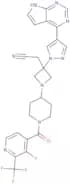
Formula:C33H44N10O7•(HCl)xPurity:Min. 95%Molecular weight:692.77 g/molItacitinib
CAS:Itacitinib is a Jak1 inhibitor that is used to treat bowel disease. Itacitinib has been shown to inhibit the growth of probiotic bacteria such as Lactobacillus and Bifidobacterium, which are beneficial for intestinal health. Itacitinib also inhibits the production of inflammatory cytokines, such as TNF-α, IL-6, and IL-8, in vitro in human monocytes. This drug has been shown to reduce the severity of bronchiolitis obliterans (a rare lung disease) in vivo in mice. Itacitinib binds to the cell factor on activated T cells and inhibits its signaling pathway. In addition, it blocks PD-L1 expression on tumor cells, thereby preventing tumor cell proliferation and inducing an M2 phenotype (a type of immune response). Finally, itacitinib inhibits Jak2 V617F activity by binding to this enzyme and causes a decrease in disease activity.
Formula:C26H23F4N9OPurity:Min. 95%Molecular weight:553.51 g/molRef: 3D-JDC29890
Discontinued product[Tyr1]-pTH (1-34) (rat)
Catalogue peptide; min. 95% purity
Formula:C186H295N55O49S2Molecular weight:4,149.86 g/molDynorphin A (3-8), porcine
Catalogue peptide; min. 95% purity
Formula:C35H60N12O7Molecular weight:760.94 g/molAmyloid beta-Protein (31-35)
CAS:Amyloid beta protein is a peptide that is a major component of the amyloid plaques found in the brain of patients with Alzheimer's disease. Amyloid beta protein (Aβ) has been shown to form fibers and fibrils, which are aggregates of polymerized Aβ peptides. These fibrils can be imaged using a fluorescent dye called dansyl. The dansyl-labeled Aβ fibrils have been shown to have a morphology similar to that seen in electron micrographs of amyloid plaques. The quantum yield for luminescence was found to be 0.1% for the Aβ fibrils but only 0.001% for the monomeric form of Aβ peptides (Aβ 1-40). This suggests that the Aβ peptides are undergoing aggregation into amyloid beta protein fibrils before they can emit light as fluorescence or phosphorescence.
Formula:C25H47N5O6SPurity:Min. 95%Molecular weight:545.74 g/molRef: 3D-FA109633
Discontinued productAntioxidant peptide A
Catalogue peptide; min. 95% purity
Formula:C31H54N12O7S2Molecular weight:770.97 g/molAKT/PKB/Rac-Protein Kinase Substrate
Catalogue peptide; min. 95% purity
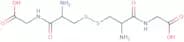
Formula:C74H114N28O20Molecular weight:1,715.91 g/mol(H-Cys-Gly-OH)2
CAS:Disulfide bond is a covalent chemical bond that links two sulfur atoms to each other. Disulfides are the major form of sulfur-containing proteins, and are important in many biological processes, such as postnatal development, biliary function, hepatitis diagnosis and cancer. Disulfide bonds can be detected using chromatographic methods such as high performance liquid chromatography (HPLC) or gas chromatography (GC). The biosynthesis of disulfides is an essential process in the metabolism of glutathione. Disulfide bonds are formed by the oxidation of two sulfhydryl groups (-SH) in a protein by reactive oxygen species (ROS), which results in the formation of a single disulfide bond between two cysteine residues. This reaction requires glutathione as a cofactor, which catalyzes the formation of -S-S- bridges between two cysteine residues by reducing them to their corresponding thiols (-SH). Glutathione also
Formula:C10H18N4O6S2Purity:Min. 95%Molecular weight:354.41 g/molMyristoylated ADP-Ribosylation Factor 6, myr-ARF6 (2-13)
Catalogue peptide; min. 95% purity
Formula:C74H128N16O18Molecular weight:1,529.95 g/mol


![[Leu144, Arg147]-PLP (139-151), [L144, R147-PLP(139-151)]](/_next/image/?url=https%3A%2Fstatic.cymitquimica.com%2Fproducts%2F3D%2Fthumb-webp%2FVAC-00495.webp&w=3840&q=75)
![[Ile12, Val15] MUC5AC Analog 3](/_next/image/?url=https%3A%2Fstatic.cymitquimica.com%2Fproducts%2F3D%2Fthumb-webp%2FVAC-00456.webp&w=3840&q=75)


![[Tyr1]-pTH (1-34) (rat)](/_next/image/?url=https%3A%2Fstatic.cymitquimica.com%2Fproducts%2F3D%2Fthumb-webp%2FVAC-00930.webp&w=3840&q=75)