Building Blocks
Subcategories of "Building Blocks"
- Boronic Acids & Boronic Acid Derivatives(5,781 products)
- Chiral Building Blocks(1,242 products)
- Hydrocarbon Building Blocks(6,101 products)
- Organic Building Blocks(61,038 products)
Found 205338 products of "Building Blocks"
DNA methyltransferase inhibitor
CAS:Sodium citrate is a DNA methyltransferase inhibitor. It blocks the transfer of methyl groups to the dna, thereby inhibiting the production of methylated dna and preventing apoptosis. Sodium citrate also inhibits the expression of pro-apoptotic protein and can induce significant cytotoxicity in vitro. This drug has been shown to cause histological changes in cells through inhibition of DNA methyltransferases in HL-60 cells.Formula:C19H14N2O4Purity:Min. 95%Molecular weight:334.3 g/mol1-(2-Hydroxy-ethyl)-1,5-dihydro-pyrazolo[3,4-d]pyrimidin-4-one
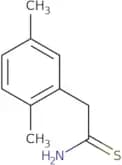
CAS:Versatile small molecule scaffoldFormula:C7H8N4O2Purity:Min. 95%Molecular weight:180.16 g/mol2-(2,5-Dimethylphenyl)ethanethioamide
CAS:Versatile small molecule scaffold
Formula:C10H13NSPurity:Min. 95%Molecular weight:179.28 g/mol2-(2-Bromophenyl)-4,4-dimethyl-4,5-dihydro-1,3-oxazole
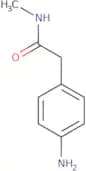
CAS:2-(2-Bromophenyl)-4,4-dimethyl-4,5-dihydro-1,3-oxazole is an aryl boronic acid that can be synthesized by a Suzuki reaction with an alkyl halide and sodium carbonate. This compound is used as a reagent in organic synthesis for the production of various pharmaceuticals. The most common use of this chemical is for the synthesis of angiotensin II antagonists. 2-(2-Bromophenyl)-4,4-dimethyl-4,5-dihydro-1,3-oxazole has also been shown to be a selective antagonist of angiotensin II type 1 receptors.Formula:C11H12BrNOPurity:Min. 95%Molecular weight:254.12 g/mol2-(4-Aminophenyl)-N-methylacetamide
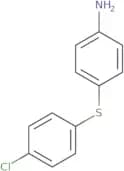
CAS:Versatile small molecule scaffoldFormula:C9H12N2OPurity:Min. 95%Molecular weight:164.2 g/mol4-Amino-4'-chloro diphenyl sulfide
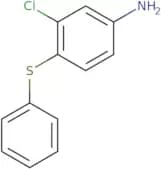
CAS:Versatile small molecule scaffoldFormula:C12H10ClNSPurity:Min. 95%Molecular weight:235.73 g/mol3-Chloro-4-(phenylsulfanyl)aniline
CAS:Versatile small molecule scaffold
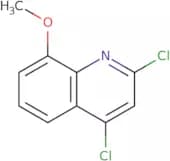
Formula:C12H10ClNSPurity:Min. 95%Molecular weight:235.73 g/mol2,4-dichloro-8-methoxyquinoline
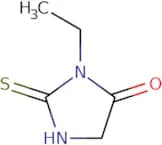
CAS:Versatile small molecule scaffoldFormula:C10H7Cl2NOPurity:Min. 95%Molecular weight:228.1 g/mol3-Ethyl-2-thioxo-4-imidazolidinone
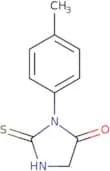
CAS:Versatile small molecule scaffoldFormula:C5H8N2OSPurity:Min. 95%Molecular weight:144.2 g/mol1-(4-Methylphenyl)-2-sulfanyl-4,5-dihydro-1H-imidazol-5-one
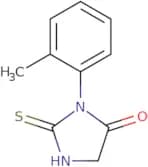
CAS:Versatile small molecule scaffoldFormula:C10H10N2OSPurity:Min. 95%Molecular weight:206.27 g/mol1-(2-Methylphenyl)-2-sulfanyl-4,5-dihydro-1H-imidazol-5-one
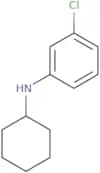
CAS:1-(2-Methylphenyl)-2-sulfanyl-4,5-dihydro-1H-imidazol-5-one is a cross linking agent that is used in the production of polyurethanes. It is derived from 2,2'-oxydiethanol and can be used as a polymerization catalyst for polyurethane resins. 1-(2-Methylphenyl)-2-sulfanyl-4,5-dihydro-1H-imidazol-5 -one has been shown to have antibacterial properties against gram positive bacteria such as Staphylococcus aureus and Streptococcus pneumoniae. The antibacterial activity was attributed to its ability to form covalent bonds with carboxylic acid groups on the bacterial cell wall.Formula:C10H10N2OSPurity:Min. 95%Molecular weight:206.27 g/mol3-Chloro-N-cyclohexylaniline
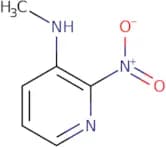
CAS:Versatile small molecule scaffoldFormula:C12H16ClNPurity:Min. 95%Molecular weight:209.71 g/molN-Methyl-2-nitropyridin-3-amine
CAS:N-Methyl-2-nitropyridin-3-amine is a hydroalcoholic compound that can stabilize the cell membrane of C. parapsilosis, which has been shown to inhibit growth and cause life-threatening effects. The benzyl group on the nitrogen atom of this compound helps to maintain its stability in water, as well as conferring some conformational rigidity to the molecule. Nitro groups are found on the ring of this organic compound, which gives it an inhibitory effect against pyridine rings in other molecules. This organic compound has a nitro group, which can be analyzed by parameters such as IR spectroscopy and NMR spectroscopy.
Formula:C6H7N3O2Purity:Min. 95%Molecular weight:153.13 g/mol4-Nonylphenyl acetate
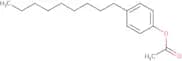
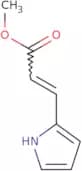
CAS:4-Nonylphenyl acetate is a phenolic compound that belongs to the class of anhydrides. It is used as a catalyst for the synthesis of 4-nonylphenol, which is an important precursor for the production of polymers, resins, and synthetic fibers. 4-Nonylphenyl acetate can be synthesized by the reaction of phenols and anhydride in the presence of a catalyst such as copper chloride or zinc chloride. This reaction can be carried out in either organic solvents or water. The yields are increased when microwave irradiation is used instead of conventional heating methods.Formula:C17H26O2Purity:Min. 95%Molecular weight:262.4 g/molMethyl 3-(1H-pyrrol-2-yl)prop-2-enoate
CAS:Versatile small molecule scaffoldFormula:C8H9NO2Purity:Min. 95%Molecular weight:151.16 g/molN-[2-(1H-Indol-3-yl)ethyl]benzenesulfonamide
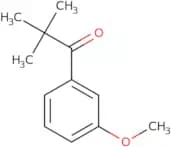
CAS:N-[2-(1H-Indol-3-yl)ethyl]benzenesulfonamide is an indole derivative and a 5-HT6 receptor antagonist. It has been shown to have affinity for the serotonin transporter, with a Ki of 0.8 μM. N-[2-(1H-Indol-3-yl)ethyl]benzenesulfonamide has an interaction with the 5HT6 receptor and can be used in age-related disorders such as Alzheimer's disease, as well as for other diseases mediated by 5HT6 receptors. This compound is chiral, with a c1-c3 alkyl group attached to the sulfur atom.Formula:C16H16N2O2SPurity:Min. 95%Molecular weight:300.4 g/mol1-(3-Methoxyphenyl)-2,2-dimethylpropan-1-one
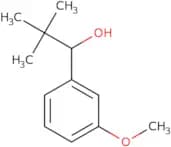
CAS:Versatile small molecule scaffoldFormula:C12H16O2Purity:Min. 95%Molecular weight:192.25 g/mol1-(3-Methoxyphenyl)-2,2-dimethylpropan-1-ol
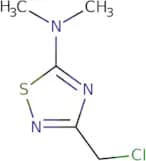
CAS:Versatile small molecule scaffoldFormula:C12H18O2Purity:Min. 95%Molecular weight:194.27 g/mol3-(Chloromethyl)-N,N-dimethyl-1,2,4-thiadiazol-5-amine
CAS:Versatile small molecule scaffoldFormula:C5H8ClN3SPurity:Min. 95%Molecular weight:177.66 g/mol2-(2,5-Dimethyl-1H-pyrrol-1-yl)pyridine
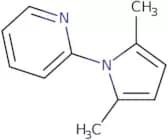
CAS:2-(2,5-Dimethyl-1H-pyrrol-1-yl)pyridine is a pyrrole derivative that has been shown to undergo multistep reactions. It can be used as a starting material for the synthesis of other compounds, such as sulfophenylpyrroles and pyridinium salts. The reaction of 2-(2,5-dimethyl-1H-pyrrol-1-yl)pyridine with perchlorates generates an electron rich intermediate, which is susceptible to oxidation by air or hydrogen peroxide. This process leads to the production of aliphatic sulfoxides and sulfones. The reaction product can then react with amines to form zirconium complexes with unusual geometry and steric interactions.!--END-->Formula:C11H12N2Purity:Min. 95%Molecular weight:172.23 g/molN-[(1H-Imidazol-4-yl)methyl]aniline
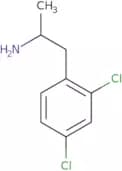
CAS:Versatile small molecule scaffoldFormula:C10H11N3Purity:Min. 95%Molecular weight:173.21 g/mol1-(2,4-Dichlorophenyl)propan-2-amine
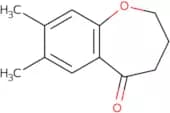
CAS:Controlled ProductVersatile small molecule scaffoldFormula:C9H11Cl2NPurity:Min. 95%Molecular weight:204.09 g/mol7,8-Dimethyl-2,3,4,5-tetrahydro-1-benzoxepin-5-one
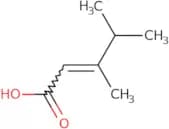
CAS:Versatile small molecule scaffoldFormula:C12H14O2Purity:Min. 95%Molecular weight:190.24 g/mol3,4-Dimethylpent-2-enoic acid
CAS:3,4-Dimethylpent-2-enoic acid is an organic compound that is extracted from Brucea javanica. It has been shown to have antitumor and antiviral properties as well as being a potent inhibitor of glucose residue. This pentenoic acid is also a potent antiviral agent that can be used in the treatment of brucea, which is caused by the virus known as the human T-lymphotropic virus type I (HTLV-I). 3,4-Dimethylpent-2-enoic acid inhibits viral replication by inhibiting protein synthesis at the ribosomal level, preventing RNA polymerase from binding to a specific site on the DNA strand.
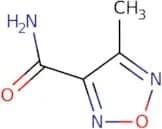
Formula:C7H12O2Purity:Min. 95%Molecular weight:128.17 g/mol4-Methyl-1,2,5-oxadiazole-3-carboxamide
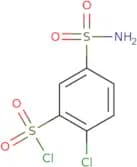
CAS:Versatile small molecule scaffoldFormula:C4H5N3O2Purity:Min. 95%Molecular weight:127.1 g/mol2-Chloro-5-sulfamoylbenzene-1-sulfonyl chloride
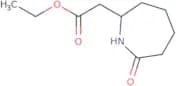
CAS:Versatile small molecule scaffoldFormula:C6H5Cl2NO4S2Purity:Min. 95%Molecular weight:290.1 g/molEthyl 2-(7-oxoazepan-2-yl)acetate
CAS:Versatile small molecule scaffold
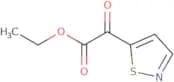
Formula:C10H17NO3Purity:Min. 95%Molecular weight:199.25 g/molEthyl 2-oxo-2-(1,2-thiazol-5-yl)acetate
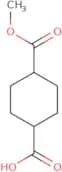
CAS:Versatile small molecule scaffoldFormula:C7H7NO3SPurity:Min. 95%Molecular weight:185.2 g/molcis-4-Carbomethoxycyclohexane-1-carboxylic acid
CAS:cis-4-Carbomethoxycyclohexane-1-carboxylic acid is a dicarboxylic acid that is produced by the inorganic and organic hydrolysis of cyclohexanecarboxylic acid. The average yield of cis-4-carbomethoxycyclohexane-1-carboxylic acid is around 30%. It has been used for the production of diacids such as adipic acid, succinic acid, and glutaric acid. cis-4-Carbomethoxycyclohexane-1-carboxylic acid can be used as an activating agent for the industrial synthesis of monomethyl esters or methyl alcohols. In this reaction, cis-4-carbomethoxycyclohexane-1-carboxylic acid reacts with an alcohol to form a carbonyl group, which then reacts with methyl chloride to form a methyl esFormula:C9H14O4Purity:Min. 95%Molecular weight:186.21 g/molMethyl(1-phenylethyl)amine
CAS:Methyl(1-phenylethyl)amine is a receptor protein that binds to the factor receptor and has been shown to be a potent growth factor. It can be used in the diagnosis of diseases, such as cancer. Methyl(1-phenylethyl)amine is detected by mass spectrometry and chromatography. The chemical structure of this compound is amide, which is composed of an amine group with an organic acid molecule. Methyl(1-phenylethyl)amine has been shown to have constitutive activation activity due to its tyrosine kinase activity.Formula:C9H13NPurity:Min. 95%Molecular weight:135.21 g/mol2-Methylbicyclo[2.2.1]heptane-2-carboxylic acid
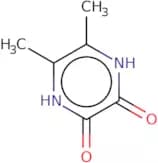
CAS:2-Methylbicyclo[2.2.1]heptane-2-carboxylic acid is a carotenoid that is found in some bacteria and plants, including the green alga Chlorella sorokiniana. It has been shown to have anticancer activity by inducing apoptosis in cancer cells. 2-Methylbicyclo[2.2.1]heptane-2-carboxylic acid also reduces the redox potential of cancer cells and inhibits their growth, which may be due to its ability to regulate cell cycle progression and inhibit protein synthesis. This compound also has been shown to stimulate the formation of bacteriochlorophyll a and membrane systems in bacteria, such as Escherichia coli and Pseudomonas aeruginosa, respectively. The gene product responsible for this carotenoid biosynthesis has been identified as a transcriptional regulator of dna binding activity and protein expression in EscherFormula:C9H14O2Purity:Min. 95%Molecular weight:154.21 g/mol5,6-Dimethylpyrazine-2,3(1H,4H)-dione
CAS:Versatile small molecule scaffold
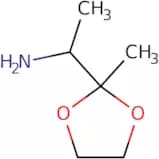
Formula:C6H8N2O2Purity:Min. 95%Molecular weight:140.14 g/mol1-(2-Methyl-1,3-dioxolan-2-yl)ethan-1-amine
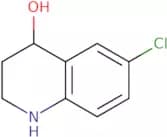
CAS:Versatile small molecule scaffoldFormula:C6H13NO2Purity:Min. 95%Molecular weight:131.17 g/mol6-Chloro-1,2,3,4-tetrahydroquinolin-4-ol
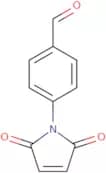
CAS:Versatile small molecule scaffoldFormula:C9H10ClNOPurity:Min. 95%Molecular weight:183.63 g/mol4-(2,5-Dioxo-2,5-dihydro-1H-pyrrol-1-yl)benzaldehyde
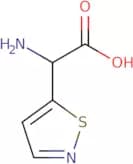
CAS:Versatile small molecule scaffoldFormula:C11H7NO3Purity:Min. 95%Molecular weight:201.18 g/mol2-Amino-2-(1,2-thiazol-5-yl)acetic acid
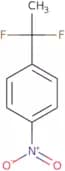
CAS:Versatile small molecule scaffoldFormula:C5H6N2O2SPurity:Min. 95%Molecular weight:158.18 g/mol1-(1,1-Difluoroethyl)-4-nitrobenzene
CAS:Versatile small molecule scaffold
Formula:C8H7F2NO2Purity:Min. 95%Molecular weight:187.15 g/mol1-[3-Methoxy-4-(methylsulfanyl)phenyl]ethan-1-one
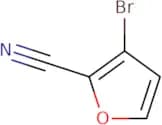
CAS:Versatile small molecule scaffoldFormula:C10H12O2SPurity:Min. 95%Molecular weight:196.27 g/mol3-Bromofuran-2-carbonitrile
CAS:Versatile small molecule scaffoldFormula:C5H2BrNOPurity:Min. 95%Molecular weight:171.98 g/mol2-(4-Bromophenyl)-2-methylpropanal
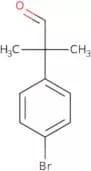
CAS:Versatile small molecule scaffold
Formula:C10H11BrOPurity:Min. 95%Molecular weight:227.1 g/molCyclobutyl(cyclohexyl)methanone
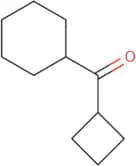
CAS:Versatile small molecule scaffold
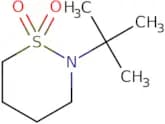
Formula:C11H18OPurity:Min. 95%Molecular weight:166.26 g/mol2-tert-Butyl-1λ⁶,2-thiazinane-1,1-dione
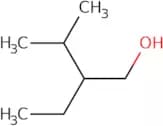
CAS:Versatile small molecule scaffoldFormula:C8H17NO2SPurity:Min. 95%Molecular weight:191.29 g/mol2-Ethyl-3-methylbutan-1-ol
CAS:2-Ethyl-3-methylbutan-1-ol is a chemical that can be activated at the 2-, 3-, or 4-position by a stepwise process. The amines are used in the synthesis of other compounds, such as pharmaceuticals and polymers. The selectivity for the alkylation reaction is high, with yields greater than 95%. The ethyl group can be removed from 2-ethyl-3-methylbutan-1-ol by using an alcohol catalyst. This chemical has been shown to have high yields when synthesized with a transfer hydrogenation reaction. It also has a byproduct that can be removed with hydrogen gas in the presence of palladium on carbon.Formula:C7H16OPurity:Min. 95%Molecular weight:116.2 g/mol2-Ethyl-3-methylbutanoic acid
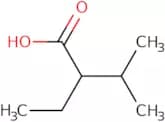
CAS:2-Ethyl-3-methylbutanoic acid is a plant cell-active compound that belongs to the group of alkylating agents. It is an acetaldehyde analogue and can be used for the synthesis of trachelanthamine, which is a skeleton building agent in the biosynthesis pathway for valine. 2-Ethyl-3-methylbutanoic acid is activated by incubation with unlabelled ethyl groups. This compound can also be used to synthesize acetaldehyde, which can be analyzed using chromatography.
Formula:C7H14O2Purity:Min. 95%Molecular weight:130.18 g/mol(2,2-Diethoxyethoxy)benzene
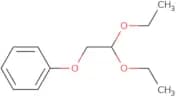
CAS:2,2-Diethoxyethoxy)benzene is a chemical that belongs to the group of polyvinyl alcohols. It is an organic compound that can be found in the environment, usually as a byproduct of industrial processes. The chemical is used in coatings, plasticizers, and solvents. 2,2-Diethoxyethoxy)benzene has been shown to cause heart disease and eye disorders when it binds to the receptors in the body.
Formula:C12H18O3Purity:Min. 95%Molecular weight:210.27 g/mol4-bromoquinolin-3-ol
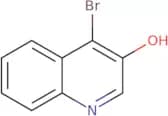
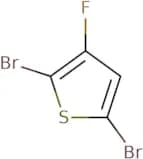
CAS:4-bromoquinolin-3-ol is a piperidine derivative that belongs to the group of pyrrole derivatives. It is primarily used as a reagent in organic synthesis and in the preparation of 3-bromo-5-hydroxypyridine, 2-amino-4-hydroxypyridine, and 3-amino-2-bromopyridine. 4BQ3H is an isomeric nucleus with substitutions on the 2-, 4-, or 6 positions. The hydroxy group on the 3 position can be substituted with a variety of groups such as methoxy, ethoxy, or acetoxy. The oxindole moiety can also be replaced by a piperidide moiety. Note that the aminations are reversible under basic conditions.Formula:C9H6NOBrPurity:Min. 95%Molecular weight:224.05 g/mol2,5-dibromo-3-fluorothiophene
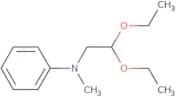
CAS:Versatile small molecule scaffoldFormula:C4HBr2FSPurity:Min. 95%Molecular weight:259.9 g/molN-(2,2-Diethoxyethyl)-N-methylaniline
CAS:Versatile small molecule scaffold
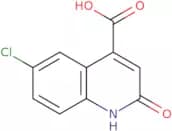
Formula:C13H21NO2Purity:Min. 95%Molecular weight:223.31 g/mol6-Chloro-2-oxo-1,2-dihydroquinoline-4-carboxylic acid
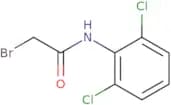
CAS:6-Chloro-2-oxo-1,2-dihydroquinoline-4-carboxylic acid (6ClOQ) is a molecule that is used as a diagnostic agent and biodegradable drug. It has high affinity binding with target tissues, such as the liver and kidney. 6ClOQ also has potential as an anticancer drug, which may be due to its ability to inhibit DNA synthesis by interacting with hydroxyl groups. 6ClOQ can be conjugated with different molecules, such as monoclonal antibodies, and this characteristic can be used to increase its efficacy in targeting cancer cells. The conjugation of 6ClOQ to a monoclonal antibody increases the stability of the drug and decreases its toxicity.Formula:C10H6ClNO3Purity:Min. 95%Molecular weight:223.61 g/mol2-Bromo-N-(2,6-dichlorophenyl)acetamide
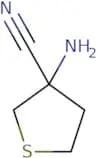
CAS:Versatile small molecule scaffoldFormula:C8H6BrCl2NOPurity:Min. 95%Molecular weight:282.95 g/mol3-Aminothiolane-3-carbonitrile
CAS:Versatile small molecule scaffoldFormula:C5H8N2SPurity:Min. 95%Molecular weight:128.2 g/molEthyl [(5-amino-1,3,4-thiadiazol-2-yl)thio]acetate
CAS:Versatile small molecule scaffoldFormula:C6H9N3O2S2Purity:Min. 95%Molecular weight:219.3 g/molN-[(5-Acetylthiophen-2-yl)methyl]acetamide
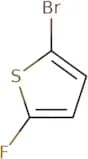
CAS:Versatile small molecule scaffoldFormula:C9H11NO2SPurity:Min. 95%Molecular weight:197.26 g/mol2-Bromo-5-fluorothiophene
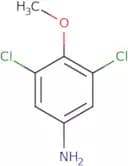
CAS:Versatile small molecule scaffoldFormula:C4H2BrFSPurity:Min. 95%Molecular weight:181.03 g/mol3,5-Dichloro-4-methoxyaniline
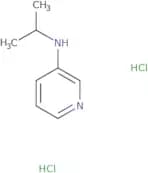
CAS:3,5-Dichloro-4-methoxyaniline is a chemical compound that belongs to the group of medicinal compounds. It is used as an intermediate in organic synthesis and has been found to inhibit the growth of cancer cells. This molecule can be prepared by reacting 3,5-dichloroaniline with methoxyacetone in the presence of hydrochloric acid. The chemical shifts observed for this compound's proton resonances are consistent with its structure as a geometric isomer. This molecule has two chiral centers and eight possible stereoisomers. Tic10 (N-[3-(3,4-dichlorophenyl)propionyl]glycine) is one such stereoisomer that inhibits the growth of cancer cells through damage to protein structures. Tic10 has been shown to be more potent than bosutinib, an inhibitor of Bcr-Abl kinase, in inhibiting tumor growth in animal models.Formula:C7H7Cl2NOPurity:Min. 95%Molecular weight:192.04 g/molN-(Propan-2-yl)pyridin-3-amine
CAS:Versatile small molecule scaffold
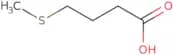
Formula:C8H14Cl2N2Purity:Min. 95%Molecular weight:209.11 g/mol4-(Methylsulfanyl)butanoic acid
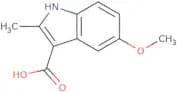
CAS:4-(Methylsulfanyl)butanoic acid is an organic solvent that is used in the production of butyric acid and butyronitrile. It is also a reaction product of inorganic acids, such as sulfuric acid, hydrogen sulfate, and nitric acid. 4-(Methylsulfanyl)butanoic acid has a crystalline structure and optical properties that are similar to those of acetic acid. This compound is expressed in plasmids and can be used as an amide or metal chelate. The enzymatic methods of 4-(methylsulfanyl)butanoic acid are supplementing with hydrogen sulfate or recycled by adding an acid catalyst.Formula:C5H10O2SPurity:Min. 95%Molecular weight:134.2 g/mol5-Methoxy-2-methyl-1H-indole-3-carboxylic acid
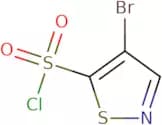
CAS:Versatile small molecule scaffoldFormula:C11H11NO3Purity:Min. 95%Molecular weight:205.21 g/mol4-Bromo-1,2-thiazole-5-sulfonyl chloride
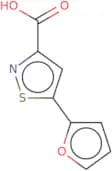
CAS:Versatile small molecule scaffoldFormula:C3HBrClNO2S2Purity:Min. 95%Molecular weight:262.5 g/mol5-(Furan-2-yl)-1,2-thiazole-3-carboxylic acid
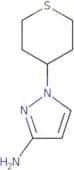
CAS:Versatile small molecule scaffoldFormula:C8H5NO3SPurity:Min. 95%Molecular weight:195.2 g/mol1-(Thian-4-yl)-1H-pyrazol-3-amine
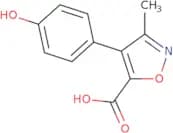
CAS:Versatile small molecule scaffoldFormula:C8H13N3SPurity:Min. 95%Molecular weight:183.28 g/mol4-(4-Hydroxyphenyl)-3-methyl-1,2-oxazole-5-carboxylic acid
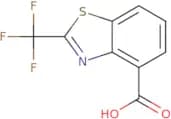
CAS:Versatile small molecule scaffoldFormula:C11H9NO4Purity:Min. 95%Molecular weight:219.2 g/mol2-(Trifluoromethyl)-1,3-benzothiazole-4-carboxylic acid
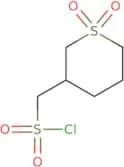
CAS:Versatile small molecule scaffoldFormula:C9H4F3NO2SPurity:Min. 95%Molecular weight:247.2 g/molTetrahydro-2H-thiopyran-3-methanesulfonyl chloride 1,1-dioxide
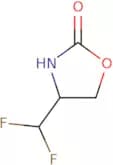
CAS:Versatile small molecule scaffoldFormula:C6H11ClO4S2Purity:Min. 95%Molecular weight:246.7 g/mol4-(Difluoromethyl)-1,3-oxazolidin-2-one
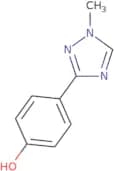
CAS:Versatile small molecule scaffoldFormula:C4H5F2NO2Purity:Min. 95%Molecular weight:137.08 g/mol4-(1-Methyl-1H-1,2,4-triazol-3-yl)phenol
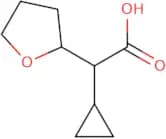
CAS:Versatile small molecule scaffoldFormula:C9H9N3OPurity:Min. 95%Molecular weight:175.19 g/mol2-Cyclopropyl-2-(oxolan-2-yl)acetic acid
CAS:Versatile small molecule scaffold
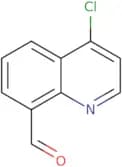
Formula:C9H14O3Purity:Min. 95%Molecular weight:170.21 g/mol4-Chloroquinoline-8-carbaldehyde
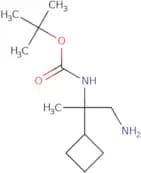
CAS:Versatile small molecule scaffoldFormula:C10H6ClNOPurity:Min. 95%Molecular weight:191.61 g/moltert-Butyl N-(1-amino-2-cyclobutylpropan-2-yl)carbamate
CAS:Versatile small molecule scaffoldFormula:C12H24N2O2Purity:Min. 95%Molecular weight:228.3 g/moltert-Butyl N-{6-aminospiro[2.5]octan-1-yl}carbamate
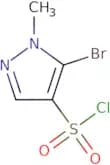
CAS:Versatile small molecule scaffoldFormula:C13H24N2O2Purity:Min. 95%Molecular weight:240.34 g/mol5-Bromo-1-methyl-1H-pyrazole-4-sulfonyl chloride
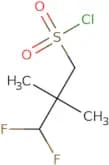
CAS:Versatile small molecule scaffoldFormula:C4H4BrClN2O2SPurity:Min. 95%Molecular weight:259.51 g/mol3,3-Difluoro-2,2-dimethylpropane-1-sulfonyl chloride
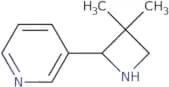
CAS:Versatile small molecule scaffoldFormula:C5H9ClF2O2SPurity:Min. 95%Molecular weight:206.64 g/mol3-(3,3-Dimethylazetidin-2-yl)pyridine
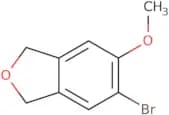
CAS:Versatile small molecule scaffoldFormula:C10H14N2Purity:Min. 95%Molecular weight:162.23 g/mol5-Bromo-6-methoxy-1,3-dihydro-2-benzofuran
CAS:Versatile small molecule scaffoldFormula:C9H9BrO2Purity:Min. 95%Molecular weight:229.07 g/mol6-(Propan-2-yl)-1H-pyrrolo[3,2-b]pyridine-2-carbaldehyde
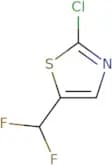
CAS:Versatile small molecule scaffoldFormula:C11H12N2OPurity:Min. 95%Molecular weight:188.23 g/mol2-Chloro-5-(difluoromethyl)-1,3-thiazole
CAS:Versatile small molecule scaffoldFormula:C4H2ClF2NSPurity:Min. 95%Molecular weight:169.58 g/mol5-(tert-Butoxycarbonyl)-2-methyl-2,4,5,6-tetrahydropyrrolo[3,4-c]pyrazole-3-carboxylic acid
CAS:Versatile small molecule scaffoldFormula:C12H17N3O4Purity:Min. 95%Molecular weight:267.28 g/mol2-{1-[(tert-Butoxy)carbonyl]piperidin-3-yl}cyclopropane-1-carboxylic acid
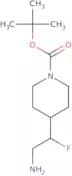
CAS:Versatile small molecule scaffoldFormula:C14H23NO4Purity:Min. 95%Molecular weight:269.34 g/moltert-Butyl 4-(2-amino-1-fluoroethyl)piperidine-1-carboxylate
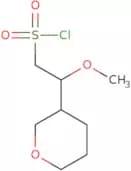
CAS:Versatile small molecule scaffoldFormula:C12H23FN2O2Purity:Min. 95%Molecular weight:246.32 g/mol2-Methoxy-2-(oxan-3-yl)ethane-1-sulfonyl chloride
CAS:Versatile small molecule scaffoldFormula:C8H15ClO4SPurity:Min. 95%Molecular weight:242.72 g/moltert-Butyl 3,5,6,7-tetrahydrospiro[imidazo[4,5-c]pyridine-4,3'-pyrrolidine]-1'-carboxylate
CAS:Versatile small molecule scaffoldFormula:C14H22N4O2Purity:Min. 95%Molecular weight:278.35 g/mol4-[(tert-Butoxy)carbonyl]-4-azaspiro[2.5]octane-7-carboxylic acid
CAS:Versatile small molecule scaffoldFormula:C13H21NO4Purity:Min. 95%Molecular weight:255.31 g/moltert-Butyl N-{9-oxo-3-oxabicyclo[3.3.1]nonan-7-yl}carbamate
CAS:Versatile small molecule scaffoldFormula:C13H21NO4Purity:Min. 95%Molecular weight:255.31 g/moltert-Butyl N-{9-oxobicyclo[3.3.1]nonan-3-yl}carbamate
CAS:Versatile small molecule scaffoldFormula:C14H23NO3Purity:Min. 95%Molecular weight:253.34 g/mol1,1-Difluorospiro[2.5]octan-6-ol
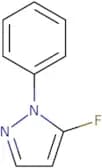
CAS:Versatile small molecule scaffoldFormula:C8H12F2OPurity:Min. 95%Molecular weight:162.18 g/mol5-Fluoro-1-phenyl-1H-pyrazole
CAS:Versatile small molecule scaffoldFormula:C9H7FN2Purity:Min. 95%Molecular weight:162.16 g/mol1H-[1,2,3]Triazolo[4,5-c]pyridine-4-carboxylic acid
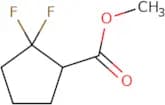
CAS:Versatile small molecule scaffoldFormula:C6H4N4O2Purity:Min. 95%Molecular weight:164.12 g/molMethyl 2,2-difluorocyclopentane-1-carboxylate
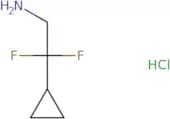
CAS:Versatile small molecule scaffoldFormula:C7H10F2O2Purity:Min. 95%Molecular weight:164.15 g/mol2-Cyclopropyl-2,2-difluoroethan-1-amine hydrochloride
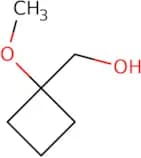
CAS:Versatile small molecule scaffoldFormula:C5H10ClF2NPurity:Min. 95%Molecular weight:157.59 g/mol(1-Methoxycyclobutyl)methanol
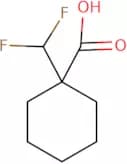
CAS:Versatile small molecule scaffoldFormula:C6H12O2Purity:Min. 95%Molecular weight:116.16 g/mol1-(Difluoromethyl)cyclohexane-1-carboxylic acid
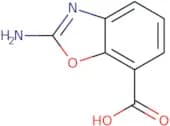
CAS:Versatile small molecule scaffoldFormula:C8H12F2O2Purity:Min. 95%Molecular weight:178.18 g/mol2-Amino-1,3-benzoxazole-7-carboxylic acid
CAS:Versatile small molecule scaffoldFormula:C8H6N2O3Purity:Min. 95%Molecular weight:178.14 g/mol[2-(Aminomethyl)bicyclo[2.2.1]hept-5-en-2-yl]methanol
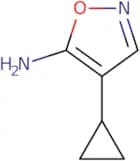
CAS:Versatile small molecule scaffoldFormula:C9H15NOPurity:Min. 95%Molecular weight:153.2 g/mol4-Cyclopropyl-1,2-oxazol-5-amine
CAS:Versatile small molecule scaffold
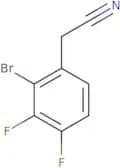
Formula:C6H8N2OPurity:Min. 95%Molecular weight:124.14 g/mol2-Bromo-3,4-difluorophenylacetonitrile
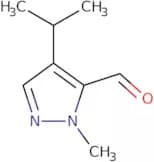
CAS:Versatile small molecule scaffoldFormula:C8H4BrF2NPurity:Min. 95%Molecular weight:232.02 g/mol1-Methyl-4-(propan-2-yl)-1H-pyrazole-5-carbaldehyde
CAS:Versatile small molecule scaffold
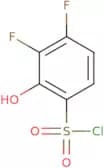
Formula:C8H12N2OPurity:Min. 95%Molecular weight:152.19 g/mol3,4-Difluoro-2-hydroxybenzene-1-sulfonyl chloride
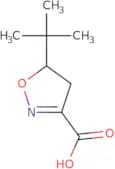
CAS:Versatile small molecule scaffoldFormula:C6H3ClF2O3SPurity:Min. 95%Molecular weight:228.6 g/mol5-tert-Butyl-4,5-dihydro-1,2-oxazole-3-carboxylic acid
CAS:Versatile small molecule scaffoldFormula:C8H13NO3Purity:Min. 95%Molecular weight:171.19 g/mol2-{1-[(tert-Butoxy)carbonyl]pyrrolidin-3-yl}-2-fluoroacetic acid
CAS:Versatile small molecule scaffold
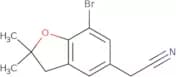
Formula:C11H18FNO4Purity:Min. 95%Color and Shape:PowderMolecular weight:247.26 g/mol2-(7-Bromo-2,2-dimethyl-2,3-dihydro-1-benzofuran-5-yl)acetonitrile
CAS:Versatile small molecule scaffoldFormula:C12H12BrNOPurity:Min. 95%Molecular weight:266.13 g/mol

![1-(2-Hydroxy-ethyl)-1,5-dihydro-pyrazolo[3,4-d]pyrimidin-4-one](/_next/image/?url=https%3A%2Fstatic.cymitquimica.com%2Fproducts%2F3D%2Fthumb-webp%2FHBA67282.webp&w=3840&q=75)

![N-[2-(1H-Indol-3-yl)ethyl]benzenesulfonamide](/_next/image/?url=https%3A%2Fstatic.cymitquimica.com%2Fproducts%2F3D%2Fthumb-webp%2FHBA58554.webp&w=3840&q=75)
![N-[(1H-Imidazol-4-yl)methyl]aniline](/_next/image/?url=https%3A%2Fstatic.cymitquimica.com%2Fproducts%2F3D%2Fthumb-webp%2FHBA56381.webp&w=3840&q=75)

![2-Methylbicyclo[2.2.1]heptane-2-carboxylic acid](/_next/image/?url=https%3A%2Fstatic.cymitquimica.com%2Fproducts%2F3D%2Fthumb-webp%2FHBA50822.webp&w=3840&q=75)
![1-[3-Methoxy-4-(methylsulfanyl)phenyl]ethan-1-one](/_next/image/?url=https%3A%2Fstatic.cymitquimica.com%2Fproducts%2F3D%2Fthumb-webp%2FHBA46774.webp&w=3840&q=75)
![Ethyl [(5-amino-1,3,4-thiadiazol-2-yl)thio]acetate](/_next/image/?url=https%3A%2Fstatic.cymitquimica.com%2Fproducts%2F3D%2Fthumb-webp%2FHBA41824.webp&w=3840&q=75)
![N-[(5-Acetylthiophen-2-yl)methyl]acetamide](/_next/image/?url=https%3A%2Fstatic.cymitquimica.com%2Fproducts%2F3D%2Fthumb-webp%2FHBA41545.webp&w=3840&q=75)
![tert-Butyl N-{6-aminospiro[2.5]octan-1-yl}carbamate](/_next/image/?url=https%3A%2Fstatic.cymitquimica.com%2Fproducts%2F3D%2Fthumb-webp%2FGWC47019.webp&w=3840&q=75)
![6-(Propan-2-yl)-1H-pyrrolo[3,2-b]pyridine-2-carbaldehyde](/_next/image/?url=https%3A%2Fstatic.cymitquimica.com%2Fproducts%2F3D%2Fthumb-webp%2FGWC43571.webp&w=3840&q=75)
![5-(tert-Butoxycarbonyl)-2-methyl-2,4,5,6-tetrahydropyrrolo[3,4-c]pyrazole-3-carboxylic acid](/_next/image/?url=https%3A%2Fstatic.cymitquimica.com%2Fproducts%2F3D%2Fthumb-webp%2FGWC42783.webp&w=3840&q=75)
![2-{1-[(tert-Butoxy)carbonyl]piperidin-3-yl}cyclopropane-1-carboxylic acid](/_next/image/?url=https%3A%2Fstatic.cymitquimica.com%2Fproducts%2F3D%2Fthumb-webp%2FGWC38317.webp&w=3840&q=75)
![tert-Butyl 3,5,6,7-tetrahydrospiro[imidazo[4,5-c]pyridine-4,3'-pyrrolidine]-1'-carboxylate](/_next/image/?url=https%3A%2Fstatic.cymitquimica.com%2Fproducts%2F3D%2Fthumb-webp%2FGWC35741.webp&w=3840&q=75)
![4-[(tert-Butoxy)carbonyl]-4-azaspiro[2.5]octane-7-carboxylic acid](/_next/image/?url=https%3A%2Fstatic.cymitquimica.com%2Fproducts%2F3D%2Fthumb-webp%2FGWC34946.webp&w=3840&q=75)
![tert-Butyl N-{9-oxo-3-oxabicyclo[3.3.1]nonan-7-yl}carbamate](/_next/image/?url=https%3A%2Fstatic.cymitquimica.com%2Fproducts%2F3D%2Fthumb-webp%2FGWC34319.webp&w=3840&q=75)
![tert-Butyl N-{9-oxobicyclo[3.3.1]nonan-3-yl}carbamate](/_next/image/?url=https%3A%2Fstatic.cymitquimica.com%2Fproducts%2F3D%2Fthumb-webp%2FGWC34295.webp&w=3840&q=75)
![1,1-Difluorospiro[2.5]octan-6-ol](/_next/image/?url=https%3A%2Fstatic.cymitquimica.com%2Fproducts%2F3D%2Fthumb-webp%2FGWC33437.webp&w=3840&q=75)
![1H-[1,2,3]Triazolo[4,5-c]pyridine-4-carboxylic acid](/_next/image/?url=https%3A%2Fstatic.cymitquimica.com%2Fproducts%2F3D%2Fthumb-webp%2FGWC33080.webp&w=3840&q=75)
![[2-(Aminomethyl)bicyclo[2.2.1]hept-5-en-2-yl]methanol](/_next/image/?url=https%3A%2Fstatic.cymitquimica.com%2Fproducts%2F3D%2Fthumb-webp%2FGWC31358.webp&w=3840&q=75)
![2-{1-[(tert-Butoxy)carbonyl]pyrrolidin-3-yl}-2-fluoroacetic acid](/_next/image/?url=https%3A%2Fstatic.cymitquimica.com%2Fproducts%2F3D%2Fthumb-webp%2FGWC16479.webp&w=3840&q=75)