


Building Blocks
This section contains fundamental products for the synthesis of organic and biological compounds. Building blocks are the essential starting materials used to construct complex molecules through various chemical reactions. They play a critical role in drug discovery, material science, and chemical research. At CymitQuimica, we offer a diverse range of high-quality building blocks to support your innovative research and industrial projects, ensuring you have the essential components for successful synthesis.
Subcategories of "Building Blocks"
- Boronic Acids & Boronic Acid Derivatives(5,756 products)
- Chiral Building Blocks(1,242 products)
- Hydrocarbon Building Blocks(6,093 products)
- Organic Building Blocks(60,532 products)
Found 195533 products of "Building Blocks"
Sort by
Purity (%)
0
100
|
0
|
50
|
90
|
95
|
100
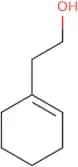
2-(Cyclohex-1-en-1-yl)ethan-1-ol
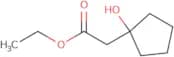
CAS:<p>Versatile small molecule scaffold</p>Formula:C8H14OPurity:Min. 95%Molecular weight:126.2 g/molEthyl 2-(1-hydroxycyclopentyl)acetate
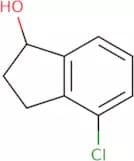
CAS:<p>Versatile small molecule scaffold</p>Formula:C9H16O3Purity:Min. 95%Molecular weight:172.22 g/mol4-Chloro-2,3-dihydro-1H-inden-1-ol
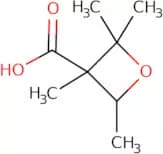
CAS:<p>Versatile small molecule scaffold</p>Formula:C9H9ClOPurity:Min. 95%Molecular weight:168.62 g/molTetramethyloxetane-3-carboxylic acid
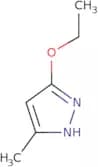
CAS:<p>Versatile small molecule scaffold</p>Formula:C8H14O3Purity:Min. 95%Molecular weight:158.19 g/mol3-Ethoxy-5-methyl-1H-pyrazole
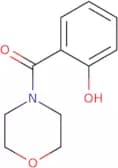
CAS:<p>Versatile small molecule scaffold</p>Formula:C6H10N2OPurity:Min. 95%Molecular weight:126.16 g/mol2-(Morpholine-4-carbonyl)phenol
CAS:<p>2-(Morpholine-4-carbonyl)phenol is a rotenoid compound that has been shown to be a potent dehydrating agent. It readily reacts with amide and alkoxy radicals, cyclic alkali metal ions, and peptides. 2-(Morpholine-4-carbonyl)phenol can also react with chloride ions to form an unstable chloro radical. This reaction releases hydrogen chloride in the process and may result in the formation of carcinogenic nitro compounds. 2-(Morpholine-4-carbonyl)phenol has antiinflammatory activity and is used as an antimicrobial agent.</p>Formula:C11H13NO3Purity:Min. 95%Molecular weight:207.23 g/mol4-Iodobutan-1-ol
CAS:<p>4-Iodobutan-1-ol is an acylation agent that is used in the synthesis of amines and alcohols. It can be synthesized by reacting a Grignard reagent with iodine or an alkyl halide. 4-Iodobutan-1-ol is also used for the production of other organometallic compounds, such as azacycles, which are important intermediates in organic synthesis. The use of 4-iodobutan-1-ol is limited because it reacts with nucleophiles such as amines, hydroxides, and alkoxides to form adducts that are not useful. However, this compound has been shown to be effective in the synthesis of fatty esters and low density lipoproteins (LDL).</p>Formula:C4H9IOPurity:Min. 95%Molecular weight:200.02 g/mol7-Chloro-[1,2,3,4]tetrazolo[1,5-c]pyrimidin-8-amine
CAS:<p>Versatile small molecule scaffold</p>Formula:C4H3ClN6Purity:Min. 95%Molecular weight:170.56 g/molrac-[(1R,2R,4R)-Bicyclo[2.2.1]hept-5-en-2-yl]methanamine
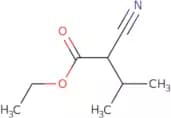
CAS:<p>Versatile small molecule scaffold</p>Formula:C8H13NPurity:Min. 95%Molecular weight:123.2 g/molEthyl 2-cyano-3-methyl-butanoate
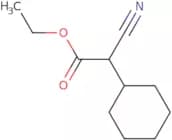
CAS:<p>Ethyl 2-cyano-3-methyl-butanoate is a nitrile that has a pyridine ring and two carbon atoms. It is an ester of ethyl cyanoacetic acid, which has a methyl group attached to the carbon atom at the 3 position. The other carbon atom is attached to two hydrogen atoms and one oxygen atom. This substance also contains a cyano group with one hydrogen atom. Ethyl 2-cyano-3-methyl-butanoate can be used as an alkyl ester, which is made up of an alkyl group and an alkyl ester group, in the production of polymers. The monoxide can be released from this substance during the process of polymerization, which will result in unsaturated polymers.</p>Formula:C8H13NO2Purity:Min. 95%Molecular weight:155.19 g/molEthyl 2-cyano-2-cyclohexylacetate
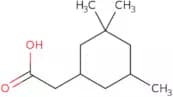
CAS:<p>Ethyl 2-cyano-2-cyclohexylacetate is an organic compound that belongs to the group of cycloaliphatic amides. It is a colorless liquid with a camphoraceous odor. The molecule consists of two rings: one of these is an aromatic ring, and the other is a saturated cycloalkane ring. This compound is prepared by the saponification and decarboxylation of camphene. Ethyl 2-cyano-2-cyclohexylacetate has been shown to react with hydrochloric acid to form nitro compounds, which are gaseous at room temperature. At higher temperatures, it decomposes into peroxides, peroxide, and isopropyl radicals.</p>Formula:C11H17NO2Purity:Min. 95%Molecular weight:195.26 g/mol2-(3,3,5-Trimethylcyclohexyl)acetic acid
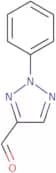
CAS:<p>Versatile small molecule scaffold</p>Formula:C11H20O2Purity:Min. 95%Molecular weight:184.27 g/mol2-Phenyl-2H-1,2,3-triazole-4-carbaldehyde
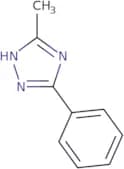
CAS:<p>2-Phenyl-2H-1,2,3-triazole-4-carbaldehyde is a white solid with an aromatic odor. It can be synthesized by the reaction of salicylaldehyde and d-xylose in the presence of catalytic amounts of iron(III) chloride. The compound is used as a ligand for copper(II) ions in asymmetric synthesis. 2-Phenyl-2H-1,2,3-triazole-4-carbaldehyde has been shown to react with diazo compounds to produce highly reactive nitrenes that are useful in organic synthesis. 2PMT has also been observed to be able to form covalent bonds with certain sugars such as darabinose and arabinose.</p>Formula:C9H7N3OPurity:Min. 95%Molecular weight:173.17 g/mol3-Methyl-5-phenyl-1H-1,2,4-triazole
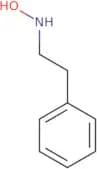
CAS:<p>Versatile small molecule scaffold</p>Formula:C9H9N3Purity:Min. 95%Molecular weight:159.19 g/molN-(2-Phenylethyl)hydroxylamine
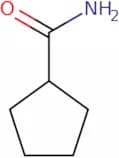
CAS:Controlled Product<p>N-(2-Phenylethyl)hydroxylamine (NPEHA) is an antidiabetic agent that is a member of the class of amides. It has been shown to inhibit the transcriptional regulation of metabolic rate and physiological activities. NPEHA binds to the dopamine receptor and may be useful in treating Parkinson’s disease. NPEHA also inhibits cancer cell growth by binding to the lps-stimulated raw264.7 cells, which are a type of mouse macrophage cell line. The hydrogen bond between the hydroxyl group and the nitrogen atom on NPEHA is critical for its activity as an antidiabetic agent.</p>Formula:C8H11NOPurity:Min. 95%Molecular weight:137.18 g/molCyclopentanecarboxamide
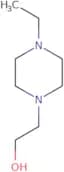
CAS:<p>Cyclopentanecarboxamide is a protonated amide that has the potential to be used as an anti-inflammatory agent. It is synthesized from quinoline derivatives and fatty acids by means of a two-step process. Cyclopentanecarboxamide has been shown to inhibit chemokine production in vitro, suggesting it may have therapeutic value for autoimmune diseases and cancer. The synthesis of cyclopentanecarboxamide can be achieved through a number of methods including tissue culture and hydrogen bond activation.</p>Formula:C6H11NOPurity:Min. 95%Molecular weight:113.16 g/mol2-(4-Ethylpiperazin-1-yl)ethan-1-ol
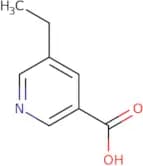
CAS:<p>Versatile small molecule scaffold</p>Formula:C8H18N2OPurity:Min. 95%Molecular weight:158.24 g/mol5-Ethylpyridine-3-carboxylic acid
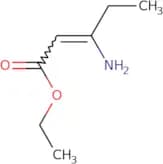
CAS:<p>5-Ethylpyridine-3-carboxylic acid is a herbicide that inhibits the enzyme 5-enolpyruvylshikimate-3-phosphate synthase, which controls the synthesis of the aromatic amino acids. It is used for weed control on unifoliate plants such as wheat, rice, and oats. This herbicide has been shown to be effective against resistant weeds that have developed in response to other herbicides. The mechanism of action of 5-ethylpyridine-3-carboxylic acid is similar to that of thifensulfuron and it also binds to DNA. 5-Ethylpyridine-3-carboxylic acid can be metabolized by plants into toxic metabolites and has been shown to inhibit photosynthetic electron transport in leaves. The molecular structure of this compound can be classified as a conjugate with two benzene rings linked by an ethylene group. The names of this</p>Formula:C8H9NO2Purity:Min. 95%Molecular weight:151.16 g/molEthyl 3-aminopent-2-enoate
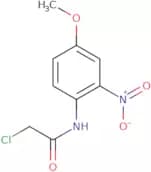
CAS:<p>Ethyl 3-aminopent-2-enoate is an enantioselective and efficient ligand that is used in asymmetric synthesis. It reacts with a variety of acceptors such as 2-bromo-3-methylpyridine to form the corresponding β-unsaturated ester. The reaction with cuprate leads to the formation of an α,β-unsaturated carbonyl compound. Ethyl 3-aminopent-2-enoate can be used to synthesize crotonates and esters by hydrolysis and alkylation respectively. The crotonate formed can be converted into its corresponding acid or ester using an enolate formed from ethyl malonate.</p>Formula:C7H13NO2Purity:Min. 95%Molecular weight:143.18 g/mol2-Chloro-N-(4-methoxy-2-nitro-phenyl)-acetamide
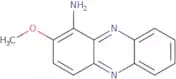
CAS:<p>Versatile small molecule scaffold</p>Formula:C9H9ClN2O4Purity:Min. 95%Molecular weight:244.6 g/mol2-Methoxyphenazin-1-amine
CAS:<p>Versatile small molecule scaffold</p>Formula:C13H11N3OPurity:Min. 95%Molecular weight:225.25 g/mol[(4-Chlorophenyl)sulfanyl]formonitrile
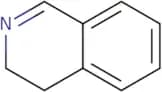
CAS:<p>[(4-Chlorophenyl)sulfanyl]formonitrile is a versatile research chemical that has various applications in the field of medicinal chemistry. It is commonly used as a starting material for the synthesis of medicaments and agrochemicals. This compound is known to be highly reactive and requires careful handling due to its toxic gas nature.</p>Formula:C7H4ClNSPurity:Min. 95%Molecular weight:169.63 g/mol3,4-Dihydroisoquinoline
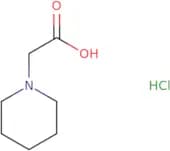
CAS:<p>3,4-Dihydroisoquinoline is a heterocyclic compound that is used as an anti-inflammatory agent and has been shown to inhibit the production of prostaglandins. 3,4-Dihydroisoquinoline decreases the immune response in animals with autoimmune diseases. This drug also inhibits tumor cell growth in vitro and in vivo. 3,4-Dihydroisoquinoline has been shown to be effective against cervical cancer cells, adrenocortical carcinoma cells, and cancer cells from lymphocytic leukemia. In addition, 3,4-dihydroisoquinoline causes apoptosis by inhibiting protein synthesis through its inhibition of DNA gyrase and topoisomerase IV.</p>Formula:C9H9NPurity:Min. 95%Molecular weight:131.17 g/molPiperidin-1-yl-acetic acid hydrochloride
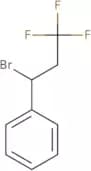
CAS:<p>Piperidin-1-yl-acetic acid hydrochloride is a labile, medicinal compound that is effective at low doses. It is used to treat hypercholesterolemia and inflammation. Piperidin-1-yl-acetic acid hydrochloride is an organic compound that belongs to the group of carboxylic acids. The molecule can exist in two different forms, which are called anomers: alpha and beta. The alpha form is more stable than the beta form and has higher medicinal properties. Piperidin-1-yl-acetic acid hydrochloride lowers cholesterol levels by inhibiting its synthesis.</p>Formula:C7H14ClNO2Purity:Min. 95%Molecular weight:179.64 g/mol(1-Bromo-3,3,3-trifluoropropyl)benzene
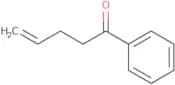
CAS:<p>Versatile small molecule scaffold</p>Formula:C9H8BrF3Purity:Min. 95%Molecular weight:253.06 g/mol1-Phenylpent-4-en-1-one
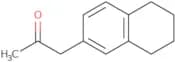
CAS:<p>1-Phenylpent-4-en-1-one is a diazo compound that is used in organic synthesis. It can be prepared by the reaction of an organic solvent with a Grignard reagent. This product has been shown to yield carbon chains and terpenes when treated with a radical chain transfer agent. It is also used as a precursor to synthesize pyrrole and terpene compounds, which are anion and tetrahydrofuran derivatives, respectively.</p>Formula:C11H12OPurity:Min. 95%Molecular weight:160.21 g/mol1-(5,6,7,8-Tetrahydronaphthalen-2-yl)propan-2-one
CAS:<p>Versatile small molecule scaffold</p>Formula:C13H16OPurity:Min. 95%Molecular weight:188.26 g/mol4H-Imidazo[4,5-c]pyridin-4-one
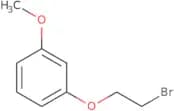
CAS:<p>4H-Imidazo[4,5-c]pyridin-4-one is a water soluble compound that is soluble in water. It is a sulphonic acid that can be found in acid salts and deazaguanine. 4H-Imidazo[4,5-c]pyridin-4-one is used as a pharmaceutical dosage.</p>Formula:C6H3N3OPurity:Min. 95%Molecular weight:133.11 g/mol1-(2-Bromoethoxy)-3-methoxybenzene
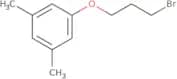
CAS:<p>Versatile small molecule scaffold</p>Formula:C9H11BrO2Purity:Min. 95%Molecular weight:231.1 g/mol1-(3-Bromopropoxy)-3,5-dimethylbenzene
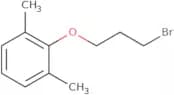
CAS:<p>Versatile small molecule scaffold</p>Formula:C11H15BrOPurity:Min. 95%Molecular weight:243.14 g/mol2-(3-Bromopropoxy)-1,3-dimethylbenzene
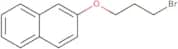
CAS:<p>Versatile small molecule scaffold</p>Formula:C11H15BrOPurity:Min. 95%Molecular weight:243.14 g/mol2-(3-Bromopropoxy)naphthalene
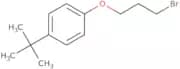
CAS:<p>Versatile small molecule scaffold</p>Formula:C13H13BrOPurity:Min. 95%Molecular weight:265.14 g/mol1-(3-Bromopropoxy)-4-tert-butylbenzene
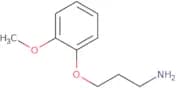
CAS:<p>Versatile small molecule scaffold</p>Formula:C13H19BrOPurity:Min. 95%Molecular weight:271.19 g/mol3-(2-Methoxyphenoxy)propan-1-amine
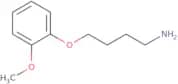
CAS:<p>Versatile small molecule scaffold</p>Formula:C10H15NO2Purity:Min. 95%Molecular weight:181.23 g/mol4-(2-Methoxyphenoxy)butan-1-amine
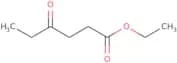
CAS:<p>Versatile small molecule scaffold</p>Formula:C11H17NO2Purity:Min. 95%Molecular weight:195.26 g/molEthyl 4-oxohexanoate
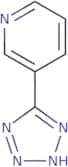
CAS:<p>Ethyl 4-oxohexanoate is an organic compound that is a dicarboxylic acid. It is used in the synthesis of esters and lactones. Ethyl 4-oxohexanoate undergoes decarboxylation to produce diethyl succinate. This reaction can be accelerated by heating ethyl 4-oxohexanoate with a catalyst such as calcium oxide, giving evolution of carbon dioxide gas. Hydrolysis of ethyl 4-oxohexanoate produces ethyl acetate as well as ethanol, which are both volatile liquids at room temperature.</p>Formula:C8H14O3Purity:Min. 95%Molecular weight:158.19 g/mol5-(3-Pyridyl)-1H-tetrazole
CAS:<p>5-(3-Pyridyl)-1H-tetrazole is a heterocyclic compound that belongs to the class of isomeric compounds. The nitrogen atoms are located in a plane and are separated by three carbon atoms, forming a trigonal planar structure. 5-(3-Pyridyl)-1H-tetrazole has been shown to activate plasma cholesterol levels through the generation of fatty acid hydroperoxides and oxidation products, which can lead to cell apoptosis. It also has the ability to catalyze reactions and form supramolecular complexes with other molecules. One such complex is formed with annexin, which may be due to hydrogen bonding interactions between the two molecules.</p>Formula:C6H5N5Purity:Min. 95%Molecular weight:147.14 g/mol3-Oxa-1-azaspiro[4.4]nonane-2,4-dione
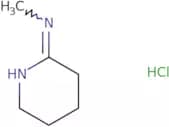
CAS:<p>Versatile small molecule scaffold</p>Formula:C7H9NO3Purity:Min. 95%Molecular weight:155.15 g/molN-Methyl-3,4,5,6-tetrahydropyridin-2-amine hydrochloride
CAS:<p>Versatile small molecule scaffold</p>Formula:C6H13ClN2Purity:Min. 95%Molecular weight:148.63 g/mol[4-(Hexyloxy)phenyl]methanol
CAS:<p>4-(Hexyloxy)phenyl]methanol (4-HPMA) is a liquid crystal and crystalline compound that is synthesized from an aryl group. 4-HPMA has been used in the production of devices such as liquid crystal displays, and is currently being investigated for use in crystalline compounds. Its mesogenic properties have made it useful for the production of crystalline materials with a high melting point, and its aryl ring structure makes it suitable for use in organic crystals.</p>Formula:C13H20O2Purity:Min. 95%Molecular weight:208.3 g/mol[4-(Prop-2-en-1-yloxy)phenyl]methanol
CAS:<p>4-(Prop-2-en-1-yloxy)phenol is a divalent model compound that has been used in the study of fossil fuel and polymerized oils. It is also used for the synthesis of polymers, as well as monomers and compounds with phenyl groups. 4-(Prop-2-en-1-yloxy)phenol has two functional groups: a phenyl group and a propoxy group. This compound has been shown to have excellent thermal stability, which makes it an ideal candidate for use in high temperatures.</p>Formula:C10H12O2Purity:Min. 95%Molecular weight:164.2 g/mol2-Hydroxy-2-[3-(trifluoromethyl)phenyl]propanoic acid
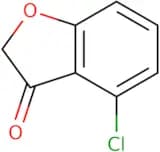
CAS:<p>Versatile small molecule scaffold</p>Formula:C10H9F3O3Purity:Min. 95%Molecular weight:234.17 g/mol4-Chloro-2,3-dihydro-1-benzofuran-3-one
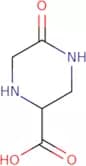
CAS:<p>Versatile small molecule scaffold</p>Formula:C8H5ClO2Purity:Min. 95%Molecular weight:168.57 g/mol5-Oxopiperazine-2-carboxylic acid
CAS:<p>Versatile small molecule scaffold</p>Formula:C5H8N2O3Purity:Min. 95%Molecular weight:144.13 g/mol1-{Bicyclo[4.2.0]octa-1,3,5-trien-7-yl}ethan-1-amine
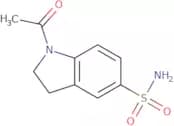
CAS:<p>Versatile small molecule scaffold</p>Formula:C10H13NPurity:Min. 95%Molecular weight:147.22 g/mol1-Acetyl-5-indolinesulfonamide
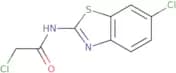
CAS:<p>Versatile small molecule scaffold</p>Formula:C10H12N2O3SPurity:Min. 95%Molecular weight:240.28 g/mol2-Chloro-N-(6-chloro-benzothiazol-2-yl)-acetamide
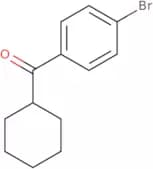
CAS:<p>Versatile small molecule scaffold</p>Formula:C9H6Cl2N2OSPurity:Min. 95%Molecular weight:261.13 g/mol4-Bromophenyl cyclohexyl ketone
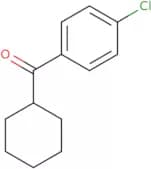
CAS:<p>Versatile small molecule scaffold</p>Formula:C13H15BrOPurity:Min. 95%Molecular weight:267.16 g/mol4-Chlorophenyl cyclohexyl ketone
CAS:<p>Versatile small molecule scaffold</p>Formula:C13H15ClOPurity:Min. 95%Molecular weight:222.71 g/mol1,8,8-Trimethylbicyclo[3.2.1]octane-2,4-dione
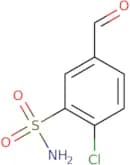
CAS:<p>Versatile small molecule scaffold</p>Formula:C11H16O2Purity:Min. 95%Molecular weight:180.24 g/mol2-Chloro-5-formylbenzene-1-sulfonamide
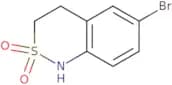
CAS:<p>2-Chloro-5-formylbenzene-1-sulfonamide is a substance that belongs to the group of sulfonamides. It is a white powder that can be synthesized from 2,4,6-trinitrobenzenesulfonic acid and chlorobenzene. The substance has been shown to form an alkaline hydrolysis product when reacted with indapamide in a 1:1 ratio. This reaction was analyzed using LC/MS/MS and the product ions were quantified. The LC/MS/MS method used for this analysis was harmonization of the data collected on two different instruments, which is called synergi. The LC/MS/MS method consisted of three steps: (i) elution with acetonitrile and water, (ii) electrospray ionization, and (iii) quantification by selected reaction monitoring.</p>Formula:C7H6ClNO3SPurity:Min. 95%Molecular weight:219.65 g/mol6-Bromo-3,4-dihydro-1H-2,1-benzothiazine 2,2-dioxide
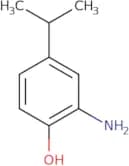
CAS:<p>Versatile small molecule scaffold</p>Formula:C8H8BrNO2SPurity:Min. 95%Molecular weight:262.13 g/mol2-Amino-4-isopropylphenol
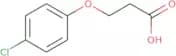
CAS:<p>Versatile small molecule scaffold</p>Formula:C9H13NOPurity:Min. 95%Molecular weight:151.21 g/mol3-(4-Chloro-phenoxy)-propionic acid
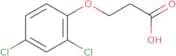
CAS:<p>3-(4-Chloro-phenoxy)-propionic acid is a synthetic tyrosinase inhibitor. It has been shown to be effective in the treatment of hyperpigmentation disorders in humans, including melasma and solar lentigo. 3-(4-Chloro-phenoxy)-propionic acid inhibits tyrosinase activity by binding to its active site. This prevents the production of melanin and leads to lightening of skin pigmentation. The extraction process is efficient and can be scaled up for clinical use. The analyte can be easily quantified using a potent assay with high recovery rates and low detection limits.</p>Formula:C9H9ClO3Purity:Min. 95%Molecular weight:200.62 g/mol3-(2,4-Dichlorophenoxy)propanoic acid
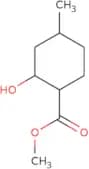
CAS:<p>Versatile small molecule scaffold</p>Formula:C9H8Cl2O3Purity:Min. 95%Molecular weight:235.06 g/molMethyl 2-hydroxy-4-methylcyclohexane-1-carboxylate
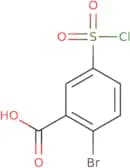
CAS:<p>Versatile small molecule scaffold</p>Formula:C9H16O3Purity:Min. 95%Molecular weight:172.2 g/mol2-Bromo-5-(chlorosulfonyl)benzoic acid
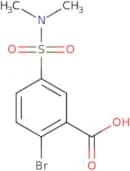
CAS:<p>Versatile small molecule scaffold</p>Formula:C7H4BrClO4SPurity:Min. 95%Molecular weight:299.53 g/mol2-Bromo-5-(dimethylsulfamoyl)benzoic acid
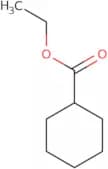
CAS:<p>Versatile small molecule scaffold</p>Formula:C9H10BrNO4SPurity:Min. 95%Molecular weight:308.15 g/molEthyl Cyclohexanecarboxylate
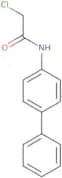
CAS:<p>Ethyl cyclohexanecarboxylate is an anti-inflammatory drug that belongs to the class of hydroxylated glycol ethers. It has been shown to have a significant effect on autoimmune diseases, such as multiple sclerosis and rheumatoid arthritis. The active form of ethyl cyclohexanecarboxylate is metabolized through nitro reduction by cytochrome P450 enzymes, which are present in most mammalian tissues. This drug also has a high phase transition temperature and can be used as a catalyst for organic reactions at low temperatures. Ethyl cyclohexanecarboxylate has been shown to inhibit dpp-iv (dipeptidyl peptidase IV), which is an enzyme that cleaves the dipeptides from the N-terminal ends of proteins, leading to increased levels of fatty acids and other alkanoic acids in the blood.</p>Formula:C9H16O2Purity:Min. 95%Molecular weight:156.22 g/mol2-Chloro-N-(4-phenylphenyl)acetamide
CAS:<p>Versatile small molecule scaffold</p>Formula:C14H12ClNOPurity:Min. 95%Molecular weight:245.7 g/mol9-Methylfluorene-9-carboxylic acid
CAS:<p>9-Methylfluorene-9-carboxylic acid is an organic compound that has a benzyl group attached to the 9th carbon of the fluorene ring. It is a colorless solid with a melting point of -78.5 °C. The synthesis of this compound involves the reaction of 9-fluorenone with diethyl ether in the presence of formic acid and phosphorous pentoxide. This reaction results in the formation of 9-methylene-9-fluorene, which is then oxidized to form 9-methylanthracene. Finally, methanol is added to form 9-methylfluorene-9-carboxylic acid. The molecular weight for this compound is 152 g/mol and it has an mp at -78.5 °C and bp at 138 °C. This compound can be used as a fingerprinting agent due to its characteristic UV absorption spectrum, which peaks</p>Formula:C15H12O2Purity:Min. 95%Molecular weight:224.25 g/mol6-Ethyltetrahydro-2H-pyran-2-one
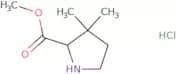
CAS:<p>6-Ethyltetrahydro-2H-pyran-2-one is a monatomic chemical in the diptera family. It is used as a detection method for host plants, and has been found to be present in fatty acids of coatings and analytical chemistry. 6-Ethyltetrahydro-2H-pyran-2-one can also be found in cuticular hydrocarbons and viscosity. The fluorescence of this compound is an analytical method that can be used to identify it. This chemical has also been shown to have antiviral properties, which are due to its ability to induce the expression of genes involved in the production of aldolases.</p>Formula:C7H12O2Purity:Min. 95%Molecular weight:128.17 g/molMethyl 3,3-dimethylpyrrolidine-2-carboxylate hydrochloride
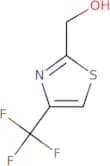
CAS:<p>Versatile small molecule scaffold</p>Formula:C8H16ClNO2Purity:Min. 95%Molecular weight:193.67 g/mol(4-(Trifluoromethyl)thiazol-2-yl)methanol
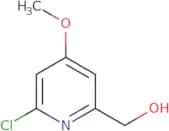
CAS:<p>Versatile small molecule scaffold</p>Formula:C5H4F3NOSPurity:Min. 95%Molecular weight:183.15 g/mol(6-Chloro-4-methoxypyridin-2-yl)methanol
CAS:<p>Versatile small molecule scaffold</p>Formula:C7H8ClNO2Purity:Min. 95%Molecular weight:173.6 g/mol1-Oxa-6-azaspiro[3.5]nonane
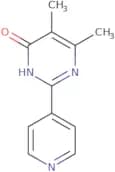
CAS:<p>Versatile small molecule scaffold</p>Formula:C7H13NOPurity:Min. 95%Molecular weight:127.19 g/mol5,6-Dimethyl-4-hydroxy-2-(pyridin-4-yl)pyrimidine
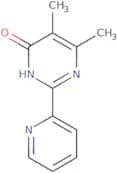
CAS:<p>Versatile small molecule scaffold</p>Formula:C11H11N3OPurity:Min. 95%Molecular weight:201.22 g/mol5,6-Dimethyl-2-(pyridin-2-yl)pyrimidin-4-ol
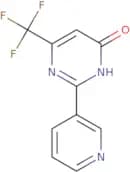
CAS:<p>Versatile small molecule scaffold</p>Formula:C11H11N3OPurity:Min. 95%Molecular weight:201.22 g/mol4-Hydroxy-2-(pyrid-3-yl)-6-trifluoromethylpyrimidine
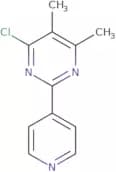
CAS:<p>Versatile small molecule scaffold</p>Formula:C10H6F3N3OPurity:Min. 95%Molecular weight:241.17 g/mol4-Chloro-5,6-dimethyl-2-(pyridin-4-yl)pyrimidine
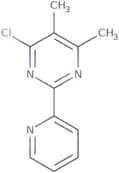
CAS:<p>Versatile small molecule scaffold</p>Formula:C11H10ClN3Purity:Min. 95%Molecular weight:219.67 g/mol4-Chloro-5,6-dimethyl-2-(pyridin-2-yl)pyrimidine
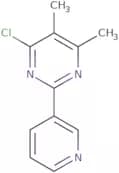
CAS:<p>Versatile small molecule scaffold</p>Formula:C11H10ClN3Purity:Min. 95%Molecular weight:219.67 g/mol4-Chloro-5,6-dimethyl-2-(pyridin-3-yl)pyrimidine
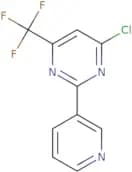
CAS:<p>Versatile small molecule scaffold</p>Formula:C11H10ClN3Purity:Min. 95%Molecular weight:219.67 g/mol4-Chloro-2-(pyridin-3-yl)-6-(trifluoromethyl)pyrimidine
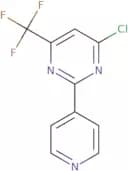
CAS:<p>Versatile small molecule scaffold</p>Formula:C10H5ClF3N3Purity:Min. 95%Molecular weight:259.61 g/mol4-Chloro-2-(4-pyridinyl)-6-(trifluoromethyl)-pyrimidine
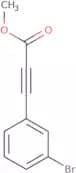
CAS:<p>4-Chloro-2-(4-pyridinyl)-6-(trifluoromethyl)pyrimidine is a potent anticancer compound that inhibits the polymerization of tubulin, leading to cell death. It has been shown to be effective in inducing apoptosis in cancer cells. The EC50 values for 4-chloro-2-(4-pyridinyl)-6-(trifluoromethyl)pyrimidine are 0.1 and 0.3 μM for t47d cells and A549 cells, respectively. This compound is also an inducer of apoptosis in cancer cells with an EC50 value of 1.0 μM for the A549 cell line.</p>Formula:C10H5ClF3N3Purity:Min. 95%Molecular weight:259.62 g/molMethyl 3-(3-bromophenyl)prop-2-ynoate
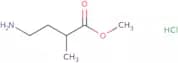
CAS:<p>Versatile small molecule scaffold</p>Formula:C10H7BrO2Purity:Min. 95%Molecular weight:239.06 g/molMethyl 4-amino-2-methylbutanoate hydrochloride
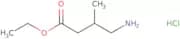
CAS:<p>Versatile small molecule scaffold</p>Formula:C6H14ClNO2Purity:Min. 95%Molecular weight:167.63 g/molEthyl 4-amino-3-methylbutanoate hydrochloride
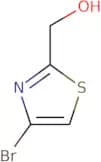
CAS:<p>Versatile small molecule scaffold</p>Formula:C7H16ClNO2Purity:Min. 95%Molecular weight:181.66 g/mol(4-Bromothiazol-2-yl)methanol
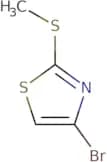
CAS:<p>Versatile small molecule scaffold</p>Formula:C4H4BrNOSPurity:Min. 95%Molecular weight:194.05 g/mol4-Bromo-2-(thiomethyl)thiazole
CAS:<p>4-Bromo-2-(thiomethyl)thiazole is an alkylating agent that has anticancer activity. It can be used to synthesize a variety of analogs, which are functional molecules with similar or improved properties. 4-Bromo-2-(thiomethyl)thiazole is hydrophobic, but has been shown to be reactive in simulations and functionalities such as the enolate form. This molecule predominately forms a ferroptosis, which is a type of cyclopentenone. The cancer cells are stabilized by this molecule's biomolecular interactions.</p>Formula:C4H4BrNS2Purity:Min. 95%Molecular weight:210.12 g/mol2-({[(tert-Butoxy)carbonyl]amino}methyl)-2-ethylbutanoic acid
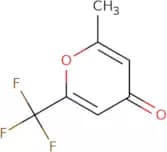
CAS:<p>Versatile small molecule scaffold</p>Formula:C12H23NO4Purity:Min. 95%Molecular weight:245.32 g/mol2-Methyl-6-(trifluoromethyl)-4H-pyran-4-one
CAS:<p>Versatile small molecule scaffold</p>Formula:C7H5F3O2Purity:Min. 95%Molecular weight:178.11 g/mol1,3-Dioxane-2-carboxylic acid
CAS:<p>1,3-Dioxane-2-carboxylic acid is a lipophilic agonist of the peroxisome proliferator-activated receptor α (PPARα). It has been shown to lower high cholesterol levels in mice. 1,3-Dioxane-2-carboxylic acid is metabolized by CYP2E1 and then undergoes oxidation to form a reactive intermediate that binds to PPARα. This binding activates PPARα, leading to increased expression of genes involved in fatty acid catabolism and lipid metabolism. 1,3-Dioxane-2-carboxylic acid is an agonist for the PPARα receptor and is used as an oral drug for the treatment of metabolic disorders.</p>Formula:C5H8O4Purity:Min. 95%Molecular weight:132.11 g/molN-[2-(tert-Butyldimethylsilyloxy)ethyl]methylamine
CAS:<p>Versatile small molecule scaffold</p>Formula:C9H23NOSiPurity:Min. 95%Molecular weight:189.37 g/mol4-{[(tert-Butyldimethylsilyl)oxy]methyl}piperidine
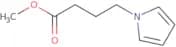
CAS:<p>Versatile small molecule scaffold</p>Formula:C12H27NOSiPurity:Min. 95%Molecular weight:229.43 g/molMethyl 4-(1H-pyrrol-1-yl)butanoate
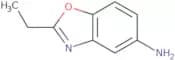
CAS:<p>Versatile small molecule scaffold</p>Formula:C9H13NO2Purity:Min. 95%Molecular weight:167.2 g/mol2-Ethyl-1,3-benzoxazol-5-amine
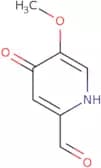
CAS:<p>Versatile small molecule scaffold</p>Formula:C9H10N2OPurity:Min. 95%Molecular weight:162.19 g/mol4-Hydroxy-5-methoxy-2-pyridinecarbaldehyde
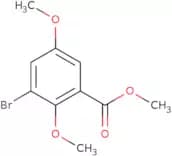
CAS:<p>Versatile small molecule scaffold</p>Formula:C7H7NO3Purity:Min. 95%Molecular weight:153.14 g/molMethyl 3-bromo-2,5-dimethoxybenzoate
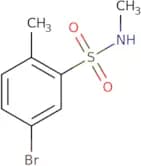
CAS:<p>Versatile small molecule scaffold</p>Formula:C10H11BrO4Purity:Min. 95%Molecular weight:275.1 g/mol5-Bromo-N,2-dimethylbenzene-1-sulfonamide
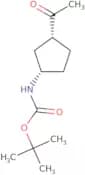
CAS:<p>Versatile small molecule scaffold</p>Formula:C8H10BrNO2SPurity:Min. 95%Molecular weight:264.14 g/mol1-((3S,1R)-3-tert-Butoxycarbonyl-aminocyclopentyl)-1-ethanone
CAS:<p>Versatile small molecule scaffold</p>Formula:C12H21NO3Purity:Min. 95%Molecular weight:227.3 g/molImidazo[1,2-a]pyridin-5-amine hydrochloride
CAS:<p>Versatile small molecule scaffold</p>Formula:C7H8ClN3Purity:Min. 95%Molecular weight:169.61 g/mol4-Amino-2-chloro-N-propylbenzamide
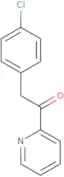
CAS:<p>Versatile small molecule scaffold</p>Formula:C10H13ClN2OPurity:Min. 95%Molecular weight:212.67 g/mol2-(4-Chlorophenyl)-1-(pyridin-2-yl)ethan-1-one
CAS:<p>Versatile small molecule scaffold</p>Formula:C13H10ClNOPurity:Min. 95%Molecular weight:231.68 g/mol5-chlorofuro[2,3-c]pyridine-2-carboxylic acid
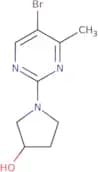
CAS:<p>Versatile small molecule scaffold</p>Formula:C8H4ClNO3Purity:Min. 95%Molecular weight:197.57 g/mol(R)-1-(5-Bromo-4-methylpyrimidin-2-yl)pyrrolidin-3-ol
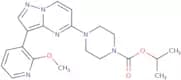
CAS:<p>Versatile small molecule scaffold</p>Formula:C9H12BrN3OPurity:Min. 95%Molecular weight:258.12 g/molLP-935509
CAS:<p>LP-935509 is a potential drug candidate that has been shown to inhibit the activity of a number of different receptors in animal models. It is a small molecule that binds to the target cell and inhibits the release of growth factors. LP-935509 has been shown to reduce pain in knockout mice, as well as modulating cancer cell proliferation. This compound may be used for the treatment of chronic pain, neuropathic pain, and cancer. LP-935509 also has dose-dependent effects on opioid receptor function. Further studies are needed to determine its effects on tyrosine kinase activity.</p>Formula:C20H24N6O3Purity:Min. 95%Molecular weight:396.44 g/mol7-Hydroxy-4H,5H,6H,7H-pyrazolo[1,5-a]pyrazin-4-one
CAS:<p>7-Hydroxy-4H,5H,6H,7H-pyrazolo[1,5-a]pyrazin-4-one is a hydrolysis product of pyrazole-3-carboxylic acid. It can be prepared by the reaction of 7-(hydroxymethyl)pyrazolo[1,5-a]pyrazine with hydrogen chloride gas in methanol. This compound has been shown to be a potent inhibitor of pyrazine dehydrogenase and an effective inhibitor of the growth of bacteria that are resistant to erythromycin.</p>Formula:C6H7N3O2Purity:Min. 95%Molecular weight:153.14 g/mol5-Chloro[1,2,4]triazolo[1,5-a]pyrazin-2-amine
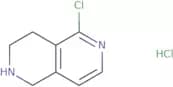
CAS:<p>Versatile small molecule scaffold</p>Formula:C5H4ClN5Purity:Min. 95%Molecular weight:169.57 g/mol5-Chloro-1,2,3,4-tetrahydro-2,6-naphthyridine hydrochloride
CAS:<p>Versatile small molecule scaffold</p>Formula:C8H10Cl2N2Purity:Min. 95%Molecular weight:205.08 g/mol7-Methyl-2-(methylthio)pyrido[2,3-d]pyrimidin-6-ol
CAS:<p>Versatile small molecule scaffold</p>Formula:C9H9N3OSPurity:Min. 95%Molecular weight:207.25 g/mol


![7-Chloro-[1,2,3,4]tetrazolo[1,5-c]pyrimidin-8-amine](/_next/image/?url=https%3A%2Fstatic.cymitquimica.com%2Fproducts%2F3D%2Fthumb-webp%2FDAA21038.webp&w=3840&q=75)
![rac-[(1R,2R,4R)-Bicyclo[2.2.1]hept-5-en-2-yl]methanamine](/_next/image/?url=https%3A%2Fstatic.cymitquimica.com%2Fproducts%2F3D%2Fthumb-webp%2FDAA21186.webp&w=3840&q=75)
![[(4-Chlorophenyl)sulfanyl]formonitrile](/_next/image/?url=https%3A%2Fstatic.cymitquimica.com%2Fproducts%2F3D%2Fthumb-webp%2FDAA22637.webp&w=3840&q=75)
![4H-Imidazo[4,5-c]pyridin-4-one](/_next/image/?url=https%3A%2Fstatic.cymitquimica.com%2Fproducts%2F3D%2Fthumb-webp%2FDAA24324.webp&w=3840&q=75)
![3-Oxa-1-azaspiro[4.4]nonane-2,4-dione](/_next/image/?url=https%3A%2Fstatic.cymitquimica.com%2Fproducts%2F3D%2Fthumb-webp%2FDAA25344.webp&w=3840&q=75)
![[4-(Hexyloxy)phenyl]methanol](/_next/image/?url=https%3A%2Fstatic.cymitquimica.com%2Fproducts%2F3D%2Fthumb-webp%2FDAA25638.webp&w=3840&q=75)
![[4-(Prop-2-en-1-yloxy)phenyl]methanol](/_next/image/?url=https%3A%2Fstatic.cymitquimica.com%2Fproducts%2F3D%2Fthumb-webp%2FDAA25645.webp&w=3840&q=75)
![2-Hydroxy-2-[3-(trifluoromethyl)phenyl]propanoic acid](/_next/image/?url=https%3A%2Fstatic.cymitquimica.com%2Fproducts%2F3D%2Fthumb-webp%2FDAA25938.webp&w=3840&q=75)
![1-{Bicyclo[4.2.0]octa-1,3,5-trien-7-yl}ethan-1-amine](/_next/image/?url=https%3A%2Fstatic.cymitquimica.com%2Fproducts%2F3D%2Fthumb-webp%2FDAA26433.webp&w=3840&q=75)
![1,8,8-Trimethylbicyclo[3.2.1]octane-2,4-dione](/_next/image/?url=https%3A%2Fstatic.cymitquimica.com%2Fproducts%2F3D%2Fthumb-webp%2FDAA27894.webp&w=3840&q=75)

![1-Oxa-6-azaspiro[3.5]nonane](/_next/image/?url=https%3A%2Fstatic.cymitquimica.com%2Fproducts%2F3D%2Fthumb-webp%2FEIA38870.webp&w=3840&q=75)
![2-({[(tert-Butoxy)carbonyl]amino}methyl)-2-ethylbutanoic acid](/_next/image/?url=https%3A%2Fstatic.cymitquimica.com%2Fproducts%2F3D%2Fthumb-webp%2FEIA51421.webp&w=3840&q=75)
![N-[2-(tert-Butyldimethylsilyloxy)ethyl]methylamine](/_next/image/?url=https%3A%2Fstatic.cymitquimica.com%2Fproducts%2F3D%2Fthumb-webp%2FEIA58028.webp&w=3840&q=75)
![4-{[(tert-Butyldimethylsilyl)oxy]methyl}piperidine](/_next/image/?url=https%3A%2Fstatic.cymitquimica.com%2Fproducts%2F3D%2Fthumb-webp%2FEIA58041.webp&w=3840&q=75)
![Imidazo[1,2-a]pyridin-5-amine hydrochloride](/_next/image/?url=https%3A%2Fstatic.cymitquimica.com%2Fproducts%2F3D%2Fthumb-webp%2FEIA92715.webp&w=3840&q=75)

![5-chlorofuro[2,3-c]pyridine-2-carboxylic acid](/_next/image/?url=https%3A%2Fstatic.cymitquimica.com%2Fproducts%2F3D%2Fthumb-webp%2FEIC28547.webp&w=3840&q=75)
![7-Hydroxy-4H,5H,6H,7H-pyrazolo[1,5-a]pyrazin-4-one](/_next/image/?url=https%3A%2Fstatic.cymitquimica.com%2Fproducts%2F3D%2Fthumb-webp%2FEIC58762.webp&w=3840&q=75)
![5-Chloro[1,2,4]triazolo[1,5-a]pyrazin-2-amine](/_next/image/?url=https%3A%2Fstatic.cymitquimica.com%2Fproducts%2F3D%2Fthumb-webp%2FEIC65385.webp&w=3840&q=75)
![7-Methyl-2-(methylthio)pyrido[2,3-d]pyrimidin-6-ol](/_next/image/?url=https%3A%2Fstatic.cymitquimica.com%2Fproducts%2F3D%2Fthumb-webp%2FEIC68275.webp&w=3840&q=75)