Building Blocks
This section contains fundamental products for the synthesis of organic and biological compounds. Building blocks are the essential starting materials used to construct complex molecules through various chemical reactions. They play a critical role in drug discovery, material science, and chemical research. At CymitQuimica, we offer a diverse range of high-quality building blocks to support your innovative research and industrial projects, ensuring you have the essential components for successful synthesis.
Subcategories of "Building Blocks"
- Boronic Acids & Boronic Acid Derivatives(5,756 products)
- Chiral Building Blocks(1,242 products)
- Hydrocarbon Building Blocks(6,095 products)
- Organic Building Blocks(61,055 products)
Found 199650 products of "Building Blocks"
Sort by
Purity (%)
0
100
|
0
|
50
|
90
|
95
|
100
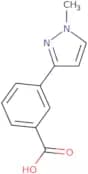
3-(1-Methyl-1H-pyrazol-3-yl)benzoic acid
CAS:<p>3-(1-Methyl-1H-pyrazol-3-yl)benzoic acid is a chemical compound with the molecular formula C5H5NO2. It is a research chemical that has not yet been fully characterized and its potential uses have not yet been determined. 3-(1-Methyl-1H-pyrazol-3-yl)benzoic acid is used as an intermediate in the synthesis of other compounds, including pharmaceuticals and pesticides. This compound has the potential to be used as a building block for complex compounds, or as a reagent in various reactions.</p>Formula:C11H10N2O2Purity:Min. 95%Color and Shape:PowderMolecular weight:202.21 g/mol6-Hydroxy-2-oxo-1,2-dihydropyridine-3-carboxylic acid
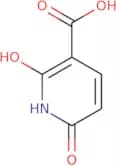
CAS:<p>6-Hydroxy-2-oxo-1,2-dihydropyridine-3-carboxylic acid is a hydroxylate that is found in animals and plants. It is also a flavinoid, meaning it has an aromatic ring with two carbon atoms and a nitrogen atom. 6-Hydroxy-2-oxo-1,2-dihydropyridine 3 carboxylic acid is found in the subunits of flavoproteins, which are enzymes that produce molecular oxygen from hydrogen peroxide. 6HODCA has been shown to be an acceptor for electrons in lipid oxidation reactions and can be used as a precursor for the synthesis of lipids. Hydroxylases also produce 6HODCA by adding water to pyridines.</p>Formula:C6H5NO4Purity:Min. 95%Molecular weight:155.11 g/molKJ Pyr 9
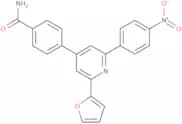
CAS:<p>KJ Pyr 9 is an all-trans retinoic acid (ATRA) derivative that has been shown to inhibit the growth of cancer cells in vitro. KJ Pyr 9 selectively binds to the retinoid X receptor, which is a transcription factor that regulates gene expression. ATRA derivatives are also known as potential biomarkers for colorectal adenocarcinoma and cervical cancer. KJ Pyr 9 was found to be cytostatic rather than cytotoxic, meaning it inhibits cell proliferation but does not kill cells. This molecule has low expression levels and may be a target for inhibitory compounds.</p>Formula:C22H15N3O4Purity:Min. 95%Molecular weight:385.37 g/mol2,3-Dihydroxybenzoic acid
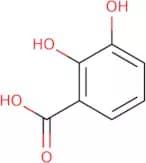
CAS:2,3-Dihydroxybenzoic acid is an antioxidant found in many plants. It has a protective effect against oxidative injury. 2,3-Dihydroxybenzoic acid has been used as a model for the study of infectious diseases and its effects on biological studies. This compound has been shown to prevent the growth of Aerobacter aerogenes and Dinucleotide phosphate. 2,3-Dihydroxybenzoic acid is also used as an ingredient in sephadex g-100 and it acts as an antimicrobial agent that prevents microbial growth in wastewater treatment systems.Formula:C7H6O4Purity:Min. 95%Color and Shape:PowderMolecular weight:154.12 g/molPF-04965842
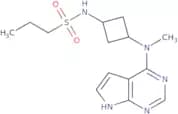
CAS:<p>PF-04965842 is an anti-inflammatory drug that belongs to the class of Jak1 inhibitors. It is used in the treatment of alopecia areata, dermatitis, and bowel disease. PF-04965842 is a selective inhibitor of JAK3 and blocks signaling through this pathway. PF-04965842 has been shown to have long-term efficacy in the treatment of inflammatory skin diseases such as atopic dermatitis and psoriasis. In addition, it has been demonstrated to be effective in reducing symptoms associated with inflammatory bowel disease (IBD) and ulcerative colitis. PF-04965842 also inhibits the production of proinflammatory cytokines by inhibiting the activation of inflammatory cells in the skin or gut.</p>Formula:C14H21N5O2SPurity:Min. 95%Color and Shape:PowderMolecular weight:323.41 g/mol2,6-Di(tert-butyl)-4-hydroxy-4-methyl-2,5-cyclohexadien-1-one
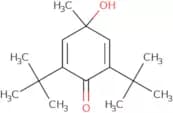
CAS:<p>2,6-Di(tert-butyl)-4-hydroxy-4-methyl-2,5-cyclohexadien-1-one (BHT) is a reactive methide that can be produced by the nucleophilic attack of an electrophile on a molecule containing a methylene group. BHT is used in analytical chemistry as an antioxidant and free radical scavenger. BHT has been shown to protect rat liver microsomes from damage induced by oxidative stress and to inhibit the development of lung cancer in rats chronically treated with cigarette smoke. This product also has been used in modelling studies to study the effect of alveolar type II cells on airway hyperresponsiveness.</p>Formula:C15H24O2Purity:Min. 95%Color and Shape:PowderMolecular weight:236.35 g/mol1,4-Diisocyanatobutane
CAS:<p>Monomer for the preparation of biocompatible polyurethane polymers</p>Formula:C6H8N2O2Purity:Min. 98 Area-%Color and Shape:Colorless Clear LiquidMolecular weight:140.14 g/mol2,4-Dinitrobenzaldehyde
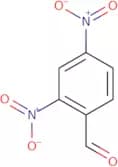
CAS:2,4-Dinitrobenzaldehyde is a chemical compound that contains a hydroxyl group and an amine. It is reactive and can form cationic surfactants with other compounds. 2,4-Dinitrobenzaldehyde has been shown to react with dimethyl fumarate in the presence of ethyl esters to form ethyl 2,4-dinitrophenolate. This reaction is catalyzed by dinucleotide phosphate and requires salinity or a base such as sodium methoxide. 2,4-Dinitrobenzaldehyde reacts with 2-aminoethanol in the presence of water or alcohols to produce 2,4-diaminobenzoic acid. The reaction mechanism for this process is not known but it may involve hydrogen bonding between the hydroxyl group and amine groups. 2,4-Dinitrobenzaldehyde has been used as a reagent for staining DNA in gel electFormula:C7H4N2O5Purity:Min. 95%Color and Shape:PowderMolecular weight:196.12 g/mol1-(4-Hydroxyphenyl)dodecan-1-one
CAS:<p>Versatile small molecule scaffold</p>Formula:C18H28O2Purity:Min. 95%Molecular weight:276.4 g/molCaffeic acid
CAS:<p>Caffeic acid is naturally produced by the metabolism of plants and fungi. Caffeic acid has an antioxidant activity that can be higher than tocopherol in oil-in-water emulsions. Caffeic acid has proven antimicrobial activity against Staphylococcus aureus. In mice, caffeic acid inhibits the enzyme 5-lipoxygenase thus inhibititing the biosynthesis of the inflammatory mediators leukotrienes.</p>Formula:C9H8O4Purity:Min. 98 Area-%Color and Shape:PowderMolecular weight:180.16 g/molCetirizine propanediol ester dihydrochloride, mixture of regioisomers
<p>Please enquire for more information about Cetirizine propanediol ester dihydrochloride, mixture of regioisomers including the price, delivery time and more detailed product information at the technical inquiry form on this page</p>Formula:C24H31ClN2O4•(HCl)2Purity:Min. 95%Color and Shape:PowderMolecular weight:519.89 g/mol4-(Cyclopropylmethyl)-1-oxa-4,9-diazaspiro[5.5]undecan-3-one hydrochloride
<p>Please enquire for more information about 4-(Cyclopropylmethyl)-1-oxa-4,9-diazaspiro[5.5]undecan-3-one hydrochloride including the price, delivery time and more detailed product information at the technical inquiry form on this page</p>Formula:C12H20N2O2•(HCl)xPurity:Min. 95%Color and Shape:Powder2-Chloro-1,3-propanediol
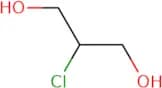
CAS:<p>2-Chloro-1,3-propanediol is a useful intermediate and building block in organic synthesis. It is also a reagent that can be used to synthesize other organic compounds. 2-Chloro-1,3-propanediol has been shown to be a versatile scaffold for the synthesis of many different types of organic molecules. It is also an important component of research chemicals and speciality chemicals. This chemical can be used as a high quality fine chemical or complex compound in the manufacture of other products.</p>Formula:C3H7ClO2Purity:Min. 97 Area-%Color and Shape:Colorless Clear LiquidMolecular weight:110.54 g/molCyclohexane-1,2-dione
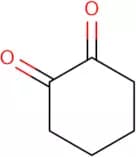
CAS:<p>Cyclohexane-1,2-dione is a natural compound that can be found in kidney beans and other plants. It has been shown to inhibit the growth of tumor cells in vitro. Cyclohexane-1,2-dione binds to DNA polymerase, preventing replication and transcription. This reaction mechanism is similar to that of the rifamycins. Cyclohexane-1,2-dione has also been shown to bind enzymes such as nitrite ion reductase with high affinity and inhibit their activity. Cyclohexane-1,2-dione is chemically stable and does not react with metal ions or form stable complexes with biological molecules. The redox potentials for this molecule are -0.42 V (5/6) under aerobic conditions and -0.52 V (5/6) under anaerobic conditions.</p>Formula:C6H8O2Purity:Min. 96.5%Color and Shape:PowderMolecular weight:112.13 g/mol2-Chloroquinoline
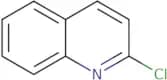
CAS:2-Chloroquinoline is a compound that has antimicrobial properties. It acts by inhibiting bacterial RNA synthesis and protein synthesis. 2-Chloroquinoline has been shown to have toxicological effects in animal studies, including cancer. It also inhibits the activity of the cb2 receptor and the CCR5 receptor, which are involved in tumor growth. The molecular docking analysis for this compound is available, which can be found on PubChem.Formula:C9H6ClNPurity:Min. 98%Color and Shape:PowderMolecular weight:163.6 g/mol2-Chloro-3-pyridinecarboxyaldehyde
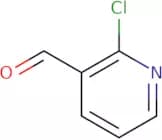
CAS:<p>2-Chloro-3-pyridinecarboxyaldehyde is a synthetic molecule that contains two chlorines and three pyridines. It is a potential drug for the treatment of cancer or tuberculosis. The synthesis of this compound starts from 2,4-dichlorobenzaldehyde and 3-amino-5-(chloromethyl)pyridine. The reaction with acetic acid yields 2-chloro-3-pyridinecarboxyaldehyde. This product has been shown to inhibit cancer cells in vitro, but it does not have any effect on healthy cells. In addition, this product can be used as an anticancer agent against cervical cancer cells in vitro.</p>Formula:C6H4ClNOPurity:Min. 98 Area-%Color and Shape:PowderMolecular weight:141.55 g/molL-Histidine acetate
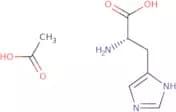
CAS:Controlled Product<p>L-Histidine acetate is a white, crystalline powder that has a constant melting point and can be soluble in water. It has a monoclinic crystal system with a crystal form of α-l-histidine dihydrogen acetate. L-Histidine acetate is an amino acid that is necessary for the biosynthesis of proteins and the metabolism of histamine. L-Histidine acetate has been studied using x-ray diffraction and optical properties to determine its functional groups. The activation energy for this compound is found to be at 4.1 kcal/mol, which is lower than most other compounds in nature. The frequencies of light waves are measured at 3,040 cm-1 and the evaporation rate at 15°C is 0.039 cm3/s.</p>Formula:C6H9N3O2•C2H4O2Purity:Min. 95%Molecular weight:215.21 g/mol(2S,5R)-5-Hydroxypiperidine-2-carboxylic acid hydrochloride
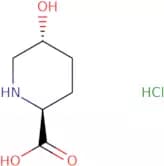
CAS:<p>(2S,5R)-5-Hydroxypiperidine-2-carboxylic acid hydrochloride is a fine chemical that is useful as a building block in organic synthesis. It is also used as an intermediate in the production of other chemicals and may be used to synthesize complex compounds. This compound has a CAS number of 824943-40-0 and may be available at competitive prices.</p>Formula:C6H12ClNO3Purity:Min. 95%Color and Shape:Off-White PowderMolecular weight:181.62 g/mol3,4-Diaminobenzoic acid
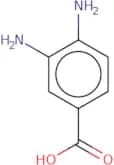
CAS:<p>3,4-Diaminobenzoic acid is a compound that is produced by the condensation of two molecules of hydrochloric acid. 3,4-Diaminobenzoic acid has been used as a reagent in the synthesis of coumarin derivatives. This chemical has been shown to be an effective proton scavenger in an optimum concentration. Benzimidazole compounds are also synthesized from 3,4-diaminobenzoic acid and have been shown to be effective against autoimmune diseases. 3,4-Diaminobenzoic acid can be used for the production of diazonium salts, which are used in the synthesis of anti-inflammatory drugs and other pharmaceuticals. The hydroxyl group on this molecule makes it chemically stable and kinetic data shows that it has high diphenolase activity.</p>Formula:C7H8N2O2Purity:Min. 96 Area-%Color and Shape:PowderMolecular weight:152.15 g/mol8-Hydroxypenillic acid
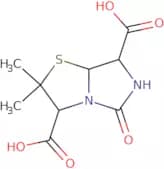
CAS:<p>8-Hydroxypenillic acid is an intermediate in the synthesis of penicillin. It is produced by the enzyme 8-hydroxylase, which converts L-lysine to L-3,4-dihydroxyphenylalanine. This reaction requires a number of cofactors, including magnesium ions and oxygen. The product is then converted to 8-hydroxypenillic acid by the enzyme hydroxypenicillinase. Inhibition of this enzyme leads to accumulation of 8-hydroxypenillic acid, which can be used as a biomarker for production of penicillin.</p>Formula:C9H12N2O5SPurity:Min. 95%Color and Shape:PowderMolecular weight:260.27 g/mol




![4-(Cyclopropylmethyl)-1-oxa-4,9-diazaspiro[5.5]undecan-3-one hydrochloride](/_next/image/?url=https%3A%2Fstatic.cymitquimica.com%2Fproducts%2F3D%2Fthumb-webp%2FFC182982.webp&w=3840&q=75)