Building Blocks
Subcategories of "Building Blocks"
- Boronic Acids & Boronic Acid Derivatives(5,783 products)
- Chiral Building Blocks(1,242 products)
- Hydrocarbon Building Blocks(6,105 products)
- Organic Building Blocks(61,055 products)
Found 205383 products of "Building Blocks"
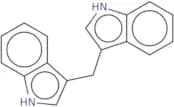
3,3'-Diindolymethane (synthetic)
CAS:3,3'-Diindolylmethane, also known as DIM, is natural compound derived from indole. In a recent study, DIM was evaluated as a potential agent for preventing biofilm formation by Streptococcus mutans, which is a major cause of dental caries. The researchers found that DIM significantly inhibited biofilm formation (by 92%) and reduced the production of extracellular polymeric substances (EPS), which are important for biofilm stability particularly under acidic conditions. The study suggests that 3,3'-diindolylmethane has anti-biofilm and anti-virulence properties against S. mutans, and it is a potential candidate for reducing biofilm formation and preventing dental caries.
It has been also reported that 3,3'-diindolymethane can act as a chemopreventive agent. DIM has estrogenic effects without interacting with the binding domain of the estrogen receptors. This study found that DIM could suppress cell growth and disrupt cell cycle progression of young adult mouse colonocytes (YAMCs) in vitro. Moreover, DIM altered gene expression associated with apoptosis and cell proliferation, and it induced transcriptional activity of the estrogen receptor (ER), which was inhibited by an ER antagonist.Formula:C17H14N2Purity:Min. 95%Color and Shape:PowderMolecular weight:246.31 g/molRef: 3D-FD14886
Discontinued product(S)-1,1'-Bi-2-Naphthol
CAS:The chemical structure of 1,1'-bi-2-naphthol is an alkanoic acid with a hydroxyl group. It has been shown to react in the presence of amines and sodium salts to form hydrogen bonding interactions. The x-ray crystal structures of magnesium salt and hydrogen bonding interactions were found to have a steric interaction with the fatty acids. The reaction mechanism for 1,1'-bi-2-naphthol is similar to that of other alkanoic acids: it reacts with a nucleophilic compound, such as water or ammonia, to produce an alcohol (hydroxyl group). When these reactions occur intramolecularly, the hydrogen bonds are formed between adjacent molecules.
Formula:C20H14O2Purity:Min. 95%Color and Shape:White PowderMolecular weight:286.32 g/molRef: 3D-FB01811
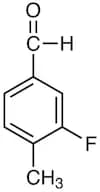
Discontinued product3-Fluoro-4-methylbenzaldehyde
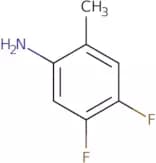
CAS:Formula:C8H7FOPurity:>95.0%(GC)Color and Shape:Light yellow to Yellow to Orange clear liquidMolecular weight:138.144,5-Difluoro-2-methylaniline
CAS:4,5-Difluoro-2-methylaniline is a chemical intermediate that is used as a reaction component in the synthesis of organic compounds. It is a fine chemical with CAS No. 875664-57-6, and it can be used as a building block for the synthesis of complex organic molecules. This reagent is useful for the production of pharmaceuticals, agrochemicals, and other specialty chemicals. 4,5-Difluoro-2-methylaniline has been shown to act as an intermediate for the synthesis of many different types of compounds, including complex compounds such as imidazole derivatives and N-(4-fluorophenyl)benzo[d]oxazole derivatives.
Formula:C7H7F2NPurity:Min. 95%Color and Shape:Off-White PowderMolecular weight:143.13 g/molRef: 3D-FD67856
Discontinued product2-Chloro-5-(trifluoromethyl)phenol
CAS:Formula:C7H4ClF3OPurity:>98.0%(GC)Color and Shape:Light orange to Yellow to Green clear liquidMolecular weight:196.552-Amino-6-fluorobenzoic acid
CAS:Intermediate in the synthesis of idelalisib
Formula:C7H6FNO2Purity:Min. 98 Area-%Color and Shape:PowderMolecular weight:155.13 g/molRef: 3D-FA11268
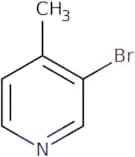
Discontinued product3-Bromo-4-methylpyridine
CAS:3-Bromo-4-methylpyridine is a molecule that consists of a five-membered ring containing three bromine atoms and one carbon atom. It has the chemical formula C5H6BrN. The molecule contains two methyl groups attached to the pyridine ring (hence its name). 3-Bromo-4-methylpyridine has been shown to be an effective synthon for palladium-catalyzed cross-coupling reactions, which are used in organic synthesis for the production of pharmaceuticals. This molecule is also an excellent ligand for metal ions, such as calcium and hydrogen, because it forms strong bonds with these ions. 3-Bromo-4-methylpyridine can be used as a bidentate ligand because it has two nitrogen atoms that can bind to metal ions. The molecule also has functional properties, such as photochromism and bilayer formation due to its symmetry.
Formula:C6H6BrNPurity:Min. 95%Color and Shape:Clear LiquidMolecular weight:172.02 g/molRef: 3D-FB01016
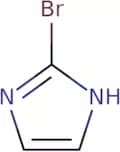
Discontinued product2-Bromo-1H-imidazole
CAS:2-Bromo-1H-imidazole is an environmental pollutant that has been detected in the atmosphere, water, and soil. It is used as a pesticide and has been found to be an impurity in biphenyl. 2-Bromo-1H-imidazole can be used as a substrate for the Suzuki coupling reaction or as a starting material for the synthesis of imidazole derivatives. The compound spontaneously fragments under acidic conditions to form nitric acid and hydrogen bromide. 2-Bromo-1H-imidazole has been shown to inhibit hepatitis C virus (HCV) replication and induce cancer cell apoptosis in vitro.
2-Bromo-1H-imidazole is also known to cause DNA fragmentation in cells through oxidation by reactive oxygen species or through spontaneous decomposition of the molecule into acid, bromine radicals, and ammonia.Formula:C3H3BrN2Purity:Min. 95%Color and Shape:PowderMolecular weight:146.97 g/molRef: 3D-FB12791
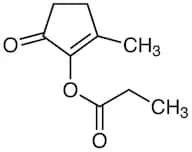
Discontinued product2-Methyl-5-oxo-1-cyclopentenyl Propionate
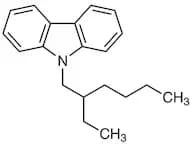
CAS:Formula:C9H12O3Purity:>98.0%(GC)Color and Shape:White to Light yellow powder to lumpMolecular weight:168.199-(2-Ethylhexyl)carbazole
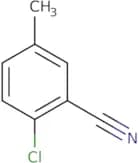
CAS:Formula:C20H25NPurity:>97.0%(GC)Color and Shape:Light yellow to Yellow to Orange clear liquidMolecular weight:279.432-Chloro-5-methylbenzonitrile
CAS:2-Chloro-5-methylbenzonitrile (2C5MB) is a versatile building block that is used in the production of fine chemicals, specialty chemicals, and pharmaceuticals. It is also used as a reagent for organic synthesis and as a speciality chemical. 2C5MB can be used in the synthesis of various complex compounds and research chemicals. The compound has been shown to have high reactivity and has been used as a reaction component or scaffold for the synthesis of other products.
Formula:C8H6ClNPurity:Min. 95%Color and Shape:PowderMolecular weight:151.59 g/molRef: 3D-FC67380
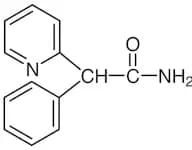
Discontinued product2-Phenyl-2-(2-pyridyl)acetamide
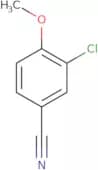
CAS:Formula:C13H12N2OPurity:>98.0%(T)(HPLC)Color and Shape:White to Almost white powder to crystalMolecular weight:212.253-Chloro-4-methoxybenzonitrile
CAS:3-Chloro-4-methoxybenzonitrile is a chemical compound that can be used as a reactant, reagent, or building block in the synthesis of other chemicals. It is an important intermediate for the production of pharmaceuticals, pesticides and dyes. 3-Chloro-4-methoxybenzonitrile is also being investigated for use in the manufacture of photoresists for semiconductor device fabrication. This chemical is listed on the Chemical Abstracts Service registry with CAS number 102151-33-7.
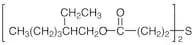
Formula:C8H6ClNOPurity:Min. 95%Color and Shape:SolidMolecular weight:167.59 g/molBis(2-ethylhexyl) 3,3'-Thiodipropionate
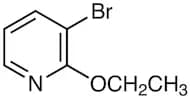
CAS:Formula:C22H42O4SPurity:>96.0%(GC)Color and Shape:Colorless to Almost colorless clear liquidMolecular weight:402.633-Bromo-2-ethoxypyridine
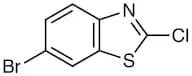
CAS:Formula:C7H8BrNOPurity:>97.0%(GC)(T)Color and Shape:Colorless to Light yellow clear liquidMolecular weight:202.056-Bromo-2-chlorobenzothiazole
CAS:Formula:C7H3BrClNSPurity:>96.0%(GC)Color and Shape:White to Orange to Green powder to crystalMolecular weight:248.52(4-Fluorophenyl)urea
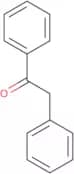
CAS:Formula:C7H7FN2OPurity:>97.0%(HPLC)(N)Color and Shape:White to Almost white powder to crystalMolecular weight:154.142-Phenylacetophenone
CAS:2-Phenylacetophenone is a synthetic compound that has been shown to be cytotoxic and significantly inhibit the growth of bacteria. 2-Phenylacetophenone binds to fatty acids in the cell membrane and forms covalent linkages with them, leading to the permeabilization of the cell membrane. This leads to bacterial death because without a functional cell membrane, cells cannot maintain homeostasis. The mechanism for this is not fully understood but it is believed that 2-phenylacetophenone binds to toll-like receptor 4 (TLR4) on macrophages, which triggers an inflammatory response. 2-Phenylacetophenone also reacts with hydroxyl groups on DNA and may interfere with DNA repair mechanisms.
Formula:C14H12OPurity:Min. 95%Color and Shape:Red PowderMolecular weight:196.24 g/molRef: 3D-FP26930
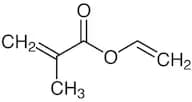
Discontinued productVinyl Methacrylate (stabilized with MEHQ)
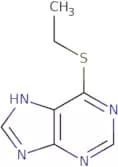
CAS:Formula:C6H8O2Purity:>98.0%(GC)Color and Shape:Colorless clear liquidMolecular weight:112.136-Ethylmercaptopurine
CAS:6-Ethylmercaptopurine is a purine analogue that inhibits the synthesis of DNA. It is used as an inhibitor of protein synthesis and in the treatment of inflammatory bowel disease. 6-Ethylmercaptopurine has been shown to inhibit the activity of ATPase, which may be responsible for its ability to suppress the proliferation of cells. This drug can also act as an analog to adenosine, which can be used to determine ATP levels in a cell or tissue sample by measuring the amount of p-nitrophenyl phosphate produced. 6-Ethylmercaptopurine has been shown to block phosphatase activity, which may lead to inflammation in some cases.
6-Ethylmercaptopurine has a molecular weight of 194.2 g/mol and an optimum pH of 4.5Formula:C7H8N4SPurity:Min. 95%Color and Shape:Off-White PowderMolecular weight:180.23 g/molRef: 3D-FE08008
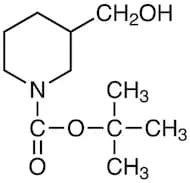
Discontinued product1-(tert-Butoxycarbonyl)-3-piperidinemethanol
CAS:Formula:C11H21NO3Purity:>95.0%(GC)Color and Shape:White to Almost white powder to crystalMolecular weight:215.292-(Chloromethyl)-1,3-thiazole
CAS:2-(Chloromethyl)-1,3-thiazole is an aromatic hydrocarbon that is used as a pesticide. It is also a metabolic intermediate in the metabolism of chlorinating agents and has been shown to be carcinogenic. This compound degrades by reacting with hydrochloric acid, nitric acid, sodium hydroxide solution, or hydrogen chloride to form 2-chloro-1,3-thiazole or 2-chloromethyltetrahydrothiophene. The pharmacokinetic properties of this compound are unknown.
Formula:C4H4ClNSPurity:Min. 95%Color and Shape:PowderMolecular weight:133.6 g/molRef: 3D-FC124123
Discontinued product4-(Acetylamino)-2-nitrobenzoic acid
CAS:4-(Acetylamino)-2-nitrobenzoic acid (AAANB) is a versatile building block that can be used in the synthesis of a wide range of organic and pharmaceutical compounds. AAANB is an intermediate in the preparation of 4-Amino-3-nitrophenol, which is an important research chemical. This compound is a useful scaffold for the synthesis of organic compounds with various biological activities. The CAS number for this product is 21573-29-5.
Formula:C9H8N2O5Purity:Min. 95%Color and Shape:PowderMolecular weight:224.17 g/molRef: 3D-FA131194
Discontinued product5-Chloro-2-phenyl-1H-imidazole-4-carboxaldehyde
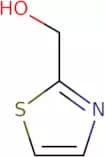
CAS:Formula:C10H7ClN2OPurity:>97.0%(HPLC)(N)Color and Shape:Orange to Amber to Dark red powder to crystalMolecular weight:206.631,3-Thiazol-2-ylmethanol
CAS:1,3-Thiazol-2-ylmethanol is a macrocyclic compound that has a structure similar to that of the natural product phenylbutazone. It is synthesized from 1,3-thiazol-2-amine and benzaldehyde by dehydrogenative condensation. The ligand binds with metal ions via its thionyl group. The metal ion coordinates with the chloride anion and the ligand to produce a planar geometry. This process also produces a distillate that contains phenylbutazone as a major product.
Formula:C4H5NOSPurity:Min. 95%Color and Shape:White PowderMolecular weight:115.15 g/molRef: 3D-FT53502
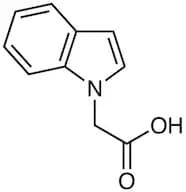
Discontinued product(1-Indolyl)acetic Acid
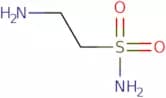
CAS:Formula:C10H9NO2Purity:>97.0%(T)Color and Shape:Light yellow to Yellow to Orange powder to crystalMolecular weight:175.192-Aminoethanesulfonamide
CAS:2-Aminoethanesulfonamide is a drug that has been shown to have biological properties. It is used for the treatment of bowel disease and has been shown to be effective in treating some cases of congestive heart failure. 2-Aminoethanesulfonamide interacts with drugs such as sodium citrate and dextran sulfate, which can lead to drug interactions. It also inhibits the enzyme activities in bone cancer cells, which may contribute to its anticancer effects. This drug has been shown to have anti-inflammatory properties and may be beneficial in treating inflammatory bowel disease (IBD).
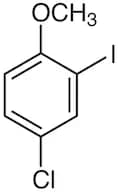
Formula:C2H8N2O2SPurity:Min. 95%Color and Shape:Off-White PowderMolecular weight:124.16 g/mol4-Chloro-2-iodoanisole
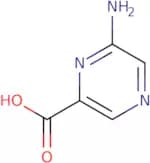
CAS:Formula:C7H6ClIOPurity:>98.0%(GC)Color and Shape:White or Colorless to Orange to Green powder to lump to clear liquidMolecular weight:268.486-Amino-2-pyrazinecarboxylic acid
CAS:6-Amino-2-pyrazinecarboxylic acid is a high quality reagent that is used as an intermediate for the synthesis of complex compounds. It is also a useful scaffold for the production of valuable speciality chemicals. This chemical is also used as a reaction component in research and development to produce versatile building blocks. 6-Amino-2-pyrazinecarboxylic acid has been shown to be useful for producing fine chemicals and speciality chemicals, which are often used in many industries.
Formula:C5H5N3O2Purity:Min. 95%Color and Shape:Yellow To Brown SolidMolecular weight:139.11 g/molRef: 3D-FA11447
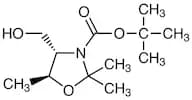
Discontinued producttert-Butyl (4S,5S)-4-(Hydroxymethyl)-2,2,5-trimethyloxazolidine-3-carboxylate
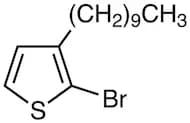
CAS:Formula:C12H23NO4Purity:>98.0%(GC)Color and Shape:Colorless to Light yellow clear liquidMolecular weight:245.322-Bromo-3-decylthiophene
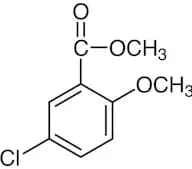
CAS:Formula:C14H23BrSPurity:>97.0%(GC)Color and Shape:Colorless to Light orange to Yellow clear liquidMolecular weight:303.30Methyl 5-Chloro-2-methoxybenzoate
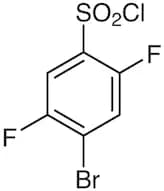
CAS:Formula:C9H9ClO3Purity:>97.0%(GC)Color and Shape:Colorless to Light orange to Yellow clear liquidMolecular weight:200.624-Bromo-2,5-difluorobenzenesulfonyl Chloride
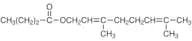
CAS:Formula:C6H2BrClF2O2SPurity:>98.0%(GC)(T)Color and Shape:White to Light yellow to Light orange powder to crystalMolecular weight:291.493,7-Dimethyl-2,6-octadienyl Butyrate
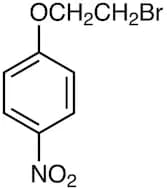
CAS:Formula:C14H24O2Purity:>95.0%(GC)Color and Shape:Colorless to Almost colorless clear liquidMolecular weight:224.34β-Bromo-4-nitrophenetole
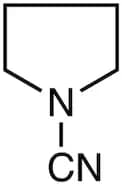
CAS:Formula:C8H8BrNO3Purity:>97.0%(GC)Color and Shape:White to Light yellow powder to crystalMolecular weight:246.06Pyrrolidine-1-carbonitrile
CAS:Formula:C5H8N2Purity:>98.0%(GC)Color and Shape:Colorless to Light orange to Yellow clear liquidMolecular weight:96.132,4-Dinitroaniline
CAS:2,4-Dinitroaniline is a diazonium salt that is used in the wastewater treatment process. It is an analytical reagent that can be used to detect and identify nucleophilic groups. 2,4-Dinitroaniline is used as a precursor for other dyes and has been shown to have genotoxic activity in some cases. The chemical structure of 2,4-dinitroaniline is made up of two nitro groups attached to an amino group. This compound absorbs ultraviolet light at 260 nm and emits radiation at 360 nm, which can be measured using synchronous fluorescence spectroscopy. It reacts with hydrochloric acid to form diazonium salt.
2,4-Dinitroaniline has been shown to react with the protein monoclonal antibody CEA3B3 by binding to its reactive thiols. This binding leads to the disruption of the antibody's function and inhibitsFormula:C6H5N3O4Purity:Min. 95%Color and Shape:Yellow PowderMolecular weight:183.12 g/molRef: 3D-FD146275
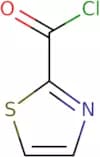
Discontinued product1,3-Thiazole-2-carbonyl chloride
CAS:1,3-Thiazole-2-carbonyl chloride is a hydrogen chloride with an amide and thionyl group. It is used in the synthesis of alicyclic compounds. 1,3-Thiazole-2-carbonyl chloride can be chlorinated to produce a chlorinating agent. This compound has been shown to have oncologic properties and can cause cancer in target cells by binding to the tyrosine kinase enzyme. It is also orally active and aromatic hydrocarbon.
Formula:C4H2ClNOSPurity:Min. 95%Color and Shape:Yellow PowderMolecular weight:147.58 g/molRef: 3D-FT06898
Discontinued product2-Naphthalenesulfonic acid sodium
CAS:2-Naphthalenesulfonic acid sodium is a chemical compound that belongs to the class of naphthalene sulfonic acids. It is used in the production of medicines and as an industrial chemical. 2-Naphthalenesulfonic acid sodium has been shown to inhibit the viscosity of blood capillaries and has been proposed for use in the treatment of diabetic retinopathy. This compound also reduces the permeability of cell membranes by binding to fatty acids, which has led it to be studied for its potential effects on prostate cancer. 2-Naphthalenesulfonic acid sodium has been shown to have a Michaelis–Menten kinetics with respect to the enzyme ft-ir spectroscopy and can be used as a reagent for cationic surfactants. 2-Naphthalenesulfonic acid sodium is soluble in water, but insoluble in hydrochloric acid or solvents such as chloroform or acetone.
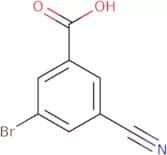
Formula:C10H7O3SNaPurity:Min. 98 Area-%Color and Shape:White Off-White PowderMolecular weight:230.22 g/mol3-Bromo-5-cyanobenzoic acid
CAS:3-Bromo-5-cyanobenzoic acid is a fine chemical that is used as a reagent or intermediate in the production of other chemicals. 3-Bromo-5-cyanobenzoic acid can be used as an intermediate in the synthesis of pharmaceuticals, agrochemicals, and perfumes. This compound is also useful as a building block for making speciality chemicals and research chemicals. 3-Bromo-5-cyanobenzoic acid is versatile because it can be used in many different reactions with many different substrates to make many different products.
Formula:C8H4BrNO2Purity:Min. 95%Color and Shape:PowderMolecular weight:226.03 g/molRef: 3D-FB12102
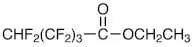
Discontinued productEthyl 5H-Octafluorovalerate
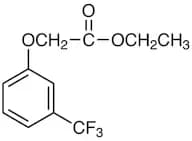
CAS:Formula:C7H6F8O2Purity:>98.0%(GC)Color and Shape:Colorless to Almost colorless clear liquidMolecular weight:274.11Ethyl 3-(Trifluoromethyl)phenoxyacetate
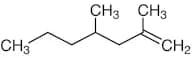
CAS:Formula:C11H11F3O3Purity:>95.0%(GC)Color and Shape:Light yellow to Yellow to Orange clear liquidMolecular weight:248.202,4-Dimethyl-1-heptene
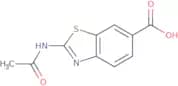
CAS:Formula:C9H18Purity:>98.0%(GC)Color and Shape:Colorless to Almost colorless clear liquidMolecular weight:126.242-(Acetylamino)-1,3-benzothiazole-6-carboxylic acid
CAS:2-(Acetylamino)-1,3-benzothiazole-6-carboxylic acid is a chemical intermediate that is used in organic synthesis as a reagent for the preparation of other compounds. It is a versatile building block and useful scaffold for the preparation of complex compounds. This compound can be used as a reaction component for research chemicals and speciality chemicals.Formula:C10H8N2O3SPurity:Min. 95%Color and Shape:PowderMolecular weight:236.25 g/molRef: 3D-FA124679
Discontinued productL-Homoglutamine
CAS:L-Homoglutamine is a non-essential amino acid that is an important part of the urea cycle. It also plays a role in protein synthesis, as well as in transfer reactions, such as the conversion of ammonia to urea. L-Homoglutamine has been shown to be an inhibitor of binding to collagenase, which may have therapeutic applications for diseases such as rheumatoid arthritis. This amino acid has been used in enzyme preparations and has been found to have biological properties that are similar to those of other carbonyl amino acids (e.g., L-glutamic acid).
Formula:C6H12N2O3Purity:Min. 95%Color and Shape:White PowderMolecular weight:160.17 g/molRef: 3D-FH23847
Discontinued product2-Chloro-4-fluorobenzyl Bromide
CAS:Formula:C7H5BrClFPurity:>98.0%(GC)Color and Shape:White to Light yellow to Light orange powder to crystalMolecular weight:223.472,6-Pyridinedicarboxylic acid dimethyl ester
CAS:2,6-Pyridinedicarboxylic acid dimethyl ester is a drug that has shown anticancer activity in animal models. It binds to DNA, forming a ternary complex with the DNA and the enzyme topoisomerase I. The binding of this drug to the enzyme prevents it from breaking the DNA strands during replication, causing the cell to die. It has been shown that 2,6-pyridinedicarboxylic acid dimethyl ester can be used as a non-competitive inhibitor of topoisomerase I. Furthermore, it has been demonstrated that 2,6-pyridinedicarboxylic acid dimethyl ester is able to bind to human endometrial cancer cells with high affinity. Finally, 2,6-pyridinedicarboxylic acid dimethyl ester was found in x-ray crystal structures of complexes with hydrogen bonds and low activation enthalpy and entropy.
Formula:C9H9NO4Purity:Min. 95%Color and Shape:White PowderMolecular weight:195.17 g/molRef: 3D-FP44227
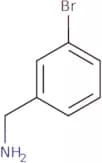
Discontinued product3-Bromobenzylamine
CAS:3-Bromobenzylamine is a chemical compound that belongs to the class of amines. It is used as an intermediate in organic synthesis, and its derivative 3-bromobenzylamine hydrochloride is used in pharmaceuticals as a heart stimulant. 3-Bromobenzylamine can be synthesized by reacting an amine with phosgene and then brominating it. This chemical has been shown to have inhibitory activity against cancer cells and can be used for the treatment of cancer. 3-Bromobenzylamine has also been shown to inhibit the growth of bacteria, fungi, and viruses in vitro. 3-Bromobenzylamine may also be useful for treating psoriasis due to its ability to inhibit prostaglandin synthesis.
Formula:C7H8BrNPurity:Min. 95%Color and Shape:Colorless PowderMolecular weight:186.04 g/molRef: 3D-FB10708
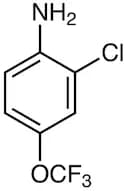
Discontinued product2-Chloro-4-(trifluoromethoxy)aniline
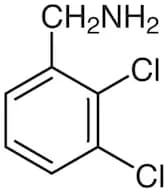
CAS:Formula:C7H5ClF3NOPurity:>97.0%(GC)(T)Color and Shape:Colorless to Light yellow to Light orange clear liquidMolecular weight:211.572,3-Dichlorobenzylamine
CAS:Formula:C7H7Cl2NPurity:>98.0%(GC)(T)Color and Shape:Colorless to Light orange to Yellow clear liquidMolecular weight:176.04