Acids and Synthetic Reagents
Synthetic reagents are essential for chemical synthesis as they enable faster and cleaner reactions, improving efficiency and product quality. They also facilitate analysis and quality control in various chemical processes. In this section, you will find a wide range of reagents, including chiral auxiliary compounds, organic ligands, polymer-supported reagents, and resins for synthesis. These products are designed to support your research and industrial applications, ensuring high-performance results. At CymitQuimica, we provide a comprehensive selection of high-quality acids and synthetic reagents to meet your specific needs.
Subcategories of "Acids and Synthetic Reagents"
- Chiral Auxiliaries(75 products)
- Miscellaneous Organic Molecules with Isotopical Substitutions(6,215 products)
- Organic Acids and Bases(914 products)
- Organic Ligands(564 products)
- Polymer-supported Reagents(13 products)
- Resins for Synthesis(41 products)
- Various Ionic Liquids(499 products)
Found 7382 products of "Acids and Synthetic Reagents"
Sort by
Purity (%)
0
100
|
0
|
50
|
90
|
95
|
100
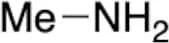
Methylamine (2.0M in methanol)
CAS:Controlled ProductFormula:CH5NColor and Shape:Single SolutionMolecular weight:31.069-Mesityl-10-methylacridinium Tetrafluoroborate
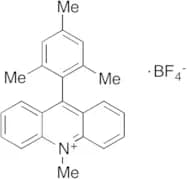
CAS:Controlled Product<p>Stability Hygroscopic<br>Applications 9-Mesityl-10-methylacridinium Tetrafluoroborate can be used for the synthesis of γ-butyrolactones, γ-lactams and pyrrolidines. 9-Mesityl-10-methylacridinium Tetrafluoroborate has been reported by Nicewicz et al. to mediate myriad transformations through Photoredox Catalysis. The applications include the anti-Markovnikov hydroamination of alkenes and addition of carboxylic acids to alkenes and the hydrotrifluoromethylation of styrenes using the Langlois reagent S673690.<br>References Gesmundo, N. J. et al.: Org. Lett. 17, 1316 (2015); Zeller, M. A., et al.: Org. Lett. 16, 4810 (2014); Nicewicz et al., J. Am. Chem. Soc., 135 (26), 9588–9591(2013)<br></p>Formula:C23H22BF4NColor and Shape:NeatMolecular weight:399.23Scandium Triflate
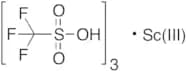
CAS:Controlled Product<p>Applications Scandium Triflate is an important catalyst used in Friedel-Crafts acylation, Baylis-Hillman reaction and other carbon-carbon bond forming reactions.<br>References Kawada, A., et al.: Synlett, 7, 545 (1994); Aggarwal, V., et al.: J. Org. Chem., 63, 7183 (1998);<br></p>Formula:C3H3F9O9S3·ScColor and Shape:NeatMolecular weight:450.23 + 44.96Ebrotidine
CAS:Controlled Product<p>Stability Light Sensitive<br>Applications Ebrotidine is a H2 receptor antagonist that has shown gastroprotective properties against gastric mucosal damange.<br>References Andrade, R.J., et al.: Hepatol., 44, 1581 (2006); Wajima, T., et al.: J. Pharma. Sci., 92, 2427 (2003); Sentellas, S.. et al.: J. Chroma., 976, 221 (2002);<br></p>Formula:C14H17BrN6O2S3Color and Shape:White To Off-WhiteMolecular weight:477.42Methyl (R)-3-Hydroxybutyrate
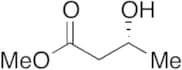
CAS:Controlled Product<p>Applications Methyl (R)-3-Hydroxybutyrate, a derivative of 3-hydroxybutyric acid, has inhibitory effects on cell apoptosis which is mediated by signaling pathways related to the elevation of cytosolic Ca2+ concentration. Also a potential effective neutral protective agent.<br>References Xiao, X.Q., et al.: Biomaterials, 28, 3608 (2007)<br></p>Formula:C5H10O3Color and Shape:NeatMolecular weight:118.131Foretinib
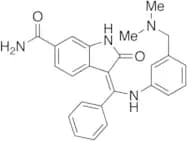
CAS:Controlled Product<p>Applications Foretinib (GSK1363089) is an ATP-competitive inhibitor of hepatocyte growth factor (HGF) and Vascular endothelial growth factor (VEGF) Receptor Tyrosine Kinases.<br>References Qian, F., et al.: Cancer Res., 69, 8009 (2009); Eder, J., et al.: Clin. Cancer Res., 16, 3507 (2010)<br></p>Formula:C34H34F2N4O6Color and Shape:NeatMolecular weight:632.65BIX02188
CAS:Controlled Product<p>Applications BIX02188 MEK inhibitor, prevents cell proliferation and induces apoptosis. Can be applied towards treatments of cancers and proliferative cell diseases.<br>References Tatake, R. et al.: Biochem. Biophys. Res. Comm., 377, 120 (2008);<br></p>Formula:C25H24N4O2Color and Shape:NeatMolecular weight:412.48Zinc Di[bis(trifluoromethylsulfonyl)imide]
CAS:Controlled Product<p>Stability Moisture Sensitive<br>Applications Zinc Di[bis(trifluoromethylsulfonyl)imide] is a reactant used in the assembly of pyrene-based Schiff base MII4L6 architectures.<br>References Ronson, T. et al.: J. Am. Chem. Soc., 137, 14502 (2015); Riddell, I. et al.: Chem. Sci., 6, 3533 (2015);<br></p>Formula:C4F12N2O8S4ZnColor and Shape:Off-WhiteMolecular weight:625.686-Nitro-7-sulfamoylbenzo[f]quinoxaline-2,3-dione, Disodium Salt
CAS:<p>Stability Hygroscopic<br>Applications A potent and discriminating antagonist for AMPA binding sites.<br>References HonorÈ, T., et al.: Science, 241, 701 (1988), Gill, et al.: Brain Res., 580, 35 (1992), Pook, et al.: Br. J. Pharmacol., 108, 179 (1993)<br></p>Formula:C12H6N4O6S·2NaColor and Shape:NeatMolecular weight:380.24Danusertib
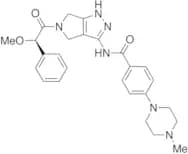
CAS:<p>Applications An Aurora kinase inhibitor, used to treat patients with chromic myeloid leukemia. It is a COVID19-related research product.<br>References Fancelli, D., et al.: J. Med. Chem., 49, 7247 (2006), Carpinelli, P., et al.: Mol. Canc. Ther., 6, 3158 (2007), Coumar, M., et al.: J. Med. Chem., 52, 1050 (2009),<br></p>Formula:C26H30N6O3Color and Shape:NeatMolecular weight:474.555-Chloro-2-methylaminopyridine
CAS:Controlled Product<p>Applications 5-Chloro-2-methylaminopyridine is used in the preparation of aminosulfuranes with N-heterocyclic groups.<br>References Pashinnik, V.E. et al.: Ukr. Khim. Zhur., 73, 45 (2007);<br></p>Formula:C6H7ClN2Color and Shape:NeatMolecular weight:142.59MK-2206 Dihydrochloride
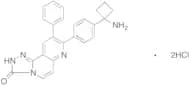
CAS:Controlled Product<p>Applications AZD 6244 and MK 2206 are targeted small-molecule drugs that inhibit MEK and AKT responses. The combination of AZD6244 and MK2206 has a significant synergistic effect on tumor growth in vitro and in vivo and leads to increased survival rates in mice bearing highly aggressive human lung tumors. Antitumor agents. Potent AKT inhibitor.<br>References Yeh, T., et al.: Clin. Cancer Res., 13, 1576 (2007), Meng, J., et al.: Cancer Biol. Ther., 8, 2073 (2009),<br></p>Formula:C25H21N5O·2ClHColor and Shape:NeatMolecular weight:480.39N-Cyclohexylpropyl Deoxynojirimycin, Hydrochloride
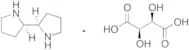
CAS:Controlled ProductFormula:C15H30ClNO4Color and Shape:NeatMolecular weight:323.86(R,R)-2,2'-Bipyrrolidine L-Tartrate Trihydrate
CAS:Controlled ProductFormula:C8H16N2(C4H6O6)Color and Shape:NeatMolecular weight:290.324-Fluorobenzyl Bromide
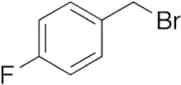
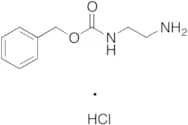
CAS:Controlled Product<p>Applications 4-Fluorobenzyl Bromide is a substituted benzyl bromide reagent used in the preparation of wide range of biologically active compounds such as bronchodialators, neurochemicals and antibacterials.<br> Not a dangerous good if item is equal to or less than 1g/ml and there is less than 100g/ml in the package<br>References Hardtmann, G.E. et al.: J. Med. Chem., 18, 447 (1975); Bartl, V. et al.: Coll. Czechoslov. Chem. Comm., 45, 3182 (1980);<br></p>Formula:C7H6BrFColor and Shape:NeatMolecular weight:189.02N-(Benzyloxycarbonyl)ethylenediamine Hydrochloride
CAS:Controlled Product<p>Applications N-(Benzyloxycarbonyl)ethylenediamine Hydrochloride is a reagent used to synthesize new opioid ligand as an analgesics with mixed agonist and antagonist properties to induce tolerance and dependence.<br>References Salvadori, S., et al.: Bioorg. Med. Chem., 15, 6876-6881 (2007);<br></p>Formula:C10H14N2O2•HClColor and Shape:NeatMolecular weight:194.233646Magnesium Bromide Hexahydrate
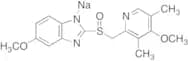
CAS:Controlled Product<p>Applications Magnesium Bromide Hexahydrate is an inorganic salt used in the synthesis of superconductors and nanowires. Also present in polymer nanocomposites to improve conductivity.<br>References Alam, M. et al.: Polym. Int., 63, 1465 (2014); McDonald, T. et al.: J. Am. Chem. Soc., 135, 7056 (2012);<br></p>Formula:Br2MgH2OColor and Shape:NeatMolecular weight:199.83228Omeprazole Sodium Salt
CAS:Controlled Product<p>Stability Hygroscopic<br>Applications Omeprazole Sodium Salt is the salt analogue of Omeprazole (O635000), which binds covalently to proton pump. It inhibits gastric secretion. Used as an anttiulcerative.<br>References Muller, P., et al.: Arzneimittel-Forsch., 33, 1685 (1983); Wallmark, B., et al.: Biochim. Biophys. Acta., 778, 549 (1984); Morii, M., et al.: J. Biol. chem., 268, 21553 (1993); Ritter, M., et al.: Br. J. Pharmacol., 124, 627 (1998)<br></p>Formula:C17H18N3O3S·Na·H2OColor and Shape:Off-WhiteMolecular weight:385.411-Methyl-4-pyrazoleboronic Acid-d3
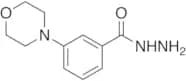
Controlled ProductFormula:C4D3H4BN2O2Color and Shape:NeatMolecular weight:128.943-(4-Morpholinyl)benzoic Acid Hydrazide
CAS:Controlled ProductFormula:C11H15N3O2Color and Shape:NeatMolecular weight:221.26



![Zinc Di[bis(trifluoromethylsulfonyl)imide]](/_next/image/?url=https%3A%2Fstatic.cymitquimica.com%2Fproducts%2FTR%2Fthumb-webp%2FZ438430.webp&w=3840&q=75)
![6-Nitro-7-sulfamoylbenzo[f]quinoxaline-2,3-dione, Disodium Salt](/_next/image/?url=https%3A%2Fstatic.cymitquimica.com%2Fproducts%2FTR%2Fthumb-webp%2FN550005.webp&w=3840&q=75)