Organoboranes
Found 6123 products of "Organoboranes"
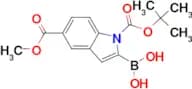
(1-(tert-Butoxycarbonyl)-5-(methoxycarbonyl)-1H-indol-2-yl)boronic acid
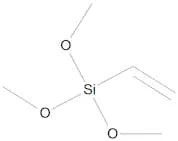
CAS:Purity:95.0%Color and Shape:SolidMolecular weight:319.1199951171875Vinyltrimethoxysilane
CAS:Applications Vinyltrimethoxysilane (cas# 2768-02-7) is a useful research chemical.
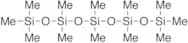
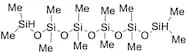
Formula:C5H12O3SiColor and Shape:Light YellowMolecular weight:148.2325Dodecamethylpentasiloxane
CAS:Controlled ProductApplications A non-cyclic polydimethyl siloxane. Study shows that it can be transformed by a specific microflora and in the natural environment degraded by mechanisms similar to other organic compounds.
References Watanabe, N. et al.: Ecotoxic. Env. Safety, 11, 174 (1986); Wasserbauer, R. et al.: Folia Microbiologica, 35, 384 (1990);Formula:C12H36O4Si5Color and Shape:NeatMolecular weight:384.84Nitrosyl Tetrafluoroborate
CAS:Controlled ProductApplications Nitrosyl Tetrafluoroborate is a reagent in the formation of miRNA-34a-conjugated magnetic nanovectors which shows therapeutic effects by inhibiting cellular migration and invasion through CD44 gene suppression.
Not a dangerous good if item is equal to or less than 1g/ml and there is less than 100g/ml in the package
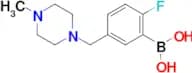
References Lee, H., et al.: J. Nanosci. Nanotechnol., 16, 12939-12946 (2016);Formula:BF4NOColor and Shape:NeatMolecular weight:116.81(2-Fluoro-5-((4-methylpiperazin-1-yl)methyl)phenyl)boronic acid
CAS:Purity:98%Molecular weight:252.10000610351562(3-Chloro-5-propoxyphenyl)boronic acid
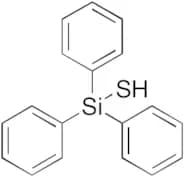
CAS:Purity:95.0%Color and Shape:SolidMolecular weight:214.4499969482422Triphenylsilanethiol
CAS:Controlled ProductApplications Triphenylsilanethiol is a useful organic building block used for carboxyl activation via silylthioesterification, and in the preparation of synthesis of tetraphenylporphyrinate manganese(III) siloxides.
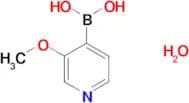
References Lamar, A. A.; et al.: Tetrahedron Lett., 56, 6034 (2015); Meininger, D. J.; et al.: J. Coord. Chem., 69, 1970 (2016).Formula:C18H16SSiColor and Shape:NeatMolecular weight:292.47(3-Methoxypyridin-4-yl)boronic acid hydrate
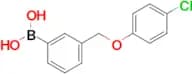
CAS:Formula:C6H10BNO4Purity:95.0%Color and Shape:SolidMolecular weight:170.96(3-((4-Chlorophenoxy)methyl)phenyl)boronic acid
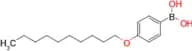
CAS:Formula:C13H12BClO3Purity:95.0%Color and Shape:SolidMolecular weight:262.5(4-(Decyloxy)phenyl)boronic acid
CAS:Purity:97.0%Color and Shape:SolidMolecular weight:278.20001220703125tert-Butyldimethylsilyl Chloride
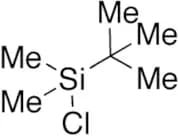
CAS:Applications Used to protect alcohols during organic synthesis.
References Shen, H., et al.: J. Med. Chem., 53, 2666 (2010), Qiang, L., et al.: Bioorg. Med. Chem. Lett., 20, 836 (2010),Formula:C6H15ClSiColor and Shape:White SolidMolecular weight:150.72Hydroxydi-p-tolylborane
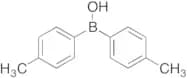
CAS:Controlled ProductApplications Hydroxydi-p-tolylborane is a building block used as a reactant in the nickel-catalyzed cross-coupling of diarylborinic acids with aryl chlorides.
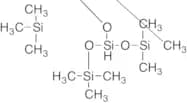
References Chen, X., et al.: ACS Catalys., 4, 379 (2014);Formula:C14H15BOColor and Shape:NeatMolecular weight:210.08Tris(trimethylsiloxy)silane
CAS:Controlled ProductStability Moisture Sensitive
Applications Tris(trimethylsiloxy)silane functions as a modified siloxane elastomer for controlled cell growth or as a biomaterial surface that induces a desired cellular response.
Not a dangerous good if item is equal to or less than 1g/ml and there is less than 100g/ml in the package
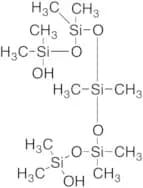
References Gibson, A. L., et al.: Mater. Res. Soc. Symp. Proc., 711, 169 (2002)Formula:C9H28O3Si4Color and Shape:NeatMolecular weight:296.66Decamethyl-1,9-Pentasiloxanediol
CAS:Controlled ProductFormula:C10H32O6Si5Color and Shape:ColourlessMolecular weight:388.781,1,3,3,5,5,7,7,9,9,11,11-Dodecamethylhexasiloxane
CAS:Applications 1,1,3,3,5,5,7,7,9,9,11,11-DODECAMETHYLHEXASILOXANE (cas# 995-82-4) is a useful research chemical.
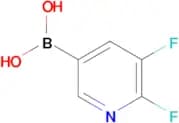
Formula:C12H38O5Si6Color and Shape:NeatMolecular weight:430.94(5,6-Difluoropyridin-3-yl)boronic acid
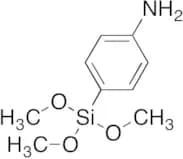
CAS:Formula:C5H4BF2NO2Purity:96%Color and Shape:No data available.Molecular weight:158.9Aminophenyltrimethoxysilane
CAS:Controlled ProductApplications Aminophenyltrimethoxysilane is a useful intermediate for the preparation of aromatic silanes as high thermal stability coupling agents.
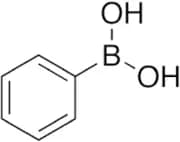
References Pan, Y., et al.: Adv. Mat. Res., 690, 1483 (2013)Formula:C9H15NO3SiColor and Shape:NeatMolecular weight:213.31Phenylboronic Acid
CAS:Controlled ProductApplications Phenylboronic Acid is a compound used in organic synthesis of various pharmaceutical goods.
References Ainley, A.D., et al.: J. Chem. Soc., 2171 (1930);Formula:C6H7BO2Purity:95%Color and Shape:NeatMolecular weight:121.932-Phenyl-2-[(trimethylsilyl)oxy]acetonitrile (90%)
CAS:Controlled ProductStability Moisture Sensitive
Applications 2-phenyl-2-[(trimethylsilyl)oxy]acetonitrile (cas# 25438-37-3) is a useful research chemical.Formula:C11H15NOSiPurity:90%Color and Shape:NeatMolecular weight:205.33(4-(Diisopropylcarbamoyl)-2-ethoxypyridin-3-yl)boronic acid
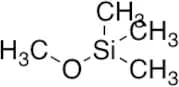
CAS:Purity:95+%Molecular weight:294.1600036621094Methoxytrimethylsilane
CAS:Controlled ProductStability Volatile
Applications Methoxytrimethylsilane (cas# 1825-61-2) is a useful research chemical.
Not a dangerous good if item is equal to or less than 1g/ml and there is less than 100g/ml in the packageFormula:C4H12OSiColor and Shape:NeatMolecular weight:104.223Iodotrimethylsilane (>90%)
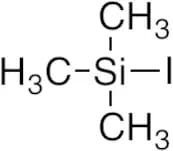
CAS:Stability Moisture Sensitive (Reactive)
Applications Iodotrimethylsilane is a reagent used for cleaving ethers, esters, carbamates, ketals and lactones.
Not a dangerous good if item is equal to or less than 1g/ml and there is less than 100g/ml in the package
References Heck, M., et al.: Tetrahedron Lett., 35, 5445 (1994); Hiral, G., et al.: Biorg. Med. Chem. Lett., 14, 2647 (2004)Formula:C3H9ISiPurity:>90%Color and Shape:NeatMolecular weight:200.09Borane Ammonia Complex
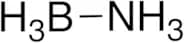
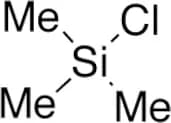
CAS:Controlled ProductFormula:NH3·(BH3)Color and Shape:NeatMolecular weight:30.87Chlorotrimethylsilane
CAS:Stability Moisture Sensitive
Applications Chlorotrimethylsilane have been used in the preparation of volatile derivatives of a wide range of compounds for GC analysis. Chlorotrimethylsilane has been used for silylation and as a protection group in the process of various organic synthesis.
E0
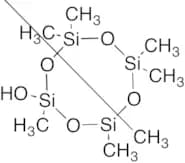
References Casimiro, M., et al.: Org. Lett., 15, 2378 (2013); Lifchits, O., et al.: J. Am. Chem. Soc., 135, 6677 (2013);Formula:C3H9ClSiColor and Shape:NeatMolecular weight:108.64Heptamethylcyclotetrasiloxan-2-ol
CAS:Controlled ProductApplications Heptamethylcyclotetrasiloxan-2-ol is a derivative of Octamethylcyclotetrasiloxane (O237145), which is an organometallic reagent that can be used in the preparation of siloxane polymers, with high surface-hydrophobicity restoration.
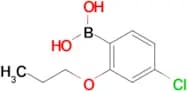
References Fritz, O., et al.: MRS Online Proceedings Library, 1535 (2012); Vanossi, A., et al.: Condensed Matter (2013);Formula:C7H22O5Si4Color and Shape:NeatMolecular weight:298.59(4-Chloro-2-propoxyphenyl)boronic acid
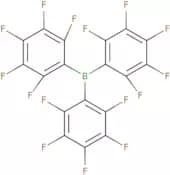
CAS:Purity:95.0%Color and Shape:SolidMolecular weight:214.4499969482422Tris(pentafluorophenyl)borane
CAS:Tris(pentafluorophenyl)borane is a cationic polymerization agent that can be used to form stable complexes with amines. These complexes are useful for the synthesis of polymers, which are used in a variety of applications such as coatings and adhesives. Tris(pentafluorophenyl)borane is also an important reagent in transfer reactions, electrochemical impedance spectroscopy, kinetic studies, and chemical stability. It has been shown to react with intramolecular hydrogen atoms to form polymeric matrixes that have high kinetic energy and transport properties. In coordination geometry, tris(pentafluorophenyl)borane has a planar geometry with a triangular arrangement around the boron atom.Formula:C18BF15Purity:Min. 95%Color and Shape:PowderMolecular weight:511.98 g/mol(S)-BoroLeu-(+)-pinanediol-trifluoroacetate
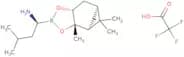
CAS:(S)-BoroLeu-(+)-pinanediol-trifluoroacetate is a useful scaffold, building block, and intermediate for the synthesis of complex compounds. It is a high quality reagent that can be used in research chemicals and speciality chemicals. (S)-BoroLeu-(+)-pinanediol-trifluoroacetate is a versatile building block because it can be used as a reaction component in the synthesis of fine chemicals and as an intermediate in the synthesis of other reagents. CAS No. 477254-69-6Formula:C15H28BNO2·C2HF3O2Purity:Min. 95%Color and Shape:PowderMolecular weight:379.22 g/mol1-Isopropyl-5-(4,4,5,5-tetramethyl-1,3,2-dioxaborolan-2-yl)-1H-pyrazole
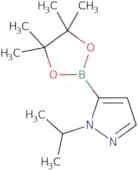
CAS:1-Isopropyl-5-(4,4,5,5-tetramethyl-1,3,2-dioxaborolan-2-yl)-1H-pyrazole is a compound with a high quality and versatile building blocks. It can be used as a reagent in organic synthesis and as a research chemical. CAS No. 1282518-60-8.Formula:C12H21BN2O2Purity:Min. 98 Area-%Color and Shape:Colorless PowderMolecular weight:236.12 g/molN-α-Boc-Nε-Z-D-lysine
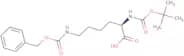
CAS:N-alpha-Boc-Nepsilon-Z-D-lysine is a fusogenic peptide that has an acidic pKa. It is a potent inhibitor of survivin, which is a protein that regulates cell death. It also inhibits the uptake of l-phenylalanine to promote cancer cell death. The functional groups on this compound are epoxyketones, which have regulatory properties as well as being able to inhibit the growth of cells.Formula:C19H28N2O6Purity:Min. 95%Molecular weight:380.44 g/mol(1R)-(1S,2S,3R,5S)-Pinanediol-N-(N-pyrazinylphenylalaninoyl)-1-amino-3-methyl-butane-1-boronate
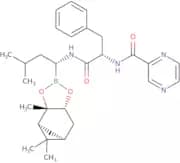
CAS:(1R)-(1S,2S,3R,5S)-Pinanediol-N-(N-pyrazinylphenylalaninoyl)-1-amino-3-methyl-butane-1-boronate is a boronic acid derivative that has been shown to have an antiproliferative effect on cancer cells. It is a biodegradable, water soluble drug with a low toxicity profile. The maximum tolerated dose has been established in vivo studies and it can be used as an imaging agent for diagnosis. (1R)-(1S,2S,3R,5S)-Pinanediol-N-(N-pyrazinylphenylalaninoyl)-1-amino-3-methyl-butane-1-boronate may be used to treat cancers such as breast cancer or leukemia. This drug targets the proteasome and inhibits its activity by binding to the active site of the 20sFormula:C29H39BN4O4Purity:Min. 95%Color and Shape:SolidMolecular weight:518.46 g/molN-α-Boc-Nε-4-nitro-Z-L-lysine
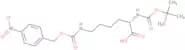
CAS:Nepsilon-4-nitro-Z-L-lysine is a plant nutrient that can be used in agricultural and horticultural applications. It is a particle that can be added to the soil to improve fertility and stimulate plant growth. Nepsilon-4-nitro-Z-L-lysine has been shown to have a protective effect on plants against insect pests and fungal infections, as well as inhibiting the formation of toxic compounds during fermentation. This product also provides an alternative to chemical treatment and can be used for environmental monitoring or mesoscale studies. Nepsilon-4-nitro-Z-L-lysine has been shown to improve horse fertility and reduce the number of treatments required for resistant bacterial infections.Formula:C19H27N3O8Purity:Min. 95%Color and Shape:SolidMolecular weight:425.43 g/molLithium tetraborate
CAS:Lithium tetraborate (LiBO) is a compound used in the preparation of samples for laser ablation. It can be synthesized by reacting lithium carbonate with boron nitride in a hydrochloric acid solution at room temperature. Lithium tetraborate is often used as a buffer to increase the pH of the solution and to maintain it at a constant level during reactions. This compound has been studied extensively, and its spectroscopic properties have been well documented. The thermal expansion coefficient of LiBO is high, which makes it suitable for use in radiation experiments. Lithium tetraborate has also been shown to be an effective catalyst for organic synthesis reactions that require high activation energies, such as the synthesis of phenol from benzene and formaldehyde.
Formula:Li2B4O7Purity:Min. 95%Color and Shape:PowderMolecular weight:169.12 g/molFerrocenium Tetrafluoroborate
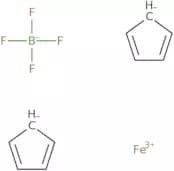
CAS:Ferrocenium tetrafluoroborate is a chiral, unreactive compound that is synthesized through the reaction of ferrocene and tetrafluoroboric acid. Ferrocenium tetrafluoroborate is a kinetic polymer that can be used as a linker in the synthesis of polymeric materials. This compound has been shown to catalyze the epoxidation of aliphatic alcohols to yield epoxides. Ferrocenium tetrafluoroborate has also been shown to catalyze the epoxidation of cyclic olefins, such as 1-octene. Ferrocenium tetrafluoroborate is an achiral catalyst and does not change during the course of the reaction.Formula:C10H2BF4FeColor and Shape:Brown PowderMolecular weight:264.77 g/mol(1-Methylethyl)boronic acid
CAS:(1-Methylethyl)boronic acid is a boronic acid that can be used as a catalyst in organic synthesis. This compound is an organometallic compound that has been shown to be a good catalyst for the polymerization of olefins, and for the preparation of copolymers with polyenes. It can also be used in asymmetric synthesis and as a site-specific ligand in transition metal catalyzed reactions. (1-Methylethyl)boronic acid has been shown to inhibit protease activity and may have therapeutic potential for metabolic disorders such as obesity.Formula:C3H9BO2Purity:Min. 95%Color and Shape:PowderMolecular weight:87.91 g/molo-Carborane-9-Carboxylic acid
CAS:Controlled Producto-Carborane-9-carboxylic acid (C9CA) is a new antitumour agent that has been shown to be effective against human tumour cells and tumour cell lines. C9CA also has a high affinity for the active site of the enzyme dihydrofolate reductase, which is involved in the synthesis of DNA. The antitumour activity of C9CA is mediated by its ability to inhibit DNA synthesis and induce apoptosis. C9CA has been shown to be less toxic than methotrexate and doxorubicin, with the potential for fewer side effects.Purity:Min. 95%4-(4,6-Dimethoxy-1,3,5-triazin-2-yl)-4-morpholinium tetrafluoroborate
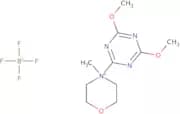
CAS:4-(4,6-Dimethoxy-1,3,5-triazin-2-yl)-4-morpholinium tetrafluoroborate is a modulating agent that is used in the treatment of infectious and metabolic disorders. The compound has been shown to increase the activity of fatty acid oxidation and decrease the production of inflammatory mediators. 4-(4,6-Dimethoxy-1,3,5-triazin-2-yl)-4-morpholinium tetrafluoroborate interacts with a variety of proteins by binding to their Nterminal domains. It can be conjugated to other molecules and then used as probes for kinetic studies or as antiinflammatory compounds.Formula:C10H17N4O3•BF4Purity:Min. 97 Area-%Color and Shape:PowderMolecular weight:328.07 g/mol6-Chloro-2-fluoropyridine-3-boronic acid
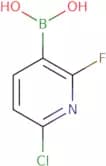
CAS:6-Chloro-2-fluoropyridine-3-boronic acid is a versatile building block for the synthesis of complex compounds, which can be used as a reagent in research or as a speciality chemical. This compound can be used as an intermediate, reaction component, or scaffold to synthesize other more complex structures. 6-Chloro-2-fluoropyridine-3-boronic acid is available in high quality and has CAS No. 1256345-66-0.Formula:C5H4BClFNO2Purity:Min. 95%Color and Shape:Light (Or Pale) Orange SolidMolecular weight:175.35 g/moltert-Butyldimethylsilyl chloride
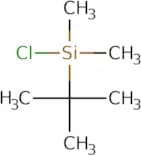
CAS:Tert-butyldimethylsilyl chloride is a silicon-containing compound that is used to prepare the tert-butyl group, which is an important part of many organic compounds. Tert-butyldimethylsilyl chloride reacts with trifluoroacetic acid to form hydrogen bonds. It can also react with hydrochloric acid to form a tert-butyl chloride, which is soluble in water and hydrolyzes in human serum. Tert-butyldimethylsilyl chloride has been used for the synthesis of carbohydrates and fatty acids. It has been used as a sample preparation agent for gas chromatography mass spectrometry and high performance liquid chromatography. The reaction solution can be prepared by reacting tert-butyldimethylsilyl chloride with an alcohol or carboxylic acid in the presence of base at low temperature. Tert-butyldimethylsilyl chloride can be synthesized by reactingFormula:C6H15ClSiPurity:Min. 95 Area-%Color and Shape:Colorless PowderMolecular weight:150.73 g/mol(3-glycidoxypropyl)methyldimethoxysilane
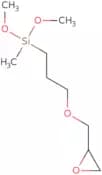
CAS:3-Glycidoxypropyl methyldimethoxysilane (3-GPMDMS) is a compound that belongs to the group of organosilicon compounds. It is an organic solvent that has been used for the activation energy of ring-opening reactions. 3-GPMDMS is also suitable for immobilizing polysaccharides, proteins, and enzymes on surfaces or in polymer matrices. 3-GPMDMS has been used to produce polymers with high molecular weight and a wide range of molecular weights by polymerization. 3-GPMDMS can be synthesized by reacting glycidoxypropyltrimethoxysilane with methanol in the presence of hydrochloric acid. The chemical structure includes methoxy groups connected to silicon atoms via methylphenyl groups. 3-GPMDMS has been shown to exhibit excellent magnetic resonance properties and be a potential candidate for use as nanomaterials. ItFormula:C9H20O4SiPurity:Min. 95%Molecular weight:220.34 g/mol2,4-Dimethoxypyrimidine-5-boronic acid, pinacol ester
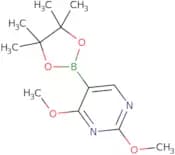
CAS:2,4-Dimethoxypyrimidine-5-boronic acid is a high quality chemical that can be used as a reagent or a complex intermediate. It is an important building block for the synthesis of many compounds and has been shown to be useful in the synthesis of 2,4-dimethoxybenzaldehyde. This compound has been used in the preparation of 2,4-dimethoxypyrimidin-5(6H)-ones and as a reaction component in organic chemistry.Formula:C12H19BN2O4Purity:Min. 97%Molecular weight:266.1 g/mol(2-Aminophenyl)boronic acid hydrochloride
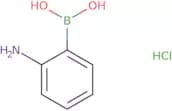
CAS:(2-Aminophenyl)boronic acid hydrochloride is an analytical reagent that is used in the cross-coupling reaction between aryl bromides and organoboron compounds. It has been synthesized from 2-aminophenylboronic acid, which can be produced by the alkylation of phenol with 3-bromoquinoline. This compound has been shown to have antimalarial activity against the human malaria parasite Plasmodium falciparum in vitro. (2-Aminophenyl)boronic acid hydrochloride has also been shown to have a high intestinal absorption rate when given orally to rats. In vivo studies are needed to determine whether this chemical is safe for humans.Formula:C6H9BClNO2Purity:Min. 95%Color and Shape:PowderMolecular weight:173.41 g/mol4-Hydroxyphenylboronic acid pinacol ester
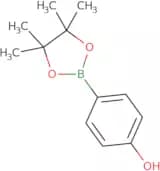
CAS:4-Hydroxyphenylboronic acid pinacol ester is a hydrophilic compound that has been used as a long-acting iron chelator. It has been shown to be active in the treatment of anemic patients with chronic kidney disease. 4-Hydroxyphenylboronic acid pinacol ester has been shown to bind to hepcidin, which is a peptide hormone that regulates iron homeostasis in the body by decreasing its absorption from the gut and increasing its excretion. It also binds to functional groups on proteins and other molecules, which allow for selective targeting of certain tissues or cells. This compound can be activated by light, making it photochromic. The addition of an active oxygen atom enables this molecule to react at a faster rate than most compounds and also creates reactive oxygen species (ROS) in humans when activated.Formula:C12H17BO3Purity:Min. 95%Color and Shape:White PowderMolecular weight:220.1 g/molN,N'-4,4'-Bis(benzyl-2-boronic acid)-bipyridinium dibromide
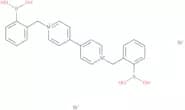
CAS:N,N'-4,4'-Bis(benzyl-2-boronic acid)-bipyridinium dibromide is a high quality reagent that can be used as an intermediate for the synthesis of complex organic compounds. It is a complex compound that contains boronic acid and bipyridinium moieties. N,N'-4,4'-Bis(benzyl-2-boronic acid)-bipyridinium dibromide is useful in the synthesis of fine chemicals and speciality chemicals. It has versatile building block properties and can be used as a reaction component in many chemical reactions.Formula:C24H24B2N2O4Br2Purity:Min. 95%Color and Shape:PowderMolecular weight:585.89 g/moltert-Butyl diphenylchlorosilane
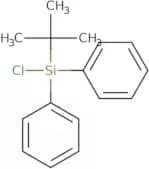
CAS:Tert-butyl diphenylchlorosilane is a chemical compound that belongs to the group of organosilicon compounds. It is used for the preparation of various organosilicon compounds, such as trifluoroacetic acid, which is used in analytical chemistry. The synthesis of tert-butyl diphenylchlorosilane starts with the reaction between hydrochloric acid and sodium citrate. This yields a phosphate bond and a hydroxyl group. In order to form the desired product, tert-butyl diphenylchlorosilane, this intermediate is reacted with trifluoroacetic acid in an asymmetric synthesis to yield the desired product. The reaction mechanism of this process involves hydrogen chloride as an electrophile attacking the carbonyl carbon atom in trifluoroacetic acid, leading to an elimination reaction. This elimination reaction results in two possible products: tert-butyl acetate or tert-butyl chlorosFormula:C16H19ClSiPurity:Min. 97 Area-%Color and Shape:Clear LiquidMolecular weight:274.87 g/mol





![2-Phenyl-2-[(trimethylsilyl)oxy]acetonitrile (90%)](/_next/image/?url=https%3A%2Fstatic.cymitquimica.com%2Fproducts%2FTR%2Fthumb-webp%2FP321065.webp&w=3840&q=75)